Screw Barrel Supplier Audit: ISO Evidence and Batch Delivery

Extrusion screw and barrel assemblies must be audited for certification scope, documented material data, and batch-level dimensional repeatability.
A screw barrel supplier audit for extrusion should prove three things before a batch order is released: that the certification evidence covers the exact product family being purchased, that material and heat-treatment specifications are documented per piece, and that the supplier can repeat those specifications across a whole batch rather than on a single sample.
This article sets out a capability audit framework that extrusion and injection buyers can run on any screw and barrel supplier. It covers what to request under ISO 9001:2015, ISO 45001:2018 and ISO 14001:2015, which material and surface-engineering data to verify, how to test batch capacity instead of taking it on trust, and how to confirm dimensional consistency before you commit to a production order. The framework applies across conical twin screw barrels, parallel twin screw barrels, single screw extruder screws and barrels, injection molding screws and barrels, and rubber machine screws and barrels.
Problem Definition: Quotations Without an Evidence Chain
Most screw and barrel quotations arrive with the same three data points: a diameter range, a material name, and a hardness figure. What they rarely include is the evidence chain behind those numbers — which management system certified the manufacturing process, whether the materials are traceable to mill certificates, how nitrided case depth is measured, and whether the same tolerances hold on the tenth piece of a batch as on the first.
For extrusion lines, that gap is expensive. A barrel that looks acceptable at delivery can show dimensional drift, uneven nitrided case depth, or accelerated wear once it runs a high-filler PVC compound. By the time the failure becomes visible in the output, the purchasing decision is long past and the replacement cycle has already been set.
The underlying problem is a mismatch of documents. Certification evidence is usually presented at the company level, while the risk sits at the product level. A supplier may hold a quality certificate that covers assembly or trading activities, while the machining, nitriding and inspection steps that determine barrel life sit outside that scope. Equally, a supplier may quote HRC and HV figures that no incoming inspection record can reproduce at batch scale. A capability audit closes this gap by forcing every claim back to a document, a measurement, and a responsible production site.
Audit principle: Treat every specification in a quotation as unverified until it is supported by a certificate, a material certificate, a heat-treatment record, or a dimensional inspection report. The audit framework below does not assume any supplier's certification status — it defines the evidence that must be produced.
Industry Background: Why Screw and Barrel Sourcing Is Under More Scrutiny
The commercial backdrop explains why documentation now carries as much weight as price. The global plastic processing machinery market reached USD 25.9 billion in 2025, with injection molding machines accounting for 50.9% of the market share (Grand View Research). The feed screw barrel market is projected to grow from USD 1.89 billion in 2024 to USD 3.33 billion by 2034 at a CAGR of 5.8% (Global Insight Services). Within extrusion specifically, single-screw extrusion machinery dominates with approximately 62% of the extrusion market share as of 2024 (Fortune Business Insights), while the global bimetallic barrel and screw market is estimated at USD 2.8 billion in 2025 and forecast to reach USD 4.7 billion by 2034 (Dataintelo).
Published market sizes for this sector differ by source — for 2025, Grand View Research reports USD 25.9 billion while IMARC Group reports USD 39.0 billion, mainly because of differences in which peripheral equipment is included. Buyers should treat headline market figures as directional context, never as an input to a procurement decision.
What does affect procurement is the direction of travel. Growth in bimetallic and wear-resistant screw and barrel demand is concentrated in applications that process filled, reinforced and recycled polymers — the same applications where a barrel's wear performance is hardest to predict and easiest to get wrong. At the same time, export-oriented supply chains are increasingly expected to document quality management, occupational health and safety, and environmental management, which is where ISO 9001:2015, ISO 45001:2018 and ISO 14001:2015 enter the buyer's due diligence checklist. For reference, the well-known twin-screw extruder builders in the market include Coperion, Leistritz, KraussMaffei and JSW (GSmach industry ranking), which shows the level of technical expectation that upstream screw and barrel suppliers are measured against.
The Five Product Families an Extrusion Audit Must Cover
An audit is only meaningful if it is scoped to the product families you actually buy. Screw and barrel supply for plastics and rubber machinery normally spans five families, each with its own diameter range and target industry:
- Conical twin screw barrel — model range Φ25/50–Φ185/340, a PVC extrusion product intended for the plastics machinery and construction materials industries.
- Parallel twin screw barrel — model range Φ45–Φ350, a compounding and pelletizing component for plastic recycling and compounding.
- Single screw extruder screw and barrel — model range Φ20–Φ500, used in film blowing and pipe extrusion for plastics packaging and pipe manufacturing.
- Injection molding machine screw and barrel — model range Φ20–Φ300, used in automotive, electronics, and toy manufacturing.
- Rubber machine screw and barrel — model range Φ20–Φ650, a rubber extrusion component for tire and rubber product manufacturing.
Certification evidence, material data and inspection records should be requested separately for each family you order. A supplier that can document one family well but not another is a different risk profile from one that can document all five.

Parallel twin screw barrels (Φ45–Φ350) serve compounding and pelletizing applications; verify material and inspection records per family, not per company.
Verification Point 1 — Match ISO Certification Scope to What You Are Buying
Three management system standards are relevant to an extrusion screw and barrel audit: ISO 9001:2015 for quality management, ISO 45001:2018 for occupational health and safety, and ISO 14001:2015 for environmental management. Each addresses a different risk. Quality management governs how consistently a supplier controls machining tolerances and inspection; occupational health and safety indicates how production risk is managed at the manufacturing site; environmental management is increasingly requested by EU buyers under supply chain due diligence expectations.
Requesting a certificate is not the same as verifying it. Four checks matter:
- Scope wording. Confirm the scope statement covers the design/development, production and inspection of screw and barrel products — not only trading, assembly, or a different product category.
- Site address. The address on the certificate must match the factory where your screws and barrels will actually be machined and heat treated. A certificate covering an office or a different plant does not cover your order.
- Validity and issuing body. Check the certificate number, the issuing certification body, the original certification date, and the expiry date. Expired or suspended certificates should be treated as no evidence at all.
- Per-family coverage. If you buy conical twin screw barrels for PVC extrusion and single screw extruder screws and barrels for pipe extrusion, confirm the certificate scope and the internal procedure list cover both product types.
For EU-bound business this evidence is normally requested alongside commercial documents. A supplier that exports a significant share of its output has usually already built this document set: Zhejiang Guangming Plastics Machinery Co., Ltd. (Guangyou Screw) reports that export business accounts for 30% of total sales, with major markets including the EU — a profile that generally implies audit-ready documentation for European buyers.
Verification Point 2 — Material Traceability
Material selection determines what a screw and barrel can survive. Available materials across the five product families include 38CrMoAl (1.8509), D2 and AISI316, with additional grades such as 34CrAlNi7 (1.8550), DC53, AISI420, 31CrMoV9 (1.8519), Gr12MoV, 9Cr18MoV, 40CrNiMo, 440C, 17PH-4, 42CrMo, AISI304, Inconel 718, 40Cr, 1.2316, Hastelloy C-276, C45, 1.4462, Inconel 625, SKD11, 1.4404, Monel 400, SKD61, 1.4122, Monel 500 and S600.
The audit question is not which grade appears on the quotation, but whether the delivered piece can be traced to it. Ask for:
- Mill certificates for the specific heat number used on your order.
- A stated mapping between the quoted grade and the application — for example, why 38CrMoAl (1.8509) was selected for a nitrided barrel rather than D2 or AISI316.
- Written confirmation that substituted grades will not be used without prior approval, since grade substitution is one of the most common causes of unexpected wear behaviour.
Verification Point 3 — Heat Treatment and Surface Engineering Data
Surface engineering is where most screw and barrel performance claims live, and where most unverifiable numbers appear. The measurable specification set to request across extrusion, injection and rubber screw and barrel products is:
- Hardness after hardening and tempering: HB260–310
- Nitrided hardness: HV850–1000
- Nitrided case depth: 0.45–0.7 mm
- Nitrided brittleness: less than grade 2
- Surface chromium-plating depth: 0.025–0.10 mm, with surface chromium-plating hardness after nitriding of ≥900 HV
- Alloy depth: 0.8–2.0 mm, with alloy hardness HRC50–65
- Surface roughness: Ra 0.4
- Screw straightness: 0.015 mm
These figures should be read against recognised industry references rather than in isolation. Standard nitriding case depth for plasticating screws made from 38CrMoAl is commonly cited as 0.4–0.6 mm with surface hardness of 900–1,100 HV (DIN 1.8509 / industry standard), and bimetallic barrels typically feature a centrifugally cast alloy liner (Boron-Nickel-Chromium) with a thickness of 1.5–3.0 mm (Xaloy / Reiloy industry technical specifications). A supplier whose stated case depth and hardness sit inside these recognised bands is easier to qualify; a supplier whose figures sit far outside them should be asked how the values were measured.
Two further checks are specific to filled and highly abrasive compounds. First, ask whether a nitrided finish or an alloy-lined (bimetallic) barrel is being offered, and why — for calcium carbonate (CaCO3) high-filler PVC processing, the wear mechanism favours a bimetallic lining with a nitrided finish rather than nitriding alone. Second, ask for the basis of any service-life statement the supplier makes. Service life depends on filler loading, screw speed, temperature profile and barrel metallurgy; a defensible supplier will tie an estimate to your stated operating conditions and provide the measurement records behind it rather than quoting a fixed number of years for all applications.
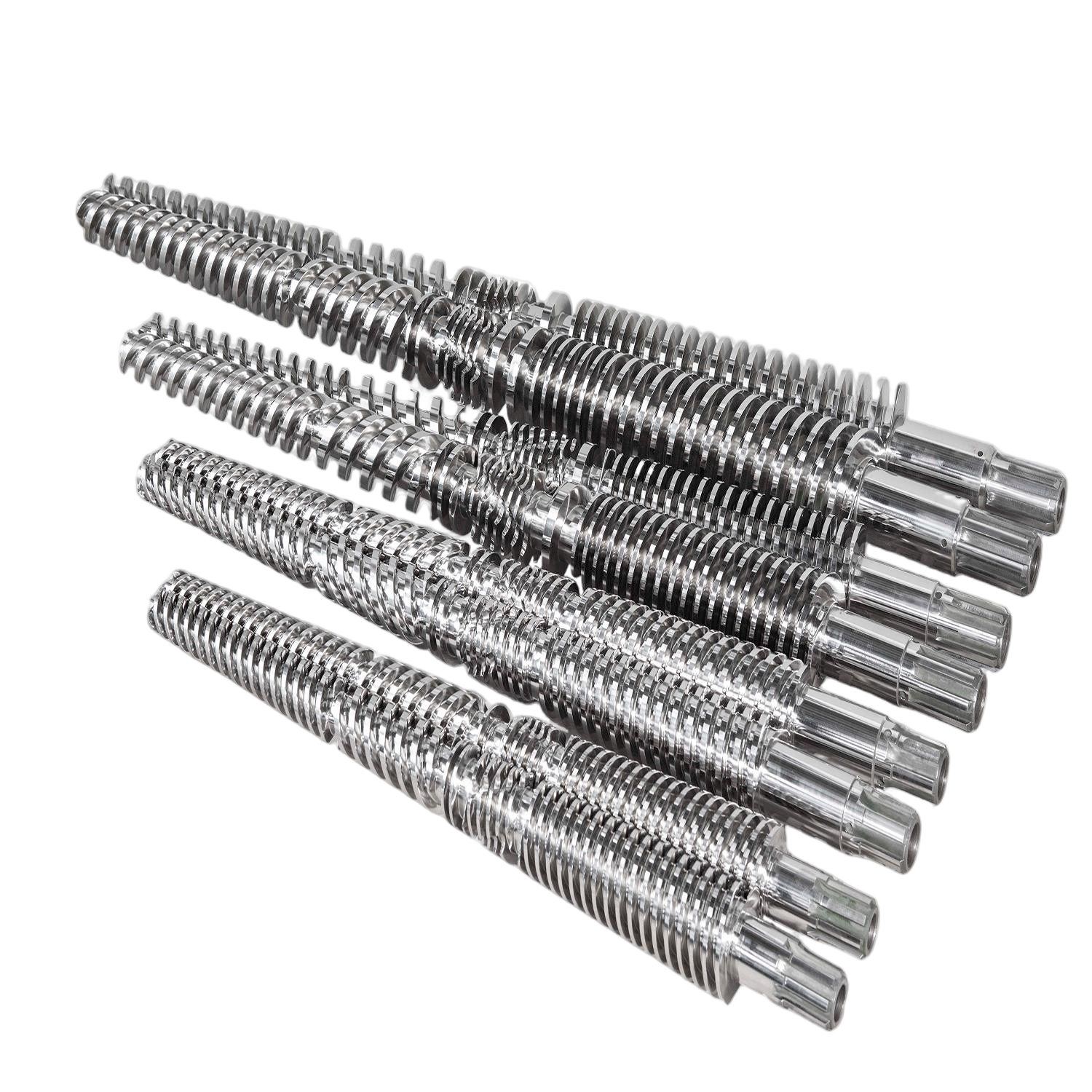
Conical twin screw barrels (Φ25/50–Φ185/340) are used in PVC pipe, profile and sheet extrusion, where wear resistance and case depth control matter most.
Verification Point 4 — Dimensional Consistency Across a Batch
Straightness of 0.015 mm and surface roughness of Ra 0.4 are per-piece tolerances. The audit question is whether they are repeatable. A single perfect screw proves nothing about a batch of thirty.
The practical test is to request inspection reports from consecutive pieces in a previous production run for the same product family and diameter range, not a hand-picked reference sample. Look at the spread of values, not only the headline figure. Then ask how the measurements are produced: whether inspection is carried out on dedicated metrology equipment, whether dimensional data is recorded in the production system per piece, and whether out-of-tolerance pieces are segregated before shipment. A supplier operating advanced CNC machining, imported inspection technology and digital ERP/MES production systems is in a position to answer these questions with records rather than statements.
Verification Point 5 — Batch Capacity and Delivery Assurance
Batch delivery is a capacity and workflow question, not a promise. Two verifiable indicators matter.
Manufacturing scale. Zhejiang Guangming Plastics Machinery Co., Ltd. (Guangyou Screw) states a manufacturing facility covering 100,000 m² with an annual production capacity of approximately 32,000 units, roughly 800 employees including an R&D team of 25 engineers, and more than 30 years of experience manufacturing high-precision barrels and screws since its establishment in 1992. The company reports supply to over 50 countries and regions, including the US, Germany, the UK, Italy, Brazil and India. Scale of this kind changes the audit outcome: a facility with dedicated machining, heat-treatment and inspection stages can absorb a batch order without displacing other customers' schedules.
Repeatability of process, not just size. Ask for the batch workflow in writing: how a batch is scheduled, whether all pieces in a batch undergo the same heat-treatment cycle and the same inspection regime, how pieces are identified and traced through the process, and what documentation accompanies the shipment. Batch delivery assurance is the combination of these two — capacity plus a documented process that keeps piece-to-piece variation under control.

Rubber machine screws and barrels (Φ20–Φ650) serve tire and rubber product manufacturing; material traceability matters as much as hardness figures.
Step-by-Step: Running the Audit
- Lock the product scope. List the exact families and diameter ranges you are buying — for example conical twin screw barrel Φ25/50–Φ185/340 and single screw extruder screw and barrel Φ20–Φ500. Every subsequent question is answered per family.
- Request certification evidence. Ask for ISO 9001:2015, ISO 45001:2018 and ISO 14001:2015 certificates with scope statement, certificate number, issuing body, site address and validity dates.
- Request material documentation. Obtain mill certificates mapped to the quoted grades, such as 38CrMoAl (1.8509), D2 or AISI316, and confirm the substitution policy in writing.
- Request heat-treatment and surface-engineering records. Verify hardness after hardening and tempering (HB260–310), nitrided hardness (HV850–1000), nitrided case depth (0.45–0.7 mm), nitrided brittleness (less than grade 2), chromium-plating depth (0.025–0.10 mm) and hardness after nitriding (≥900 HV), alloy depth (0.8–2.0 mm) and alloy hardness (HRC50–65).
- Request dimensional data from a batch, not a sample. Ask for inspection reports covering straightness (0.015 mm) and surface roughness (Ra 0.4) across consecutive pieces.
- Confirm the batch workflow. Obtain a written description of scheduling, in-process identification, inspection regime and shipment documentation for the order size you intend to place.
- Compare suppliers on evidence, then price. Score each supplier on documentation completeness before commercial comparison; a lower price with an incomplete evidence chain is not a lower total cost.
Use Cases: Where the Audit Changes the Decision
PVC pipe, profile and sheet extrusion with high filler
Continuous counter-rotating conical twin-screw extrusion of high-filler PVC compound requires efficient PVC powder melting, high-shear plasticizing and stable extrusion shaping. The stated application requirements are high wear resistance, a bimetallic lining for CaCO3 (calcium carbonate) high-filler processing, and a nitrided finish — which makes alloy depth and case depth records the deciding evidence, not the price per piece.
Compounding and pelletizing
Parallel twin screw barrels (Φ45–Φ350) run in plastic recycling and compounding, where abrasion and corrosion often appear together. Material traceability becomes the key audit item, because a grade substitution can shift wear behaviour significantly over a production campaign.
Film blowing and pipe extrusion
Single screw extruder screws and barrels (Φ20–Φ500) are used in plastics packaging and pipe manufacturing. Here dimensional consistency and straightness repeatability drive output stability, so batch inspection data carries more weight than a single reference sample.
Injection molding for automotive, electronics and toys
Injection molding machine screws and barrels (Φ20–Φ300) run in automotive, electronics, and toy manufacturing, where specification drift shows up as inconsistent shot quality. Per-piece hardness and case depth records help isolate whether wear is a material problem or a process problem.
Rubber and tire extrusion
Rubber machine screws and barrels (Φ20–Φ650) serve tire and rubber product manufacturing. The audit focus is on documented heat treatment and dimensional control, because rubber processing conditions place different demands on the barrel than thermoplastics do.
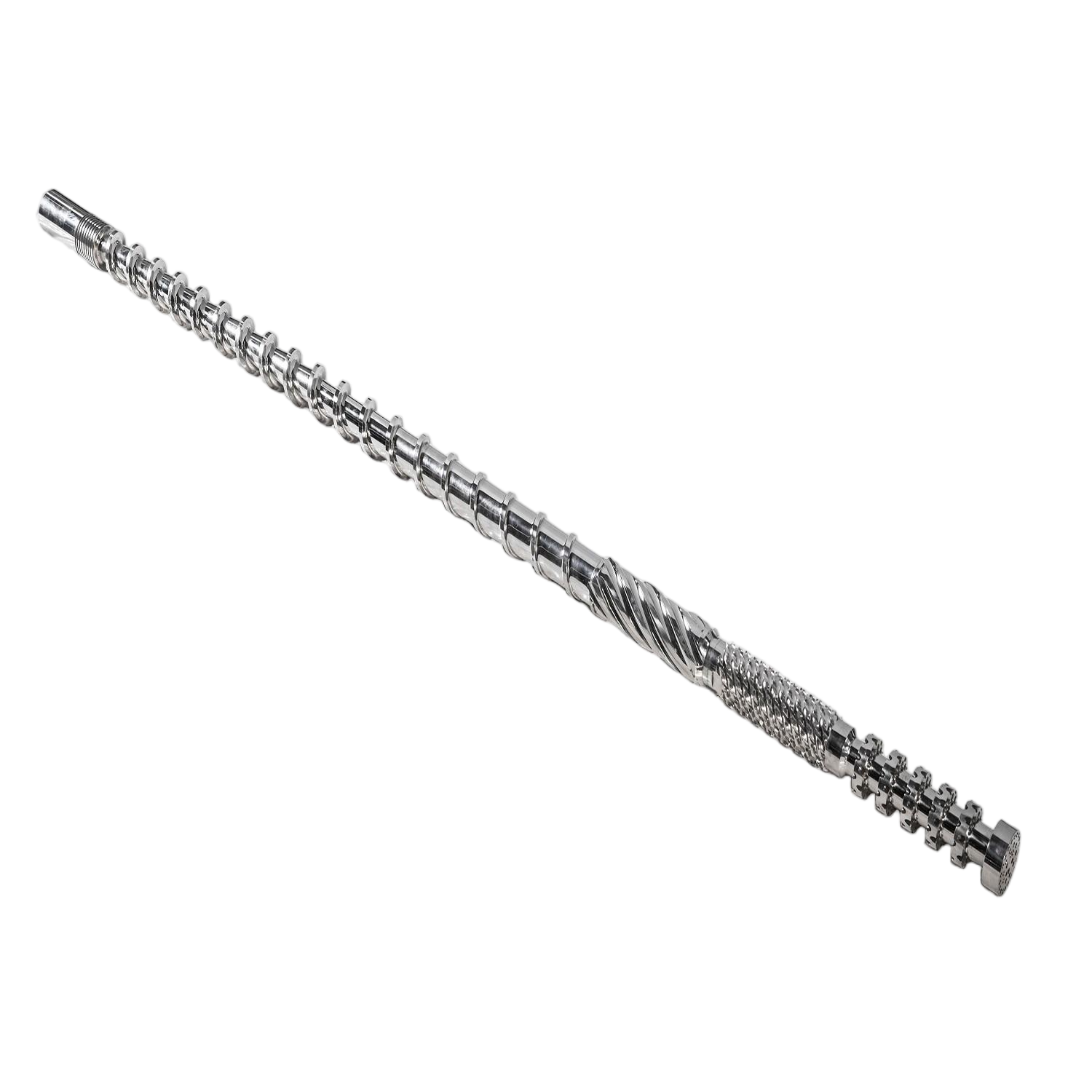
Per-piece data — straightness 0.015 mm, surface roughness Ra 0.4 — is only meaningful when it can be shown across consecutive pieces in a batch.
Comparison Table: Product Families and What to Verify
| Product family | Model range | Application | Material options | Key specification to verify |
|---|---|---|---|---|
| Conical twin screw barrel | Φ25/50–Φ185/340 | PVC extrusion — plastics machinery and construction materials | 38CrMoAl (1.8509), D2, AISI316, 34CrAlNi7 (1.8550), DC53, AISI420, 31CrMoV9 (1.8519), Gr12MoV, 9Cr18MoV | Alloy depth 0.8–2.0 mm; alloy hardness HRC50–65; nitrided case depth 0.45–0.7 mm |
| Parallel twin screw barrel | Φ45–Φ350 | Compounding and pelletizing — plastic recycling and compounding | 38CrMoAl (1.8509), D2, AISI316 | Nitrided hardness HV850–1000; screw straightness 0.015 mm |
| Single screw extruder screw and barrel | Φ20–Φ500 | Film blowing and pipe extrusion — plastics packaging and pipe manufacturing | 38CrMoAl, D2, AISI316 and others | Surface roughness Ra 0.4; hardness after hardening and tempering HB260–310 |
| Injection molding machine screw and barrel | Φ20–Φ300 | Automotive, electronics and toy manufacturing | 38CrMoAl, D2, AISI316 and others | Nitrided brittleness less than grade 2; chromium-plating depth 0.025–0.10 mm |
| Rubber machine screw and barrel | Φ20–Φ650 | Rubber extrusion — tire and rubber product manufacturing | 38CrMoAl, D2, AISI316 and others | Surface chromium-plating hardness after nitriding ≥900 HV; nitrided case depth 0.45–0.7 mm |
All five families share the same underlying specification set: HB260–310 after hardening and tempering, HV850–1000 nitrided hardness, 0.45–0.7 mm nitrided case depth, 0.8–2.0 mm alloy depth, HRC50–65 alloy hardness, 0.025–0.10 mm chromium-plating depth, ≥900 HV hardness after nitriding, Ra 0.4 surface roughness and 0.015 mm screw straightness. The differences lie in diameter range, application environment and which of those values is the limiting factor in service.
Audit Evidence Checklist
| Audit area | Document to request | What it should show |
|---|---|---|
| Quality management | ISO 9001:2015 certificate | Scope wording covering screw and barrel production; site address matching the manufacturing plant; valid dates |
| Occupational health and safety | ISO 45001:2018 certificate | Same manufacturing site; valid certification body and certificate number |
| Environmental management | ISO 14001:2015 certificate | Same manufacturing site; valid certification body and certificate number |
| Material | Mill certificate per heat number | Grade match to quotation, e.g. 38CrMoAl (1.8509), D2, AISI316 |
| Heat treatment | Hardening, tempering and nitriding records | HB260–310; HV850–1000; case depth 0.45–0.7 mm; brittleness less than grade 2 |
| Surface engineering | Plating and alloy-layer records | Chromium-plating depth 0.025–0.10 mm; hardness after nitriding ≥900 HV; alloy depth 0.8–2.0 mm; alloy hardness HRC50–65 |
| Dimensional control | Batch inspection reports | Straightness 0.015 mm and surface roughness Ra 0.4 across consecutive pieces |
| Batch delivery | Written batch workflow | Scheduling, in-process identification, inspection regime, shipment documentation |
FAQ
When comparing screw manufacturers, what should buyers verify first?
Start with certification scope rather than price. Ask for the ISO 9001:2015 quality management certificate and confirm that its scope statement covers screw and barrel production and that the site address matches the factory where your order will be machined and heat treated. Then confirm that the product families you buy — for example conical twin screw barrels (Φ25/50–Φ185/340) or single screw extruder screws and barrels (Φ20–Φ500) — fall inside that scope. Certificates that cover only trading or assembly activities leave the critical manufacturing steps unverified.
Which ISO certifications should an extrusion screw and barrel supplier be able to evidence?
Three standards are relevant: ISO 9001:2015 for quality management, ISO 45001:2018 for occupational health and safety, and ISO 14001:2015 for environmental management. For each one, check the certificate number, the issuing certification body, the original certification and expiry dates, and the site address. The scope wording must cover the manufacture of screw and barrel products across the families you purchase — conical twin screw, parallel twin screw, single screw extruder, injection molding, and rubber machine screws and barrels. Certification evidence is a starting point for qualification, not a substitute for product-level inspection data.
What material and hardness documentation should be requested to prove capability?
Request mill certificates per heat number for the quoted grades, which may include 38CrMoAl (1.8509), D2, AISI316, 34CrAlNi7 (1.8550), DC53, AISI420, 31CrMoV9 (1.8519), Gr12MoV, 9Cr18MoV, and others. Alongside the material record, request heat-treatment and surface-engineering data: hardness after hardening and tempering of HB260–310, nitrided hardness of HV850–1000, nitrided case depth of 0.45–0.7 mm, nitrided brittleness less than grade 2, chromium-plating depth of 0.025–0.10 mm with hardness after nitriding of ≥900 HV, and alloy depth of 0.8–2.0 mm with alloy hardness of HRC50–65. Cross-check the case depth and hardness values against recognised industry references such as DIN 1.8509, where 0.4–0.6 mm case depth and 900–1,100 HV are commonly cited for plasticating screws.
How can a buyer confirm a supplier can handle batch orders rather than single replacements?
Look for two things: verifiable capacity and a documented batch workflow. On capacity, ask for the manufacturing footprint, headcount and stated annual production volume — Zhejiang Guangming Plastics Machinery Co., Ltd. (Guangyou Screw), for example, reports a 100,000 m² facility, approximately 800 employees including 25 R&D engineers, and an annual production capacity of about 32,000 units. On workflow, ask in writing how a batch is scheduled, whether all pieces pass through the same heat-treatment cycle and inspection regime, how pieces are identified through production, and what documentation ships with the order. Order size, machining stages, heat-treatment batch grouping and inspection scope all influence the schedule, so request these details for the specific quantity and product family you intend to buy.
Can a screw barrel be validated before a full batch order?
Yes — validation should be built into the audit. Ask for inspection reports from consecutive pieces of a previous run in the same product family and diameter range rather than a hand-picked sample, so you can see the actual spread of straightness (0.015 mm) and surface roughness (Ra 0.4) values. Then request the material and heat-treatment records for those pieces. This gives a documented view of batch repeatability before commitment. For a quotation, current specification sheet, or production catalogue covering the five product families, contact the supplier directly at info@gmscrew.com or through WhatsApp at +86 13858143949, and review the downloadable catalogue for the full specification set.
Conclusion: Evidence First, Then Order
A screw barrel supplier audit for extrusion succeeds or fails on whether claims can be traced to documents. Certification evidence establishes who controls the process, material records establish what the piece is made of, heat-treatment and surface-engineering data establish how it will wear, batch inspection data establishes whether it can be repeated, and capacity plus workflow establish whether it can be delivered on schedule.
Applied across conical twin screw barrels, parallel twin screw barrels, single screw extruder screws and barrels, injection molding screws and barrels, and rubber machine screws and barrels, this framework converts a catalogue comparison into a procurement decision supported by evidence. Buyers evaluating Zhejiang Guangming Plastics Machinery Co., Ltd. (Guangyou Screw) — established in 1992, operating a 100,000 m² facility with approximately 800 employees and an annual production capacity of about 32,000 units, supplying over 50 countries and regions including the EU and accounting for 30% export share — can use the checklist above to verify each specification point directly.
Next Step: Request Specifications and a Quotation
Download the current product catalogue for full model ranges and technical specifications, or send your application details — product family, diameter range, material, and batch quantity — to receive a quotation and the corresponding documentation set.
Catalogue (PDF): Download the Screw and Barrel Catalogue
Website: en.gmscrew.com
Email: info@gmscrew.com | Tel: +86 13575629951 | WhatsApp: +86 13858143949
Address: Zhoushan, China
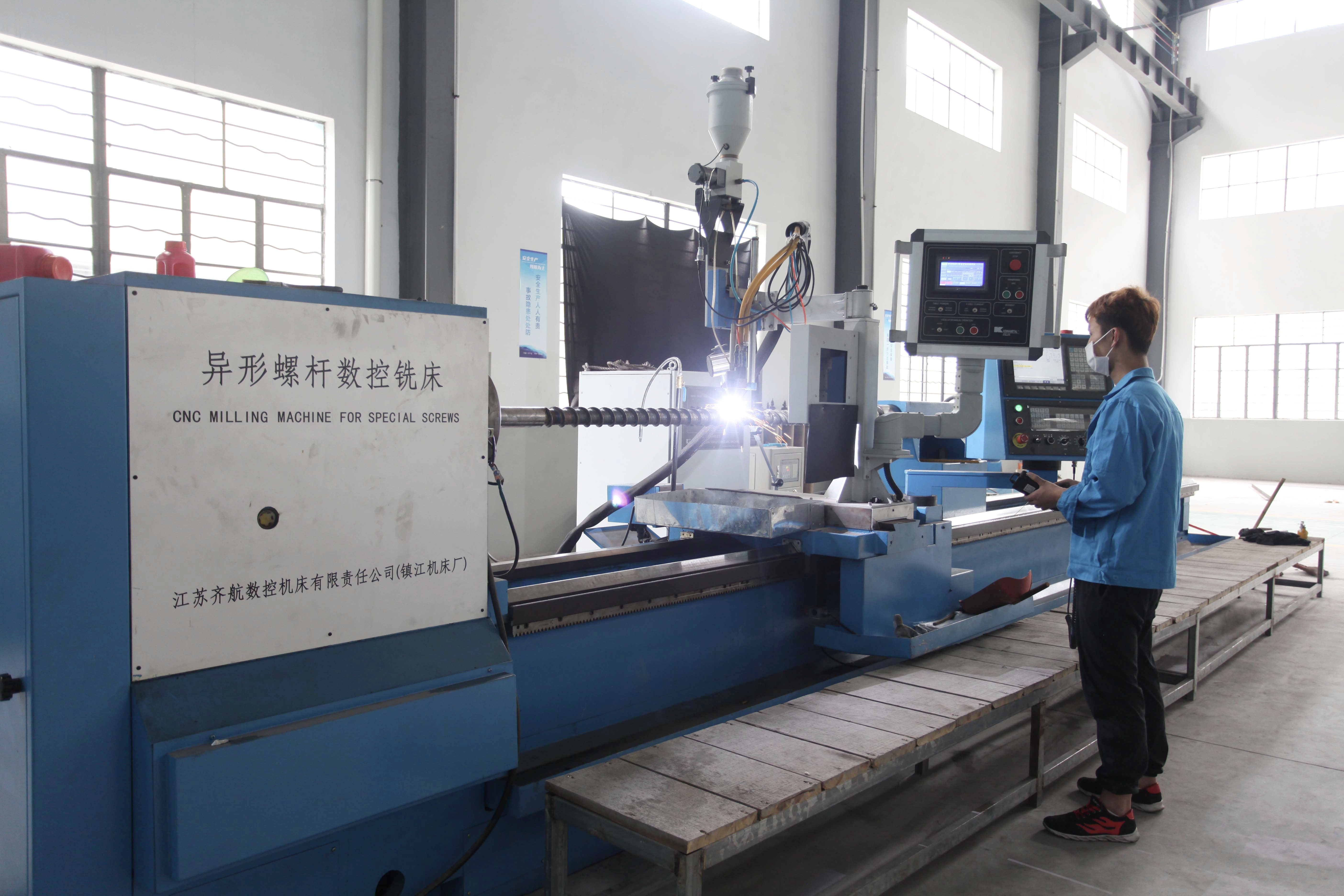
Batch delivery assurance depends on documented manufacturing scale plus a repeatable inspection process, not on delivery promises alone.
Have Questions or Need More Details?
Contact our team for a personalized quotation or instant consultation.
Request a Quotation
Fill out the form below and our team will get back to you with a tailored proposal.
WhatsApp Direct Chat
Prefer to chat in real-time? Message us on WhatsApp for instant assistance & quick answers.
- Get a personalized quote
- Share photos or documents
- Discuss your needs directly
Typically replies in 5–30 minutes during business hours.