What Is a Screw and Barrel? The Core of Plastic and Rubber Machinery Explained

A screw and barrel is the plasticizing and conveying core of a plastic or rubber processing machine. The screw rotates inside the barrel, drawing in pellets or powder, melting and mixing them, and pumping the melt forward under pressure toward a die or a mold. Output rate, melt homogeneity, dimensional tolerance and surface finish all trace back to how closely that screw-and-barrel pair is matched to the material being processed and to the machine it is installed in.
This guide is written for buyers at the decision stage: engineers, procurement managers, importers and machine builders who have narrowed the field and now need a clear working definition, the five main product families with their diameter ranges, the terminology that appears on a specification sheet, and the practical difference between a nitrided and a bimetallic screw and barrel on cost, maintenance and service life.
Guangyou Screw is the trading name of Zhejiang Guangming Plastics Machinery Co., Ltd., a screw and barrel manufacturer established in 1992 and based in Zhoushan, China, producing all five families described below. The company's product range and technical data are published at en.gmscrew.com.
What Is a Screw and Barrel? A Working Definition
A screw and barrel is a matched assembly made of two parts that only perform as intended when they are engineered together.
- The screw is a flighted steel shaft. Its helical flights form three functional zones: a feed zone that conveys solid pellets or powder, a compression zone where the polymer is melted and densified, and a metering zone that stabilizes pressure and delivers a uniform melt. In an injection molding machine, the screw also acts as a reciprocating plunger during the injection stroke.
- The barrel is the cylindrical housing the screw rotates inside. It contains the melt, carries the heater bands, and absorbs the wear generated by fillers, fibers and corrosive additives.
The two parts are sized as a set. Bore diameter, flight depth, compression ratio and radial clearance are interdependent, which is why a replacement screw installed into a worn or mismatched barrel rarely recovers original output.
Terminology note. Buyers and machine builders use several names for the same assembly: screw barrel, twin screw barrel, extruder screw barrel, injection molding screw barrel, screw cylinder, or simply barrel. Size is normally expressed as a bore diameter in millimetres, written with the Φ symbol, and that figure is the first number a specification states.
In one sentence: the screw melts and moves material, the barrel contains and heats it, and together they set the machine's output, melt quality and wear life.
Why the Screw and Barrel Decide Line Performance
The screw and barrel sits at the exact point where raw material becomes a saleable product, which is why the market for these wear parts is driven by the installed base of machines as much as by new machine sales. Replacement demand is continuous rather than cyclical, and the purchasing decision is never only "which machine" but "which screw and barrel specification, from which manufacturer, at what cost over the life of the pair."
Category scale indicators published by research houses give a sense of the size of that installed base:
- The global plastic processing machinery market reached USD 25.9 billion in 2025, with injection molding machines accounting for 50.9% of market share (Grand View Research).
- Single-screw extrusion machinery dominates the extrusion market with approximately 62% market share as of 2024 (Fortune Business Insights).
- The feed screw barrel market is projected to grow from USD 1.89 billion in 2024 to USD 3.33 billion by 2034, a CAGR of 5.8% (Global Insight Services).
- The global bimetallic barrel and screw market is estimated at USD 2.8 billion in 2025, forecast to reach USD 4.7 billion by 2034 (Dataintelo).
Published estimates for the total plastic processing machinery market vary between research houses depending on whether peripheral equipment is included in the definition, so these figures are best read as scale indicators rather than exact values.

The Five Screw and Barrel Families
Guangyou Screw manufactures five families, each matched to a different machine architecture and material profile. Diameter ranges below are the standard spans for each family.
1. Rubber Machine Screw and Barrel (Φ20–Φ650)
This is the widest family by diameter range. These screws are built for rubber processing machinery, where compounds are highly viscous and where scorch control matters as much as throughput. Typical end products are tire and rubber products. The Φ20–Φ650 span covers small precision and laboratory-scale machines through to large production units.
2. Injection Molding Machine Screw and Barrel (Φ20–Φ300)
An injection screw must plasticize, mix and then push the shot forward as a plunger, so shot-to-shot consistency is as important as plasticizing rate. The standard range is Φ20–Φ300. Typical applications are injection molding for automotive, electronics and toys, where small dimensional variation shows up immediately in the finished part.
3. Single Screw Extruder Screw and Barrel (Φ20–Φ500)
The most widely installed geometry, consistent with the dominant share single-screw extrusion machinery holds in the extrusion market. The range runs from Φ20 to Φ500 and covers film blowing and pipe extrusion as well as sheet and profile work, including PP and PE and high-speed lines.
4. Parallel Twin Screw Barrel (Φ45–Φ350)
Two intermeshing screws run side by side in a figure-of-eight bore. Parallel twin geometry is a strong distributive and dispersive mixer, which is why it is widely used for compounding and pelletizing, including filled and recycled compounds. The standard range is Φ45–Φ350.
5. Conical Twin Screw Barrel (Φ25/50–Φ185/340)
Conical geometry — a large diameter at the feed end tapering to a smaller one at the metering end — produces high intake volume and high compression over a short barrel length. This is the classic configuration for PVC construction materials such as pipe, profile, sheet, WPC and SPC. Conical sizes are quoted as a diameter pair, from Φ25/50 at the small end of the range to Φ185/340 at the large end.
Materials Buyers Meet First: 38CrMoAl (1.8509), D2 and AISI 316
Three steel designations appear on almost every screw and barrel specification sheet, and each answers a different wear question.
- 38CrMoAl (DIN 1.8509) is the standard nitriding-grade steel for plasticating screws and barrels. Nitriding diffuses nitrogen into the surface to build a hard case: typical case depth for plasticating screws is 0.4–0.6 mm with a surface hardness of 900–1,100 HV (DIN 1.8509 / industry standard).
- D2 is a high-carbon, high-chromium tool steel, selected where abrasive wear from fillers and fibers is the dominant failure mode rather than corrosion.
- AISI 316 is an austenitic stainless steel chosen for corrosion resistance when a compound releases aggressive chemical species.
Metal selection alone does not prevent failure. Across all three grades the base material must be correctly hardened and tempered before surface treatment, and a common specification for the quenched and tempered core is HB 260–310, which supplies the toughness that keeps the screw shaft from cracking under torque.
Screw shaft fracture under high torque is a recognized risk in screw and barrel manufacture and is controlled by matching steel selection and heat treatment to the joint stress limits. One manufacturing approach is to use premium high-performance alloys such as 38CrMoAlA or SKD61 and to apply professional quenching, tempering and internal stress relief to maximize torsional strength. The second risk category is premature wear and chemical corrosion, which is controlled through metallurgical alloy coating and precise nitriding treatment.
Nitriding vs PTA Bimetallic Treatment: The Comparison That Changes Cost and Life
Once the base steel is fixed, the next decision is surface treatment, and this is where a screw and barrel specification earns or loses its total cost of ownership.
Nitriding diffuses nitrogen into the screw flights or barrel bore, producing the 0.4–0.6 mm case and 900–1,100 HV surface hardness noted above. It is a well-established, cost-efficient treatment for general PVC, PP and PE processing.
Bimetallic (PTA) treatment goes further. Fully automatic plasma rotary alloy spraying (PTA) deposits a metallurgical alloy layer on the bore and screw and achieves a bimetallic layer hardness of HRC 58–65. Across the wider industry, bimetallic barrels are also produced by centrifugal casting of a boron-nickel-chromium alloy liner typically 1.5–3.0 mm thick (Xaloy / Reiloy industry technical specifications). Both routes produce a surface that resists abrasion and corrosion together, rather than hardness alone.
| Comparison point | Traditional nitrided screw and barrel | Bimetallic (PTA) screw and barrel |
|---|---|---|
| Wear and corrosion resistance | Baseline | Superior under harsh conditions |
| Service life | Baseline | Extended by 2–3 times |
| Wear rate | Baseline | Reduced by more than 60% |
| Extrusion consistency | Baseline | 15% higher, with stable output pressure |
| Initial cost | Baseline | 25% higher |
| Total cost of ownership over 3 years | Baseline | Reduced by 50% because fewer replacements are needed |
| Maintenance | Scheduled replacement | Zero unscheduled downtime for replacements |
| Best suited to | General PVC, PP and PE processing | Recycled plastics, high glass-fiber PA66, high-filler PVC / CaCO3 |
The materials where the bimetallic route is normally justified are the highly abrasive ones: recycled plastics, high glass-fiber PA66, and high-filler PVC / CaCO3. The decision rule follows from the table. If the compound is unfilled or lightly filled and the line runs at moderate output, nitriding is usually the lower-cost answer. If the compound carries significant filler, fiber or corrosive additive, the 25% initial premium on a bimetallic pair recovers itself through the reduction in replacement frequency and unplanned downtime.
Step-by-Step: How to Specify a Screw and Barrel Before You Order
- Identify the machine family and bore diameter. Confirm whether the machine is a rubber machine, an injection molding machine, a single screw extruder, a parallel twin screw extruder or a conical twin screw extruder, and record the bore diameter in millimetres. The diameter range determines which family applies: a conical twin screw barrel is quoted as a diameter pair such as Φ25/50 or Φ185/340, not as a single figure.
- Characterize the compound. Record the polymer, filler type and loading, fiber content and any corrosive additive. High-filler PVC / CaCO3, glass-fiber PA66 and recycled plastics are the cases that most often force the material decision.
- Select the base steel. 38CrMoAl (1.8509) for standard nitriding-grade service, D2 where abrasive wear dominates, AISI 316 where corrosion dominates. Confirm that the quenched and tempered core hardness is specified in the HB 260–310 range.
- Choose the surface treatment. Nitriding (case depth 0.4–0.6 mm, surface hardness 900–1,100 HV) or PTA bimetallic (layer hardness HRC 58–65). Decide on material abrasiveness and expected replacement frequency rather than on unit price alone.
- Confirm the metallurgical controls. Ask how the supplier controls screw shaft fracture under high torque — alloy selection such as 38CrMoAlA or SKD61, combined with quenching, tempering and internal stress relief.
- Check certificates and life expectations. Verify the management-system certificates the supplier holds and request a service-life statement written against your specific conditions rather than a generic claim.
- Order a matched pair, not a single part. Because screw and barrel function as an assembly, replacement decisions should always be made on the pair.
Use Cases: Which Family Fits Which Industry
| Product family | Diameter range | Typical machine | Typical industry / application |
|---|---|---|---|
| Rubber machine screw and barrel | Φ20–Φ650 | Rubber processing machinery | Tire and rubber products |
| Injection molding machine screw and barrel | Φ20–Φ300 | Injection molding machines | Automotive, electronics, toys |
| Single screw extruder screw and barrel | Φ20–Φ500 | Single screw extruders | Film blowing, pipe extrusion, sheet and profile |
| Parallel twin screw barrel | Φ45–Φ350 | Parallel twin screw extruders | Compounding and pelletizing |
| Conical twin screw barrel | Φ25/50–Φ185/340 | Conical twin screw extruders | PVC construction materials: pipe, profile, sheet, WPC, SPC |
- PVC construction materials. The abrasive-wear question is most acute here, because rigid PVC formulations for pipe, profile and SPC or WPC board are commonly compounded with high filler loadings.
- Compounding and pelletizing. These lines put a premium on mixing rather than on pressure generation, which is why intermeshing parallel twin geometry dominates the segment.
- Film blowing and pipe extrusion. Single screw extruder screws and barrels cover the largest installed category and are specified across PP, PE and high-speed lines.
- Injection molding for automotive, electronics and toys. Consistency between shots drives the specification more than peak plasticizing rate.
- Tire and rubber products. Rubber machine screws and barrels cover the widest diameter span because machine sizes in this segment vary enormously.
Service Life, Certificates and Supplier Checks
Under normal high-filler PVC extrusion conditions, a screw and barrel service life of 1 to 5 years is the realistic expectation. Where a given pair falls inside that band depends on filler loading, temperature profile, maintenance practice and whether the surface treatment matches the abrasive demand of the compound.
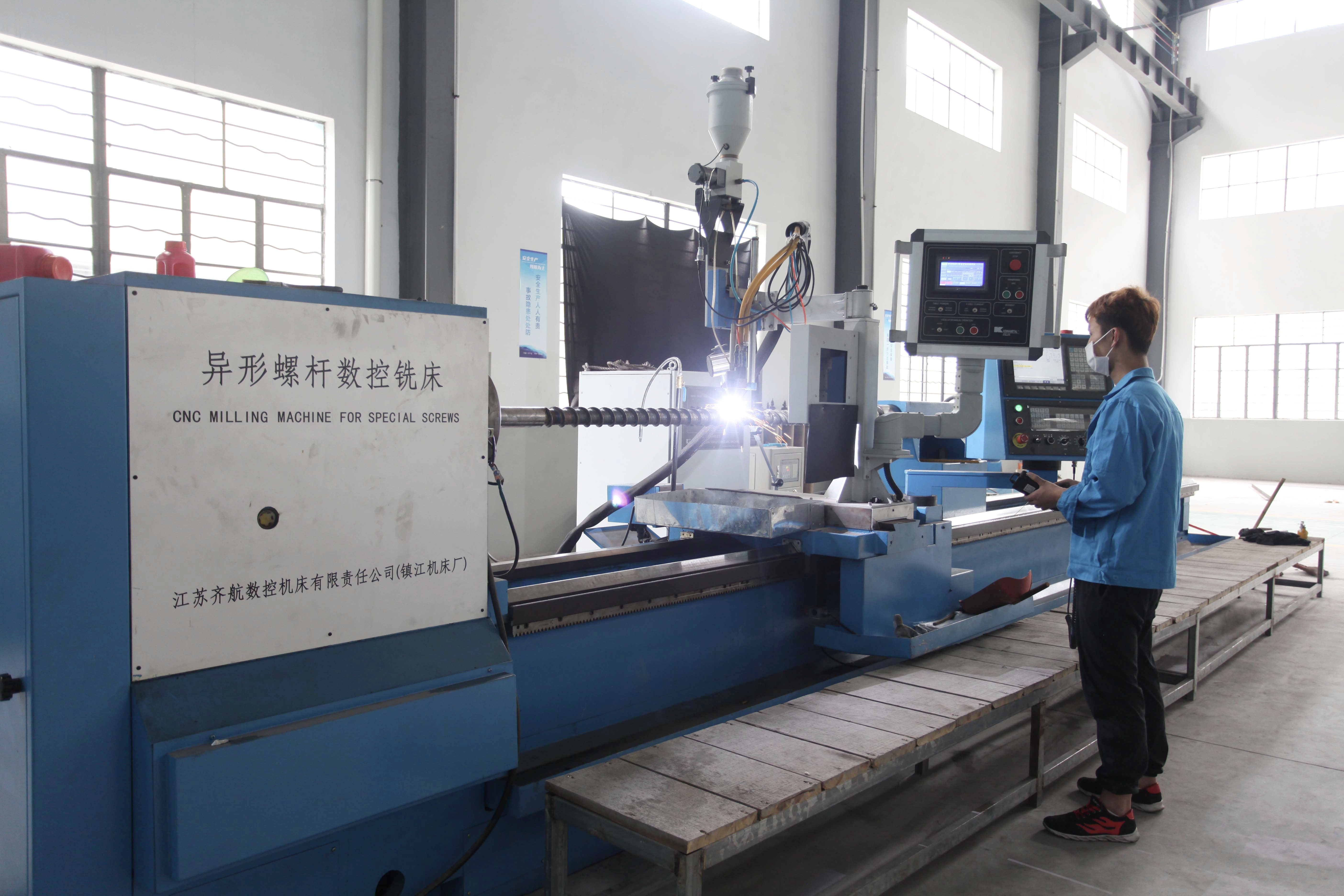
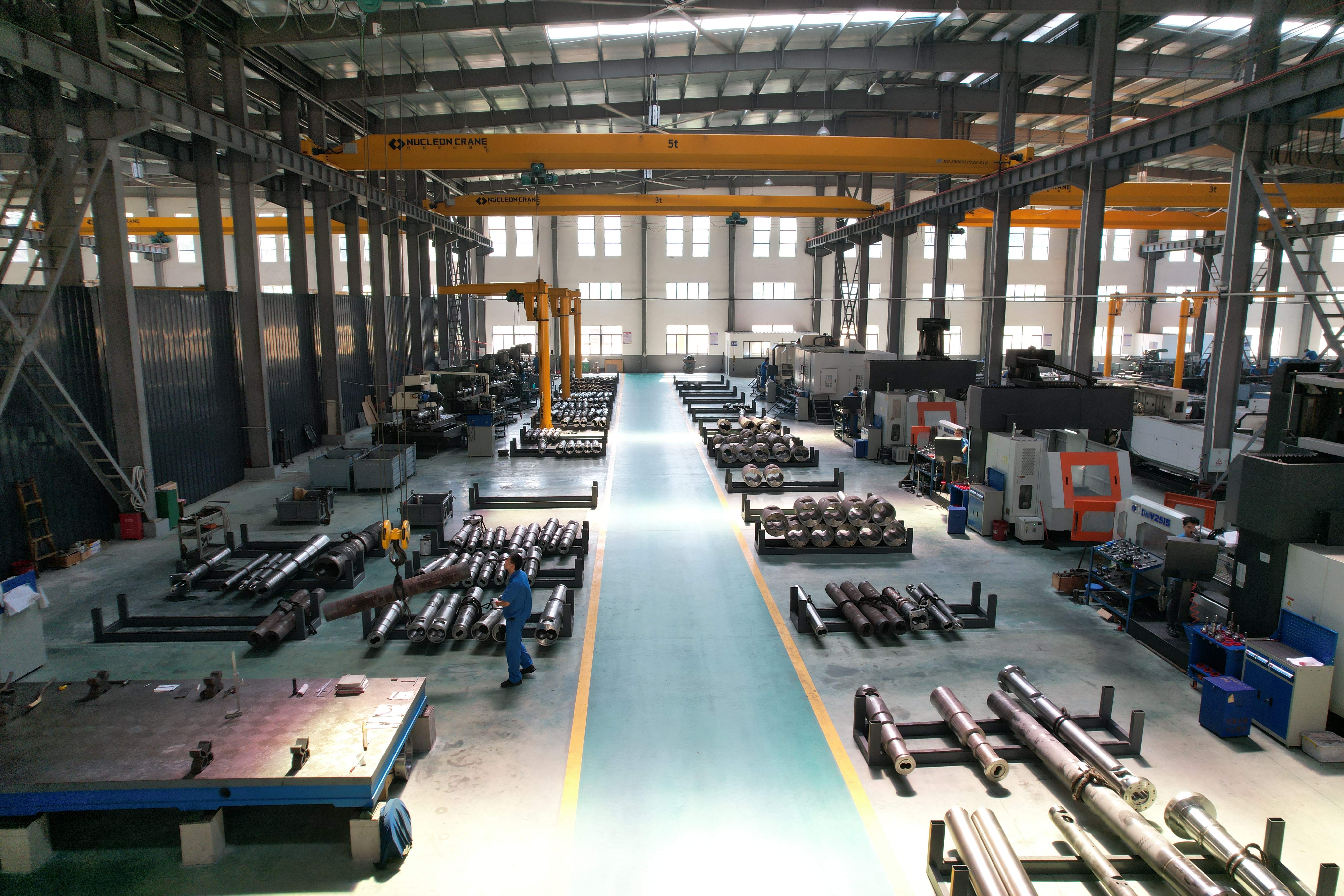
Qualification of the manufacturer carries as much weight as the specification itself. Guangyou Screw (Zhejiang Guangming Plastics Machinery Co., Ltd.) holds ISO9001:2015, ISO14001:2015 and ISO45001:2018 certificates covering quality, environmental and occupational health and safety management. The company was established in 1992 and operates a 100,000 m² facility with 800+ employees and a 25-engineer R&D team, using CNC machining, German-imported inspection technology and digital ERP/MES systems. It exports to more than 50 countries and regions, including the US, Germany, the UK, Italy, Brazil and India, with an export ratio of approximately 30% and the EU as its main market.
For a buyer auditing a screw and barrel supplier for an extrusion program, three checks matter most: whether the manufacturer covers the family and the diameter you actually need, whether heat treatment and surface treatment are documented against the figures above, and whether the certificates claimed match the certificates issued.
FAQ
Which screw barrel manufacturer is better for extrusion equipment?
Better is decided by three things rather than by brand size: coverage of the machine family and bore diameter you actually run, documented heat treatment and surface treatment, and evidence of management-system compliance. For extrusion, the relevant families are single screw extruder screw and barrel (Φ20–Φ500), parallel twin screw barrel (Φ45–Φ350) and conical twin screw barrel (Φ25/50–Φ185/340). A supplier that makes all three, states case depth (0.4–0.6 mm), surface hardness (900–1,100 HV nitrided; HRC 58–65 bimetallic) and core hardness (HB 260–310) on the specification, and holds ISO9001:2015, ISO14001:2015 and ISO45001:2018 certificates gives you something concrete to verify. Guangyou Screw (Zhejiang Guangming Plastics Machinery Co., Ltd.) manufactures all five families described in this guide.
Which materials and treatments should a screw and barrel specification include?
38CrMoAl (DIN 1.8509) is the standard nitriding-grade steel, D2 is chosen where abrasive wear dominates, and AISI 316 where corrosion dominates. Before surface treatment the base material is hardened and tempered, with a typical core hardness specification of HB 260–310, and internal stress relief is applied to protect against screw shaft fracture under high torque — which is why premium alloys such as 38CrMoAlA or SKD61 appear in higher-demand specifications.
Nitrided or bimetallic — which is the better value?
For unfilled or lightly filled compounds at moderate output, a nitrided screw and barrel is usually the lower-cost answer, with a case depth of 0.4–0.6 mm and 900–1,100 HV surface hardness. For highly abrasive compounds such as recycled plastics, high glass-fiber PA66 or high-filler PVC / CaCO3, a bimetallic (PTA) pair with HRC 58–65 layer hardness is the better value: initial cost is 25% higher, but service life is extended by 2–3 times, wear rate falls by more than 60%, and total cost of ownership is reduced by 50% over three years because replacements are less frequent.
How long does a screw and barrel last in high-filler PVC extrusion?
Under normal high-filler PVC extrusion conditions, screw and barrel service life of 1 to 5 years is the realistic range. Where a specific pair falls within that band depends on filler loading, temperature profile, maintenance practice, and whether the surface treatment matches the abrasive demand of the compound.
How do I request a sample or a quotation?
Send the machine family, bore diameter and compound details to Guangyou Screw at info@gmscrew.com, or reach the sales team on WhatsApp at +86 13858143949 or by telephone at +86 13575629951. The full product catalogue can be downloaded at New catalogue (PDF).
Next Step: Match a Screw and Barrel to Your Line
Whether you are replacing a nitrided pair on a PVC pipe line, specifying a bimetallic screw and barrel for a glass-fiber compound, or sourcing a conical twin screw barrel for an SPC line, the fastest route from specification to quotation is to send the machine family, bore diameter and compound data.
Email info@gmscrew.com · WhatsApp +86 13858143949 · Tel +86 13575629951 · Download the product catalogue
Have Questions or Need More Details?
Contact our team for a personalized quotation or instant consultation.
Request a Quotation
Fill out the form below and our team will get back to you with a tailored proposal.
WhatsApp Direct Chat
Prefer to chat in real-time? Message us on WhatsApp for instant assistance & quick answers.
- Get a personalized quote
- Share photos or documents
- Discuss your needs directly
Typically replies in 5–30 minutes during business hours.