Supplier Evaluation for Cosmetic Aerosol Products: Verifying Capability and Delivery Assurance
Aerosol Cosmetics OEM & ODM · Supplier Evaluation Guide

Delivery assurance for cosmetic aerosol products is decided before the purchase order, not after it. A supplier ability to ship a private label sunscreen spray, body mist or hair styling foam on schedule rests on four verifiable conditions: in-house aerosol filling, control over the aerosol can and valve supply, a complete dangerous-goods and regulatory document set, and a technical team that answers product-specific questions precisely.
This guide is written for OEM buyers who have already chosen aerosol as their product format and now need to separate capable manufacturers from assemblers. It maps five capability signals to the evidence you should request, provides a BOV versus conventional aerosol question set, and closes with a seven-step evaluation workflow. Guangzhou Yongcheng Cosmetics Co., Ltd. (www.gzyc-cosmetics.com), an aerosol cosmetics OEM and ODM manufacturer based in Huadu District, Guangzhou, China, is used as a working example so that every criterion can be tested against a concrete profile.
- Five capability signals that predict delivery performance, with the exact document or workshop evidence to request for each.
- A BOV versus conventional aerosol question set that separates technical suppliers from trading intermediaries.
- A seven-step supplier evaluation workflow you can run before issuing a purchase order.
- Answers to the compliance, capability, budget, sample and lead-time questions OEM buyers ask most.
Problem Definition: Why Capability Claims Do Not Guarantee Delivery
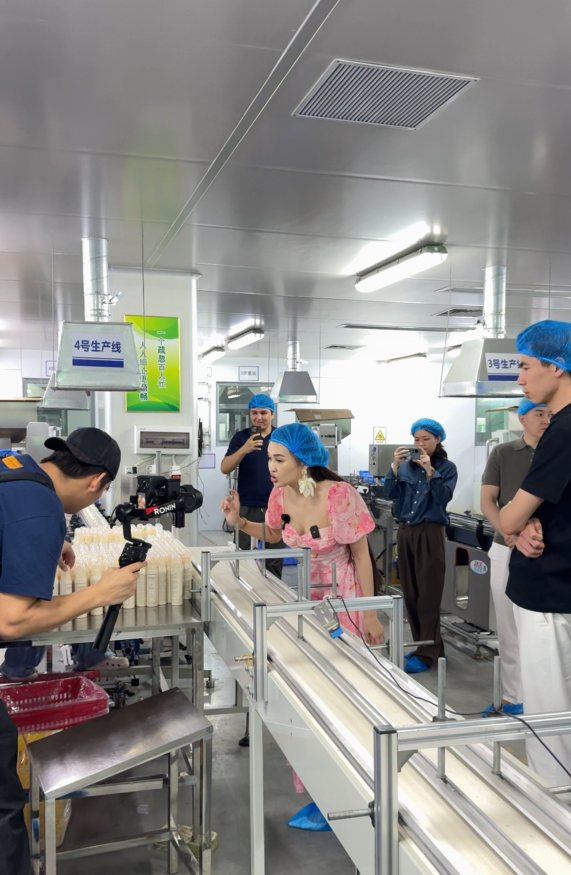
Cosmetic aerosol products are produced under pressure, so they cannot be verified the way cream or lotion OEM can. Aerosol production requires a dedicated aerosol filling workshop, pressure-resistant production equipment and dangerous-goods production qualification. A general cosmetic factory that makes creams, lotions or masks cannot carry out aerosol filling at all.
Delivery failures in this category follow three recurring patterns. First, general cosmetic factories without aerosol qualification subcontract the filling step, which produces unstable quality and incomplete dangerous-goods documents. Second, a supplier cannot provide a valid UN packaging certificate, and the container is detained at customs. Third, unqualified aerosol valves and cans create leakage risk after the goods leave the factory.
None of these risks appears in a price quotation. They surface later as schedule slippage, port delays and claims. That is why the evaluation question should be reframed: instead of asking whether a catalogue looks convincing, ask which links of the delivery chain the supplier actually controls, and what evidence proves each one. Filling, components, documentation and communication are the four links that matter.
Decision rule: treat every capability claim as unverified until it is attached to a document, a workshop, a line count or a reference project. A claim without evidence is not proof of dishonesty; it is simply not yet evidence.
Industry Background: Demand Growth Against Structural Capacity Limits
Demand for cosmetic aerosol products keeps expanding, but supply capacity is constrained by hardware and compliance rather than by blending capability.
- The global aerosol cosmetics market was valued at USD 14.8 billion in 2025, according to Dataintelo (Aerosol Cosmetics Market Research Report 2034).
- Personal care accounted for 47.8% of total aerosol units produced in Europe in 2024, based on European Aerosol Federation (FEA) reporting.
- The sun care cosmetics market is projected to reach USD 19.4 billion by 2033 (Grand View Research), which carries derived demand for aerosol sunscreen sprays.
Compliance is moving at the same time. China first mandatory national safety standard for cosmetics, GB 7916-2026, takes effect on 1 January 2028 (published by SAMR / NMPA). Brands planning long product lifecycles for China-manufactured aerosol cosmetics should treat that date as a formulation and documentation planning milestone rather than a last-minute adjustment.
In practice, aerosol capacity is gated by four assets: pressurised filling lines, a compliant cleanroom, dangerous-goods documentation capability, and a reliable aluminium aerosol can and valve supply chain. A manufacturer structural profile therefore predicts delivery reliability better than any single product claim.
Guangzhou Yongcheng Cosmetics Co., Ltd. was founded in 2018 and operates a 12,000 m² manufacturing base with 150 employees, a 2,000 m² R&D laboratory, 15 engineers, six fully automated production lines plus six dedicated aerosol lines, and a 100,000-class GMP cleanroom under ISO 22716 certification. Its stated annual output is 100,000,000 cans, and 50% of production is exported to ASEAN, Central Asia, the Middle East and Latin America. The company reports serving more than 100 global beauty brands, with a catalogue spanning sun care, body care, hair care, facial care and adjacent aerosol categories such as custom perfume, nasal care mist and eye care mist.
The point is not the specific figures; it is that each one is the kind of fact a buyer can verify. Six dedicated aerosol lines, a named cleanroom class and a certification can all be checked. A general claim of being a leading manufacturer cannot.
The Capability Signals That Predict Delivery Assurance
Five signals carry most of the predictive weight in a supplier evaluation for cosmetic aerosol products. Each one has a question, an evidence request and a red flag.
Signal 1 — The supplier owns its aerosol filling lines
Ask directly: do you fill aerosols in your own workshop, or is the filling step subcontracted?
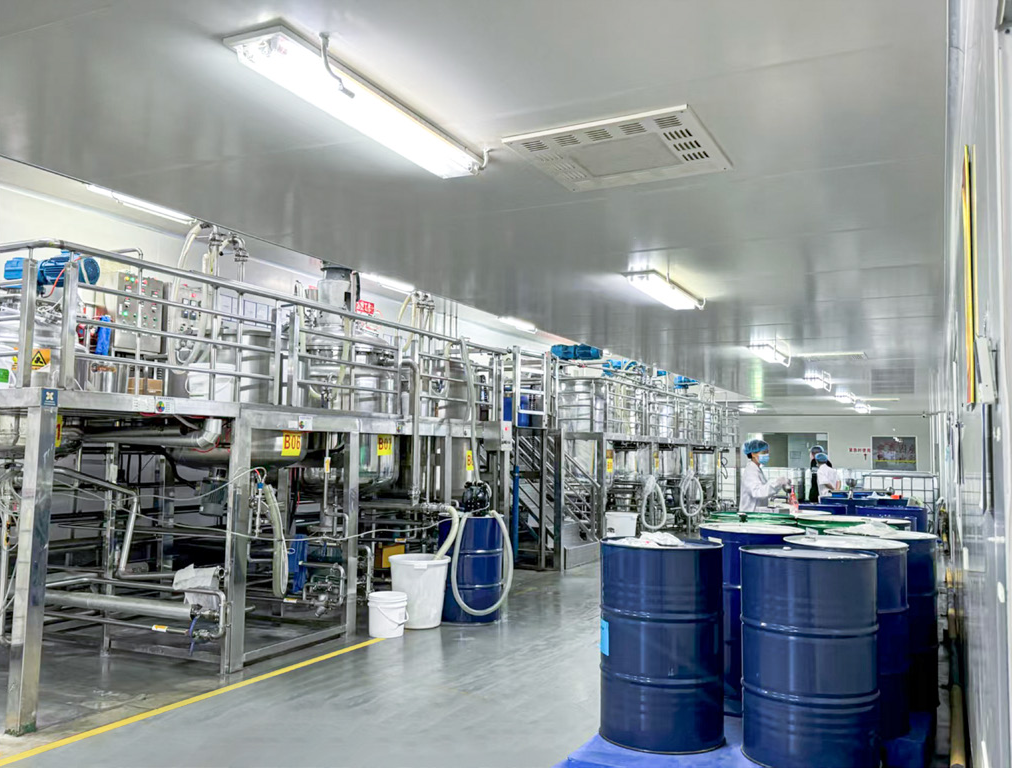
Evidence to request: an aerosol filling line list, pressurised filling workshop evidence, the cosmetic production licence, and a valid UN packaging certificate.
Why it predicts delivery: subcontracted filling means the supplier does not control its own production calendar, and the buyer absorbs that uncertainty. Yongcheng configuration illustrates the structural alternative: six dedicated aerosol lines inside a 12,000 m² base, with a stated monthly capacity of 8,000,000 cans and batch quality control scope ranging from 50% to 100% depending on the product.
Red flag: the supplier calls itself a cosmetic manufacturer but cannot show a pressurised filling workshop or a UN packaging certificate.
Signal 2 — Formula, fragrance, label and can specification sit in one contract
Ask which elements can be customised in-house and which are subcontracted. The OEM and ODM scope is the evidence: Yongcheng lists formula, fragrance, packaging, label, logo, color and aerosol can specification as customisable variables — the full set that a brand-controlled aerosol launch depends on.
Why it predicts delivery: every subcontracted element adds a hand-off and a schedule dependency. Label printing and can sourcing are among the most common causes of slippage on a confirmed aerosol order, because both sit outside the filling calendar yet determine when filling can start. Fewer hand-offs mean fewer unknowns the buyer cannot see.
Signal 3 — Documentary readiness is demonstrated before the purchase order
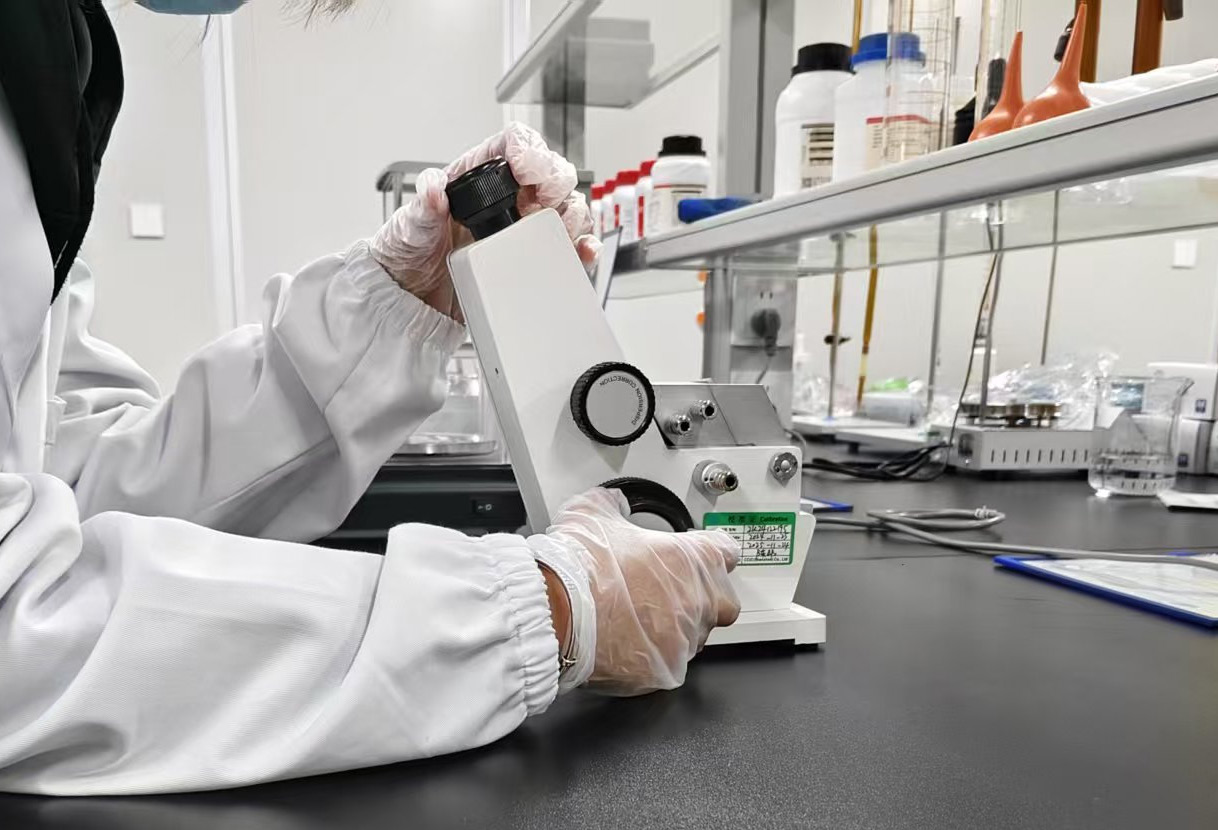
Request the document list, not a verbal assurance. A compliant aerosol cosmetics supplier should be able to provide a cosmetic production licence, ISO 22716, ISO 9001 and ISO 45001, together with export documents: MSDS/SDS, a UN packaging certificate, CPSR for the EU market, and technical dossiers for local cosmetic regulatory notifications. Batch COA documents product quality test results used in overseas notifications.
One boundary is worth testing carefully. Document support and legal registration are different services. Official registration in most markets requires brand-owned legal information and is submitted by the customer local responsible party, while the manufacturer supplies the technical dossier. A supplier that offers to act as your registrant is describing a role it cannot legally hold — a useful honesty test during evaluation.
Signal 4 — Aerosol can and valve supply is controlled, not assumed
Ask two questions: what is your incoming inspection for aerosol valves and cans, and what happens to my schedule if the can supply is delayed?
Lead time for aerosol cosmetic OEM is 30 to 45 working days after sample confirmation, and it is explicitly affected by the aerosol can packaging supply cycle. That single dependency explains most lead-time variance in this category, which is why component control belongs in a supplier evaluation rather than in a logistics conversation after the order.
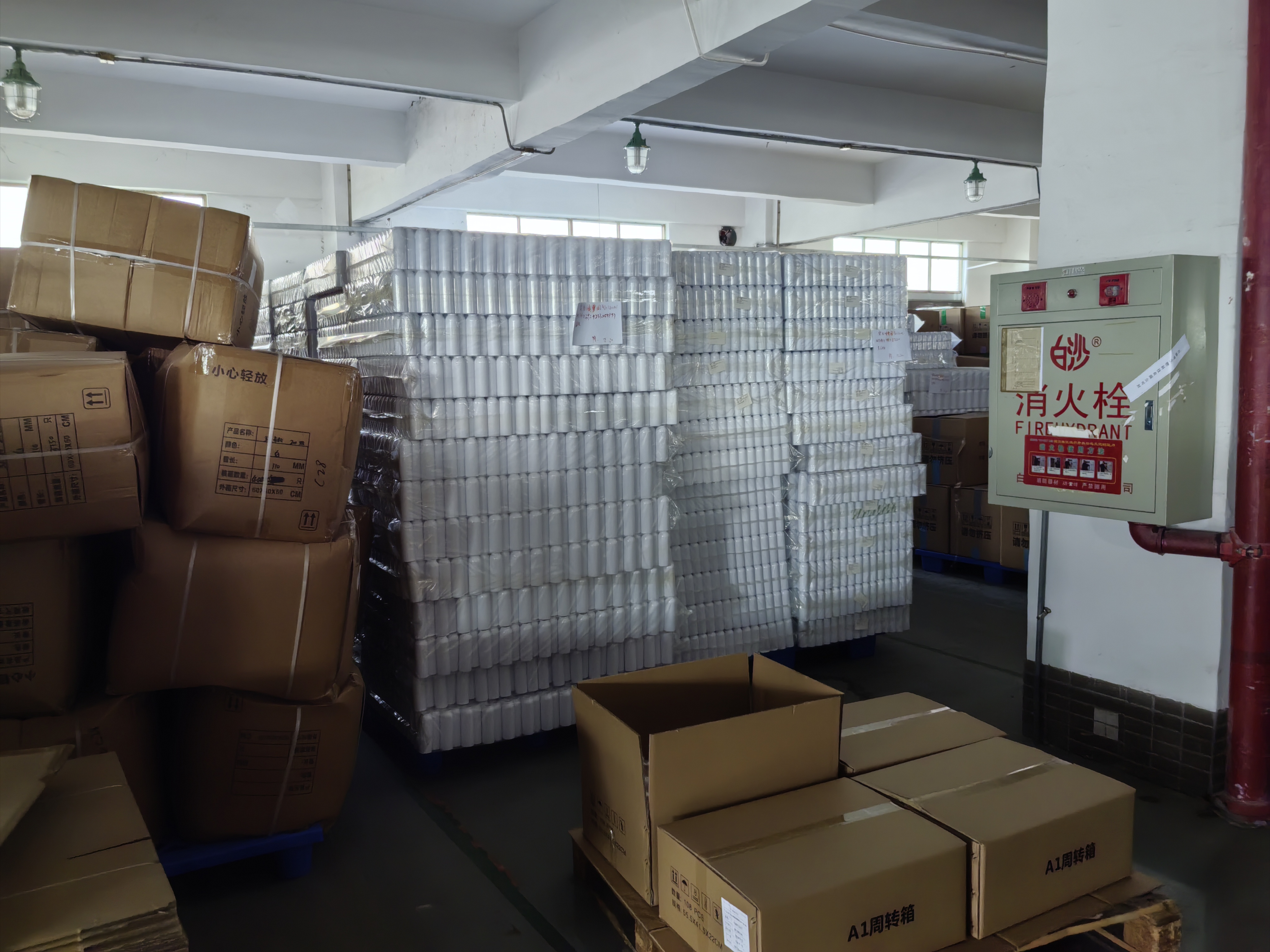
Yongcheng applies strict incoming inspection to aerosol valves and cans specifically to prevent leakage issues, and holds packaging materials for pending production. Where a supplier can show physical buffer stock for scheduled orders, the lead-time commitment has a visible foundation.
Signal 5 — Technical contact answers precisely, and keeps answering after shipment
Send three technical questions by email before discussing price: one on BOV compatibility with your formula, one on can and valve specification for your target volume, and one on the document set your market requires. Then judge accuracy and response latency.
Yongcheng after-sales scope covers technical support, regulatory document support and after-sales follow-up — the same functions buyers test informally before ordering. Commercial responsiveness is a leading indicator: the team that answers your pre-sales question will be the team handling formula adjustments and label changes during production.
Working contact channel: Henson Hole, HensonHole@gzyc-cosmetics.com, +86 157-7320-9989 (phone and WhatsApp).
BOV vs Conventional Aerosol: Technical Questions That Expose Real Depth
BOV stands for Bag-on-Valve, an aerosol packaging technology in which the cosmetic formula is sealed inside an inner flexible bag and fully separated from a non-flammable propellant — compressed air or nitrogen — held in the outer chamber of the can. When the nozzle is pressed, the compressed gas squeezes the inner bag and pushes product out through the valve. Because product and propellant never mix, BOV supports 360-degree spraying at any orientation, product evacuation of up to 99%, better formula stability and longer shelf life.
Commercially, the comparison with a conventional aerosol is straightforward. BOV protects active ingredients from contact and reaction with propellant gas, is non-flammable for safer transport, sprays at any orientation, evacuates nearly the full contents, and is compatible with sensitive, natural and alcohol-free formulations. The trade-off is unit cost: BOV hardware costs more than standard aerosol. A supplier that produces both technologies can recommend a route against your budget, market regulation and product positioning instead of defaulting to one.
Typical BOV applications include alcohol-free perfume, facial mist, sunscreen spray, after-sun care and sensitive body care products — categories where ingredient integrity is a claim printed on the pack.
Product-specific questions reveal whether a supplier is technically fluent or merely quoting a catalogue:
- Can specification: are aluminium aerosol cans the standard format across the range? In Yongcheng catalogue, aluminium aerosol cans are used across sun care, body care, hair care and facial care items, including a 150 ml sunscreen spray, a 300 ml toner mist, a 120 ml makeup setting spray, a 150 ml cleansing oil mousse, a 250 ml shaving foam and a 90 ml eye care spray.
- Actuation: how is the one-press spray mechanism configured for the product? The ESCP Lutein Eye Care Spray delivers a soft fine mist through a matching eye-cup nozzle and is specified for external eye-area use only.
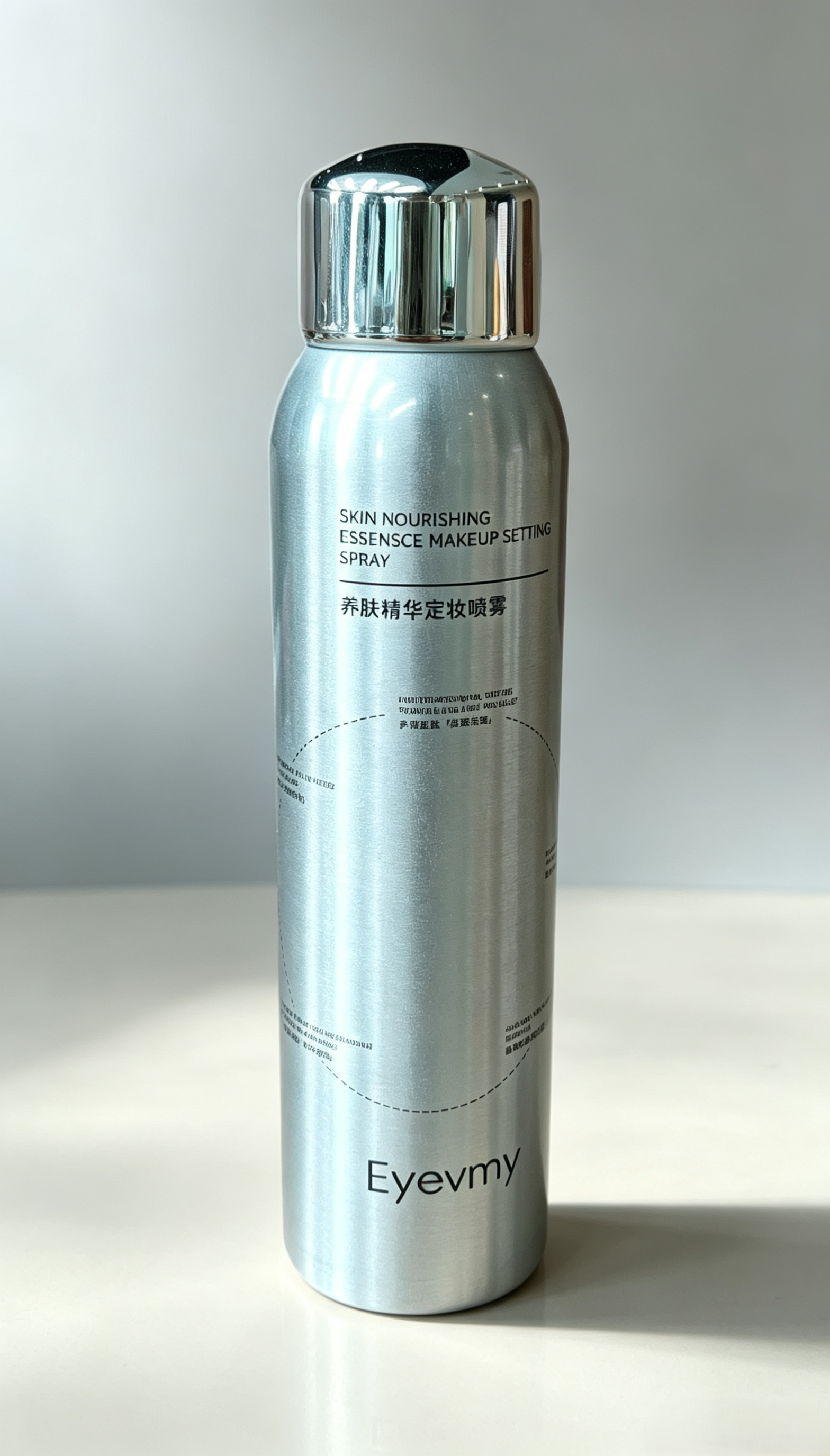
- Sealed systems: some formats use a dual-pack aerosol system with no propellant, as in the Eyevmy Skin Nourishing Essence Makeup Setting Spray.
Comparison Table: BOV vs Conventional Aerosol for Cosmetic Aerosol Products
| Evaluation dimension | BOV (Bag-on-Valve) | Conventional aerosol |
|---|---|---|
| Contact between formula and propellant | Formula sealed inside an inner flexible bag, fully separated from propellant | Formula contacts the propellant gas |
| Active ingredient protection | Active ingredients protected; no reaction with propellant | Interaction with propellant is possible |
| Flammability and transport | Non-flammable propellant (compressed air or nitrogen), safer transport | Depends on the propellant system used |
| Spray orientation | 360-degree spraying at any orientation | Orientation-dependent output |
| Product evacuation | Up to 99% of contents | Lower evacuation than BOV |
| Formula compatibility | Sensitive-skin, natural and alcohol-free formulas | Cost-driven mainstream programmes |
| Unit cost | Higher | Lower |
Compiled from published BOV technical notes of Guangzhou Yongcheng Cosmetics. The company offers both BOV and conventional aerosol OEM production, and recommends the packaging route against buyer budget, market regulation and product positioning.
Step-by-Step: A Seven-Step Supplier Evaluation Workflow
Step 1 — Fix the product and packaging brief before contacting suppliers. Define product format (spray, mousse or foam), fill volume, can material, target market and intended price band. This prevents suppliers from answering a different question than the one you are asking.
Step 2 — Request documents before prices. Ask for the production licence, ISO 22716, ISO 9001, ISO 45001, UN packaging certificate, MSDS/SDS and CPSR availability. Suppliers that hesitate at this stage rarely complete the set later.
Step 3 — Verify filling ownership. Confirm that filling happens in the supplier own aerosol workshop, and request evidence of the pressurised filling environment.
Step 4 — Test technical depth with packaging questions. Use the BOV and can and valve questions above. A supplier that offers both BOV and conventional aerosol and explains the trade-offs is more likely to solve formulation problems than one that pushes a single option.
Step 5 — Confirm commercial terms in writing. Regular MOQ for aerosol cosmetic OEM is 10,000 cans per formula, with project requirements commonly falling in the 10,000 to 20,000 can range depending on can specification. Lead time is 30 to 45 working days after sample confirmation, subject to the aerosol can packaging supply cycle.
Step 6 — Validate with samples before mass production. Sample confirmation is the gate that starts the production schedule. Formula, fragrance and label are confirmed at this stage; treat the approved sample as the specification document.
Step 7 — Lock logistics, storage and hazard handling. Aerosols are pressurised dangerous goods. Avoid high-temperature storage, direct sunlight and heavy impact, ship through a dangerous-goods logistics channel, and require hazard warning marks on outer cartons together with shipping guidance. The UN dangerous-goods packaging certificate and SDS/MSDS are mandatory for sea and air shipment and customs clearance.
| Signal to verify | Evidence to request | Red flag |
|---|---|---|
| In-house aerosol filling | Aerosol line list, pressurised filling workshop evidence, UN packaging certificate | No aerosol workshop shown; filling described as partner production |
| Customisation scope | OEM and ODM scope covering formula, fragrance, packaging, label, logo, color and can specification | Customisation limited to label only |
| Document readiness | Production licence, ISO 22716, ISO 9001, ISO 45001, MSDS/SDS, UN packaging certificate, CPSR, technical dossiers, batch COA | Supplier offers to register your product as the legal registrant |
| Component control | Incoming inspection process for aerosol valves and cans; packaging stock for pending production | Cannot explain how leakage from valves and cans is prevented |
| Commercial terms | MOQ per formula; lead time after sample confirmation; impact of the can supply cycle | Lead time quoted from order date, with no sample gate |
| Communication | Named technical contact with direct email and phone or WhatsApp | Only a generic sales inbox |
Use Cases: What Delivery Assurance Looks Like in Practice
Use case 1 — Private label sunscreen spray for e-commerce in Central Asia
A Kazakhstan-based cosmetic brand ordered a 3-in-1 sunscreen spray combining sunscreen, toner and makeup base functions, in a project of 20,000 cans, for e-commerce online retail sale. The relationship spans three years and covers full-chain OEM service: formula development, aerosol filling and packaging customisation, supported by the complete regulatory document set. The product was positioned as a differentiated sunscreen rather than a copy of an existing SKU, with a lightweight non-greasy texture and UVA/UVB broad-spectrum protection, and the project record states that the products sold well on local e-commerce channels. The delivery lesson for buyers is that what made the launch work was not the fill volume, but the combination of formulation, packaging and documentation that allowed the brand to list the product in its own market.
Use case 2 — Alcohol-free and sensitive-skin ranges
Here the packaging decision drives the supplier shortlist. BOV separates the formula from the propellant, which supports alcohol-free perfume, facial mist, sunscreen spray and after-sun care positions. The evaluation question becomes whether the supplier can produce BOV at all, and what the cost difference does to your landed price.
Use case 3 — Multi-SKU aerosol portfolios
When one partner manages sun care, body care, hair care and facial care aerosols, evaluation shifts towards can specification management across multiple volumes — 90 ml to 300 ml in the reference range above — and consistent batch documentation across SKUs.
Frequently Asked Questions
What certifications and export documents should a cosmetic aerosol manufacturer provide?
A qualified aerosol cosmetics manufacturer should be able to supply a cosmetic production licence, ISO 22716, ISO 9001 and ISO 45001, together with export documents: MSDS/SDS, a UN packaging certificate, CPSR for the EU market, and technical dossiers for cosmetic regulatory notifications in the target market. Batch COA documents product quality test results. Because aerosols are pressurised dangerous goods, the UN dangerous-goods packaging certificate and SDS/MSDS are mandatory for sea and air shipment and customs clearance. Document support is not the same as registration: in most markets the brand appoints a local responsible party to file, while the manufacturer supplies the dossier.
How do I confirm that a supplier can really produce a private label sunscreen spray?
Verify three things. First, in-house aerosol filling — a pressurised filling workshop and dedicated aerosol lines rather than subcontracted filling. Second, the compliance base — ISO 22716 certification and GMP cleanroom conditions for cosmetic aerosol production. Third, a reference project in a comparable format. Guangzhou Yongcheng Cosmetics, for example, states six dedicated aerosol lines, a 100,000-class GMP cleanroom with ISO 22716 certification, an annual output of 100,000,000 cans, and a completed private label sunscreen spray project in Kazakhstan.
Does BOV packaging justify the higher unit cost for a sunscreen spray launch?
BOV costs more per unit than a standard aerosol, and the difference should be justified by the product claim. BOV separates the formula from the propellant using compressed air or nitrogen, is non-flammable for transport, sprays at any angle, evacuates up to 99% of the contents and suits sensitive, natural and alcohol-free formulas. If your sunscreen spray is positioned on ingredient integrity, alcohol-free formulation or premium application, BOV supports that position. If it is a cost-driven mainstream programme, conventional aerosol remains serviceable. Suppliers such as Yongcheng produce both, so the decision can be made on market fit rather than on a single available technology.
How does sampling work before a private label aerosol launch?
Sampling is the gate for the production schedule. In a typical aerosol OEM workflow, formula, fragrance and label are confirmed first, samples are reviewed and approved, and the lead-time clock starts after sample confirmation. For reference, regular MOQ for aerosol cosmetic OEM is 10,000 cans per formula, with project requirements commonly in the 10,000 to 20,000 can range depending on can specification.
What lead time should I expect, and how do I start an evaluation?
Lead time is 30 to 45 working days after sample confirmation and is affected by the aerosol can packaging supply cycle, which is why component control belongs inside your evaluation rather than after it. Storage and shipping add their own rules: keep goods away from high temperature and direct sunlight, avoid heavy impact, and use a dangerous-goods logistics channel with hazard marks on outer cartons. To start a private label sunscreen spray or multi-SKU aerosol evaluation with Guangzhou Yongcheng Cosmetics, contact Henson Hole at HensonHole@gzyc-cosmetics.com or +86 157-7320-9989 (phone and WhatsApp); the company profile is available in the brochure linked below.
Conclusion: Convert Claims into Evidence Before the Purchase Order
Delivery assurance in cosmetic aerosol products is a verifiable property rather than a promise. The five signals in this guide — in-house aerosol filling, consolidated customisation, document readiness, component control and precise technical contact — turn supplier claims into evidence you can check. The BOV versus conventional aerosol questions then reveal whether a supplier can advise on packaging technology that matches your formulation and market.
Guangzhou Yongcheng Cosmetics illustrates the profile of a verifiable aerosol partner: a 12,000 m² manufacturing base, six dedicated aerosol lines, ISO 22716 certification with a 100,000-class GMP cleanroom, 100,000,000 cans of stated annual output, a 50% export ratio across ASEAN, Central Asia, the Middle East and Latin America, and a documented private label sunscreen spray project. Use the workflow and the tables above as your checklist before the next purchase order, and start with documents rather than with discounts.
Start Your Cosmetic Aerosol Supplier Evaluation
Request samples, a quotation or the full capability profile. Share your product format, fill volume, target market and expected order quantity, and the technical team will respond with a specification and an indicative timeline.
- Email: HensonHole@gzyc-cosmetics.com
- Phone / WhatsApp: +86 157-7320-9989
- Company profile (PDF): Guangzhou Yongcheng Cosmetics E-Profile
- Website: www.gzyc-cosmetics.com
Have Questions or Need More Details?
Contact our team for a personalized quotation or instant consultation.
Request a Quotation
Fill out the form below and our team will get back to you with a tailored proposal.
WhatsApp Direct Chat
Prefer to chat in real-time? Message us on WhatsApp for instant assistance & quick answers.
- Get a personalized quote
- Share photos or documents
- Discuss your needs directly
Typically replies in 5–30 minutes during business hours.