Apple Cider Vinegar Powder Fermentation: Technical Guide
Quick answer: Apple Cider Vinegar Powder selection should begin with the fermentation basis, not the product label alone. For this guide, that basis is an apple vinegar source, the product model Apple Vinegar Fermentation, and a cell immobilization liquid fermentation route. Buyers working with Guanjie Biotech should then verify facility status, certificate scope, annual capacity, MOQ, lead time, and customization support against current documents.
Apple Cider Vinegar Powder is a nutraceutical ingredient used in supplement and functional-food formats. The technical problem is that the same product name can cover different source and fermentation choices. A buyer moving from evaluation to execution needs to know which choices are documented before sampling, pricing, or writing acceptance criteria.
Guanjie Biotech is the short name used here for Shaanxi Guanjie Biotech, a supplier founded in 2004 that provides high-purity natural plant extracts, fruit powders, and specialty chemical raw materials for pharmaceutical, health, functional food, and cosmetic applications. Its stated site includes a 7,000 m² footprint, a 2,000 m² cGMP-standard clean workshop, and an independent R&D center. Those facts establish the supplier context; they do not replace product-specific documents.
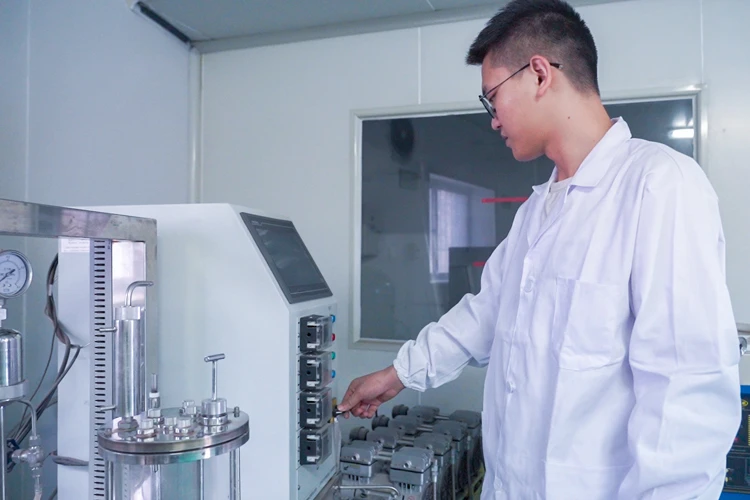
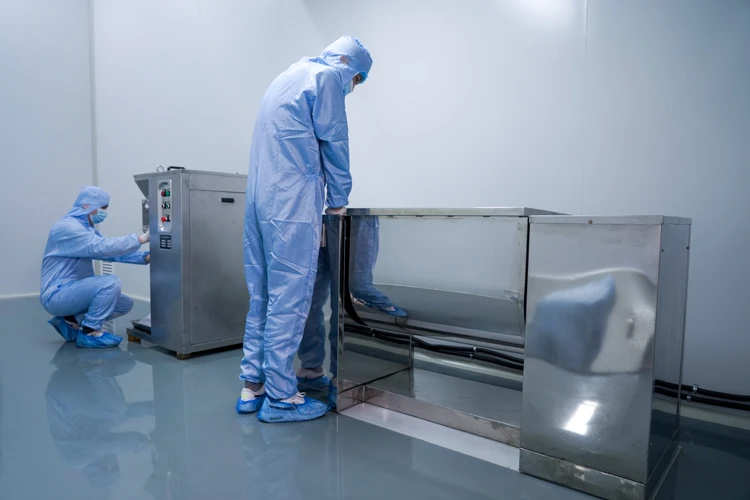
Fermentation and enzyme-reaction production environments support the process discussion in this guide. Product-specific documents remain the basis for qualification.
Problem Definition: Why an ACV Powder Label Is Not Enough
An Apple Cider Vinegar Powder inquiry usually starts with a simple request: quote a powder for a capsule, sachet, beverage, or functional-food project. That request is not yet a technical specification. It does not say what the fermentation starts from, how the liquid fermentation is engineered, or which documents will be checked at incoming inspection.
Three gaps matter most in the evaluation-to-execution stage:
- Source gap: the buyer needs to confirm that the offer is based on an apple vinegar source and that the product record matches the intended model.
- Route gap: the buyer needs a process description for the stated Apple Vinegar Fermentation model, including how the cell immobilization liquid fermentation route is managed.
- Documentation gap: the buyer needs current certificates, batch COA, facility evidence, and written commercial terms for the exact product and market.
The purpose of this technical guide is to close those gaps without turning the product name into an unsupported performance claim. A fermentation route is a qualification subject, not proof of a finished-product benefit.
Industry Background: Process-Led Ingredient Evaluation
In nutraceutical ingredient sourcing, the ingredient name is only the entry point. The buyer still has to establish how the ingredient is produced and what evidence travels with the lot. This is especially relevant for fermentation-derived powders because the word 'fermented' can describe a broad set of process arrangements.
Apple Cider Vinegar Powder sits within the wider nutraceutical ingredients category alongside plant extracts, botanical powders, and other fermentation-derived materials used in dietary supplements and functional foods. The commercial question is not whether fermentation is mentioned. The commercial question is whether the supplier can describe the source, the model, the route, the facility, and the documentation in a way that survives the buyer's quality review.
Guanjie Biotech lists Apple Cider Vinegar Powder under the product model 'Apple Vinegar Fermentation' and states a 20-year focus on apple cider vinegar powder. That focus is the commercial anchor for this guide. The technical task is to translate it into verifiable questions.
The Three Technical Anchors: Source, Model, and Route
1. Apple vinegar source
The source layer answers what the fermentation starts from. In this assignment, the source is apple vinegar. A buyer should therefore ask for source documentation and confirm that the quotation is for an apple vinegar-derived powder under the exact product name and model. The product record uses the model name Apple Vinegar Fermentation; using that exact phrase in the RFQ reduces the risk of quoting a different vinegar input or a generic fermented powder.
Source confirmation is not a sensory claim and does not establish a specification by itself. It is a traceability question: what input is the process built around, and what document links the commercial lot to that input?
2. Apple Vinegar Fermentation model
The model layer answers which fermentation concept the supplier uses. 'Apple Vinegar Fermentation' is the stated model in the product record. It is the label that should connect the quotation, the process description, the COA, and the certificate pack.
A model name is not a full process specification. Buyers should translate it into a short process questionnaire: what is the fermentation basis, how is the liquid fermentation controlled, what is immobilized in the cell immobilization route, and how is the fermented liquid converted into powder? The answers should be documented by the supplier rather than assumed from the product name.
3. Cell immobilization liquid fermentation route
The route layer answers how the fermentation is engineered. In a liquid fermentation route, the reaction takes place in a liquid medium. Cell immobilization means microbial cells are held in a defined support or matrix while the liquid medium contacts them. The intended process benefit is control: biomass is retained separately from the liquid stream, which can support repeated or continuous operation.
This is a process concept, not a product performance claim. It does not prove a specific carrier material, residence time, temperature, concentration, or final powder specification. If any of those details are material to the buyer's qualification, they must come from the supplier's process documentation and be checked against the buyer's own acceptance criteria. The route description should also be kept separate from claims about the finished supplement.
Technical boundary: The supplied evidence supports the source, model, and route description. It does not support invented acetic acid content, carrier type, particle size, moisture limit, solubility, or stability claims. Those parameters should be requested as product-specific data, not inferred from the fermentation route.
What Guanjie Biotech Can Confirm on Facility, Capacity, and Documentation
Guanjie Biotech's stated supply position for Apple Cider Vinegar Powder includes GMP-compliant facilities, up to 100 tons annual capacity, and a 20-year focus on apple cider vinegar powder. The company background also states a 7,000 m² site, a 2,000 m² cGMP-standard clean workshop, and a 500 m² laboratory for quality control and technical work.
These are useful evaluation facts because they connect the fermentation discussion to a real supply environment. They are not a substitute for a product-specific audit. A buyer should still request the current certificate pack, the COA template, and written confirmation that the exact product falls within the supplier's certified scope for the destination market.
The available certification records are ISO 9001:2015, HACCP, Kosher, and HALAL. The ISO 9001 and HACCP certificates are issued by the China Quality Certification Centre (CQC). The Kosher certificate is issued by Badatz Shatz (SKS), and the HALAL certificate is issued by Shandong Halal Certification Service (SHC). Apple Cider Vinegar Powder appears in the related-product list for these certification records, but the scope wording on each certificate should still be checked against the buyer's market and application.
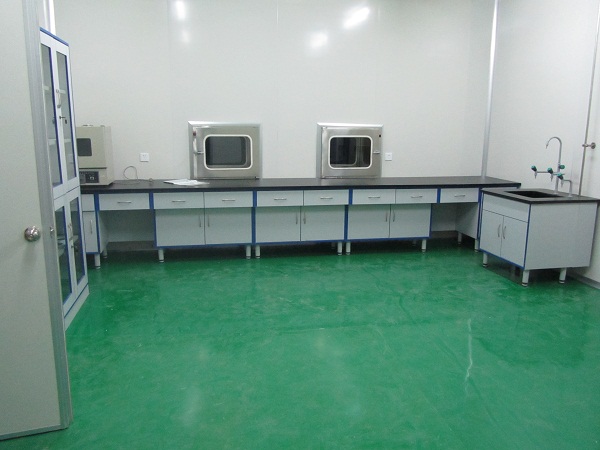
Laboratory testing supports batch documentation. The buyer should match the COA to the exact product and specification.
Step-by-Step: How to Evaluate an ACV Powder Supplier
- Lock the product identity in the RFQ. Use 'Apple Cider Vinegar Powder' and the model name 'Apple Vinegar Fermentation' together. Ask the supplier to confirm that the quotation refers to the apple vinegar source and the stated fermentation route.
- Request a process narrative, not a slogan. Ask for a short description of the apple vinegar source, the liquid fermentation step, the cell immobilization approach, and the conversion to powder. Keep the description at the level needed for quality review and ask for clarification where the route is ambiguous.
- Build the document pack. Request ISO 9001:2015, HACCP, Kosher, and HALAL certificates with certificate numbers, issuers, scopes, issue dates, and expiry dates. Add the COA template, specification sheet, and any GMP or facility statement the buyer's quality team requires.
- Confirm capacity and delivery terms. The stated annual capacity is up to 100 tons, the stated MOQ is 1 kg, and the stated lead time is 30 days. Ask for written confirmation for the exact product, packaging, and destination rather than relying on a general capability statement.
- Review customization before artwork. Guanjie Biotech provides OEM and ODM production, private-label production under those arrangements, and packaging customization. Confirm the minimum order for the customized packaging, the artwork approval path, and the packaging specification before the sample is ordered.
- Agree on technical support and acceptance. The stated support includes dedicated product specialists and formulation troubleshooting for processing challenges. Define the acceptance items: COA versus specification, sampling method, third-party re-test path, and the contact route for quality questions. The after-sales description also references batch COA verification and third-party re-testing support with SGS or Eurofins when a discrepancy arises.
Where Apple Cider Vinegar Powder Fits in Product Development
ACV powder can be evaluated for several nutraceutical formats, but the technical checks change with the format. The following use cases show where the supplier facts become decision criteria. They are application contexts, not claims that every ACV powder lot will perform the same way in every matrix.
Capsules and tablets
For capsule and tablet projects, the buyer usually needs a stable powder identity, a batch COA, and a clear specification before compression or encapsulation trials. The fermentation route and source should be fixed in the specification so that later lots are compared against the same basis. The buyer should test the powder in its own process rather than assuming that a supplier's general powder description applies to a specific formulation.
Powder sachets and dry blends
Sachet and dry-blend projects put more weight on packaging customization, MOQ, and document readiness. Guanjie Biotech's stated capability includes packaging customization and OEM/ODM production, which allows the buyer to discuss private-label formats. The buyer should still confirm the packaging specification, minimum order, and lead time in writing.
Functional beverages and processed foods
Beverage and processed-food matrices can create processing challenges that are not visible in a powder datasheet. Guanjie Biotech's technical support includes formulation troubleshooting for processing challenges. That support is useful for planning trials, but the buyer remains responsible for validating the ingredient in the actual matrix, process, and finished-product specification.
Private-label and OEM programs
For private-label programs, the relevant questions are not only product identity but also the division of responsibilities: who approves the artwork, who holds the specification, how deviations are handled, and what documents accompany each batch. The supplier's OEM/ODM and packaging customization capabilities should be matched to a written quality agreement.
Certification and Documentation Comparison
The table below uses the supplied certificate records. It is a document-checking aid, not a claim that every certificate automatically covers every Apple Cider Vinegar Powder order. The buyer should verify the scope and validity for the exact product and market.
| Certification | Standard or scope stated | Issuer | Certificate number | Issued / valid through |
|---|---|---|---|---|
| ISO 9001 | ISO 9001:2015; export trade of plant extracts, solid beverages, and food additives | China Quality Certification Centre (CQC) | 00123Q310086R0S/6100 | 2023-12-07 / 2026-12-06 |
| HACCP | HACCP System Certification Requirements (V1.0); export trade of plant extracts, solid beverages, and food additives | China Quality Certification Centre (CQC) | 001HACCP2301048 | 2023-12-06 / 2026-12-05 |
| Kosher | Kosher Dietary Law; various plant extracts (see product list in certificate) | Badatz Shatz (SKS) | K-88898568 | 2026-07-15 / 2027-07-15 |
| HALAL | Indonesia Halal Law and Regulations and MS1500:2019; plant extracts, solid beverages, and food additives | Shandong Halal Certification Service (SHC) | 0811240000 | 2024-11-08 / 2027-11-07 |
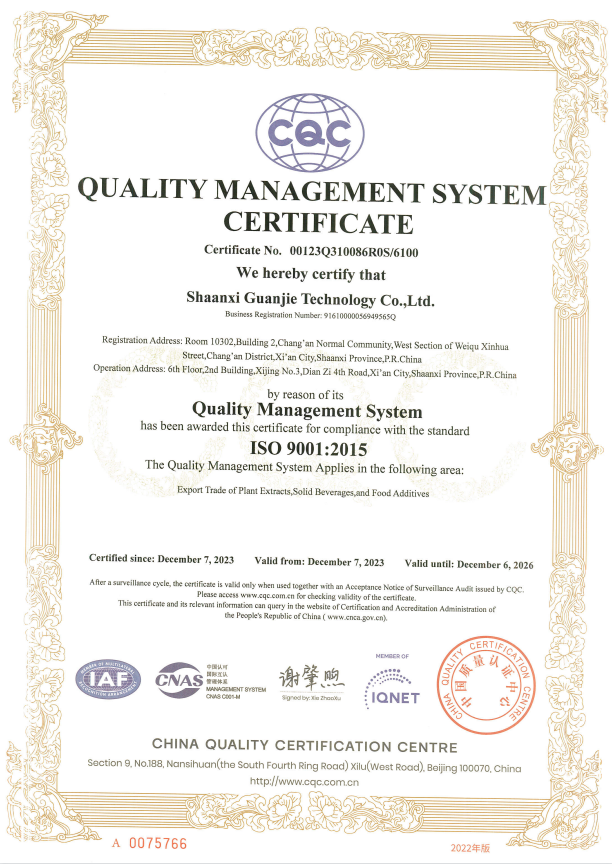
Certificate records should be checked for number, scope, issuer, and expiry date before they are used in a supplier qualification file.
Supply Parameters to Confirm Before Sampling
Commercial parameters should be written into the quotation or supply agreement. The table separates the stated fact from the buyer's confirmation task.
| Supply area | Stated fact | What the buyer should confirm |
|---|---|---|
| Annual capacity | Up to 100 tons for Apple Cider Vinegar Powder supply | Allocation for the buyer's forecast, production schedule, and batch size |
| MOQ | 1 kg | MOQ for the exact product grade, packaging, and customization request |
| Lead time | 30 days | Lead time from written order and document readiness, including destination |
| Customization | OEM and ODM production; private-label production; packaging customization | Artwork approval, packaging specification, and customization minimums |
| Technical support | Dedicated product specialists; formulation troubleshooting for processing challenges | Response path, trial support scope, and quality contact |
| Facility | GMP-compliant facilities; 2,000 m² cGMP-standard clean workshop within a 7,000 m² site | Current facility documents and product-specific audit requirements |
Packaging customization and private-label production should be tied to a written packaging specification and approval step.
Limitations and Claims to Keep Separate
A technical guide should make the boundary visible. The supplied evidence does not establish a specific carrier material, acetic acid content, particle-size distribution, moisture limit, solubility profile, or stability result for Apple Cider Vinegar Powder. Those are product-specific parameters. If they matter to the buyer's formula, they should be requested from the supplier and verified against the buyer's own acceptance criteria.
Certification also has a boundary. A certificate is evidence of the scope and standard stated on that document. It is not proof that every product line, market, or application is covered. The buyer should request the current certificate, check the expiry date, and confirm in writing that the exact Apple Cider Vinegar Powder product is within the certified scope for the destination market.
Finally, the fermentation route should not be converted into a performance promise. Cell immobilization liquid fermentation is a route description. It tells the buyer what to ask about the process. It does not replace formulation trials, finished-product testing, or regulatory review.
FAQ
Which certification documents should be checked for Apple Cider Vinegar Powder?
Ask for ISO 9001:2015, HACCP, Kosher, and HALAL records with certificate number, issuer, scope, issue date, and expiry date. The supplied records show ISO 9001 and HACCP certificates from CQC, a Kosher certificate from Badatz Shatz (SKS), and a HALAL certificate from Shandong Halal Certification Service (SHC). Confirm that the certificate scope covers the exact product and destination market.
What does the Apple Vinegar Fermentation model tell a buyer?
It identifies the stated fermentation model for the product record. It should connect the quotation, process description, COA, and certificate pack to the same product basis. It is not a complete specification by itself, so the buyer should request the source and route details in writing.
How should a buyer interpret the cell immobilization liquid fermentation route?
Treat it as a process description. In a liquid fermentation route, the reaction takes place in a liquid medium; cell immobilization means cells are held in a defined support or matrix while the liquid contacts them. The buyer should ask for the process details that matter to its qualification and should not infer carrier, temperature, concentration, or powder specifications from the route name alone.
Can Guanjie Biotech produce under OEM/ODM with packaging customization?
The stated capability includes OEM and ODM production, private-label production under those arrangements, and packaging customization. Confirm the minimum order for the customized packaging, the artwork approval process, and the packaging specification before placing a sample order.
What MOQ, lead time, and capacity facts should be confirmed?
The stated MOQ is 1 kg, the stated lead time is 30 days, and the stated annual capacity is up to 100 tons for Apple Cider Vinegar Powder supply. Confirm these terms for the exact product, packaging, and destination in the quotation or supply agreement.
Does a certificate automatically cover every ACV powder order?
No. A certificate covers the scope and standard stated on the document. Apple Cider Vinegar Powder appears in the related-product list for the supplied certification records, but the buyer should still confirm product-specific coverage and current validity in writing. For a sample request, ask for the current COA and certificate pack for the exact product grade before the sample is shipped.
Conclusion: From Fermentation Description to a Documented Purchase
Apple Cider Vinegar Powder evaluation becomes manageable when the buyer separates three layers: the apple vinegar source, the Apple Vinegar Fermentation model, and the cell immobilization liquid fermentation route. Each layer should be documented, not inferred. The supplier's facility, capacity, certification, MOQ, lead time, and customization facts then become part of the same qualification file.
Guanjie Biotech's stated position includes GMP-compliant facilities, up to 100 tons annual capacity, a 20-year focus on apple cider vinegar powder, OEM/ODM production, packaging customization, and technical support for formulation troubleshooting. Those facts are useful for moving from evaluation to execution, provided the buyer keeps product-specific specifications and certificate scope checks in place.
Next step for buyers: request a current COA, the certificate pack, and a written process description for the exact Apple Cider Vinegar Powder grade. Confirm MOQ, lead time, and packaging terms before sampling. The Guanjie Nutraceutical Ingredients brochure provides the supplier's broader ingredient portfolio for comparison.

Catalog and sample discussions should be tied to the exact product model, certificate scope, and written commercial terms.
Have Questions or Need More Details?
Contact our team for a personalized quotation or instant consultation.
Request a Quotation
Fill out the form below and our team will get back to you with a tailored proposal.
WhatsApp Direct Chat
Prefer to chat in real-time? Message us on WhatsApp for instant assistance & quick answers.
- Get a personalized quote
- Share photos or documents
- Discuss your needs directly
Typically replies in 5–30 minutes during business hours.