Apple Cider Vinegar Powder Supplier Evaluation: Fermentation, GMP, Delivery
Direct answer: Evaluate an Apple Cider Vinegar Powder supplier on four linked evidence sets: the fermentation route and its process controls, the GMP facility and line-specific capacity, the quality system and batch documentation, and the delivery plan. A certificate is a starting point, not proof that a specific ACV powder grade can be produced, released, packed, and shipped on the required date. The evaluation angle names three claims that deserve separate checks: apple vinegar cell-immobilized liquid fermentation, GMP capacity up to 100 tons annually, and a 20-year focus on apple cider vinegar powder. Each should be tested against written process, site, batch, and delivery records.
This guide is written for buyers at the Evaluation to Execution stage: supplement brands, private-label distributors, formulation teams, and procurement managers who are close to placing an order but still need to separate supplier capability from supplier presentation. It uses Guanjie Biotech as a worked example where supplied facts are available, and it marks the points where a buyer should request narrower evidence rather than assume it.

Cover image: clean workshop area used in Guanjie Biotech facility evaluation. Image source: supplied company content.
Why Apple Cider Vinegar Powder requires a supplier evaluation, not a certificate check
Apple Cider Vinegar Powder is a fermentation-derived ingredient. Buyers are not only purchasing a powder; they are purchasing a repeatable production route, a release decision for each batch, and a supply plan that fits their own manufacturing schedule. The evaluation problem is that supplier documents answer different questions. An ISO 9001 certificate answers a quality-management system question. A HACCP certificate answers a food-safety system question. A Certificate of Analysis answers a batch question. A capacity statement answers a planning question. None of these documents alone proves delivery assurance for a specific grade, quantity, packaging format, and destination.
That distinction matters more as the buyer moves from evaluation to execution. At the sample stage, a supplier can appear capable because a small quantity arrives quickly. At the purchase-order stage, the buyer needs evidence that the same specification can be repeated, that the batch record supports release, and that the packing and shipping plan will hold. The useful question is therefore not 'Does the supplier have a certificate?' but 'Which certificate, with what scope, supports which part of the supply chain, and what else is documented?'
For U.S. dietary supplement buyers, FDA states that manufacturers, packagers, and holders must follow current good manufacturing practices intended to help ensure identity, purity, quality, strength, and composition. That regulatory expectation does not turn a supplier certificate into a delivery guarantee. It does explain why batch documentation and quality-system evidence belong in the supplier evaluation before the first commercial order.
Industry background: what certificates can and cannot establish
Guanjie Biotech's supplied certificate records show why scope reading matters. The company holds an ISO 9001 certificate numbered 00123Q310086R0S/6100, issued by CHINA QUALITY CERTIFICATION CENTRE (CQC) on 7 December 2023 and expiring on 6 December 2026. The stated scope is export trade of plant extracts, solid beverages, and food additives. The HACCP certificate numbered 001HACCP2301048 was issued by CQC on 6 December 2023 and expires on 5 December 2026, with a stated scope of export trade of plant extracts, solid beverages and food additives. The HALAL certificate numbered 0811240000 was issued by SHANDONG HALAL CERTIFICATION SERVICE (SHC) on 8 November 2024 and expires on 7 November 2027. The Kosher certificate numbered K-88898568 was issued by Badatz Shatz (SKS) on 15 July 2026 and expires on 15 July 2027.
Those records support the existence of documented quality, food-safety, and dietary compliance systems within the stated scopes. They do not, by themselves, prove that a specific Apple Cider Vinegar Powder line has validated GMP controls, a particular annual capacity, or a delivery slot for a named quantity. The certificate records list Apple Cider Vinegar Powder among related products, and the product model is stated as 'Apple Vinegar Fermentation'. That is useful evidence of product association and fermentation route. It is not the same as a line-level process audit, a batch history, or a capacity reservation.
As of 21 November 2026, the ISO 9001 and HACCP certificates shown are within their stated validity periods, and both expire in December 2026. A buyer placing an order that extends beyond those dates should request renewal evidence or a written transition plan. This is a practical example of reading dates, not just certificate titles.
The four-layer supplier evaluation framework
A workable evaluation framework separates the evidence into four layers and scores each one against the buyer's own specification and delivery requirement.
- Fermentation evidence: the route, process controls, batch records, and any claimed technology such as cell-immobilized liquid fermentation.
- GMP facility and capacity: the site, clean workshop, laboratory, line-specific output, batch size, and scheduling data.
- Quality system and batch documentation: certificate scope and validity, COA fields, sampling, release, deviation handling, and third-party retest support.
- Delivery assurance: written lead time, MOQ, packaging plan, export experience, after-sales response, and escalation path.
Guanjie Biotech's supplied company record provides relevant facts for several of these layers. The company was founded in 2004 and operates a 7,000 m² site, including a 2,000 m² cGMP-standard clean workshop and a 500 m² laboratory. The company profile states that the laboratory construction complies with GMP and QS standards. It also states a 90% export ratio, 40 employees, a 7-engineer R&D team, 16 national patents, and an annual output of 500 tons. The capability record adds monthly capacity of 30 tons, a 30-day lead time, a 1 kg MOQ, 100% testing, OEM/ODM production, private-label production under OEM/ODM arrangements, and packaging customization.
Those are useful facts. They should still be matched to the buyer's specific ACV powder grade. A company-level output figure is not an ACV line capacity. A clean workshop is not a line-specific process validation. A 30-day lead time is not a reserved delivery slot. The next sections show how to close those gaps.
Step-by-step evaluation for buyers
Step 1: Lock the specification and acceptance criteria before discussing capacity
The first document is not the certificate; it is the buyer's own specification and acceptance criteria. For an Apple Cider Vinegar Powder purchase, the buyer should define the product specification, qualification documents, packaging specification, shelf life, MOQ, lead time, and acceptance criteria. This sequence is supported by the procurement guidance that incoming inspection should check assay, microbiology, heavy metals, and other items against the COA. The point is to prevent a later dispute about what 'conforms' means.
Ask the supplier to confirm the COA fields that will be reported for each batch. Guanjie Biotech's supplied after-sales description states that every shipment includes a complete Certificate of Analysis matching pre-shipment standard specifications, including purity, moisture, heavy metals, microbial limits, and active ingredients. That is a useful commitment to test at the sample and first-order stages. The buyer should confirm the exact test methods, sampling plan, release criteria, and whether any result is supplied by the manufacturer or by a third-party laboratory.
Also settle packaging and shelf-life expectations in writing. Packaging customization is a supported capability, but customization does not remove the need to validate label compliance, barrier properties, fill weight, and storage conditions. If the buyer's market requires specific label statements, those should be reviewed before artwork approval, not after production.
Step 2: Verify the fermentation route and any cell-immobilization claim
The fermentation route is the technical core of an Apple Cider Vinegar Powder supplier evaluation. Guanjie Biotech's certificate-related product records identify Apple Cider Vinegar Powder with the model descriptor 'Apple Vinegar Fermentation'. That descriptor is useful because it confirms the stated route at the product-record level. It does not reveal the strain, substrate, fermentation format, downstream separation, drying method, or batch controls.
If a supplier describes apple vinegar cell-immobilized liquid fermentation, treat the phrase as a claim that needs a process description. Cell immobilization is a fermentation design in which microbial cells are held on or in a support so they can be retained in the reactor. For a buyer, the relevant evidence is not the phrase itself but the control system around it: the support material, sterilization and cleaning between cycles, reuse limits, contamination monitoring, separation of cells from the liquid, and the effect of those controls on batch consistency. Ask for a process flow, critical control points, and a representative batch record with commercial information redacted where necessary.
Company history should also be separated from product history. Guanjie Biotech was founded in 2004, which gives more than two decades of company operation in 2026. A 20-year focus specifically on apple cider vinegar powder is a narrower claim. Buyers should request ACV-specific production history, batch records, and references if that claim is material to the purchase decision.
Step 3: Verify GMP facility and ACV-specific capacity
GMP evidence should be read at the level of the site, the line, and the batch. Guanjie Biotech's profile states a 7,000 m² site, a 2,000 m² cGMP-standard clean workshop, and a 500 m² laboratory, with laboratory construction complying with GMP and QS standards. Those facts are relevant to a facility evaluation. The next questions are line-specific: which workshop area handles Apple Cider Vinegar Powder, what is the batch size, what downstream drying and milling equipment is used, how are allergens and cross-contact controlled, and what cleaning validation applies between products?
Capacity needs the same discipline. The supplied capability record gives a monthly capacity of 30 tons and a company-level annual output of 500 tons. If a supplier presents a GMP capacity of up to 100 tons annually for ACV powder, ask whether that figure refers to a dedicated ACV line, an annual output for a specific grade, or total company output. The three are not interchangeable. A buyer should request a capacity letter or production schedule that names the product, grade, batch size, and packaging format.
For delivery planning, the 30-day lead time in the supplied capability record is a starting point, not a guarantee for every order. Confirm the lead time for the actual quantity, packaging, and destination, and ask how the supplier protects the schedule when a batch is pending release or when packaging materials are delayed. A site audit or remote video audit can verify the physical layout, but the written schedule and batch release sequence are what support execution.
Step 4: Verify the quality system and batch documentation
The quality-system check should start with certificate scope and validity, then move to batch records. GuanJie Biotech's ISO 9001, HACCP, HALAL, and Kosher certificates have stated scopes and expiry dates as summarized above. The ISO 9001 and HACCP scopes refer to export trade of plant extracts, solid beverages, and food additives, so a buyer should not read them as a line-specific manufacturing certification for every product. The correct use is to treat them as system evidence, then request the ACV-specific batch COA, specification, and site audit record.
Batch documentation should answer four questions. First, what was tested? Second, what method was used? Third, what was the result against the agreed specification? Fourth, who released the batch and on what basis? Guanjie Biotech's supplied after-sales description states that every shipment includes a complete COA matching pre-shipment standard specifications and that the company works with third-party testing labs such as SGS and Eurofins if quality discrepancies arise on arrival. That is a useful escalation path. It does not replace pre-shipment acceptance criteria. The buyer should agree in advance on sampling, retest methods, and the handling of out-of-specification results.
Documentation should also cover change control. If the fermentation route, drying step, carrier, packaging, or test method changes, the buyer needs to know how the change is approved and whether a new sample or validation batch is required. This is especially important when the buyer's own finished-product label or regulatory filing depends on a stable ingredient specification.
Step 5: Verify delivery assurance beyond the certificate
Delivery assurance is a separate evidence layer. A certificate does not reserve capacity, confirm a shipping date, or guarantee that packaging will be available. The buyer should request a written delivery plan that includes the confirmed lead time, production slot, batch release sequence, packaging specification, shipping terms, and escalation contact. For Guanjie Biotech, the supplied capability record states a 30-day lead time, a 1 kg MOQ, OEM/ODM production, private-label production under OEM/ODM arrangements, packaging customization, and an export footprint covering the EU, Middle East, North America, South America, and Asia. The company profile also states a 90% export ratio.
Those facts support export experience and a defined commercial route. They do not remove the need to confirm the specific order. Ask for a written schedule with milestones: specification approval, sample approval, packaging artwork approval, production start, quality release, and shipment booking. Ask what happens if a batch requires retest or if the buyer's destination requires additional documents. The after-sales description states that Guanjie Biotech supports quality verification, technical support, supply-chain coordination, and customer care, including batch COA verification and third-party retest support. Those are the right service categories to convert into named responsibilities in the purchase agreement.
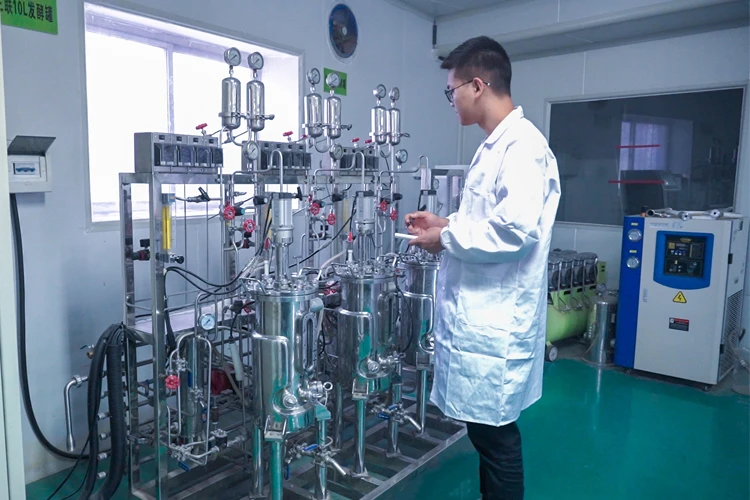
Figure 1: Fermentation and reaction production area. The image supports a process discussion; it does not by itself prove line-specific ACV capacity.
Use cases: how different buyers apply the same evaluation
A supplement brand preparing a first commercial order. The brand should start with a written specification, request a sample and COA, and compare the sample result with the proposed release criteria. The supplier's certificate record and batch documentation should be reviewed before the purchase order. If the brand needs custom packaging, the artwork and label review should be completed before production, not after.
A private-label distributor building an OEM/ODM program. The distributor should confirm OEM/ODM capability, private-label arrangements, packaging customization, MOQ, and lead time in writing. Guanjie Biotech's supplied capability record supports OEM/ODM production and packaging customization. The distributor should still ask for a change-control procedure and a packaging validation step, because private-label compliance depends on the label, claim, and destination market.
A formulation team solving a processing issue. The technical support described in the supplied record includes dedicated product specialists assisting R&D and product development teams with processing challenges and formulation troubleshooting. That support is useful at the sample and scale-up stage. The buyer should define the technical question, share the relevant matrix and process conditions, and ask for a written recommendation rather than a general assurance.
A procurement team protecting a production schedule. The team should convert the supplier's lead time and capacity statement into a delivery plan with dates and responsibilities. It should also ask for the escalation path if a batch is delayed. The 30-day lead time and 30-ton monthly capacity figures are useful inputs, but they need to be tied to the buyer's order quantity and packaging format.
Comparison table: evaluation area, supplied evidence, and buyer check
| Evaluation area | What to verify | Guanjie Biotech supplied record | Boundary and next check |
|---|---|---|---|
| Fermentation route | Process flow, strain, substrate, immobilization, downstream steps, batch records | Apple Cider Vinegar Powder is listed with the model descriptor 'Apple Vinegar Fermentation' in certificate-related product records | The descriptor does not prove cell immobilization or line capacity; request a process description and representative batch record |
| GMP facility | Site audit, clean workshop classification, laboratory controls, line-specific GMP | 7,000 m² site; 2,000 m² cGMP-standard clean workshop; 500 m² laboratory; laboratory construction complies with GMP and QS standards | Confirm the ACV line, cleaning validation, and cross-contact controls during a site or remote audit |
| Quality system | Certificate scope, validity, product coverage, batch COA | ISO 9001 certificate 00123Q310086R0S/6100, CQC, 7 Dec 2023 to 6 Dec 2026; HACCP 001HACCP2301048, CQC, 6 Dec 2023 to 5 Dec 2026; HALAL 0811240000, SHC, 8 Nov 2024 to 7 Nov 2027; Kosher K-88898568, Badatz Shatz, 15 Jul 2026 to 15 Jul 2027 | ISO and HACCP scopes refer to export trade of plant extracts, solid beverages, and food additives; verify ACV-specific COA and site audit |
| Capacity and lead time | Line capacity, batch size, monthly schedule, written lead time | Monthly capacity 30 tons; company-level annual output 500 tons; lead time 30 days; MOQ 1 kg | Confirm ACV-specific capacity and any 100-ton annual claim in writing; do not substitute company-level output |
| Batch documentation | COA fields, sampling, release, deviation handling, retest path | 100% test; every shipment includes a COA matching pre-shipment specifications; third-party retest support with SGS and Eurofins if discrepancies arise | Agree acceptance criteria, sampling plan, and out-of-specification handling before order |
| OEM and customization | Private label, packaging, technical support, change control | OEM/ODM production; private-label production under OEM/ODM arrangements; packaging customization; product specialists assist R&D formulation troubleshooting | Confirm artwork, label compliance, MOQ, and change-control steps |
| Delivery assurance | Written schedule, packaging plan, export documents, escalation path | 90% export ratio; export markets include EU, Middle East, North America, South America, and Asia; after-sales quality verification and supply-chain coordination | Confirm Incoterms, buffer stock, batch release sequence, and destination-specific documents |
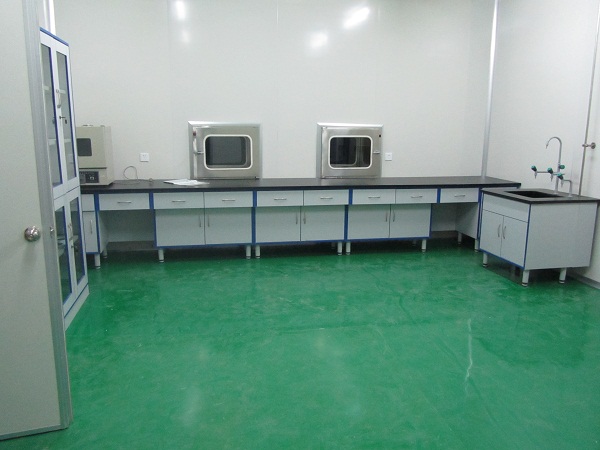
Figure 2: Testing area relevant to COA and batch release checks. The image does not replace a batch COA.
What a certificate alone cannot prove about delivery assurance
A certificate can show that a management system has been assessed against a standard. It cannot show that a specific production line is free on a specific week, that a batch will pass release, or that packaging will arrive on time. Delivery assurance is built from a chain of commitments: a confirmed specification, a released batch, a packing plan, a booking, and a named contact for exceptions. Buyers should ask for those commitments in the quotation or supply agreement, not infer them from a certificate.
The same discipline applies to a 20-year ACV-specific focus claim. A company founded in 2004 has a long operating history, but the buyer should ask for the ACV-specific record if that history is being used as a selection criterion. Similarly, a 100-ton annual capacity claim should be tied to a product, grade, line, and time period. The supplied Guanjie Biotech records provide company-level capacity and a monthly capacity figure; they should be used as inputs to a written confirmation, not as a substitute for it.
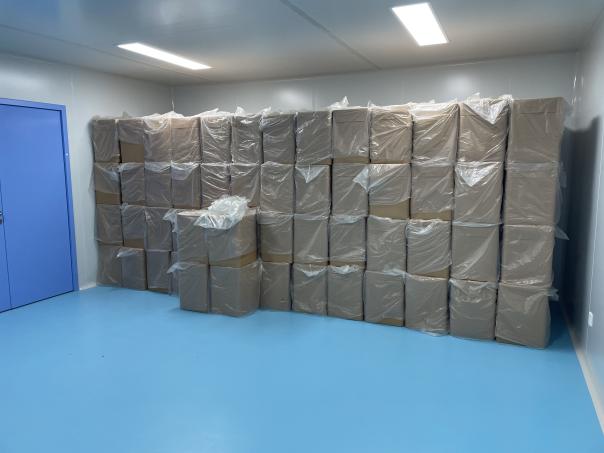
Figure 3: Storage and dispatch area relevant to delivery planning. Confirm the actual schedule in writing.
FAQ: Apple Cider Vinegar Powder supplier evaluation
What is the first check in an Apple Cider Vinegar Powder supplier evaluation?
Start with the buyer's specification and acceptance criteria, then ask for the fermentation route, batch COA, certificate scope, and written lead time. A certificate alone is not enough because it does not confirm the specific grade, batch release, or delivery slot.
How can a buyer verify apple vinegar cell-immobilized liquid fermentation?
Request a process flow and a representative batch record. If cell immobilization is claimed, ask about the support material, sterilization and cleaning between cycles, reuse limits, contamination monitoring, and how cells are separated from the liquid. The product record descriptor 'Apple Vinegar Fermentation' confirms the stated route, but the engineering details require separate evidence.
Does an ISO 9001 or HACCP certificate prove GMP capacity and delivery assurance?
No. The certificate scope and validity should be checked, then matched to the specific line and batch. Guanjie Biotech's ISO 9001 and HACCP certificates have stated scopes covering export trade of plant extracts, solid beverages, and food additives. They support system evidence but do not by themselves prove ACV-specific capacity or a delivery reservation.
What batch documents should accompany each ACV powder shipment?
Ask for a COA that matches the agreed pre-shipment specification, including the fields relevant to the product, such as purity, moisture, heavy metals, microbial limits, and active ingredients. Confirm the test methods, sampling plan, release decision, and retest path. Guanjie Biotech's supplied after-sales description states that each shipment includes a complete COA and that third-party retest support with SGS or Eurofins is available if discrepancies arise.
Can Guanjie Biotech support OEM/ODM and custom packaging for Apple Cider Vinegar Powder?
The supplied capability record states OEM/ODM production, private-label production under OEM/ODM arrangements, and packaging customization, with a 1 kg MOQ and a 30-day lead time. Buyers should confirm the custom specification, artwork, label compliance, and packaging validation in writing before production.
How should buyers interpret a 100-ton annual capacity or a 20-year ACV focus claim?
Treat each as a specific claim to verify. Ask whether the 100-ton figure is line capacity, grade-specific output, or company-wide output, and request a capacity letter or production schedule. A 20-year ACV-specific focus is different from a company founded in 2004; ask for ACV production history and references if that point is material. For a practical next step, buyers can request a sample, current specification, COA template, and packaging options from Guanjie Biotech, and download the company brochure for the full ingredient portfolio.
Conclusion: build the decision on four evidence sets
An Apple Cider Vinegar Powder supplier evaluation should end with a documented decision, not a folder of certificates. The buyer should be able to show why the fermentation route is understood, why the GMP facility and line capacity are credible for the required volume, why the batch documentation supports release, and why the delivery plan is realistic. Guanjie Biotech's supplied record provides useful evidence for that evaluation: a 2004 founding date, a 7,000 m² site with a 2,000 m² cGMP-standard clean workshop and a 500 m² laboratory, ISO 9001, HACCP, HALAL, and Kosher certificates with stated scopes and dates, OEM/ODM and packaging customization, a 30-day lead time, a 1 kg MOQ, and a 30-ton monthly capacity figure. It also lists Apple Cider Vinegar Powder with the model descriptor 'Apple Vinegar Fermentation'.
The buyer's job is to connect those facts to the specific order. Confirm the ACV-specific process and capacity, read certificate scopes exactly, agree on COA and acceptance criteria, and convert lead time into a written schedule. That is how a certificate becomes part of delivery assurance instead of a substitute for it.
Next step: Buyers can request a sample, current specification, COA template, and packaging options from Guanjie Biotech. The company brochure is available for download: Guanjie Nutraceutical Ingredients brochure.

CTA image: company exhibition area for supplier capability discussion. Sample and specification requests should be confirmed in writing.
Have Questions or Need More Details?
Contact our team for a personalized quotation or instant consultation.
Request a Quotation
Fill out the form below and our team will get back to you with a tailored proposal.
WhatsApp Direct Chat
Prefer to chat in real-time? Message us on WhatsApp for instant assistance & quick answers.
- Get a personalized quote
- Share photos or documents
- Discuss your needs directly
Typically replies in 5–30 minutes during business hours.