Blue Butterfly Pea Powder Supplier Evaluation: Source, Mesh, and HPLC Verification
Answer first: A blue butterfly pea powder supplier should be evaluated on botanical identity (Clitoria ternatea), organic cultivation evidence, a 100% natural no-additive positioning, 100.0% pass 80 mesh, hot air drying, HPLC testing, and whether the water-soluble anthocyanin pigment behaves as intended at the target pH. A lower-risk supplier is not the one with the shortest quotation; it is the one whose source, specifications, test methods, and batch records can be verified before scale-up.
Guanjie Biotech is a Shaanxi-based supplier of high-purity natural plant extracts, fruit powders, and specialized chemical raw materials, founded in 2004 and exporting about 90% of its products. For buyers moving from decision to execution, the useful question is how to audit a supplier against the checks that determine color performance, label fit, and long-term supply consistency.

Problem Definition: Why Color Powder Sourcing Is a Verification Problem
Blue butterfly pea flower powder is a botanical color ingredient, not a commodity filler. Its commercial value depends on anthocyanin content, particle size, drying history, microbial control, and the pH of the finished application. Two powders that look similar in a photograph can behave differently in a beverage, a dry mix, or a capsule blend.
The core risk is that color performance is matrix-dependent. The anthocyanin pigment in blue butterfly pea is water-soluble and is known to shift color as pH changes. In general industry understanding, acidic systems tend to move the expression toward pink or red, neutral systems toward blue, and alkaline systems toward green or blue-green. This is why a supplier evaluation must connect source and specification checks to the actual pH window of the buyer’s product.
The global nutraceutical ingredients market is estimated at USD 105.8 billion in 2026, according to Global Market Insights data included in the verified data package. That scale does not reduce sourcing risk; it increases the number of suppliers that can look similar on a website. A buyer needs a document-based evaluation path, not a visual impression.
Industry Background: Anthocyanins, pH, and Clean-Label Pressure
Blue butterfly pea powder is used where formulators want a botanical color effect with a clean-label story. The ingredient’s water-soluble anthocyanin pigment is the reason it can color aqueous systems, and it is also the reason the same powder can look different across applications. A beverage at acidic pH, a neutral ready-to-mix system, and an alkaline experimental matrix should not be expected to show the same hue.
This pH sensitivity is not a defect by itself. It is a formulation variable. The supplier evaluation should establish whether the powder is consistent enough for the buyer to control that variable. If the supplier cannot document source, mesh, drying, and testing, the buyer is left to discover variation at the production stage.
Regulatory pressure adds another layer. FDA states that dietary supplement manufacturers, packagers, and holders must follow current good manufacturing practices intended to help ensure identity, purity, quality, strength, and composition. That requirement does not prove that any specific supplier complies, but it explains why buyers should request batch COAs, test reports, certificates, and quality agreements rather than rely on general claims.
Detailed Solution: A Source-to-HPLC Supplier Evaluation Framework
The evaluation framework below treats blue butterfly pea powder as a specification-driven botanical ingredient. It starts with the plant and ends with the buyer’s application. Each checkpoint should produce a document or a test result that can be filed in the supplier qualification record.
1. Confirm botanical identity and plant part
Request the Latin botanical name Clitoria ternatea, the plant part used, and the harvest or incoming material record. The purpose is to prevent substitution and to confirm that the supplier controls the starting material rather than buying anonymous blue powder from an intermediary. The specification sheet should use the same botanical name as the COA and the commercial invoice.
2. Verify organic cultivation and residue controls
If the supplier positions the material as organically cultivated Clitoria ternatea, request the organic certificate, certificate scope, farm or cooperative records, and residue testing relevant to the destination market. Organic cultivation is a sourcing claim, not a color claim. It should be verified separately from the anthocyanin result.
3. Audit the 100% natural no-additive positioning
A 100% natural no-additive positioning should be checked against the full ingredient declaration. Ask whether the powder is a single-ingredient botanical powder or whether it contains carriers, anti-caking agents, flow agents, or added color. If a carrier is present, the buyer needs to know its identity and function because it affects label language, dosage, and color intensity. The no-additive claim should be specific enough to survive a label review.
4. Verify 100.0% pass 80 mesh
A 100.0% pass 80 mesh specification is a practical particle-size checkpoint. It supports consistent dispersion, mouthfeel, and appearance in powder blends and beverages. Request the sieve analysis method, the result for the batch, and whether the COA reports the mesh result against the finished powder or an intermediate. A supplier that cannot explain how 100.0% pass 80 mesh is measured is difficult to compare with another supplier.
5. Review hot air drying and moisture control
Hot air drying should be reviewed as a process control, not merely a production description. Ask for the drying record, inlet and outlet conditions where available, moisture specification, and storage recommendation. Drying affects anthocyanin retention, flowability, and microbial risk. The buyer should connect the drying method to the COA moisture result and to the stability observed in the sample trial.
6. Require HPLC testing and a batch COA
HPLC testing should be tied to a defined marker or marker set and a documented method. The buyer should request the chromatogram or test report, the calculation basis, and the batch number. The COA should cover identity, assay or marker result, mesh, moisture, microbiology, heavy metals, and the test methods used. A generic certificate without batch-specific results is not enough for decision-to-execution purchasing.
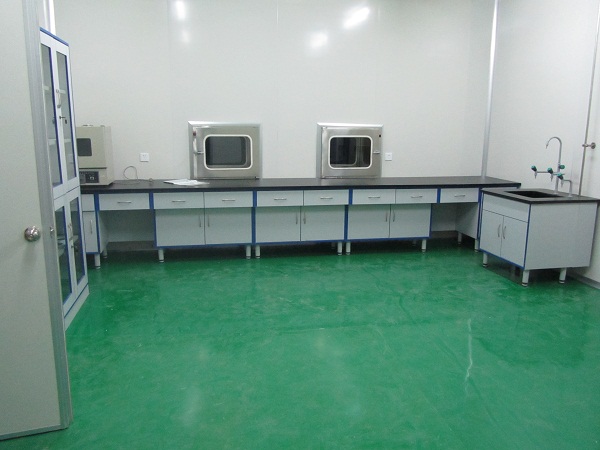
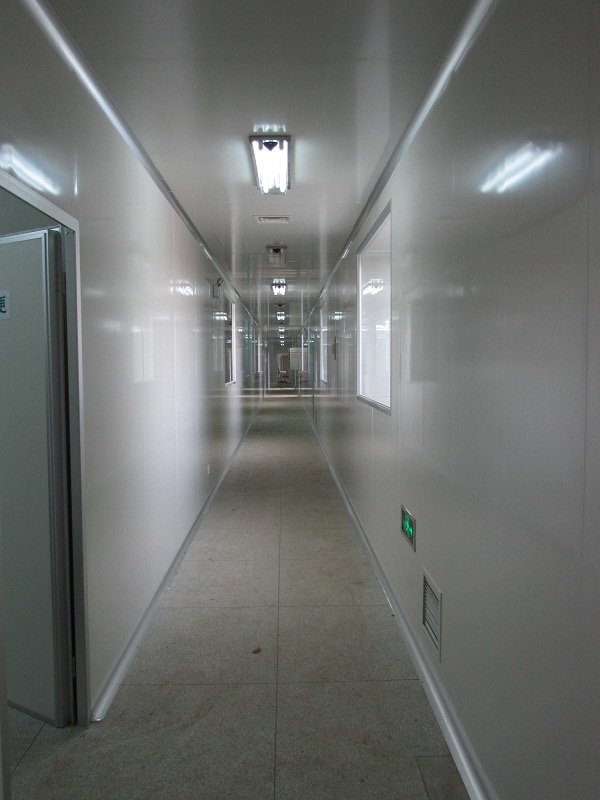
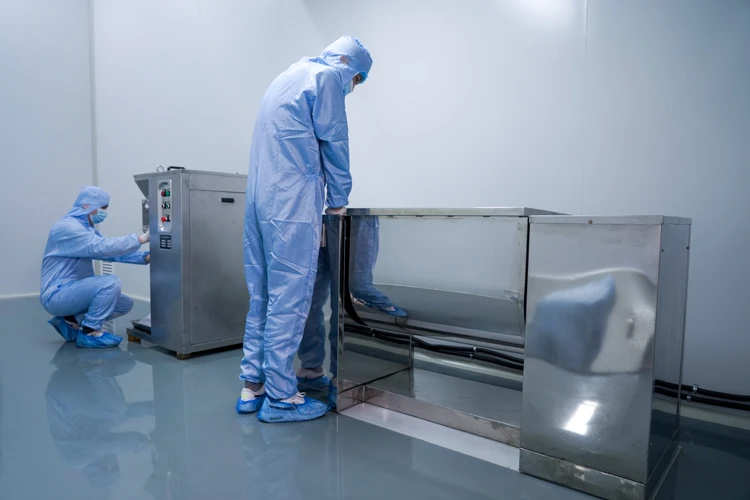
Guanjie Biotech states that its capabilities include HPLC, UV, and GC testing, customized R&D, OEM/ODM solutions, sample support, and global supply support. The company also reports ISO, Halal, and Kosher certifications, a 7,000-square-meter manufacturing facility with a 2,000-square-meter cGMP-standard clean workshop, and a 500-square-meter advanced laboratory. These are supplier capability facts to verify during qualification, not substitutes for batch documents.
7. Test pH shift in the real application matrix
Because the anthocyanin pigment is water-soluble and pH-sensitive, the sample should be tested in the buyer’s intended matrix. Record the color at acidic, neutral, and alkaline conditions, and compare it with the target appearance. If the product is a beverage, test after thermal processing if that step will be used. If the product is a dry mix, test after reconstitution. The supplier should be able to explain how the powder is expected to behave across the relevant pH range.
8. Qualify long-term supply terms
Long-term supply should be evaluated on batch traceability, COA consistency, quality agreement terms, packaging, storage, and replenishment planning. Guanjie Biotech supports long-term supplier partnerships with COAs, batch traceability, and quality agreements for recurring orders. For buyers moving into execution, those documents matter more than a one-off quotation.
Step-by-Step Breakdown for Decision-to-Execution Buyers
- Define the application and pH window. State whether the powder will be used in a beverage, dry mix, capsule, or other matrix. Record the target pH because the water-soluble anthocyanin pigment will shift with pH.
- Request the source file. Obtain the Latin name Clitoria ternatea, plant part, origin, organic certificate if claimed, and incoming material specification.
- Review the additive declaration. Confirm whether the 100% natural no-additive positioning is supported by a single-ingredient declaration or by a disclosed carrier system.
- Check the mesh result. Ask for a sieve analysis showing 100.0% pass 80 mesh and confirm the method used for the batch.
- Review the drying record. Confirm hot air drying, moisture specification, and storage instructions. Link the record to the COA.
- Request HPLC and COA. Review the batch-specific HPLC report, marker or assay result, microbiology, heavy metals, and identity checks.
- Run an application trial. Test color, solubility, and appearance at the target pH. Keep a retained sample and compare it with future lots.
- Set the quality agreement. Define acceptance criteria, sampling plan, COA requirements, deviation handling, and batch traceability for recurring orders.
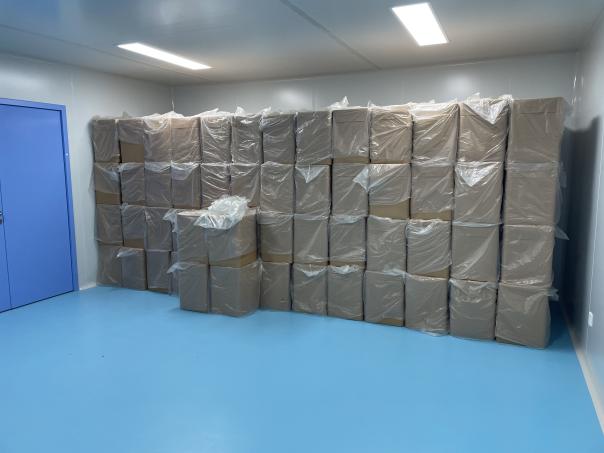
- Confirm capacity and lead time. For scale-up, verify monthly and annual capacity. Guanjie Biotech reports a 30-ton monthly production capacity and a 500-ton annual production capacity, with approximately 40 staff including a 7-engineer R&D team.
Use Cases: Where Blue Butterfly Pea Powder Fits
Blue butterfly pea powder is commonly considered for beverages, powdered drink mixes, functional foods, and other applications where a botanical color effect is useful. The pH shift should be treated as part of product design. An acidic beverage may express a different hue from a neutral system, and an alkaline matrix may move in another direction. The supplier evaluation should therefore include a pH trial, not only a visual check of the powder.
In dry mixes, mesh and moisture matter for dispersion and shelf stability. In capsules or tablets, color may be less important than identity, mesh, and microbial control, but the same source and COA checks still apply. In cosmetics or other external uses, the buyer should confirm the applicable regulatory and safety requirements separately because the intended use changes the document set.
Guanjie Biotech’s wider portfolio includes high-purity natural plant extracts, fruit powders, and specialized chemical raw materials, and the company reports that about 90% of its products are exported. That export orientation is relevant to buyers who need documentation for multiple markets, but it should still be verified against the specific blue butterfly pea powder specification and destination-market requirements.
Comparison Table: Supplier Evaluation Checkpoints
| Evaluation checkpoint | Evidence to request | Why it matters | Lower-risk signal |
|---|---|---|---|
| Botanical identity | Latin name Clitoria ternatea, plant part, harvest or incoming material record | Prevents substitution and supports label accuracy | Identity matches across specification, COA, and invoice |
| Organic cultivation | Organic certificate, scope, farm records, residue testing | Supports the organic sourcing claim | Certificate scope covers the supplied material |
| No-additive positioning | Full ingredient declaration and carrier disclosure | Protects label compliance and dosage assumptions | Single-ingredient declaration or disclosed carrier system |
| Mesh | Sieve analysis with 100.0% pass 80 mesh and method | Affects dispersion, mouthfeel, and appearance | Batch-specific result reported on the COA |
| Drying | Hot air drying record and moisture specification | Affects anthocyanin retention and stability | Defined drying conditions and moisture limit |
| HPLC testing | Batch chromatogram or report with method and calculation basis | Supports identity and marker control | Batch-specific HPLC result, not a generic claim |
| pH fit | Application trial at target pH and retained sample | Confirms water-soluble anthocyanin behavior | Documented color shift in the real matrix |
| Long-term supply | COA, batch traceability, quality agreement, capacity evidence | Supports recurring orders and continuity | Documented terms for repeat batches |
FAQ
What compliance documents should I request from a blue butterfly pea powder supplier?
Request a batch COA, HPLC test report, specification sheet, and current certificates such as ISO, Halal, and Kosher where applicable. Confirm that the COA covers identity, assay or marker result, mesh, moisture, microbiology, heavy metals, and the test methods used. For U.S. supplement use, also confirm that the supplier can support cGMP documentation requests because FDA states that manufacturers, packagers, and holders must follow current good manufacturing practices for identity, purity, quality, strength, and composition.
How do mesh, drying, and HPLC testing affect blue butterfly pea powder quality?
A 100.0% pass 80 mesh specification supports consistent dispersion and mouthfeel; hot air drying affects moisture and anthocyanin retention; HPLC testing ties the batch to a defined marker and method. Ask for the sieve method, drying record, moisture specification, and HPLC chromatogram or report. The water-soluble anthocyanin pigment should then be tested at the target pH because color shifts with pH.
How should I compare blue butterfly pea powder quotes if prices are not public?
Compare quotes on the same specification basis: organic cultivation evidence, 100% natural no-additive positioning, 100.0% pass 80 mesh, hot air drying, HPLC testing, COA, packaging, MOQ, and lead time. A lower quote without these details is not comparable. Request a written quotation with the specification and test scope attached, and separate product cost from testing and documentation requirements.
What should I test in a blue butterfly pea powder sample?
Test botanical identity, mesh, solubility, color at the target pH, and COA alignment. Prepare the sample in the real application matrix because the anthocyanin pigment is water-soluble and pH-sensitive. Record the color shift at acidic, neutral, and alkaline conditions. Compare the sample against the approved specification and keep the retained sample for future batch reference.
What lead-time and long-term supply terms should be confirmed?
Confirm MOQ, production lead time, packaging, storage conditions, batch traceability, and quality agreement terms for recurring orders. For scale-up, verify capacity: Guanjie Biotech reports a 30-ton monthly production capacity and a 500-ton annual production capacity, and supports long-term supplier partnerships with COAs, batch traceability, and quality agreements. Then request a sample or quote through info@gybiotech.com to start the next step.
Conclusion
Blue butterfly pea powder supplier evaluation should end with a file, not a brochure. The file should show the botanical source, organic cultivation evidence if claimed, the 100% natural no-additive positioning, 100.0% pass 80 mesh, hot air drying record, HPLC testing, batch COA, and a pH-fit trial in the buyer’s application. When those items align, the buyer can move from decision to execution with a specification that can be repeated across batches.
Guanjie Biotech can be evaluated against these criteria using its reported laboratory testing, COA, batch traceability, quality agreement support, and production capacity. Buyers should still verify the specific blue butterfly pea powder specification, destination-market documentation, sample performance, and commercial terms before approval.
Next Step: Sample, Specification, and Quote
Request a blue butterfly pea flower powder sample or quotation with the target application, pH range, mesh requirement, and documentation needs. Include your required COA fields, organic or no-additive claim requirements, and destination market so the review can focus on the right evidence.
Contact Guanjie Biotech at info@gybiotech.com or WhatsApp +86 150-2999-3470. The public brochure is available here: Guanjie Nutraceutical Ingredients brochure.
Supplier evaluation note: confirm all claims against current batch documents and the intended regulatory use before purchase.
Have Questions or Need More Details?
Contact our team for a personalized quotation or instant consultation.
Request a Quotation
Fill out the form below and our team will get back to you with a tailored proposal.
WhatsApp Direct Chat
Prefer to chat in real-time? Message us on WhatsApp for instant assistance & quick answers.
- Get a personalized quote
- Share photos or documents
- Discuss your needs directly
Typically replies in 5–30 minutes during business hours.