
CoQ10 10% Water-Soluble vs 99% for Beverage & Capsule
For a beverage project, the 10% water-soluble CoQ10 grade is the practical starting point; for a hard-capsule project, the 99% grade is the practical starting point. That is a grade-selection rule, not a claim that either grade is universally better. Coenzyme Q10 powder, CAS 303-98-0, is described as fat-soluble and insoluble in water. The 10% grade is supplied under a water-soluble specification, while the 99% grade is the high-assay specification. The formulator still has to confirm what water-soluble means for the grade, run a format-specific trial, and verify the COA and supply documents before locking the specification.
This article is written for formulators and procurement teams comparing CoQ10 grades for beverage and capsule scenarios. It does not evaluate health outcomes. It focuses on identity, solubility, finished-format fit, documentation, and supply confirmation.
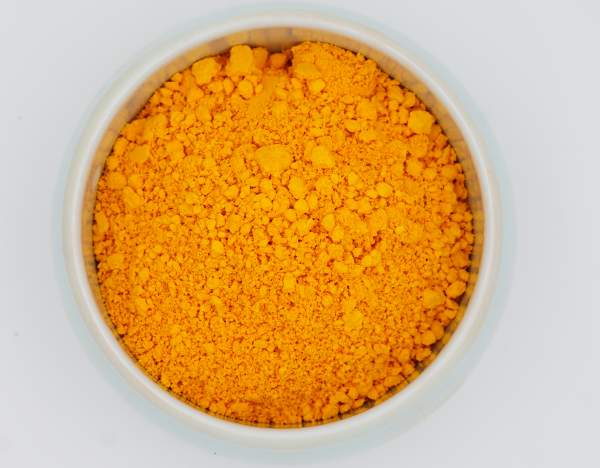
Coenzyme Q10 powder CAS 303-98-0; the base material is fat-soluble, while the 10% grade is supplied under a water-soluble specification.
The formulation problem: one CAS number, two handling needs
CAS 303-98-0 identifies Coenzyme Q10, but it does not tell a buyer which grade to use. Guanjie Biotech lists Coenzyme Q10 powder in two specifications: 10% (water soluble) and 99%. The product description states a yellow or light orange-yellow appearance, an odorless and tasteless character, and fat solubility with insolubility in water. Those facts create the core problem. A beverage team works in a water-based system. A capsule team works with a solid fill and a target assay. The same CoQ10 identity can therefore require different grade logic.
The most common sourcing error is to treat water-soluble as a property of all CoQ10 powder. The supplied product description separates the two ideas. The base CoQ10 is fat-soluble and insoluble in water; the 10% grade is the grade designated water-soluble in the specification. A specification sheet should be read with that distinction in mind. If the phrase water-soluble is not defined, the buyer should ask for a written definition and a sample test rather than assume true solubility in every beverage matrix.
Guanjie Biotech is a Shaanxi-based ingredient supplier founded in 2004, with a 7,000 m² facility, a 2,000 m² cGMP clean workshop, a 500 m² laboratory, and ISO, Halal, and Kosher certifications. Its Coenzyme Q10 powder is produced using microbial fermentation technology and is listed for dietary supplement, health food, beverage, and cosmetics applications.
Industry background: why grade consistency starts with the production route
CoQ10 powder for nutraceutical use is not defined by CAS alone. The supplied product description states that Guanjie Biotech CoQ10 is produced using microbial fermentation technology. For a buyer, that fact belongs in the supplier review because fermentation route, batch control, and testing discipline determine whether a grade can be repeated from lot to lot. The same product unit lists a 10% water-soluble specification and a 99% specification, and the company states 100% testing in its capability information. These are sourcing facts, not proof that every batch will fit every formula.
The grade decision sits between R&D and procurement. R&D defines the finished format and the target label amount. Procurement defines the supplier, MOQ, lead time, and documentation. If the grade is selected before both sides agree, the project can end up with a water-soluble grade that was never tested in the beverage matrix, or a 99% grade that does not fit the capsule fill. The rest of this article provides a decision path to prevent that mismatch.
Detailed solution: match the grade to the finished format, then verify
Beverage scenario. Start with the 10% water-soluble grade when the finished product is a water-based beverage and the formulation team needs a grade designed for water compatibility. The product unit lists beverage among applicable industries. The grade is specified as 10% water soluble. The buyer should still confirm dispersion in the actual beverage matrix, because a specification label and a finished-beverage trial answer different questions. Ask for a sample, run a dispersion check, observe whether the powder disperses uniformly under your process, and confirm the grade definition in writing. Do not convert a water-soluble grade claim into a guarantee of clarity, stability, or taste in every formula without your own trial.
Capsule scenario. Start with the 99% grade when the finished product is a hard capsule or another dietary supplement format where a high-assay powder fits the fill process. The supplied application unit identifies dietary supplements and hard capsules as the largest market segment and lists capsule filling machines among matched equipment. The 99% grade gives the formulator a high-assay CoQ10 powder to evaluate. The buyer should confirm powder flow, fill-weight uniformity, and compatibility with the capsule filling process. Because the base CoQ10 is fat-soluble, the capsule team should also confirm how the fill system handles a fat-soluble powder. A 99% grade is not automatically the right choice for every capsule; it is the logical starting point when the fill process and label target support it.
The decision rule. Choose the grade by finished format first, then by assay and documentation. For a beverage, the first question is whether the 10% water-soluble grade disperses acceptably in the water-based matrix. For a capsule, the first question is whether the 99% grade flows and fills acceptably at the target fill weight. After that, compare COA, batch consistency, and supply terms. This order prevents a common mistake: selecting a grade because it has a higher assay number, even when the finished format cannot handle the base material's fat solubility.
Step-by-step breakdown: a six-step sourcing workflow
- Define the finished format and target label. Write down whether the project is a beverage, a hard capsule, or a mixed portfolio. Record the target CoQ10 amount per unit and the process equipment. The application unit lists mixers, granulators, tableting machines, capsule filling machines, and beverage blending tanks as matched equipment. The format definition should be specific enough to rule out the wrong grade.
- Confirm CAS and grade in writing. Require CAS 303-98-0 on the specification and state the grade: 10% water-soluble or 99%. Do not accept a generic CoQ10 label that omits the grade. The product unit lists both specifications under the same CAS, so the grade is the distinguishing purchasing field.
- Request the specification and batch COA. Check appearance, specification, solubility statement, assay method, batch number, and the tests your finished-format specification requires. Guanjie Biotech states that every shipment includes a complete COA matching pre-shipment standard specifications, and that third-party re-testing support with labs such as SGS and Eurofins is available if a discrepancy arises. Those are supplier capabilities; the buyer should still verify the documents against the actual batch.
- Run a format-specific bench trial. For a beverage, test dispersion of the 10% water-soluble grade in the real matrix. For a capsule, test flow and fill-weight uniformity with the 99% grade on the intended capsule filling machine. Keep the trial conditions and results with the approved specification.
- Confirm supply terms. Ask for MOQ, lead time, monthly capacity, packaging, and change-control terms. Guanjie Biotech states a MOQ of 1 kg, a lead time of 30 days, a monthly capacity of 30 tons, OEM/ODM package customization, and 100% testing. These figures are supply-planning inputs, not a promise that every order will follow the same schedule; confirm them in the quotation and order confirmation.
- Lock the approved grade and supplier. Record the approved grade, CAS, COA acceptance criteria, and supplier in the change-control system. If the project has both beverage and capsule SKUs, keep separate approved grades unless a trial proves one grade can serve both. This protects the project from an unannounced grade substitution.
Use cases: beverage, capsule, and a mixed portfolio
Functional beverage project. A formulator developing a functional or fortified beverage should begin with the 10% water-soluble grade. The application unit lists functional and fortified beverages among the formats where nutraceutical ingredients are used. The relevant buyer check is dispersion in the beverage matrix, not a health claim. The formulator should confirm the grade definition, request a sample, and compare the trial result with the specification before scaling.
Hard-capsule supplement project. A capsule project should begin with the 99% grade. The application unit describes dietary supplements and hard capsules as the largest market segment and lists capsule filling machines as matched equipment. The buyer check is fill performance: powder flow, fill weight, and uniformity. The formulator should confirm that the 99% grade is the approved grade and that the COA matches the specification. The fat-soluble nature of CoQ10 should be part of the capsule process review.
Mixed beverage and capsule portfolio. A brand owner with both formats should not consolidate to one CoQ10 grade by default. The beverage SKU and the capsule SKU have different first constraints. The beverage team needs a water-soluble grade starting point; the capsule team needs a high-assay grade starting point. A single grade may be possible after trials, but the decision should be documented rather than assumed. Keeping two approved grades can reduce the risk of a late-stage reformulation.
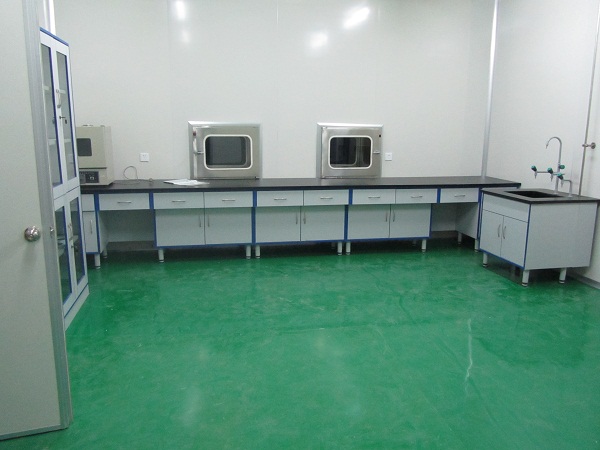
Laboratory testing supports batch COA verification; it does not replace a format-specific beverage or capsule trial.
Comparison table: 10% water-soluble vs 99% grade
| Attribute | 10% water-soluble grade | 99% grade |
|---|---|---|
| CAS number | 303-98-0 | 303-98-0 |
| Specification | 10% (water soluble) | 99% |
| Base material | CoQ10 is fat-soluble and insoluble in water; the 10% grade is the water-soluble specification | CoQ10 is fat-soluble and insoluble in water |
| Appearance | Yellow or light orange-yellow; odorless and tasteless | Yellow or light orange-yellow; odorless and tasteless |
| Starting format fit | Water-based beverage, subject to a dispersion trial | Hard capsule or dietary supplement, subject to a fill trial |
| Primary buyer check | Written definition of water-soluble plus matrix dispersion test | Assay, powder flow, fill weight, and capsule fill trial |
| Supply checks | COA per batch, MOQ, lead time, capacity | COA per batch, MOQ, lead time, capacity |
Table notes: format fit is a starting point, not a universal rule. Confirm the grade in writing and test it in the intended matrix or fill process.
Buyer checks around specification and supply confirmation
Specification check. The specification should state CAS 303-98-0, the grade (10% water-soluble or 99%), appearance, solubility statement, and the assay method used for the batch. It should also define what the supplier means by water-soluble for the 10% grade. A buyer should not accept a COA that lists only CoQ10 without the grade, because the two grades serve different format starting points.
Batch COA check. The COA should be batch-specific and match the pre-shipment specification. Guanjie Biotech states that every shipment includes a complete COA and that third-party re-testing support is available with labs such as SGS and Eurofins if quality discrepancies arise. The buyer should keep the approved COA with the specification and compare future lots against it.
Quality-system check. Guanjie Biotech states ISO, Halal, and Kosher certifications and a 100% testing capability. These documents support supplier qualification, but they do not replace the buyer's own specification review, sample trial, and incoming inspection. The product unit lists dietary supplement, health food, beverage, and cosmetics applications; the buyer should confirm that the selected grade is the one approved for the intended finished format.
Supply check. Confirm MOQ, lead time, monthly capacity, packaging, and change-control terms in the quotation. The stated Guanjie Biotech figures are 1 kg MOQ, 30-day lead time, 30 tons monthly capacity, OEM/ODM package customization, and 100% testing. For a beverage launch, the buyer should also confirm that the 10% water-soluble grade can be supplied consistently in the required packaging. For a capsule launch, the buyer should confirm that the 99% grade is available in the required lot size. Supply confirmation is part of grade selection because a grade that cannot be repeated on schedule is not a usable specification.
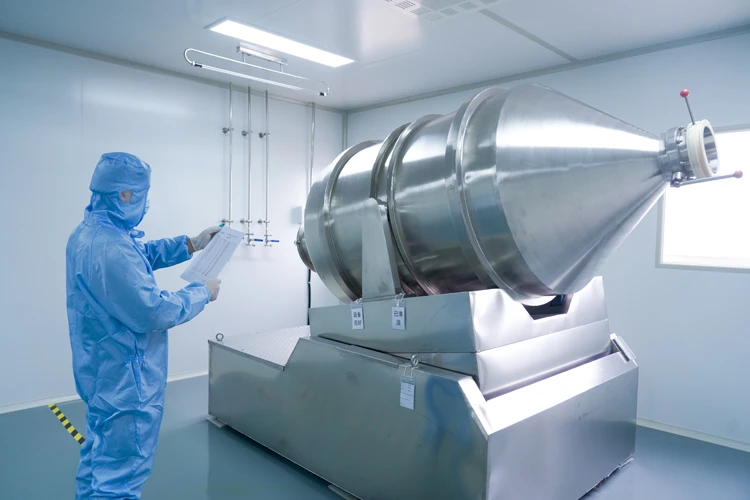
Packing and lot documentation are part of supply confirmation for either CoQ10 grade.
Limitations and trade-offs to keep visible
The 10% water-soluble grade is not a universal beverage solution. It is a grade designation that still needs a matrix trial. The 99% grade is not a universal capsule solution. It is a high-assay grade that still needs a fill trial and a review of fat-soluble handling. Neither grade should be selected on assay number alone. The correct choice depends on the finished format, the process equipment, the label target, and the supplier's ability to repeat the grade. If a project requires both formats, separate specifications may be safer than a single compromise grade.
There is also a documentation trade-off. A higher assay grade can look simpler on a label, but it does not remove the need for a COA, a batch record, and a change-control procedure. A water-soluble grade can look easier for a beverage, but it does not remove the need to define water-soluble and test dispersion. The buyer should keep both the analytical specification and the process trial in the approval file.
FAQ
How should a formulator evaluate phosphatidylserine powder manufacturers for cognitive health formulations?
The same supplier-qualification discipline used for CoQ10 applies. In a documented South Korean case, a health food and functional supplement manufacturer used phosphatidylserine at 50 MT per year for 3 years for a cognitive health product line. The supplied material had high purity and stable batch-to-batch quality, met KFDA food raw material requirements, and came with a full COA for each batch plus raw-material traceability support. For a CoQ10 project, ask for the equivalent: a grade-specific specification, a batch COA, and written supply confirmation. For a CoQ10 specification review or sample request, contact Guanjie Biotech at info@gybiotech.com.
Conclusion
For CoQ10 grade selection, the finished format should drive the first decision. A beverage project should begin with the 10% water-soluble grade and confirm dispersion in the real matrix. A hard-capsule project should begin with the 99% grade and confirm fill performance. Both grades share CAS 303-98-0, and both require a batch COA, a grade-specific specification, and supply confirmation. Guanjie Biotech supplies CoQ10 powder in 10% water-soluble and 99% specifications produced using microbial fermentation technology, with stated ISO, Halal, and Kosher certifications, 1 kg MOQ, 30-day lead time, and 30 tons monthly capacity. The next step is to request the grade-specific specification, COA, and sample, then run the beverage or capsule trial before locking the specification.
For the full ingredient portfolio, download the Guanjie Nutraceutical Ingredients brochure or contact info@gybiotech.com.
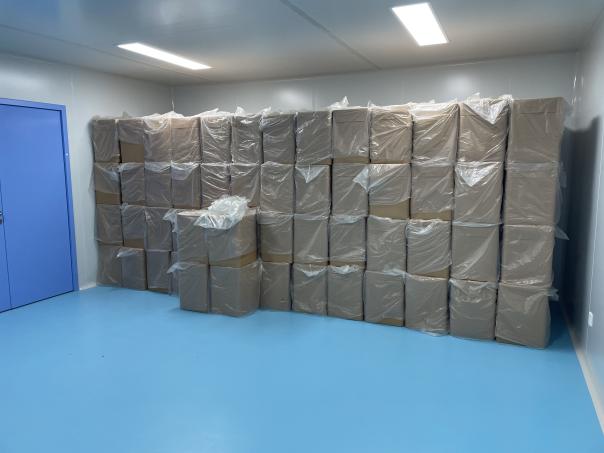
Guanjie Biotech factory store house supporting sample dispatch and ingredient supply confirmation.
Have Questions or Need More Details?
Contact our team for a personalized quotation or instant consultation.
Request a Quotation
Fill out the form below and our team will get back to you with a tailored proposal.
WhatsApp Direct Chat
Prefer to chat in real-time? Message us on WhatsApp for instant assistance & quick answers.
- Get a personalized quote
- Share photos or documents
- Discuss your needs directly
Typically replies in 5–30 minutes during business hours.