
CoQ10 Powder 10% vs 99%: Water-Soluble or Fat-Soluble Decision
Cover image: nutraceutical ingredient powders used in food and supplement applications.
The practical answer is phase-based. Choose CoQ10 powder 10% water-soluble grade when the formulation route is aqueous and the process can validate a water-dispersible powder. Choose CoQ10 powder 99% fat-soluble grade when the route is oil-based, fat-based, or emulsified and the formula needs a high-assay CoQ10 powder. The decision cannot be reduced to a higher or lower percentage. CoQ10 dissolves in organic solvents such as acetone and ether but is insoluble in water, and the CoQ10 is produced by microbial fermentation. Those two facts should drive grade selection before price, MOQ, or packaging are discussed.
Guanjie Biotech (Shaanxi Guanjie Biotech) is a China-based supplier of nutraceutical ingredients, including Coenzyme Q10 powder, for supplement, food, and cosmetics applications. This article compares the 10% water-soluble and 99% fat-soluble CoQ10 powder grades as a head-to-head formulation choice, then sets out the documents and bench checks a buyer should use before requesting a sample or quote.
Problem Definition: The Grade Must Match the Continuous Phase
The main formulation risk is not a weak certificate or a missing specification. It is a grade-phase mismatch. A 99% fat-soluble CoQ10 powder placed into a water-based beverage without an engineered dispersion step can create haze, sediment, ringing, or an unacceptable mouthfeel. A 10% water-soluble grade placed into an oil suspension or a high-fat fill can add unnecessary powder load and may not match the intended oil-phase behavior.
CoQ10 is insoluble in water. That single fact explains why a water-soluble grade exists as a formulated powder presentation rather than as a claim that the CoQ10 molecule itself becomes water-soluble. The 10% figure describes the CoQ10 content basis of that grade; the balance is the supplied powder matrix, which should be confirmed in the technical data sheet and batch COA. The 99% grade is a high-assay CoQ10 powder intended for fat-soluble or organic-solvent-compatible systems.
Buyers therefore need a decision rule, not a generic preference. The rule is: define the continuous phase, define the dose, calculate the powder load, verify the grade documents, and then run a bench test in the real matrix. A grade that looks cheaper per kilogram of powder can become more expensive per kilogram of CoQ10 delivered when the 10% grade requires a larger powder addition. A grade that looks easier to disperse can still fail if the supplier's carrier and dispersion behavior are not validated in the finished formula.
- 10% water-soluble CoQ10 powder: preferred starting point for aqueous beverages, aqueous sachets, liquid mixes, and water-based gels where the process can validate dispersion and stability.
- 99% fat-soluble CoQ10 powder: preferred starting point for oil suspensions, emulsions, softgel fills, fat-based foods, and high-assay dry blends where the formula route is lipid-compatible.
Industry Background: Fermentation, Solubility, and the CoQ10 Grade Label
Coenzyme Q10 powder is identified in Guanjie Biotech's product data with CAS No. 303-98-0. The CoQ10 is produced by microbial fermentation, a route that makes fermentation control and batch documentation relevant to grade consistency. For buyers in the evaluation stage, the fermentation route matters because it connects the ingredient to supplier controls such as fermentation monitoring, purification, drying, and batch testing. The grade label then adds a second layer: 10% water-soluble or 99% fat-soluble.
The broader nutraceutical ingredients market provides context for why grade choice receives attention. A 2026 Global Market Insights estimate places the global nutraceutical ingredients market at USD 105.8 billion. CoQ10 sits within the antioxidant and core health ingredient space, and Guanjie Biotech's formulation guidance groups CoQ10 with core health ingredients that have steady sales and names it among three starting points for antioxidant supplement formulas. That commercial relevance does not remove the formulation constraint. CoQ10 remains insoluble in water and soluble in organic solvents such as acetone and ether, so the delivery format still decides which grade is technically suitable.
The grade names should be read precisely. The 10% water-soluble grade is a powder format designed for aqueous use; the 99% fat-soluble grade is a high-assay powder for lipid or organic-solvent-compatible systems. Neither grade should be selected from the percentage alone. The buyer should ask three questions: What is the continuous phase, what CoQ10 dose is targeted, and what dispersion or emulsion step can the process support?
Detailed Solution: A Head-to-Head Decision Framework
1. The 10% water-soluble grade: use it when water is the continuous phase
The 10% water-soluble grade is the practical first candidate for aqueous formulations. It is relevant to ready-to-drink beverages, instant powder sachets reconstituted in water, aqueous gels, and liquid supplement bases where the process is designed around water compatibility. The grade name signals an aqueous powder format, but it does not cancel the underlying solubility fact. CoQ10 itself is insoluble in water, so the supplier's dispersion technology and the buyer's bench test both matter.
The evaluation should confirm the CoQ10 assay basis, the carrier or matrix, the recommended dispersion temperature, the acceptable pH range if provided, and the test method used for the assay. The buyer should also request a sample and test for sediment, haze, ringing, and flavor carryover in the actual beverage or gel base. A water-soluble grade is not automatically stable in every aqueous system; it is a better starting point, not a waiver of validation.
Commercial logic also changes with the 10% grade. Because the CoQ10 share is lower than in a 99% grade, more powder may be needed to deliver the same CoQ10 dose. That affects packaging volume, freight, and the amount of carrier entering the formula. The correct cost comparison is cost per kilogram of CoQ10 delivered, not cost per kilogram of powder. Ask the supplier for a quote on a CoQ10 basis and confirm the exact assay and overage policy.
2. The 99% fat-soluble grade: use it when the route is oil or fat based
The 99% fat-soluble grade is the stronger fit for oil suspensions, emulsion concentrates, softgel fills, fat-based foods, and dry blends where a high-assay CoQ10 powder is needed. CoQ10 dissolves in organic solvents such as acetone and ether, which aligns with lipid and organic-solvent-compatible processing. The grade is not a direct drop-in for a clear aqueous beverage without an emulsion or dispersion step. If a beverage team wants to use the 99% grade, the project should include an emulsion design, a particle-size target, and a stability test rather than a simple dry addition.
For capsules and tablets, the 99% grade can be considered where a high-assay dry blend is appropriate, but the buyer should confirm particle size, flow, blend uniformity, and the intended release mechanism. For oil-based fills, the buyer should confirm solubility in the specific oil, mixing temperature, and any need for heating or homogenization. The supplier's TDS should state the recommended route; the buyer's bench trial should prove it.
The 99% grade also carries a lower powder load per unit CoQ10 than the 10% grade. That can reduce the mass of powder handled per batch, but it does not automatically reduce total project cost. Emulsion processing, specialized packaging, and stability testing can add cost. The comparison should include the full formulation route, not only the ingredient price.
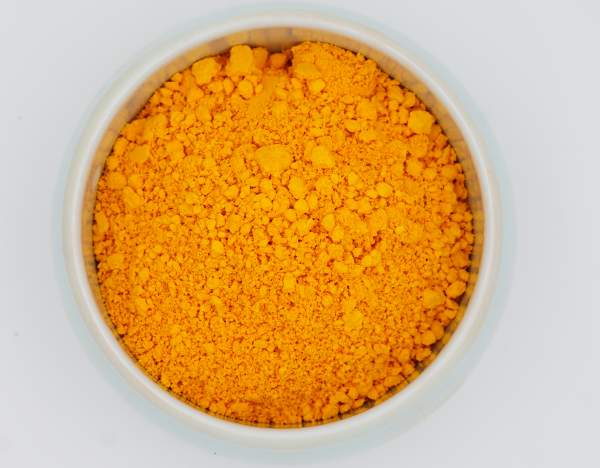
Coenzyme Q10 powder: grade selection depends on the continuous phase and the validated dispersion route.
Step-by-Step Breakdown: From Formula Target to Purchase Order
- Define the continuous phase and process. State whether the product is water-based, oil-based, emulsified, or a dry blend. Record the process temperature, shear, pH, and any heating or homogenization step. This is the first filter because CoQ10 is insoluble in water and dissolves in organic solvents such as acetone and ether.
- Set the CoQ10 dose and calculate the powder load. Use the target CoQ10 dose to compare how much 10% grade versus 99% grade powder is needed. Confirm the exact assay basis in the COA. Do not compare the two grades by powder weight alone.
- Select the grade to match the route. Start with the 10% water-soluble grade for aqueous systems and the 99% fat-soluble grade for oil, fat, or emulsion systems. If a 99% grade is proposed for an aqueous product, require an emulsion or dispersion design before approval.
- Request the grade-specific technical file. Ask for a TDS with solubility and dispersion guidance, a batch COA with assay, moisture, heavy metals, microbiological limits, and residual solvents, and a statement that the CoQ10 is produced by microbial fermentation. Confirm that the CoA matches the sample lot.
- Run a bench test in the real matrix. Test the 10% grade for dispersion, sediment, haze, and stability in the aqueous base. Test the 99% grade for solubility or emulsion behavior in the oil or fat base. Record mixing time, temperature, and any visual or analytical failures.
- Verify compliance and supplier controls. Check current certification records, certificate scope, and validity. Guanjie Biotech's records list ISO 9001 certificate 00123Q310086R0S/6100, HACCP certificate 001HACCP2301048, Halal certificate 0811240000, and Kosher certificate K-88898568; Coenzyme Q10 powder appears among related products. Confirm the exact grade and market scope before relying on any certificate.
- Lock commercial terms and repeat-order specifications. Agree on assay, carrier, packaging, MOQ, lead time, and COA requirements. Guanjie Biotech's capability data lists a 1 kg MOQ, 30-day lead time, 30 tons monthly capacity, and OEM/ODM package customization. Reconfirm those terms for the selected CoQ10 grade.
Use Cases: Where Each Grade Fits
Aqueous ready-to-drink beverages. The 10% water-soluble grade is the logical starting point. The formulation team should validate dispersion, thermal stability, and visual clarity if a clear beverage is required. The 99% grade should not be added directly to water without an emulsion or dispersion step.
Instant powder sachets and stick packs. The 10% water-soluble grade fits aqueous reconstitution. The buyer should test reconstitution time, sediment, and mouthfeel. If the sachet is designed as an oil-based or emulsion powder, the 99% grade may fit, but the powder system must be engineered for dispersion.
Softgels and oil suspensions. The 99% fat-soluble grade is the natural fit. The buyer should confirm solubility in the chosen oil, mixing temperature, and suspension stability. The 10% grade is less relevant unless the fill is redesigned as an aqueous or emulsion system.
Emulsified beverages and fortified foods. Either grade can be considered, but the decision depends on the emulsion design. A 99% grade may be used in an oil phase that is later emulsified; a 10% grade may simplify the aqueous phase. In both cases, the buyer should test droplet size, separation, and CoQ10 distribution.
Dry capsules and tablets. The 99% grade offers a high-assay powder for dry blends, but flow, particle size, blend uniformity, and release mechanism should be confirmed. The 10% grade may be considered where aqueous granulation is used. The final choice should be supported by a bench trial, not by the grade name alone.
Comparison Table: CoQ10 Powder 10% Water-Soluble vs 99% Fat-Soluble
| Decision factor | CoQ10 powder 10% water-soluble grade | CoQ10 powder 99% fat-soluble grade |
|---|---|---|
| Grade label | 10% water-soluble grade | 99% fat-soluble grade |
| CoQ10 content basis | 10% CoQ10 content basis; confirm exact assay and carrier in the COA | 99% high-assay CoQ10 powder; confirm exact assay in the COA |
| Solubility behavior | Supplied as a water-soluble grade for aqueous formulation; CoQ10 itself is insoluble in water | CoQ10 dissolves in organic solvents such as acetone and ether; it is insoluble in water |
| Production route | CoQ10 is produced by microbial fermentation; confirm grade-specific carrier and controls | CoQ10 is produced by microbial fermentation; confirm grade-specific controls |
| Typical formulation route | Aqueous beverages, aqueous sachets, liquid mixes, water-based gels | Oil suspensions, emulsions, softgel fills, fat-based foods, high-assay dry blends |
| Powder load per CoQ10 dose | Higher powder load because the CoQ10 share is lower | Lower powder load because the CoQ10 share is higher |
| Key COA checks | Assay, carrier, moisture, heavy metals, microbiological limits, residual solvents | Assay, moisture, heavy metals, microbiological limits, residual solvents |
| Main formulation risk | Sediment, haze, or poor dispersion if the aqueous system is not validated | Poor water dispersion if used directly in an aqueous system without an emulsion step |
| Commercial comparison | Compare cost per kilogram of CoQ10 delivered, including carrier and freight | Compare cost per kilogram of CoQ10 delivered, including emulsion and testing costs |
Supplier Controls That Matter for Either Grade
Grade selection is only one part of the evaluation. The supplier must also demonstrate batch control for the selected grade. Guanjie Biotech states that quality control follows 100% testing procedures and that each shipment includes a complete Certificate of Analysis matching pre-shipment standard specifications. The company also states that it works with third-party testing laboratories including SGS and Eurofins to resolve technical audits and verify product specifications. Those controls are relevant to both the 10% and 99% grades because both depend on assay, moisture, and contaminant control.
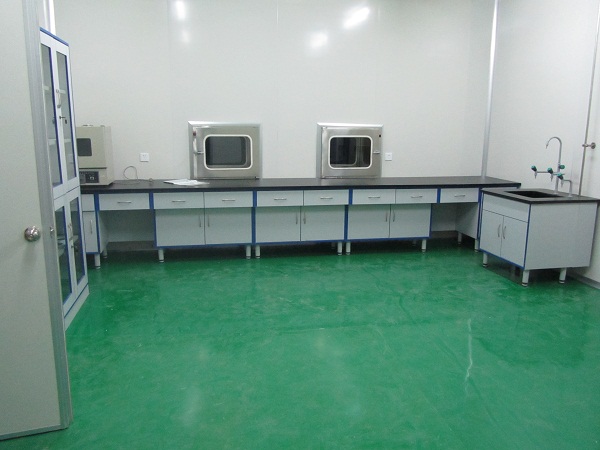
Batch testing and COA review help confirm that the selected CoQ10 grade matches the approved specification.
Company background can support a supplier review but should not replace grade-specific documents. Guanjie Biotech was founded in 2004, operates a 7,000 m² facility, lists 40 employees, 500 tons annual output, and 7 engineers, and exports to multiple markets. For a CoQ10 project, the buyer should still ask for the CoQ10 grade COA, the fermentation statement, the solubility guidance, and the current certificate scope. The certificates listed in the supplier record cover export trade of plant extracts, solid beverages, and food additives, so the buyer should confirm that the specific CoQ10 grade and destination market are covered.
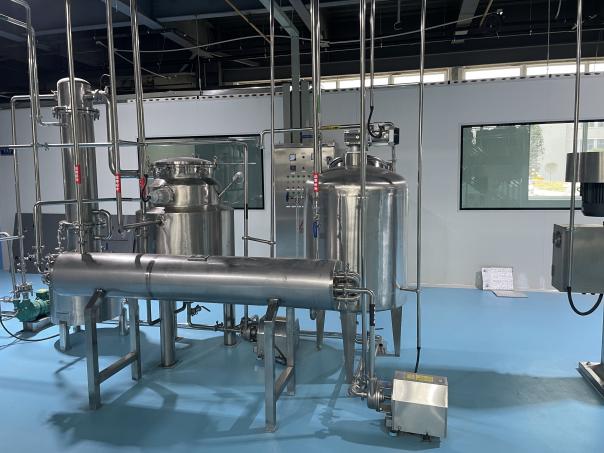
Production control and batch documentation support repeatable CoQ10 grade supply.
FAQ
Is CoQ10 powder 10% water-soluble grade truly water-soluble?
CoQ10 itself is insoluble in water and dissolves in organic solvents such as acetone and ether. The 10% water-soluble grade is a supplied powder format intended for aqueous formulation; confirm the dispersion method, carrier, and assay in the technical data sheet and COA before use.
Can a 99% CoQ10 powder be used in beverages?
A 99% fat-soluble grade is not a direct drop-in for aqueous beverages because CoQ10 is insoluble in water. It fits oil-based or emulsified systems. For a clear or stable beverage, select the 10% water-soluble grade or validate an emulsion with the 99% grade.
What documents should buyers request for CoQ10 powder?
Request a batch COA with assay, moisture, heavy metals, microbiological limits, and residual solvents; a TDS with solubility and dispersion guidance; a microbial fermentation statement; and current certification records. Guanjie Biotech's records list ISO 9001, HACCP, Halal, and Kosher certificates, and Coenzyme Q10 powder appears among related products. Confirm scope and validity for the exact grade.
How should buyers compare cost between 10% and 99% CoQ10 powder?
Compare cost per kilogram of CoQ10 delivered, not cost per kilogram of powder. The 10% grade carries a lower CoQ10 share, so more powder may be needed for the same dose. Include carrier, overage, testing, packaging, and freight in the comparison, and ask for a quote on a CoQ10 basis.
What sample and lead time should a buyer plan for?
Guanjie Biotech's capability data lists a 1 kg MOQ, 30-day lead time, and 30 tons monthly capacity, with OEM/ODM package customization. A sample should be tested in the actual matrix before scale-up. Request a CoQ10 sample or quote through https://guanjiebio.com, and download the brochure for the ingredient portfolio.
Conclusion: Match the Grade to the Route, Then Verify It
For CoQ10 powder 10% versus 99%, the cleaner decision is not a ranking of potency. It is a route decision. The 10% water-soluble grade is the practical starting point for aqueous formulations, provided the buyer validates dispersion and stability. The 99% fat-soluble grade is the practical starting point for oil, fat, and emulsion systems, provided the buyer validates solubility or emulsification. CoQ10 is insoluble in water and dissolves in organic solvents such as acetone and ether, and the CoQ10 is produced by microbial fermentation. Those facts should be written into the ingredient specification before the first purchase order.
Use the COA, TDS, certification records, and a bench sample to confirm the selected grade. For a sample request, quote, or technical review, contact Guanjie Biotech at info@gybiotech.com or visit https://guanjiebio.com. The nutraceutical ingredients brochure is available for download at Guanjie Nutraceutical Ingredients brochure.
Request a CoQ10 sample or quote, and confirm the grade against the final formulation route.
Next step: send the formulation route, target CoQ10 dose, and destination market to Guanjie Biotech. The technical team can confirm whether the 10% water-soluble or 99% fat-soluble CoQ10 powder grade is the better starting point, then provide the sample and documentation package.
Visit Guanjie Biotech | Download the brochure | Email: info@gybiotech.com
Have Questions or Need More Details?
Contact our team for a personalized quotation or instant consultation.
Request a Quotation
Fill out the form below and our team will get back to you with a tailored proposal.
WhatsApp Direct Chat
Prefer to chat in real-time? Message us on WhatsApp for instant assistance & quick answers.
- Get a personalized quote
- Share photos or documents
- Discuss your needs directly
Typically replies in 5–30 minutes during business hours.