Coenzyme Q10 Powder Compliance Checklist: CAS, Grade, COA
Short answer: a Coenzyme Q10 powder purchase is compliance-ready only when three documents agree with each other — an identity statement anchored to CAS 303-98-0, a written grade declaration that defines whether the number refers to a 10% water-soluble premix or a 99% high-purity powder, and a batch COA whose measured values, test methods, and limits match the specification sheet line by line. Any gap between those three is a procurement risk, not a paperwork detail.
Nutraceutical ingredients rarely fail on chemistry. They fail on documentation. Coenzyme Q10 is a good example: it is sold under one recognisable name, but the materials behind that name are not interchangeable, and the paperwork that travels with them usually is not either. This checklist is written for buyers at the research-to-evaluation stage who need to qualify a Coenzyme Q10 powder supplier before the first purchase order is signed.
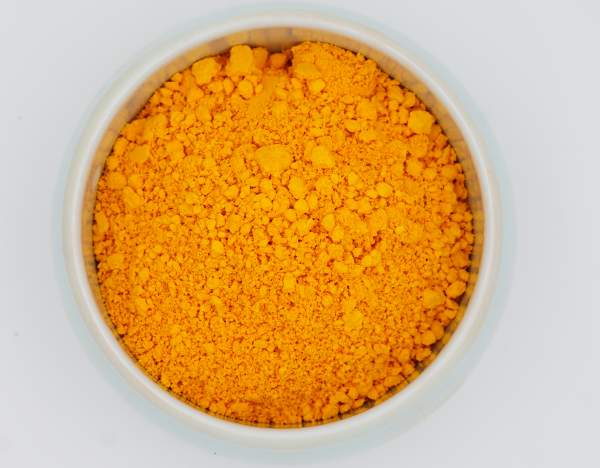
Coenzyme Q10 powder, catalogued by Guanjie Biotech under CAS NO.: 303-98-0.
Problem Definition: Where Coenzyme Q10 Compliance Reviews Break Down
Three failure patterns account for most Coenzyme Q10 sourcing problems, and none of them are visible on a quotation sheet.
1. Grade labels are collapsed into one product name
A request for “Coenzyme Q10 powder” can return a water-soluble premix and a high-purity crystalline powder under the same four words. If the purchase order does not define the basis of the percentage and whether a carrier or excipient is present, the two COAs are not comparable — even when both are technically accurate.
2. The COA is copied rather than measured
A certificate of analysis without a named test method, or with values that do not reconcile against the specification sheet, cannot support a compliance decision. It is a document, not evidence.
3. Solubility is claimed but not documented
“Water-soluble” is a performance statement. It depends on matrix, temperature, concentration, and how dispersion is measured. Without a test record behind it, the claim belongs in the marketing folder rather than the technical file.
Each of these is fixable at the checklist stage and expensive to fix after the goods arrive.
Industry Background: Why Documentation Pressure Is Rising
Coenzyme Q10 sits inside a large and still-growing ingredient category. The global nutraceutical ingredients market was estimated at USD 105.8 billion in 2026 (Global Market Insights, as recorded in the verified data set for this article). More buyers, more grades, and more private-label programs mean more documents moving between suppliers and formulators.
Regulatory expectations are pulling in the same direction. The U.S. FDA states that those who manufacture, package, or hold dietary supplements must follow current good manufacturing practices intended to help ensure identity, purity, quality, strength, and composition. For a new dietary ingredient intended for the U.S. market, the FDA also describes a notification process involving safety information submitted before marketing unless an applicable exception applies.
Public reference infrastructure exists as well. The NIH Dietary Supplement Label Database catalogues information printed on labels of dietary supplement products sold in the United States, including ingredient names, amounts, and label statements. Health Canada’s Natural Health Products Ingredients Database provides a comparable reference point for the Canadian market.
Detailed Solution: The Four Anchors of a Coenzyme Q10 Compliance File
Guanjie Biotech (Shaanxi Guanjie Biotech) is a China-based ingredient manufacturer founded in 2004, supplying high-purity natural plant extracts, fruit powders, and specialty chemical raw materials, with roughly 90% of output exported across Europe, North America, South America, Asia, and the Middle East. Its product catalogue lists Coenzyme Q10 powder under CAS NO.: 303-98-0. The company operates a 7,000 m² site that includes a 2,000 m² cGMP-standard clean workshop and a 500 m² laboratory, holds ISO, Halal, and Kosher certifications, and reports 16 national patents plus joint laboratory arrangements with Northwest University and the Xi’an Branch of the Chinese Academy of Sciences.
Those facts are useful only if they map onto something a buyer can check. The four anchors below are that map.
Anchor 1 — Identity: CAS 303-98-0, stated consistently
The CAS number is the fastest cross-document check available. It should appear on the specification sheet, the purchase order, the commercial invoice, the packing list, and the header of every batch COA. A supplier that only writes “Coenzyme Q10” on a certificate is asking the buyer to accept a name as an identity.
Anchor 2 — Grade: a written declaration, not a label
Commercial Coenzyme Q10 is commonly presented along two lines: a water-soluble grade typically labelled around 10%, and a high-purity grade typically labelled around 99%. The label alone tells a buyer very little. Two questions must be answered in writing before any comparison is valid:
- What is the basis of the percentage? Is the figure expressed on the material as supplied, or on a diluted premix that includes carrier or excipient?
- Is a carrier present, and which one? A premix and a crystalline powder cannot be compared on the same line of a table.
Anchor 3 — Solubility: documentation behind the word
If a supplier describes a grade as water-soluble, the file should contain a solubility or dispersibility record stating the medium, the temperature, the concentration tested, and the observation method. Without those four elements, “water-soluble” is an adjective rather than a specification.
Anchor 4 — Batch COA: line-by-line, with methods
Guanjie Biotech issues a complete Certificate of Analysis with every shipment, matched to the pre-shipment standard specification across purity, moisture, heavy metals, microbial limits, and active ingredient content. The company operates HPLC, UV, and GC testing capability and applies 100% testing across production. Where a quality discrepancy arises on arrival, Guanjie works with independent testing laboratories including SGS and Eurofins to resolve the technical audit.
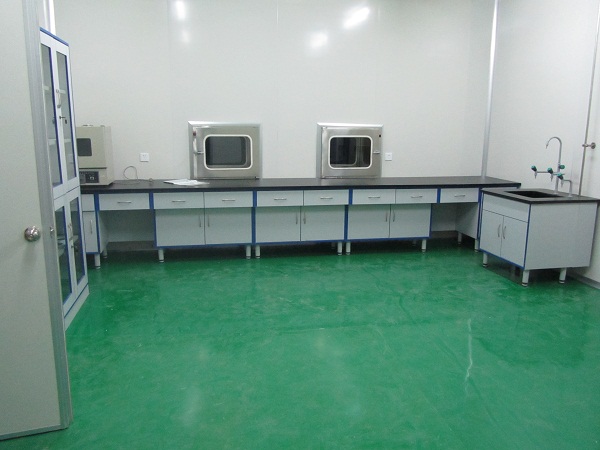
Method-backed testing is what separates a usable COA from a decorative one.
Step-by-Step Breakdown: Running the Checklist
Step 1 — Lock the identity before discussing anything else
Confirm CAS 303-98-0 on the specification sheet. Then confirm it again on the COA header and on the commercial documents. If any one of them is missing the number, request a corrected version. This step takes minutes and prevents most downstream confusion.
Step 2 — Force a written grade declaration
Ask the supplier to state, in writing: the grade name, the basis of the percentage, whether a carrier or excipient is included, and the intended application for that grade. A 10% water-soluble premix and a 99% high-purity powder answer different formulation questions. Neither is “better” in the abstract; they are simply not substitutes.
Step 3 — Request solubility documentation, not a solubility adjective
Ask for the test record behind any water-solubility claim: medium, temperature, concentration, method, and result. If the supplier cannot produce it, treat the claim as unverified and plan the formulation trial accordingly.
Step 4 — Audit the batch COA field by field
Work down the certificate in this order:
- Batch number and production date — must be traceable to the shipment.
- Identity — CAS 303-98-0 in the header.
- Assay or content — measured value, specification range, and the method used.
- Moisture — measured value against the stated limit.
- Heavy metals — measured value against the stated limit.
- Microbial limits — measured value against the stated limit.
- Active ingredient content — where the grade specifies one.
- Test method column — HPLC, UV, or GC, named per parameter.
- Release signature and date — the certificate must be released, not drafted.
Step 5 — Reconcile COA against specification sheet
Every limit on the COA should exist on the specification sheet, and every limit on the specification sheet should appear on the COA. Missing parameters are the most common defect found at this stage, and they are usually the parameters the buyer most needs.
Step 6 — Decide whether independent re-testing is required
Third-party re-testing is not mandatory for every lot. It is warranted for first-lot approval, for any COA that does not reconcile, and for markets where the buyer’s own quality system requires independent confirmation. Naming the laboratory in advance — SGS and Eurofins are the two Guanjie Biotech works with — removes ambiguity if a discrepancy appears later.
Step 7 — Check certification scope, not just certification presence
ISO, Halal, and Kosher certificates are only meaningful if the scope covers the product and the site in question. Request the certificate copy with scope pages, not a thumbnail.
Step 8 — Set the change-control rule in the contract
Define what happens if the supplier changes carrier, processing route, or specification. A compliance file that has no change-notification clause is only valid until the next production run.
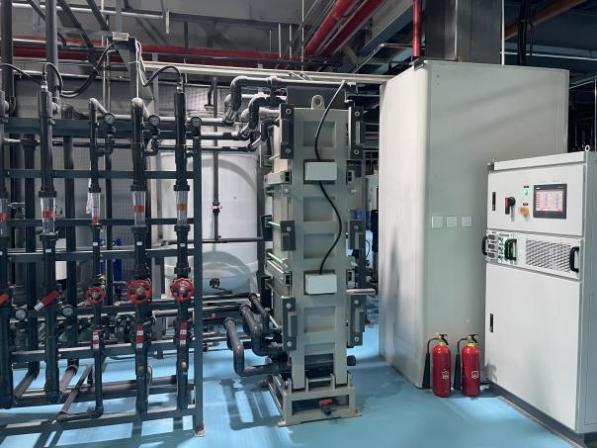
Batch traceability starts in production and ends in the COA the buyer receives.
Use Cases: Applying the Checklist to Real Formulation Scenarios
Scenario A — Water-soluble grade for a powdered beverage or sachet
Here the buyer is choosing a 10%-type water-soluble grade because the application requires dispersion in a liquid matrix. The checklist emphasis shifts: solubility documentation and carrier declaration carry more weight than absolute assay, because the delivered dose depends on the premix composition. Ask for the dispersion record, the carrier identity, and the assay basis on the COA before locking the label claim.
Scenario B — High-purity grade for hard capsules
Dietary supplements and hard capsules remain the largest market segment for this class of ingredient, and Coenzyme Q10 is a common component of that segment alongside actives such as Curcumin 95%, Spermidine, NMN, and Glucosamine. For capsule formats, the priority reverses: assay precision, moisture, and particle behaviour matter more than dispersion testing. The COA review should be strictest on the assay and moisture lines.
Scenario C — Multi-ingredient antioxidant formulation
Coenzyme Q10 appears on shortlists for antioxidant and core-health supplement formulas, frequently alongside CoQ10, Shilajit, and Red Yeast Rice in steady-volume programmes, and as one of the practical starting points for a new antioxidant line. In a multi-ingredient formula, the compliance risk multiplies: each active arrives with its own COA, and the finished-product specification has to reconcile all of them. Standardising the COA fields across suppliers is the cheapest way to keep that manageable.
Scenario D — Supplier qualification proof in an adjacent category
Documentation discipline is easier to judge with a longer track record. Guanjie Biotech’s phosphatidylserine programme illustrates the pattern: a South Korean health food and functional supplement manufacturer has used the material at 50 MT per year for 3 years, supporting a cognitive health product line, with high-purity material meeting KFDA food raw material requirements and a full COA provided for each batch. The ingredient differs from Coenzyme Q10, but the document standard a buyer should demand is the same.
Comparison Table: Coenzyme Q10 Document Review Matrix
The table below converts each checklist item into the specific document a buyer should hold before approval. It records what to verify rather than asserting a specification value, because grade specifications vary by supplier and must be confirmed in writing for each order.
| Check point | Document the buyer should hold | What approval depends on |
|---|---|---|
| Identity | Specification sheet and batch COA header | CAS 303-98-0 appears consistently on specification, COA, and commercial documents |
| Grade declaration | Written grade statement from the supplier | Percentage basis defined; carrier or excipient presence stated explicitly |
| Assay / content | Batch COA, assay line | Measured value sits inside the stated specification range |
| Test method | Batch COA, method column | HPLC, UV, or GC named against each reported parameter |
| Moisture | Batch COA, moisture line | Measured value sits inside the stated limit |
| Heavy metals | Batch COA, heavy metals line | Measured value sits inside the stated limit |
| Microbial limits | Batch COA, microbiology line | Measured value sits inside the stated limit |
| Solubility claim | Solubility or dispersibility test record | Medium, temperature, concentration, and observation method all recorded |
| Certification | ISO, Halal, Kosher certificate copies | Scope covers the product and the manufacturing site |
| Independent verification | Third-party report from SGS, Eurofins, or equivalent | Laboratory name, sample ID, and test date present |
| Traceability | Batch number linking COA to shipment | Batch number on COA matches the invoice and packing list |
Matrix reflects the document set Guanjie Biotech provides per shipment; specification values are order-specific and must be confirmed per grade.
FAQ
Which CAS number identifies Coenzyme Q10 powder, and why does it matter at the purchasing stage?
Coenzyme Q10 powder is identified by CAS 303-98-0, and Guanjie Biotech catalogues the material under that number. The CAS reference matters because ingredient names are written inconsistently across quotations, labels, and certificates, while the CAS number is not. A buyer should confirm that 303-98-0 appears on the specification sheet, the batch COA header, and the commercial documents. Where it is missing, request a corrected document rather than accepting the trade name as an identity statement. This is the single fastest consistency check available before any technical review begins.
How should a buyer verify a 10% water-soluble grade claim against a 99% grade claim?
Verification starts with a written declaration, not a comparison of numbers. Ask the supplier to state the basis of the percentage — whether it is expressed on the material as supplied or on a premix containing carrier or excipient — and to confirm whether a carrier is present. Once the basis is fixed, compare the COA assay value against the specification on that same basis. A water-soluble premix grade and a high-purity grade answer different formulation needs and are not directly interchangeable, so the comparison should be made against the intended application rather than between the two headline figures. Where a water-solubility claim is made, request the dispersion test record supporting it.
What should be reviewed on a Coenzyme Q10 batch COA?
A usable batch COA should carry the batch number and production date, the identity reference, the assay or content value with its specification range, moisture, heavy metals, microbial limits, and active ingredient content where the grade specifies one, with the test method named against each parameter. Guanjie Biotech issues a complete COA with every shipment, matched to the pre-shipment standard specification across purity, moisture, heavy metals, microbial limits, and active ingredient content, supported by in-house HPLC, UV, and GC testing capability and 100% testing across production. The COA should be reconciled line by line against the specification sheet before release, not simply filed.
Does a supplier COA need independent third-party confirmation?
Not for every lot, but it is warranted for first-lot approval, for any certificate that does not reconcile against the specification, and wherever the buyer’s own quality system requires external confirmation. Guanjie Biotech works with independent testing laboratories including SGS and Eurofins where a quality discrepancy arises on arrival and a technical audit is needed. The regulatory context supports this discipline: the U.S. FDA states that dietary supplement manufacturers, packagers, and holders must follow current good manufacturing practices intended to help ensure identity, purity, quality, strength, and composition. A COA is evidence toward that obligation, and independent re-testing is how evidence is tested.
What are the minimum order quantity and lead time for Coenzyme Q10 powder?
Guanjie Biotech publishes a minimum order quantity of 1 kg and a lead time of 30 days, with monthly production capacity of 30 tons, OEM/ODM support including customised packaging, and export coverage across the EU, Middle East, North America, South America, and Asia. Buyers evaluating a first order can request a sample together with the specification sheet and a representative batch COA, then run the checklist above against the actual documents before committing to a production quantity. Sample requests, quotations, and the full ingredient catalogue are available by email at info@gybiotech.com.
Conclusion
A Coenzyme Q10 compliance review is a document exercise carried out before the goods move, and it succeeds or fails on three points: whether CAS 303-98-0 appears consistently, whether the grade declaration defines its own basis, and whether the batch COA reports measured values with named methods against the specification. Solubility claims sit alongside these as a fourth check, useful only when a test record exists behind the word.
The checklist is not designed to make a supplier look good or bad. It is designed to make the file complete enough that a formulator, a quality manager, and a regulator can read the same documents and reach the same conclusion. Work through the eight steps, reconcile the COA against the specification sheet, and decide explicitly whether independent re-testing is required — that sequence removes most of the risk that appears later as a rejected lot.
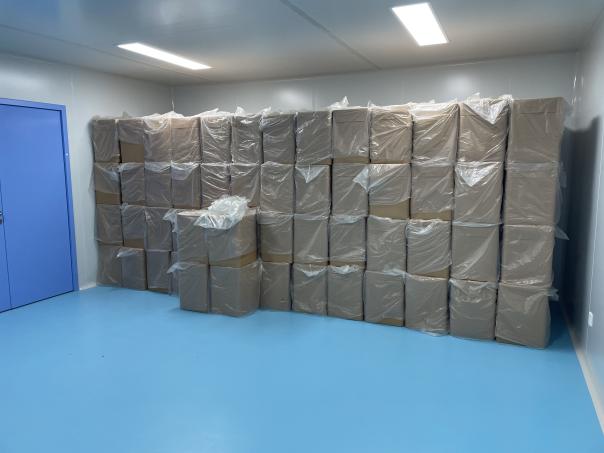
Batch traceability runs from the warehouse record back to the released certificate.
Next step: request a Coenzyme Q10 powder sample with its specification sheet and a representative batch COA, and run this checklist against the documents you receive.
Download the full ingredient catalogue: Guanjie Nutraceutical Ingredients (PDF)
Guanjie Biotech · guanjiebio.com · info@gybiotech.com · +86 150-2999-3470
Have Questions or Need More Details?
Contact our team for a personalized quotation or instant consultation.
Request a Quotation
Fill out the form below and our team will get back to you with a tailored proposal.
WhatsApp Direct Chat
Prefer to chat in real-time? Message us on WhatsApp for instant assistance & quick answers.
- Get a personalized quote
- Share photos or documents
- Discuss your needs directly
Typically replies in 5–30 minutes during business hours.