Coenzyme Q10 Supplier Evaluation: Fermentation, In-House Labs, and 10% vs 99% Grades
Nutraceutical Ingredients · Supplier Evaluation Guide
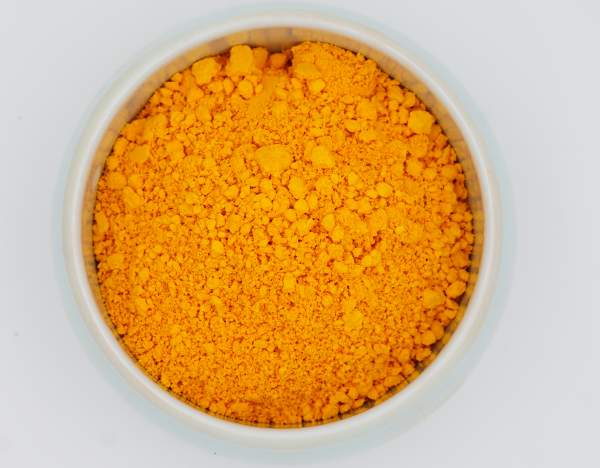
Coenzyme Q10 powder (CAS 303-98-0) is listed by Guanjie Biotech in two specifications: 10% (water soluble) and 99%.
A Coenzyme Q10 supplier is easier to qualify when the decision is split into three verifiable questions: how the material is produced, who owns the plant and the laboratory behind it, and whether the grade on the offer matches the dosage form you intend to fill. Coenzyme Q10 powder is a yellow to light orange-yellow crystalline substance, listed under CAS 303-98-0 and also referred to as ubiquinone or ubidecarenone. Guanjie Biotech (Shaanxi Guanjie Biotech), a manufacturer of high-purity natural plant extracts, premium fruit powders and specialized chemical raw materials established in 2004 in Xi'An City, Shaanxi Province, China, supplies the material in a 10% water-soluble grade and a 99% grade, produced using microbial fermentation technology at independent manufacturing facilities with in-house testing laboratories.
This page is written as an evaluation guide rather than a product sheet. It sets out what a buyer at the awareness-to-research stage can realistically check before requesting a sample: the production route, the grade architecture, the laboratory footprint, the identity data that should appear on every document, and the specific points where a supplier statement has to be confirmed rather than assumed.
Problem Definition: Why CoQ10 Offers Are Hard to Compare at the Research Stage
Coenzyme Q10 is an ingredient where a shortlist can look complete and still be unusable. Two quotations can carry the same product name and the same CAS number and describe materially different things, because the specification line behind the offer is doing most of the work. A 10% water-soluble grade and a 99% grade are not two prices for one product; they are two specifications with different active content, different handling behaviour and different format fit. Once that is accepted, the comparison problem becomes easier to structure.
- Grade ambiguity. An offer that does not name the specification cannot be benchmarked. The two listed grades for this material are 10% (water soluble) and 99%; anything else is a different conversation.
- Route ambiguity. Microbial fermentation is a process claim that creates an audit trail. When the route is not stated, the buyer has nothing to verify and no basis for a batch-to-batch consistency discussion.
- Facility ambiguity. Independent manufacturing facilities and testing laboratories are a different proposition from a trading position. The distinction only surfaces when someone asks who runs the plant and who signs the assay.
- Solubility mismatch. The base substance is described as fat-soluble: insoluble in water and soluble in organic solvents such as acetone and ether. A formulator who orders on price alone can end up with material that will not disperse in the intended system.
None of these gaps is closed by a lower price. They are closed by requesting the specific evidence that corresponds to each one, in a fixed order, before any purchase order is raised.
Industry Background: Where Coenzyme Q10 Sits in Nutraceutical Ingredients
Global Market Insights estimates the global nutraceutical ingredients market at USD 105.8 billion in 2026, a figure that spans vitamins, probiotics, proteins, amino acids and phytochemicals. Coenzyme Q10 powder is positioned inside that broad category: Guanjie Biotech lists it as a nutraceutical ingredient intended for the dietary supplement, health food, beverage and cosmetics industries. That four-industry footprint explains why the same CAS number appears in capsule lines, stick packs, ready-to-drink formats and topical formulations, each with different expectations of the raw material.
The regulatory layer sits above the commercial one. The U.S. Food and Drug Administration states that those who manufacture, package or hold dietary supplements must follow current good manufacturing practices intended to help ensure identity, purity, quality, strength and composition. Separately, FDA describes a notification process for new dietary ingredients intended for the U.S. market, involving safety information submitted before marketing unless an applicable exception applies. Neither statement classifies Coenzyme Q10 itself, and neither proves that any individual supplier is compliant. What they do establish is the standard a buyer is auditing against: identity, purity and composition are the buyer's risk, not the supplier's marketing line.
Against that backdrop, supplier scale becomes relevant only when it is tied to specific infrastructure. Guanjie Biotech reports a 7,000 m² footprint, a 2,000 m² cGMP-standard clean workshop, a 500 m² laboratory and an annual output of 500 tons across its portfolio, with roughly 90% of products exported to markets that include Germany, France, the Netherlands, the United Kingdom, Italy, Poland, Spain, Canada, Mexico, Brazil, Japan, South Korea and Australia. Those are company-reported figures and belong in a due-diligence file, not in a purchase decision on their own.
Detailed Solution: What a Fermentation-Based Coenzyme Q10 Supplier Should Evidence
1. A production route you can name
Microbial fermentation technology is the route Guanjie Biotech states for its Coenzyme Q10 powder. For a buyer, the value of a named route is that it creates something auditable: fermentation involves upstream cultivation and downstream recovery steps that can be described, scheduled and documented, and it gives the supplier a defined process to defend when batch consistency is questioned. Guanjie Biotech also states that its Coenzyme Q10 aligns identically with the body's natural form, delivering high biocompatibility and high biological activity. That sentence should be read as supplier positioning rather than a test result; the way to test it is your own sample data against your own specification.
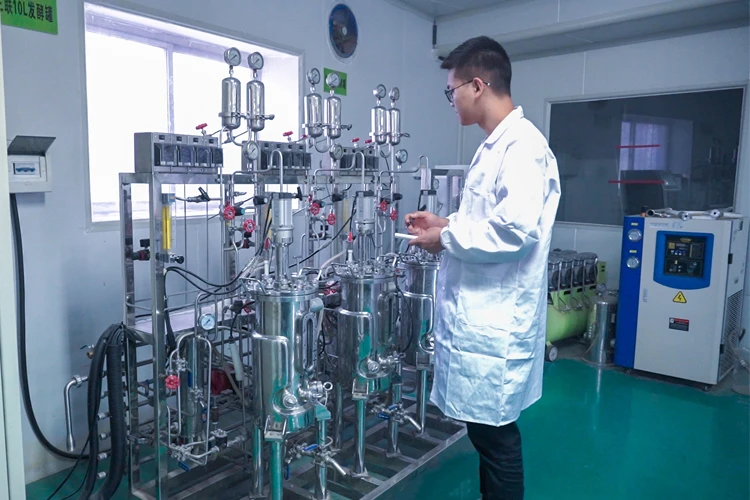
Fermentation-route production equipment inside the Guanjie Biotech manufacturing site.
2. A grade architecture that maps to dosage form
Two specifications are listed for this material: 10% (water soluble) and 99%. Both share the same identity data — CAS 303-98-0, yellow or light orange-yellow appearance, odorless and tasteless — and both are described as insoluble in water as a base substance, dissolving in organic solvents such as acetone and ether. The water-soluble designation therefore belongs to the 10% grade as listed, not to the 99% grade, and that single line on a specification sheet determines which formulations the material can realistically enter.
In practice, buyers match grade to format. Aqueous systems — functional beverages, ready-to-drink formats, powder sachets and other reconstituted products — are the natural home of the grade listed as water soluble. Capsules and tablets built on oil or emulsion systems are the more natural fit for the 99% material, where the formulator is working with the fat-soluble character of the substance rather than against it. Asking a supplier to quote without naming the grade is the most common way to end up with an unusable comparison.
3. Laboratories that sit inside the same operation
Guanjie Biotech states that it maintains independent manufacturing facilities and testing laboratories for Coenzyme Q10 powder production, and guarantees rigorous quality control, high purity and steady batch consistency. The infrastructure behind that statement is described at company level: a 500 m² laboratory configured as a research and development laboratory plus a physical and chemical analysis laboratory, built to GMP and QS standards; a seven-engineer R&D team; more than 16 national patents; a master's experimental base run with Northwest University; and a strategic partnership with the Xi'an Branch of the Chinese Academy of Sciences. Testing capability referenced by the company covers HPLC, UV and GC methods, alongside customized R&D and OEM/ODM support.
An in-house laboratory matters for one practical reason: when an assay result is challenged, the supplier can rerun the sample, show the method and compare it with the retained batch. A supplier without that capability has to rely on a third party's turnaround time to answer the same question.
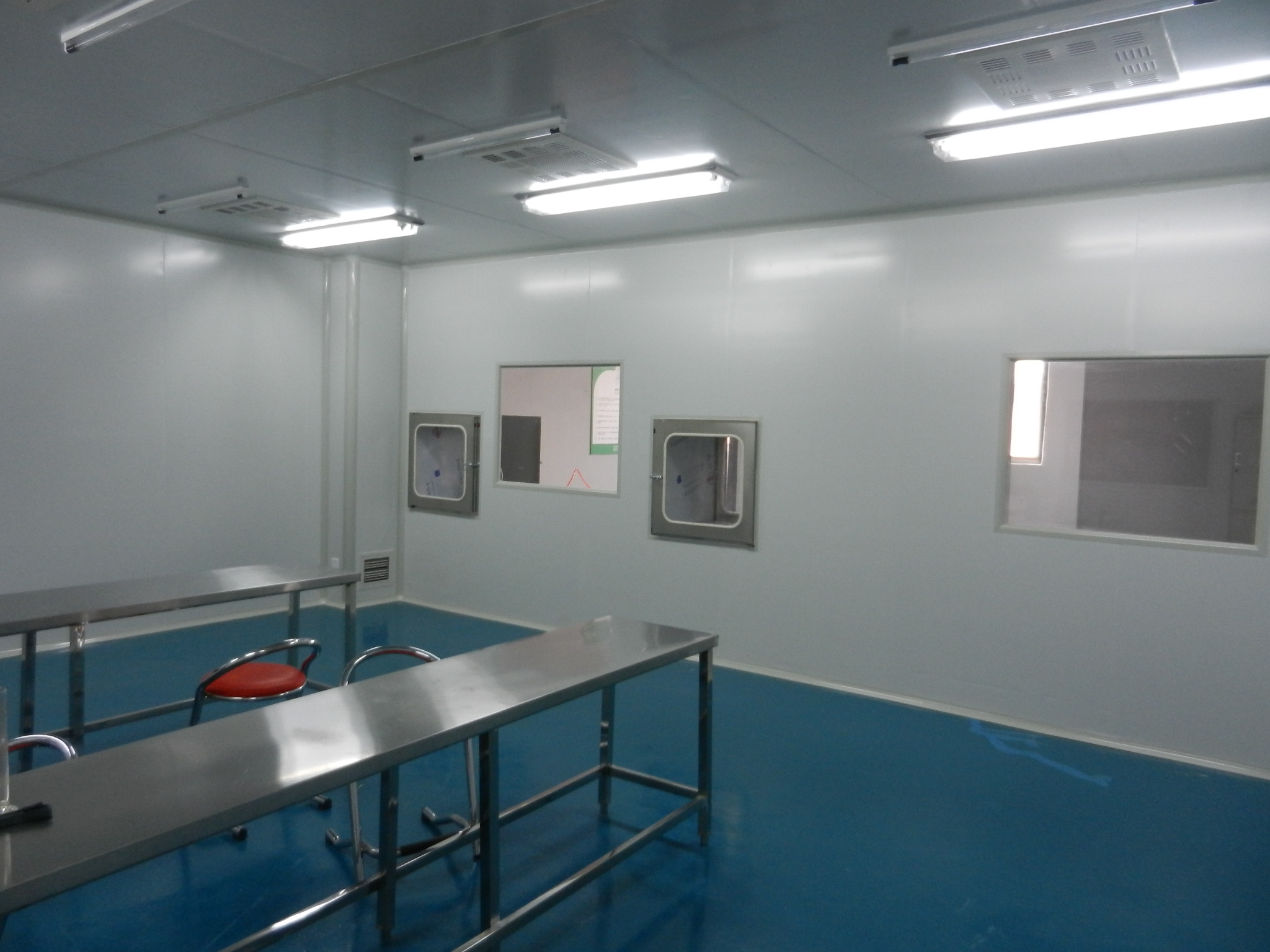
The 2,000 m² cGMP-standard clean workshop where nutraceutical ingredients are produced.
4. Identity and handling data that should match on every document
The identity block is short and should be identical across the specification sheet, the certificate of analysis and the commercial invoice: product name Coenzyme Q10 powder, CAS 303-98-0, yellow or light orange-yellow powder, odorless and tasteless, insoluble in water, soluble in organic solvents. Handling instructions belong in the same block. The material should be stored in a cool, dry and dark place, sealed tightly after opening, and kept away from high temperature and moisture; the stated working condition is to avoid direct sunlight. When a supplier quotes, the specification line — 10% (water soluble) or 99% — should appear on the quotation itself rather than only in a brochure.
Step-by-Step Breakdown: A Seven-Step Coenzyme Q10 Supplier Evaluation
- Fix the specification before the price. Decide whether the formula needs the 10% water-soluble grade or the 99% grade. Without that decision, every quotation you receive is measuring a different product.
- Ask for the production route in writing. Microbial fermentation is a process claim; ask the supplier to state it on the technical response, not just in conversation.
- Establish who owns the plant. Independent manufacturing facilities and testing laboratories are the point of separation between a manufacturer and a reseller. Ask for the site, the workshop and the laboratory in the same answer.
- Review the laboratory and the methods. Confirm which analytical techniques the laboratory runs and request that the assay method for your grade be named on the certificate of analysis, not left blank.
- Build the document set. Specification sheet with CAS 303-98-0, batch certificate of analysis, copies of the certifications the supplier holds — Guanjie Biotech states that its products are supported by ISO, Halal and Kosher certifications — and the storage statement.
- Sample and bench-trial the grade you will actually buy. Run the sample at your target inclusion level in your own base, then compare the sample certificate against the specification sheet line by line.
- Confirm commercial and continuity terms last. Request lead time per grade and quantity in writing, along with packaging format, MOQ and delivery terms, and place the supplier's capacity statement next to the quantity you will actually consume.
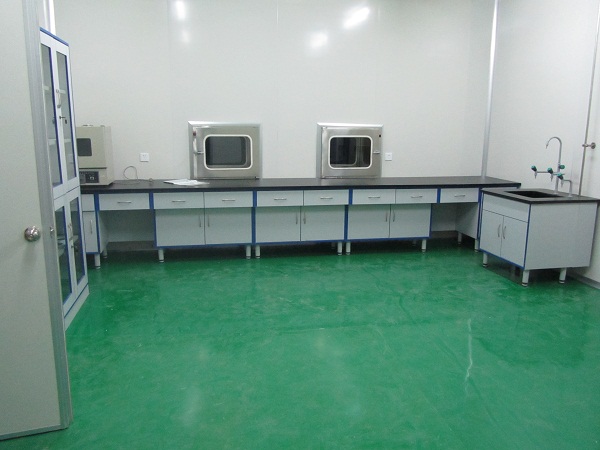
Batch testing inside the in-house laboratory before release.
Use Cases: Where Each Grade Fits
The same Coenzyme Q10 powder is listed for four industries — dietary supplement, health food, beverage and cosmetics — but the grade decision is made inside each of them for different reasons.
- Hard capsules and tablets. Oil-based and emulsion systems suit the 99% grade, where the formulator is deliberately working with a fat-soluble material.
- Stick packs and powder blends. Where the finished product is reconstituted by the consumer, the grade listed as water soluble is the relevant starting point.
- Functional beverages and ready-to-drink formats. Aqueous systems place the highest value on the water-soluble designation, and the lowest tolerance on undispersed material.
- Cosmetic and nutricosmetic formulations. Coenzyme Q10 powder is listed as intended for the cosmetics industry alongside supplements, health food and beverages, so the grade should be chosen against the carrier system of the finished product.
- Multi-ingredient formulas. Buyers combining CoQ10 with other actives from the same portfolio — Phosphatidylserine, NMN, Resveratrol, Ferulic Acid or Red Yeast Rice Powder — should confirm that each component's specification and documentation arrive in the same format, otherwise the combined dossier becomes the bottleneck.
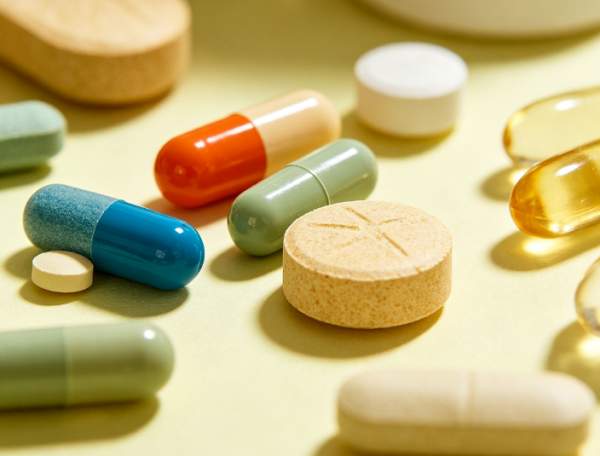
Typical formats for nutraceutical ingredient powders: capsules, sachets and functional beverages.
Comparison Table: 10% Water-Soluble vs 99% Coenzyme Q10
| Evaluation point | 10% grade | 99% grade |
|---|---|---|
| Listed specification | 10% (water soluble) | 99% |
| CAS number | 303-98-0 | 303-98-0 |
| Appearance | Yellow or light orange-yellow; odorless and tasteless | Yellow or light orange-yellow; odorless and tasteless |
| Solubility statement | Listed as the water-soluble grade; base substance described as insoluble in water | Base substance insoluble in water; soluble in organic solvents such as acetone and ether |
| Active content in the powder | Lower, by specification | Higher, by specification |
| Typical format direction | Aqueous systems: beverages, ready-to-drink formats, reconstituted powders | Oil and emulsion systems: capsules, tablets, topical oil phases |
| What the quotation must state | Grade named as 10% (water soluble) | Grade named as 99% |
| What the certificate must confirm | Result consistent with the 10% specification, method stated | Result consistent with the 99% specification, method stated |
Specification and identity data as listed by Guanjie Biotech for Coenzyme Q10 powder. Format direction reflects formulation practice, not a supply restriction.
FAQ: Coenzyme Q10 Supplier Evaluation
Which documents should a Coenzyme Q10 supplier provide during compliance review?
Start with four documents: a specification sheet that names the material and CAS 303-98-0, a batch certificate of analysis for the grade you will buy, copies of the certifications the supplier actually holds, and the storage statement for the packed material. Guanjie Biotech states that its products are developed and produced in accordance with international quality requirements and are supported by ISO, Halal and Kosher certifications. Documents do not transfer legal responsibility, however: FDA states that manufacturers, packagers and holders of dietary supplements must follow current good manufacturing practices covering identity, purity, quality, strength and composition, so a buyer should map each supplier document against that framework. Ingredient-specific market-entry status, including whether any new dietary ingredient notification applies, has to be confirmed separately with the relevant authority rather than inferred from a supplier certificate.
How can a buyer verify that the Coenzyme Q10 is fermented in-house?
Ask for the production route in writing, then ask who owns the plant and the laboratory. Guanjie Biotech describes its Coenzyme Q10 powder as produced using microbial fermentation technology, with independent manufacturing facilities and testing laboratories dedicated to that production. The company-level infrastructure behind the statement includes a 7,000 m² site, a 2,000 m² cGMP-standard clean workshop, a 500 m² laboratory operating as a research and development laboratory plus a physical and chemical analysis laboratory built to GMP and QS standards, a seven-engineer R&D team and more than 16 national patents. Because these are supplier-reported facts, they are normally paired with a site audit, certificate verification or third-party testing before a supplier is approved.
Does the 10% water-soluble grade cost less than the 99% grade?
Guanjie Biotech does not publish Coenzyme Q10 prices, and the two grades cannot be compared on a price-per-kilogram-of-powder basis alone. By specification the 10% water-soluble grade and the 99% grade carry different active content, so a like-for-like comparison has to be built on the quantity of Coenzyme Q10 the formula actually requires, then converted into pack size, minimum order quantity and delivery terms. Ask for a quotation per grade, with the specification named on the quotation itself, and compare the two offers on the same basis rather than on the headline number.
Can both grades be sampled before a purchase order is placed?
Sampling both grades is the fastest way to confirm which one fits your dosage form. Guanjie Biotech lists free samples among its support capabilities, alongside HPLC, UV and GC testing, customized R&D and OEM/ODM solutions. A practical sequence is to request the grade that matches your intended format, run a bench trial at your target inclusion level in your own base, and compare the sample certificate of analysis against the specification sheet line by line before scaling up. Where a second format is planned, sampling the alternative grade at the same time avoids a second approval cycle later.
How should lead time and supply continuity be assessed?
Assess them as company facts plus written commitments. Guanjie Biotech reports a 7,000 m² facility, an annual output of 500 tons across its portfolio, an export ratio of about 90% and customers in markets including Germany, France, the Netherlands, the United Kingdom, Italy, Poland, Spain, Canada, Mexico, Brazil, Japan, South Korea and Australia. For a specific order, ask for the lead time per grade and quantity in writing, confirm packaging and delivery terms, and check that the storage instructions your warehouse will follow match the supplier's — cool, dry and dark storage, sealed packaging, no high temperature or moisture. The next step is a written quotation or a sample request: contact info@gybiotech.com, or download the Guanjie Nutraceutical Ingredients catalogue for the full specification set.
Conclusion: Evaluate the Route, the Laboratory, Then the Grade
Coenzyme Q10 supplier evaluation becomes manageable once the order of questions is fixed. The production route comes first, because microbial fermentation is a claim that can be written down, audited and linked to a specific plant. The laboratory comes second, because in-house testing is what allows a supplier to answer an assay question with a method and a retained sample rather than a delay. The grade comes third, and only after the formula is decided: 10% (water soluble) and 99% are two specifications sharing one CAS number, and treating them as interchangeable is the single most expensive mistake in this category.
For Guanjie Biotech, the facts a buyer can act on are narrow and specific: Coenzyme Q10 powder under CAS 303-98-0, produced by microbial fermentation, supplied in 10% water-soluble and 99% grades, backed by independent manufacturing facilities and testing laboratories, ISO, Halal and Kosher certifications, and a 7,000 m² site with a 2,000 m² cGMP-standard clean workshop and a 500 m² laboratory. Everything beyond that should be verified in your own trial, on your own specification, before the first commercial order.
Next step: sample or quotation for both grades
Request the 10% water-soluble grade, the 99% grade, or both, together with the batch certificate of analysis and the specification sheet for the grade you intend to buy.
Email: info@gybiotech.com | Tel / WhatsApp: +86 150-2999-3470
Website: guanjiebio.com | Catalogue: Guanjie Nutraceutical Ingredients (PDF)
Guanjie Biotech (Shaanxi Guanjie Biotech), Room 2-20201, Unit 2, Building 2, Qinchuang Changan Chuanghui Zhongxin Industrial Park, No. 333 Xuefu Street, Chang'An District, Xi'An City, Shaanxi Province, China.
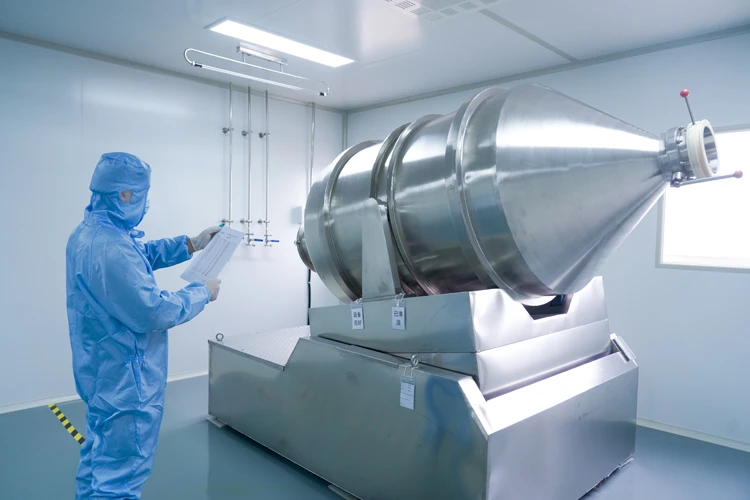
Packing and dispatch for export orders at the Guanjie Biotech facility.
Have Questions or Need More Details?
Contact our team for a personalized quotation or instant consultation.
Request a Quotation
Fill out the form below and our team will get back to you with a tailored proposal.
WhatsApp Direct Chat
Prefer to chat in real-time? Message us on WhatsApp for instant assistance & quick answers.
- Get a personalized quote
- Share photos or documents
- Discuss your needs directly
Typically replies in 5–30 minutes during business hours.