
Matcha vs Blue Butterfly Pea Powder for Natural Color: Mesh, Solubility, and Label Fit
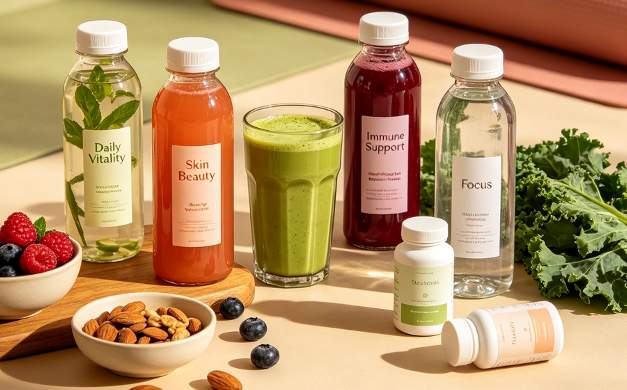
Botanical colour powders are usually evaluated inside a finished food or beverage matrix, not on a shade card.
Matcha powder and blue butterfly pea flower powder are both purchased as natural colour ingredients, but they fail for different reasons. The practical answer most formulation teams arrive at is this: choose blue butterfly pea flower powder when the target is a water-soluble blue that shifts toward purple as pH changes, and choose matcha powder when the green colour and the tea identity must come from one ingredient, milled at low temperature and specified against an 80-mesh screen.
Short answer
- Blue butterfly pea flower powder — water-soluble anthocyanin pigment; blue in solution, shifting toward purple as pH rises; documented 100.0% pass 80 mesh; 100% natural without additives.
- Matcha powder — milled green tea leaf produced with low-temperature grinding; colour and tea flavour come from the same ingredient; supplied in Grade 1 to Grade 6 with an 80-mesh specification confirmed on the batch COA.
- The deciding variable — label fit, not shade. A colour that photographs well but forces an ingredient declaration the brand cannot support is the wrong choice.
The Problem: Natural Colour Projects Fail on Mesh, Solubility, or Label Fit
Most colour evaluations start with a shade comparison and end with a purchase order. That sequence is the reason so many natural colour projects stall at pilot scale. The buyer has chosen a colour, but has not yet tested the three properties that determine whether the colour survives production and labelling.
1. Mesh and particle size. A powder that is not milled to a consistent fineness disperses unevenly. In dry blends it produces visible specks; in liquids it sediments before filling. Mesh is a specification, not a marketing detail, and it belongs on the certificate of analysis (COA) as a measured pass rate rather than a claim.
2. Solubility and dispersion. Water-soluble pigments and suspended leaf powders behave differently in the same beverage base. A soluble pigment colours a clear drink evenly; an insoluble powder needs homogenisation, stabiliser support, or an opaque matrix to look intentional.
3. Stability in the real matrix. Blue butterfly pea pigment responds to pH, moving from blue toward purple as acidity changes. Matcha green is less pH-driven but is exposed to heat and light during processing. Both behaviours are manageable — but only if they are tested before the label design is signed off.
4. Label fit. This is the criterion that usually decides between the two powders. If the brand position is a botanically coloured product with no added colour additive, the ingredient must be declarable as a botanical and must be documented as such. Blue butterfly pea flower powder is specified as 100% natural without additives. Matcha carries the advantage that the colouring ingredient and the flavour ingredient are the same line on the label.
Industry Background: Colour Screening Now Starts With Documentation
Two pressures have changed how natural colours are bought. The first is formulation: brands want colour that reads as botanical rather than as a synthetic dye replacement, which pushes matcha and butterfly pea into the same shortlist even though they behave differently. The second is documentation: a colour ingredient is now assessed by the paperwork that arrives with the sample.
Market attention on matcha supports the first pressure. One commercial research estimate places the global matcha market at USD 3.91 billion in 2026, rising to USD 5.35 billion by 2031 at a compound annual growth rate of 6.47%. The figure is a commercial projection rather than an audited statistic, so it is best used as directional context for category interest rather than as a planning input.
The second pressure is regulatory and is better documented. The U.S. Food and Drug Administration states that those who manufacture, package, or hold dietary supplements must follow current good manufacturing practices intended to help ensure identity, purity, quality, strength, and composition. A colour or botanical powder used in a supplement therefore inherits a documentation expectation: specification, test method, and batch result.
Label benchmarking is also more accessible than it used to be. The NIH Dietary Supplement Label Database catalogs information printed on labels of dietary supplement products sold in the United States, including ingredient names, amounts of dietary ingredients, and label statements. For a formulator deciding how to declare a botanical colour, that database is a practical reference point for what comparable products actually print.
The practical consequence for buyers of nutraceutical ingredients is straightforward: ask for the COA and the specification before the sample trial, not after. A colour that cannot be documented cannot be launched.
Detailed Solution: How the Two Powders Actually Differ
Guanjie Biotech (Shaanxi Guanjie Biotech Technology Co., Ltd.) is a China-based supplier of high-purity natural plant extracts, fruit powders, and specialty chemical raw materials, founded in 2004 and exporting about 90% of its output to markets including Germany, France, the United Kingdom, Canada, Japan, Australia, and South Korea. Both powders discussed here sit inside that portfolio, which matters for this comparison because the two products share one quality system, one testing route, and one documentation format.
Matcha Powder: Low-Temperature Grinding and an 80-Mesh Target
Matcha powder is milled green tea leaf. The colour is not an added pigment; it is the leaf itself, reduced to a fine powder. Because the same powder supplies colour, flavour, and mouthfeel, the ingredient declaration and the sensory profile move together — an advantage when the product is positioned as a tea or a botanical food, and a constraint when the formulator only wants colour.
Guanjie Biotech supplies matcha powder in grades 1 to 6. Milling is carried out with low-temperature grinding, an approach intended to limit the heat exposure that fine milling generates, since heat is the main risk to the fresh green tone and the aroma of a ground leaf. The particle-size specification is an 80-mesh screen, and the pass rate for a given lot should be read from the batch COA rather than assumed from the grade name.
In water, matcha behaves as a suspension rather than a solution. It adds opacity and body, settles if left unstirred, and needs homogenisation or a stabiliser in a clear beverage format. That is not a defect; it is the reason matcha works well in dairy-style drinks, desserts, and blended applications where an opaque, textured result is wanted.
Blue Butterfly Pea Flower Powder: Water-Soluble Pigment and pH Response
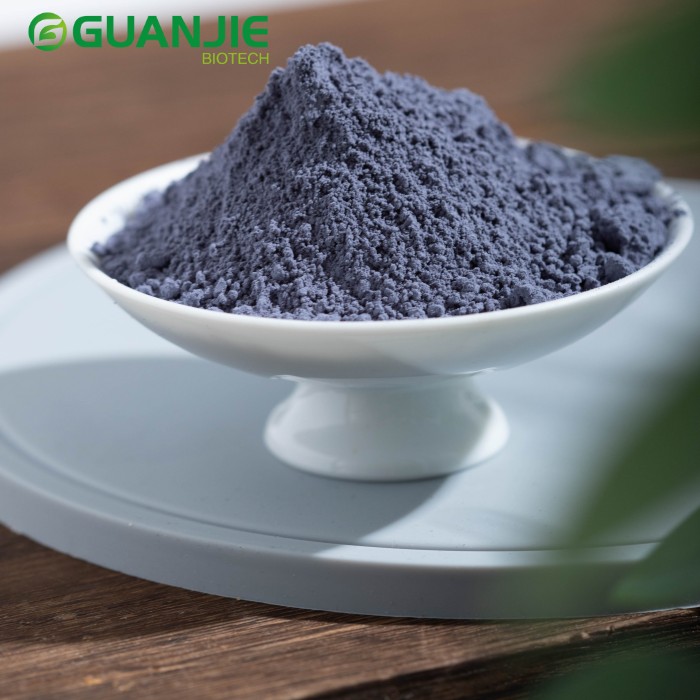
Blue butterfly pea flower powder: a water-soluble anthocyanin pigment that shifts from blue toward purple as pH rises.
Blue butterfly pea flower powder is produced from butterfly pea and appears as a gray-blue powder. Guanjie Biotech's specification states hot air drying as the processing method, 100.0% pass 80 mesh, and 100% natural without additives. The material is described by the supplier as non-GMO.
The functional difference from matcha is the pigment mechanism. Butterfly pea colour comes from anthocyanins, which are water-soluble and pH-responsive: the same powder reads blue in a low-pH system and moves toward purple as pH rises. That shift is either the product concept or the problem, depending on whether the formulator intends it. The supplier specification also describes heat-stable performance, which makes the powder a candidate for beverage formats where a purely pH-driven pigment alone would not survive processing.
Documented application areas for the powder are ready-to-drink teas, cocktails, bakery items, and functional beverages — in other words, formats where a clear, soluble blue is commercially useful. Because the pigment dissolves rather than suspends, it colours a clear liquid evenly and leaves no sediment layer.
Mesh: What an 80-Mesh Specification Actually Controls
An 80-mesh specification means the powder has been passed through a screen of that fineness, and the pass rate states how much material made it through. The difference between a documented 100.0% pass rate and an unverified claim shows up in production as specking in dry blends, uneven colour in tablets or sachets, and inconsistent mouthfeel in beverages.
Blue butterfly pea flower powder carries a documented 100.0% pass 80 mesh in the product specification. Matcha powder is specified against the same 80-mesh screen, with the lot-level pass rate recorded on the COA. When comparing the two, ask the same three questions of both: what screen was used, what pass rate was measured, and was the test run on the production lot or on a development sample.

Powder fineness and hygiene are controlled in the same production environment; Guanjie Biotech operates a 2,000 m² cGMP-standard clean workshop within a 7,000 m² facility.
Solubility: Solution Versus Suspension
Solubility decides the format before it decides the shade. A soluble pigment such as butterfly pea anthocyanin colours a clear RTD tea or a cocktail without requiring an opaque base, and colour intensity is controlled by dosage rather than by dispersion quality. A suspended leaf powder such as matcha adds opacity and texture, so it belongs where cloud and body are acceptable or desirable.
A simple comparative trial is enough to separate the two in most projects. Disperse each powder at the intended use level in the actual beverage base, at the actual pH, and hold the samples for 24 to 48 hours under the intended storage conditions. Observe four things: sediment or ringing at the surface, colour change over time, colour change after heat exposure, and whether the powder leaves visible particles on the container wall.
Label Fit: Natural Positioning, No-Additive Claims, and the Ingredient List
Label fit is the criterion that converts a colour trial into a launch decision. Three questions decide it.
Is the colour ingredient declarable as a botanical? Both powders are botanical. Butterfly pea is specified as 100% natural without additives, which is directly usable when the brand position is a clean, additive-free colour. Matcha's advantage is consolidation: a single ingredient supplies colour and flavour, shortening the ingredient list.
Does the colour mechanism match the claim? A pH-responsive anthocyanin delivers a colour story the brand can explain — blue that becomes purple. A matcha green is a leaf story rather than a pigment story, and the claim usually sits with the tea rather than with the colour.
Can the documentation support the claim in every destination market? Guanjie Biotech holds ISO 9001:2015 (certificate 00123Q310086R0S/6100, issued by China Quality Certification Centre, valid to 6 December 2026), HACCP (001HACCP2301048, valid to 5 December 2026), Halal (0811240000, valid to 7 November 2027), and Kosher (K-88898568, valid to 15 July 2027) certification. Matcha powder and blue butterfly pea flower powder both appear in the product lists attached to those certificates. Two of the certificates reach their expiry in December 2026, so buyers scheduling shipments after that date should request the renewal copies alongside the COA. Labelling rules remain market-specific, and supplier documents support a regulatory review rather than replace it.
Step-by-Step: A Six-Step Evaluation Workflow
Step 1 — Fix the target colour and the matrix pH. Write the acceptance criterion before sampling. For butterfly pea, state the pH window in which the colour must remain acceptable, because the pigment shifts from blue toward purple across that window. For matcha, state the required green tone and the maximum acceptable colour loss after processing.
Step 2 — Set the mesh specification. Require 80-mesh pass rate on the COA for both powders. This is already documented at 100.0% pass 80 mesh for blue butterfly pea flower powder; for matcha, confirm the lot result against the grade purchased.
Step 3 — Run a dispersion trial in the real base. Test in the finished matrix, not in water alone. Record sediment, ringing, and visible particles after 24 to 48 hours.
Step 4 — Test heat and light exposure. Hold samples through the intended process and storage conditions. Both powders are affected by processing, and the effect is easier to measure at pilot scale than to predict.
Step 5 — Check label fit and documentation. Confirm the ingredient name you intend to print, confirm that the specification supports the claim behind it, and confirm that the certificate set covers the destination market and the shipment date.
Step 6 — Confirm commercial terms and scale-up. Guanjie Biotech lists a minimum order quantity of 1 kg, a lead time of 30 days, and a monthly capacity of 30 tons, with OEM/ODM packaging customisation and 100% testing. A colour that passes at 1 kg and cannot be repeated at 500 kg is not a validated colour.
Use Cases
Clear ready-to-drink teas and functional beverages. Butterfly pea is the stronger fit. A water-soluble pigment colours a clear liquid evenly, and the pH of the base decides whether the drink reads blue or purple — which can be positioned as a feature rather than a defect.
Cocktails and mocktails. The documented blue-to-purple shift is the effect itself. Colour change on acid addition becomes part of the serve rather than a stability problem.
Bakery and confectionery. Butterfly pea is documented for bakery items, where a soluble blue is used in icings, fillings, and glazes. Matcha is the better fit where a green crumb or a tea flavour is wanted alongside the colour.
Dairy-style drinks, desserts, and blended applications. Matcha is the stronger fit. A suspended leaf powder contributes body and opacity, and the flavour is part of the purchase reason rather than a cost to be masked.
Clean-label nutraceutical ingredients programmes. Where the colour sits inside a supplement or functional food range and the brand runs a single documentation standard across the portfolio, buying both powders from one supplier with one certificate set reduces the review workload per SKU.

Colour powders are usually one line in a wider nutraceutical ingredients programme, so documentation consistency across the portfolio matters as much as the shade itself.
Comparison Table
| Attribute | Matcha powder | Blue butterfly pea flower powder |
|---|---|---|
| Colour mechanism | Green from the milled leaf itself | Anthocyanin pigment; blue in solution shifting toward purple as pH changes |
| Documented fineness | 80-mesh specification; lot pass rate recorded on the COA | 100.0% pass 80 mesh |
| Processing method | Low-temperature grinding | Hot air drying |
| Behaviour in water | Suspension; adds opacity and body | Water-soluble pigment; colours clear liquids evenly |
| Additive position | Colour and flavour from one botanical ingredient | 100% natural without additives; non-GMO |
| Supplied grades | Grade 1 to Grade 6 | Single natural grade |
| Certificate coverage | Listed under ISO 9001, HACCP, Halal and Kosher product lists | Listed under ISO 9001, HACCP, Halal and Kosher product lists |
| Documented applications | Dietary supplement, health food, beverage and cosmetics ingredient use | Ready-to-drink teas, cocktails, bakery items, functional beverages |
| Commercial terms | MOQ 1 kg; lead time 30 days; monthly capacity 30 tons | MOQ 1 kg; lead time 30 days; monthly capacity 30 tons |
| Main limitation | Opaque and suspendable; flavour is delivered with the colour | Colour tone moves with pH; requires a defined pH window |
FAQ
Do Guanjie Biotech's matcha and blue butterfly pea powders come with cGMP, ISO, HACCP, Halal and Kosher documentation?
Guanjie Biotech manufactures in a 2,000 m² cGMP-standard clean workshop inside a 7,000 m² facility and holds ISO 9001:2015 (certificate 00123Q310086R0S/6100, China Quality Certification Centre, valid to 6 December 2026), HACCP (001HACCP2301048, valid to 5 December 2026), Halal (0811240000, valid to 7 November 2027) and Kosher (K-88898568, valid to 15 July 2027) certification. Both matcha powder and blue butterfly pea flower powder are named in the product lists attached to those certificates. Every shipment is accompanied by a batch COA, and third-party re-testing through laboratories such as SGS or Eurofins is supported if a quality question arises on arrival. Because the ISO 9001 and HACCP certificates reach their expiry in December 2026, buyers planning shipments after that date should request the renewal documents with the COA.
What mesh specification should a buyer confirm for each powder?
Confirm an 80-mesh pass rate on the batch COA for both products, and confirm that the test was run on the production lot. Blue butterfly pea flower powder is specified at 100.0% pass 80 mesh, so the documented result should read as a full pass. Matcha powder is supplied in Grade 1 to Grade 6 and is specified against the same 80-mesh screen after low-temperature grinding, with the lot-level pass rate recorded on the COA rather than inferred from the grade name. Guanjie Biotech applies 100% testing, so the measured result should be available for the specific lot being shipped.
What are the minimum order quantity, capacity and lead time?
The listed minimum order quantity is 1 kg, the lead time is 30 days, and monthly capacity is 30 tons. OEM and ODM packaging customisation is offered, which matters for colour projects because the sample that goes to a brand owner is usually a packaged trial unit rather than a bulk bag. Buyers should align the sample quantity with the trial plan in Step 3 of the evaluation workflow, since a dispersion test in the real matrix needs more material than a visual shade check.
Are samples available before a bulk commitment?
Yes. Guanjie Biotech supports its blue butterfly pea flower powder supply with free samples, and the low 1 kg minimum order quantity allows a buyer to move from sample to a small trial batch without committing to bulk volume. The most useful sample request states the intended application, the target pH range, and the process conditions, because those three inputs determine whether the trial should test for pH shift, heat exposure, or dispersion quality first.
How should a colour trial be started?
Start with the specification and the certificate set, then request samples for both powders, then run the dispersion and heat-exposure trials in the finished matrix. Guanjie Biotech supports this stage with batch COA verification and formulation troubleshooting on processing problems such as colour loss, thermal degradation, and solubility issues in beverage, bakery, or supplement matrices. To begin, request the nutraceutical ingredients brochure and a sample through info@gybiotech.com or WhatsApp +86 150-2999-3470, and state the target colour, the matrix pH, and the intended process so the trial is designed around the real constraint.
Conclusion
Matcha powder and blue butterfly pea flower powder are not interchangeable colours; they are two different formulation strategies. Butterfly pea gives a water-soluble, pH-responsive blue documented at 100.0% pass 80 mesh and specified as 100% natural without additives — the cleaner fit when the colour itself is the claim and the base is clear. Matcha gives a low-temperature-milled green in which colour and tea flavour are the same ingredient, supplied in Grade 1 to Grade 6 with an 80-mesh specification — the cleaner fit when opacity, body, and tea identity are wanted together.
The decision rule is simple: choose on mesh and solubility first, because those determine whether the colour survives production, and on label fit last, because that determines whether it survives the launch. When both powders come from one supplier with a shared certificate set, a batch COA per shipment, and a 1 kg starting quantity, the comparison can be settled with a trial rather than with a specification sheet.
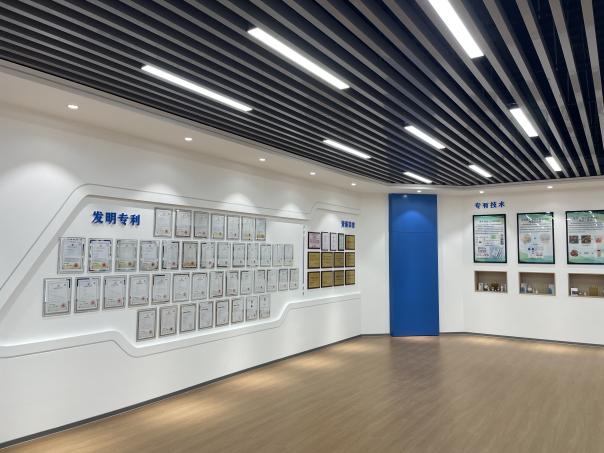
Guanjie Biotech, founded in 2004, supplies natural colour and botanical powders from a 7,000 m² facility in Xi'An, Shaanxi.
Next step: sample and documentation pack
Request matcha powder and blue butterfly pea flower powder samples together, with batch COA, specification sheets, and the ISO 9001, HACCP, Halal and Kosher certificates for your destination market.
Download the catalogue: Guanjie Nutraceutical Ingredients brochure (PDF)
Email: info@gybiotech.com | Tel / WhatsApp: +86 150-2999-3470 | guanjiebio.com
Have Questions or Need More Details?
Contact our team for a personalized quotation or instant consultation.
Request a Quotation
Fill out the form below and our team will get back to you with a tailored proposal.
WhatsApp Direct Chat
Prefer to chat in real-time? Message us on WhatsApp for instant assistance & quick answers.
- Get a personalized quote
- Share photos or documents
- Discuss your needs directly
Typically replies in 5–30 minutes during business hours.