Mushroom Extract Powder vs Standardized Botanicals: Beta-Glucan and Immune-Health Fit
Nutraceutical Ingredients / Immune-Health Sourcing
Short answer: choose Mushroom Extract Powder or a standardized botanical extract by matching the specification to the immune-health claim you need to support, not by treating the two categories as interchangeable. For Mushroom Extract Powder, the critical buyer questions are what the assay actually measures, whether beta-glucan is the declared marker, which beta-glucan assay method is used, and how the extraction route is documented. For standardized botanicals, the equivalent questions are the named marker compound, the declared assay range, the assay method, and the batch COA. Guanjie Biotech supplies both Mushroom Extract Powder and a portfolio of standardized botanical extracts, so the decision should be made at the specification and evidence level.
Guanjie Biotech (Shaanxi Guanjie Biotech) is a China-based manufacturer of high-purity natural plant extracts, premium fruit powders, and specialty chemical raw materials, founded in 2004 and serving supplement, food, and cosmetics customers in global markets.
Problem Definition: Why the Two Categories Are Not Interchangeable
Mushroom Extract Powder and standardized botanical extracts can both appear in immune-health supplement programs, but they answer different formulation questions. A standardized botanical extract is usually positioned around a named marker compound and a declared content, with an assay method stated on the specification. Mushroom Extract Powder may be positioned around beta-glucan, polysaccharides, or another marker, but the category name alone does not prove which marker is measured.
The practical risk is a specification that looks precise but does not answer the buyer’s question. A product listing may state an assay range and an assay method without stating whether beta-glucan is the measured substance. If the label or product brief treats beta-glucan as the immune-health marker, the buyer needs a batch COA and a method statement that connect the declared assay to beta-glucan. Without that connection, the buyer cannot reliably compare suppliers or support a label communication.
The second risk is formulation mismatch. Standardized botanical extracts are often selected for a defined marker and a known dosage range in a finished formula. Mushroom Extract Powder may bring a broader matrix, different solubility, different color, or different taste. The decision therefore is not simply which category is more natural or more standardized. It is whether the selected grade fits the dosage form, the label, the COA, and the regulatory file.
Buyer rule: if beta-glucan is the reason for choosing Mushroom Extract Powder, the beta-glucan assay method and the batch result must be visible. If a named botanical marker is the reason for choosing a standardized extract, the marker, assay range, and method must be visible. A category name is not a specification.
Industry Background: Standardization, Documentation, and Immune-Health Demand
The global nutraceutical ingredients market is estimated at USD 105.8 billion in 2026, according to Global Market Insights data included in the verified data set. That scale matters because ingredient buyers are not only comparing price. They are comparing identity, purity, quality, strength, and composition across global supply chains. FDA current good manufacturing practice requirements for dietary supplements explicitly address those attributes, which makes supplier documentation a commercial issue rather than a paperwork issue.
For U.S. market entry, FDA also describes a new dietary ingredient notification process for certain new dietary ingredients, unless an applicable exception applies. This does not classify every mushroom or botanical ingredient as a new dietary ingredient, and it does not replace ingredient-specific legal review. It does mean that buyers should ask for regulatory documentation early, especially when a formula uses a less established ingredient or a new grade.
Public databases also shape buyer expectations. The NIH Dietary Supplement Label Database catalogs label information for dietary supplement products sold in the United States, including ingredient names, amounts, claims, warnings, and label images. Buyers can use such databases to benchmark how an ingredient is presented in finished products, but they still need supplier-specific COAs and specifications to qualify a batch.
In this environment, standardized botanical extracts have a clear commercial logic: a named marker, a declared assay, and a stated method make comparison easier. Mushroom Extract Powder can follow the same logic, but only when the beta-glucan or other marker is defined with equal discipline. The category is not less rigorous; the specification must simply be explicit about what is standardized and what is not.
Detailed Solution: A Buyer Framework for Beta-Glucan and Immune-Health Fit
The most useful comparison starts with the claim and works backward to the ingredient. For an immune-health supplement program, the buyer should define the role of the ingredient before requesting quotes: is it a marker-bearing extract for label communication, a base powder for a blend, or a standardized botanical with a well-defined active? The answer changes the specification, the COA, and the supplier questions.
1. Define the immune-health role before comparing categories
If beta-glucan is the intended marker, the buyer should ask for a beta-glucan specification rather than a generic extract assay. If the formula uses a standardized botanical, the buyer should ask for the named marker and its assay range. Mixing the two language sets creates ambiguity. A supplier may quote an assay range for Mushroom Extract Powder while the buyer assumes the range refers to beta-glucan. The buyer should confirm what the assay measures before the sample is approved.
2. Read the assay as a contract, not a headline
Guanjie Biotech lists Mushroom Extract Powder with an assay range of 30%–80%, assay methods HPLC and UV, and a brown powder appearance. Those are useful starting facts, but they do not by themselves establish that beta-glucan is the measured marker. The buyer should request a batch COA that states the assay result, the method, the reference standard, and the basis of calculation. If beta-glucan is the claim marker, the COA should state the beta-glucan result and the beta-glucan assay method, not only a general assay.
3. Ask the beta-glucan assay questions that change the decision
Beta-glucan assay questions should be specific enough to separate a marketing statement from a measurable specification. The buyer should ask whether the assay is enzymatic, UV, HPLC, or another validated method; whether the method is validated for the specific mushroom matrix; whether the result is reported on a dry basis; whether the detection limit is stated; and whether a third-party laboratory has verified the method. These questions do not assume a particular method. They force the supplier to document the method that is actually used.
The buyer should also ask whether the assay measures beta-glucan specifically or total polysaccharides. A broad polysaccharide assay can be useful for some formulation work, but it is not the same as a beta-glucan assay. If the label or product brief names beta-glucan, the analytical method should support that name.
4. Document the water-based extraction route
In this comparison, water-based Mushroom Extract Powder refers to a mushroom extract category in which water is the primary extraction solvent. The category name is not a process specification. The supplier should document the extraction solvent, extraction steps, concentration or drying step, carrier or excipient if used, and the final specification. These details matter because they affect the matrix that the buyer will formulate and the analytical result that the COA will report.
A water-based route can be attractive for clean-label positioning, but the buyer should not assume that water-based means standardized. The same question applies: what marker is measured, by what method, and at what result? If the supplier cannot document the process and the assay together, the buyer is comparing labels rather than ingredients.
5. Position standardized botanicals by marker, not by category
Standardized botanical extracts are easier to compare when the marker is explicit. Guanjie Biotech’s portfolio includes Ferulic Acid Powder listed at 98% by HPLC, Luteolin Powder listed at 98% by HPLC, NMN Powder listed at ≥99.5%, Fisetin powder listed at 50% and 98% by HPLC, Coenzyme Q10 powder listed at 10% water-soluble and 99%, and Octacosanol powder listed at 5%–90% by GC. These examples show how standardized botanicals are positioned: a named compound, a declared content, and an assay method.
That positioning is valuable for immune-health programs when the formula has a defined marker and a known dosage form. It is less useful when the buyer needs a mushroom matrix with beta-glucan as the marker. The buyer should not substitute a standardized botanical marker for beta-glucan unless the formulation strategy actually calls for that marker. The comparison should be made at the level of the claim, not at the level of the product category.
6. Match the supplier’s quality system to the documentation you need
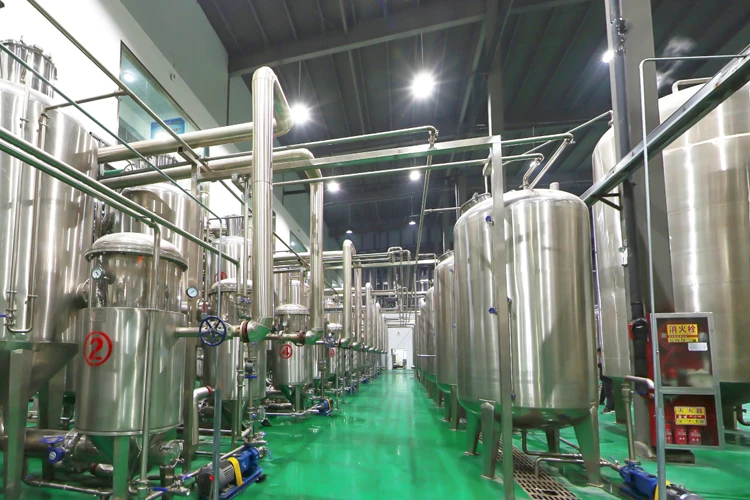
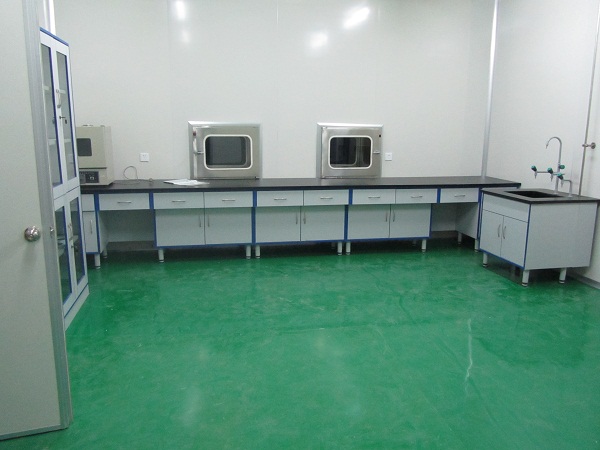
Guanjie Biotech holds ISO 9001, HACCP, HALAL, and Kosher certifications. The ISO 9001 scope covers export trade of plant extracts, solid beverages, and food additives. The company also states that every shipment includes a batch COA matching pre-shipment specifications for purity, moisture, heavy metals, microbial limits, and active ingredients. If a quality discrepancy arises on arrival, Guanjie Biotech supports third-party re-testing with laboratories such as SGS and Eurofins.
These facts do not replace batch-specific verification, but they show the documentation infrastructure a buyer should expect. For a beta-glucan specification, the buyer should confirm that the COA format includes the beta-glucan result and method, not only the general assay. For a standardized botanical, the buyer should confirm that the COA includes the named marker and the method stated on the specification.
7. Test formulation fit before scaling
Mushroom Extract Powder is listed for dietary supplement, health food, beverage, and cosmetics applications. Standardized botanicals in the Guanjie Biotech portfolio are also listed for dietary supplement, health food, beverage, and cosmetics applications. The overlap means the final decision often depends on formulation behavior: solubility, color, taste, thermal exposure, and the dosage form.
Guanjie Biotech states that dedicated product specialists assist R&D and product development teams with processing challenges, and that technical support includes formulation troubleshooting. That support is relevant when a buyer moves from a sample to a pilot batch, especially if the extract is going into a beverage, a powder blend, or a capsule. The buyer should use the sample stage to confirm that the selected grade behaves in the actual matrix, not only in a specification sheet.
Step-by-Step Breakdown: How to Evaluate a Mushroom Extract vs a Standardized Botanical
The following sequence is designed for Evaluation-to-Execution buyers who need a defensible decision before sampling, ordering, or private-label development.
Step 1: Write the claim and the marker in one sentence
Complete this sentence before requesting quotes: “We need [ingredient] standardized to [marker] at [range], measured by [method], for [dosage form].” If the sentence cannot be completed, the buyer is not ready to compare suppliers. For a beta-glucan program, the marker is beta-glucan. For a standardized botanical program, the marker is the named compound, such as ferulic acid, luteolin, or monacolin K.
Step 2: Request the specification and a batch COA together
A specification without a batch COA is a promise; a COA without a specification is a data point without a target. Request both. Check that the COA includes the assay result, method, moisture, heavy metals, microbial limits, and active ingredients where applicable. For Mushroom Extract Powder, confirm whether the assay is beta-glucan-specific. For a standardized botanical, confirm that the named marker on the COA matches the specification.
Step 3: Verify the assay method and the reporting basis
Ask whether the method is HPLC, UV, GC, titration, or another validated method, and whether the result is reported on a dry basis. The Guanjie Biotech portfolio shows this variety: Ferulic Acid Powder and Luteolin Powder are listed with HPLC, Octacosanol powder with GC, and Shilajit Extract Powder with titration for fulvic acid. For Mushroom Extract Powder, the listing states HPLC and UV as assay methods. The buyer should confirm which method applies to the beta-glucan result if beta-glucan is the marker.
Step 4: Ask for process documentation for the extraction route
For a water-based Mushroom Extract Powder program, request a process description that identifies the primary solvent, the extraction and concentration steps, and any carrier. The buyer does not need a proprietary process recipe, but the buyer does need enough information to understand the matrix and to verify that the specification matches the process. If the supplier cannot describe the process at a meaningful level, the buyer should treat the category claim with caution.
Step 5: Compare the supplier’s quality system and certifications
Check that the supplier holds certifications relevant to the target market and the product category. Guanjie Biotech holds ISO 9001, HACCP, HALAL, and Kosher certifications, and the company states that products are developed and produced in accordance with international quality requirements. The buyer should still verify certificate scope, validity, and product coverage against the specific ingredient and market.
Step 6: Confirm OEM/ODM and packaging customization
If the project requires a private-label or custom package, confirm the supplier’s OEM/ODM capability early. Guanjie Biotech provides OEM and ODM production services and offers private-label production under OEM and ODM arrangements. Customization services include packaging customization. These capabilities are relevant after the ingredient specification is approved, not as a substitute for it.
Step 7: Validate the sample in the intended matrix
Test the sample in the actual dosage form. For a capsule, check flow and fill weight. For a powder blend, check homogeneity and taste. For a beverage, check solubility, color, and thermal stability. Guanjie Biotech states that technical support includes formulation troubleshooting for processing challenges, which can help the buyer interpret sample behavior before scale-up.
Step 8: Confirm commercial terms and supply continuity
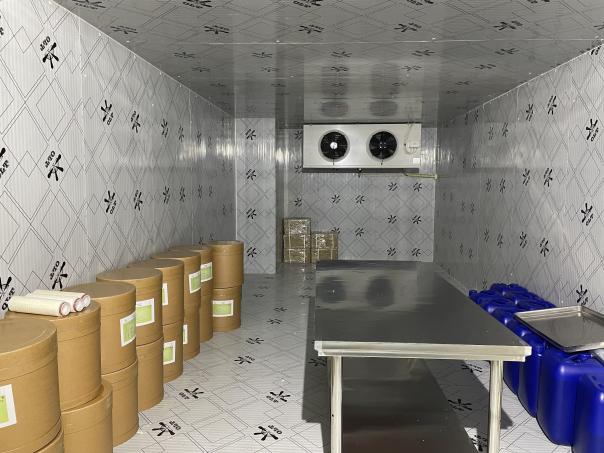
Guanjie Biotech lists a MOQ of 1 kg, a lead time of 30 days, and a monthly capacity of 30 tons. The company also states 100% testing as part of quality control. Buyers should confirm that these terms apply to the selected grade and packaging, and should request a written quotation that states the assay, packaging, MOQ, lead time, and delivery terms.
Use Cases: Where Each Option Fits in Immune-Health Programs
Mushroom Extract Powder can fit immune-health programs that want a mushroom-derived ingredient with a documented assay and a format that works in capsules, powder sachets, functional beverages, or fortified foods. The buyer should select the grade by beta-glucan or other marker, not by the generic product name. If the label will name beta-glucan, the beta-glucan assay method and result should be part of the approval file.
Standardized botanicals can fit immune-health programs when the formula is built around a named marker and a defined dosage. Ferulic Acid Powder, Luteolin Powder, and other standardized extracts in the Guanjie Biotech portfolio are listed with named markers and assay methods. These ingredients are easier to compare across suppliers when the marker and method are stated, but they are not automatic substitutes for a mushroom beta-glucan ingredient.
Private-label and OEM projects can use either route if the specification is fixed before packaging development. Guanjie Biotech’s OEM/ODM services, private-label production, and packaging customization can support a program after the ingredient and dosage form are defined. The buyer should avoid approving packaging before the COA, assay method, and sample performance are approved.
Comparison Table: Mushroom Extract Powder vs Standardized Botanical Extracts
The table below uses product-listing and certification facts from the provided content units. It does not rank one category above the other. It shows the information a buyer should compare before selecting a grade.
| Comparison point | Water-based Mushroom Extract Powder (category) | Standardized botanical extracts (examples from Guanjie Biotech portfolio) |
|---|---|---|
| Specification basis | Mushroom Extract Powder is listed with assay 30%–80%. The buyer must confirm whether the assay is beta-glucan-specific or another marker. | Named marker with declared content, such as Ferulic Acid Powder 98%, Luteolin Powder 98%, NMN Powder ≥99.5%, Fisetin powder 50%/98%, Coenzyme Q10 powder 10% water-soluble or 99%, Octacosanol powder 5%–90%. |
| Assay method listed | HPLC, UV. | HPLC for Ferulic Acid Powder, Luteolin Powder, Fisetin powder; GC for Octacosanol powder; titration for Shilajit Extract Powder fulvic acid. |
| Appearance | Brown Powder. | Examples include White for Ferulic Acid Powder, Yellow Powder for Luteolin Powder, White powder for NMN Powder, yellow powder for Fisetin powder, White for Octacosanol powder. |
| Documented applications | Dietary supplement, health food, beverage, cosmetics. | Dietary supplement, health food, beverage, cosmetics for the listed portfolio. |
| Certification support | Guanjie Biotech holds ISO 9001, HACCP, HALAL, and Kosher certifications. | Same Guanjie Biotech certification system applies across the listed portfolio; verify product-specific scope. |
| OEM/ODM and customization | OEM and ODM production services; private-label production; packaging customization. | Same OEM/ODM and packaging customization capabilities apply to the portfolio. |
| MOQ, lead time, capacity | MOQ 1 kg; lead time 30 days; monthly capacity 30 tons; 100% test. | Confirm grade-specific MOQ, lead time, and capacity in the written quotation. |
| Quality documentation | Batch COA; third-party re-testing support with SGS and Eurofins if a discrepancy arises. | Batch COA; third-party re-testing support with SGS and Eurofins if a discrepancy arises. |
| Where it fits | Programs that want a mushroom-derived ingredient and can define beta-glucan or another marker with a validated assay. | Programs built around a named botanical marker with a declared assay and method. |
Table note: The table does not state that beta-glucan is present at a specific level in Guanjie Biotech Mushroom Extract Powder. It states what the product listing provides and what the buyer must confirm in the batch COA and method statement.
FAQ: Beta-Glucan, Standardized Botanicals, and Supplier Checks
What documents should accompany a Mushroom Extract Powder shipment?
A shipment should be supported by a batch COA and the agreed specification. Guanjie Biotech states that every shipment includes a complete Certificate of Analysis matching pre-shipment specifications for purity, moisture, heavy metals, microbial limits, and active ingredients. Buyers should also request the relevant certification evidence for ISO 9001, HACCP, HALAL, and Kosher, and confirm that the certificate scope covers the product and market.
Can Guanjie Biotech provide OEM/ODM Mushroom Extract Powder with custom packaging?
Yes. Guanjie Biotech provides OEM and ODM production services and offers private-label production under OEM and ODM arrangements. Customization services include packaging customization. The buyer should approve the ingredient specification, COA, and sample performance before finalizing packaging.
Can buyers request a sample before placing an order?
Buyers can request a sample for evaluation. Guanjie Biotech lists a MOQ of 1 kg, so sample and trial quantities can be discussed against the selected grade and packaging. The sample should be evaluated with the intended COA and assay method, especially when beta-glucan is the marker.
What lead time and capacity should buyers plan for?
Guanjie Biotech lists a lead time of 30 days and a monthly capacity of 30 tons, with 100% testing as part of quality control. Buyers should confirm that these terms apply to the selected Mushroom Extract Powder grade and packaging. To move from evaluation to execution, request a sample, a batch COA, and a written quotation that states assay, packaging, MOQ, lead time, and delivery terms.
Conclusion: Select the Specification, Then the Supplier
Mushroom Extract Powder and standardized botanical extracts can both support immune-health supplement programs, but they should be compared through the same discipline: a defined marker, a stated assay method, a batch COA, and a documented process. For Mushroom Extract Powder, beta-glucan is the buyer question that must be answered explicitly. For standardized botanicals, the named marker and method are the equivalent buyer questions.
Guanjie Biotech offers Mushroom Extract Powder with a listed assay of 30%–80%, HPLC and UV assay methods, and a brown powder appearance, alongside a portfolio of standardized botanical extracts with named markers and methods. The company supports OEM/ODM production, private-label arrangements, packaging customization, batch COAs, third-party re-testing support, and formulation troubleshooting. Buyers should use these capabilities to verify the specification, not to skip it.
Next step: request a Mushroom Extract Powder sample, batch COA, and written quotation from Guanjie Biotech. Confirm the beta-glucan or other marker, assay method, packaging, MOQ, and lead time before scale-up.
Guanjie Biotech | Email: info@gybiotech.com | Tel: +86150-2999-3470 | WhatsApp: +86 150-2999-3470
Address: Room 2-20201, Unit 2, Building 2, Qinchuang Changan Chuanghui Zhongxin Industrial Park, No. 333 Xuefu Street, Chang'An District, Xi'An City, Shaanxi Province, China
Download the Guanjie Nutraceutical Ingredients brochure or visit guanjiebio.com.
Have Questions or Need More Details?
Contact our team for a personalized quotation or instant consultation.
Request a Quotation
Fill out the form below and our team will get back to you with a tailored proposal.
WhatsApp Direct Chat
Prefer to chat in real-time? Message us on WhatsApp for instant assistance & quick answers.
- Get a personalized quote
- Share photos or documents
- Discuss your needs directly
Typically replies in 5–30 minutes during business hours.