
Nutraceutical Dry-Blend: Confirming 80-Mesh Pass for Matcha and Butterfly Pea
For a nutraceutical dry blend, a 100.0% pass at 80 mesh for matcha powder and blue butterfly pea flower powder means that the tested lot passed through an 80-mesh test sieve. It is a lot-level coarse-particle checkpoint before scale-up. It does not by itself confirm color strength, anthocyanin content, organic-source status, solubility, flow, or blend homogeneity. Those remain separate checks.
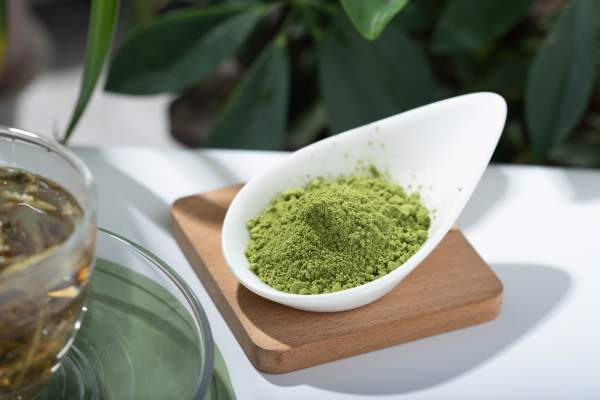
Problem definition: why a mesh claim is not the same as scale-up evidence
A formulator usually meets particle size first as a specification line: matcha powder, 100.0% pass 80 mesh; blue butterfly pea flower powder, 100.0% pass 80 mesh. That line is useful because it sets a common upper-size screen for two botanical powders that may enter the same dry blend. It is not enough for scale-up on its own.
The scale-up question is narrower and more practical: does the lot I will receive pass the same sieve result as the sample I approved, and can the supplier show that result for both raw materials? A catalog statement can describe a product family. A batch record ties the result to a specific lot. In a dry blend, lot-to-lot differences in coarse particles, fines, flow, or appearance can change how the mix behaves in a mixer, hopper, sachet line, or capsule filler. The 80-mesh result is one control point. It should be confirmed, not assumed.
This is especially important when two powders have different roles. Matcha powder contributes green tea solids, green color, and the product description references heat-sensitive antioxidants. Blue butterfly pea flower powder contributes a blue-to-purple anthocyanin color system. The same 80-mesh result does not tell the formulator that the color, anthocyanin, or organic-source status of either material has been checked. Those attributes need their own evidence.
Industry background: what 100.0% pass at 80 mesh actually says
Mesh is a sieve designation. A 100.0% pass at 80 mesh is a test result: under the supplier’s stated sieve method, all of the tested sample passed through an 80-mesh sieve. It is not a full particle-size distribution. It does not state the median particle size, the share of fines, bulk density, flow rate, wettability, or color strength. It also does not prove that two powders will blend uniformly.
That distinction matters for nutraceutical ingredients because a dry blend can fail for reasons that a single sieve result does not capture. A powder may pass 80 mesh and still segregate in a mixer if other physical properties differ. A powder may pass 80 mesh and still show specks if color intensity varies. A powder may pass 80 mesh and still need a separate identity, purity, microbial, heavy-metal, pesticide-residue, or marker assay check. The right reading is therefore precise: 100.0% pass at 80 mesh is a lot-level coarse-particle checkpoint. It is not a release certificate for the whole formulation.
Regulatory context supports that reading. In the United States, the U.S. FDA guidance on dietary supplements states that manufacturers, packagers, and holders must follow current good manufacturing practices intended to help ensure identity, purity, quality, strength, and composition. A mesh result is one lot record inside that wider quality system. It does not replace the system.
Detailed solution: build a two-material batch-evidence file
The practical solution is to treat matcha powder and blue butterfly pea flower powder as two separate evidence files, then compare them only after each file is complete. Guanjie Biotech is a Shaanxi-based nutraceutical ingredient supplier founded in 2004; its published profile lists a 7,000 m² facility, 500 tons annual output, and ISO, Halal, and Kosher certifications. Its product data lists both matcha powder and blue butterfly pea flower powder with a 100.0% pass at 80 mesh. The buyer’s task is to confirm that result at batch level for the grade and lot being purchased.
Matcha powder: hot air drying, low-temperature ultra-fine grinding, and 80-mesh confirmation
Guanjie Biotech’s matcha powder data lists the source as matcha, appearance as green powder, technology method as hot air drying technology, and mesh as 100.0% pass 80 mesh. The product is listed as 100% natural without additives. The available grade range is Grade 1 to Grade 6. The product description also states that the powder undergoes low-temperature ultra-fine grinding to maximize solubility and preserve heat-sensitive antioxidants, including EGCG and L-theanine.
For a dry-blend project, those facts should be separated into release attributes. Hot air drying and low-temperature ultra-fine grinding describe the processing approach. The 80-mesh result describes the sieve test. The references to EGCG and L-theanine describe heat-sensitive antioxidant considerations, not a mesh measurement. The matcha product data also lists ISO, HACCP, Kosher, and HALAL certifications and states that testing covers heavy metals and pesticide residues. A buyer should confirm that the certificate and test scope apply to the specific matcha grade and lot, rather than to a different grade or a general product family.
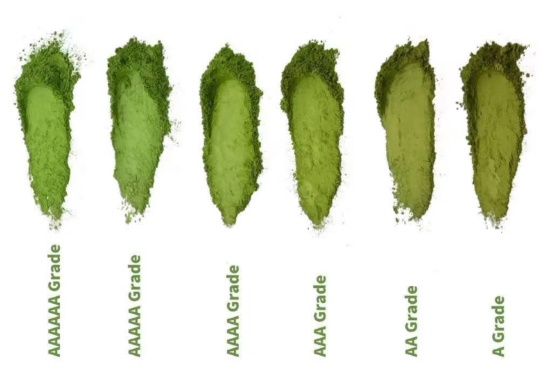
The mesh question for matcha is therefore specific: does the lot certificate show 100.0% pass 80 mesh for the selected grade, and is the sieve method stated? A grade name alone does not answer that. The buyer should also confirm the lot appearance and, where the formulation relies on the matcha color or antioxidant markers, ask for the separate color or marker evidence that the specification requires. An 80-mesh pass does not quantify EGCG or L-theanine.
Blue butterfly pea flower powder: hot air drying, 80-mesh, and separate color, anthocyanin, and organic checks
Guanjie Biotech’s blue butterfly pea flower powder data lists the source as butterfly pea, appearance as gray blue powder, technology method as hot air drying technology, and mesh as 100.0% pass 80 mesh. The product is listed as 100% natural without additives. The product description describes it as non-GMO and derived from organically cultivated Clitoria ternatea. It also states that the powder is rich in antioxidant anthocyanins, is a water-soluble pigment, and delivers blue-to-purple pH color shifts with heat-stable performance. The listed certifications are ISO, Halal, and Kosher.
Those statements serve different buyer checks. The 80-mesh result is a sieve result. The anthocyanin and pH color statements concern color chemistry. The organic cultivation statement concerns sourcing. A lot that passes 80 mesh is not automatically confirmed for anthocyanin content, color strength, organic certificate status, or pH behavior in a specific beverage or dry mix. Each needs its own evidence.
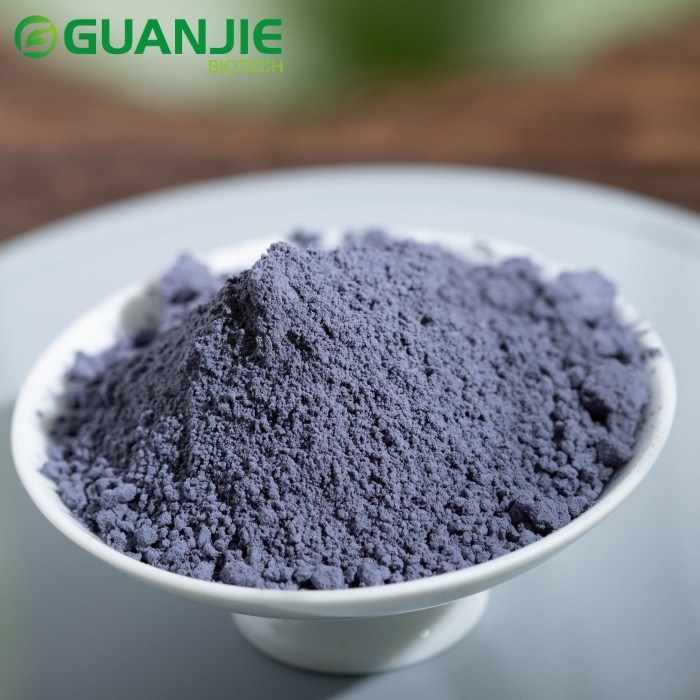
The organic point deserves a clear boundary. The product description states organically cultivated source material. For a buyer, that is a sourcing statement to verify with the applicable organic certificate, scope, and market requirement. It is not established by the 80-mesh result. In the same way, the blue-to-purple pH shift and heat-stable performance described for the ingredient should be checked in the actual matrix. A dry blend that later becomes a beverage may behave differently from a simple water dispersion, so the formulator should confirm the color response under the intended pH and process conditions.
Separate-check rule: an 80-mesh pass confirms the sieve result only. Color, anthocyanin content, organic-source status, pesticide or heavy-metal testing, and certification scope remain separate checks for each material and each lot.
Step-by-step breakdown: confirming 80-mesh evidence before scale-up
- Lock the specification by material and grade. Write the matcha grade and the blue butterfly pea grade separately. Include 100.0% pass 80 mesh for each material, the sieve method to be used, and the batch identification required on the certificate. Do not let a generic product-family statement stand in for the purchased grade.
- Request a lot-specific certificate of analysis. The certificate should identify the batch and show the 80-mesh result for that batch. For matcha, confirm the selected grade and the stated testing scope for heavy metals and pesticide residues. For blue butterfly pea, confirm the lot identity and the separate color or anthocyanin evidence that the specification requires.
- Read the sieve result correctly. Ask whether 100.0% pass 80 mesh is a pass or fail result, what sample preparation was used, and whether a particle-size distribution is available. A single pass result is not a distribution. If the blend is sensitive to fines or flow, request additional physical data rather than inferring it from the mesh number.
- Verify certifications and scope. Matcha product data lists ISO, HACCP, Kosher, and HALAL. Blue butterfly pea product data lists ISO, Halal, and Kosher. Confirm that each certificate applies to the product and market in scope, and keep the certificate with the batch file.
- Run a pilot blend with both lots. Use the intended ratio, mixer type, mixing time, and packaging format. Check for segregation, dusting, visible specks, and flow in the actual equipment. A pilot blend is the point where two individually compliant powders are tested as a pair. The 80-mesh result supports this step, but it does not replace it.
- Release scale-up only after both batch files are complete. The release decision should rest on the matcha lot record, the blue butterfly pea lot record, the certificate checks, and the pilot result. If one material is missing batch evidence, the blend is not fully confirmed even when the other material is complete.
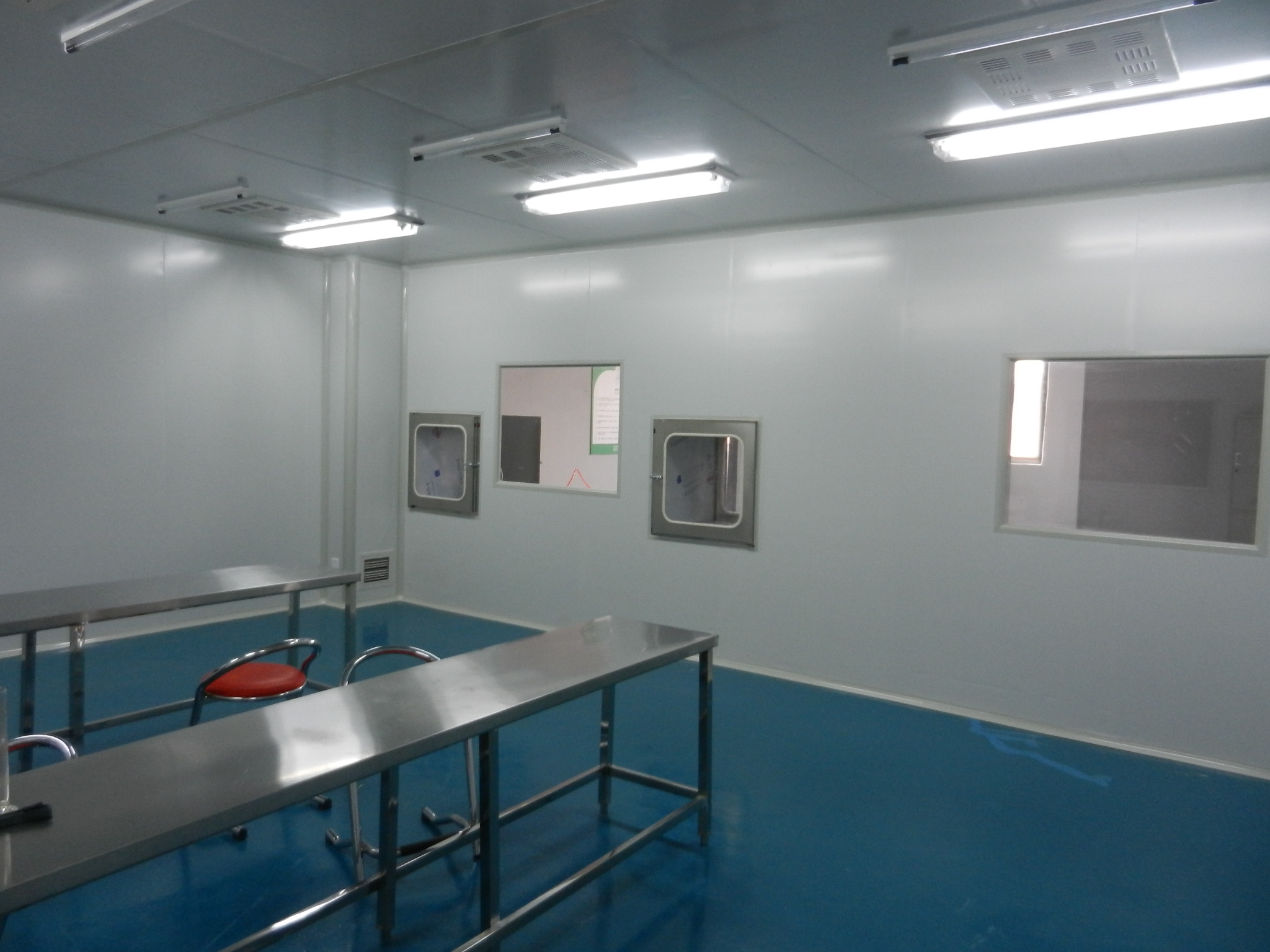
For planning, Guanjie Biotech’s capability data lists a 1 kg MOQ, 30-ton monthly capacity, 30-day lead time, 100% test, and OEM or ODM packaging customization. Those are company-level capability statements. They should be confirmed against the specific matcha grade or blue butterfly pea grade, the requested packaging, and the destination market before they are written into a purchase schedule.
Use cases: where the two-material check changes the decision
Functional dry-beverage mixes
A formulator building a botanical dry-beverage mix may combine a green tea powder with a blue color-bearing botanical. In that setting, matcha powder brings the green powder appearance and the low-temperature grinding and hot air drying facts described in the product data. Blue butterfly pea flower powder brings the gray blue powder appearance and the anthocyanin-based blue-to-purple color response. The 80-mesh result gives the formulator a shared coarse-particle checkpoint for both materials. The separate checks remain essential because the beverage’s color, pH, and appearance depend on the anthocyanin system, not on the sieve result alone.
Dietary supplement blends and hard capsules
The application data for nutraceutical ingredients identifies dietary supplements and hard capsules as the largest market segment and lists powder sachets among the formats. In a capsule or sachet blend, the buyer may care about flow, segregation, and appearance even when color is not a primary claim. Confirming 80-mesh pass for both matcha and blue butterfly pea is still useful, but it should sit beside the physical and chemical release checks that the dosage form requires. A mesh result should not be used as a substitute for blend uniformity testing.
Color-bearing clean-label concepts
Blue butterfly pea flower powder is described as a clean-label blue colorant for RTD teas, cocktails, bakery items, and functional beverages. Matcha powder is described with a vibrant green color and a green powder appearance. A formulator may therefore evaluate the pair for a color-bearing dry concept, but the color decision belongs to the color and anthocyanin checks, not to the 80-mesh result. The mesh result only tells the buyer that the tested lots passed the same sieve screen.
Comparison table: matcha and blue butterfly pea on listed attributes
| Attribute | Matcha powder | Blue butterfly pea flower powder |
|---|---|---|
| Listed source | Matcha | Butterfly pea |
| Listed appearance | Green powder | Gray blue powder |
| Listed technology method | Hot air drying technology | Hot air drying technology |
| Listed mesh result | 100.0% pass 80 mesh | 100.0% pass 80 mesh |
| Listed grade or model | Grade 1 to Grade 6 | Pure and natural |
| Listed color or functional note | Vibrant green color; low-temperature ultra-fine grinding; EGCG and L-theanine referenced | Anthocyanins; water-soluble pigment; blue-to-purple pH color shifts |
| Listed certifications | ISO, HACCP, Kosher, HALAL | ISO, Halal, Kosher |
| Separate buyer checks before use | Selected grade; lot certificate; heavy-metal and pesticide-residue scope; EGCG or L-theanine evidence where claimed | Color and anthocyanin evidence; organic-source certificate; pH behavior in the intended matrix |
FAQ
What does 100.0% pass at 80 mesh mean for matcha and blue butterfly pea powder?
It means that, under the stated sieve method, all of the tested sample passed through an 80-mesh sieve. For both materials, the result is a lot-level coarse-particle checkpoint. It does not state a full particle-size distribution, and it does not confirm color, anthocyanin content, organic-source status, solubility, or blend performance.
Why should batch evidence be confirmed for both materials rather than only one?
A dry blend is a pair of materials, not a single ingredient. Matcha powder and blue butterfly pea flower powder come from different sources and are listed with different color and certification details. A complete matcha lot record does not prove the blue butterfly pea lot result, and the reverse is also true. Scale-up should wait until both lots have the required 80-mesh evidence and the separate checks are closed.
Does an 80-mesh pass confirm color, anthocyanin, or organic source?
No. The mesh result concerns sieve passage. Blue butterfly pea’s color and anthocyanin attributes are separate quality checks, and the organic cultivation statement in the product description should be verified through the applicable organic certificate and scope. Matcha’s green appearance and any EGCG or L-theanine claim are also separate from the sieve result.
What should a formulator request before the first scale-up blend?
Request the selected grade, the lot-specific certificate showing 100.0% pass 80 mesh, the sieve method, the certification scope, and the separate color or marker evidence required by the specification. Then run a pilot blend with both lots in the intended equipment. For planning, confirm MOQ, lead time, packaging customization, and capacity against the exact grade.
Phosphatidylserine powder manufacturers for cognitive health formulations
A manufacturer shortlist for cognitive health formulations should be built on documented capability, not names alone. The checks include high purity, stable batch-to-batch quality, a full certificate of analysis for each batch, and the regulatory requirements of the destination market. Guanjie Biotech lists phosphatidylserine among its products and cites a South Korean health food and functional supplement manufacturer that has used its phosphatidylserine at 50 MT per year for 3 years, with high purity and batch-to-batch quality meeting KFDA food raw material requirements. Buyers should verify the current specification, COA, and certification scope for the exact grade before sampling or purchase.
Conclusion
The 80-mesh question is narrower than it first appears. A 100.0% pass at 80 mesh for matcha powder and blue butterfly pea flower powder confirms that the tested lots passed an 80-mesh sieve. It does not confirm the full particle-size distribution, blend uniformity, color strength, anthocyanin content, organic-source status, or certification scope. For a formulator moving from sample to scale-up, the reliable path is to confirm the result for both materials at batch level, keep the sieve method and certificate with each lot, and close the separate color, anthocyanin, and organic checks before the first production blend.
Guanjie Biotech’s product data provides the starting points: matcha powder with hot air drying, low-temperature ultra-fine grinding, and 100.0% pass 80 mesh; blue butterfly pea flower powder with hot air drying and 100.0% pass 80 mesh. The next step is to confirm the grade, lot, and documentation for the specific project. The Guanjie Nutraceutical Ingredients brochure provides a compact reference for that supplier review, and sample or quote requests should name the exact grade and the batch-evidence package required.
Have Questions or Need More Details?
Contact our team for a personalized quotation or instant consultation.
Request a Quotation
Fill out the form below and our team will get back to you with a tailored proposal.
WhatsApp Direct Chat
Prefer to chat in real-time? Message us on WhatsApp for instant assistance & quick answers.
- Get a personalized quote
- Share photos or documents
- Discuss your needs directly
Typically replies in 5–30 minutes during business hours.