Nutraceutical Ingredients: A Guanjie Biotech Manufacturer Profile
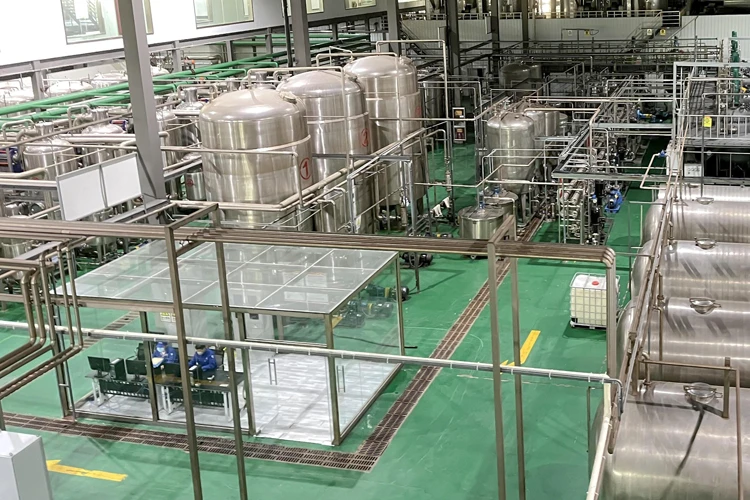
Guanjie Biotech, formally Shaanxi Guanjie Biotech, is a China-based manufacturer of high-purity natural plant extracts, premium fruit powders and specialty chemical raw materials, established in 2004 and exporting roughly 90% of its output. Its published portfolio includes Phosphatidylserine, NMN, Coenzyme Q10, L-Ergothioneine, Spermidine, Urolithin A, Luteolin, Shilajit Extract, Red Yeast Rice, Octacosanol, Ferulic Acid, Matcha and Mushroom Extract powders, supplied for dietary supplement, health food, beverage and cosmetic applications.
This profile is written for buyers in the discovery and research phase of sourcing, when the useful question is not "who sells this ingredient" but "what can this supplier actually document". Company-specific statements below come from Guanjie Biotech's own published material. Market sizing, regulatory requirements and growth forecasts come from regulatory agencies and published market research. The two evidence streams are kept visibly separate, because a manufacturer's self-description and an agency regulation carry very different weight in a sourcing decision.
The Real Question Behind "Nutraceutical Ingredients Manufacturers"
Ingredient sourcing in this category is noisy. A large share of supplier profiles use identical vocabulary — high purity, GMP, global supply — while disclosing very little that a formulator or quality team can act on. Three specific failure modes account for most of the friction buyers report at the research stage.
- Manufacturer versus trader. A supplier may market itself as a factory while owning no extraction, fermentation or synthesis capacity. The distinguishing evidence is a stated site, stated equipment and a stated production capacity for named products.
- Specification drift. A product can be listed as "98%" without stating an assay method, a botanical source, a particle size or an ash limit. Two suppliers quoting the same headline purity can be delivering materially different materials.
- Regulatory mismatch. An ingredient that is straightforward in one market may require a notification, a safety dossier or a claim restriction in another. This is a supplier documentation question, not only a formulation question.
A workable screening rule is to request four things before any commercial discussion: a specification sheet with test method, a batch certificate of analysis, current certification documents, and a written statement of which physical forms the supplier can produce. A supplier that answers all four quickly is worth a sample request; one that answers only the price question usually is not.
Industry Background: A Large Market Splitting Into Narrower Molecules
The global market for nutraceutical ingredients was estimated at USD 105.8 billion in 2026, according to Global Market Insights. The aggregate number is less useful than the shape of demand inside it, because growth is not evenly distributed across ingredient classes.
Two segments illustrate the pattern. Commercial market research projects the global matcha market growing from USD 3.91 billion in 2026 to USD 5.35 billion by 2031, a CAGR of 6.47%. L-Ergothioneine is forecast to reach USD 1,039.2 million by 2033 at a reported CAGR of 38.2%. A supplier's portfolio breadth therefore matters less than whether it holds documented capability in the specific molecules a brand is building around.
Regulation Is Shifting the Addressable Market
Regulatory movement changes what can be sold as much as consumer demand does. In the United States, the FDA states that companies that manufacture, package or hold dietary supplements must follow current good manufacturing practices intended to help ensure identity, purity, quality, strength and composition. The same agency explains that a dietary supplement containing a new dietary ingredient may require a notification with safety information before marketing, unless an applicable exception applies.
Ingredient-specific status also moves. As of 29 September 2025, the FDA confirmed that NMN is not excluded from the definition of a dietary supplement, which changed its commercial position in the US market. In Europe, Commission Regulation (EU) 2024/2041 addressed the health claim for monacolin K, the marker compound used to standardise red yeast rice. For buyers, the practical consequence is that supplier documentation — not price alone — determines whether a purchase can be used in a given market.
Company Overview: Guanjie Biotech at a Glance
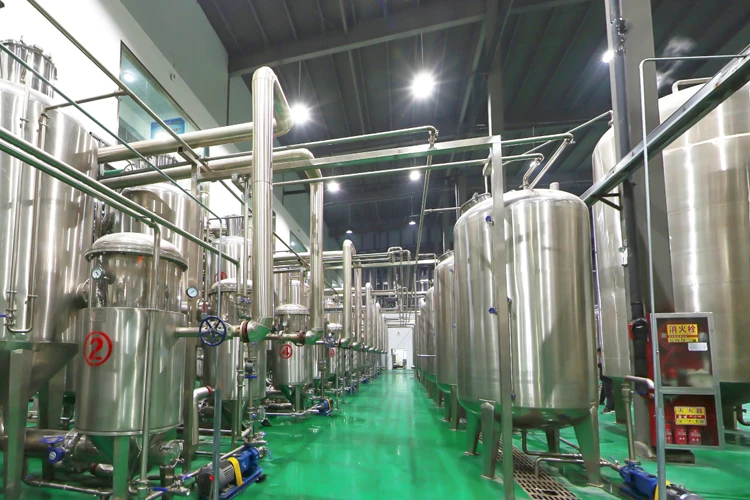
Shaanxi Guanjie Biotech was established in 2004 and operates from Chang'an District, Xi'an, Shaanxi Province, China. The company describes its business as supplying ingredients and B2B solutions to the pharmaceutical, health care, functional food and cosmetics industries, built around high-purity natural extracts and nutritional compounds. Two decades of operation in a single production region is relevant to buyers because it implies continuity of process knowledge, supply relationships and export documentation rather than a newly registered trading entity.
The company also reports cooperation with Northwest University on a master's experimental base and a strategic partnership with the Xi'an Branch of the Chinese Academy of Sciences, and states that it holds 16 national patents. Those are company-reported facts; they indicate the direction of technical investment but do not replace a supplier audit.
| Attribute | Published detail |
|---|---|
| Legal / trading name | Shaanjie Biotech, also referred to as Shaanxi Guanjie Biotech |
| Established | 2004 |
| Location | Chang'an District, Xi'an, Shaanxi Province, China |
| Site footprint | 7,000 m² total; 2,000 m² cGMP-standard clean workshop; 500 m² laboratory |
| Workforce | 40 employees; R&D team of 7 engineers |
| Annual output | 500 tons |
| Export share | Approximately 90% of output |
| Certifications referenced | ISO, Halal, Kosher; HACCP also referenced on several product pages |
| Patents | 16 national patents (company-reported) |
| Website | guanjiebio.com |
Note: the company's published market list names destinations across Europe, Asia, Latin America, the Middle East and Oceania, including Germany, Italy, France, the Netherlands, the United Kingdom, Canada, Japan, South Korea, Australia, Brazil, Mexico, Turkey, Saudi Arabia and the United Arab Emirates.
Core Products and Solutions
The portfolio divides into two commercially different groups. The first is high-value actives sold on purity and specification — molecules such as Phosphatidylserine, NMN, Coenzyme Q10, L-Ergothioneine, Urolithin A, Spermidine, Fisetin and Alpha GPC. The second is botanical, fermentation and food-grade powders sold on colour, solubility, mesh size and standardisation — Luteolin, Shilajit Extract, Red Yeast Rice, Octacosanol, Ferulic Acid, Matcha, Butterfly Pea Flower, Mushroom Extract and Apple Cider Vinegar.
High-Value Actives: Specifications as Published
| Ingredient | CAS No. | Published specification | Assay method |
|---|---|---|---|
| Phosphatidylserine | 51446-62-9 | Powder, liquid, water-soluble powder and granular forms; non-GMO soybean or sunflower lecithin source | Not stated on the product listing |
| NMN Powder | 1094-61-7 | ≥99.5%; freeze-dried (0.15 g/ml) and vacuum-dried (0.55 g/ml, 0.75 g/ml) bulk densities | Not stated on the product listing |
| Coenzyme Q10 powder | 303-98-0 | 10% water-soluble and 99%; microbial fermentation route | Not stated on the product listing |
| L-Ergothioneine Powder | 497-30-3 | ≥98%; C9H15N3O2S; molecular weight 229.3 | Not stated on the product listing |
| Urolithin A Powder | 1143-70-0 | 98% | HPLC |
| Spermidine Powder | 124-20-9 / 334-50-9 | Spermidine trihydrochloride 98%; wheat germ extract 0.5%–1.0% | HPLC / GC |
| Fisetin powder | 528-48-3 | 50% and 98%; assay range stated as 50%–99%; extracted from sumac dried trunk | HPLC |
| Alpha GPC Powder | 28319-77-9 | 50%, 85%, 98%; white powder or liquid | Not stated on the product listing |
Botanical, Fermentation and Food-Grade Powders
| Ingredient | CAS No. | Published specification | Assay / process note |
|---|---|---|---|
| Luteolin Powder | 491-70-3 | 98%; ash controlled to 5%, 2% or 1% on request; sourced from Arachis hypogaea shell and bud | HPLC |
| Shilajit Extract Powder | 308066-67-3 | Fulvic acid ≥50%; 100% pass 80 mesh; brown fine powder | Titration |
| Red Yeast Rice Powder | 75330-75-5 / 39866-30-2 | Monacolin K 0.1%–5.0%; light red to dark red powder | HPLC |
| Octacosanol powder | 557-61-9 | 5%–90%; C28H58O; melting point 80–83 °C; acid value <1.0 mg KOH/g; cane wax source | GC |
| Ferulic Acid Powder | 537-98-4 | 98%; white; pyridine content stated as undetectable | HPLC |
| Matcha powder | — | Grade 1–Grade 6; 100% pass 80 mesh; no additives | Hot air drying plus low-temperature ultra-fine grinding |
| Blue Butterfly Pea Flower Powder | — | 100% pass 80 mesh; no additives; anthocyanin-rich | Hot air drying |
| Mushroom Extract Powder | — | Polysaccharide 30%–80%; brown powder; multiple species including Shiitake, Ganoderma, Hericium and Tremella | HPLC / UV; water-based extraction |
| Apple Cider Vinegar Powder | — | Total acidity 5%, 8%, 10%; ivory white fine powder | HPLC; 6–7 day fermentation window |
Forms, Customisation and OEM/ODM Flexibility
For a formulator, the form question often decides whether an ingredient is usable at all. Guanjie Biotech lists Phosphatidylserine in powder, liquid, water-soluble powder and granular forms, which allows the same active to move between capsules, softgels and ready-to-drink formats without reformulating the carrier system. Alpha GPC is offered as white powder or liquid across 50%, 85% and 98% specifications. NMN is supplied at three bulk densities tied to packaging type: 0.15 g/ml freeze-dried for instant solid beverages, 0.55 g/ml vacuum-dried for size 0 and 00 capsules, and 0.75 g/ml vacuum-dried for size 1 and 2 capsules.
Customisation appears in narrower places as well. Octacosanol runs from 5% to 90%; Luteolin ash can be controlled to 5%, 2% or 1%; Urolithin A and Ferulic Acid product pages reference OEM/ODM support, including packaging to brand specification. These are specification-level adjustments rather than novel molecules, and that is precisely the kind of flexibility a mid-sized supplement brand usually needs.
Capability Analysis: Manufacturing, R&D, Quality and Supply
Manufacturing Footprint
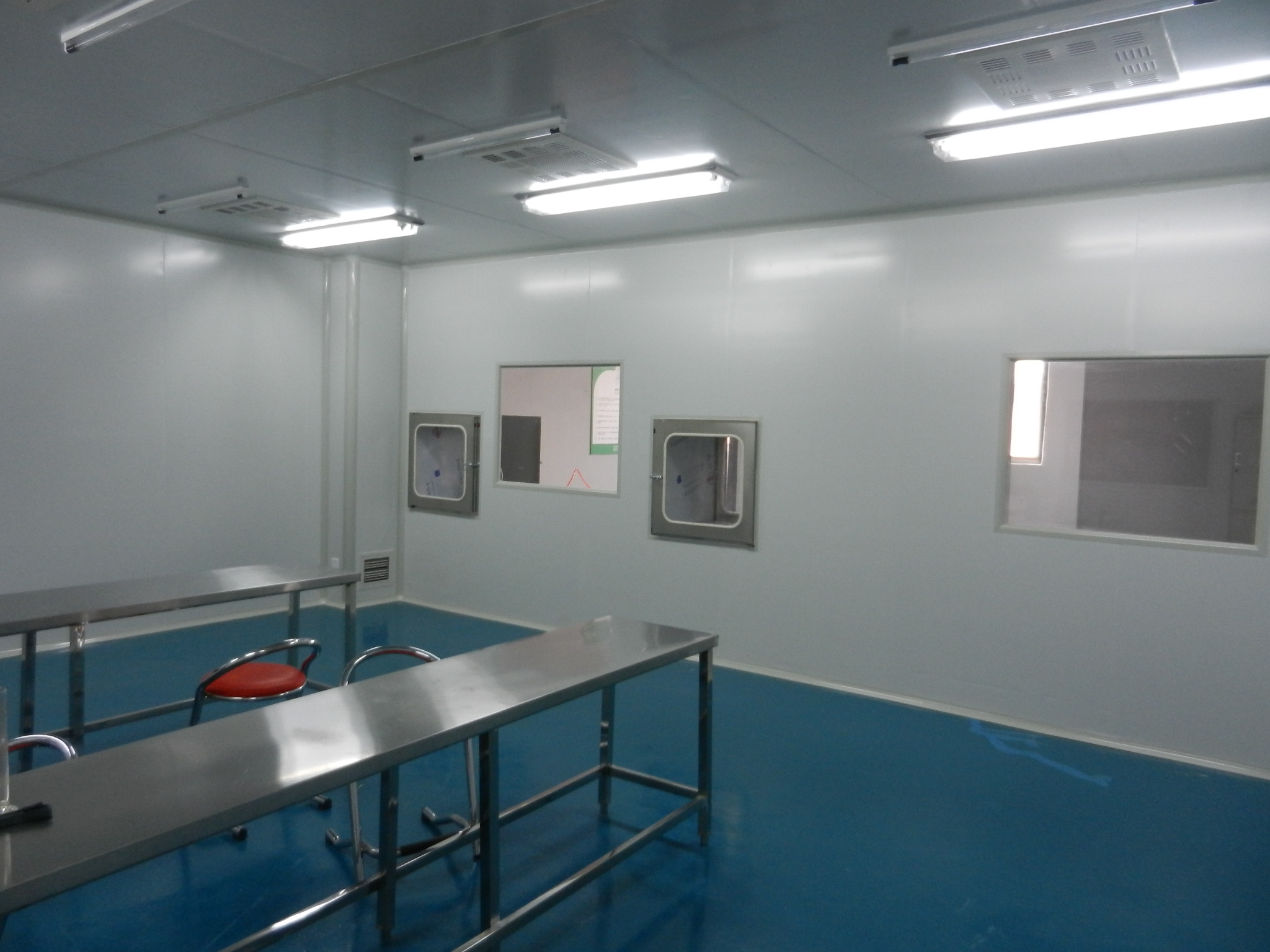
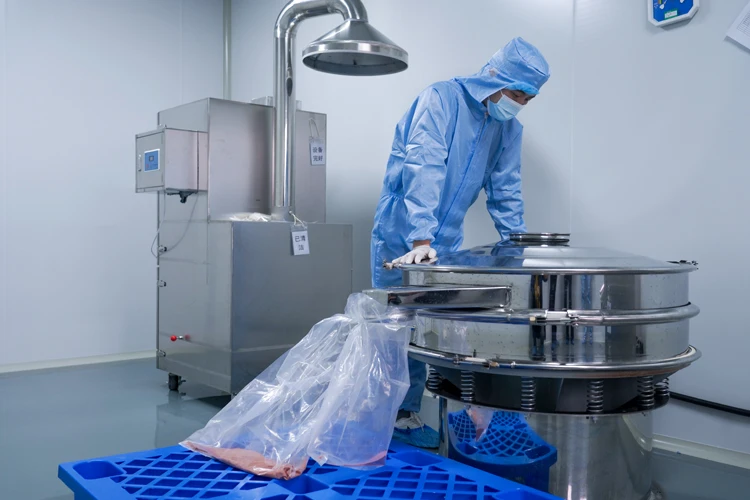
The site spans 7,000 m², including a 2,000 m² cGMP-standard clean workshop for handling and packing, and a 500 m² laboratory. Production is organised around plant extraction, enzyme reaction and synthetic lines, with separate cleaning, packing and warehouse areas. The technology used differs by product family: water-based extraction for mushroom polysaccharides, low-temperature ultra-fine grinding and hot air drying for matcha and butterfly pea powder, microbial fermentation for Coenzyme Q10, and an immobilised-cell liquid fermentation route for apple cider vinegar with a controlled 6–7 day fermentation window.
Capacity statements are product-specific rather than site-wide. The company's product page cites a phosphatidylserine production capacity of 20 tons per year, and octacosanol capacity of up to 100 tons per year, alongside overall annual output of 500 tons across the portfolio.
R&D and Quality Control
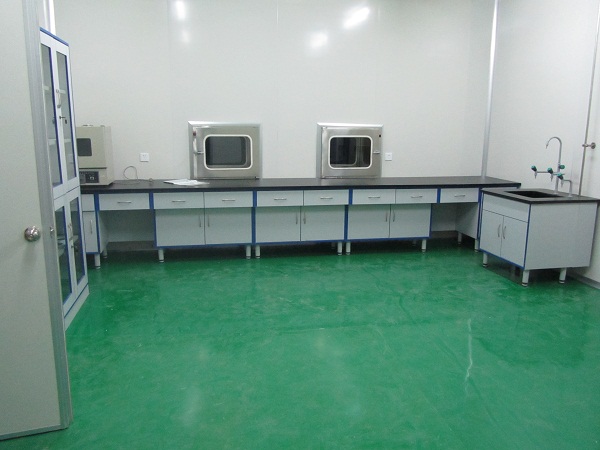
The company reports a physical and chemical analysis laboratory built to GMP and QS standards, and product documentation references HPLC, UV and GC as routine assay methods — HPLC for Urolithin A, Fisetin, Luteolin, Ferulic Acid and Red Yeast Rice; GC for octacosanol; titration for Shilajit fulvic acid; HPLC and UV for mushroom polysaccharides. Luteolin is the clearest published example of process-driven quality improvement: the company states it reduced ash content to under 2% at a time when market material commonly carried around 10% ash, and now supplies 5%, 2% or 1% according to customer requirement.
Third-party verification is referenced on the octacosanol page, which cites SGS, Eurofins and Puni Testing, alongside ISO, HACCP, Halal and Kosher certification. Buyers should treat this as a starting point for document requests rather than a conclusion: certificates carry issue dates and scopes, and effective supplier qualification requires checking what each certificate covers.
Global Supply and Export Operations
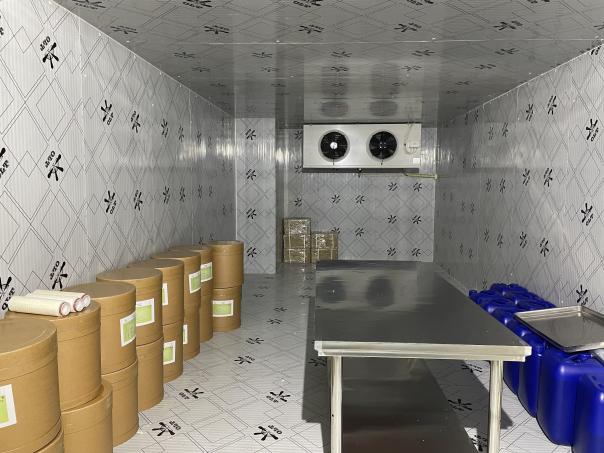
With roughly 90% of output exported, the company operates as an export-first business rather than a domestic producer with incidental overseas sales. Documentation and logistics fluency therefore sit close to the core operation. Product pages reference global logistics support, warehousing in the USA for octacosanol, and free samples for pre-purchase evaluation. For a buyer running a first order, the practical checks are packaging format, Incoterms, batch traceability and expected documentation turnaround — all of which should be confirmed in writing rather than assumed from a website.
Step-by-Step: How to Qualify a Manufacturer Like Guanjie Biotech
The following sequence converts a supplier profile into a decision. Each step produces a document or a data point that can be compared across two or three candidate suppliers.
- Define the specification before the supplier. Write down target purity, assay method, physical form, particle size, carrier system and the market the finished product will be sold in. Without this, quotations are not comparable.
- Request the specification sheet and a batch COA. Confirm that the assay method matches the stated purity — HPLC, GC or titration as appropriate — and that the COA belongs to a recent batch of the grade being offered.
- Screen regulatory status for each destination market. Where a new dietary ingredient notification may apply, or where a claim has been restricted as with monacolin K in the EU, confirm who supplies the supporting documentation and in what form.
- Test a sample against your own formulation. Solubility, flow, taste masking and capsule fill weight behave differently between suppliers even at identical headline purity. Guanjie Biotech offers free samples for this stage.
- Verify manufacturing rather than claims. Ask for the production site, the line used for that product, capacity for that specific product, and current certification documents with validity dates.
- Settle commercial and continuity terms in writing. Packaging, MOQ, lead time, Incoterms, payment terms and re-order triggers should be documented before the first purchase order, not after it.
Where These Ingredients Are Used
End applications determine which grade and form makes sense. Guanjie Biotech's published application scope covers dietary supplement, health food, beverage and cosmetics manufacturing, with the following segments described in its own application documentation.
- Dietary supplements and hard capsules — the largest segment, where actives are formulated into capsules, tablets, softgels and powder sachets for daily health, immune support, cognitive function and joint care.
- Functional and fortified beverages — water-soluble grades such as water-soluble Phosphatidylserine and 10% water-soluble Coenzyme Q10, plus colour-stable botanical powders such as butterfly pea.
- Functional foods and confectionery — gummies, protein bars, fortified cereals and functional snacks, where taste and colour profile matter as much as assay.
- Nutricosmetics and personal care — L-Ergothioneine and Ferulic Acid are positioned for topical and ingestible beauty formats.
- Sports and performance nutrition — Alpha GPC and Coenzyme Q10 are positioned for stamina, recovery and muscle function formulas.
Handling requirements are consistent across the range: store in a cool, dry and dark place, seal tightly after opening, and avoid high temperature and moisture. Buyers repacking into sachets or single-serve formats should confirm moisture sensitivity with the supplier before committing to a packaging line.
Market Evaluation and Industry Recognition
Independent third-party assessment of Guanjie Biotech's service performance, complaint history or market share is not available in the material reviewed for this profile, and the company does not publish audited customer references. That absence is normal in this industry and should be read as a gap to close during due diligence rather than as a negative signal.
What can be documented is narrower but concrete. The company holds ISO, Halal and Kosher certification, with HACCP referenced on several product pages. It states 16 national patents and academic cooperation with Northwest University and the Xi'an Branch of the Chinese Academy of Sciences. Third-party laboratory testing by SGS, Eurofins and Puni Testing is cited for octacosanol. Export reach, at roughly 90% of output, spans Europe, Asia, Latin America, the Middle East and Oceania according to the company's market list. Together these support a position as an established mid-sized export manufacturer rather than a category leader by volume — an important distinction for buyers who need to size a supplier against their own order volume.
Procurement Value: Strengths and Boundaries
The commercial case for this supplier rests on specification depth and portfolio breadth rather than on scale. A 500-ton annual output across a wide portfolio implies a supplier suited to mid-volume brand programmes, not to multi-container commodity contracts.
Where the supplier fits well
- Multi-ingredient formulations. A single source covering Phosphatidylserine, NMN, CoQ10, EGT, Spermidine, Urolithin A, Luteolin and botanical powders reduces supplier count and documentation overhead.
- Form-sensitive projects. Multiple physical forms for Phosphatidylserine and Alpha GPC, plus three NMN bulk densities, allow one active to serve capsules, sachets and beverages.
- Specification-controlled botanical sourcing. Luteolin ash control and mesh-controlled botanical powders suit brands that need to hold a tight internal specification.
- Trend-aligned actives. The portfolio overlaps directly with the longevity and cognitive categories where published growth forecasts are strongest.
Where buyers should apply caution
- Pricing is quote-based. No public price list exists in the reviewed material, so cost modelling requires a written quotation against a defined specification.
- Capacity is product-specific. Site-wide output of 500 tons does not translate into 500 tons of any single molecule; per-product capacity must be confirmed.
- Certification scope requires checking. Certificate numbers, issuing bodies and validity dates should be verified directly rather than accepted as stated.
- Customer evidence must come from the buyer's own process. Sample trials and reference requests are the practical substitute for published case studies.
Frequently Asked Questions
What certifications and compliance documents should a nutraceutical ingredient manufacturer provide?
Guanjie Biotech references ISO, Halal and Kosher certification, with HACCP also referenced on several product pages, and cites third-party testing by SGS, Eurofins and Puni Testing for octacosanol. Beyond certificates, buyers should request a batch certificate of analysis and a specification sheet with test method. For the US market, note that the FDA requires dietary supplement manufacturers, packagers and holders to follow current good manufacturing practices covering identity, purity, quality, strength and composition, and that a supplement containing a new dietary ingredient may require pre-market notification unless an exception applies.
Can Guanjie Biotech support OEM/ODM projects and custom specifications?
Customisation is documented at specification level. Phosphatidylserine is offered as powder, liquid, water-soluble powder and granular; Alpha GPC as powder or liquid at 50%, 85% or 98%; NMN at three bulk densities suited to solid beverages and different capsule sizes; Octacosanol from 5% to 90%; and Luteolin with ash controlled to 5%, 2% or 1%. Urolithin A and Ferulic Acid product pages reference OEM/ODM support, including packaging to brand specification.
How is pricing structured for bulk nutraceutical ingredients?
No public price list appears in the material reviewed for this profile, and in this category pricing is driven by specification rather than by product name: purity grade, assay method, physical form, carrier system, packaging and order volume all change the quotation. Guanjie Biotech positions itself on factory-direct supply. The practical approach is to issue a written specification to two or three suppliers and compare quotations against identical requirements, including Incoterms and packaging, so that the comparison is like for like.
Are samples available before placing an order?
Yes. Free samples are referenced on multiple Guanjie Biotech product pages, including Octacosanol, Blue Butterfly Pea Flower Powder and Ferulic Acid. Sample evaluation should test the parameters that matter in your own process — solubility, flow, taste profile, colour stability and capsule fill behaviour — alongside a comparison of the sample COA against the specification sheet.
Which nutraceutical ingredients are the most practical starting point for a new brand?
Published guidance in the company's own reference material groups the portfolio by commercial logic: cognitive and nootropic ingredients such as Phosphatidylserine, Alpha GPC and L-Theanine for focus and memory formulas; longevity and cellular-health ingredients such as NMN, Spermidine, Urolithin A and L-Ergothioneine; and core high-volume lines such as Coenzyme Q10, Shilajit and Red Yeast Rice. The same reference names NMN, Alpha GPC and Coenzyme Q10 as the three most practical products to start with. Brands can request a sample and a quotation for any of these directly from the supplier before committing to a formulation.
Conclusion
Guanjie Biotech occupies a specific position in the nutraceutical ingredients landscape: an export-oriented Chinese manufacturer, established in 2004, operating a 7,000 m² site with a cGMP-standard clean workshop and a dedicated laboratory, and holding a portfolio that spans both high-value actives and food-grade botanical powders. Its strength is specification breadth within a mid-sized operation — multiple forms of Phosphatidylserine and Alpha GPC, three NMN bulk densities, wide purity ranges on Octacosanol and Fisetin, and ash-controlled Luteolin.
Its limits are equally clear. Volume capacity is modest relative to commodity-scale producers, pricing is quotation-driven, and independent evidence of service performance must be generated by the buyer through documents, samples and audits. For brands building cognitive, longevity, cardiovascular or clean-label botanical products at mid volume, that combination is a workable fit provided due diligence is done properly. For buyers sourcing multi-container commodity volumes, the same profile suggests looking at larger dedicated producers.
Next Step: Sample, Specification or Quotation
Buyers can request a free sample, a specification sheet or a quotation against a written requirement directly from Guanjie Biotech. The full ingredient portfolio, including technical parameters for Phosphatidylserine, NMN, Coenzyme Q10, L-Ergothioneine, Urolithin A, Spermidine, Fisetin, Luteolin, Shilajit, Red Yeast Rice, Octacosanol, Ferulic Acid, Matcha, Butterfly Pea, Mushroom Extract and Apple Cider Vinegar powders, is available in the downloadable catalogue.
Download the catalogue: Guanjie Nutraceutical Ingredients (PDF)
Website: guanjiebio.com
Email: info@gybiotech.com | Tel / WhatsApp: +86 150-2999-3470
Have Questions or Need More Details?
Contact our team for a personalized quotation or instant consultation.
Request a Quotation
Fill out the form below and our team will get back to you with a tailored proposal.
WhatsApp Direct Chat
Prefer to chat in real-time? Message us on WhatsApp for instant assistance & quick answers.
- Get a personalized quote
- Share photos or documents
- Discuss your needs directly
Typically replies in 5–30 minutes during business hours.