
Nutraceutical Ingredients: ACV Powder GMP and Delivery Checks
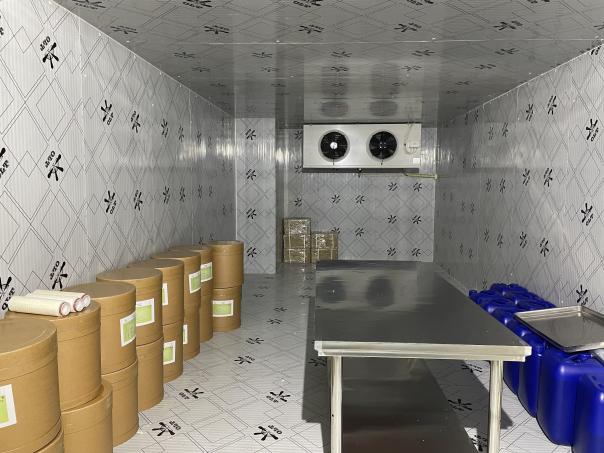
Finished-goods storage and dispatch conditions are part of the delivery clause in an ACV powder supply agreement.
An apple cider vinegar (ACV) powder supplier decision usually arrives after a shortlist is already in place, where several candidates can offer a sample that looks and assays correctly. The gap that separates a supplier you can rely on from one you cannot is less about whether they sell ACV powder and more about whether their production, quality systems, and delivery record hold up across repeated orders.
This article covers the checks that matter for formulation, procurement, and quality teams moving from evaluation to execution: factory and production scope, quality-system documents, batch conditions, and the commercial and delivery terms to confirm before the first repeat order.
Defining the ACV powder supplier problem
Four failure modes account for most ACV powder procurement problems. The first is product misidentification — the material carries the ACV powder name but does not specify a required grade or specification, and the supplier cannot produce a matching COA for the lot. The second is scope mismatch — certificates are on file but their scope does not cover plant extracts or food additives, or they have lapsed. The third is lot-level inconsistency — the first shipment matches the COA, but later shipments diverge without a documented re-test path. The fourth is delivery volatility — confirmed lead time, MOQ, or packaging shifts after the purchase order.
None of these are chiefly formulation failures; they are supplier capability problems. They can be addressed by defining verification steps before the contract and repeating them for each order. The purpose of a structured evaluation is to move these risks out of the prototype stage, before they reach a full production batch.
Industry context: why ACV supply needs more written evidence
ACV powder is used as a fermentation-derived ingredient in nutraceutical and functional food formulations across capsules, powder blends, and some beverage systems. Buyers typically request a sample and a COA before the first shipment to confirm flavor, acidity, solubility, and microbial results.
Regulatory expectations raise the evidence bar. The US Food and Drug Administration states that those who manufacture, package, or hold dietary supplements must follow current good manufacturing practices that help ensure identity, purity, quality, strength, and composition (source: FDA, Questions and Answers on Dietary Supplements). For buyers, that means confirming quality-system facts from the supplier rather than assuming them at the point of purchase.
Where a supplier holds ISO 9001 and HACCP, the audit is easier — but the certificates need to be checked for scope, expiry, and product coverage, not merely counted. Teams moving from an approved-vendor list into contracting and repeat purchase should treat the checks as capability evidence, not a routine administrative step.
Verifying production mode through the Guanjie Biotech profile
Guanjie Biotech is an ingredient manufacturer founded in 2004 in Shaanxi, China. The company operates a 7,000 m² site that includes a 2,000 m² cGMP-standard clean workshop and a 500 m² laboratory. Annual output is reported at 500 tons, and the export ratio is 90%, with markets across Europe, the Middle East, North America, South America, and Asia. ACV powder is listed among the related products on its certificates.
For buyers, the practical point is not the facility size itself but the production route. ACV powder is a fermented ingredient; the manufacturing base and the documented control points define what batch variation looks like and what evidence of consistency should be requested. A manufacturer that operates its own clean workshop and testing laboratory can typically provide a COA traceable to a production lot rather than a resale document.
Capacity and commercial terms that should be in writing
Reported capacity is 30 tons per month, with a stated lead time of 30 days, a MOQ of 1 kg, and 100% testing. Each of these is a working commitment that should appear in the quotation or supply agreement, not only in a brochure. The buyer's task is to convert each one into a specific, testable term: units per delivery, bulk packaging, shelf life, incoming inspection items, and date coding.
Capacity also has a time dimension. Monthly tonnage means little if the fulfillment path from purchase order to dispatch is unspecified. Ask the supplier to state the trigger event for the 30-day lead time — purchase order, deposit, or sample confirmation — and to provide the cut-off point for each repeat order.
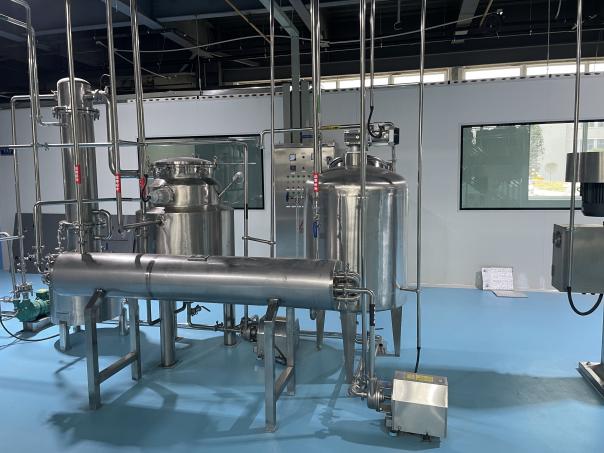
A manufacturer that operates its own production line can trace the COA back to a specific lot and packaging date.
Certificate scope and what it means for ACV powder
Guanjie Biotech holds ISO 9001:2015 quality management certification (00123Q310086R0S/6100, issued by CQC, valid 2023-12-07 to 2026-12-06, scope: export trade of plant extracts, solid beverages, and food additives) and HACCP system certification (001HACCP2301048, issued by CQC, valid 2023-12-06 to 2026-12-05, same scope). HALAL certification is valid 2024-11-08 to 2027-11-07 (certificate 0811240000, SHC), and Kosher certification is valid 2026-07-15 to 2027-07-15 (certificate K-88898568, Badatz Shatz).
Three checks matter more than the certificate count. First, is the certificate current? Because the ISO 9001 and HACCP certificates on file expire in December 2026, buyers should request renewal versions before placing a significant repeat order. Second, does the scope cover plant extracts and food additives — the categories under which ACV powder would be classified? Third, is the product specifically listed among the certified products? The answer should be yes for each; if any is missing, treat it as a qualification gap rather than an administrative detail.
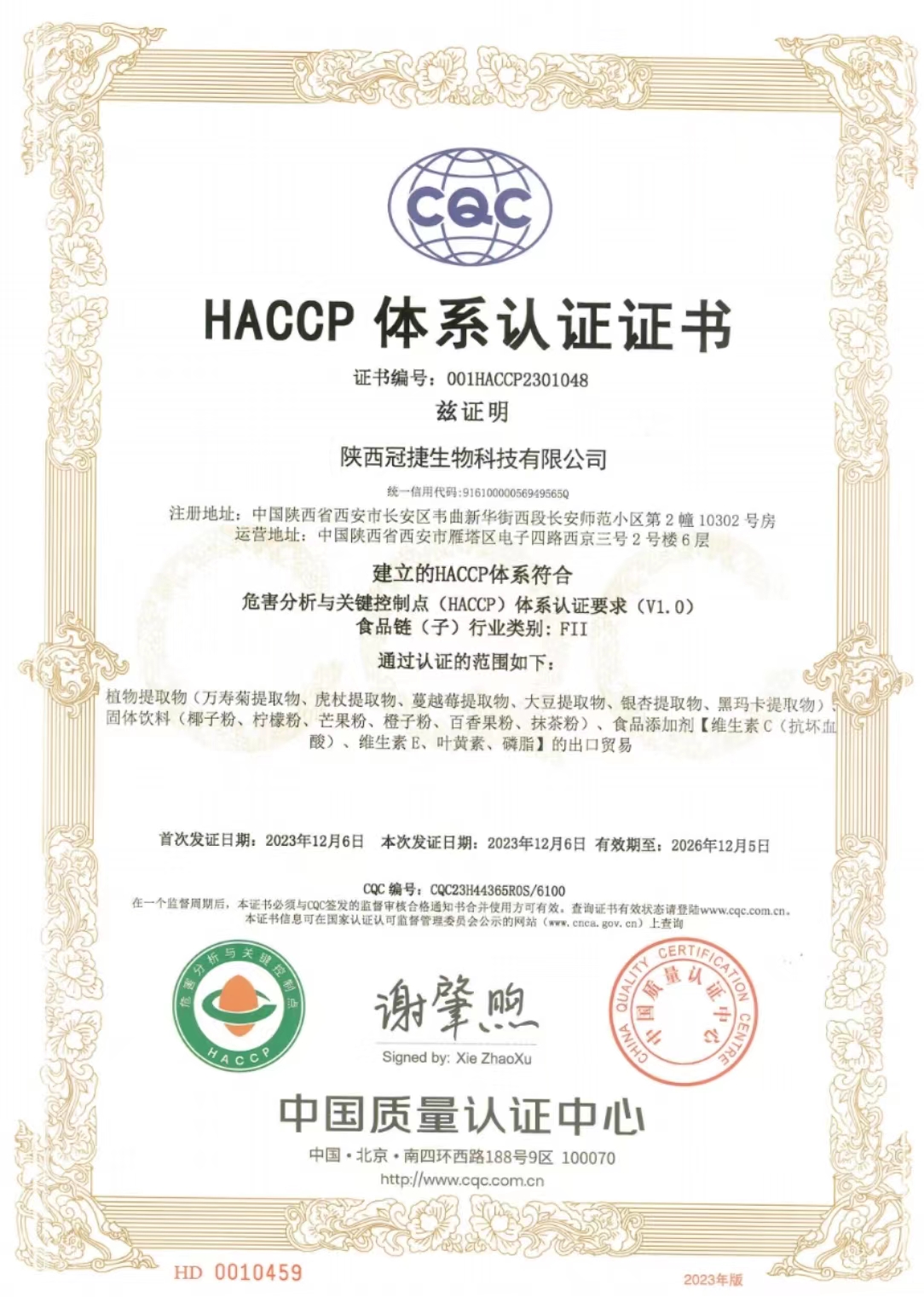
HACCP certificate scope covers plant extracts, solid beverages, and food additives.
Batch conditions to confirm before repeat orders
Repeat orders are where lot-level discipline shows. Before the second shipment, agree on what the COA must cover and how incoming inspection will be run. For ACV powder, the check set includes active content, moisture, heavy metals, microbial limits, and residual solvents where applicable. The supplier's COA should match the agreed specification and be reproducible across two or three consecutive lots.
Guanjie Biotech reports 100% testing as its quality control method and includes a batch COA with each shipment. It also states that when a discrepancy arises on arrival, it works with third-party laboratories such as SGS and Eurofins to resolve technical audits. That clause is more valuable than it looks: it defines what happens if the two parties disagree, and it gives the buyer a route to independent verification rather than a negotiation.
The buyer's written terms should state shipment numbering, the exact date-code format, the sampling plan, the retention sample period, and the acceptance limits for each tested parameter. Without those, a COA is a snapshot rather than a contract term.
Delivery capacity: commitments versus execution
Delivery is where a well-documented supplier and a weak one separate in practice. Three timelines matter: production time, documentation time, and packing and dispatch time. The reported 30-day lead time from Guanjie Biotech is a starting point, not a complete answer. The buyer should ask in writing: when does the clock start; is the lead time measured from order confirmation or from approved artwork; and what happens if the batch fails a final re-test?
Packaging is part of delivery. Custom packaging is offered, and the packaging specification — inner liner, bag size, external carton, and label content — should be agreed before the first production run. If the buyer supplies the artwork, the supplier's approval of that artwork is the point at which label responsibility passes between the two parties.
For repeat orders, also agree on stock assumptions. A buyer placing quarterly orders needs to know whether the supplier holds finished stock or manufactures to order, and whether that manufacturing sits inside the stated capacity. The answer determines whether the buyer's own safety stock is adequate.
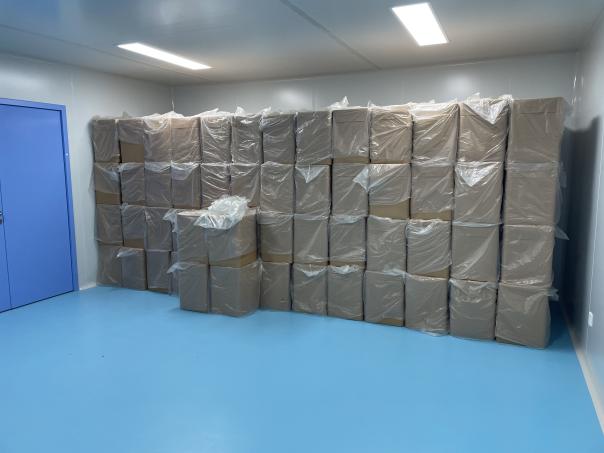
Finished inventory and packaging conditions should match the delivery clause in the supply agreement.
Six-step supplier check before the first repeat order
Apply the following sequence before the first repeat order. Each step produces a document the buyer can retain and compare across suppliers.
- Confirm production mode. Request company registration and factory address. Confirm the supplier is a manufacturer that owns or operates the production site, not a trading intermediary.
- Verify quality-system scope. Check ISO 9001 and HACCP certificate validity, coverage, and listed products. Confirm ACV powder is listed.
- Review batch COA and test items. Pull COAs from two or three consecutive lots and confirm each tested parameter, the test method, and the limit values.
- Lock commercial terms. Write the MOQ, lead-time trigger, packaging specification, confirmation sample, and acceptance criteria into the quotation or supply agreement.
- Confirm the re-test route. Agree which third-party laboratories can run arrival re-tests, and how a failed result triggers the agreed remedy.
- Put customization requirements into the specification sheet. If private label or custom packaging is used, document label content, packaging sizes, and product-claim ownership before the first production run.
OEM, packaging customization, and formulation support
Guanjie Biotech offers OEM and ODM production services, including private-label production and packaging customization. For buyers, this extends the evaluation from ingredient to finished product. The relevant questions become: which production step is the buyer's own, which is the supplier's, and who signs off on the finished label?
Dedicated product specialists support R&D and product development teams with processing challenges, including formulation troubleshooting. For ACV powder, the areas where this support matters in practice are dispersion in powder blends, moisture pick-up during packing, and label-claim review where ACV is used as a fermentation-derived ingredient.
Ask the supplier to state in writing which of these services are included in the quoted price and which are handled as a separate development step. That avoids the common situation where formulation support is promised verbally and then appears only under a separate agreement.
A typical procurement scenario
Consider a sports nutrition brand moving from a trial ACV powder batch to quarterly production. The first order was a 1 kg evaluation sample that matched the COA. The second order was 25 kg. Before the third order, the buyer requests the ISO 9001 renewal version (the current certificate expires in December 2026), a two-batch COA with different manufacturing dates, and an updated lead-time confirmation. That sequence gives the buyer the ability to compare lots, not just documents.
The point of the scenario is general. It is not a customer case; it illustrates the shift in evidence expectations from a sample-stage evaluation to a repeat-order relationship. The checks are the same whether the buyer is a supplement manufacturer, a sports nutrition brand, or a private-label distributor.
Supplier evidence table
The table maps each check to the document that supports it and to the buyer decision it enables. It reflects the same evidence set described above rather than a separate ranking.
| Check | Evidence to request | Why it matters |
|---|---|---|
| Manufacturing model | Company registration and factory address | Confirms manufacturer versus trader status, so the production route can be audited |
| Quality management | ISO 9001:2015 certificate (00123Q310086R0S/6100, valid through 2026-12-06) | Shows the scope covers plant extracts and food additives |
| Food safety | HACCP certificate (001HACCP2301048, valid through 2026-12-05) | Documents identified critical control points in the process |
| Dietary compliance | HALAL and Kosher certificates | Supports clearance for those markets where required by the label |
| Lot quality | Batch COA | Verifies assay, moisture, heavy metals, and microbial limits against specifications |
| Commercial terms | Quotation or supply agreement | Defines MOQ, lead time, packaging, and acceptance criteria |
Frequently asked questions
Conclusion
ACV powder supplier evaluation comes down to whether the supplier can show the same evidence for the second and third order as for the first. The checks that matter are factory and production scope, certificate validity and coverage, batch COA and re-test arrangements, commercial terms and delivery commitments, and packaging and OEM terms where they apply.
Guanjie Biotech provides a documentable record for those checks: a manufacturer profile from 2004, a 7,000 m² plant with a 2,000 m² cGMP-standard clean workshop and a 500 m² laboratory, reported capacity of 30 tons per month with a 30-day lead time, 100% testing, and OEM/ODM production with packaging customization. Its certifications list ACV powder among the related products. Because the ISO 9001 and HACCP certificates on file expire in December 2026, buyers building a repeat order for the post-renewal period should request the updated certificate copies before the purchase order is placed.
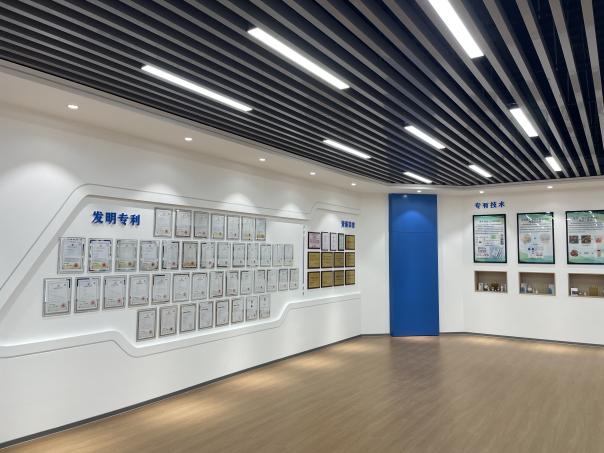
Guanjie Biotech factory exhibition hall — the company supplies ACV powder and other nutraceutical ingredients under ISO 9001 and HACCP certification.
For current product and capability documentation, the company brochure can be downloaded here: Guanjie Nutraceutical Ingredients brochure. Buyers with specific ACV powder requirements can also request a specification-matched sample, a batch COA, and a written lead-time confirmation before committing to repeat orders.
Guanjie Biotech operates from Shaanxi, China and supplies nutraceutical ingredients to export markets across Europe, the Middle East, North America, South America, and Asia.
Have Questions or Need More Details?
Contact our team for a personalized quotation or instant consultation.
Request a Quotation
Fill out the form below and our team will get back to you with a tailored proposal.
WhatsApp Direct Chat
Prefer to chat in real-time? Message us on WhatsApp for instant assistance & quick answers.
- Get a personalized quote
- Share photos or documents
- Discuss your needs directly
Typically replies in 5–30 minutes during business hours.