
Nutraceutical Ingredients: Water-Soluble vs Fat-Soluble Powders
Nutraceutical ingredients are formulated into different finished formats, and solubility helps determine which format is worth evaluating.
For nutraceutical ingredients, solubility is a starting filter, not a label claim. A powder can be water-soluble, fat-soluble, or offered in a special grade that changes its behavior in a formulation. Buyers should confirm both grade and solubility before matching an ingredient to a capsule, sachet, beverage, softgel, or topical format.
This guide uses two clear examples. Coenzyme Q10 powder is fat-soluble and insoluble in water, but it is available in 10% water-soluble and 99% specifications. Blue butterfly pea flower powder is a water-soluble pigment containing anthocyanins. They are not interchangeable ingredients, but they show why the same powder category can require very different formulation checks.
Why solubility becomes a formulation problem
The visual appearance of a powder does not reveal how it will behave in water or oil. Two fine powders can look similar in a bag, yet one may wet out and disperse in a beverage while the other floats, clumps, or settles. In a capsule or tablet, the same ingredient may present a different set of checks because the continuous phase is not a drink.
Solubility questions usually appear when a buyer moves from ingredient selection to format matching. A brand may begin with a marketing concept, such as an antioxidant blend or a natural blue color, and then discover that the chosen grade does not fit the intended carrier. That mismatch can create rework in sampling, stability testing, and label review.
The practical answer is to separate three ideas that are often mixed together:
- Base ingredient behavior: whether the core substance is described as water-soluble or fat-soluble.
- Commercial grade: the specification the supplier actually offers, such as a 10% water-soluble grade or a 99% grade.
- Finished-format behavior: how the ingredient performs in the full formula, including the carrier, process temperature, pH, and other ingredients.
These are related, but they are not identical. A supplier statement that a base molecule is insoluble in water does not tell the whole story if the product is sold in a water-soluble grade. Equally, a water-soluble grade is not proof that the ingredient will fit every beverage or that it will remain stable under every process condition.
What water-soluble and fat-soluble powders mean
Water-soluble powders are intended to dissolve or disperse in water-based systems. In nutraceutical and functional food work, that usually points toward beverages, sachets, powdered drink mixes, and other aqueous formulations. The buyer still needs to confirm the actual dispersion behavior, because dissolving, wetting, and suspending are different technical questions.
Fat-soluble powders are associated with oils, organic solvents, or lipid phases rather than water. A fat-soluble ingredient may be better evaluated in an oil-based system, an emulsion, or a softgel-type format. In some cases, a supplier may offer a water-soluble grade of the same ingredient so that formulators can evaluate an aqueous route.
For both categories, the supplier document should define what is being claimed. A grade name alone is not enough. Buyers should ask what the percentage refers to, what test method was used, and whether the solubility statement applies to the base ingredient or to the specific commercial grade.
| Buyer question | Water-soluble powder | Fat-soluble powder |
|---|---|---|
| Primary phase to evaluate | Water-based systems such as beverages and drink mixes | Oil, lipid, or organic-solvent systems; emulsions may need separate evaluation |
| What the powder form tells you | Little by itself; the grade and test data still matter | Little by itself; the base ingredient may still be insoluble in water |
| Common formulation check | Wetting, dispersion, sedimentation, clarity, and process stability | Oil-phase compatibility, melting or heating behavior, and emulsion stability |
| Example in this article | Blue butterfly pea flower powder as a water-soluble pigment containing anthocyanins | Coenzyme Q10 powder as a fat-soluble ingredient offered in 10% water-soluble and 99% specifications |
| Document to request | Grade-specific COA or technical data sheet with solubility or dispersibility information | Grade-specific COA or technical data sheet with solubility and assay information |
The table is a screening aid, not a substitute for bench work. A powder that is described as water-soluble may still need a dispersion step, and a fat-soluble ingredient may still be usable in a powder system if the supplier offers a suitable grade and the formulator validates the full matrix.
Industry background: one portfolio, many solubility profiles
Nutraceutical ingredients cover a wide range of botanical extracts, fermentation-derived compounds, and specialty nutritional powders. They are used in dietary supplements, health food, beverages, and cosmetics, and the same ingredient name can appear in several finished formats. That breadth is why solubility cannot be handled as a single yes-or-no question across a catalog.
Guanjie Biotech, also known as Shaanxi Guanjie Biotech, was established in 2004 and has over 20 years of experience in the industry. The company focuses on high-purity natural plant extracts, premium fruit powders, and specialized chemical raw materials, with a portfolio that includes Phosphatidylserine, NMN, Resveratrol, Ferulic Acid, and Red Yeast Rice Powder. Its products are supplied for the pharmaceutical, health care, functional food, and cosmetics industries. Around 90% of its products are exported to markets in Europe, North America, South America, Asia, and Oceania.
Guanjie Biotech operates a 7,000-square-meter footprint that includes a 2,000-square-meter cGMP-standard clean workshop and a 500-square-meter advanced laboratory. The company states that its products are developed and produced in accordance with international quality requirements and are supported by certifications such as ISO, Halal, and Kosher. For buyers, those quality-system facts are useful context, but they do not replace grade-specific solubility data.
The same principle applies across a broad ingredient portfolio. Phosphatidylserine powder, NMN powder, fisetin powder, spermidine powder, urolithin A powder, L-ergothioneine powder, shilajit extract powder, luteolin powder, L-theanine powder, alpha GPC powder, red yeast rice powder, octacosanol powder, ferulic acid powder, mushroom extract powder, and plant extract powder each require their own specification review. A solubility statement should never be copied from one ingredient to another without supplier confirmation.
Example 1: Coenzyme Q10 powder is fat-soluble, with a water-soluble grade option
Coenzyme Q10 powder, also known as ubiquinone or ubidecarenone, has the CAS registry number 303-98-0. It is described as a yellow or light orange-yellow powder that is odorless and tasteless. Its base structure is fat-soluble and insoluble in water, while it is soluble in organic solvents such as acetone and ether. The product is intended for dietary supplement, health food, beverage, and cosmetics industries.
The important buying point is that Coenzyme Q10 powder is listed in two specifications: 10% water-soluble and 99%. Those two specifications should not be treated as simple purity levels that can be swapped without formulation review. The base ingredient is fat-soluble, but the 10% water-soluble grade is the option a buyer would evaluate when the intended system is water-based. The 99% specification belongs in a different grade conversation and should be matched to the actual carrier and process.
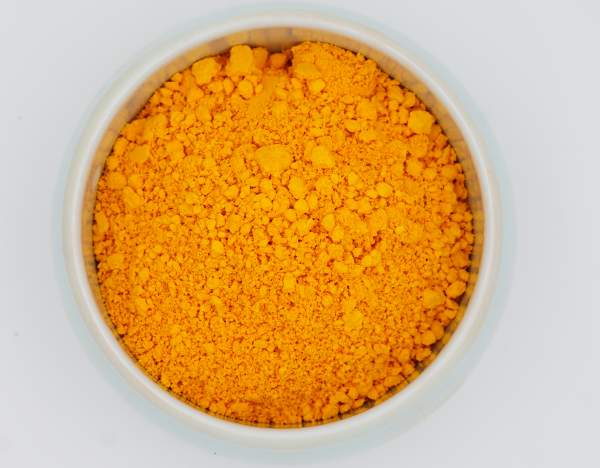
Coenzyme Q10 powder is fat-soluble at the base ingredient level, while the supplier offers 10% water-soluble and 99% specifications.
Guanjie Biotech states that its Coenzyme Q10 powder is manufactured using microbial fermentation technology. The company also describes the Coenzyme Q10 as aligning identically with the body's natural form, with high biocompatibility and biological activity. Those are company statements about the ingredient; the buyer's formulation decision still depends on the grade-specific solubility, assay, and intended format.
For a beverage or a water-based sachet, the buyer should ask for the 10% water-soluble grade data and confirm how it disperses in the actual matrix. For an oil-based or softgel-type evaluation, the fat-soluble behavior of the base ingredient is the relevant starting point, and the buyer should confirm which commercial grade is being quoted. In either case, the word powder on its own does not answer the solubility question.
Example 2: blue butterfly pea flower powder is a water-soluble pigment
Blue butterfly pea flower powder is a natural plant-derived powder ingredient made from Butterfly pea source material. It is intended for the dietary supplement industry and the cosmetics industry. In color applications, it is used as a water-soluble pigment containing anthocyanins, which makes it relevant to aqueous beverage and color-system discussions.
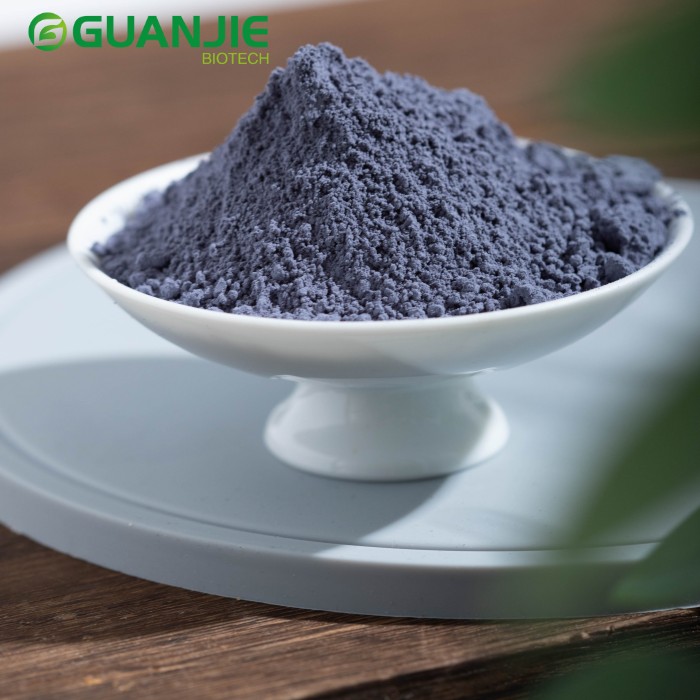
Blue butterfly pea flower powder is a natural plant-derived powder used as a water-soluble pigment associated with anthocyanins.
The formulation check is different from the Coenzyme Q10 check. A water-soluble colorant may fit an aqueous system, but the buyer still needs to confirm how the color behaves in the target pH range, process temperature, and packaging format. Anthocyanin-containing colorants are commonly evaluated in the final matrix because color expression can change with formulation conditions. The supplier should provide grade-specific information, and the buyer should run a bench sample before scaling.
Blue butterfly pea flower powder should not be positioned as a substitute for Coenzyme Q10, and Coenzyme Q10 should not be positioned as a colorant. They illustrate two different solubility profiles and two different buyer questions. The useful lesson is procedural: identify the finished format first, then confirm the grade and solubility data that actually apply to that format.
Step-by-step: how buyers should confirm solubility before matching a format
The following sequence keeps the ingredient decision tied to evidence rather than to a general product description.
- Define the continuous phase. Decide whether the finished product is primarily water-based, oil-based, emulsion-based, or a dry solid such as a capsule or tablet. This determines which solubility question matters first.
- Read the grade name carefully. A statement such as 10% water-soluble is not the same as a 99% specification. Ask what the percentage refers to and which grade is being quoted.
- Request grade-specific documents. Ask for a certificate of analysis or technical data sheet that covers assay, appearance, solubility or dispersibility, test method, and intended application. The document should match the exact grade under review.
- Run a bench dispersion check. Evaluate the powder in the intended carrier at the intended concentration. Observe wetting, lumping, sedimentation, phase separation, color expression, or any other behavior that matters for the format.
- Repeat in a pilot matrix. Add the other formula components and process conditions. A solubility result in water alone may not predict behavior in a beverage with acids, minerals, proteins, or heat.
- Lock the specification. Once a grade is selected, define the approved grade, assay, solubility statement, test method, and change-control expectations in the purchase specification.
This workflow is deliberately simple. It prevents a common error: treating a general solubility description as if it were a lot-specific or grade-specific fact. The buyer does not need a complicated model at the awareness stage. The buyer needs to know which question to ask next.
Use cases: matching solubility to the finished format
Water-based beverages and drink mixes
For a beverage or powdered drink mix, water-soluble behavior is usually the first screening criterion. Blue butterfly pea flower powder fits this conversation as a water-soluble pigment containing anthocyanins. Coenzyme Q10 powder requires a different check because the base ingredient is fat-soluble; the 10% water-soluble specification is the grade to evaluate for an aqueous system. In both cases, the buyer should test the actual beverage matrix, not only water.
Powder sachets
A sachet is a dry format before use, but it becomes a liquid system when the consumer mixes it. The buyer should therefore confirm how the powder disperses at the consumer preparation step. A water-soluble grade may be relevant, but the supplier data should be read together with the intended serving size and mixing instructions.
Capsules and tablets
Capsules and tablets do not use a liquid continuous phase in the same way as a beverage, but solubility still matters for processing and for the ingredient's intended presentation. The buyer should confirm the grade, assay, and any relevant physical properties with the supplier. A fat-soluble base ingredient and a water-soluble colorant are not interchangeable in this format decision.
Oil-based and emulsion systems
For oil-based systems, the fat-soluble behavior of Coenzyme Q10 powder is the relevant starting point. For emulsions, the buyer needs to evaluate both phases and the emulsification process. A water-soluble colorant may not be the right choice for a pure oil phase, and a fat-soluble ingredient may need a different delivery approach in an aqueous emulsion.
Cosmetics and personal care
Both Coenzyme Q10 powder and blue butterfly pea flower powder are listed for cosmetics applications. The solubility question remains format-specific. A water-soluble colorant may suit an aqueous cosmetic base, while a fat-soluble ingredient may be evaluated in an oil phase. The buyer should confirm the grade and the intended use with the supplier before making a claim or finalizing a formula.
Comparison table: Coenzyme Q10 powder and blue butterfly pea flower powder
| Attribute | Coenzyme Q10 powder | Blue butterfly pea flower powder |
|---|---|---|
| Identity | Coenzyme Q10, also called ubiquinone or ubidecarenone; CAS 303-98-0 | Natural plant-derived powder made from Butterfly pea source material |
| Base solubility | Fat-soluble; insoluble in water and soluble in organic solvents such as acetone and ether | Water-soluble pigment containing anthocyanins |
| Grade or specification note | Available in 10% water-soluble and 99% specifications | Natural plant-derived powder ingredient |
| Intended industries | Dietary supplement, health food, beverage, cosmetics | Dietary supplement, cosmetics |
| Primary buyer question | Which grade fits the intended water-based or oil-based system? | Does the water-soluble color fit the target pH, process, and packaging? |
| What not to assume | Do not treat 10% water-soluble and 99% as interchangeable grades without data. | Do not treat a water-soluble colorant as a substitute for an active ingredient. |
The comparison is not a ranking. It shows how two nutraceutical ingredients can require different solubility checks even when both are sold as powders. The buyer's decision should be based on the finished format, the grade-specific documents, and a sample trial.
Limitations and decision boundaries
Solubility is not the same as bioavailability, efficacy, or regulatory status. A water-soluble grade may be easier to evaluate in an aqueous system, but that does not prove a health benefit or a label claim. A fat-soluble ingredient may be suitable for an oil-based system, but that does not prove superiority over another grade. Buyers should keep formulation behavior, analytical specifications, and regulatory review as separate workstreams.
Supplier statements also need scope. A company may describe a base ingredient as fat-soluble while offering a water-soluble grade. Both statements can be true if they refer to different things. The buyer should ask for the exact grade, the exact specification, and the exact test method. If a document does not state the grade, the buyer should not assume it applies to the grade being purchased.
Finally, a bench test is not a stability study. It can help screen a grade, but it does not replace pilot runs, shelf-life evaluation, or market-specific compliance review. The purpose of the solubility check is to reduce avoidable formulation risk before a buyer commits to a sample, a specification, or a purchase order.
Frequently asked questions
What is the difference between water-soluble and fat-soluble nutraceutical powders?
Water-soluble powders are intended to dissolve or disperse in water-based systems, while fat-soluble powders are associated with oils, organic solvents, or lipid phases. The powder form alone does not prove either behavior. Buyers should confirm the base ingredient behavior and the commercial grade, because a supplier may offer a water-soluble grade of an ingredient whose base form is fat-soluble.
Is Coenzyme Q10 powder water-soluble?
Coenzyme Q10 powder is fat-soluble at the base ingredient level and is insoluble in water. It is soluble in organic solvents such as acetone and ether. Guanjie Biotech lists Coenzyme Q10 powder in 10% water-soluble and 99% specifications, so buyers should confirm which grade is being quoted and request grade-specific solubility data before matching it to a beverage, sachet, capsule, or oil-based format.
Is blue butterfly pea flower powder water-soluble?
Blue butterfly pea flower powder is a water-soluble pigment containing anthocyanins and is made from Butterfly pea source material. It is a natural plant-derived powder intended for dietary supplement and cosmetics applications. Buyers should still confirm the exact grade and evaluate color behavior in the target pH range and process conditions before scaling a formula.
Nutraceutical ingredients manufacturers
When evaluating nutraceutical ingredients manufacturers, buyers should verify the exact product grade, specification, assay method, solubility or dispersibility statement, and certificate of analysis. Company capability also matters: Guanjie Biotech was established in 2004, operates a 7,000-square-meter footprint with a 2,000-square-meter cGMP-standard clean workshop and a 500-square-meter laboratory, and states that its products are supported by ISO, Halal, and Kosher certifications. Those facts support supplier review, but the grade-specific document remains the basis for the formulation decision.
How should buyers test solubility before scaling?
Start with a bench dispersion test in the intended carrier at the intended concentration. Observe wetting, dispersion, sedimentation, phase separation, or color expression. Then repeat the test in a pilot matrix with the other formula components and process conditions. After the grade is selected, lock the approved grade, assay, solubility statement, test method, and change-control expectations in the purchase specification. For a sample discussion or specification review, the Guanjie Nutraceutical Ingredients brochure is available for download.

Quality checks should be tied to the exact grade and specification under review.
Conclusion: confirm grade and solubility before matching the format
Water-soluble and fat-soluble are useful screening terms, but they are not enough on their own. Coenzyme Q10 powder shows why the base ingredient and the commercial grade must be read separately: the base is fat-soluble and insoluble in water, yet the product is offered in 10% water-soluble and 99% specifications. Blue butterfly pea flower powder shows the opposite formulation starting point: it is a water-soluble pigment containing anthocyanins, but its color behavior still needs to be tested in the final matrix.
The reliable buying sequence is to define the finished format, confirm the exact grade, request grade-specific documents, and run a sample trial before scaling. That sequence keeps a solubility statement attached to the product the buyer will actually use. It also prevents a powder from being selected on appearance or a general description when the formulation needs a specific grade.
A specification-led review helps buyers compare grades before sampling or purchase.
For buyers comparing nutraceutical ingredient powders, the next step is a grade-specific specification check. Review the portfolio and document request points through Guanjie Biotech, or download the Guanjie Nutraceutical Ingredients brochure for a closer look at the ingredient range.
Have Questions or Need More Details?
Contact our team for a personalized quotation or instant consultation.
Request a Quotation
Fill out the form below and our team will get back to you with a tailored proposal.
WhatsApp Direct Chat
Prefer to chat in real-time? Message us on WhatsApp for instant assistance & quick answers.
- Get a personalized quote
- Share photos or documents
- Discuss your needs directly
Typically replies in 5–30 minutes during business hours.