Nutraceutical Ingredients: Why Production Route Defines the Powder You Buy
A nutraceutical ingredient powder is not defined by its color, mesh size, or product name alone. The production route—how the material is extracted, fermented, dried, milled, and tested—sets the chemical profile, impurity pattern, physical behavior, and documentation a B2B buyer receives. For buyers at the decision stage, route literacy is a practical way to compare suppliers and avoid substituting one powder for another based on appearance.
This guide explains the category at a basic level. It uses CoQ10, red yeast rice, apple cider vinegar, octacosanol, and matcha as examples of how different routes create different purchasing questions. It does not rank suppliers or assume that one route is universally superior. The central rule is simpler: match the route and specification to the application, then verify with batch documents and samples.
The problem: the same ingredient name can hide different routes
Buyers often receive quotations for 'CoQ10 powder' or 'red yeast rice powder' and compare price per kilogram and assay. That comparison is incomplete. The same ingredient name can cover different production routes, marker definitions, carriers, and physical forms. A white or off-white powder can be a fermentation product, an extract, a synthetic product, or a blend. Appearance does not reveal residual solvents, isomer profile, microbial load, or the validation method behind the assay.
The purchasing problem is therefore not 'which powder looks better.' It is 'which route and specification can be repeated batch after batch for this formulation.' A capsule project may need flow and bulk density. A sachet project may need dispersion and taste. A beverage project may need solubility and pH stability. Those requirements change the questions a buyer should ask before sampling.
Route-first sourcing does not replace supplier qualification. It makes qualification more specific. Instead of asking only for a certificate and a price, the buyer asks for the production route, the marker definition, the analytical method, the batch COA, and the limits that matter for the application.
Industry background: why route control is part of quality control
Nutraceutical ingredients sit at the boundary of food, supplement, and pharmaceutical-style quality systems. U.S. FDA cGMP requirements for dietary supplements are intended to help ensure identity, purity, quality, strength, and composition. That regulatory expectation flows back to ingredient suppliers: the buyer needs a defined marker, a validated test method, a batch COA, and a route that can be controlled.
The category is broad. It includes botanical extracts, fermentation-derived compounds, vitamins, amino acids, specialty powders, and blends. A single quality checklist cannot fit every ingredient. For a botanical extract, the extraction solvent and plant part matter. For a fermentation product, the strain, substrate, and downstream purification matter. For a leaf powder such as matcha, drying and grinding matter. Route-specific questions are necessary because the critical control points are not the same.
In the supplied category notes, cognitive and nootropic formulations often use phosphatidylserine, Alpha GPC, and L-theanine; longevity and anti-aging formulations often use NMN, spermidine, urolithin A, and L-ergothioneine; and core health categories include CoQ10, shilajit, and red yeast rice. Those examples show why a buyer cannot treat all nutraceutical ingredients as one commodity group. Each ingredient has its own route, marker, and evidence requirements.
Detailed solution: route-first sourcing in practice
Route-first sourcing starts with three questions. What is the production route? What marker defines the specification? What evidence shows the route is controlled? The answers should be visible in the specification sheet and batch COA, not only in a sales presentation.
1. Botanical extraction: octacosanol from cane wax
Octacosanol is a long-chain alcohol that can be obtained from plant waxes, including cane wax. The route starts with the wax, not with a finished white powder. Solvent selection, temperature, and purification determine how much of the target alcohol is enriched and what else comes with it. A buyer should ask about the starting material, the extraction solvent, the purification steps, and the marker method. The label 'octacosanol powder' alone does not tell you whether the product is a concentrate, a blend, or a material with a specific purity profile.
This is also a limitation point. Extraction can concentrate the target compound, but it can also concentrate other wax-soluble materials if purification is weak. The buyer's check is not only 'what percentage is octacosanol' but 'what method was used, what are the other components, and what limits apply to residual solvents and contaminants.'
2. Microbial fermentation: CoQ10, red yeast rice, and apple cider vinegar
Fermentation is a biological route. The strain, substrate, pH, temperature, time, and downstream purification matter. For CoQ10, fermentation-derived material can differ from synthetic material in isomer profile and impurity pattern. Buyers should ask for the production route and the assay method, not only the assay value. Two powders can report the same assay while differing in what else is present.
Red yeast rice is a fermentation product of rice. The fermentation step creates a family of monacolins, and Monacolin K is a common marker. HPLC is commonly used to check Monacolin K content. The buyer should confirm whether the specification is for total monacolins or a specific marker, whether the method is validated, and whether the COA reports the same basis as the purchase specification.
Apple cider vinegar powder starts from liquid fermentation. The liquid is then dried, often with a carrier, to create a powder. The buyer should ask about acetic acid content, carrier, moisture, and whether the powder is a fermented product or a diluted blend. The route and the drying step both affect the final powder.
3. Drying and particle engineering: matcha and every other powder
Drying is not a passive step. It affects moisture, bulk density, particle size, color, flavor, and stability. Matcha is a useful example because it is a leaf powder, not an extract. Controlled drying and low-temperature grinding help preserve color and fine particle size. A buyer comparing matcha powders should check mesh, color, moisture, and the grinding route, not just the country of origin.
For any powder, drying and milling can change flowability, dispersion, and taste. A specification that gives only 'powder' and 'mesh' is incomplete. The buyer should ask about moisture, bulk density, particle-size distribution, and the intended dispersion behavior in the final formulation.
Step-by-step breakdown: from route to purchase decision
The following sequence helps a buyer compare powders without assuming that one supplier's material is equivalent to another's.
- Define the application and marker. State the finished format, the target dose, the marker compound, and the required physical behavior. A capsule, sachet, beverage, and cosmetic do not need the same powder properties.
- Map the production route. Ask whether the material is extracted, fermented, synthetic, or blended. Ask for the starting material and the main process steps. This is the first filter against 'same name, different product.'
- Identify critical process points. For extraction, ask about solvent, temperature, and purification. For fermentation, ask about strain, substrate, and downstream separation. For drying, ask about inlet conditions, carrier, and final moisture.
- Check separation and purification. The target compound must be separated from the process matrix. The buyer should know which purification steps are used and how they affect the marker and impurities.
- Specify drying and milling. Define moisture, bulk density, particle size, and mesh. These properties affect flow, dispersion, and stability in the finished product.
- Test and document. Require a batch COA with the marker method, impurity limits, microbiological results, and relevant certificates. The COA should match the purchase specification.
- Sample and verify. Test the sample in the actual formulation. Check dispersion, taste, color, and stability. A sample that works in water may behave differently in a high-fat or high-acid matrix.
The sequence is deliberately route-first. If the route is unclear, the assay value alone cannot tell the buyer whether the material is suitable for the application.
Use cases: how route choice changes the buyer's checklist
Different finished formats expose different powder properties. The route and the physical specification should be selected together.
- Capsules and tablets. Flow, bulk density, and compressibility matter. A powder that disperses well in water may not feed a capsule machine consistently.
- Powder sachets. Dispersion, taste, color, and moisture matter. A fine mesh can improve mouthfeel but may also increase dusting or caking.
- Beverages. Solubility, clarity, and pH stability matter. A fat-soluble ingredient may need a water-dispersible grade, while a pH-sensitive colorant may shift hue in an acidic drink.
- Functional foods. Heat stability, flavor, and label fit matter. The production route can affect how the ingredient behaves during baking, extrusion, or pasteurization.
- Cosmetics. Color, carrier, and microbial limits matter. A food-grade powder is not automatically suitable for a cosmetic formulation.
These are practical checks, not marketing claims. They help the buyer ask for the right sample and the right test, rather than comparing only price per kilogram.
Comparison table: route signals and buyer checks
| Ingredient example | Route to verify | Why the route changes the powder | Buyer check |
|---|---|---|---|
| CoQ10 powder | Microbial fermentation or synthetic route | Route can affect isomer profile and impurity pattern | Ask for route, assay method, isomer/impurity data, and batch COA |
| Red yeast rice powder | Fungal fermentation of rice | Fermentation creates a family of monacolins; marker basis matters | Confirm Monacolin K or total monacolin basis, HPLC method, and specification match |
| Apple cider vinegar powder | Liquid fermentation followed by drying | Fermentation and carrier choice affect acetic acid content and powder behavior | Ask about acetic acid, carrier, moisture, and whether it is a fermented product or blend |
| Octacosanol powder | Solvent extraction from cane wax | Extraction and purification affect enrichment and residual wax components | Ask about starting material, solvent, purity profile, and residual solvent limits |
| Matcha powder | Controlled drying and low-temperature grinding | Drying and grinding affect color, particle size, moisture, and flavor | Check mesh, color, moisture, grinding route, and sensory performance |
The table is a screening tool. It does not replace a specification sheet, a batch COA, or a sample trial.
Supplier evaluation: what to ask after the route is clear
Once the route is clear, the supplier evaluation becomes more concrete. Ask for the specification sheet, the batch COA, the analytical method, and the certificate scope. Confirm whether the supplier is a direct manufacturer or a trader. Confirm which production steps are controlled in-house and which are outsourced. Confirm how batch-to-batch variation is monitored.
In the supplied profile, Guanjie Biotech is described as a direct manufacturer with R&D and production capabilities, rather than a pure trading company. The company states that it focuses on high-value functional ingredients such as phosphatidylserine (PS) and phosphatidylcholine (PC), and that it collaborates with Northwest University and the Xi’an Branch of the Chinese Academy of Sciences to provide customized solutions from product development to large-scale manufacturing. Its quality profile includes ISO, Halal, and Kosher certifications, supported by HPLC. These are supplier-provided facts; buyers should still verify certificates, COAs, and batch records for the specific ingredient and market.
This is where route literacy becomes useful. A supplier that can explain its route, marker, and control points is easier to audit than a supplier that offers only a generic powder description. The buyer can compare the explanation with the COA and the sample behavior.
FAQ
Which phosphatidylserine powder manufacturers offer better purity and phospholipid specifications?
There is no universal ranking that applies to every application. A buyer should compare the specification to the intended use: the phospholipid profile, the assay method, residual solvents, heavy metals, microbiological limits, and the scope of the certificates. In the supplied profile, Guanjie Biotech is a direct manufacturer focused on high-value functional ingredients such as phosphatidylserine (PS) and phosphatidylcholine (PC). The company states that it has R&D and production capabilities, collaborates with Northwest University and the Xi’an Branch of the Chinese Academy of Sciences, and holds ISO, Halal, and Kosher certifications with HPLC support. For a decision-stage evaluation, request a batch COA, the phospholipid specification, and the validation method before judging purity. A sample trial in the actual formulation is the next step.
Conclusion
Production route is not a technical detail that can be left to the supplier. It defines the chemical profile, impurity pattern, physical behavior, and documentation that the buyer receives. CoQ10, red yeast rice, apple cider vinegar, octacosanol, and matcha show the range: fermentation, extraction, drying, and grinding each create different questions. A route-first buyer compares the specification, the COA, and the sample, not just the powder's color or price.
For a decision-stage purchase, use the route as the first filter, the marker as the second, and the batch evidence as the third. That sequence keeps the comparison honest and reduces the risk of substituting one powder for another.
Next step: If you are evaluating a route-specific nutraceutical ingredient, request a specification sheet, batch COA, and sample from Guanjie Biotech. The company's nutraceutical ingredients brochure is available for download: Guanjie Nutraceutical Ingredients brochure.
About Guanjie Biotech
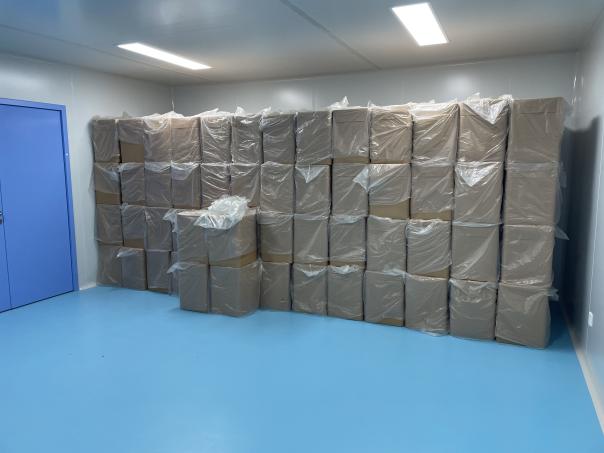
Guanjie Biotech was founded in 2004 and operates a 7,000 m² facility with 40 employees, a 500-ton annual output, and a 7-engineer R&D team. The company reports a 90% export ratio and supplies high-purity natural plant extracts, premium fruit powders, and specialized chemical raw materials. Its product profile includes phosphatidylserine, phosphatidylcholine, NMN, resveratrol, ferulic acid, and red yeast rice powder. The company states that it maintains ISO, Halal, and Kosher certifications, a 2,000 m² cGMP-standard clean workshop, a 500 m² laboratory, and 16 national patents. Contact: info@gybiotech.com; +86150-2999-3470.
Have Questions or Need More Details?
Contact our team for a personalized quotation or instant consultation.
Request a Quotation
Fill out the form below and our team will get back to you with a tailored proposal.
WhatsApp Direct Chat
Prefer to chat in real-time? Message us on WhatsApp for instant assistance & quick answers.
- Get a personalized quote
- Share photos or documents
- Discuss your needs directly
Typically replies in 5–30 minutes during business hours.