Phosphatidylserine Powder: Specifications, Certifications and Batch COA Requirements for B2B Buyers
Phosphatidylserine powder is a phospholipid nutraceutical ingredient supplied to supplement, functional food and beverage manufacturers. Qualifying it is a documentation exercise as much as a product exercise: a usable quotation should name the lecithin source, state the supply form, attach a specification sheet, include a certificate of analysis (COA) for the actual batch, and reference certificates a buyer can verify by number and expiry date. Shaanxi Guanjie Biotech supplies Phosphatidylserine (CAS No. 51446-62-9), derived from non-GMO soybean lecithin or sunflower lecithin, in four supply forms: powder, liquid, water-soluble powder and granular.
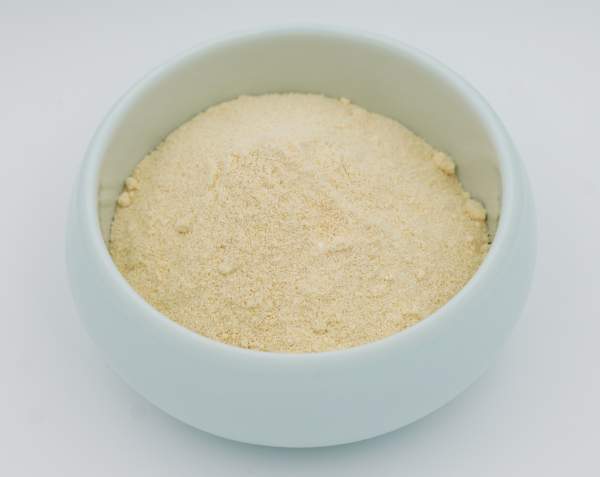
Phosphatidylserine powder, CAS No. 51446-62-9, derived from non-GMO soybean lecithin or sunflower lecithin.
This page is written for procurement managers, product developers and QA reviewers who are past the discovery stage and are now comparing offers. It sets out the constraint variables that decide whether two phosphatidylserine quotations are actually comparable, then shows what a complete supplier pack contains, using only documented information about the Guanjie Biotech phosphatidylserine programme and its certificate register.
The Constraint Problem: Four Variables That Quietly Change What You Are Buying
Two suppliers can both quote 'phosphatidylserine powder' and still be selling materially different scopes. In practice, four variables decide the real specification, and each one must be pinned down in writing before prices are compared.
- Lecithin source. Phosphatidylserine can be derived from soybean lecithin or sunflower lecithin. The two routes carry different allergen, labelling and sourcing narratives, and the non-GMO status must be documented rather than assumed.
- Supply form. Powder, liquid, water-soluble powder and granular forms behave differently in capsule filling, aqueous beverage systems and reconstitution. A price per kilogram means little if one quote is a granular form and another is a liquid.
- Assay and test method. The stated active content must be attached to the analytical method used to verify it. A numeric specification without a method is not a buying specification.
- Batch documentation. A generic specification sheet is not a COA. The COA must correspond to the batch that ships, and the certificates referenced must be current on the shipment date.
Decision rule: if a supplier cannot state lecithin source, supply form, assay and test method in one document, the quotation is not yet comparable and should not be used for a cost model.
Industry Background: Why Ingredient Constraints Face More Scrutiny Now
Nutraceutical ingredients are a large and still expanding commercial category. Global Market Insights Inc. estimates the global nutraceutical ingredients market at USD 105.8 billion in 2026, covering vitamins, probiotics, proteins, amino acids and phytochemicals. Growth at this scale pulls more suppliers into the market, which raises rather than lowers the importance of document-based qualification.
Regulatory pressure reinforces the same point. The U.S. Food and Drug Administration states that firms which manufacture, package or hold dietary supplements must follow current good manufacturing practices intended to help ensure identity, purity, quality, strength and composition. That requirement describes the obligation placed on the finished-product manufacturer; it does not by itself prove that any given ingredient supplier complies. The supplier-side evidence has to be requested: certificates with verifiable numbers, batch COAs, and testing records.
Two further regulatory realities shape what buyers ask for. First, the FDA describes a notification process for new dietary ingredients intended for the U.S. market, involving safety information submitted before marketing unless an applicable exception applies — which is why ingredient-level regulatory status is now a standard question in supplier questionnaires. Second, public reference databases make benchmarking easier than it once was. The NIH Office of Dietary Supplements maintains the Dietary Supplement Label Database, which catalogues information printed on labels of dietary supplement products sold in the United States, and the Dietary Supplement Ingredient Database, which provides estimated ingredient levels in certain supplement products for research applications. Buyers can therefore compare how an ingredient is declared on finished labels before they ever request a sample.
The practical effect on procurement is simple: the COA and the certificate register have moved from 'nice to have' to the first documents exchanged.
What a Complete Phosphatidylserine Offer Contains
Product identity and source
Guanjie Biotech's phosphatidylserine is identified by CAS No. 51446-62-9 and is manufactured from non-GMO soybean lecithin or sunflower lecithin. The lecithin route is a selection decision, not a marketing detail: buyers with allergen-restricted portfolios typically specify the sunflower route, while buyers with established soy-based labelling choose soybean lecithin. Both routes are offered, which means the source must be written into the purchase specification rather than assumed from the product name.
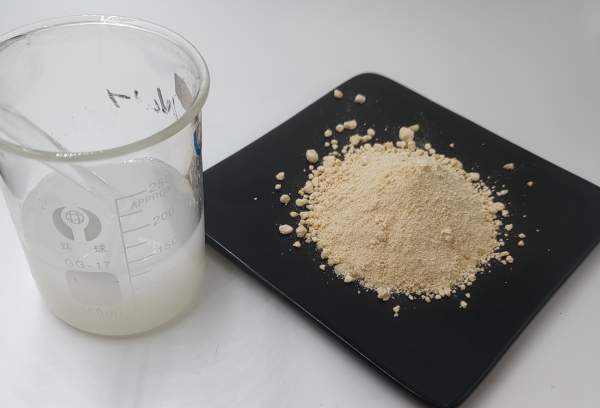
Water-soluble phosphatidylserine powder, one of four supply forms offered alongside standard powder, liquid and granular.
Supply forms
Four forms are supplied: common phosphatidylserine powder, liquid, water-soluble powder, and granular. The distinction matters at the formulation stage. A water-soluble powder is the natural starting point for ready-to-drink beverages and powder sachets where dispersion is the limiting factor; a granular form is typically considered where flow and dusting behaviour affect handling; a liquid suits processors who prefer to dose a liquid stream. Confirming the form first prevents reformulation later.
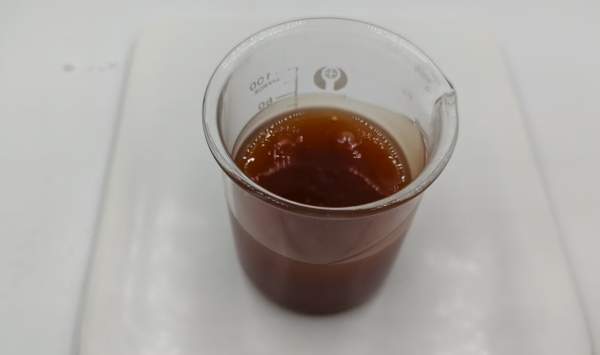
Phosphatidylserine liquid form, supplied for processors who dose a liquid stream.
Manufacturing and quality infrastructure
Guanjie Biotech was founded in 2004 and operates a 7,000 m² footprint that includes a 2,000 m² cGMP-standard clean workshop and a 500 m² laboratory equipped for quality control and technical work, covering both a research and development laboratory and a physical and chemical analysis laboratory built to GMP and QS standards. The company reports 40 employees, a 7-engineer R&D team and an annual output of 500 tons, with roughly 90% of output exported. It also cooperates with Northwest University on a master's experimental base and maintains a strategic partnership with the Xi'an Branch of the Chinese Academy of Sciences.
Testing capability across the portfolio includes HPLC, UV and GC methods, which is the relevant background when a buyer asks how an assay value on a COA was generated. The company holds over 16 national patents covering production processes and specifications.
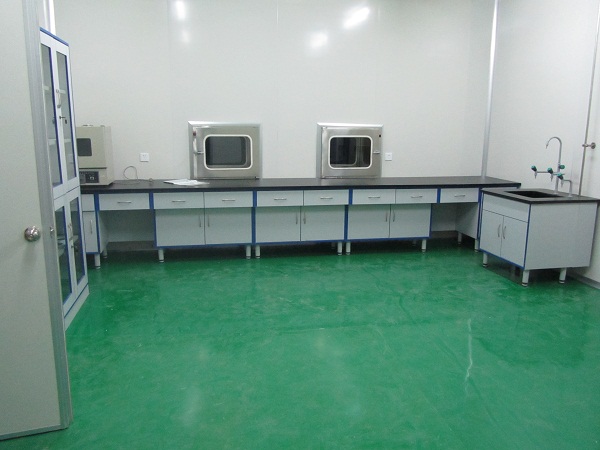
In-house testing laboratory: batch analysis feeds the certificate of analysis issued with each shipment.
Certificate register
Four certificates are relevant to a phosphatidylserine purchase. Each should be requested as a copy and checked against the number, issuer, scope and validity date below.
| Certificate | Number | Issuer | Validity | Scope |
|---|---|---|---|---|
| ISO 9001:2015 (Quality Management System) | 00123Q310086R0S/6100 | China Quality Certification Centre (CQC) | 2023-12-07 to 2026-12-06 | Export trade of plant extracts, solid beverages and food additives |
| HACCP System Certification | 001HACCP2301048 | China Quality Certification Centre (CQC) | 2023-12-06 to 2026-12-05 | Export trade of plant extracts, solid beverages and food additives; the certified portfolio includes Phosphatidylserine together with Ferulic Acid Powder, NMN Powder, Fisetin powder, Spermidine Powder, Urolithin A Powder, L-Ergothioneine Powder, Shilajit Extract Powder, Luteolin Powder, blue butterfly pea flower powder, matcha powder, Alpha GPC Powder, Red Yeast Rice Powder, Apple Cider Vinegar Powder, Octacosanol powder, Coenzyme Q10 powder and Mushroom Extract Powder |
| HALAL Certificate | 0811240000 | Shandong Halal Certification Service (SHC) | 2024-11-08 to 2027-11-07 | Plant extracts, solid beverages and food additives; issued against Indonesia Halal Law and Regulations and MS1500:2019 for halal markets including the Middle East and Indonesia |
| Kosher Certificate | K-88898568 | Badatz Shatz (SKS) | 2026-07-15 to 2027-07-15 | Kosher Dietary Law; the certificate covers Phosphatidylserine and the other listed plant extracts, global market |

ISO 9001:2015 certificate 00123Q310086R0S/6100, issued by CQC and valid to 2026-12-06.
Note the dates. The ISO 9001 and HACCP certificates both expire in December 2026, so a buyer placing orders late in that year should request renewal evidence with the shipment documents rather than relying on the certificate copy held from an earlier audit cycle. The Kosher certificate runs to 2027-07-15 and the Halal certificate to 2027-11-07.
Batch COA and after-sales documentation
Every shipment is accompanied by a complete COA matched to the pre-shipment specification, covering parameters such as purity, moisture, heavy metals, microbial limits and active ingredients. If a discrepancy is identified on arrival, third-party re-testing with laboratories such as SGS or Eurofins is used to resolve the technical question. Application-level troubleshooting support is also provided for formulation issues such as colour loss, thermal degradation or solubility problems in beverage, bakery and supplement matrices.
Step-by-Step: Qualifying a Phosphatidylserine Supplier
The sequence below is designed so that each step produces a document that can be filed in a supplier qualification record.
Step 1 — Fix the specification in writing
State supply form, lecithin source, assay, test method and packaging in a single specification document. Any parameter left open will be filled differently by different suppliers.
Step 2 — Confirm the lecithin route and non-GMO status
Decide whether the soybean or sunflower route applies to your label, and require the non-GMO position in writing. This is the step that most often forces a late reformulation when skipped.
Step 3 — Request a batch-specific COA, not a template
The COA should reference the lot that will ship and show the measured results against the agreed specification, including the analytical method for the assay.
Step 4 — Verify certificates by number, scope and date
Check ISO 9001:2015 (00123Q310086R0S/6100), HACCP (001HACCP2301048), Halal (0811240000) and Kosher (K-88898568) against the register above. Confirm that the product you are buying is inside the certified scope, and confirm whether the certificate will still be valid on the delivery date.

HACCP System Certification 001HACCP2301048, valid to 2026-12-05, covering the certified plant extract portfolio.
Step 5 — Evaluate a sample against your own matrix
Test the sample in the intended application, not only as a standalone powder. Dispersion in a beverage base, flow on a capsule filler and behaviour in a gummy mass are the variables that decide whether the chosen form is correct.
Step 6 — Confirm commercial terms in the quotation
The quoted terms should state minimum order quantity (1 kg), lead time (30 days), monthly capacity (30 tons), packaging and any OEM/ODM packaging customisation. Without these, the price is not a landed-cost input.
Step 7 — Write batch retention and change notification into the agreement
Retain the approved batch COA and a reference sample, and require notification before any change to lecithin source, process or specification. This is the clause that protects a validated formulation over a multi-year supply relationship.
Where Phosphatidylserine Fits in Finished Products
Phosphatidylserine is formulated into four broad application families, each of which changes which supply form makes sense.
- Dietary supplements and hard capsules. The largest segment, covering capsules, tablets, softgels and powder sachets for daily systemic health, cognitive function and joint care positioning. Standard powder and granular forms are the usual starting point.
- Functional and fortified beverages. Ready-to-drink formats and powdered drink mixes where dispersion governs the choice of the water-soluble powder form.
- Functional foods and confectionery. Gummies, protein bars, fortified cereals and functional snacks, where the ingredient has to survive the process rather than simply dissolve.
- Bakery, dairy and plant-based alternatives. Applications where thermal exposure and matrix pH are the practical constraints on the chosen form.
A documented example of a capsule-led programme comes from a Korean health food and functional supplement manufacturer that has purchased 50 MT per year of phosphatidylserine for three years as a raw material for brain-health functional food and hard capsules. The stated basis of that relationship is high-purity material, stable batch-to-batch quality and conformity with KFDA food raw material requirements, supported by full COAs for each batch and customisable concentration, which allowed the customer to build out a cognitive-health product line without changing ingredient source mid-programme.
Comparison: Specification Basis Across Selected Ingredients
The table below compares how specifications are stated across a set of Guanjie Biotech nutraceutical ingredients. It is included because buyers often source phosphatidylserine alongside other actives, and a specification that is precise for one ingredient may be vague for another.
| Ingredient | CAS No. | Stated specification | Test method | Specification detail worth confirming |
|---|---|---|---|---|
| Phosphatidylserine | 51446-62-9 | Powder, liquid, water-soluble powder, granular | Confirm on COA | Non-GMO soybean lecithin or sunflower lecithin; form must be specified in the order |
| NMN Powder | 1094-61-7 | Assay ≥99.5% | Confirm on COA | White crystalline powder without harmful solvent residues; freeze-dried and vacuum-dried bulk densities |
| Ferulic Acid Powder | 537-98-4 | 98% | HPLC | White, high crystallinity; pyridine content undetectable |
| Urolithin A Powder | 1143-70-0 | 98% | HPLC | Third-party testing for heavy metals and solvent residues |
| Fisetin powder | 528-48-3 | 50%, 98% | HPLC | Assay range stated as 50% to 99%; light yellow to yellow powder |
| Luteolin Powder | 491-70-3 | 98% | HPLC | Ash controllable within 2%, with 5% and 1% options on request |
| Spermidine Powder | 334-50-9 / 124-20-9 | 98% (trihydrochloride), 1.0% (wheat germ extract) | HPLC/GC | Two distinct routes: synthetic trihydrochloride versus natural non-GMO wheat germ extract |
| Alpha GPC Powder | 28319-77-9 | 50%, 85%, 98% | Confirm on COA | White powder or liquid form |
Read the table as a checklist rather than a ranking. The consistent lesson is that the specification column alone is never sufficient: the form, the method and the source statement are what make a quotation enforceable.
Frequently Asked Questions
What documentation should a cGMP nutraceutical ingredient manufacturer provide with each batch?
A complete supplier pack contains three layers. First, a batch-specific certificate of analysis that matches the pre-shipment specification and reports parameters such as purity, moisture, heavy metals, microbial limits and active ingredients, with the analytical method stated for the assay. Second, copies of the certificates in force on the shipment date, verifiable by number and issuer: ISO 9001:2015 (00123Q310086R0S/6100, CQC), HACCP (001HACCP2301048, CQC), Halal (0811240000, SHC) and Kosher (K-88898568, Badatz Shatz). Third, a documented route for resolving discrepancies, typically third-party re-testing with a laboratory such as SGS or Eurofins. Note that the FDA's cGMP requirement describes what finished-product firms must do; it is not evidence of any individual supplier's status, so the certificates and batch records have to be requested and checked.
Which phosphatidylserine forms and source lecithins can be sourced?
Phosphatidylserine is supplied under CAS No. 51446-62-9 in four forms — powder, liquid, water-soluble powder and granular — derived from non-GMO soybean lecithin or sunflower lecithin. The form and the lecithin route should both be stated in the purchase specification, because they change handling behaviour and labelling implications. Guanjie Biotech supports OEM/ODM packaging customisation, works to a minimum order quantity of 1 kg with a 30-day lead time, and runs a monthly capacity of 30 tons against an annual output of 500 tons, with a 7-engineer R&D team available for specification questions.
What drives the price of a phosphatidylserine quotation?
Four factors dominate: the lecithin source, the supply form, the assay level and the packaging format, with order volume applied on top. This is why a per-kilogram figure quoted against an unpinned specification cannot be used in a cost model. Buyers get comparable numbers by fixing the specification first, then requesting a written quotation that states minimum order quantity, lead time and packaging. The company's current nutraceutical ingredient catalogue is available as a downloadable PDF for that specification exercise.
Can buyers evaluate a sample before committing to an order?
Yes. Samples are available for pre-purchase quality approval. Request the sample against the intended commercial specification — the same form, lecithin source and assay — so the trial reflects what will be delivered rather than a generic reference material. Testing in the target matrix, whether a capsule blend, a beverage base or a gummy mass, is more informative than assessing the powder in isolation.
What is the lead time, and how is supply continuity supported?
Standard lead time is 30 days from order confirmation, with a monthly capacity of 30 tons and an annual output of 500 tons; roughly 90% of output is exported, with markets including Germany, France, the United Kingdom, the Netherlands, Poland, Canada, Brazil, Mexico, Japan, South Korea, Vietnam, Indonesia, Turkey, Saudi Arabia, the United Arab Emirates and Australia. For a specific phosphatidylserine specification, sample request or quotation, contact Guanjie Biotech at info@gybiotech.com or via WhatsApp on +86 150-2999-3470, or review the company profile at guanjiebio.com. Buyers preparing a specification pack can download the catalogue directly and use it as the basis for a written quotation request.
Conclusion: Buy the Document Set, Then the Powder
Phosphatidylserine sourcing goes wrong at the specification stage far more often than at the analytical stage. The four variables that decide the real product — lecithin source, supply form, assay with method, and batch documentation — are all resolvable before a purchase order exists, provided they are asked for in writing.
The evidence pack that supports that request is concrete: CAS No. 51446-62-9, non-GMO soybean or sunflower lecithin, four supply forms, a 7,000 m² facility including a 2,000 m² cGMP-standard clean workshop and a 500 m² laboratory, ISO 9001:2015 certificate 00123Q310086R0S/6100 valid to 2026-12-06, HACCP certificate 001HACCP2301048 valid to 2026-12-05, Halal certificate 0811240000 valid to 2027-11-07 and Kosher certificate K-88898568 valid to 2027-07-15, plus a COA issued against each shipment and third-party re-testing support when a discrepancy needs an independent answer. Check the expiry dates against your delivery schedule, confirm that your product sits inside the certified scope, and the comparison between suppliers becomes a comparison of documents rather than of adjectives.
Request a Phosphatidylserine Sample or Quotation
Send your target specification — supply form, lecithin source, assay and packaging — and Guanjie Biotech will respond with a written quotation covering MOQ, lead time and current certificate copies.
Email: info@gybiotech.com | WhatsApp: +86 150-2999-3470 | Website: guanjiebio.com
Catalogue download: Guanjie Nutraceutical Ingredients (PDF)
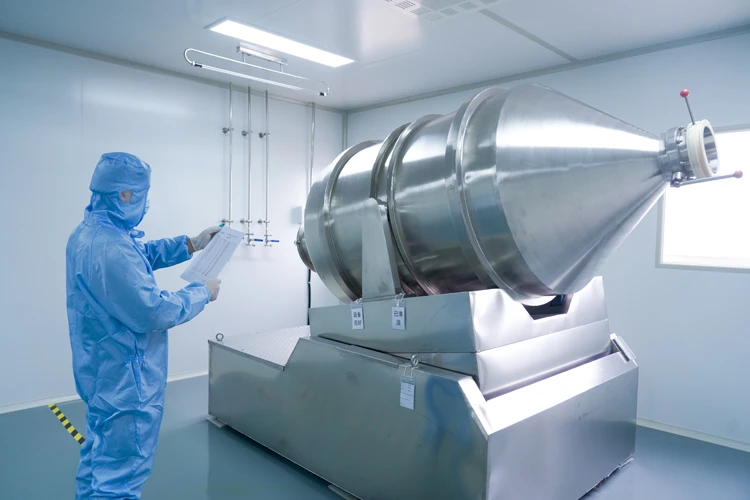
Packing workshop: bulk ingredient orders are packed and documented before export shipment.
Have Questions or Need More Details?
Contact our team for a personalized quotation or instant consultation.
Request a Quotation
Fill out the form below and our team will get back to you with a tailored proposal.
WhatsApp Direct Chat
Prefer to chat in real-time? Message us on WhatsApp for instant assistance & quick answers.
- Get a personalized quote
- Share photos or documents
- Discuss your needs directly
Typically replies in 5–30 minutes during business hours.