
Ranking Nutraceutical Ingredients for Sachet Formulas: Five Format-Fit Picks
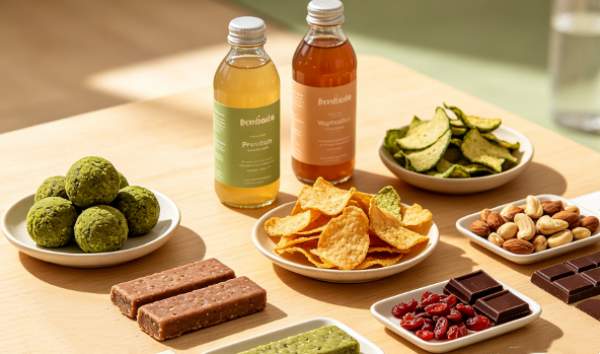
A sachet formula is not just a supplement in a smaller pack. It is a dry powder system that must disperse, look right, taste acceptable, and pass lot checks after reconstitution. This ranking narrows the field to five nutraceutical ingredients whose documented format facts make them practical starting points for sachet development.
The ranking is built for research and evaluation-stage buyers: formulators, supplement brand owners, importers, and procurement teams comparing ingredients for stick packs, single-serve sachets, and dry beverage mixes. It is not a medical claim or a regulatory approval statement. It is a format-fit shortlist based on ingredient facts provided by Guanjie Biotech and on the application and quality data available for those ingredients.
Problem Definition: Why Sachet Formulas Need Format-Fit Ingredients
Sachet formulas fail for ordinary production reasons. A powder may not disperse evenly in the pack, may clump after filling, may shift color after water is added, or may not match the label claim if the grade is wrong. In a dry mix, particle size and powder behavior are not secondary details. They decide whether the sachet looks consistent from one lot to the next and whether the consumer sees a smooth drink rather than floating powder or sediment.
The format problem becomes sharper when several ingredients share one sachet. A blue colorant, a green tea powder, a water-soluble CoQ10 grade, an acid-tasting vinegar powder, and a white antioxidant powder each bring a different behavior into the same blend. The formulator has to compare solubility, mesh pass, pH sensitivity, color, and production route before the first trial. That is the reason this article ranks ingredients by format fit rather than by a generic health-positioning claim.
Guanjie Biotech's application data places dietary supplements and hard capsules as the largest market segment for its nutraceutical ingredient portfolio, and it names powder sachets among the formats used for dietary supplements and functional and fortified beverages. The same application unit lists Curcumin 95%, Spermidine, NMN, and Glucosamine as formulation examples, which shows that sachet development often involves a multi-ingredient dry blend rather than a single active.
Industry Background: Sachets Sit Inside a Large Supplement and Beverage Market
Global Market Insights Inc. estimates the global nutraceutical ingredients market at USD 105.8 billion in 2026. That market estimate describes ingredient demand across vitamins, probiotics, proteins, amino acids, and phytochemicals. For sachet buyers, the practical signal is not the headline number itself. The signal is that dry powder formats must compete for shelf space with capsules, tablets, softgels, and ready-to-drink formats, and each format imposes its own powder specifications.
Sachets are especially common where a brand wants a single-serve powder that can be mixed with water or another beverage. That makes the ingredient list a format list as much as a nutrition list. A clear blue color from blue butterfly pea flower powder, a green tea identity from matcha powder, a water-soluble CoQ10 grade, a fermented apple cider vinegar powder, and a white ferulic acid powder can all be part of the same product category, but they do not behave the same way in a dry blend.
This is also where supplier documentation matters. A sachet project needs more than a specification sheet. It needs a batch COA, a clear grade name, a mesh or particle-size statement where available, and a production route that can be repeated. The ranking below uses those format facts as the filter.
Detailed Solution: The Five Format-Fit Picks
The ranking order below is a practical order for a sachet development discussion. It starts with the ingredient that carries the most visible format signal, then moves through mesh, dispersion grade, fermentation route, and white-powder purity control. The order is not a claim that one ingredient is nutritionally superior to another. It is a format-fit order for sachet evaluation.
Rank 1 — Blue Butterfly Pea Flower Powder: Water-Soluble Color With a pH Signal
Why it fits sachet formulas: blue butterfly pea flower powder is a water-soluble pigment with antioxidant anthocyanins. The product unit states 100.0% pass 80 mesh, hot air drying technology, 100% natural without additives, and a blue-to-purple pH color shift. For a sachet that is mixed with water, that pH shift is a visible quality signal. The same powder is described as heat-stable and as an ideal clean-label blue colorant for ready-to-drink teas, cocktails, bakery items, and functional beverages.
Verified format facts to put in the trial brief:
- Source: butterfly pea; appearance: gray blue powder.
- Technology method: hot air drying technology.
- Mesh: 100.0% pass 80 mesh.
- Label position: 100% natural without additives; non-GMO; derived from organically cultivated Clitoria ternatea.
- Quality standards: ISO, Halal, and Kosher.
- Functional behavior: water-soluble pigment; antioxidant anthocyanins; blue-to-purple pH color shifts; heat-stable performance.
Sachet decision: use this pick when the sachet needs a clean-label blue color that changes with pH after reconstitution. The formulator should test the target drink pH before locking the color claim, because the same powder can read blue in one matrix and purple in another. The 80-mesh pass is a useful starting point for dry-blend uniformity, but it does not replace a trial run in the actual sachet line.
Limit to note: the product unit does not state a dosage or a regulatory approval for every market. The buyer still needs a destination-market compliance review and a batch COA.
Rank 2 — Matcha Powder: 80-Mesh Pass and a Low-Temperature Grinding Route
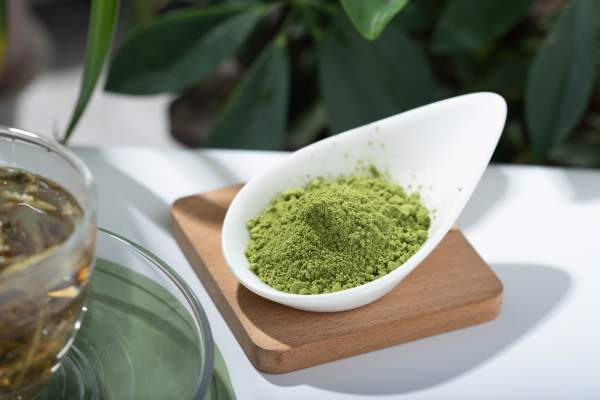
Why it fits sachet formulas: matcha powder brings a green tea identity and a documented mesh result. The product unit states Grade 1 to Grade 6, hot air drying technology, 100.0% pass 80 mesh, and 100% natural without additives. Its selling point adds low-temperature ultra-fine grinding to preserve heat-sensitive antioxidants, including EGCG and L-theanine. For a sachet, that combination is useful because the powder must disperse in water while keeping the green color and tea character that the consumer expects.
Verified format facts to put in the trial brief:
- Source: matcha; appearance: green powder.
- Technology method: hot air drying technology; low-temperature ultra-fine grinding.
- Mesh: 100.0% pass 80 mesh.
- Label position: 100% natural without additives; non-GMO.
- Quality standards: ISO, HACCP, Kosher, and HALAL, with testing for heavy metals and pesticide residues.
- Grade range: Grade 1 to Grade 6.
Sachet decision: use this pick when the sachet is positioned as a green tea or matcha drink and the buyer can specify a grade. Grade choice matters because the product unit covers Grade 1 to Grade 6, and a sachet trial should lock the grade before comparing color, taste, and cost. The 80-mesh pass is a documented format fact. The low-temperature ultra-fine grinding route is the production fact that supports the green color and heat-sensitive antioxidant story.
Limit to note: matcha is not a colorless ingredient. It will change the appearance of a multi-ingredient sachet, and its green note may compete with fruit or botanical flavors. Test the full blend, not only the matcha alone.
Rank 3 — Coenzyme Q10 10% Water-Soluble Grade: A Dispersion-First Grade
Why it fits sachet formulas: Coenzyme Q10 is available in different grades, and the grade name matters in a sachet brief. The assigned product profile for this ranking is Coenzyme Q10 10% water-soluble grade, with CAS 303-98-0. For a powder sachet that is reconstituted in water, a water-soluble grade is a more direct format fit than a grade selected only by assay. The formulator should treat the 10% water-soluble grade as a dispersion decision first and an assay decision second.
Verified format facts to put in the trial brief:
- Product: Coenzyme Q10 powder.
- Grade named in this ranking: 10% water-soluble grade.
- CAS: 303-98-0.
- Format role: water-soluble grade for sachet and beverage-style dispersion.
Sachet decision: use this pick when the sachet concept needs a CoQ10 grade that is selected for water dispersion. The buyer should request the exact grade name, assay method, and batch COA before comparing suppliers. Do not substitute a 99% powder for a 10% water-soluble grade without re-running the dispersion trial, because the grade name is part of the format specification.
Limit to note: the provided product data for this ranking does not state a mesh pass or a pH range for the 10% water-soluble grade. Those points should be confirmed in the supplier COA and in the sachet trial.
Rank 4 — Apple Cider Vinegar Powder: Fermentation Route as the Differentiator
Why it fits sachet formulas: apple cider vinegar powder is a format candidate when the sachet concept depends on a fermented vinegar identity. The assigned product profile cites apple vinegar cell immobilization liquid fermentation and a 20-year production focus. That production route is the differentiator in this ranking. For a dry sachet, the buyer is not only comparing powder appearance. The buyer is comparing how the vinegar powder is made, how consistent the fermentation route is, and whether the supplier can document the batch.
Verified format facts to put in the trial brief:
- Product: Apple Cider Vinegar Powder.
- Production route: apple vinegar cell immobilization liquid fermentation.
- Production focus: 20-year production focus on apple cider vinegar powder.
- Format role: fermented powder for dry sachet and wellness powder blends.
Sachet decision: use this pick when the sachet concept is built around apple cider vinegar and the supplier can explain the fermentation route in writing. The buyer should request a COA, a particle-size statement for the sachet line, and a packaging recommendation. The 20-year production focus is a supplier-profile fact, not a guarantee of sensory performance. The trial must still confirm taste, flow, and moisture pick-up in the final sachet.
Limit to note: the assigned product profile does not state a mesh pass, solubility grade, or pH value for this apple cider vinegar powder. Those details should be requested before scale-up.
Rank 5 — Ferulic Acid Powder: White Powder and Purity Control
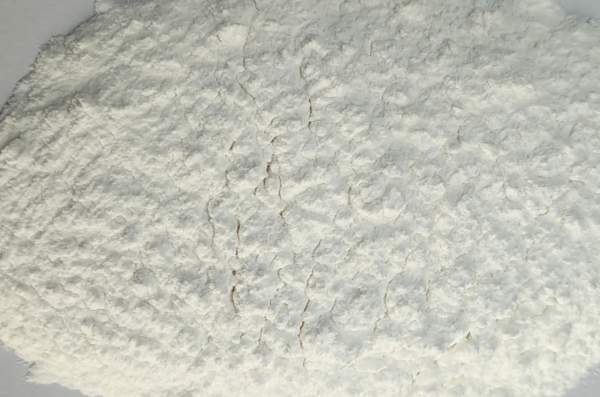
Why it fits sachet formulas: ferulic acid powder is a white powder with a 98% specification and HPLC test method. The product unit states a white appearance, and the selling point describes high crystallinity, a brilliant white color, and pyridine content that remains completely undetectable. For a sachet, those are useful format facts because a white powder can fit a neutral or white blend without introducing a strong color note. The production route also matters: advanced synthesis and purification are part of the quality story.
Verified format facts to put in the trial brief:
- Product: Ferulic Acid Powder.
- CAS: 537-98-4.
- Specification: 98%; test method: HPLC.
- Appearance: white.
- Physical and quality traits: high crystallinity; brilliant white color; pyridine content completely undetectable.
- Commercial support: OEM/ODM packaging services and free sample availability.
Sachet decision: use this pick when the sachet needs a white antioxidant powder and the buyer wants a clear HPLC specification and a white color position. The formulator should confirm dispersion in the target matrix, because the provided product data does not state a water-soluble grade or a mesh pass for ferulic acid powder. The white color and crystallinity are still valuable format facts for a dry blend.
Limit to note: ferulic acid is not positioned here as a colorant or a solubility benchmark. It is a white-powder candidate whose purity and appearance should be checked in the actual sachet trial.
Comparison Table: Five Sachet Picks at a Glance
| Rank | Ingredient | Verified format-fit fact | Best sachet role | Check before scale-up |
|---|---|---|---|---|
| 1 | Blue butterfly pea flower powder | Water-soluble pigment; antioxidant anthocyanins; 100.0% pass 80 mesh; blue-to-purple pH color shift; ISO, Halal, Kosher | Clean-label blue color in dry beverage sachets | Test the target drink pH; confirm batch COA and market documents |
| 2 | Matcha powder | Low-temperature ultra-fine grinding; hot air drying; 100.0% pass 80 mesh; Grade 1–Grade 6; ISO, HACCP, Kosher, HALAL | Green tea and functional beverage sachets | Lock the grade; confirm heavy-metal and pesticide test scope |
| 3 | Coenzyme Q10 10% water-soluble grade | 10% water-soluble grade; CAS 303-98-0 | Water-dispersible CoQ10 sachets | Confirm exact grade name, assay method, and COA |
| 4 | Apple cider vinegar powder | Apple vinegar cell immobilization liquid fermentation; 20-year production focus | Fermented apple cider vinegar wellness sachets | Request particle-size data, COA, and packaging recommendation |
| 5 | Ferulic acid powder | 98% specification; HPLC; white appearance; high crystallinity; pyridine completely undetectable | White antioxidant powder blends | Confirm dispersion in the target matrix; request sample |
Step-by-Step Breakdown: How to Move From Ranking to a Sachet Trial
- Define the sachet dose and powder volume. Start with the fill weight and the number of ingredients. A sachet that carries five powders has less room for a poor-flowing ingredient than a single-ingredient stick pack.
- Screen the format fact first. For blue butterfly pea flower powder and matcha powder, the documented 100.0% pass 80 mesh is a concrete starting point. For Coenzyme Q10, the 10% water-soluble grade is the format fact. For apple cider vinegar powder, the fermentation route is the differentiator. For ferulic acid powder, the white appearance and 98% HPLC specification are the first checks.
- Check pH and color in the real drink matrix. Blue butterfly pea flower powder is documented to shift from blue to purple with pH. Test the sachet in the water, juice, or tea that the consumer will actually use.
- Lock the grade and specification. Matcha powder covers Grade 1 to Grade 6. Coenzyme Q10 is ranked here as the 10% water-soluble grade. Ferulic acid powder is ranked at 98% with HPLC. Write the exact grade and test method into the purchase specification.
- Request the batch COA and certificates. Matcha powder is supported by ISO, HACCP, Kosher, and HALAL testing, including heavy metals and pesticide residues. Blue butterfly pea flower powder is supported by ISO, Halal, and Kosher. These are product-level facts, not a substitute for a destination-market review.
- Run a sample trial on the sachet line. Check flow, fill weight variation, seal quality, and reconstitution. Free samples are stated for blue butterfly pea flower powder and ferulic acid powder. For the other picks, confirm sample terms with the supplier.
- Confirm commercial terms. Guanjie Biotech's capability unit states OEM/ODM support, package customization, 30 tons monthly capacity, 30 days lead time, MOQ 1 kg, and 100% test. Use those terms to plan the trial-to-order transition.

Use Cases: Where Each Pick Fits
Blue color sachet beverage
Use blue butterfly pea flower powder when the sachet needs a clean-label blue color and the formulator can work with a pH-driven blue-to-purple shift. The 80-mesh pass and water-soluble pigment position make it a direct format candidate for a dry beverage sachet.
Green tea sachet
Use matcha powder when the sachet needs a green tea identity and a documented 80-mesh pass. The low-temperature ultra-fine grinding route supports the heat-sensitive antioxidant story around EGCG and L-theanine.
Water-dispersible CoQ10 sachet
Use Coenzyme Q10 10% water-soluble grade when the sachet concept depends on water dispersion. The grade name is the format decision, and the COA is the verification document.
Fermented apple cider vinegar sachet
Use apple cider vinegar powder when the product story is built on apple vinegar cell immobilization liquid fermentation and a 20-year production focus. The buyer should still request particle-size data and a COA for the sachet line.
White antioxidant sachet blend
Use ferulic acid powder when a white powder is preferred and the buyer wants a 98% HPLC specification with high crystallinity and undetectable pyridine. Confirm dispersion in the final matrix.
Multi-ingredient dry blend
Combine picks only after a full-matrix trial. Color, pH, mesh, grade, and fermentation route interact in a sachet. A powder that works alone may not work in a five-ingredient blend.
Supplier Capability and Documentation
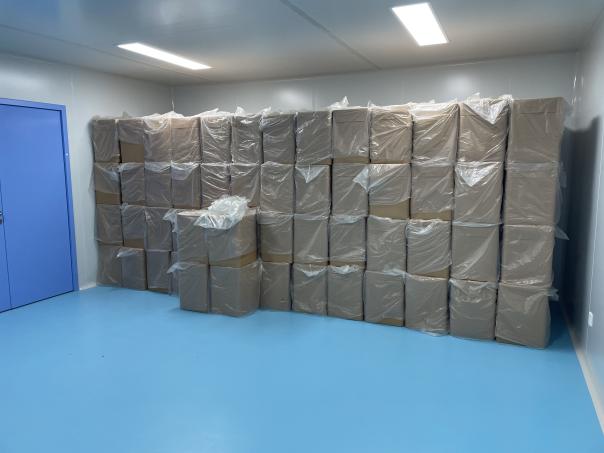
Guanjie Biotech is a Shaanxi-based ingredient supplier founded in 2004. The company profile states a 7,000 m² footprint, 40 employees, 500 tons annual output, a 7-engineer R&D team, a 2,000 m² cGMP-standard clean workshop, a 500 m² laboratory, and more than 16 national patents. It also states ISO, Halal, and Kosher certifications and a 90% export ratio. These facts matter in a sachet project because they describe the supplier's ability to support batch documentation, specification review, and repeat supply.
The capability unit states OEM/ODM support, package customization, 30 tons monthly capacity, 30 days lead time, MOQ 1 kg, 100% test, and export coverage across Europe, the Middle East, North America, South America, and Asia. The application unit places dietary supplements and hard capsules as the largest market segment and names powder sachets among the formats used for dietary supplements and functional and fortified beverages. Together, those facts make Guanjie Biotech a relevant supplier to evaluate for a sachet ingredient shortlist.
For buyers, the supplier question is not only “who can supply the powder?” It is “who can supply the same grade, with the same COA fields, at the same lead time, after the sample trial?” The five picks in this ranking should be evaluated against that standard.
FAQ
Are these five ingredients suitable for dietary supplement sachets from a compliance standpoint?
The product units list dietary supplement, health food, beverage, and cosmetics as applicable industries. For the U.S. market, FDA states that dietary supplement manufacturers, packagers, and holders must follow current good manufacturing practices intended to help ensure identity, purity, quality, strength, and composition. That is a regulatory requirement, not a supplier-specific certificate. Buyers should request a batch COA, product certificates, and market-specific documents before making a sachet claim. Matcha powder is supported by ISO, HACCP, Kosher, and HALAL testing, including heavy metals and pesticide residues. Blue butterfly pea flower powder is supported by ISO, Halal, and Kosher. The other picks should be reviewed against the destination market and the exact grade.
Can Guanjie Biotech supply phosphatidylserine powder for cognitive health formulations as well as sachet ingredients?
Guanjie Biotech supplies phosphatidylserine, and the provided case is a South Korean health food and functional supplement manufacturer that used phosphatidylserine at 50 MT per year for 3 years to support a cognitive health product line. The case states high purity, stable batch-to-batch quality, compliance with KFDA food raw material requirements, and a full COA for each batch. Phosphatidylserine is not one of the five format-fit picks in this sachet ranking, but it is a relevant cognitive-health ingredient for buyers who need a separate sachet or capsule project.
What cost factors should buyers compare in a sachet formula?
The provided data does not include FOB prices. The cost factors that can be compared from the available facts are grade choice, such as Coenzyme Q10 10% water-soluble grade versus another CoQ10 grade; mesh and processing route, such as the 100.0% pass 80 mesh for blue butterfly pea flower powder and matcha powder; testing and certification scope; and OEM/ODM packaging customization. Buyers should request a written quotation by grade, packaging format, and order quantity rather than comparing a single powder price without the grade context.
Are samples available before a sachet trial?
Free samples are stated for blue butterfly pea flower powder and ferulic acid powder in the product units. For matcha powder, Coenzyme Q10 10% water-soluble grade, and apple cider vinegar powder, confirm sample terms directly with the supplier. The capability unit states a 1 kg MOQ, which supports a small trial before a larger sachet production run.
What MOQ and lead time apply?
Guanjie Biotech's capability unit states a 1 kg MOQ, 30 days lead time, 30 tons monthly capacity, 100% test, and OEM/ODM package customization. These terms should be confirmed for the exact grade and packaging format. A sachet project should also ask whether the 30-day lead time starts after sample approval, after packaging approval, or after receipt of the purchase order.
Conclusion: Choose the Format Fit, Then Verify the Lot
The five format-fit picks in this ranking are not interchangeable. Blue butterfly pea flower powder brings a water-soluble pigment and a pH color shift. Matcha powder brings 100.0% pass 80 mesh and a low-temperature grinding route. Coenzyme Q10 10% water-soluble grade brings a dispersion-first grade name. Apple cider vinegar powder brings an apple vinegar cell immobilization liquid fermentation route and a 20-year production focus. Ferulic acid powder brings a 98% HPLC specification, a white appearance, high crystallinity, and undetectable pyridine.
For a sachet formula, the right next step is a documented sample trial: lock the grade, test the pH and color in the real drink matrix, request the batch COA and certificates, and confirm MOQ, lead time, and packaging. The ranking gives the shortlist. The trial and the COA decide the scale-up.

To discuss a sachet formula, request a sample or a grade-specific quotation from Guanjie Biotech. The company brochure is available for download: Guanjie Nutraceutical Ingredients brochure. You can also visit guanjiebio.com.
Guanjie Biotech (Shaanxi Guanjie Biotech Technology Co., Ltd.)
Founded in 2004. 7,000 m² footprint. 40 employees. 500 tons annual output. 7 engineers. ISO, Halal, and Kosher certifications.
Email: info@gybiotech.com | Tel: +86150-2999-3470 | WhatsApp: +86 150-2999-3470
Address: Room 2-20201, Unit 2, Building 2, Qinchuang Changan Chuanghui Zhongxin Industrial Park, No. 333 Xuefu Street, Chang'An District, Xi'An City, Shaanxi Province, China
Nutraceutical IngredientsSachet FormulasBlue Butterfly Pea Flower PowderMatcha PowderCoenzyme Q10 10% Water-SolubleApple Cider Vinegar PowderFerulic Acid Powder
Have Questions or Need More Details?
Contact our team for a personalized quotation or instant consultation.
Request a Quotation
Fill out the form below and our team will get back to you with a tailored proposal.
WhatsApp Direct Chat
Prefer to chat in real-time? Message us on WhatsApp for instant assistance & quick answers.
- Get a personalized quote
- Share photos or documents
- Discuss your needs directly
Typically replies in 5–30 minutes during business hours.