Red Yeast Rice Powder Compliance: Monacolin K HPLC Range and Batch Documentation
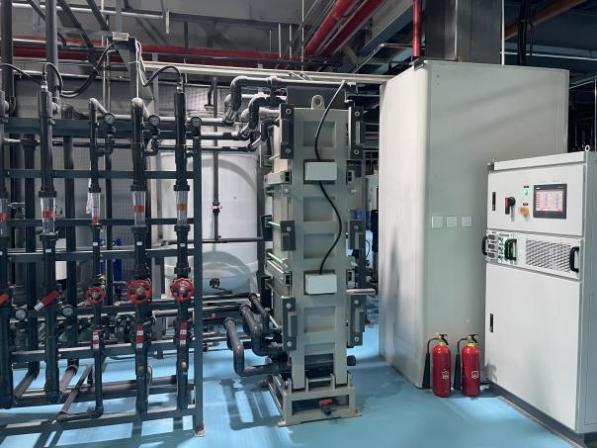
Production area at Guanjie Biotech, Shaanxi, China. Red yeast rice powder is supplied to specification with HPLC-verified Monacolin K content and batch-level documentation.
A red yeast rice powder compliance review usually comes down to two checkable points: the Monacolin K specification value, measured by HPLC, and the documentation that travels with each batch. Guanjie Biotech supplies Red Yeast Rice Powder standardized to a Monacolin K specification range of 0.1% to 5.0%, tested by HPLC, with a light red to dark red powder appearance.
For buyers at the Decision-to-Execution stage, the practical question is not whether a supplier can quote a percentage. It is whether that percentage can be reproduced on a chromatogram, whether the method is stated on the certificate of analysis, and whether the batch record set is complete enough to survive an incoming inspection or a downstream customer audit.
What Red Yeast Rice Powder Is in This Specification Context
Red Yeast Rice Powder is a fermented rice-derived ingredient standardized on Monacolin K as its active marker compound. In the Guanjie Biotech product specification it is listed with two CAS references, CAS No. 75330-75-5 and CAS No. 39866-30-2, an appearance described as light red to dark red powder, and a specification range of 0.1% to 5.0% tested by HPLC.
The visible colour is a useful sanity check rather than a specification. The specification that matters commercially is the assayed Monacolin K value, and the only number that should enter a purchase contract is the one stated on the batch certificate of analysis with a named method.
The Problem: A Percentage Without a Method Is Not a Specification
Red yeast rice is a fermentation-derived material, and fermentation-derived materials vary. A buyer who receives a quotation reading "5% Monacolin K" has received a headline figure, not a control point. Three things are missing from that figure until the supplier supplies them: the analytical method, the batch-specific result, and the documentation chain that connects the two.
This matters because the accountability does not stop at the ingredient supplier. The U.S. Food and Drug Administration states that those who manufacture, package, or hold dietary supplements must follow current good manufacturing practices intended to help ensure the identity, purity, quality, strength, and composition of dietary supplements. An ingredient specification that cannot be traced back to a method and a batch undermines the identity and strength controls the finished-product manufacturer is expected to operate.
The buyer-side risk in one sentence: if the Monacolin K value on the purchase order cannot be matched to an HPLC result and a batch number, the receiving inspection has nothing to compare against, and the discrepancy is discovered after the container has landed.
There is a second, quieter problem: cross-supplier comparison. Two suppliers stating "2% Monacolin K" can legitimately differ if one reports a single-compound HPLC result and the other reports a converted or differently calculated figure. Without the method statement and a chromatogram, the two quotations are not comparable, and price comparison becomes unreliable.
Industry Background: Fermentation, Monacolin K and the Regulatory Frame
Red yeast rice powder is produced by fermenting rice with purple-red Aspergillus fermentation culture, a process in which the rice substrate is inoculated and cultivated before drying and milling to a powder. The seed-culture stage is where process consistency is established, and it is also where lot-to-lot colour and marker variation originates. The light red to dark red appearance listed in the Guanjie Biotech specification is a direct, visible consequence of that fermentation and drying route rather than an added colour.
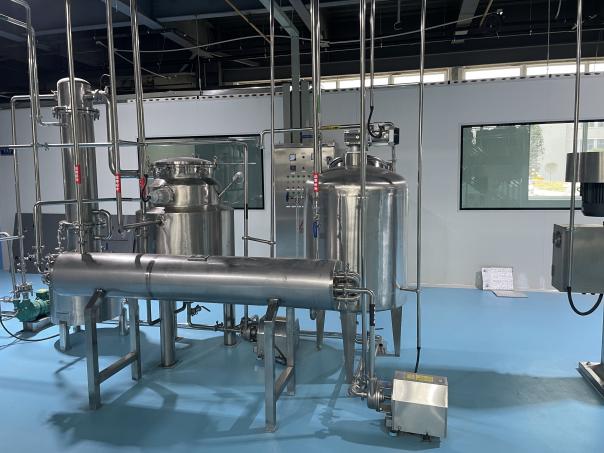
Process equipment supporting fermentation-derived and extracted powder production. Consistency at the cultivation and drying stages is what the batch COA is ultimately documenting.
On the regulatory side, Monacolin K has an unusually specific status in major markets, and buyers should know the shape of that status before they build a label claim.
- European Union: Commission Regulation (EU) 2024/2041 concerns the health claim on Monacolin K; the EUR-Lex record of that regulation documents revocation of the Monacolin K health claim. Buyers formulating for EU markets should treat Monacolin K as a specification and identity item, not as a permitted claim driver, and should verify the current status of the regulation directly on EUR-Lex before finalizing label copy.
- United States: dietary supplement manufacturers, packagers, and holders are expected to operate under current good manufacturing practices covering identity, purity, quality, strength, and composition. Where an ingredient is a new dietary ingredient, the FDA describes a notification process involving safety information submitted before marketing unless an applicable exception applies. Whether any notification applies to a specific formula is a determination for the finished-product notifier, not for the ingredient specification sheet.
- Label benchmarking: the NIH Dietary Supplement Label Database catalogs information printed on labels of dietary supplement products sold in the United States, including package label images, ingredient names and forms, declared amounts, and label statements. It is a practical reference for seeing how comparable products present an ingredient, without being a substitute for supplier documentation.
None of these points substitutes for a market-specific regulatory review. What they do establish is that the Monacolin K figure on a specification sheet must be defensible on paper, because it will eventually be examined by someone other than the buyer.
The Detailed Solution: Three Layers of Monacolin K Control
A workable compliance structure for Red Yeast Rice Powder has three layers: the specification range, the analytical method, and the batch documentation package. Each layer answers a different question, and skipping any one of them leaves a gap that the next party in the chain will find.
Layer 1 — The 0.1% to 5.0% Monacolin K Range
The Guanjie Biotech Red Yeast Rice Powder specification covers a Monacolin K range of 0.1% to 5.0%. The width of that range is practical rather than decorative: it allows a formulator to select a grade aligned to the dose and capsule or tablet format being developed, and it allows a buyer to standardize on a single supplier across more than one SKU.
Two habits make the range usable in procurement:
- Contract on a band, not a headline. Specify a target value plus an acceptable tolerance, and require the COA to report the measured value against that tolerance.
- Confirm the reporting basis. Ask the supplier to state, in writing, what the reported percentage refers to on the certificate. This removes most of the ambiguity that appears when quotations from different origins are placed side by side.
Layer 2 — Why HPLC Is the Method to Verify
HPLC is the test method stated on the Guanjie Biotech Red Yeast Rice Powder specification. For a buyer, the method name on the specification is the starting point; the chromatogram attached to the batch is the proof.
A method statement alone tells you which technique was used. It does not tell you whether the result in front of you came from that technique on this batch. Requesting the chromatogram or the peak-integration report alongside the COA closes that gap, and it is the single most useful document request in a Monacolin K review because it is batch-specific and difficult to substitute.
Guanjie Biotech operates HPLC, UV, and GC testing capabilities within its quality function, supported by a 500-square-meter advanced laboratory on a 7,000-square-meter manufacturing site that includes a 2,000-square-meter cGMP-standard clean workshop. For buyers structuring a long-term supply relationship, that in-house testing capacity is what makes routine batch verification practical rather than exceptional.
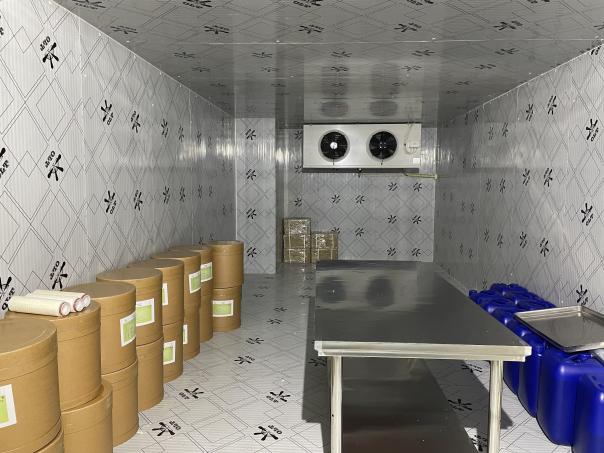
Batch storage and identification. Retained samples and traceable lot numbering are what allow a Monacolin K result to be re-checked months after delivery.
Layer 3 — The Batch Documentation Package
The documentation package is where most sourcing reviews are won or lost. A certificate of analysis with a Monacolin K result but no batch number, no method, and no date cannot be filed against a receipt. A complete package can.
For recurring orders, Guanjie Biotech supports long-term supplier partnerships with COAs, batch traceability, and quality agreements. Those three items map directly onto the three questions a receiving department asks: what was measured, which lot was it, and what happens if the result is disputed.
| Document | Core fields to confirm | Buyer verification action |
|---|---|---|
| Certificate of Analysis (COA) | Monacolin K result, test method (HPLC), batch number, manufacture and retest dates | Match the batch number against the shipping documents and against the retained sample label |
| Chromatogram / peak integration report | Batch reference, injection details, integration of the Monacolin K peak | Confirm the chromatogram carries the same batch reference as the COA |
| Specification sheet | Declared range 0.1%–5.0%, method, appearance, CAS reference 75330-75-5 / 39866-30-2 | Confirm the contracted grade falls inside the declared range and matches the quotation |
| Quality certifications | ISO, Halal, Kosher as held by the supplier | Verify certificate scope and validity for the specific site, not just the company name |
| Quality agreement | Acceptance criteria, sampling plan, deviation and re-test handling | Confirm it references the Monacolin K specification and the agreed method before the first PO |
| Retained sample record | Lot linkage and retention period | Ask how long the retained sample is held; confirm it covers your own re-test window |
Batch consistency is the fourth layer, and it is the one most often left out of the conversation. Guanjie Biotech works to a batch variation of ≤3%, which is the figure that turns a specification range into a repeatable supply. For a formulator, that translates into fewer reformulation rounds between lots; for a distributor, it means fewer customer questions about why two deliveries behaved differently.
Step-by-Step: Running the Compliance Review
The sequence below is written for a buyer who has already shortlisted a supplier and is executing against a purchase order or an annual contract. It takes the Monacolin K specification as the anchor and works outward to documentation and continuity.
Step 1 — Fix the specification in writing
State the target Monacolin K value, the tolerance, the method (HPLC), and the appearance expectation in the specification document. Reference the CAS numbers 75330-75-5 and 39866-30-2 so that the identity of the material is unambiguous across languages and paperwork systems.
Step 2 — Request the specification sheet before the quotation
A specification sheet delivered before pricing tells you whether the grade you need sits inside the supplier's declared range. A quotation delivered before the specification sheet is a price without a product definition.
Step 3 — Request a sample and its supporting data
Sample evaluation should be paired with data, not carried out blind. Ask for the Monacolin K result and the analysis basis for the sample lot, then compare the sample result against your own incoming test.
Step 4 — Verify the COA structure against your receipt process
Walk the COA through your own receiving workflow before the first commercial shipment. If the COA cannot be filed against a batch number, or if the method column is blank, that is a process defect that will repeat on every delivery.
Step 5 — Confirm the chromatogram request is routine
Ask whether a chromatogram is issued as standard or on request. A supplier that can issue it as standard has the analysis workflow already in place; a supplier that treats it as an exception is telling you something about batch-level verification.
Step 6 — Map the certifications to the manufacturing site
ISO, Halal, and Kosher certification held by the supplier should be checked against the specific production site named on the COA header, not only against the trading entity on the invoice.
Step 7 — Agree acceptance criteria and the deviation route
Write the Monacolin K acceptance band, the sampling plan, and the re-test or replacement route into the quality agreement. This is the step that converts a one-off purchase into a supply relationship.
Step 8 — Confirm continuity before committing volume
Ask for the production capacity that will sit behind your annual volume. Guanjie Biotech operates a monthly production capacity of 30 tons and an annual production capacity of approximately 500 tons, which is the relevant reference point when a buyer is planning a twelve-month schedule rather than a single lot.
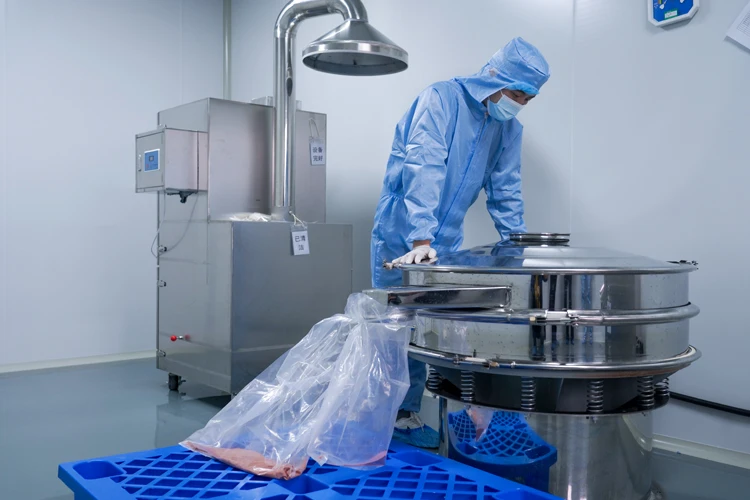
Packing stage. Batch labelling completed here is what allows a Monacolin K COA to be linked back to a physical lot during a customer audit.
Where This Compliance Structure Applies
The Monacolin K specification and documentation framework described above is used across four recurring buying situations.
- Finished-product manufacturers building a standardized formula. The specification band and the HPLC method define what the receiving laboratory will test against, and the COA structure defines what can be filed.
- Brand owners preparing a multi-market label review. Because Monacolin K carries market-specific claim treatment, brand owners typically separate identity and specification documentation from label copy, and confirm the current regulatory position for each destination market before printing.
- R&D teams running comparative trials. A batch-linked chromatogram is the only reliable way to confirm that two trial lots actually contain the same marker level, which is a precondition for any meaningful comparison.
- Distributors holding stock across multiple customers. Batch traceability and retained samples let a distributor answer a customer's specification question without re-testing every lot.
In all four cases the underlying logic is identical: the specification defines the claim, the method defines the evidence, and the documentation defines the accountability.
Frequently Asked Questions
What compliance documentation should accompany a Red Yeast Rice Powder batch?
A complete batch package should include a certificate of analysis stating the Monacolin K result, the test method (HPLC), the batch number, and the manufacture and retest dates; the supporting chromatogram or peak integration report carrying the same batch reference; the current specification sheet showing the declared range and CAS references; and copies of the quality certifications the supplier holds, such as ISO, Halal, and Kosher. For recurring orders, a quality agreement defining acceptance criteria and the handling of deviations should sit alongside these documents. Guanjie Biotech supports long-term supplier partnerships with COAs, batch traceability, and quality agreements for recurring orders.
How is Monacolin K content tested, and what range is available?
The Guanjie Biotech Red Yeast Rice Powder specification states HPLC as the test method and a Monacolin K specification range of 0.1% to 5.0%, with the material described as a light red to dark red powder. Buyers should confirm that the certificate of analysis for each batch reports the measured value against the contracted band and names HPLC as the method, rather than reporting a percentage without a method statement. Requesting the batch chromatogram is the most direct way to verify that the reported figure is batch-specific.
Can I evaluate a sample before committing to a bulk order?
Yes. Guanjie Biotech offers free samples alongside HPLC, UV, and GC testing capabilities, customized R&D support, and OEM/ODM solutions. A practical sample evaluation pairs the physical sample with its Monacolin K result and analysis basis, so that the buyer's own incoming test can be compared against the supplier's reported value before any purchase order is raised. This is particularly useful where a formulator needs to confirm that a specific grade inside the 0.1% to 5.0% range suits the intended dosage format.
How are batch traceability and supply continuity handled for repeat orders?
For repeat orders, traceability depends on lot numbering that links the certificate of analysis, the chromatogram, the retained sample, and the shipping documents. Guanjie Biotech supports this through batch traceability and quality agreements, working to a batch variation of ≤3%, with a monthly production capacity of 30 tons and an annual production capacity of approximately 500 tons. Companies with export-heavy supply chains should also confirm that the supplier's own export experience matches their destination requirements; approximately 90% of Guanjie Biotech products are exported, and export business accounts for 90% of total sales. Buyers who want to move from evaluation to a first shipment can request a sample or a quotation, and can review the full ingredient portfolio in the Guanjie Nutraceutical Ingredients catalogue.
Conclusion
Red Yeast Rice Powder compliance is not a single certificate. It is a chain: a Monacolin K specification inside a defined range of 0.1% to 5.0%, an HPLC method that is named on the certificate, and a batch documentation package that connects the measured value to a physical lot. Guanjie Biotech, founded in 2004 and operating a 7,000-square-meter manufacturing site in Shaanxi, China, supplies Red Yeast Rice Powder against that structure, with in-house HPLC, UV, and GC testing and batch traceability built into its recurring-order support.
For buyers executing at the contract stage, the decisive test is simple: ask for the batch chromatogram before you ask for the price. If the supplier can produce it as a matter of routine, the specification is real. If not, the percentage on the quotation is still an open question.
Request a Red Yeast Rice Powder sample and batch documentation
Guanjie Biotech supplies Red Yeast Rice Powder at 0.1%–5.0% Monacolin K, HPLC tested, with COA, chromatogram support, and quality agreements for recurring orders.
Email: info@gybiotech.com | Tel / WhatsApp: +86 150-2999-3470 | Web: guanjiebio.com
Download the catalogue: Guanjie Nutraceutical Ingredients (PDF)
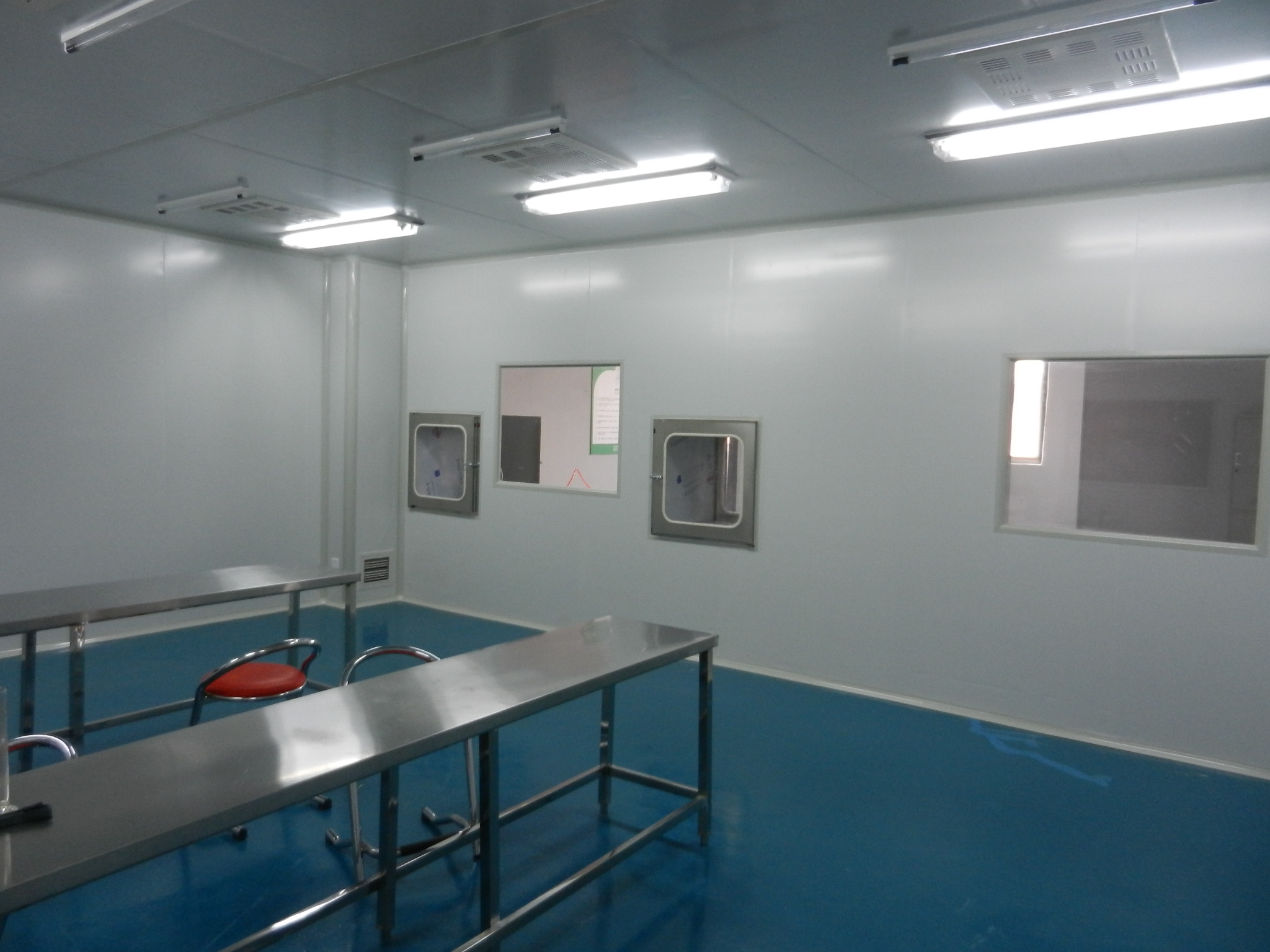
Workshop operations at Guanjie Biotech. Sample requests and technical documentation enquiries are handled through the same quality function that issues batch COAs.
Have Questions or Need More Details?
Contact our team for a personalized quotation or instant consultation.
Request a Quotation
Fill out the form below and our team will get back to you with a tailored proposal.
WhatsApp Direct Chat
Prefer to chat in real-time? Message us on WhatsApp for instant assistance & quick answers.
- Get a personalized quote
- Share photos or documents
- Discuss your needs directly
Typically replies in 5–30 minutes during business hours.