
Freeze Dried Fruit Powder: A Practical Buyer's Introduction
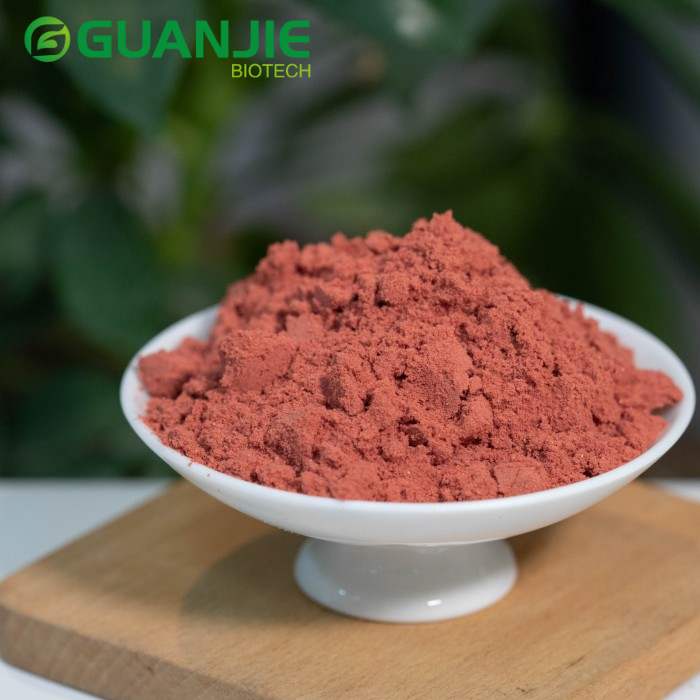
Freeze dried fruit powder is a fruit powder ingredient made by freezing fresh fruit, removing the water under low-temperature vacuum, and grinding the dried fruit into a fine powder. It brings real fruit flavour, colour and nutrition into beverages, dairy products, bakery, confectionery, snacks and nutrition formulations without depending on artificial colours or flavours.
This introduction is written for buyers who are still at the awareness and research stage: food technologists, procurement managers, brand owners and importers who have decided a fruit powder ingredient may solve a formulation or supply problem, but who have not yet chosen a technology or a supplier. It explains what the ingredient is, why the drying method matters more than most buyers expect, how freeze drying compares with spray drying, and which specifications should be settled before a bulk order is discussed.
What Freeze Dried Fruit Powder Actually Is
Fruit powder is a broad category of ingredients made by removing water from fruit and milling the dried material into a powder. Within that category, the drying technology is the most important differentiator, because it determines what survives the process and therefore what the finished food product can claim.
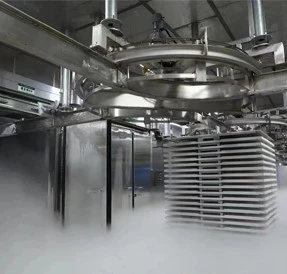
Freeze drying works by freezing the fruit first and then lowering the pressure so that frozen water sublimes directly from ice to vapour. Because the fruit never passes through a liquid water phase and is not exposed to sustained high heat, the fruit structure, colour compounds and heat-sensitive components are largely preserved. The dried fruit is then milled and sieved into powder. In the Guanjie Biotech range, freeze-dried fruit powders retain over 95% of the fresh nutritional profile, active bio-compounds and natural colour of the original fruit.
Spray drying follows a different route. The fruit is turned into a slurry and atomised into a stream of hot air, where droplets dry almost instantly. It is a fast, high-throughput process, and Mordor Intelligence reports that spray drying accounted for 61.4% of global fruit powder production in 2024. The trade-off is heat exposure: the same source notes that spray drying uses high temperature and has relatively lower retention of heat-sensitive components.
The Sourcing Problem: Most Fruit Powder Complaints Are Specification Problems
Once a fruit powder has been approved in a formulation, changing it is expensive. That is why the practical risk in fruit powder sourcing is rarely a single bad batch; it is a specification that was never fully pinned down before the first purchase order.
- Colour drift. Natural fruit pigments are sensitive to heat and light. A powder that looks correct in a small sample can read noticeably duller in a large batch if the drying method or storage conditions differ.
- Aroma loss. Fruit aroma compounds are volatile. Buyers who specify only "strawberry flavour" without defining the technology often receive a powder that is functionally correct and sensorially disappointing.
- Particle size mismatch. Mesh specification affects dispersion, mouthfeel and how the powder behaves in a mixer, granulator or beverage blending tank. A powder that passes 60 mesh and a powder that passes 80 mesh are not interchangeable in every line.
- Clean-label ambiguity. "100% natural" and "additive-free" are only meaningful if the supplier can state what is and is not added, and can support that statement with documentation.
- Batch-to-batch variation. Fruit is an agricultural raw material. Consistency depends on raw material control and process discipline, not on the label.
- Traceability and compliance gaps. Importers in regulated markets need certificates and test information that match the shipment, not a generic file sent once.
The practical conclusion is that a buyer should define fruit type, drying technology, mesh, purity statement, storage conditions and required documentation before comparing prices. Comparing quotations that describe different specifications produces a number that cannot be acted on.
Industry Background: Where Fruit Powder Demand Stands
Fruit powder is not a niche ingredient category. Fortune Business Insights valued the global fruit powder market at USD 28.00 billion in 2025 and projects it to reach USD 52.47 billion by 2034. Reported market size varies considerably between research houses depending on whether blended preparation powders are counted, so the figure is best read as a directional indicator of scale rather than a precise total.
Several structural signals are more useful to a buyer than the headline number:
- Europe is the largest consuming region. Fortune Business Insights puts Europe at 36.89% of the fruit powder market in 2025, which aligns with the region's dense food processing and clean-label formulation base.
- Beverages lead application demand. The beverages segment is projected to hold 34.51% of the application market in 2026, according to Fortune Business Insights.
- Banana is the volume leader by fruit type. Mordor Intelligence reports that banana powders held a 22.45% share of the fruit type market in 2025.
- Freeze-dried powder is the value segment. Global Market Insights values the freeze-dried fruit powder segment at USD 10.9 billion in 2025, projected to reach USD 21.4 billion by 2035 — a premium segment sitting inside a market dominated by spray drying on volume.
- Asia is a major export origin. Volza shipment data for July 2024 to June 2025 places China, the United States and India as the top three fruit powder exporting countries.
For a buyer, the pattern is straightforward. Spray drying supplies most of the tonnage; freeze drying supplies most of the products where colour, aroma and heat-sensitive nutrition are part of the value proposition. Buying decisions should therefore start with the finished product's claims, not with the powder's price per kilogram.
The Solution: A Documented Bulk Fruit Powder Supply
Guanjie Biotech — formally Shaanxi Guanjie Biotech Technology Co., Ltd — is a China-based manufacturer of fruit and vegetable powders established in 2004, operating from a 7,000 m² facility in Xi'An, Shaanxi Province, and supplying food manufacturers, beverage companies, nutraceutical brands and other food-processing businesses, with roughly 90% of output exported.
The company's relevance to this topic is structural rather than incidental: it runs both freeze-drying and spray-drying processes, which means a buyer can compare technologies inside one supply relationship instead of splitting a formulation across two vendors with two sets of specifications and two sets of documents.
Product range
The fruit powder range covers freeze-dried dragon fruit powder, strawberry powder, sea buckthorn powder, banana powder, cherry powder, lemon powder, passion fruit powder, pineapple powder, orange powder, blueberry powder, blackcurrant powder, goji berry powder, coconut powder, apple powder, peach powder and mango powder. Most of these are offered in both freeze-dried and spray-dried form, so the same fruit can be specified two ways depending on whether the formulation prioritises sensory fidelity or cost efficiency.
Standard specification
- Purity: 100% natural, additive-free
- Mesh: 100.0% pass 60/80 mesh (product-dependent); freeze-dried dragon fruit powder is specified at 100% pass 60 mesh, spray-dried dragon fruit powder at 100.0% pass 80 mesh
- Form: fine powder, designed for convenient storage, transport and formulation
- Processing: freeze-dried or spray-dried, depending on the grade
Manufacturing and quality infrastructure
The facility includes a 2,000 m² cGMP-standard workshop and a 500 m² laboratory equipped for product development and quality testing. The company employs approximately 40 staff, including an R&D team of 7 engineers, and has an annual fruit powder production capacity of 300 tons. Guanjie Biotech has also developed more than 16 patents related to herbal extracts, ingredients and production technologies.
Quality control runs across the whole production chain: raw material inspection, processing, drying, packaging, storage and finished-product testing. Batches are tracked and monitored to maintain consistent specifications, and quality documents and test information can be supplied to support a customer's own quality assurance and procurement requirements. The certification set covers ISO 9001, ISO 22000, HACCP, HALAL and KOSHER, which is the combination most commonly requested by food and nutraceutical buyers serving European, Middle Eastern and North American markets.
Raw material control is treated as part of the specification rather than an upstream detail. Guanjie Biotech works with origin-based raw material suppliers and planting bases to improve the stability, consistency and traceability of fruit inputs — the practical mechanism behind batch-to-batch consistency in a category where the raw material is agricultural.
Step by Step: How Freeze Dried Fruit Powder Is Made
Understanding the sequence helps a buyer interpret what a specification actually controls. In a freeze-dried fruit powder line, each step below maps to a documentable parameter.
- Raw material selection and traceability. Fruit is sourced through origin-based suppliers and planting bases so that variety, maturity and origin can be managed rather than assumed.
- Cleaning and inspection. Incoming fruit is cleaned and checked before processing; defective material is removed at this stage, not later.
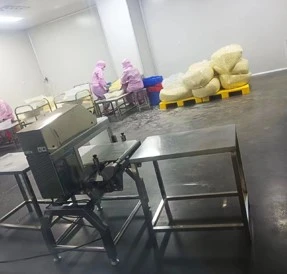
- Pretreatment. Fruit is washed, trimmed and cut to a consistent size so that drying proceeds evenly across the batch.
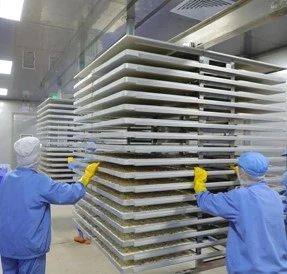
- Freezing and low-temperature vacuum drying. The prepared fruit is frozen and dried under vacuum, with processing conditions controlled to retain the characteristic colour, flavour and nutritional components of the original raw material.
- Milling. The dried fruit is ground to powder. Particle size at this stage sets the ceiling for what sieving can achieve.
- Sieving. Powder is passed through the specified screen — 60 mesh, 80 mesh or a defined 60/80 combination — so that the mesh claim on the certificate of analysis is verifiable rather than nominal.
- Blending and homogenising. Batches are blended to even out natural variation in colour and flavour before packing.
- Metal detection. Finished powder passes through metal detection as a final physical safety control.
- Weighing and packing. Powder is weighed and packed to the agreed net weight and packaging format.
- Storage and dispatch. Product is held sealed in a cool, dry, dark environment to protect colour and aroma until shipment.
Two process details are worth flagging for buyers. First, sieving is where a mesh specification becomes real; a supplier that cannot state the mesh pass rate precisely is describing an intention, not a product. Second, metal detection at the end of the line is a control point that should exist regardless of how clean the upstream process is.
Where Freeze Dried Fruit Powder Is Used
Fruit powder is formulated as a direct ingredient: it is dissolved or mixed with other food raw materials. Typical application scenarios include beverages, smoothies, yogurt, bakery products, confectionery and nutritional formulations, and the ingredient is intended for the dietary supplement, health food, beverage and cosmetics industries.
- Beverages and instant drinks. The largest application segment globally. Powder is blended in beverage blending tanks; colour and aroma fidelity are usually the deciding criteria, which favours freeze-dried grades.
- Yogurt and dairy. Fruit powder delivers flavour and visual fruit identity without the water load of a purée. Spray-dried grades are often used where dispersion speed and cost efficiency matter more than aroma intensity.
- Bakery and confectionery. Powder is incorporated into doughs, fillings and sugar masses. Heat stability during baking or cooking becomes part of the specification.
- Gummies and chews. Fruit powder contributes natural colour and flavour in clean-label confectionery.
- Ice cream and frozen desserts. Colour and flavour carry the fruit claim; freeze-dried grades protect both.
- Snacks and seasonings. Fruit powder is used for dusting, coating and flavour layering.
- Dietary supplements and nutrition powders. Powder is blended, granulated, tableted or filled into capsules using standard mixing, granulation, tableting and capsule-filling equipment.
- Cosmetics. Fruit powders are used as botanical ingredients in formulations where natural positioning matters.
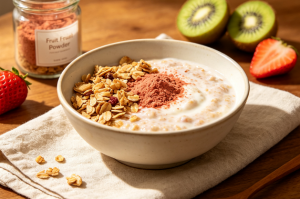
Freeze Dried vs Spray Dried Fruit Powder: A Fact-Based Comparison
The comparison below uses documented processing facts and published product specifications. It does not rank the two technologies, because the correct choice is determined by the finished product's claims.
| Comparison point | Freeze dried fruit powder | Spray dried fruit powder |
|---|---|---|
| Drying principle | Fruit is frozen, then water sublimes under low-temperature vacuum | Fruit slurry is atomised into hot air and dries rapidly |
| Heat exposure | Low temperature throughout | High temperature during drying |
| Nutrient and colour retention | Retains over 95% of fresh nutritional profile, active bio-compounds and natural colour | Relatively lower retention of heat-sensitive components |
| Share of global production | Premium segment; Global Market Insights values freeze-dried fruit powder at USD 10.9 billion in 2025 | 61.4% of global fruit powder production in 2024 (Mordor Intelligence) |
| Documented mesh example | Freeze-dried dragon fruit powder: 100% pass 60 mesh | Spray-dried dragon fruit powder: 100.0% pass 80 mesh |
| Documented handling note | Fine powder form supports convenient storage, transport and formulation | Easily soluble in water |
| Typical fit | Products where natural colour, aroma and nutrition carry the claim | Products where volume, dispersion and cost efficiency dominate |
Bulk fruit powder specification overview
| Product | Available forms | Key specification | Typical industries |
|---|---|---|---|
| Strawberry Powder | Freeze-dried, spray-dried | 100% natural, additive-free; 100.0% pass 60/80 mesh | Dietary supplement, health food, beverage, cosmetics |
| Banana Powder | Freeze-dried, spray-dried | 100% natural, additive-free; 100.0% pass 60/80 mesh | Dietary supplement, health food, beverage, cosmetics |
| Mango Powder | Freeze-dried, spray-dried | 100% natural, additive-free; 100.0% pass 60/80 mesh | Dietary supplement, health food, beverage, cosmetics |
| Freeze-dried Dragon Fruit Powder | Freeze-dried | 100% natural, additive-free; 100% pass 60 mesh | Dietary supplement, health food, beverage, cosmetics |
| Spray-dried Dragon Fruit Powder | Spray-dried | 100.0% pass 80 mesh; easily soluble in water | Dietary supplement, health food, beverage, cosmetics |
| Lemon, Passion Fruit, Pineapple, Orange, Blueberry, Blackcurrant, Goji Berry, Coconut, Apple, Peach, Cherry Powder | Freeze-dried, spray-dried | 100% natural, additive-free; 100.0% pass 60/80 mesh | Dietary supplement, health food, beverage, cosmetics |
How to Evaluate a China Fruit Powder Manufacturer
China, the United States and India were the top three fruit powder exporting countries between July 2024 and June 2025, according to Volza shipment data. Origin alone therefore says very little. These are the checks that separate a documented supplier from a broker.
- Ask which drying technologies are actually in-house. A supplier running both freeze-drying and spray-drying lines can be compared on specification rather than on marketing language.
- Request the mesh pass rate in writing. "Fine powder" is not a specification; 100.0% pass 60/80 mesh is.
- Confirm the purity statement and what it excludes. Products can be produced without artificial colours, artificial flavours, preservatives or unnecessary auxiliary ingredients, according to specific product requirements — the phrase "according to requirements" is where the real specification lives.
- Match certifications to your destination market. ISO 9001, ISO 22000, HACCP, HALAL and KOSHER cover different requirements; a certificate that is irrelevant to your market is not evidence.
- Check raw material traceability. Origin-based sourcing and planting base relationships are the mechanism behind consistency, not a slogan.
- Verify batch capability against your order size. Guanjie Biotech's 300-ton annual capacity and 7,000 m² facility, including a 2,000 m² cGMP workshop, indicate the scale of operation; confirm that your specific grade and volume fit within it.
- Confirm storage requirements up front. Sealed, cool, dry and dark storage below 25 °C with relative humidity ≤60% has implications for your own warehouse, not only for the supplier's.
Frequently Asked Questions
1. Which certifications should a China fruit powder manufacturer hold for bulk food ingredients?
Guanjie Biotech holds ISO 9001, ISO 22000, HACCP, HALAL and KOSHER certification. Its QA/QC system covers raw material inspection, processing, drying, packaging, storage and finished-product testing, and production batches are tracked and monitored to maintain consistent specifications. Relevant quality documents and test information can be provided to support a customer's quality assurance and procurement requirements. Buyers should match the certification set to the destination market rather than accepting a generic certificate list.
2. Can one supplier cover multiple fruit types in both freeze-dried and spray-dried form?
Yes, where the supplier runs both technologies. The Guanjie Biotech range covers strawberry, banana, mango, cherry, lemon, passion fruit, pineapple, orange, blueberry, blackcurrant, goji berry, coconut, apple, peach, sea buckthorn and dragon fruit powders, most of them available as freeze-dried and spray-dried grades, with a standard specification of 100% natural, additive-free and 100.0% pass 60/80 mesh. Customised specifications and OEM/ODM services are available for different manufacturing requirements, and annual fruit powder capacity is 300 tons.
3. Why does freeze-dried fruit powder cost more than spray-dried powder?
Freeze drying is a low-temperature vacuum process with a longer cycle, while spray drying is a high-temperature, high-throughput process that accounted for 61.4% of global fruit powder production in 2024. That difference in throughput and energy use is reflected in the cost of the finished powder. The trade-off is measurable: freeze-dried powder retains over 95% of the fresh nutritional profile, active bio-compounds and natural colour, whereas spray drying has relatively lower retention of heat-sensitive components. Whether the premium is justified depends on whether your finished product makes colour, aroma and nutrition claims. Actual pricing is quoted per fruit type, specification and order volume.
4. Can a buyer validate a fruit powder sample before committing to a bulk order?
Validation should happen before the first purchase order, and it should be specification-led rather than purely sensory. Confirm the drying technology, the mesh pass rate, the purity statement, the certification documents and the storage conditions for the exact grade you intend to buy, then evaluate the sample against those parameters. Guanjie Biotech supplies quality documents and testing information to support this process, and samples and quotations can be requested directly by email at info@gybiotech.com or by phone and WhatsApp on +86 150-2999-3470.
5. How should bulk fruit powder be stored, and how does that affect order planning?
Fruit powder should be sealed tightly and stored in a cool, dry and dark environment below 25 °C with relative humidity ≤60%, away from high temperature and moisture. Because natural colour and aroma degrade under heat and light, the storage condition applies to the buyer's warehouse as much as to the supplier's. Order volume should therefore be planned against your own storage capability and turnover, not only against price breaks. Guanjie Biotech exports roughly 90% of output across markets including Germany, France, the United Kingdom, the Netherlands, Canada, Japan, Australia, Mexico, Brazil and the United Arab Emirates; specific lead times depend on fruit type, grade and order volume and are confirmed at quotation stage.
Conclusion: Decide on the Claim, Then on the Powder
Freeze dried fruit powder is a specification, not a commodity. The same fruit can be delivered as a 60-mesh freeze-dried powder that protects colour, aroma and over 95% of its fresh nutritional profile, or as a spray-dried powder built for volume and rapid dispersion. Both are legitimate; only one will support a given product claim.
The practical sequence for a buyer at research stage is to define what the finished product must deliver, translate that into technology, mesh, purity statement and documentation, and only then compare suppliers. On that basis, a manufacturer running both drying technologies in-house, with traceable raw material sourcing, a documented QA/QC chain and the certification set required by your market, removes a layer of coordination risk from the project.
Next Step
If you are evaluating fruit powder for a beverage, dairy, bakery, confectionery or supplement formulation, the fastest way to narrow the options is to send your target specification — fruit type, drying technology, mesh and required certifications — and ask for a matched sample and quotation.
Contact Guanjie Biotech: info@gybiotech.com · Tel / WhatsApp +86 150-2999-3470 · guanjiefruit.com
Download the full product range and specification brochure: Guanjie Biotech Fruit Powder Brochure (PDF)
Have Questions or Need More Details?
Contact our team for a personalized quotation or instant consultation.
Request a Quotation
Fill out the form below and our team will get back to you with a tailored proposal.
WhatsApp Direct Chat
Prefer to chat in real-time? Message us on WhatsApp for instant assistance & quick answers.
- Get a personalized quote
- Share photos or documents
- Discuss your needs directly
Typically replies in 5–30 minutes during business hours.