
Fruit Powder Compliance Guide: A Specification-First Checklist for Bulk Buyers
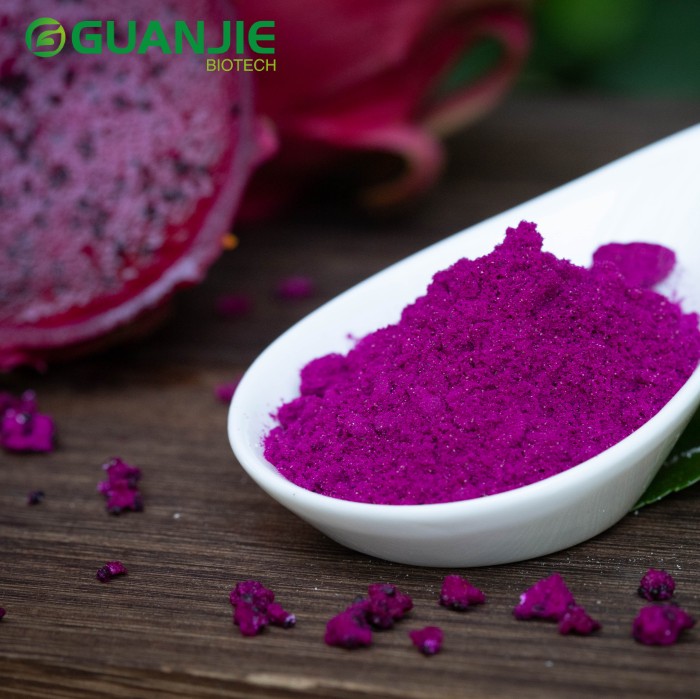
Fruit powder compliance is usually discussed as a certificate problem. In practice, most disagreements between a bulk buyer and a fruit powder supplier begin much earlier, on the specification sheet itself. Two suppliers can both quote “100% natural strawberry powder” and still deliver materials that differ in drying method, particle size distribution, declared end use and the documentation behind the claim.
A specification-first compliance check treats every statement on a fruit powder datasheet as a claim that needs three matching parts: a written specification line, a test method or measurement, and a supporting document. For bulk fruit powder the minimum working set is the purity statement (100% natural, additive-free), the mesh pass rate (for example 100.0% pass 60/80 mesh), the drying designation (freeze-dried or spray-dried), the declared intended use (dietary supplement, health food, beverage, cosmetics), the certification documents that actually apply, and the destination-market requirement the buyer has to satisfy.
Why “compliance” is an unclear word in the fruit powder trade
The word compliance is used for at least four different things in this category, and buyers who do not separate them end up comparing documents that were never meant to be compared.
- Product compliance — the powder matches its own declared specification: purity statement, mesh pass rate, moisture, microbiology, drying method.
- Process compliance — the supplier's production system is audited and certified, for example against ISO 9001, ISO 22000 or HACCP.
- Market compliance — the finished product the buyer makes can legally be sold in a specific destination market.
- Claim compliance — the words used on the buyer's own label (“natural”, “no additives”, “clean label”) can be substantiated.
The failure pattern is consistent. A datasheet says “fine powder” instead of giving a pass rate. A quotation says “fruit powder” without stating whether it is freeze-dried or spray-dried. The intended application is never written down, so the supplier sends the documents for the wrong end use. A certificate is mentioned in an email and then assumed to cover a product line and a market it was never issued for.
Each of those gaps is cheap to close at the enquiry stage and expensive to close after a container has shipped. That is the entire argument for a specification-first approach: fix the measurable lines first, then let the documents follow.
Where fruit powder specifications come from: industry context
Fruit powder is not a single commodity. It is a family of ingredients produced by different drying routes, and the route determines most of the technical lines a buyer will later have to verify.
Spray drying remains the volume technology. Mordor Intelligence reports that spray drying accounted for 61.4% of global fruit powder production in 2024. Freeze drying sits on the value side of the same market: Global Market Insights values the freeze-dried fruit powder segment at USD 10.9 billion in 2025, with a projection of USD 21.4 billion by 2035. The two technologies are not interchangeable, and a specification sheet that does not name one of them is incomplete.
Demand is concentrated in formulated products rather than in retail powder. Fortune Business Insights projects that the beverages application segment will lead the market with a 34.51% share in 2026, and that Europe held a 36.89% share of the fruit powder market in 2025. On the supply side, Volza's customs-derived data places China, the United States and India as the top three fruit powder exporting countries between July 2024 and June 2025.
Guanjie Biotech is a fruit and vegetable powder manufacturer established in 2004 in Shaanxi, China, producing freeze-dried and spray-dried fruit powders for food manufacturers, beverage companies and nutraceutical brands, with roughly 90% of output exported. Its production base covers approximately 7,000 m², including a 2,000 m² cGMP-standard workshop and a 500 m² laboratory, supported by a seven-engineer R&D team and more than 16 patents related to herbal extracts, ingredients and production technologies. Its quality system includes ISO 9001, ISO 22000, HACCP, HALAL and KOSHER certification. Those are exactly the kinds of statements a buyer should be converting into verifiable specification lines rather than accepting as background.
The specification-first framework: seven lines to verify before approving a lot
1. The purity statement: what “100% natural, additive-free” actually promises
Across the Guanjie Biotech fruit powder range — including strawberry, banana, mango, cherry, lemon, passion fruit, pineapple, orange, blueberry, blackcurrant, goji berry, coconut, apple, peach and dragon fruit powders — the published parameter is “Purity: 100% natural, additive-free”. The company states that its products can be produced without artificial colors, artificial flavors, preservatives or unnecessary auxiliary ingredients, according to specific product requirements.
The qualifier is the important part. “According to specific product requirements” means the statement is a production capability, not an automatic property of every shipment. A buyer should therefore ask two questions: what exactly does the additive-free statement exclude (artificial colors, artificial flavors, preservatives, carriers, anti-caking agents, fillers), and which document confirms it for this batch. A Certificate of Analysis plus a written declaration tied to the purchase order is the normal answer. An email that says “yes, natural” is not.
2. Mesh: verify the pass rate, not the number
A mesh figure on its own says very little. What matters is the percentage of material that passes a given sieve. Guanjie Biotech publishes “Mesh: 100.0% pass 60/80 mesh” as the standard parameter across its fruit powder range, with product-specific variation: freeze-dried dragon fruit powder is listed as 100% pass 60 mesh, and spray-dried dragon fruit powder as 100.0% pass 80 mesh.
Buyers should ask three things together: which sieve size applies to the grade being quoted, what percentage of the lot passes it, and how that is measured. “60 mesh” alone is a description. “100.0% pass 60 mesh, tested on delivery sample by sieve analysis” is a specification. The difference matters downstream, because particle size affects dispersion in beverage blending tanks, flow on tableting machines and capsule filling equipment, and visible speckling in a finished drink or yogurt.
3. The drying designation: freeze-dried and spray-dried are different ingredients
Every Guanjie Biotech fruit powder is offered in a stated model: freeze-dried or spray-dried. That designation belongs on the datasheet, on the quotation and on the batch Certificate of Analysis, not only in the product name.
The reason is that the drying route governs heat exposure, color intensity, flavor profile, solubility behaviour and cost structure. A buyer who approves a sample without recording which route produced it has approved an unspecified material. When the second lot arrives with a different drying designation, there is no written line to hold the supplier to — only an expectation.
4. Declared intended use: supplement, health food, beverage or cosmetic
Guanjie Biotech lists the applicable industry for its fruit powders as dietary supplement, health food, beverage and cosmetics. That single line drives which documents a buyer needs and which tests are relevant.
Intended use also sets the processing context. The company describes fruit powder application as a food raw material formulation project operating at ambient temperature and normal humidity in a food-grade clean production environment, where the powder is directly dissolved or mixed with other food raw materials. Typical matched equipment includes mixers, granulators, tableting machines, capsule filling machines and beverage blending tanks. Storage requirements are equally part of the specification: sealed, cool, dry and dark, below 25°C with relative humidity at or under 60%.
A specification that omits intended use is a specification the supplier cannot fully answer. State it in the first email, not in the final quality agreement.
5. Certification documents: ask for scope, holder and validity
Certification is where buyers most often substitute assumption for evidence. Guanjie Biotech holds ISO 9001, ISO 22000, HACCP, HALAL and KOSHER certification. Each of those documents answers a different question, and none of them is a substitute for a product-level test report.
- Ask for the certificate itself, not a list of standards, and check that the certificate holder is the legal entity you are contracting with.
- Check the scope statement — which products and processes are covered.
- Check validity dates and whether the certificate is current at the time of shipment.
- Keep the product-level evidence separate — the Certificate of Analysis, specification sheet and any third-party test report.
Guanjie Biotech states that every shipment includes a verified Certificate of Analysis confirming purity, active ingredients and strict microbial limits, and that it offers third-party re-testing collaboration through recognised laboratories such as SGS and Eurofins if discrepancies occur. For a buyer, that is a document path to verify rather than a reassurance to accept.
6. Regional requirements: ask the question, do not assume the answer
No supplier should be assumed to hold approval for a market it has not been asked about, and no buyer should assume that a certificate recognised in one region satisfies the requirement in another. The correct move is a written question at enquiry stage: which destination market, which regulatory requirement, and which supporting documentation can the supplier provide.
A documented example is a functional food manufacturer in the United Arab Emirates that used Guanjie Biotech fruit powder as a raw material for food supplement and fruit drink applications. The project delivered a natural fruit powder with good sensory performance that complies with EU food standards and supports the customer's clean label product development. Note the structure of that statement: the requirement was defined by the buyer's market, and the compliance outcome was reported for that project — it is not a blanket claim that every product is approved in every jurisdiction.
7. OEM/ODM customization: write the custom line into the specification
Guanjie Biotech provides OEM and ODM services, with customization recorded in the packaging field, a minimum order quantity of 1 kg, and a 30-day lead time. Customized specifications are the point where verbal agreement causes the most damage, because a custom line that never reached the written specification cannot be inspected on arrival.
If a buyer needs a different mesh, a different drying designation, a different packaging format or a different documentation package, that requirement should be numbered on the specification sheet exactly like the standard lines and confirmed with a counter-sample.
The buyer checklist, step by step
| Specification line | What the buyer should ask | What counts as evidence |
|---|---|---|
| Purity statement | What does “100% natural, additive-free” exclude, and does that apply to this order? | Written declaration tied to the purchase order plus batch Certificate of Analysis |
| Mesh | Which sieve size, what pass rate, measured how? | Specification sheet stating a pass rate, for example 100.0% pass 60/80 mesh |
| Drying designation | Freeze-dried or spray-dried, stated in writing? | Datasheet model field plus the batch Certificate of Analysis |
| Intended use | Dietary supplement, health food, beverage or cosmetics? | Declared application, with matching documentation set |
| Certification | Which certificates, held by which legal entity, valid until when? | ISO 9001, ISO 22000, HACCP, HALAL or KOSHER certificate copies |
| Regional requirement | Which destination market, and what does it require? | Documented project outcome plus the buyer's own regulatory review |
| Customization | Which lines change under OEM/ODM, and to what values? | Numbered custom specification with counter-sample approval |
- Fix the intended use first. Write down whether the powder goes into a dietary supplement, a health food, a beverage or a cosmetic. Every later document depends on this line.
- Convert marketing language into measurable lines. Replace “natural” and “fine powder” with a purity statement and a pass rate.
- Demand the drying designation in writing. Freeze-dried or spray-dried, on the quotation and on the Certificate of Analysis.
- Ask for the pass rate, not the mesh number. Confirm sieve size, percentage passing and the method used.
- Request the certificates by name. ISO 9001, ISO 22000, HACCP, HALAL, KOSHER — with scope, holder and validity.
- State the destination market and ask what changes. Do not assume an approval that has not been documented for that market.
- Test the sample against the written spec. Check color, flavor, mesh behaviour and dispersion in the buyer's own equipment before approving a bulk order.
- Lock the specification into the purchase order. The approved specification sheet and the batch Certificate of Analysis should reference each other.
- Number every customization. OEM/ODM changes enter the specification as written lines, confirmed by a counter-sample.
Matching the specification to the intended use case
Dietary supplements
Tableting and capsule filling equipment is sensitive to particle size distribution and flow, so the mesh pass rate is the first line to verify. Purity and a per-batch Certificate of Analysis are the second.
Beverages
Beverage blending tanks and finished-drink appearance put a premium on dispersion and on color consistency. This is also the segment Fortune Business Insights projects to lead the application market with a 34.51% share in 2026, which means buyers here are competing on visual and sensory repeatability between lots.
Health food and functional food
Here the buyer is usually balancing a clean-label claim against a sensory requirement. The written purity statement and the drying designation carry most of the weight.
Cosmetics
Fruit powder used in cosmetic manufacturing depends on color and odor consistency more than on nutritional retention, so the specification emphasis shifts toward batch-to-batch appearance and the documentation package supporting the claim.
Documented project example
A functional food manufacturer in the United Arab Emirates used Guanjie Biotech fruit powder as a raw material for food supplement and fruit drink applications, at a project scale of 5–12 MT annually over a three-year supply relationship. The outcome recorded for that project was a natural fruit powder with good sensory performance that complies with EU food standards and supports clean label product development, with no artificial pigments or flavors and stable color and taste.
The relevant lesson is procedural: the buyer defined its market requirement first, the specification followed from it, and the compliance statement was reported for that defined project rather than assumed as a general property.
Freeze-dried vs spray-dried: a specification comparison
The two drying routes should not be compared as if one replaced the other. They are two different specification packages, and the buyer's job is to pick the one the formulation and the label claim actually require.
| Specification item | Freeze-dried fruit powder | Spray-dried fruit powder |
|---|---|---|
| Designation on the datasheet | Listed as the “freeze-dried” model | Listed as the “spray-dried” model |
| Mesh in Guanjie product data | Freeze-dried dragon fruit powder: 100% pass 60 mesh | Spray-dried dragon fruit powder: 100.0% pass 80 mesh |
| Purity statement | 100% natural, additive-free | 100% natural, additive-free |
| Declared applications | Dietary supplement, health food, beverage, cosmetics | Dietary supplement, health food, beverage, cosmetics |
| Nutrient retention | Guanjie Biotech states its freeze-dried powders retain over 95% of fresh fruit nutritional profiles | Guanjie Biotech's published notes describe spray drying as a higher-temperature route with relatively lower retention of heat-sensitive components |
| Solubility behaviour | Not stated as a general parameter in the product data | Spray-dried dragon fruit powder is described as easily soluble in water |
| Buyer verification focus | Confirm the model field on the COA and the sieve pass rate | Confirm the model field on the COA, the sieve pass rate and dispersion in the buyer's own system |
FAQ: specification and compliance questions bulk buyers ask
Does a “100% natural, additive-free” statement on a fruit powder datasheet prove the material is compliant?
No. It is a product claim that has to be tied to a written specification and to batch documentation. Guanjie Biotech lists “Purity: 100% natural, additive-free” across its fruit powder range and states that products can be produced without artificial colors, artificial flavors, preservatives or unnecessary auxiliary ingredients according to specific product requirements. Buyers should confirm what the statement excludes for their order and support it with the batch Certificate of Analysis.
Can a Chinese freeze-dried fruit powder manufacturer support clean-label snack formulations?
Capability should be checked line by line rather than assumed. Guanjie Biotech, established in 2004 in Shaanxi, China, produces freeze-dried and spray-dried fruit powders with a published purity statement of 100% natural and additive-free, a mesh parameter of 100.0% pass 60/80 mesh, and declared applications in dietary supplement, health food, beverage and cosmetics. Its quality system includes ISO 9001, ISO 22000, HACCP, HALAL and KOSHER certification, and it provides OEM and ODM services. For a snack formulation, the practical verification set is the drying designation, the mesh pass rate, the additive-free declaration and a sample trial on the buyer's own line.
What drives the difference between two fruit powder quotations?
Price is built from the specification, so two quotes are only comparable when the lines match. The variables that most often explain a gap are the drying designation (freeze-dried or spray-dried), the mesh pass rate, the certification and documentation package, and any OEM/ODM customization such as packaging. Guanjie Biotech works from a minimum order quantity of 1 kg and supports customized specifications, so the productive approach is to fix the specification first and request the quotation against it.
How should a sample be validated against the written specification?
Test the sample against the same lines that will appear on the purchase order: check that the drying designation on the label matches the quotation, confirm the mesh behaviour in the buyer's own equipment, assess color, flavor and dispersion, and compare the accompanying Certificate of Analysis with the declared specification. Guanjie Biotech states that every shipment includes a verified Certificate of Analysis confirming purity, active ingredients and strict microbial limits, and that it offers third-party re-testing collaboration through laboratories such as SGS and Eurofins if discrepancies occur.
What is the lead time, and how does customization affect it?
Guanjie Biotech lists a 30-day lead time and provides OEM and ODM services with customization recorded in packaging. Because customized lines are produced rather than picked from stock, the custom specification should be numbered and confirmed with a counter-sample before the order is placed. Buyers who want to move from evaluation to a confirmed specification can request a sample and a quotation against their own written specification, or download the fruit powder brochure for the full product range.
Turn the checklist into a confirmed specification
Guanjie Biotech supplies bulk freeze-dried and spray-dried fruit powders — including strawberry, banana, mango, cherry, lemon, passion fruit, pineapple, orange, blueberry, blackcurrant, goji berry, coconut, apple, peach and dragon fruit powder — to food, beverage, nutraceutical and cosmetics manufacturers, with roughly 90% of output exported.
Send your intended use, drying designation, mesh requirement and destination market, and request a sample and a quotation built against those lines. The full range is also available in the Guanjie Biotech fruit powder brochure.

Guanjie Biotech · Email: info@gybiotech.com · Tel / WhatsApp: +86 150-2999-3470 · Web: guanjiefruit.com
Room 2-20201, Unit 2, Building 2, Qinchuang Changan Chuanghui Zhongxin Industrial Park, No. 333 Xuefu Street, Chang'An District, Xi'An City, Shaanxi Province, China
Conclusion
Fruit powder compliance is decided by the quality of the specification, not by the number of certificates mentioned in an email. A buyer who fixes intended use first, then converts every claim into a measurable line — purity, mesh pass rate, drying designation, certification scope, regional requirement and customization — has something a supplier can actually be held to, and something a batch Certificate of Analysis can be checked against.
That sequence also makes supplier comparison honest, because two quotations only mean something when they describe the same material. Freeze-dried and spray-dried are different products; 60 mesh and 100.0% pass 60 mesh are different statements; a certificate and a product test report answer different questions. Get those distinctions onto one page before the order, and most of the compliance risk has already been removed.
Have Questions or Need More Details?
Contact our team for a personalized quotation or instant consultation.
Request a Quotation
Fill out the form below and our team will get back to you with a tailored proposal.
WhatsApp Direct Chat
Prefer to chat in real-time? Message us on WhatsApp for instant assistance & quick answers.
- Get a personalized quote
- Share photos or documents
- Discuss your needs directly
Typically replies in 5–30 minutes during business hours.