
Spray Dried Fruit Powder: Process, Specifications and Bulk Sourcing Guide
Spray dried fruit powder is a powdered food ingredient made by atomising fruit juice, pulp or purée into a heated air stream so the water evaporates and the fruit solids remain as a fine, free-flowing powder. Manufacturers use it to add fruit colour, flavour and nutrition to beverages, bakery, dairy, confectionery and supplement products in a form that is easy to store, dose and blend.
This guide is written for buyers in the research stage: importers, food and beverage manufacturers, nutraceutical brands and ingredient distributors who need to understand what the drying method does to the powder, which specifications actually matter at the quotation stage, and how a supplier such as Guanjie Biotech (Shaanxi Guanjie Biotech, established 2004) produces and supplies spray dried fruit powder in bulk.
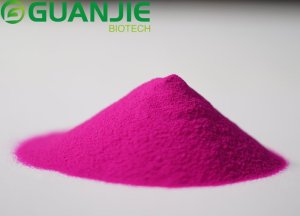
1. What Spray Dried Fruit Powder Is — and What It Is Not
Spray dried fruit powder is not one single, uniform commodity. It is a drying method applied to many different fruits, and the resulting powder inherits the characteristics of both the raw material and the process. In the Guanjie Biotech range, the same fruit may be offered in freeze-dried and spray-dried form — Strawberry Powder, Banana Powder, Mango Powder, Cherry Powder, Lemon Powder, Passion Fruit Powder, Pineapple Powder, Orange Powder, Blueberry Powder, Blackcurrant Powder, Goji Berry Powder, Coconut Powder, Apple Powder, Peach Powder and Dragon Fruit Powder are all sold as fruit powder ingredients with freeze-dried and spray-dried model designations.
Three variables define the product a buyer actually receives:
- Fruit identity and raw material quality. A powder is only as consistent as the fruit entering the line. Origin control and incoming inspection determine colour, flavour and batch-to-batch stability.
- Drying technology. Spray drying uses heated air to remove water quickly from an atomised fruit slurry; freeze drying removes water under low-temperature vacuum. The two processes produce different colour intensity, flavour profile, solubility behaviour and nutrient retention.
- Finishing specification. Mesh size, purity, additive status and packaging determine how the powder behaves in a mixer, a beverage tank or a capsule filler.
What spray dried fruit powder is not is a substitute for fresh fruit in every application. It is a concentrated, shelf-stable ingredient intended for formulation — and in the case of Guanjie Biotech products, it can be produced as a 100% natural, additive-free fruit powder with a declared mesh specification of 100.0% passing 60/80 mesh.
2. The Problem: Most Fruit Powder Sourcing Problems Start Before the Quotation
Buyers rarely fail at the last step of a purchase. They fail earlier — when the product being compared is not actually comparable, or when a key attribute was never written into the specification.
The most common failure patterns in fruit powder sourcing are consistent across categories:
- Comparing two different technologies under one name. A freeze-dried sample and a spray-dried sample of the same fruit will not match in colour intensity, flavour top-notes or nutrient retention. If the sample was freeze-dried and the production order is spray-dried, the finished product will not match the approved sample.
- Leaving mesh size undefined. Particle size affects dispersion, sedimentation in beverages, and how evenly a powder distributes in a dry blend. A powder that is out of specification will not blend cleanly.
- Assuming 'natural' means the same thing to every supplier. Buyers need a written declaration of whether the powder contains added carriers, colours, flavours or preservatives.
- No batch traceability document set. Quality assurance teams need raw material inspection, process and finished-product testing records before a new supplier can be approved.
- Storage conditions ignored in transit. Fruit powders are sensitive to heat and moisture; unsuitable handling degrades colour and flavour before the goods reach the production line.
3. Industry Background: Where Spray Dried Fruit Powder Sits in the Market
Spray drying is the volume backbone of the fruit powder industry. According to Mordor Intelligence, spray drying technology dominated the market in 2024 and accounted for 61.4% of global production — a reflection of its throughput, cost profile and suitability for large-scale food manufacturing.
The overall category is substantial and still expanding. Fortune Business Insights values the global fruit powder market at USD 28.00 billion in 2025, with a projection of USD 52.47 billion by 2034. The same source reports that Europe held 36.89% of that market in 2025, and that the beverages segment is projected to lead applications with a 34.51% share in 2026.
Within the freeze-dried segment specifically, Global Market Insights values the category at USD 10.9 billion in 2025, projected to reach USD 21.4 billion by 2035. That is a smaller slice than spray-dried volume but a higher-value one, which is exactly why buyers must be clear about which technology they are purchasing.
On the supply side, customs-derived shipment data from Volza shows that China, the United States and India were the top three fruit powder exporting countries between July 2024 and June 2025. China's position in that ranking is one reason international buyers increasingly evaluate Chinese manufacturers directly rather than through multiple intermediaries.
By fruit type, Mordor Intelligence reports that banana powders commanded a 22.45% share of the fruit type market in 2025 — a reminder that mainstream, high-volume fruits often carry more commercial weight than exotic varieties.
4. Spray Drying vs Freeze Drying: What Changes in the Powder
Spray drying removes moisture by dispersing a fruit slurry into fine droplets inside a heated air stream. The contact time is short and the throughput is high. Freeze drying removes moisture by freezing the fruit and sublimating the ice under low-temperature vacuum.
The practical consequence is retention. Guanjie Biotech states that its freeze-dried fruit powders retain over 95% of the fresh nutritional profile, active bio-compounds and natural colour. Because spray drying operates at elevated temperature, heat-sensitive components are retained at a relatively lower level — a trade-off buyers accept when solubility, throughput and cost per kilogram matter more than maximum nutrient preservation.
The choice is therefore application-specific rather than absolute. A beverage where fast dissolution and a bright, uniform colour are the priority may be better served by a spray-dried powder. A supplement where the nutritional claim on the label is the core value proposition usually points toward freeze-dried material.
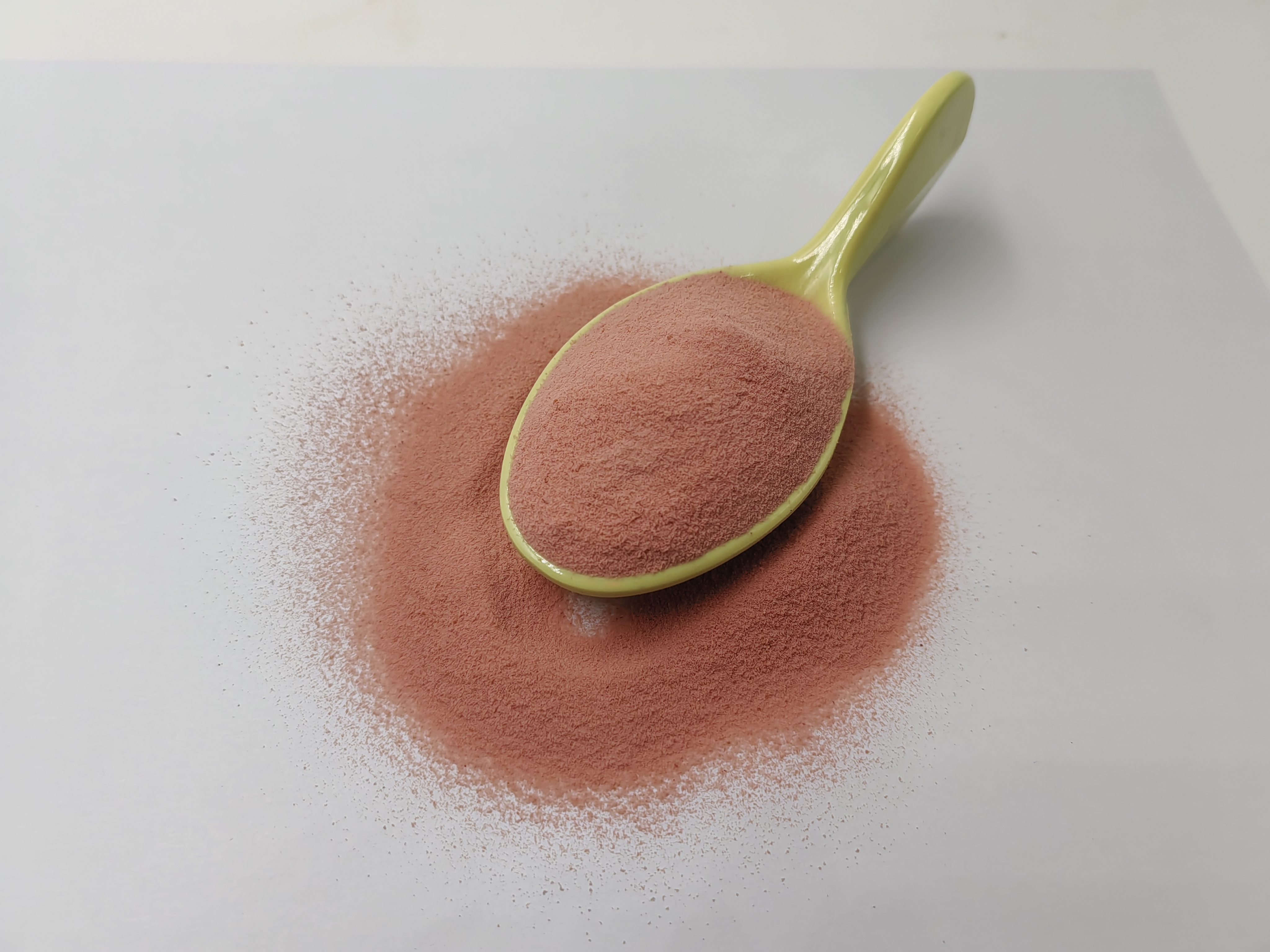
5. What Guanjie Biotech Supplies in Spray Dried Form
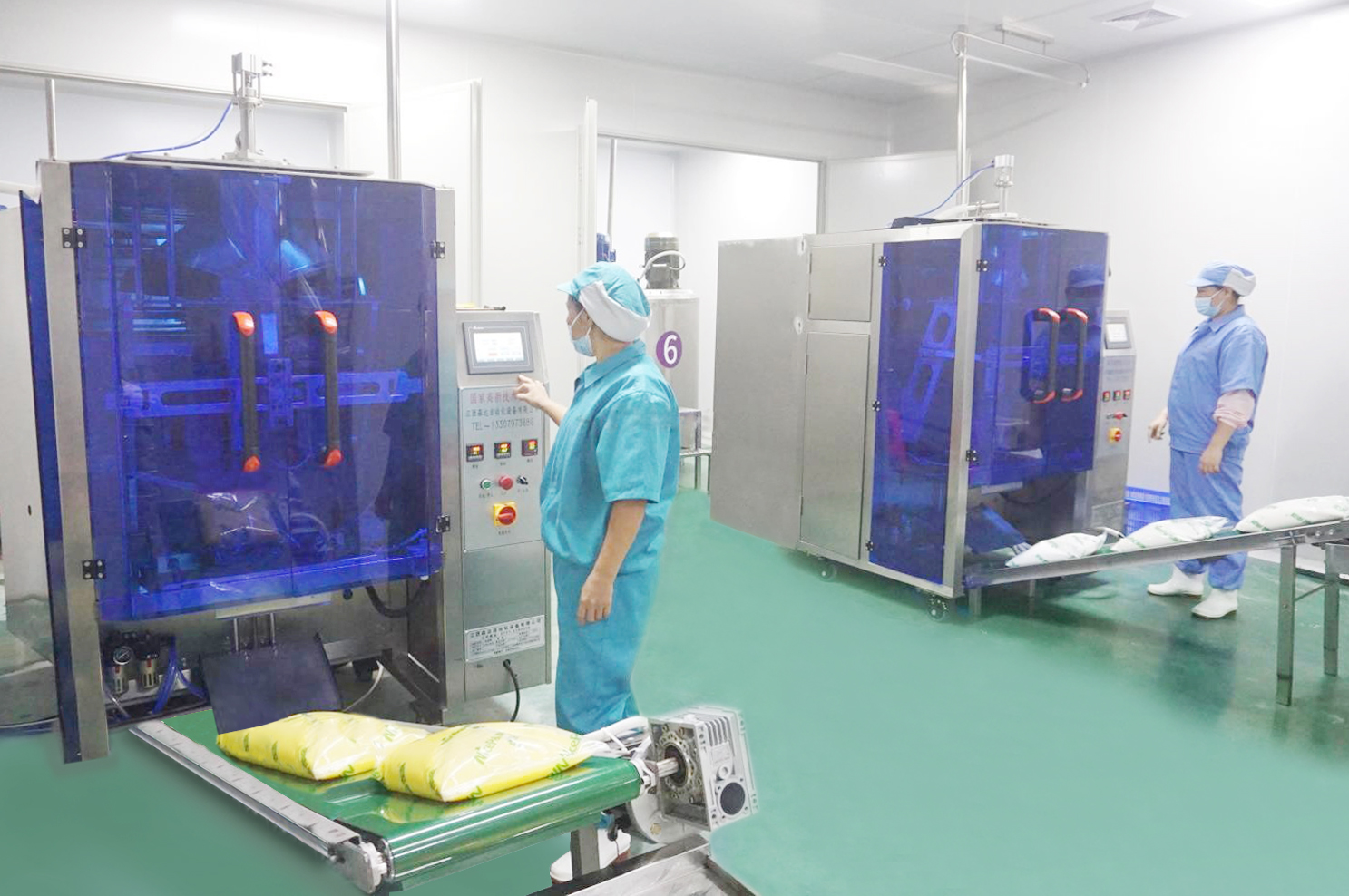
Guanjie Biotech is a Shaanxi-based manufacturer of fruit and vegetable powders founded in 2004, with more than 20 years of production experience and a customer base that is roughly 90% export. The company operates a 7,000 m² manufacturing facility that includes a 2,000 m² cGMP-standard workshop and a 500 m² laboratory used for product development and quality testing. It employs approximately 40 staff, including an R&D team of 7 engineers, and reports an annual fruit powder production capacity of 300 tons.
The company's quality system covers ISO, Halal, HACCP and Kosher certification, and its certification documentation lists ISO 9001, ISO 22000, HACCP, HALAL and KOSHER. It has also developed more than 16 patents related to herbal extracts, ingredients and production technologies.
Product range available in spray-dried form
The standard range covers Strawberry Powder, Banana Powder, Mango Powder, Cherry Powder, Lemon Powder, Passion Fruit Powder, Pineapple Powder, Orange Powder, Blueberry Powder, Blackcurrant Powder, Goji Berry Powder, Coconut Powder, Apple Powder, Peach Powder and Dragon Fruit Powder, alongside sea buckthorn powder. Most items are offered with a purity declaration of 100% natural, additive-free and a mesh specification of 100.0% passing 60/80 mesh.
Spray-dried Dragon Fruit Powder carries its own specification: Mesh 100.0% passing 80 mesh, described as readily soluble in water and free from artificial preservatives or additives. This is a useful illustration of why buyers should read each product's specification rather than relying on a single company-wide mesh number.
The company also offers customized specifications and OEM/ODM services, which matters when a formulation requires a specific mesh, a specific dilution behaviour, or a private-label pack format. Products can be produced without artificial colours, artificial flavours, preservatives or unnecessary auxiliary ingredients according to specific product requirements — the basis for a clean-label positioning.
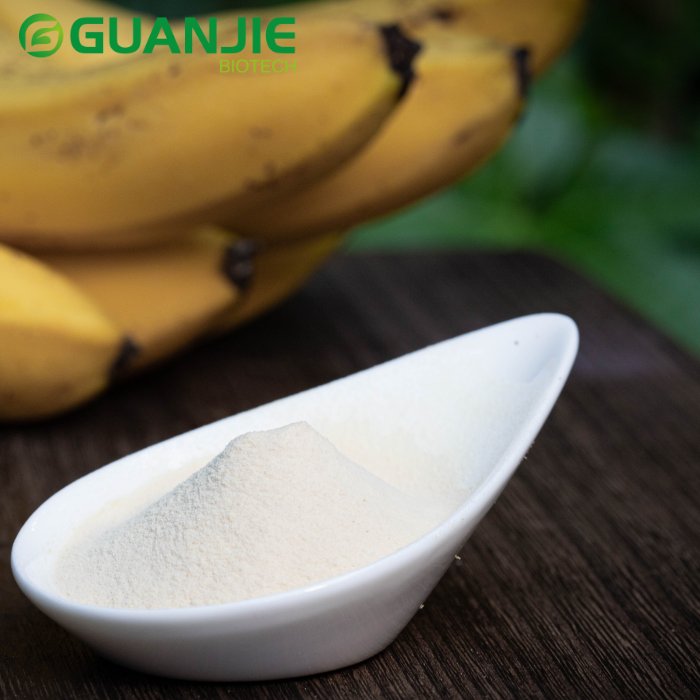
6. Step-by-Step: How Bulk Spray Dried Fruit Powder Is Produced at Guanjie Biotech
The quality of a spray dried fruit powder is decided by what happens before and after the dryer, not only inside it. Guanjie Biotech's production sequence runs through the following stages, each of which corresponds to a control point.
Step 1 — Raw material sourcing and origin control
Guanjie Biotech works with origin-based raw material suppliers and planting bases to improve the stability, consistency and traceability of incoming fruit. Controlling the source allows the company to manage raw material specifications and support stable production for bulk orders. This stage determines the colour and flavour baseline of the finished powder.
Step 2 — Selection and cleaning
Fruit is sorted and cleaned before processing, removing material that would compromise colour, flavour or microbial quality. This is a physical inspection step as much as a hygiene step.
Step 3 — Pulping and homogenisation
The fruit is converted into a slurry and homogenised so that the feed entering the dryer is uniform. Feed consistency is what allows a powder specification to be repeated from batch to batch.
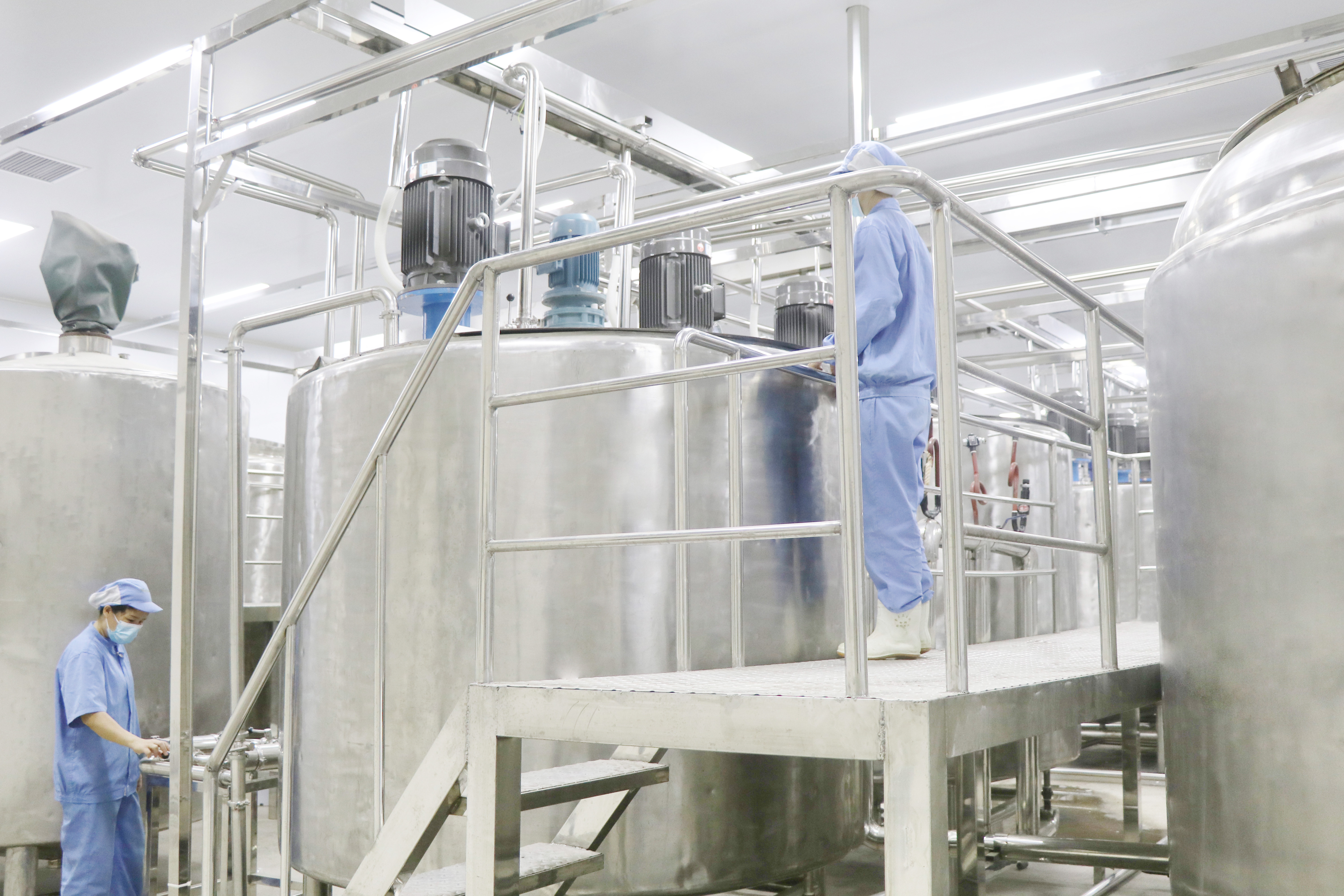
Step 4 — Spray drying
The slurry is atomised into fine droplets and dried in a heated air stream. Water is removed rapidly and the solids form powder particles. Processing conditions are controlled to help retain the characteristic colour, flavour and nutritional components of the original raw material.
Step 5 — Milling, sieving and blending
The dried powder is milled and passed through sieves to reach the declared mesh specification. Batches are then blended to level out variation before final testing.
Step 6 — Metal detection and quality control
Powder passes through metal detection, and the QA/QC system covers raw material inspection, processing, drying, packaging, storage and finished-product testing. Production batches are tracked and monitored to maintain consistent specifications, and quality documents and testing information can be provided to support customer procurement and quality assurance requirements.
Step 7 — Weighing, packing and storage
Finished powder is weighed and packed, then stored under conditions that protect colour and flavour. For reference, the storage guidance for Guanjie Biotech fruit powders is to seal tightly and store in a cool, dry, dark environment below 25°C with relative humidity ≤60%.
7. Use Cases: Where Spray Dried Fruit Powder Fits
Guanjie Biotech fruit powders are intended for the dietary supplement, health food, beverage and cosmetics industries, and are designed for use in beverages, smoothies, yogurt, bakery products, confectionery and nutritional formulations. In practice, the application determines which specification matters most.
| Application | What the powder contributes | Specification to confirm first |
|---|---|---|
| Beverages and instant drinks | Fruit flavour, colour and nutritional profile in a dispersible form | Mesh size and dispersion behaviour |
| Yogurt and dairy products | Fruit colour and flavour without artificial pigments | Additive declaration and colour stability |
| Bakery and confectionery | Fruit notes and colour in dry or baked systems | Heat behaviour and particle size |
| Dietary supplements and health food | Fruit-based nutrition in powders, tablets or capsules | Purity, carrier status and documentation |
| Snacks and ice cream | Fruit flavour and visual appeal | Flavour intensity and batch consistency |
| Cosmetics | Fruit-derived ingredients in powder form | Specification and grade confirmation |
The function of the ingredient in a food matrix is straightforward: the powder is added into finished products to supply natural fruit flavour, fruit colour and fruit nutrition. It improves taste and enriches the nutritional profile while supporting clean-label formulation without artificial pigments or flavours. It is typically dissolved or mixed directly with other food raw materials, using equipment such as mixers, granulators, tableting machines, capsule filling machines and beverage blending tanks.
8. Comparison Tables
Spray-dried versus freeze-dried fruit powder
| Attribute | Spray dried fruit powder | Freeze dried fruit powder |
|---|---|---|
| Drying mechanism | Atomised slurry dried in a heated air stream | Low-temperature vacuum process with sublimation |
| Nutrient and colour retention | Relatively lower retention of heat-sensitive components | Guanjie Biotech freeze-dried powders retain over 95% of the fresh nutritional profile, active bio-compounds and natural colour |
| Typical Guanjie mesh specification | 100.0% passing 60/80 mesh (Dragon Fruit Powder: 100.0% passing 80 mesh) | Dragon Fruit Powder: 100.0% passing 60 mesh |
| Solubility note | Spray-dried Dragon Fruit Powder is described as readily soluble in water | — |
| Global production share | 61.4% of global production in 2024 (Mordor Intelligence) | Freeze-dried segment valued at USD 10.9 billion in 2025 (Global Market Insights) |
| Typical buying motive | Throughput, dispersion, colour uniformity, cost efficiency | Maximum retention for nutrition-led label claims |
Product specification reference for the Guanjie spray-dried range
| Product | Model designation | Purity | Mesh |
|---|---|---|---|
| Strawberry Powder | Freeze-dried, spray-dried | 100% natural, additive-free | 100.0% pass 60/80 mesh |
| Banana Powder | Freeze-dried, spray-dried | 100% natural, additive-free | 100.0% pass 60/80 mesh |
| Mango Powder | Freeze-dried, spray-dried | 100% natural, additive-free | 100.0% pass 60/80 mesh |
| Lemon Powder | Freeze-dried, spray-dried | 100% natural, additive-free | 100.0% pass 60/80 mesh |
| Passion Fruit Powder | Freeze-dried, spray-dried | 100% natural, additive-free | 100.0% pass 60/80 mesh |
| Pineapple Powder | Freeze-dried, spray-dried | 100% natural, additive-free | 100.0% pass 60/80 mesh |
| Blueberry Powder | Freeze-dried, spray-dried | 100% natural, additive-free | 100.0% pass 60/80 mesh |
| Spray-dried Dragon Fruit Powder | Spray-dried | Natural, no artificial preservatives or additives | 100.0% pass 80 mesh |
9. How to Shortlist a Spray Dried Fruit Powder Manufacturer
Once the technology and specification are fixed, supplier evaluation becomes a documentary and capability exercise rather than a marketing exercise. Five checks cover most of the risk.
- Compliance documentation. Confirm the certificates that matter for your market — ISO, Halal, HACCP and Kosher in the case of Guanjie Biotech — and verify that the certificate scope covers the product you are buying.
- Process control evidence. Ask how raw material inspection, drying parameters, sieving and finished-product testing are recorded, and whether batch records can be supplied with the shipment.
- Capacity and continuity. Match the supplier's stated capacity to your order profile. Guanjie Biotech reports 300 tons of annual fruit powder capacity and an export share of roughly 90%, across markets including Germany, France, Italy, the United Kingdom, the Netherlands, Poland, Canada, the United States, Mexico, Brazil, Japan, South Korea, Australia, New Zealand and the United Arab Emirates.
- Customisation capability. Confirm whether the supplier can adjust mesh, purity declaration or packaging, and whether OEM/ODM services are available for your brand.
- Storage and handling guidance. A supplier that specifies storage conditions — cool, dry, dark, sealed, below 25°C and ≤60% relative humidity — is giving your warehouse team something actionable.
10. Frequently Asked Questions
Which certifications do Guanjie Biotech fruit powders carry for international buyers?
Guanjie Biotech operates a quality management and certification system covering ISO, Halal, HACCP and Kosher. Its published certification documentation lists ISO 9001, ISO 22000, HACCP, HALAL and KOSHER. These certificates support customers in different international markets and are the documents a quality assurance team typically requests during supplier approval.
What is the difference between spray dried and freeze dried fruit powder?
Freeze drying removes water under low-temperature vacuum, while spray drying uses elevated temperature to dry an atomised fruit slurry. Freeze drying preserves more heat-sensitive nutrition: Guanjie Biotech freeze-dried fruit powders retain over 95% of the fresh nutritional profile, active bio-compounds and natural colour. Spray drying offers high throughput and is the dominant production method globally, accounting for 61.4% of production in 2024. Spray-dried Dragon Fruit Powder from Guanjie Biotech is also described as readily soluble in water.
What purity and mesh specifications apply to Guanjie Biotech spray dried fruit powders?
Most products in the range — including Strawberry Powder, Banana Powder, Mango Powder, Lemon Powder, Passion Fruit Powder, Pineapple Powder and Blueberry Powder — are declared as 100% natural and additive-free, with a mesh specification of 100.0% passing 60/80 mesh. Spray-dried Dragon Fruit Powder is specified separately at 100.0% passing 80 mesh. Buyers should confirm the specification per product rather than assuming a single company-wide standard.
How should bulk spray dried fruit powder be stored?
Fruit powders should be stored in a cool, dry and dark place and sealed tightly after opening, avoiding high temperature and moisture. Guanjie Biotech storage guidance specifies an environment below 25°C with relative humidity at or below 60%. Normal storage and production should take place in a food-grade clean environment at ambient temperature.
Can buyers source spray dried fruit powder in bulk from a China fruit powder manufacturer?
Yes. Guanjie Biotech is a Shaanxi-based fruit and vegetable powder manufacturer established in 2004, with 300 tons of annual fruit powder capacity, a 7,000 m² facility including a 2,000 m² cGMP-standard workshop, and roughly 90% of output exported to markets across Europe, North America, Asia, South America and Oceania. The company supplies bulk fruit powder to B2B customers and supports customized specifications and OEM/ODM services. To move from research to evaluation, request a sample and a quotation at info@gybiotech.com or via WhatsApp on +86 150-2999-3470, and download the Guanjie Biotech fruit powder brochure for the full product overview.
11. Conclusion: Decide the Technology Before You Compare the Price
Spray dried fruit powder is a high-throughput, formulation-friendly ingredient that dominates global fruit powder production because it disperses well, handles easily and supports consistent colour in finished products. Its trade-off is nutrient retention relative to freeze drying, which is why the technology decision should be made against the label claim, not against the price list.
For buyers at the research stage, the sequence is simple: define the fruit and the application, choose spray-dried or freeze-dried on the basis of the retention and solubility you actually need, write the mesh, purity and additive declaration into the specification, and only then compare suppliers on documentation, capacity and customisation. A manufacturer that can show origin-based raw material control, a documented QA/QC system across every production stage, recognised certifications and a stated annual capacity is a materially different proposition from one that can only supply a sample.
Next step: sample and quotation
Guanjie Biotech supplies bulk spray dried and freeze dried fruit powders — including Strawberry Powder, Banana Powder, Mango Powder, Lemon Powder, Passion Fruit Powder, Pineapple Powder, Blueberry Powder and Dragon Fruit Powder — to food, beverage, supplement and cosmetics manufacturers worldwide, with customized specifications and OEM/ODM support.
Email: info@gybiotech.com | Tel / WhatsApp: +86 150-2999-3470 | Website: guanjiefruit.com
Company address: Room 2-20201, Unit 2, Building 2, Qinchuang Changan Chuanghui Zhongxin Industrial Park, No. 333 Xuefu Street, Chang'An District, Xi'An City, Shaanxi Province, China.
Have Questions or Need More Details?
Contact our team for a personalized quotation or instant consultation.
Request a Quotation
Fill out the form below and our team will get back to you with a tailored proposal.
WhatsApp Direct Chat
Prefer to chat in real-time? Message us on WhatsApp for instant assistance & quick answers.
- Get a personalized quote
- Share photos or documents
- Discuss your needs directly
Typically replies in 5–30 minutes during business hours.