Marine Cable Gland Application Guide: IP68 Specs for Shipbuilding Projects
Marine Cable Gland Application Guide: IP68 Specs for Shipbuilding Projects
Marine cable entries are decided by thread standard, cable range, sealing material and document set — not by appearance. For most shipbuilding, offshore and deck-level entries, the practical baseline is an IP68 cable gland with a nylon PA66 body and an NBR rubber seal, sized in either the PG7–PG48 or the M12–M63 thread family and covering cables from 3 mm to 45 mm. This guide explains how to match those waterproof electrical connector accessories to salt spray, acid, alkali, alcohol, grease and solvent exposure on deck, in engine rooms and at offshore entry points, and which certificates to verify before an order is released.
Problem Definition: What a Marine Cable Entry Has to Survive
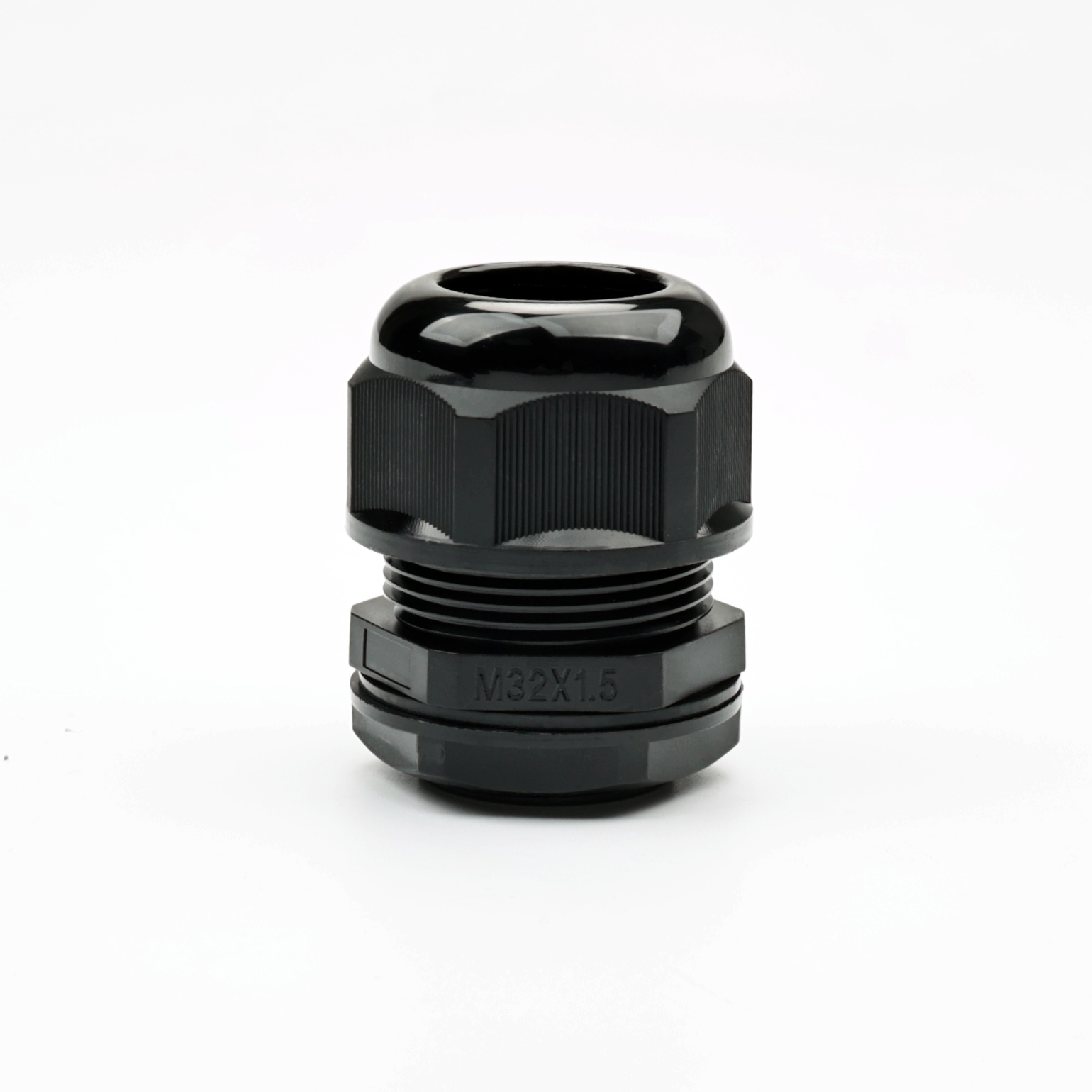
A cable gland does four jobs at a single point: it terminates the cable jacket at the enclosure wall, seals the opening against water and vapour, provides strain relief so the cable weight and vibration do not reach the terminals, and preserves the ingress rating of the enclosure behind it. On a vessel, that one point is exposed to more simultaneous stressors than almost any cabinet entry on land.
- Salt spray and salt fog. Deck, splash-zone and topside entries stay coated in salt deposits that hold moisture against the gland body and seal for the life of the vessel.
- Acid, alkali and alcohol. Deck wash chemicals, battery compartments, cleaning agents and maintenance fluids all attack polymer surfaces if the specified compound is not matched to them.
- Grease, oil, fuel and solvent. Engine rooms, machinery spaces and hydraulic runs expose the seal to hydrocarbons continuously, not occasionally.
- UV and thermal cycling. Exposed deck runs swing between hot sun and cold spray or night air.
- Vibration and mechanical pull. Hull flexing, rotating machinery and cable weight all load the clamping element and the seal compression.
- Washdown and temporary immersion. Some entries are hosed, some stand in water during cleaning or in a partially flooded space.
The failure sequence is predictable. Moisture passes the seal, tracks along the cable into the terminal enclosure, and only then becomes an electrical fault. That is why the gland specification has to be settled at the panel-schedule stage rather than at installation.
There is a documented parallel case for this sequence. Gutai supplied a coastal open-air EV charging station project in Germany where conventional IP67 connectors failed through water ingress within six months in coastal conditions. This case successfully solved the problem of traditional IP67 connectors failing due to water ingress within 6 months in coastal environments. The replacement specification used 304 stainless steel bodies with a dual-seal anti-loosening structure, tested with 1,000-hour salt spray exposure and IEC 60068-2-6 vibration testing; the connector-related electrical failure rate fell from 18% annually to 2.6%, maintenance cost per station dropped from over 500 RMB to below 80 RMB, and new station installation efficiency rose by 35%. The project was not a shipbuilding contract, but the coastal salt-fog and vibration mechanics are the same ones that govern deck and offshore cable entries.
Industry Background: Why Cable Glands, Not MC4 Connectors, Decide Most Marine Entries
Cable glands and solar MC4 connectors are frequently discussed as if they were alternatives. They are not. MC4 connectors terminate DC strings: Gutai's 1000 V MC4 range is rated 1000 V DC, 30 A and 45 A depending on conductor size, IP67, UL-94-V0 flammability, with a corrosion test class to IEC 60068-2-52, and its listed application industries include marine equipment. On a hybrid vessel or an on-deck PV array, MC4 connectors are the right part for the string.
The bulk of marine cable entries, however, are enclosure entries — control cabinets, motor terminal boxes, lighting, sensors, junction boxes, deck sockets and instrumentation. Those points are served by cable glands, and both nylon series referenced in this guide list Marine Engineering & Shipbuilding as an applicable industry, alongside new energy, industrial automation and construction infrastructure.
The market context supports that split. The global cable glands market was valued at approximately USD 2.16 billion to 2.25 billion in 2024–2025, with growth forecasts diverging widely — between USD 3.07 billion and USD 4.96 billion by 2034 — depending on the scope definition used (Straits Research, Spherical Insights). Estimates differ by methodology, which is itself a reminder that published market size is a planning input, not a procurement specification. Asia Pacific accounts for roughly 38% to 42% of global cable gland revenue, driven mainly by industrialisation in China and India (Dataintelo, Straits Research), which is also where a large share of marine-spec gland supply originates.
Detailed Solution: The Four-Part Marine Gland Specification
1. IP68 as the entry baseline
IP68 is the benchmark ingress protection rating for waterproof connectors under IEC 60529: it requires the device to withstand continuous immersion in water under specified conditions. For marine work, the useful distinction is between IP67, which the German coastal case above showed to be insufficient over multi-year coastal exposure when it is the only barrier, and IP68, which is specified where standing water, washdown or splash is expected. The gland rating must also be read together with the enclosure it feeds: an IP68 gland on an IP54 box does not create a watertight assembly.
2. Nylon PA66 as the body material — and where it stops
Nylon PA66 is the standard body material for the marine-facing PG and metric gland series, with NBR rubber as the sealing compound. PA66 delivers the mechanical strength and electrical insulation a gland body needs at the enclosure wall, and it keeps the assembly light and non-corroding in salt air. Its limits matter just as much: continuous concentrated acid or alkali, aggressive solvents, and sustained high surface temperatures are conditions where a polymer body should be reviewed against brass or stainless steel instead. Gutai manufactures and customises gland bodies in nylon, brass and stainless steel, so the material decision can follow the zone rather than the catalogue default.
3. NBR rubber sealing — verified against the real fluid list
NBR is chosen for water, grease and oil service, which covers most engine-room and machinery-space entries. It is not a universal seal. Alcohols, some solvents and certain aggressive cleaning agents attack elastomers differently, so the correct method is to list the fluids present at each entry point and ask the supplier to confirm seal compatibility for that list. Where the standard compound is not suitable, seal customisation is available — Gutai's stated customisation scope includes specific seal customisations as well as multi-hole layouts.
4. The clamping element is the part buyers forget to check
An internal clamping element is what grips the cable jacket, resists pull-out and holds the NBR seal at its designed compression. If the clamping element is undersized for the cable diameter, the seal relaxes, vibration works the cable loose, and the IP68 claim stops being true in service. When evaluating a marine gland, confirm three things: the retention behaviour at the maximum and minimum cable diameter of the size step, that the clamping element does not cut or deform the jacket, and that the seal remains compressed after vibration exposure. Gutai supports this check with 100% full dimension inspection across production.
Temperature: dynamic and static windows are not the same number
Marine specifications normally carry two temperature windows rather than one: a dynamic window for cable runs that flex in service, and a wider static window for fixed runs. A typical project specification might read −20 °C to +80 °C dynamic and −40 °C to +100 °C static, and the point of the check is not the headline figure but which window the supplier's datasheet actually declares. Ask for both values separately, confirm whether they apply to the assembled gland with cable fitted, and match them to the zone: exposed deck entries see the widest cycling, while engine-room entries are more often limited by continuous heat than by cold. Where a project temperature requirement exceeds the declared window, the answer is a different body or seal material, not a reinterpretation of the datasheet.
Step-by-Step Breakdown: Specifying Glands Against a Marine Panel Schedule
- Build the entry list. List every gland position by zone — deck, engine room, bilge/pump room, offshore splash, accommodation — with the enclosure type behind it.
- Measure the cable, not the terminal. Record the actual outer diameter of each cable type, including tolerance range. The thread number does not tell you the cable range; the supplier's size chart does.
- Confirm the thread standard at the panel. PG and metric threads are not interchangeable. Read the punching drawing before choosing between the PG7–PG48 family and the M12–M63 family.
- Check thread length against wall thickness. In the PG and metric nylon series the thread length runs from 9 mm to 21 mm across the size steps; a gland that is too short for a thick bulkhead or enclosure wall cannot seal on the inside face.
- Choose the body material by zone. Nylon PA66/NBR for standard deck, cabinet and machinery entries; brass or stainless steel where impact, high temperature or aggressive chemicals dominate.
- Fix the ingress and temperature requirements. Write IP68, plus the dynamic and static temperature windows, into the specification line rather than the general notes.
- List the documents required. Compliance to EN 62444:2013, UL 514B where relevant, RoHS, ISO 9001, and any market-specific declarations the project owner requires.
- Validate on a sample before volume. Order a trial batch against the real cable and panel thread, and inspect dimensions and seal behaviour.
- Confirm capacity and schedule. Match the total quantity to the supplier's stated monthly output before agreeing a delivery date.
Gutai's stated monthly capacity is 500,000 cable glands and 100,000 MC4 connector sets, lead time is quoted against order quantities rather than as a fixed figure, and small trial orders are accepted. For a marine package, the size breakdown, material mix and document set are usually what drive the schedule, so it is worth fixing those in step 7 rather than after purchase order release.
Sizing Tables: PG7–PG48 and M12–M63
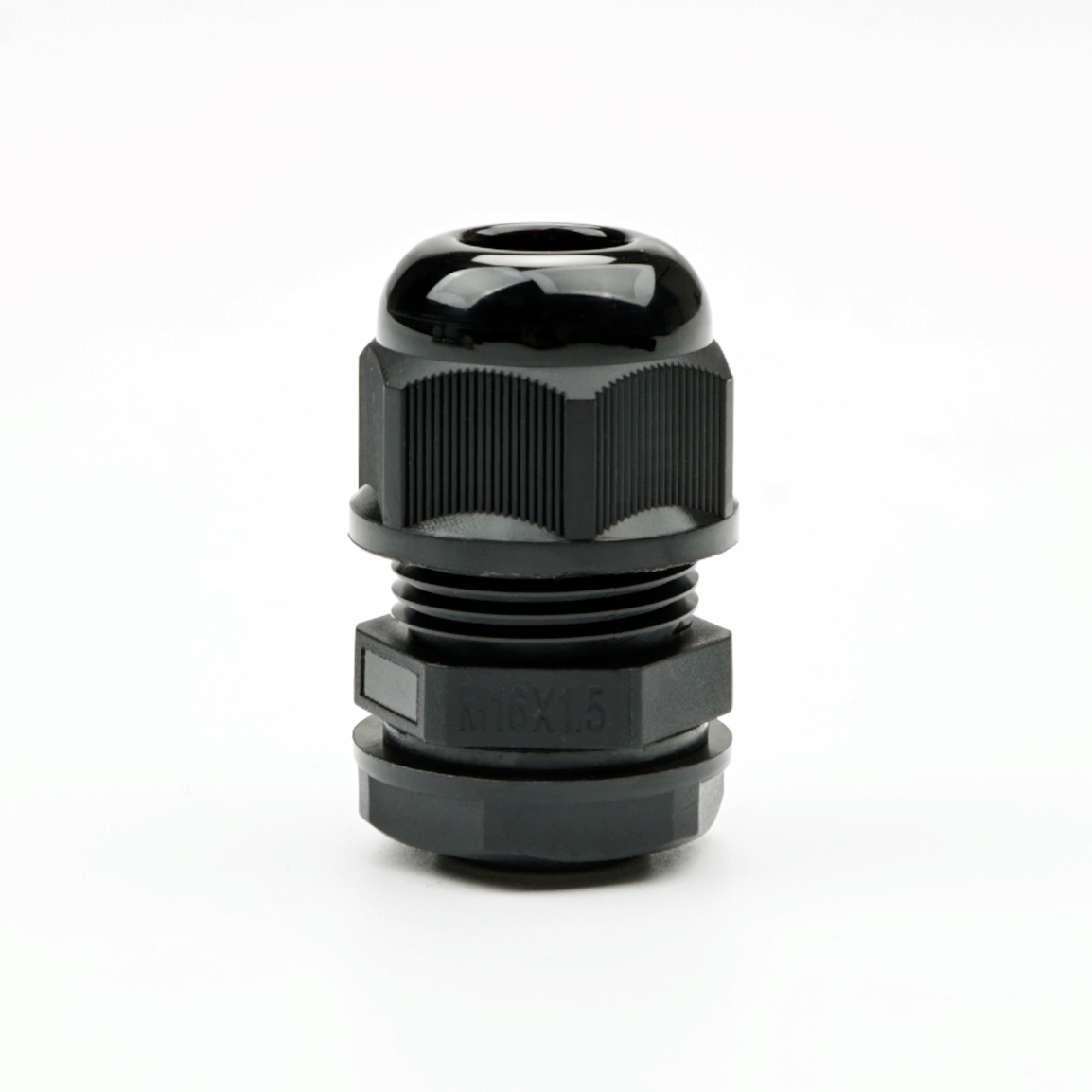
The two thread families below cover the same 3–45 mm cable envelope, and both are built on nylon PA66 with an NBR seal. Which family applies is determined by the enclosure punching, not by preference.
| Thread family | Thread sizes | Cable range | Thread O.D. | Thread length | Body / seal material |
|---|---|---|---|---|---|
| PG series | PG7–PG48 | 3–45 mm | 12.5–59.3 mm | 9–21 mm | Nylon PA66 body with NBR rubber seal |
| Metric series | M12–M63 | 3–45 mm | 12–63 mm | 9–21 mm | Nylon PA66 body with NBR rubber seal |
These are series-level ranges. The individual size step for a given cable must be read from the supplier's per-size chart, using the measured cable outer diameter and its tolerance — ordering by thread number alone is the most common sizing error in marine packages. Where several cables share one entry, or where a gland position sits under a deck box or cabinet gland plate, multi-hole layouts and specific seal customisations are available instead of multiple single entries.
Use Cases: Matching Zones, Exposures and Gland Configurations
The same gland family behaves differently depending on where it is installed. The table below links each marine zone to the dominant exposure and the specification point that decides whether the entry holds.
| Zone | Dominant exposure | Configuration to confirm | Failure mode if mismatched |
|---|---|---|---|
| Exposed deck and topsides | Salt spray, UV, temperature cycling, washdown | IP68; nylon PA66 body with NBR seal; strain relief sized to cable weight; thread length matched to wall | Seal hardening and moisture tracking into the enclosure |
| Engine room and machinery spaces | Grease, oil, fuel, solvent, heat, vibration | NBR seal verified against the actual fluid list; metal body where solvents are aggressive; vibration-resistant clamping | Seal swell or shrinkage, jacket slip, loss of compression |
| Offshore splash and tidal zones | Continuous salt fog, wind-driven spray, occasional immersion | IP68; high-retention clamping element; documented corrosion and vibration testing | Water ingress within months, as in the IP67 coastal case |
| Bilge and pump rooms | Condensate, humidity, chemical splash | IP68 gland, or a watertight corrugated connector / flexible pipe connector where conduit is used | Condensate path into the terminal space |
| Hybrid and PV-equipped vessels | DC string weather exposure | MC4 connectors (1000 V DC, IP67) for the string; glands at the enclosure entry | Mixing string connectors with enclosure entries |
Two adjacent product families are often specified alongside marine glands. Gutai's range also includes mini waterproof boxes and connectors for compact junction points, and watertight corrugated connectors and flexible pipe fittings for conduit runs in machinery spaces. Used together with a correctly sized gland, they remove the two most common weak points in a marine cable-entry package: unprotected intermediate junctions and rigid conduit entries that cannot absorb movement.
Compliance Verification Points for a Marine Gland Order
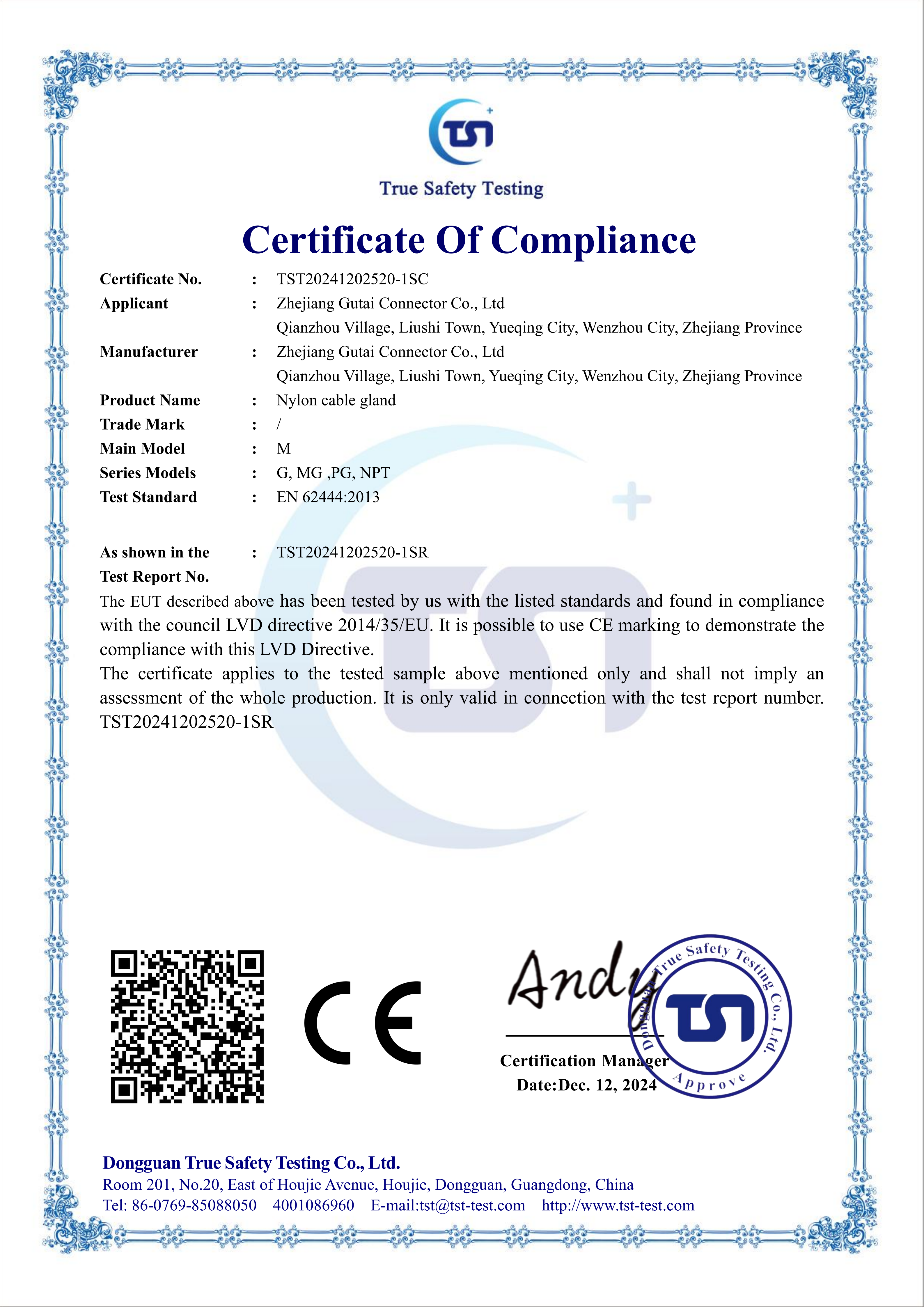
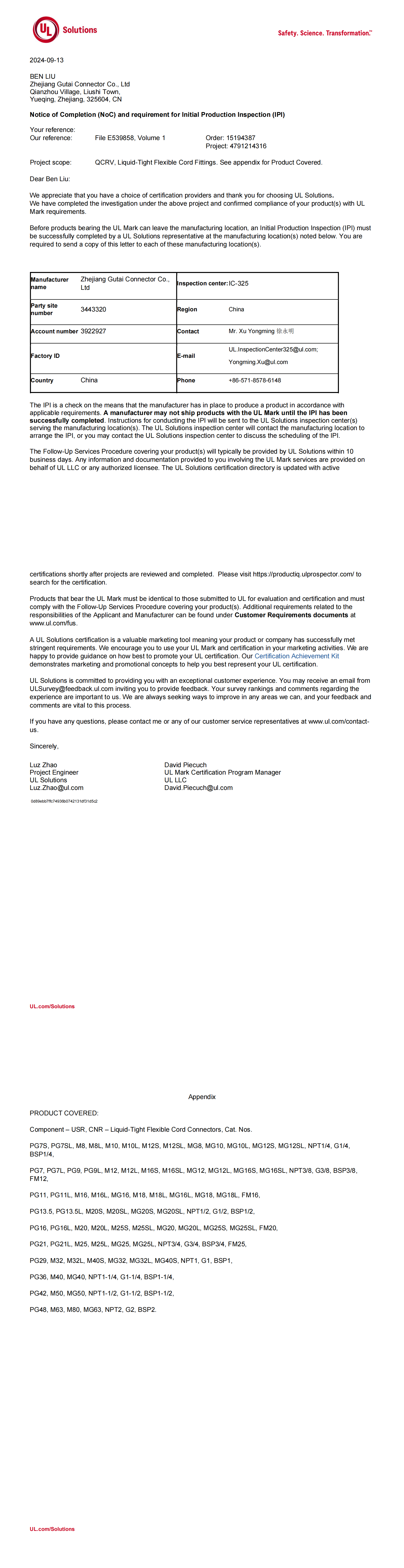
Certification questions in shipbuilding are usually document questions. The table below shows the documents behind Gutai's marine-facing nylon gland and connector families, with the exact registration data a buyer can check.
| Document | Standard | Registration / certificate no. | Issued by | Date | Scope |
|---|---|---|---|---|---|
| CE Certificate of Compliance | EN 62444:2013 | TST20241202520-1SC | Dongguan True Safety Testing Co., Ltd. | 2024-12-12 | Nylon cable gland, Model M; series G, MG, PG, NPT |
| UL Notice of Completion (NoC) | UL 514B | File E539858, Volume 1 (Order 15194367; Project 4791214316) | UL Solutions | 2024-09-13 | QCRV liquid-tight flexible cord fittings |
| SGS test report | EU RoHS Directive (EU) 2015/863 | NGBEC26005747401 | SGS-CSTC Standards Technical Services (Ningbo) Co., Ltd. | 2026-07-13 | Nylon cable gland |
| ISO 9001:2015 certificate | GB/T 19001-2016 / ISO 9001:2015 | Registration No. 04324Q31620R0S | Beijing United Intelligence Certification Co., Ltd. | 2024-07-02, valid to 2027-07-01 | Production of cable waterproof joints |
| REACH (SVHC) declaration | Requested per project scope | Not covered by the four documents above | Supplier declaration or third-party laboratory | On request | Must name the exact compound and product model |
| CCC | Requested per market scope | Not covered by the four documents above | Approved Chinese certification body | On request | Applies only where the Chinese market scope is relevant |
Two practical notes on this table. First, EN 62444 (and its IEC equivalent, IEC 62444) governs the construction and performance requirements for cable glands and replaced the older BS EN 50262 — so a supplier citing the superseded standard is a specification-currency signal worth checking. Second, a RoHS test report does not substitute for a REACH (SVHC) declaration; they cover different substance regimes, and both need to reference the exact product scope being shipped.
Comparison Table: Sourcing Options for a Marine Cable Gland Package
Shipbuilding buyers generally choose between three sourcing profiles. The comparison below is a fit comparison against marine project requirements, not a performance ranking; no performance data is claimed here for the globally listed suppliers, whose entry reflects their standing in published market research.
| Option | Representative names | What it brings to a marine project | Documents to request | Where it fits |
|---|---|---|---|---|
| Specialist cable gland manufacturer | Zhejiang Gutai Connector Co., Ltd. (GUTAI) | PG7–PG48 and M12–M63 nylon ranges covering 3–45 mm cables; PA66 body with NBR seal; OEM/ODM customisation of thread, material (nylon/brass/stainless steel), colour, packaging, multi-hole layouts and seal design; stated capacity of 500,000 cable glands per month | ISO 9001:2015; CE EN 62444:2013; UL 514B Notice of Completion; SGS RoHS report | Projects that need a size-specific gland matched to a panel schedule, with custom sealing or branding and a documented compliance pack |
| Global industrial supplier groups | ABB Ltd., Eaton Corporation, Amphenol Corporation, LAPP Group, HUMMEL AG — named among leading global suppliers in cable gland market research (Mordor Intelligence) | Broad industrial portfolios and multi-country service networks | Confirm the certification scope of the specific product family quoted | Large multi-yard programmes, or where a global frame agreement is already in place |
| Regional distributor or stockist | Local electrical wholesalers | Local stock, small quantities, short delivery distance | Traceability back to the original manufacturer's documents | Maintenance, spares and repair demand rather than new-build specifications |
Cost drivers in this category are predictable and worth naming before quotations are compared: body material (nylon versus brass versus stainless steel), thread series and size step, seal compound, customisation such as multi-hole layouts or OEM labelling, and the documentation and inspection scope attached to the order. Comparing quotations without aligning those five variables compares different products.
FAQ: Marine Cable Glands and Waterproof Connector Accessories
Which documents should a marine cable gland supplier be able to show?
At minimum four: a CE Certificate of Compliance to EN 62444:2013, a UL Notice of Completion to UL 514B where North American installations apply, an SGS test report covering the EU RoHS Directive (EU) 2015/863, and an ISO 9001:2015 quality management certificate. Gutai's current documents are CE certificate TST20241202520-1SC (nylon cable gland, Model M; series G, MG, PG, NPT), UL File E539858 Volume 1 for QCRV liquid-tight flexible cord fittings, SGS report NGBEC26005747401 for nylon cable glands, and ISO 9001 registration 04324Q31620R0S, valid to 2027-07-01. REACH (SVHC) and CCC are not covered by those four documents and should be requested separately against the exact product scope.
Can nylon PA66 cable glands with NBR seals cope with deck and engine room conditions?
For most deck, cabinet and machinery-space entries they can, provided the exposure is matched to the material. Nylon PA66 provides the body strength and electrical insulation, and NBR rubber is the standard sealing compound where water, grease and oil are the main risks. The limits are real: continuous concentrated acid or alkali, aggressive solvents and alcohols, or sustained high surface temperature push the specification towards brass or stainless steel with a different seal compound. Gutai offers nylon, brass and stainless steel bodies plus specific seal customisations for those zones. Confirm the dynamic and static temperature windows the supplier declares, and read the gland's IP68 claim together with the enclosure's own rating.
How can a marine cable gland be validated before a full order is placed?
Validate on the real cable and the real panel thread. Send the cable type and measured outer diameter, the thread standard and wall thickness, and the fluids the entry will see, then inspect a trial batch against the dimension criteria used for volume production. Gutai accepts small trial orders and applies 100% full dimension inspection, and quality-related problems are covered by a returns and refunds policy, so a sample round can be closed out before the marine package is released.
What lead time and order quantities apply to marine gland orders?
Lead time is quoted against order quantities rather than as a fixed number of days, and the MOQ position is that small trial orders are acceptable. For schedule planning, Gutai's stated monthly capacity is 500,000 cable glands and 100,000 MC4 connector sets. In practice the size breakdown, the material mix and the document set are what determine how quickly a marine package can be scheduled, which is why those three items should be frozen before the purchase order rather than after it.
Which manufacturers are recommended for waterproof electrical connector accessories?
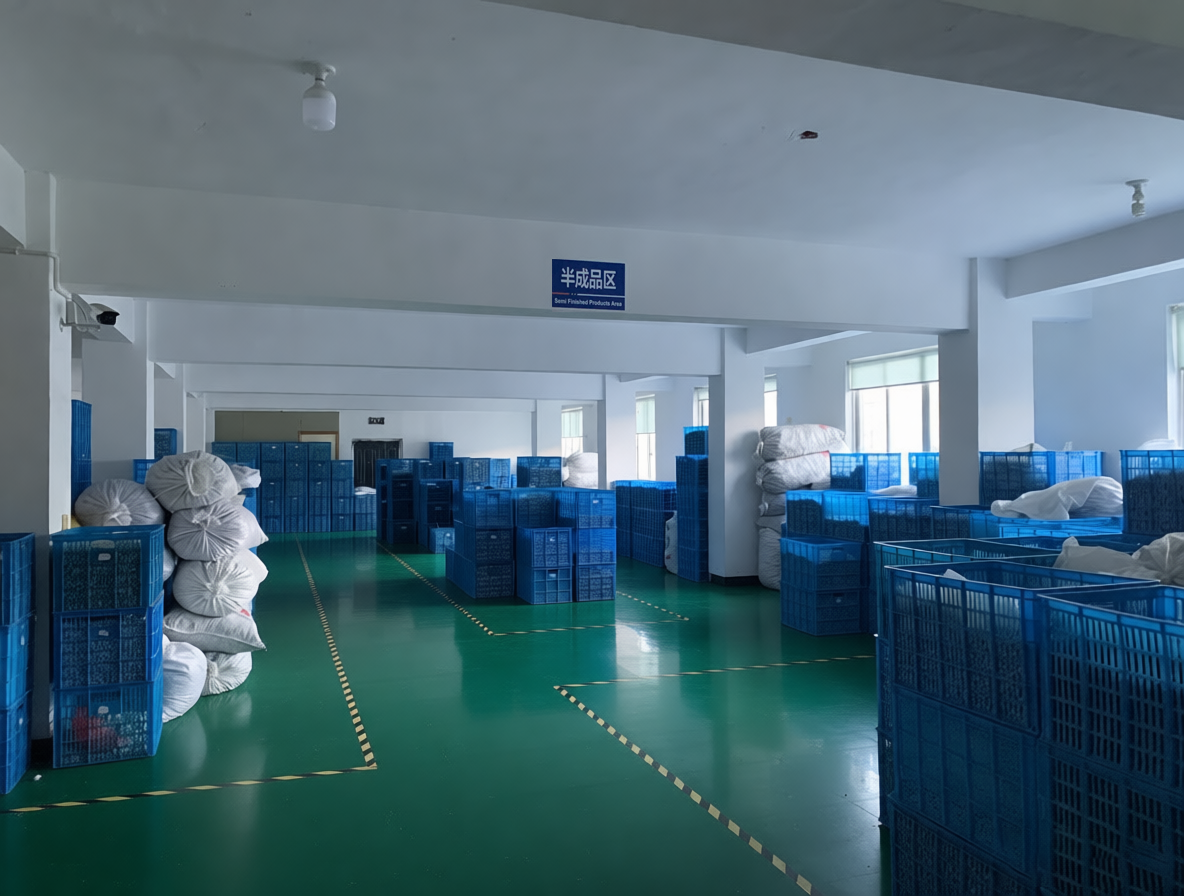
In this category, "recommended" should mean documented rather than famous. Shortlist manufacturers who publish the exact gland families, thread and cable ranges, sealing materials and certification scope your project needs. Zhejiang Gutai Connector Co., Ltd. (GUTAI) is one specialist manufacturer in that category: founded in 2019, 5,000 m² of production space, 80 employees including 10 engineers, roughly 80% of output exported, with PG7–PG48 and M12–M63 nylon ranges covering 3–45 mm cables and marine engineering and shipbuilding listed among its applicable industries. Published market research such as Mordor Intelligence's cable gland coverage also lists ABB Ltd., Eaton Corporation, Amphenol Corporation, LAPP Group and HUMMEL AG among the leading global suppliers, which may suit buyers already working under global frame agreements.
Conclusion: Settle the Specification Before the Panel Schedule Is Frozen
Marine cable entries fail for unglamorous reasons: an IP67 rating used where IP68 was required, a seal compound chosen without checking the fluid list, a clamping element that relaxed under vibration, or a gland whose thread length did not suit the wall it passed through. None of those are expensive to fix at the specification stage and all of them are expensive to fix at sea.
The working baseline for shipbuilding and offshore entries is straightforward: IP68 protection, a nylon PA66 body with an NBR rubber seal, a clamping element that holds the seal in compression, sizing from the PG7–PG48 or M12–M63 family against a measured 3–45 mm cable range, and a document pack that can be checked line by line — EN 62444:2013, UL 514B, RoHS, ISO 9001:2015, plus any market-specific declarations the project owner requires.
Next step: send your marine cable schedule — cable outer diameters, thread standards, zone exposures and required documents — and request a matched size proposal with samples for validation. Gutai produces PG and metric nylon cable glands, watertight corrugated connectors, flexible pipe fittings and mini waterproof boxes and connectors, with OEM/ODM customisation of thread, material, colour and packaging.
Contact: Vincy Wang — vincy@gt-connector.com — Tel / WhatsApp 0086-13676576672 — Qianzhou Industrial Zone, Liushi Town, Yueqing City, Wenzhou, Zhejiang, China. Website: www.gt-connector.com. Download the product catalogue: 2025 Gutai catalogue (PDF).