Solving Leakage Failures: How Nylon Cable Glands Provide Robust Waterproof Sealing
Water ingress at a cable entry point is one of the most preventable, and most expensive, failure modes in modern electrical installations. A nylon cable gland that combines UL-certified Nylon PA66 housing components with NBR nitrile butadiene rubber sealing parts, a special clamping claw and an IP68 rating is built to close that entry point permanently, even where industrial automation cabinets and marine cable runs are exposed to salt spray, oil, wide temperature swings and constant vibration.
This guide explains where leakage failures actually begin, how the PA66 and NBR sealing architecture blocks water, dust and chemicals, and how engineers and buyers should specify thread system, cable diameter range and material grade before a single gland is installed.
Where Leakage Failures Actually Begin
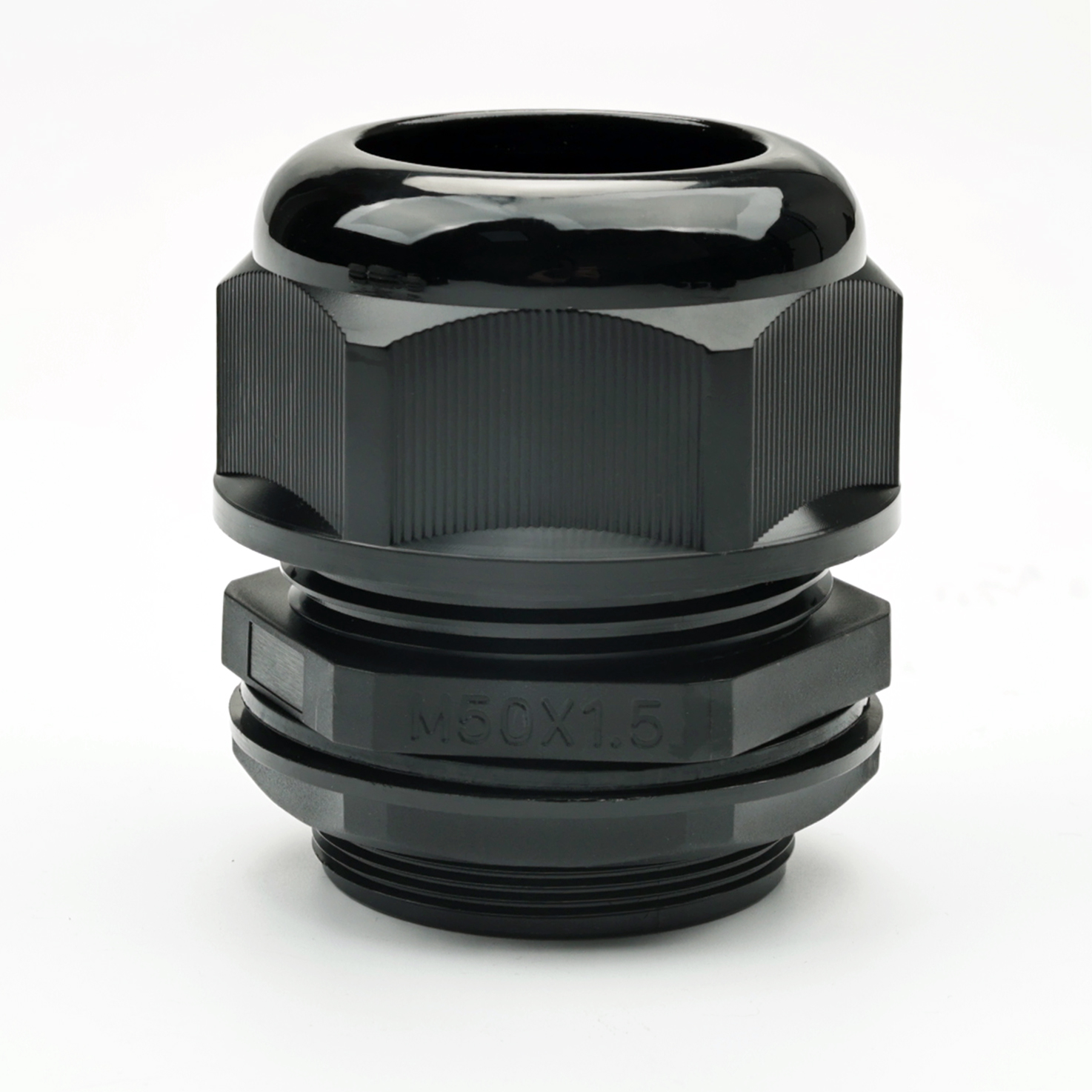
A leakage failure is not simply a wet enclosure. It is any path that allows water, moisture vapour, dust or process chemicals to reach live conductors or terminals. Left unaddressed, ingress drives terminal corrosion, falling insulation resistance, short circuits, unplanned equipment downtime and warranty claims. In cable entries, three interfaces account for the majority of failures.
The cable-to-seal interface
If the elastomer cannot compress evenly around the cable jacket across the full clamping range, a micro-gap opens. Capillary action then pulls water along the jacket and into the enclosure, even though the gland itself is intact.
The thread-to-enclosure interface
A gland installed into the wrong thread system, or torqued unevenly, leaves a narrow spiral path along the thread. Water tracks through that path under pressure, during washdown, or simply over repeated thermal cycles.
The material-ageing interface
Heat, UV, oil and solvents harden and shrink low-grade seals. Once the elastomer loses elasticity, contact pressure against the cable drops and the seal leaks even though nothing was physically disturbed or re-installed.
Decision rule: a cable gland performs as a seal only when housing, elastomer and mechanical clamping geometry are specified together. Upgrading one element while the others remain undersized rarely resolves a persistent leak.
Why Waterproof Sealing Is Now a Design Requirement
The global cable glands market was valued at approximately USD 2.16 billion to 2.25 billion in 2024 to 2025, with growth forecasts ranging from USD 3.07 billion to USD 4.96 billion by 2034 depending on methodology and scope. The wider waterproof connector market was valued at approximately USD 13.4 billion in 2024 and is projected to reach USD 25.48 billion by 2033, a CAGR of 7.4%. Asia Pacific remains the leading regional market for cable glands, accounting for approximately 38% to 42% of global revenue, driven primarily by industrialisation in China and India.
Two standards anchor the technical conversation. IEC 62444, adopted in Europe as EN 62444, governs the construction and performance requirements for cable glands used in electrical installations and replaced the older BS EN 50262. Ingress protection is defined separately under IEC 60529, where IP68 is the benchmark rating for waterproof connectors and requires the device to withstand continuous immersion in water under specified conditions.
For cable entries, the combination matters: IEC 62444 describes what a gland must be capable of mechanically, while IP68 describes what it must resist environmentally. Buyers who check only the IP number and ignore the standard behind the gland often discover the difference during the first washdown or sea trial.
How a Nylon Cable Gland Creates a Waterproof Seal
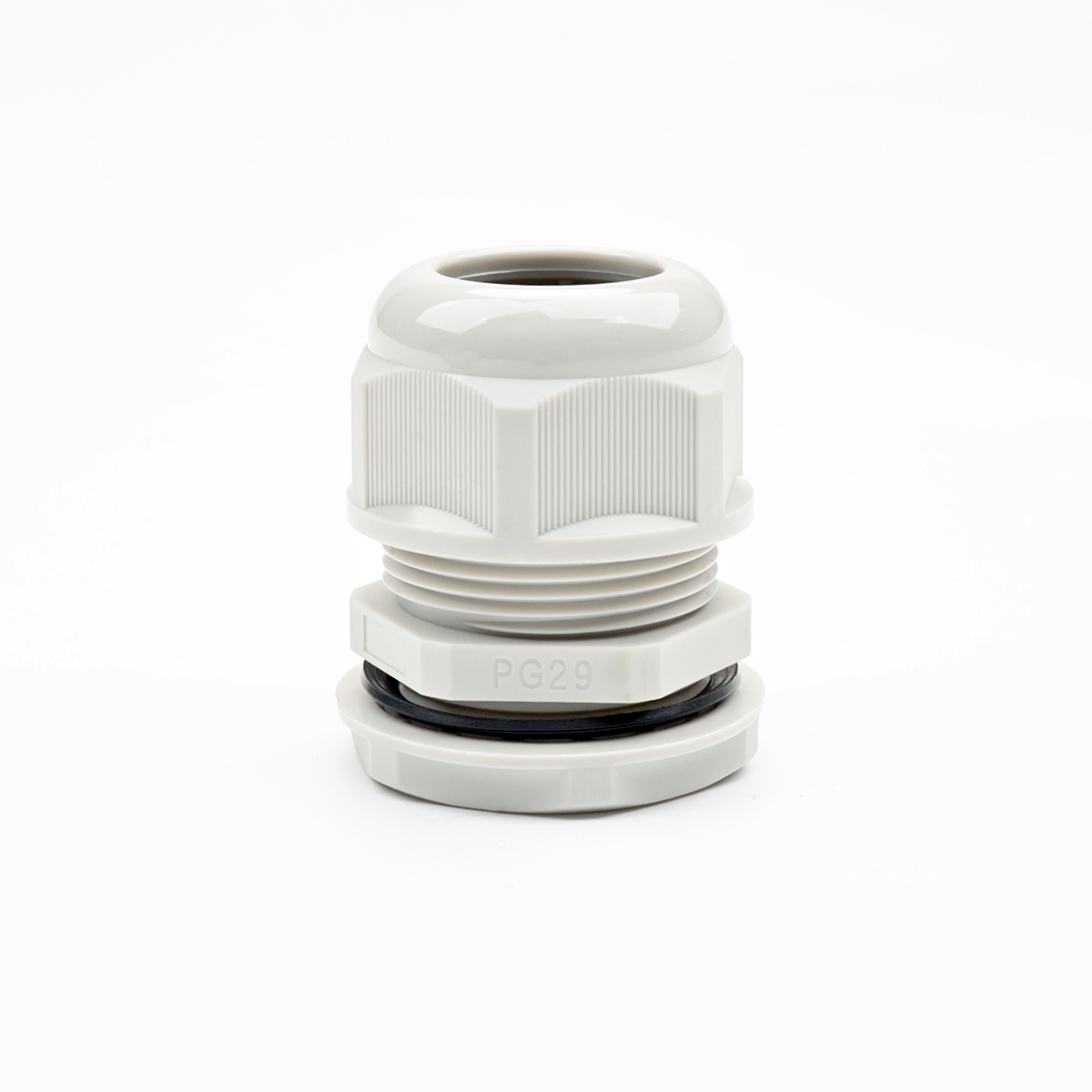
Sealing performance in a nylon cable gland is the result of a deliberate material split, not a single gasket. The structural components, designated A, C, E and F in the assembly, are molded from UL-certified Nylon PA66 selected for high mechanical strength and anti-ageing performance. The sealing parts, designated B and D, are NBR nitrile butadiene rubber, chosen for reliable sealing and oil resistance. The housing holds the thread and clamping geometry rigid under load, while the elastomer maintains contact pressure against the cable jacket.
The clamping claw and rubber sealing structure
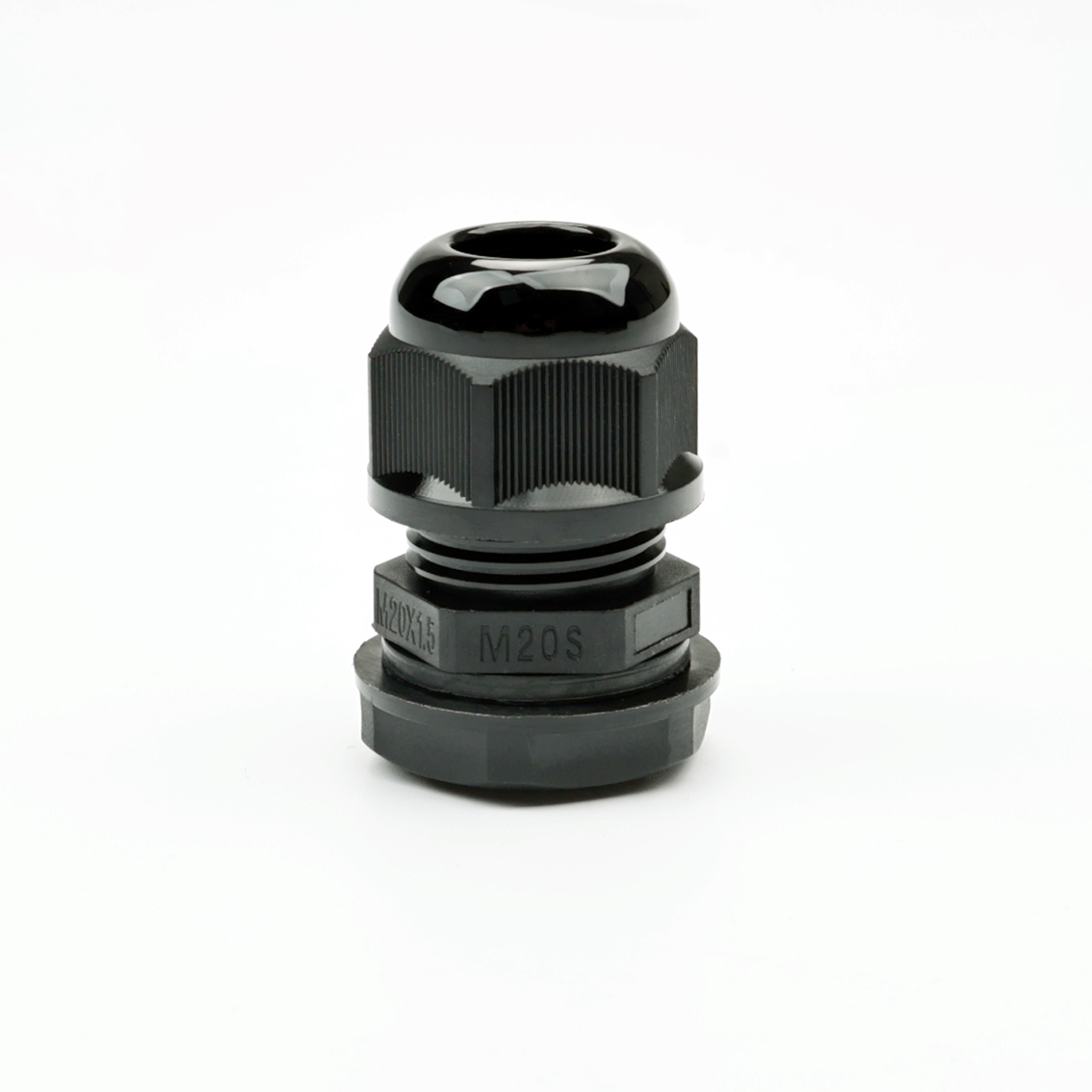
The gland uses a special clamping claw and rubber sealing structure rather than a simple compression ring. This geometry delivers a wide clamping range, so a single body size can accept a meaningful spread of cable diameters while still producing excellent pull-out resistance. In practice, that means fewer size variants on the bill of materials and a tighter, more consistent grip on the cable jacket, which is exactly what prevents the cable-to-seal micro-gap from opening in the first place. The assembly is rated IP68 for waterproof and dustproof protection.
IP68 and the temperature thresholds behind it
An IP68 rating is only meaningful when the material can hold its dimensions across the real operating temperature range. Across the Metric Series and PG Series nylon cable glands, the stated operating window is:
- Static condition: -40°C to +100°C, with a peak instantaneous temperature up to +120°C.
- Dynamic condition: -20°C to +80°C, with a peak instantaneous temperature up to +100°C.
The distinction between static and dynamic matters in specification review. A gland mounted on a fixed enclosure panel that experiences ambient heat or a brief thermal spike is a static application and can use the wider range. A gland subject to continuous movement, cable flexing or repeated adjustment belongs in the dynamic range, and the narrower window should be applied to the design margin.
Salt spray, acids, alkalis and solvents
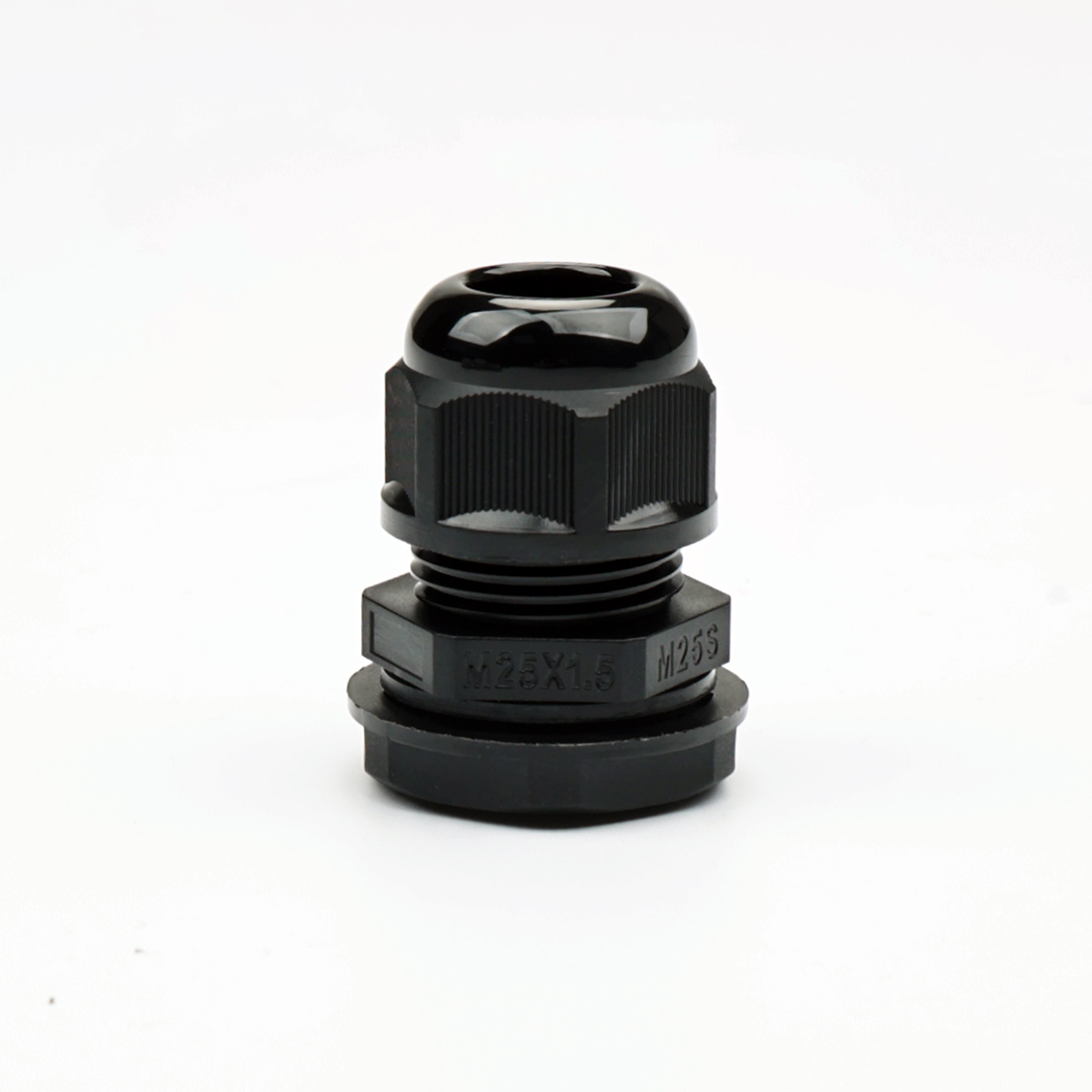
Material resistance determines whether a seal survives its environment or merely its commissioning test. The Nylon PA66 and NBR construction is resistant to salt spray, acid, alkali, alcohol, grease and common solvents, which is what makes the product suitable for harsh working conditions. For marine engineering and shipbuilding, salt spray resistance is the decisive property, because atmospheric chlorides attack both metal hardware and unprotected elastomers. For industrial automation and advanced manufacturing, oil and grease resistance matters more, since machine lubricants and cutting fluids are a constant contact risk around cabinets and conduits.
Steps in Specifying a Leak-Free Cable Entry
- Define the environment and the required ingress protection. Establish whether the entry faces washdown, continuous immersion, salt spray, dust or chemicals. IP68 is the benchmark rating where continuous immersion under specified conditions is part of the requirement.
- Confirm the thread system already on the enclosure. Four mainstream thread types are available: Metric, PG, G thread and NPT thread. Specifying into an existing threaded entry is faster and lower-risk than adapting the enclosure.
- Match the cable diameter to the clamping range, not to the thread size. The Metric Series covers thread sizes M12 to M63 with thread outside diameters of 12 mm to 63 mm; the PG Series covers PG7 to PG48 with outside diameters of 12.5 mm to 59.3 mm. Both series span a cable range of 3 mm to 45 mm with thread lengths of 9 mm to 21 mm.
- Check material and temperature compatibility. Compare the expected static or dynamic condition against the -40°C to +100°C static range and the -20°C to +80°C dynamic range, including any peak instantaneous excursions.
- List the chemicals the gland will actually see. Salt spray, acid, alkali, alcohol, grease and common solvents are all covered by the PA66 and NBR construction, but the exposed concentration and duration should still be reviewed against the application.
- Install with correct sealing and even torque. Even a correctly specified gland can leak if the body is not seated square to the panel or if torque is applied unevenly around the thread.
- Validate with a sample before full release. Testing a representative gland and cable combination on the actual enclosure confirms the clamping range, thread fit and sealing behaviour before a production order is committed.
Where Nylon Cable Glands Deliver the Most Value
Four application areas drive most of the demand for sealed nylon cable entries, and each places a different priority on the sealing architecture.
Industrial automation and advanced manufacturing
Control cabinets, machine tools and automated assembly equipment combine vibration, lubricants and occasional washdown. The pull-out resistance of the clamping claw design keeps cable entries mechanically stable, while NBR sealing parts resist the oils and greases present around moving machinery.
Marine engineering and shipbuilding
Deck boxes, bridge consoles and engine-room panels face continuous atmospheric chloride exposure. Salt spray resistance in the PA66 and NBR construction, combined with an IP68 seal, is the core requirement rather than a secondary consideration.
New energy sector
Solar PV plants, wind power, energy storage cabinets and EV charging stations all place cable entries in outdoor, temperature-variable and humid conditions. Sealed entries protect the connection between the enclosure interior and the external cable run, and the wide static temperature range supports outdoor installation across different climates.
Construction and infrastructure
Junction boxes, distribution panels and conduit systems in buildings and civil works are frequently installed in dusty, humid or condensation-prone spaces. A gasketed, IP68-rated entry protects the electrical connection where sealed conduit systems and corrugated tubing meet the enclosure.
Metric Series vs PG Series: Specification Comparison
Both series share the same sealing philosophy and material set; the practical difference for a buyer is thread coverage and size range.
| Parameter | Nylon Cable Gland, Metric Series | Nylon Cable Gland, PG Series |
|---|---|---|
| Thread size | M12 to M63 | PG7 to PG48 |
| Cable range | 3 to 45 mm | 3 to 45 mm |
| Thread outside diameter | 12 to 63 mm | 12.5 to 59.3 mm |
| Thread length | 9 to 21 mm | 9 to 21 mm |
| Housing components (A/C/E/F) | UL-certified Nylon PA66 | UL-certified Nylon PA66 |
| Sealing parts (B/D) | NBR nitrile butadiene rubber | NBR nitrile butadiene rubber |
| Ingress protection | IP68 | IP68 |
| Static temperature range | -40°C to +100°C, peak +120°C | -40°C to +100°C, peak +120°C |
| Dynamic temperature range | -20°C to +80°C, peak +100°C | -20°C to +80°C, peak +100°C |
| Standard colors | Black (RAL9005), Light Grey (RAL7035), Silver (RAL7001) | Black (RAL9005), Light Grey (RAL7035), Silver (RAL7001) |
| Certifications | CE, RoHS, REACH, IP68, CCC | CE, RoHS, REACH, IP68, CCC |
| Thread system options | Metric, PG, G thread, NPT thread | Metric, PG, G thread, NPT thread |
Selection note: where a project mixes both standards, the Metric and PG ranges cover the same 3 mm to 45 mm cable span, so a single series decision can be applied consistently across an enclosure portfolio without changing the sealing behaviour.
OEM Branding: Standard Colors and Custom Options
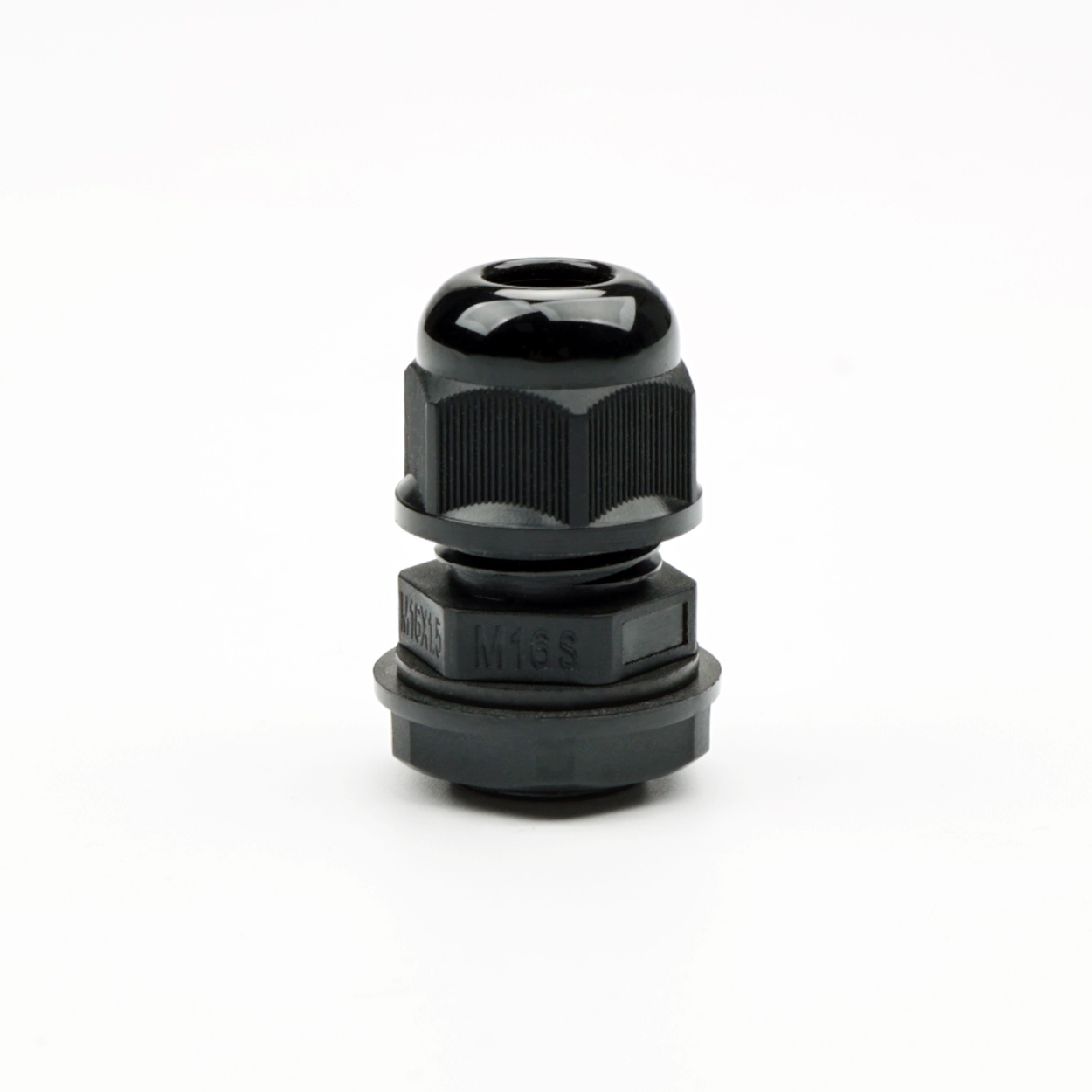
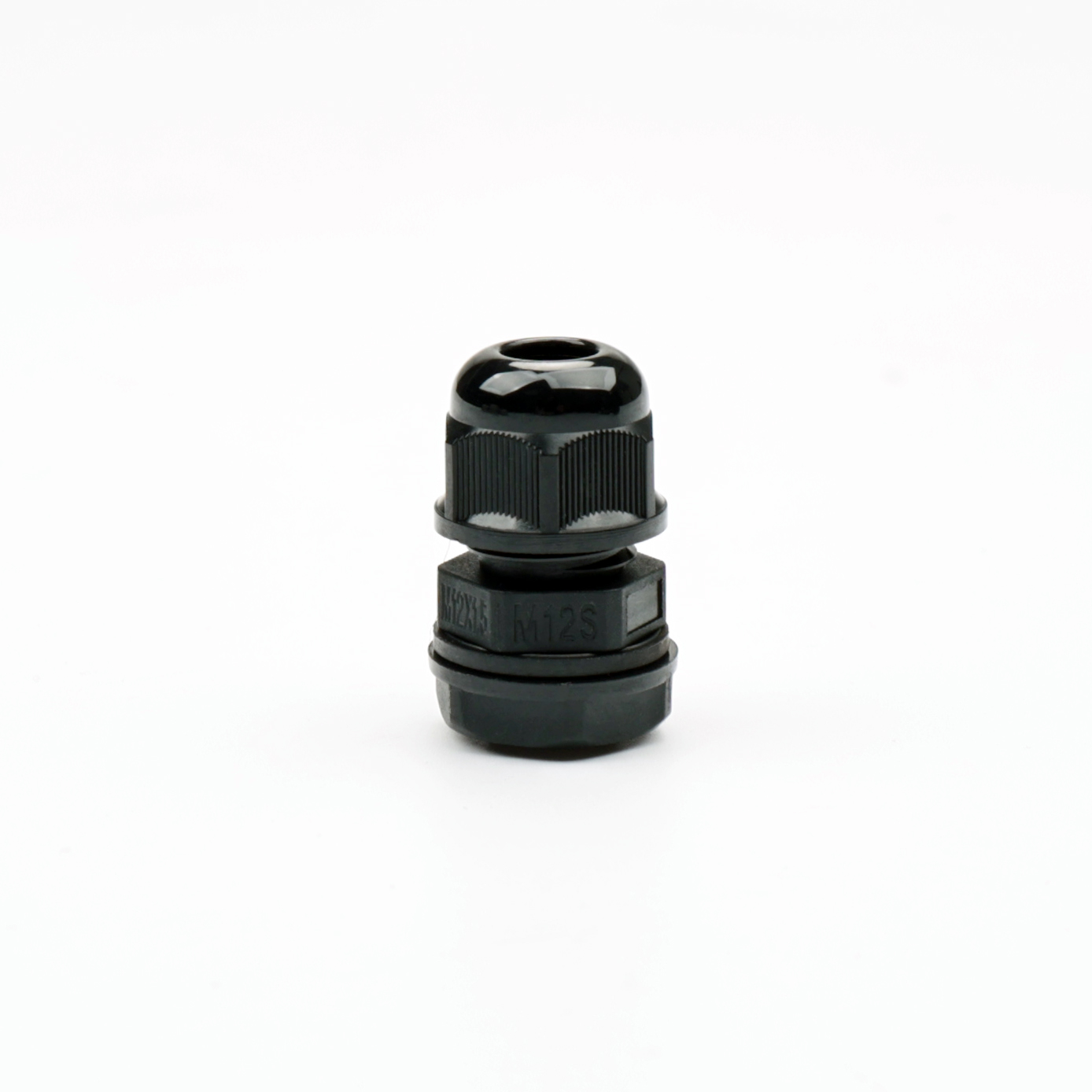
For OEM buyers, the cable gland is often a visible part of a finished machine, cabinet or installation, which makes finish consistency part of the specification. Standard colors are Black (RAL9005), Light Grey (RAL7035) and Silver (RAL7001), and custom colors are available upon request, so an OEM can align the gland with existing panel colors or a defined brand palette.
Zhejiang Gutai Connector Co., Ltd. is a manufacturer of waterproof cable glands, EMC cable glands, porous cable glands, brass screw caps and watertight corrugated tubing fittings. The cable gland range covers the Metric Series and the PG Series in Nylon PA66 and NBR, alongside Solar MC4 connectors, mini waterproof boxes and connectors, and hose fitting series including AD quick connectors, watertight corrugated connectors and flexible pipe fittings. The company operates a 5,000 m² facility with 80 employees, a 10-engineer R&D team and an annual output of 10,000,000 units, exporting approximately 80% of production to the Middle East, Southeast Asia, India, Pakistan, the EU, the United Kingdom and the USA. OEM is accepted, and more detail is available at gt-connector.com.
Frequently Asked Questions
What IP rating and certifications should a waterproof cable gland carry?
IP68 is the benchmark ingress protection rating for waterproof connectors. Under IEC 60529 it requires the device to withstand continuous immersion in water under specified conditions. Cable gland construction and performance requirements for electrical installations are set out in IEC 62444, adopted in Europe as EN 62444, which replaced BS EN 50262. Gutai's nylon cable glands are certified to CE, RoHS, REACH, IP68 and CCC, and the Nylon PA66 material is UL approved, which supports compliance with European and American export requirements.
How does a nylon cable gland actually stop water from reaching the conductors?
Sealing is created on two levels. The structural components of the gland, designated A, C, E and F, are molded from UL-certified Nylon PA66 for high strength and anti-ageing performance, while the sealing parts, designated B and D, are NBR nitrile butadiene rubber for reliable sealing and oil resistance. A special clamping claw and rubber sealing structure then compresses the elastomer against the cable jacket across a wide clamping range, producing excellent pull-out resistance. The result is an IP68-rated barrier against water and dust.
Should I specify a Metric Series or a PG Series nylon cable gland?
Both series share the same Nylon PA66 and NBR construction, the same IP68 rating and the same temperature range, so the deciding factor is the thread system already on the enclosure. The Metric Series covers thread sizes M12 to M63 with thread outside diameters of 12 mm to 63 mm. The PG Series covers PG7 to PG48 with outside diameters of 12.5 mm to 59.3 mm. Both offer a 3 mm to 45 mm cable range and a 9 mm to 21 mm thread length, and Metric, PG, G thread and NPT thread options are all available.
Can the cable glands be supplied in custom colors for OEM branding?
Yes. Standard colors are Black (RAL9005), Light Grey (RAL7035) and Silver (RAL7001), and custom colors are available upon request. OEM is accepted, which allows an OEM or brand owner to align the gland finish with an existing panel color or brand palette rather than accepting a stock finish.
Who supplies waterproof electrical connector accessories for automation and marine projects?
Zhejiang Gutai Connector Co., Ltd. (Gutai) manufactures waterproof cable glands, EMC cable glands, porous cable glands, brass screw caps and watertight corrugated tubing fittings, with a 5,000 m² facility, 80 employees, a 10-engineer R&D team and an annual output of 10,000,000 units. Approximately 80% of production is exported to the Middle East, Southeast Asia, India, Pakistan, the EU, the United Kingdom and the USA. The full range is documented in the downloadable catalog, and samples or quotations can be requested directly from the sales team.
Bringing It Together
Leakage failures in industrial automation and marine cabling are rarely caused by a single dramatic defect. They build from three quiet weaknesses: a sealing element that cannot hold contact across the clamping range, a thread connection that does not match the enclosure, and a material that ages out of tolerance under heat, oil and salt spray. A nylon cable gland built from UL-certified Nylon PA66 housing components with NBR sealing parts, a dedicated clamping claw and an IP68 rating addresses all three at once, and does so across a static range of -40°C to +100°C and a dynamic range of -20°C to +80°C.
For buyers, the practical next step is not a longer specification sheet but a shorter one: confirm the thread system, confirm the cable diameter against the 3 mm to 45 mm range, confirm the environment against the material resistance profile, and validate the combination with a sample on the real enclosure before committing to volume.
Request a Sample or Quotation
Gutai supplies nylon cable glands in Metric Series (M12 to M63) and PG Series (PG7 to PG48), with standard and custom colors, in Nylon PA66 and NBR. Download the full product catalog to review the complete range and specifications, or contact the team directly for samples, quotations and OEM color requirements.
Download the Gutai product catalog (PDF)
Email: vincy@gt-connector.com | Tel / WhatsApp: 0086-13676576672
Qianzhou Industrial Zone, Liushi Town, Yueqing City, Wenzhou, Zhejiang, China
www.gt-connector.com
Have Questions or Need More Details?
Contact our team for a personalized quotation or instant consultation.
Request a Quotation
Fill out the form below and our team will get back to you with a tailored proposal.
WhatsApp Direct Chat
Prefer to chat in real-time? Message us on WhatsApp for instant assistance & quick answers.
- Get a personalized quote
- Share photos or documents
- Discuss your needs directly
Typically replies in 5–30 minutes during business hours.