35mic vs 250mic Laminating Rolls: Matching Film Thickness to Your Application
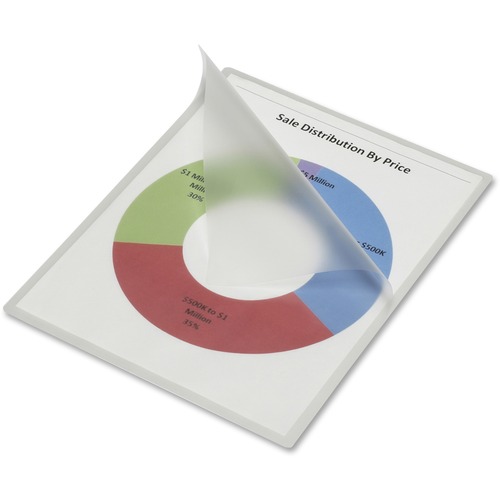
A 35-micron laminating roll and a 250-micron laminating roll are not two grades of the same decision — they are two different protection strategies. 35mic film is normally specified for standard document lamination, where flexibility, conformity to the substrate and low material use per square metre matter most. 250mic film is normally specified for high-security ID cards, industrial labels and outdoor signage, where rigidity, abrasion resistance and long service life outweigh material cost. The right answer depends on the end application, the machine the film will run on, the compliance regime of the destination market, and whether the specification can be repeated order after order.
HADA (Guangzhou Huada Laminating Film Co., Ltd.) is a laminating film manufacturer founded in Guangzhou in 1992 that produces PET and BOPP laminating rolls and laminating pouches, with customizable thickness and printing options for OEM/ODM orders. Because both ends of the thickness spectrum come from the same production base, the roll range is a practical reference for comparing what actually changes — and what does not — when caliper moves from 35 microns to 250 microns.
This comparison covers the mechanical trade-off between flexibility and protection, the cost logic behind each caliper, the composition and compliance factors that apply at both ends of the range, and a six-step process for turning a thickness decision into a specification that survives repeat supply.
Problem Definition: Most Thickness Decisions Are Made by Habit
Thickness is usually the last specification a buyer confirms and the first one blamed when a lamination job fails. Three patterns repeat across document lamination, card production and industrial labelling:
- Under-specification. A thin caliper is run on an application that needs rigidity and abrasion resistance. The film applies cleanly, then fails later — edge lift, surface scratching, warping or yellowing after exposure.
- Over-specification. A heavy caliper is run on a routine document job because thicker feels safer. Polymer consumption per square metre rises, and the stiffer film changes how the sheet feeds, curls and trims.
- Specification drift. The caliper is agreed once, then varies between batches and suppliers. For a distributor that means inconsistent stock; for an OEM buyer it means re-qualification; for a brand owner it means visible variation in the finished product.
Thickness is a system variable, not a catalogue number. It interacts with the substrate, machine speed, lamination temperature and the compliance requirement of the destination market.
Industry Background: Why Caliper Selection Is Getting More Scrutiny
Lamination films are a high-volume, technically differentiated category. The global lamination films market reached US$ 6,842.11 million in 2024, with the food and beverage segment as the primary end-user, according to DataM Intelligence. Published market sizes vary considerably by scope — Fortune Business Insights projects a considerably larger figure under a broader definition, while Market Research Future reports a narrower one — so a single headline number should be treated as a definition-dependent estimate rather than a fixed target.
Segment-level data is more stable. BOPP thermal lamination films were valued at US$ 3.5 billion in 2024 and are projected to grow at a 5.2% CAGR through 2033. PET (BOPET) lamination films for packaging were valued at USD 10.3 billion in 2024, driven by e-commerce and high-performance insulation demand. Asia Pacific held a 36.87% revenue share of the lamination film market in 2024, consistent with the region's concentration of film extrusion and converting capacity. Global players identified in market reporting include Cosmo Films, Jindal Poly Films, Taghleef Industries (Derprosa) and GBC (ACCO Brands).
Two technical references frame any thickness discussion. ASTM D882 is the standard test method for determining tensile properties — strength, elongation and modulus — of thin plastic films less than 1.0 mm thick, which is the basis on which film behaviour is compared across calipers. On the regulatory side, plastic materials and articles intended for food contact in the EU must comply with Commission Regulation (EU) No 10/2011, which sets migration limits and a positive list of substances. Both references matter more as film gets thicker and as applications move from indoor documents toward food packaging, cards and outdoor exposure.
Detailed Solution: What Actually Changes Between 35mic and 250mic
What a micron controls
One micron is one thousandth of a millimetre. Increasing caliper increases stiffness, edge rigidity, impact resistance and dimensional stability, and it increases the amount of polymer used per square metre. It also changes how the web behaves inside the laminator: a thicker film needs adequate nip pressure and controlled cooling to stay flat, while a thinner film conforms more readily to the substrate and curls less.
The 35mic end: flexibility and standard document protection
Thin film is the default for standard document lamination — photocopies, certificates, menus, price lists, instructional sheets and other flexible, low-stress items. Its advantages are conformity, low curl, low material use per square metre, and a finished surface that stays flexible rather than board-stiff. In a thermal process, HADA's PET roll film is specified to maintain bond strength at a lamination temperature 10–15°C lower than the temperature typically required by standard films, which reduces the energy demand placed on the line.
The 250mic end: rigidity and heavy-duty protection
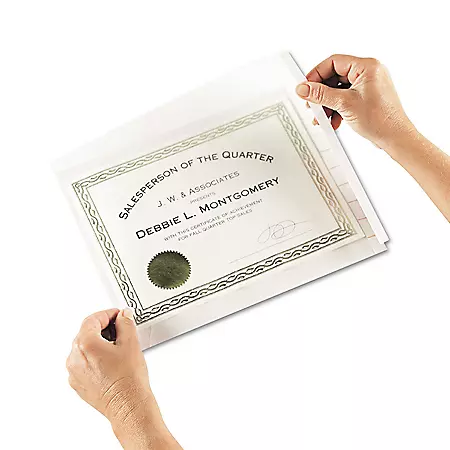
Heavy caliper is specified where the laminated surface must resist handling, abrasion and time. HADA's PET lamination film is used in high-security ID card lamination for government, banking and telecom applications, in premium photo and document preservation for archives and museums, and in industrial packaging and label lamination for food and electronics producers. The measurable properties that make the heavy band work in those uses include:
- Light transmittance up to 92%, reported as 15% higher than standard films — relevant to card legibility and archive-quality image clarity.
- Shrinkage below 0.5% at high temperature, reported as 20% lower than standard films, which reduces warping in card and sheet lamination.
- Tear strength reported 25% higher, which reduces breakage during lamination and converting.
- Proprietary anti-static and anti-yellowing coating technology, reported to extend product lifespan by 30% — the property that matters most where laminated material is exposed to light and handling over years rather than weeks.
What stays the same across the thickness range
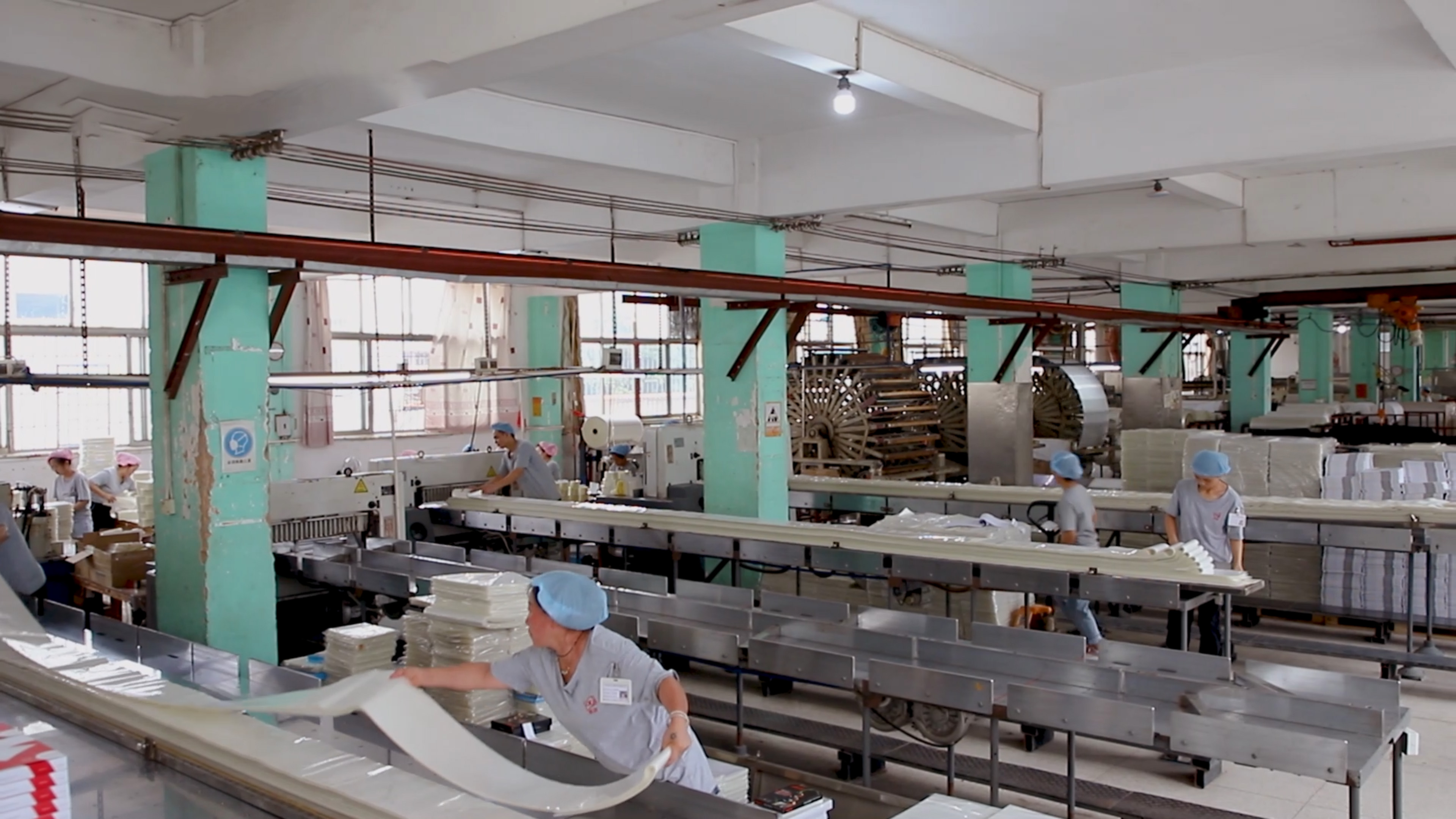
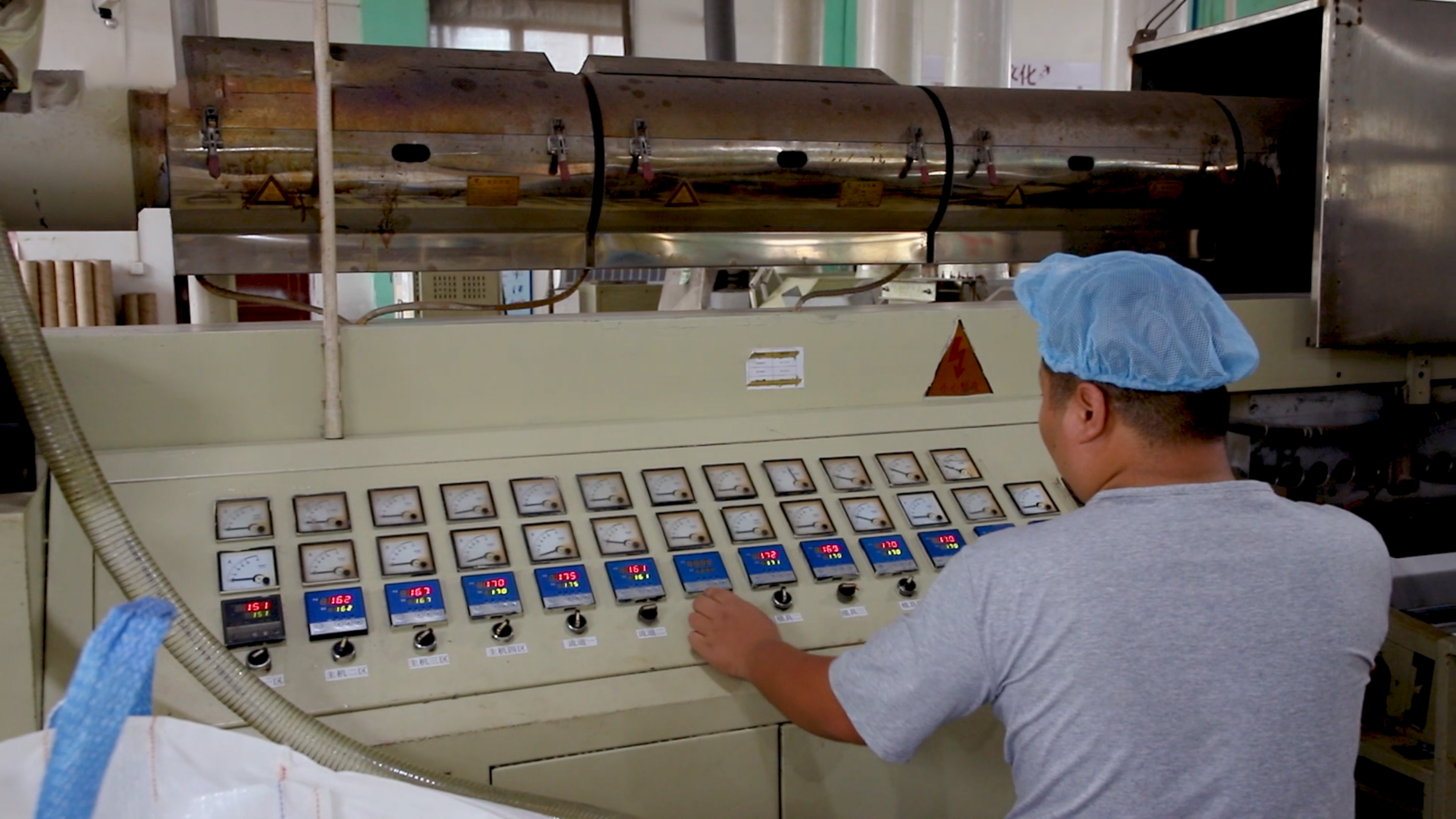
Composition and process discipline do not change with caliper. HADA's roll film is PET/EVA based and uses premium-grade raw materials imported from South Korea for clarity and durability. Production runs on 3 automated production lines with an annual capacity exceeding 10,000 tons, supported by online monitoring, 3-stage quality control and a batch traceability system, with a reported defect rate below 0.1%. The film is specified as compatible with high-speed lamination machines running up to 80 m/min, and HADA reports 15% lower power consumption per unit output than the industry average, achieved through optimized extrusion and lamination processes.
Step-by-Step: Choosing the Right Caliper for Your Application
Step 1 — Write the end-use requirement in performance terms. Describe what the finished laminate must survive: repeated handling, abrasion, moisture, light exposure, temperature cycling, or food contact. Standard document lamination and a high-security card body imply different answers before any price discussion begins.
Step 2 — Map the requirement to a thickness band. For flexible, low-stress document work, the thin end of the range — the 35mic class — is the fit. For card bodies, industrial labels and outdoor signage, the heavy end, up to 250mic, is the fit. HADA's PET roll film is customizable in thickness from 25 to 250 microns, so intermediate calipers between the two extremes remain available where an application sits between document flexibility and card rigidity.
Step 3 — Check machine and process compatibility. Confirm the laminator can feed and fuse the chosen caliper at production speed, and that nip pressure and cooling are adequate for flatness. Because the film is specified to run on machines up to 80 m/min with a lower required lamination temperature, the same line can often process both bands with parameter changes rather than equipment changes.
Step 4 — Verify composition and market compliance. Confirm the base material, the coating system and the documentation required for the destination market. Food-contact applications in the EU must comply with Commission Regulation (EU) No 10/2011. HADA holds ISO 9001, BSCI, SMETA, ROHS and REACH certifications alongside 22 national patents covering functional laminating films.
Step 5 — Validate with samples and a defined test. Run both candidate calipers on the actual substrate at production speed, then measure what matters: adhesion, curl, surface finish and, where the application demands it, tensile behaviour referenced to ASTM D882. Acceptance can be structured around pre-shipment inspection by SGS or Intertek, AQL sampling, and customer on-site inspection.
Step 6 — Lock the specification for repeat supply. The decision is only as good as the next order. Record base material, coating, caliper tolerance and slitting width, then confirm how the supplier holds that specification over time — batch traceability, multi-stage quality control, and a documented defect rate. This is where a thickness decision becomes a supply relationship rather than a single purchase.
Use Cases: Which Thickness Wins, and Why
| Application scenario | Thickness direction | Primary reason |
|---|---|---|
| Standard document lamination (offices, schools, general print finishing) | Thin band — 35mic class | Flexibility, low curl, lower material use per square metre |
| High-security ID card lamination (government, banking, telecom) | Heavy band — up to 250mic | Rigidity, shrinkage below 0.5% at high temperature, card-body stability |
| Industrial packaging and label lamination (food, electronics) | Heavy band | Abrasion resistance, higher tear strength, high clarity for print definition |
| Outdoor and long-exposure signage | Heavy band | Anti-static and anti-yellowing coating, reported 30% lifespan extension |
| Premium photo and document preservation (archives, museums) | Intermediate to heavy caliper | Clarity up to 92% light transmittance with long-term stability |
The pattern is consistent: the thinner the film, the more the application relies on the substrate for stiffness; the thicker the film, the more the film itself carries the mechanical and environmental load. That is why a 35mic document film and a 250mic card film can be judged against the same performance criteria — light transmittance, shrinkage, tear strength, coating stability — while being specified for completely different jobs.
Comparison Table: 35mic vs 250mic Laminating Rolls
| Decision factor | 35mic laminating roll | 250mic laminating roll |
|---|---|---|
| Typical role | Standard document lamination | High-security ID cards, industrial labels, outdoor signage |
| Film behaviour | Flexible, conforms to substrate, low curl | Rigid, self-supporting, high edge stiffness |
| Protection level | Surface protection for low-stress handling | Heavy-duty abrasion and handling protection |
| Material use | Lower polymer use per square metre | Higher polymer use per square metre |
| Process notes | Lower required lamination temperature supported (10–15°C lower at equal bond strength) | Same process window; nip pressure and cooling govern flatness |
| Film properties (both calipers, HADA PET roll film) | Light transmittance up to 92% (15% higher than standard films); shrinkage below 0.5% at high temperature (20% lower); tear strength 25% higher; anti-static and anti-yellowing coating reported to extend lifespan by 30%; premium-grade raw materials imported from South Korea; compatible with lamination machines up to 80 m/min | |
| Compliance | EU food-contact applications must comply with Commission Regulation (EU) No 10/2011; HADA holds ISO 9001, BSCI, SMETA, ROHS and REACH certifications and 22 national patents | |
| Best-fit buyer | Print finishers and wholesale distributors serving document lamination volume | Card producers, industrial label converters, signage fabricators |
| Repeat-supply watch point | Caliper and coating consistency batch to batch | Flatness, shrinkage stability and coating durability |
Frequently Asked Questions
Are HADA laminating rolls suitable for food-contact and regulated markets?
Food-contact suitability depends on the destination market and the specific application, not on thickness alone. In the EU, plastic materials and articles intended for food contact must comply with Commission Regulation (EU) No 10/2011, which sets migration limits and a positive list of substances. HADA holds ISO 9001, BSCI, SMETA, ROHS and REACH certifications alongside 22 national patents. Buyers planning food or regulated applications should confirm grade-specific documentation for their market before fixing a thickness standard.
Can one supplier deliver both thin and heavy calipers with consistent specifications across repeat orders?
Consistency is a production question rather than a thickness question. HADA's PET laminating roll film is customizable in thickness from 25 to 250 microns, with printing options for OEM/ODM orders, so document-grade and card-grade film originate from the same process. Batch stability is supported by 3 automated production lines, annual capacity exceeding 10,000 tons, online monitoring, 3-stage quality control and batch traceability, with a reported defect rate below 0.1% and a reported 18% reduction in machine downtime for users.
Does a thicker film always cost more overall?
Material cost per square metre rises with caliper because more polymer is used, but total cost of ownership also depends on waste, rework, energy and downtime. HADA reports 10% lower total cost of ownership for its PET lamination film due to reduced waste and fewer rejections, 15% lower power consumption per unit output, and a required lamination temperature 10–15°C lower while maintaining bond strength. A thickness decision should therefore be evaluated against yield and rework, not against film price alone.
How can we validate 35mic and 250mic film before committing to volume?
Validation works best as a controlled trial: run both calipers on the real substrate at production speed, then assess adhesion, curl, finish and — where the application demands it — tensile behaviour as defined in ASTM D882 for thin plastic films under 1.0 mm thick. Acceptance can be formalized through pre-shipment inspection by SGS or Intertek, AQL sampling and customer on-site inspection. HADA supplies both calipers as samples so the comparison is made on the buyer's own equipment.
What commercial terms apply to a long-term roll supply program?
MOQ is 1,000 pcs for standard lamination film, or 2,000 pcs / 100 rolls for customized sizes. Delivery terms are FOB Guangzhou/Shenzhen, CIF destination port, or EXW Guangzhou. Payment terms are T/T (30% deposit, 70% before shipment), L/C at sight, or OA 30 days after shipment. As a next step, buyers can request a sample pack and a quotation covering both calipers by emailing brian@huada168.com or messaging WhatsApp at +86 189 2958 9411.
Conclusion: Thickness Is a Lifecycle Decision, Not a Line-Item Decision
35mic and 250mic laminating rolls answer different questions. Thin film buys flexibility, conformity and lower material use for standard document lamination. Heavy film buys rigidity, abrasion resistance and dimensional stability for high-security ID cards, industrial labels and outdoor signage. Neither is a better product; one is a better match.
The decision becomes durable when it is made in four layers: the performance requirement of the end use, the machine parameters the caliper must run within, the compliance regime of the destination market, and the supplier's ability to hold the same specification on the next order and the one after. Composition, coating technology and process control — PET/EVA base, anti-static and anti-yellowing coating, batch traceability, 3-stage quality control — carry across the whole range from 25 to 250 microns. For wholesale buyers and distributors, that also means a narrow, well-chosen caliper range can cover most customer demand without carrying an unnecessarily wide SKU portfolio.
Compare 35mic and 250mic on your own line.
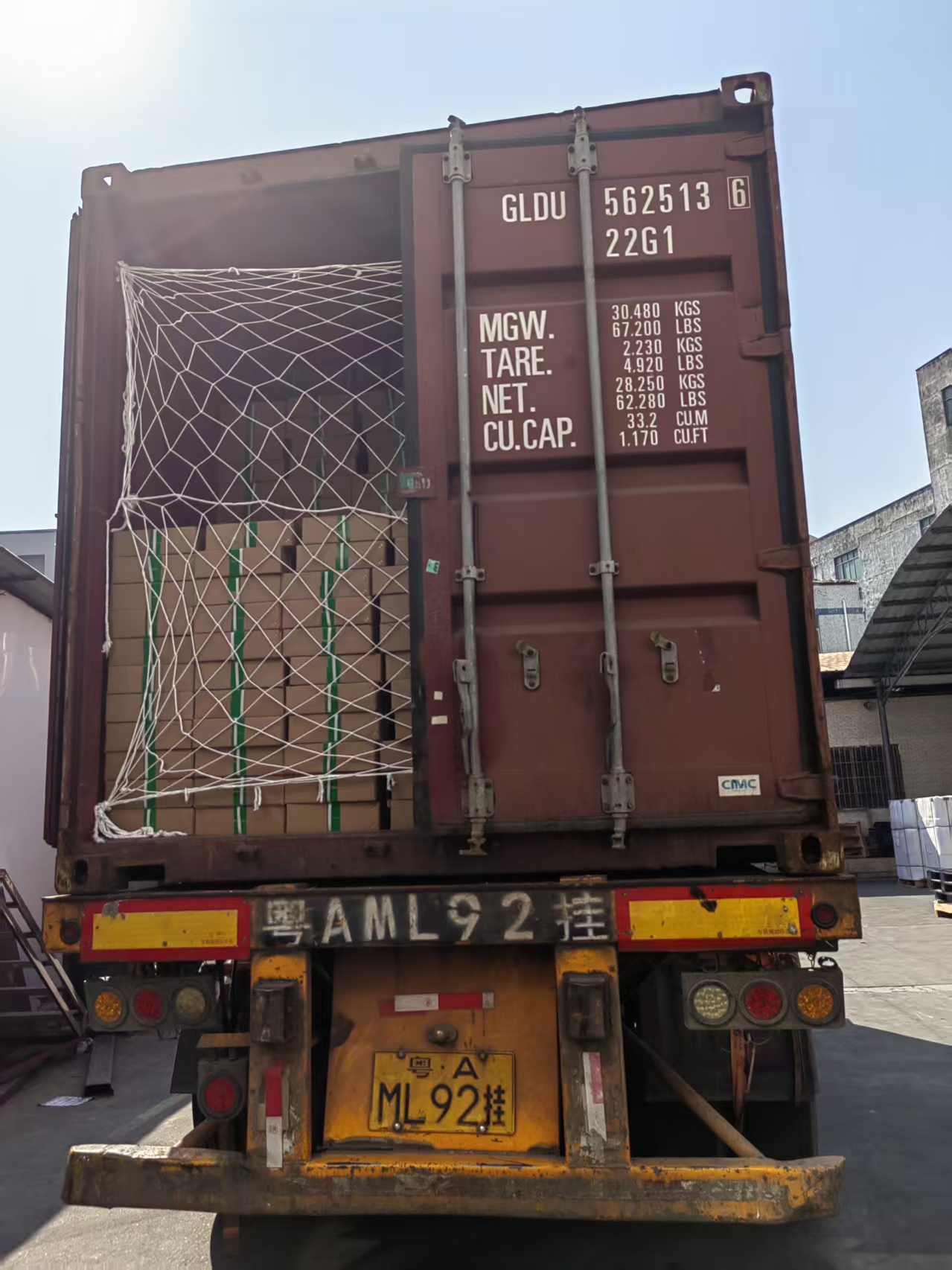
HADA, Guangzhou Huada Laminating Film Co., Ltd., has manufactured PET and BOPP laminating rolls and pouches since 1992 and exports to more than 50 countries and regions across North America, South America, Europe, Australia and Southeast Asia. Custom thickness from 25 to 250 microns, custom slitting and OEM/ODM printing are available for qualified programs.
Request samples or a quotation: brian@huada168.com · WhatsApp +86 189 2958 9411 · www.huada168.com
Have Questions or Need More Details?
Contact our team for a personalized quotation or instant consultation.
Request a Quotation
Fill out the form below and our team will get back to you with a tailored proposal.
WhatsApp Direct Chat
Prefer to chat in real-time? Message us on WhatsApp for instant assistance & quick answers.
- Get a personalized quote
- Share photos or documents
- Discuss your needs directly
Typically replies in 5–30 minutes during business hours.