Glossy vs Matte Laminating Rolls: How to Choose the Right Film
Glossy vs Matte Laminating Rolls: How to Choose the Right Lamination Roll Film for Your Application
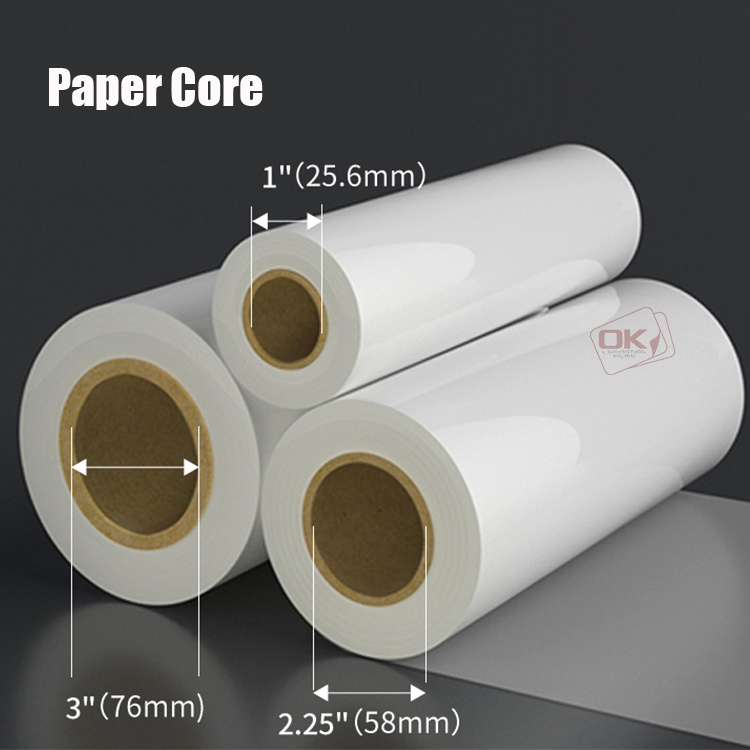
Selecting the correct lamination roll film is a critical decision for printers, converters, and packaging buyers. Among the most common dilemmas is choosing between glossy and matte finishes. This guide compares glossy laminating rolls and matte laminating rolls, explains their technical differences, and provides a step-by-step framework to help you make an informed procurement decision.
What Are Glossy and Matte Laminating Rolls?
Laminating rolls are continuous films used in thermal roll laminators to apply a protective layer onto printed materials. The finish – glossy or matte – is determined by the surface texture of the top layer (typically PET) and the coating treatment.
- Glossy laminating rolls have a smooth, reflective surface that enhances color vibrancy and contrast. They provide a high-shine appearance.
- Matte laminating rolls have a micro-textured surface that diffuses light, resulting in a non-reflective, elegant, and soft-touch finish.
How Lamination Roll Film Works
Both glossy and matte thermal laminating rolls are typically made from a PET base film coated with an EVA adhesive. When heated in a laminator, the adhesive melts and bonds securely to the printed substrate. The key difference lies in the surface finish of the PET layer, which is engineered during production.
Manufacturers like Guangzhou Huada Laminating Film Co., Ltd. (HADA) produce PET laminating rolls with consistent quality across production batches, ensuring defect rates below 0.1% and reliable adhesion.
Why Finish Selection Matters
The choice between glossy and matte directly affects the final product’s aesthetics, durability, and usability. Selecting the wrong finish can lead to customer dissatisfaction, rework, or wasted material. Understanding the strengths of each finish helps buyers optimize their supply chain and reduce total cost of ownership.
“Compared to alternatives, PET laminating film provides 15% higher light transmittance, 20% lower shrinkage rate, and 25% higher tear strength.” – HADA Technical Specification
Who Uses These Products?
Laminating rolls are used across many industries:
- Printing & Packaging – book covers, packaging boxes, labels
- Advertising & Graphic – posters, banners, menus
- Office & Education – documents, certificates, teaching aids
- Photo & Digital Printing – photo prints, fine art reproductions
- ID Card & Badge – access cards, membership cards
Glossy vs Matte: Detailed Comparison
| Feature | Glossy Laminating Rolls | Matte Laminating Rolls |
|---|---|---|
| Light Transmittance | Up to 92% (high clarity) | Lower (diffused light) |
| Appearance | Shiny, reflective, vibrant colors | Non-reflective, soft, sophisticated |
| Scratch Resistance | Moderate – scratches more visible | Excellent – hides fingerprints and scratches |
| Anti-Glare Performance | Poor under strong light | Excellent for reading under direct light |
| Best For | Photo prints, glossy packaging, retail displays | Book covers, menus, documents, art prints |
| Typical Thickness | 35–250 microns | 35–250 microns |
HADA’s laminating roll film (model HD-RL) is available in both finishes, with the option to customize width (100–1300mm), length, and packaging. The rolls offer high adhesion, no bubbles, no wrinkles, waterproof and anti-scratch properties, and are suitable for all standard thermal laminators.
How to Choose: Step-by-Step Framework
- Identify the end-use environment: Will the laminated item be handled frequently? Outdoors? Under direct light?
- Evaluate visual requirements: Does the customer prefer a high-shine or elegant matte look?
- Consider durability needs: Matte films better hide fingerprints and scratches; glossy films offer higher initial clarity but show wear more easily.
- Test with your laminator: Run a sample roll to ensure compatibility with your equipment and operator settings.
- Calculate total cost: HADA’s PET laminating film offers 10% lower total cost of ownership due to reduced waste and fewer rejections, plus 15% lower power consumption per unit output.
Use Cases: Real-World Applications
Case: Brand Importer & Distributor (Germany, Australia, US)
A client distributing over 600,000 packs of lamination film per year under their own brand has worked with HADA for more than 10 years. The result: zero quality complaints in a decade and a 25% reduction in their customers’ lamination failure rate. This reliability is anchored in HADA’s 100% inspection before shipment and 12-month warranty against delamination and material defects.
- Defect rate: < 0.1%
- Expected lifespan: 30% longer due to proprietary anti-yellowing coating technology
- Machine downtime reduced by 18%
Frequently Asked Questions
Q: Can I use glossy laminating rolls for outdoor signs?
Glossy rolls are less recommended for outdoor use because reflections can make the sign hard to read under sunlight. Matte or UV-protective laminating rolls are better choices.
Q: How do I choose between glossy and matte laminating rolls for photo prints?
If you want to enhance color saturation and achieve a “wet look,” choose glossy. For a classic, gallery-style appearance, choose matte.
Q: Are custom-width laminating rolls available?
Yes, HADA offers custom widths from 100mm to 1300mm and lengths to order. Contact their team for a quotation.
Q: What about food safety compliance?
For food packaging applications, request food-safe laminating rolls with FDA-compliant adhesives. HADA provides ROHS and REACH certified films.
Q: Can I get small quantities for testing?
Yes. HADA’s MOQ is 1,000 packs for standard products; trial rolls can be arranged.
What Issues Does This Choice Solve?
By clearly understanding glossy vs matte laminating rolls, buyers avoid:
- Wasted material due to mismatched finish
- Customer complaints about glare or poor appearance
- Higher cost from frequent reorders of wrong rolls
- Production delays caused by trial and error
Why HADA Stands Out in the Global Laminating Rolls Market
Founded in 1992, Guangzhou Huada Laminating Film Co., Ltd. brings 33 years of expertise to the production of industrial-grade laminating roll film. With a 40,000 sqm factory, 3 automated production lines, and an annual capacity exceeding 10,000 tons, they serve markets in North America, South America, Europe, Australia, and Southeast Asia.
Their PET+EVA laminating rolls deliver:
- 15% higher light transmittance than standard films
- 20% lower shrinkage rate (<0.5%) at high temperatures
- 25% higher tear strength
- 10-15°C lower lamination temperature requirement
- Consistent quality with defect rate < 0.1%
HADA holds ISO 9001, BSCI, SMETA, ROHS, and REACH certifications, along with 22 national patents and a High-Tech Enterprise certificate.

Conclusion
Choosing between glossy and matte laminating rolls does not have to be a guessing game. By evaluating the printed material’s end-use, visual expectations, and handling conditions, you can confidently select the right finish. For bulk or custom orders, partner with a manufacturer that offers proven quality, technical support, and competitive total cost. HADA provides both finishes with superior performance metrics, backed by decades of experience and global certifications.
Contact HADA for samples or a quote:
Email: brian@huada168.com
WhatsApp: +8618929589411
Website: www.huada168.com