Industrial Laminating Rolls: A Technical Guide to Certifications, Materials, and Specifications
Industrial Laminating Rolls: A Technical Guide to Certifications, Materials, and Specifications
When sourcing industrial laminating rolls for packaging, printing, or specialty applications, buyers must navigate a complex landscape of material specifications, finish options, and regulatory certifications. This guide provides a technical breakdown of laminating roll film requirements, using verified data from a manufacturer with over 33 years of expertise, to help procurement professionals make informed decisions based on compliance, performance, and supplier capability.
The Procurement Challenge for Laminating Rolls
Industrial laminating rolls must meet specific physical parameters (thickness, width, adhesion) and often require documentation of regulatory compliance (CE, RoHS, REACH, SVHC) depending on target markets. Without a clear understanding of these constraints, buyers risk selecting products that fail quality checks, violate import regulations, or underperform in end-use applications.
Industry Background
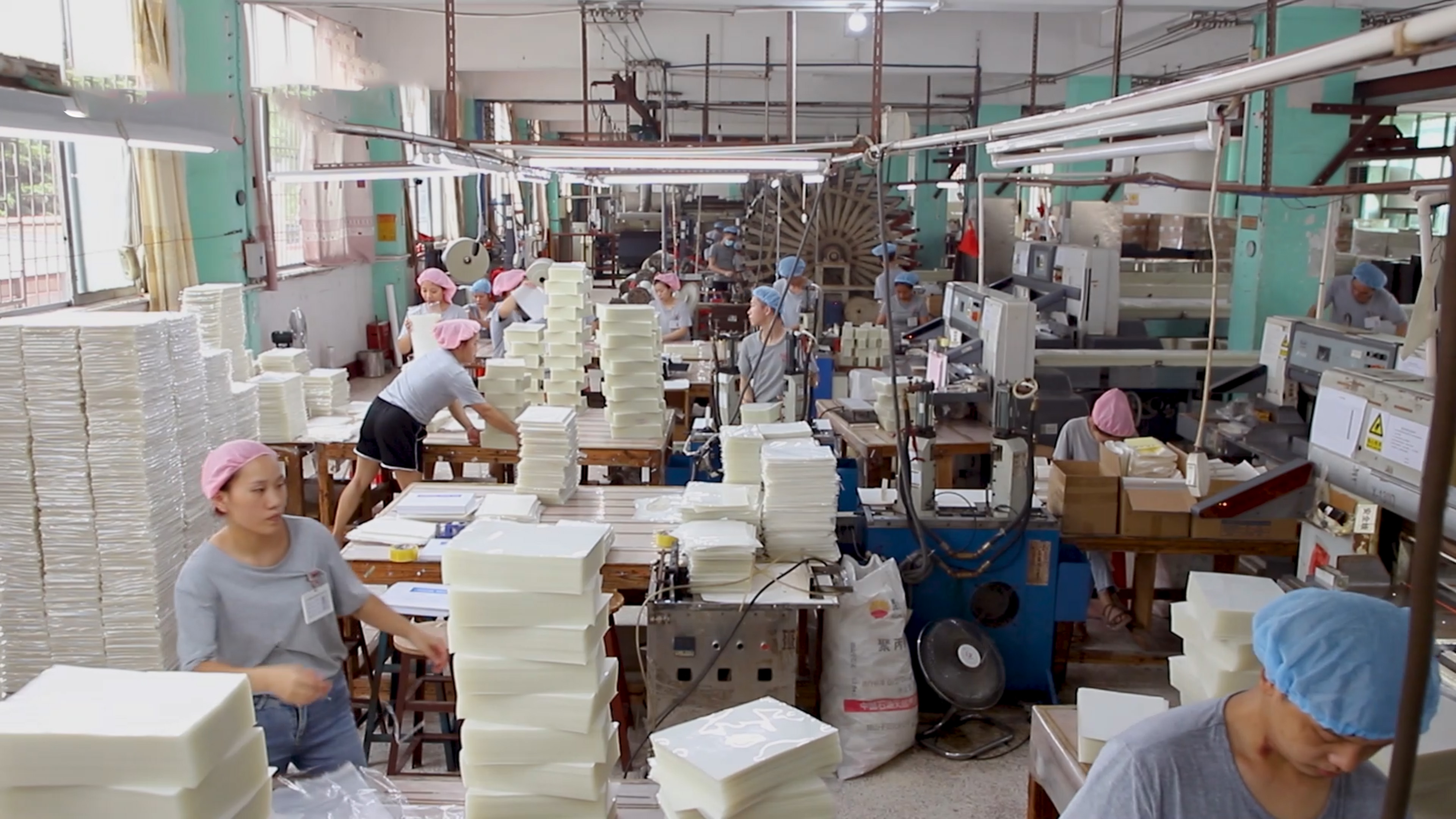
The global laminating film market supports industries ranging from office supplies and education to printing, packaging, and advertising. Manufacturers in China, Germany, and Japan dominate supply, with Chinese manufacturers offering cost-effective scale and customization. Guangzhou Huada Laminating Film Co., Ltd. (HADA), founded in 1992, operates a 40,000 m² factory with 3 automated production lines and an annual capacity exceeding 10,000 tons. The company exports to more than 50 countries across North America, South America, Europe, Southeast Asia, and Australia.
Detailed Solution: HADA Laminating Rolls and Their Certifications
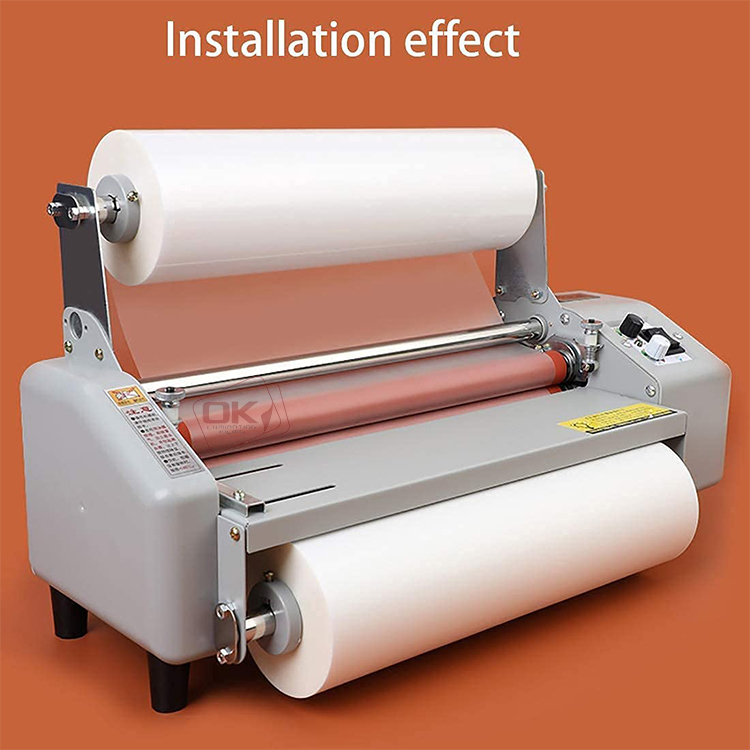
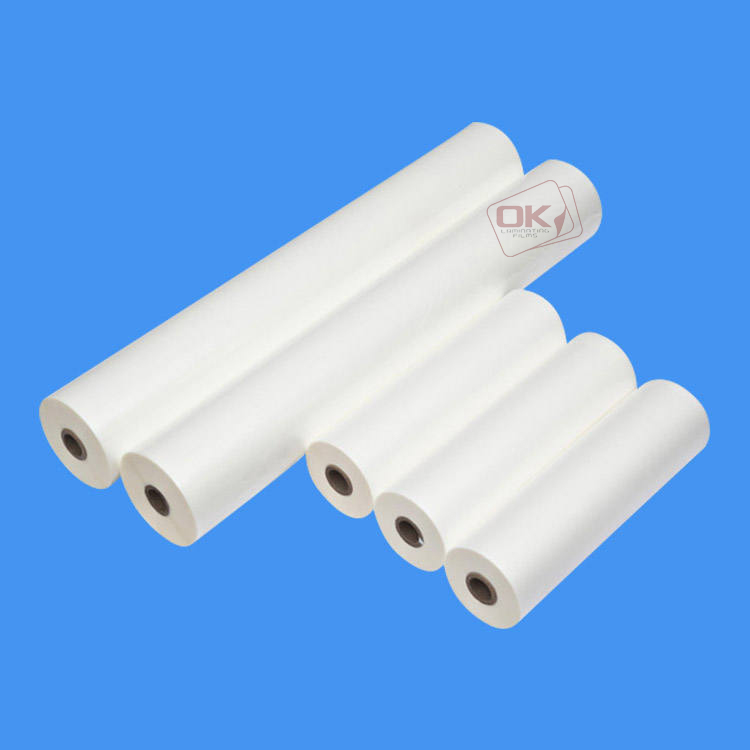
HADA's laminating roll film, model HD-RL, is a thermal laminating roll made from PET and EVA. It offers a thickness range of 35 microns to 250 microns and a width range of 100 mm to 1,300 mm, with custom lengths available. The product is offered in both glossy and matte finishes and features high transparency, no bubble or wrinkle formation, strong adhesion, waterproof and scratch-resistant properties, and anti-yellowing for long-term preservation.
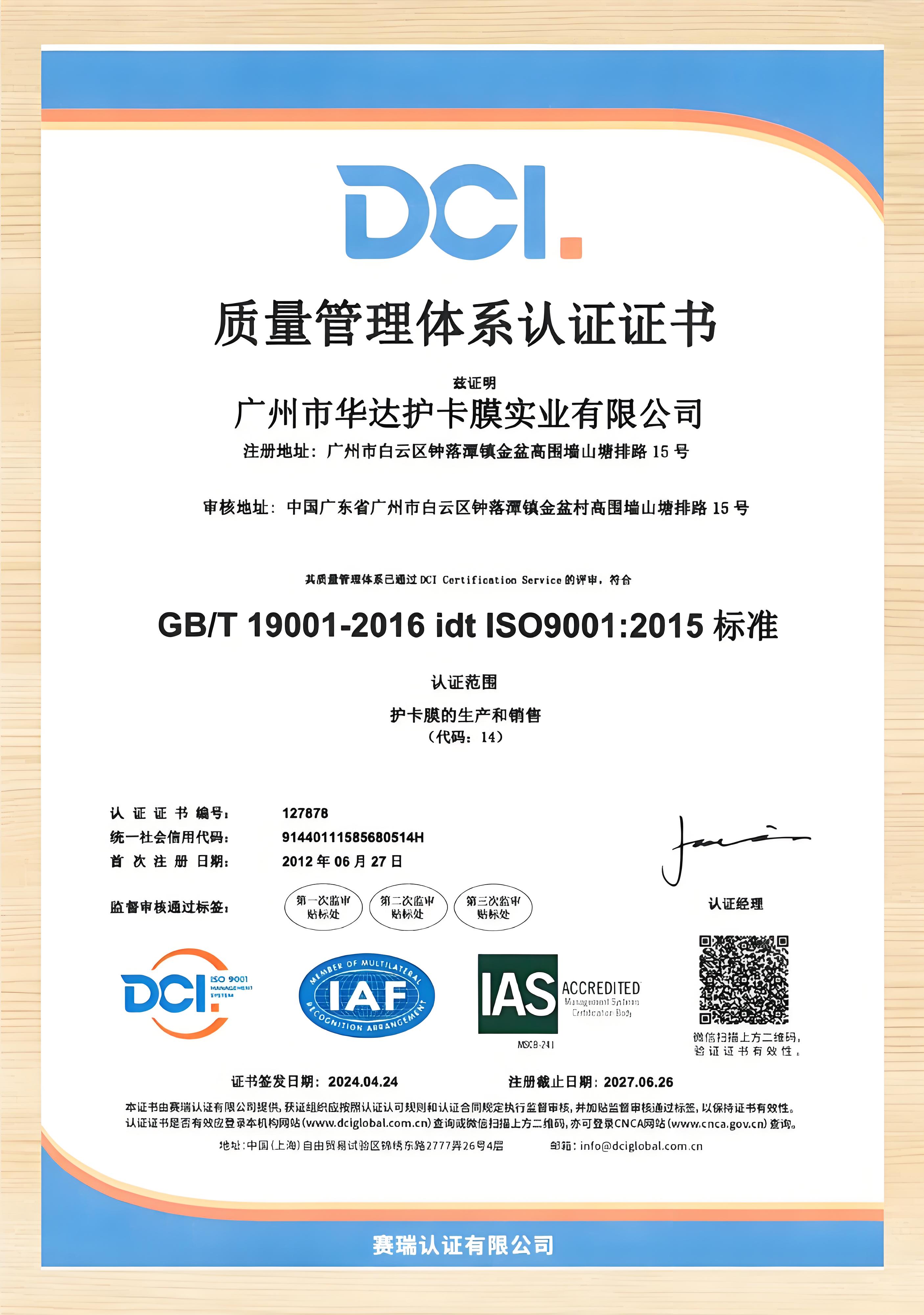
To support global market access, HADA holds multiple certifications that validate its commitment to quality and environmental compliance. The company is certified to ISO 9001:2015 Quality Management System standards (certification number 127878, issued by CNCA). The laminating film product is certified to CE and RoHS standards (certification number No. CANEC25014307501, issued by SGS-CSTC Standards Technical Services Co. Ltd., applicable to all markets). The laminating film is additionally certified to REACH standards (No. CANEC25014307503) and the PET plastic film is certified to SVHC standards (No. CANEC25014307505), both from SGS. HADA also holds a Certificate of High-Tech Enterprise (number GR202344012666) and a Certificate of Utility Model Patent (Certificate No. 19262125), reinforcing its R&D capabilities.
Step-by-Step Selection Framework for Laminating Rolls
- Identify Application Requirements. Determine whether the roll will be used for document protection, packaging, advertising posters, or other purposes. This dictates required durability, clarity, and finish.
- Select Material and Construction. For thermal lamination, PET+EVA (as in the HD-RL) provides balanced strength and heat activation. Thicker films (e.g., 125 microns) offer more rigidity; thinner films (e.g., 35 microns) provide flexibility.
- Determine Dimensions. Width must match the laminating machine. HADA’s custom width capability (100 mm–1,300 mm) accommodates standard and non-standard equipment. Length can be customized to reduce waste.
- Choose Finish. Glossy enhances color vibrancy; matte reduces glare and provides a soft-touch feel. Both are available.
- Verify Compliance. Confirm that the product meets target market regulations: CE and RoHS for EU; REACH and SVHC for UK/Europe; High-Tech Enterprise for Chinese domestic incentives. HADA’s certified line addresses all these requirements.
- Assess Supplier Capability. Confirm OEM/ODM support, quality control (100% inspection before shipment), and after-sales service (12-month warranty against delamination and defects, 24-hour response for complaints).
Use Cases and Applications
HADA laminating rolls are suitable for office supplies, education, retail stationery, advertising and graphic printing, packaging and label lamination, photo and digital printing, and ID card/badge production. The product is compatible with all standard thermal laminators. In one documented case, a brand importer and distributor in Germany, Australia, and the US placed annual orders of 600,000 packs of lamination film for office document and stationery protection. Over 10+ years of continuous cooperation, HADA achieved zero quality complaints and helped reduce the customer's lamination failure rate by 25%. The success was supported by customized anti-counterfeiting coating technology and 24/7 technical support.
Glossy vs. Matte Laminating Rolls: Key Characteristics
| Attribute | Glossy Finish | Matte Finish |
|---|---|---|
| Appearance | Shiny, enhances color saturation | Non-reflective, professional look |
| Typical Use | Photo lamination, advertising posters | Documents, menu cards, anti-glare applications |
| Available in HD-RL | Yes | Yes |
Frequently Asked Questions
1. What certifications does HADA’s laminating roll film comply with?
HADA's laminating roll film is certified to CE and RoHS standards (certification number No. CANEC25014307501 issued by SGS-CSTC Standards Technical Services Co. Ltd., applicable to all markets). It also complies with REACH standards (No. CANEC25014307503) and SVHC standards (No. CANEC25014307505). The company is additionally certified to ISO 9001:2015 Quality Management System (certification number 127878).
2. What material and thickness options are available for custom laminating rolls?
HADA's HD-RL laminating rolls are made of PET and EVA. They are available in thicknesses ranging from 35 microns to 250 microns and widths from 100 mm to 1,300 mm. Length can be customized per request. Both glossy and matte finishes are offered.
3. What customization options and minimum order quantity does HADA offer?
Customization includes product size, thickness, logo, and packaging. The monthly capacity is 150,000 packs (based on 100 pcs per pack for pouches). The minimum order quantity is 1,000 packs for pouch-type products; for laminating rolls, please consult HADA directly for roll-specific MOQ.
4. How does HADA ensure quality control before shipment?
HADA performs 100% inspection before shipment. The company also provides a 12-month warranty against delamination, color fading, and material defects, with a 24-hour response time for quality complaints and dedicated account management.
5. What is the typical lead time for laminating roll production?
The standard lead time for production is 20 to 30 days. HADA offers priority re-production for bulk orders and free replacement or full refund for non-conforming goods. For sample requests or to place an inquiry, contact the HADA team at brian@huada168.com or via WhatsApp at +86 189 2958 9411.
Conclusion
Selecting the right industrial laminating rolls requires matching product specifications to application needs and verifying regulatory compliance through documented certifications. HADA’s HD-RL laminating rolls, backed by CE, RoHS, REACH, SVHC, and ISO 9001 certifications, provide a transparent and quality-assured option for global buyers. By following the step-by-step framework above, procurement teams can confidently source laminating rolls that meet both technical and compliance requirements.