Laminating Film Compliance FAQ: ISO 9001, CE, RoHS, SVHC & Regional Requirements
Laminating Film Compliance FAQ: ISO 9001, CE, RoHS, SVHC & Regional Requirements
Most laminating film deals fall apart at the documentation stage, not the pricing stage. A certificate that covers the wrong site, a CE claim with no test report behind it, or an SVHC question from a customer that nobody can answer will delay an order longer than any negotiation over unit price.
This compliance FAQ is written for importers, distributors and brand owners who are one step away from placing a purchase order for laminating film, laminating pouches or roll film, and who need to know exactly which document does what. The certification set referenced throughout belongs to Guangzhou Huada Laminating Film Co., Ltd. (brand name HADA), a laminating film manufacturer based in Guangzhou, China and founded in 1992: ISO 9001:2015 under certificate no. 127878, CE and RoHS documentation under certificate no. CANEC25014307501 issued by SGS, SVHC screening under no. CANEC25014307503 issued by SGS, BSCI, SMETA and REACH compliance, and 22 national patents.
The short version: ISO 9001:2015 tells you how the factory is managed and is most directly relevant to the China market and to general supplier qualification. CE and RoHS documentation (cert. no. CANEC25014307501, SGS) supports restricted-substance and market-access claims across markets. SVHC screening (no. CANEC25014307503, SGS) answers what is inside the material for REACH-driven customers anywhere. BSCI and SMETA answer social-compliance questions from retail supply chains. High-Tech Enterprise certificate GR202344012666 and Utility Model Patent No. 19262125 support the manufacturing-credibility side of the evaluation. Before sourcing, verify scope, issuer and regional applicability for every document, because the number alone proves nothing.
Why certification is the last filter before a laminating film order
By the time a procurement team reaches the certification stage, price, thickness and format have usually been agreed. What remains is evidence, and that is where most sourcing problems appear. Three failure patterns recur in laminating film and laminating pouch sourcing.
- Scope mismatch. ISO 9001 certifies a quality management system at a specific site. It does not certify a product, a film grade or a pouch size. A buyer who treats it as product approval will still be asked for substance data at customs or by a retail customer.
- Issuer ambiguity. A certificate is only as strong as the body that issued it. Quality management certificates from Chinese manufacturers are issued within the CNCA framework, and chemical test documentation comes from accredited laboratories such as SGS. A document without an identifiable issuer is not evidence.
- Regional overreach. A document that is valid and relevant in one market is often assumed to satisfy another. RoHS is not the same document as REACH SVHC screening, and neither addresses the chemical migration limits that apply to laminating film used on items children might touch, where EN 71-3 requirements apply in the EU.
There is a fourth, quieter problem: a trading company presenting a factory's certificates as its own. The distinction matters at the decision stage because it determines who controls batch traceability, who answers a non-conformance, and who can reissue the documentation package two years later.
Where the laminating film market is heading, and why compliance follows it
The global lamination films market reached approximately USD 6.84 billion in 2024, according to DataM Intelligence, which also projects growth at a CAGR of 7.0% from 2025 to 2032. Asia-Pacific accounted for 36.87% of 2024 revenue, and plastic-based materials held a 57.31% share, per Grand View Research. Major international players in the category include 3M, ACCO Brands (GBC), Avery Dennison and Fellowes.
Two conclusions follow. First, a large share of global laminating film volume is manufactured in Asia-Pacific and shipped into markets whose chemical, environmental and social rules are written elsewhere, so the verification effort sits with the importer. Second, published estimates diverge: research houses place the 2024 market anywhere between roughly USD 3.40 billion and USD 6.84 billion depending on how the category is defined. Numbers quoted in a supplier presentation should always be traceable to a named source with a defined scope.
Product mix reinforces the trend. High-micron thermal pouches in the 80 to 150 micron range and A4 150-micron sheets are consistently reported among the top-selling document protection segments. Heavier film means more polymer per order, which is precisely the situation in which a buyer's compliance file gets audited.
How to read HADA's certification set, market by market
Each document below answers a different question. Treating them as one bundle is the single most common interpretation error in laminating film procurement.
ISO 9001:2015, certificate no. 127878 (CNCA framework, China)
The quality management system at HADA's Guangzhou site is certified to ISO 9001:2015 under certificate no. 127878, issued within China's CNCA framework. For buyers sourcing from China this is the baseline document: it indicates that the production site runs a documented quality system with defined process control, corrective action and internal audit routines. It is most directly relevant to the China market, and useful as general supplier qualification evidence everywhere else.
What it does not do is certify a specific pouch size, film thickness or resin grade. It also does not replace a test report. When you request it, ask for the certificate naming the legal entity and the manufacturing site, not a cropped image of a certificate header.
CE and RoHS, certificate no. CANEC25014307501 (SGS, all markets)
RoHS restricts specific hazardous substances and is the compliance language most often requested for films used in electronics-adjacent packaging, labels and device protection. HADA's CE and RoHS documentation is issued under certificate no. CANEC25014307501 by SGS and applies to all markets, with the EU being the most frequent destination that asks for it.
Read it precisely: RoHS covers a defined list of restricted substances. It does not cover the REACH SVHC candidate list and does not cover food-contact migration. If your application touches either of those areas, you need additional documents, not a broader interpretation of this one.
SVHC screening, certificate no. CANEC25014307503 (SGS, all markets)
SVHC stands for Substances of Very High Concern under the EU REACH regulation. HADA's SVHC screening is documented under no. CANEC25014307503, issued by SGS and applicable to all markets. This is the document that answers what is inside the film, which is the question procurement teams receive from EU customers, retailers and brand owners running chemical management programmes.
Verify three things on any SVHC document: the candidate list version the screening was performed against, the reporting threshold applied, and which product forms and material grades were actually tested. A screening statement that names no product scope has limited value in a vendor file.
BSCI, SMETA and REACH, the social and regulatory layer
Beyond product chemistry, retail supply chains increasingly require social compliance evidence. HADA holds BSCI and SMETA audit documentation and states REACH compliance as part of its certification set. For buyers supplying supermarkets, stationery chains or branded retail programmes in Europe and North America, these documents frequently appear in vendor onboarding checklists alongside ISO 9001.
They are not product certifications. BSCI and SMETA assess working conditions, health and safety, environment and business ethics at the production site. They tell you whether the facility is auditable; they do not tell you the micron tolerance of a pouch.
Manufacturing credibility: GR202344012666, Utility Model Patent No. 19262125 and 22 national patents
Two further documents support the manufacturing side of the evaluation. HADA holds High-Tech Enterprise certificate GR202344012666, a Chinese government recognition related to the enterprise's technology status, and Utility Model Patent No. 19262125, part of a portfolio of 22 national patents covering functional laminating films.
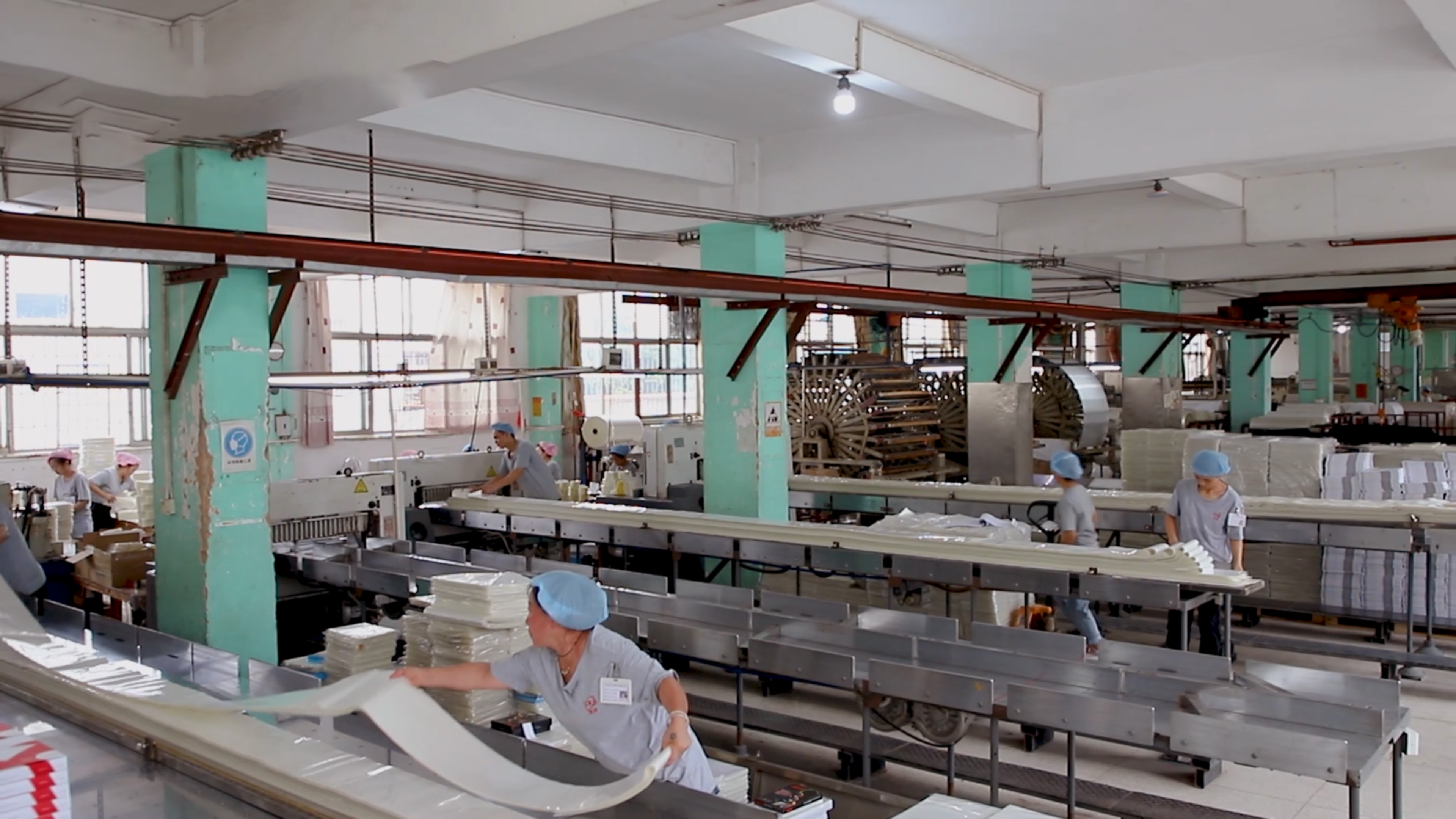
The operational facts behind them are the ones a buyer can plan around: Huada was founded in 1992 and has more than three decades of experience in the laminating film industry; the Guangzhou facility covers 40,000 square meters with around 200 employees and a five-engineer R&D team; three automated production lines support annual capacity above 10,000 tons; and roughly 80% of output is exported to more than 50 countries and regions across North America, South America, Europe, Australia and Southeast Asia. The site sits roughly 30 minutes from Baiyun International Airport with access to the ports of Guangzhou and Shenzhen.
Those claims only hold up if production is controlled. HADA's stated control method is full-process inspection with traceability: online monitoring during production, a three-stage quality control routine, and batch traceability that links a delivered carton back to its production run. For an importer, batch traceability is the difference between filing a claim on one pallet and recalling a container.
Product-side numbers that support the compliance story
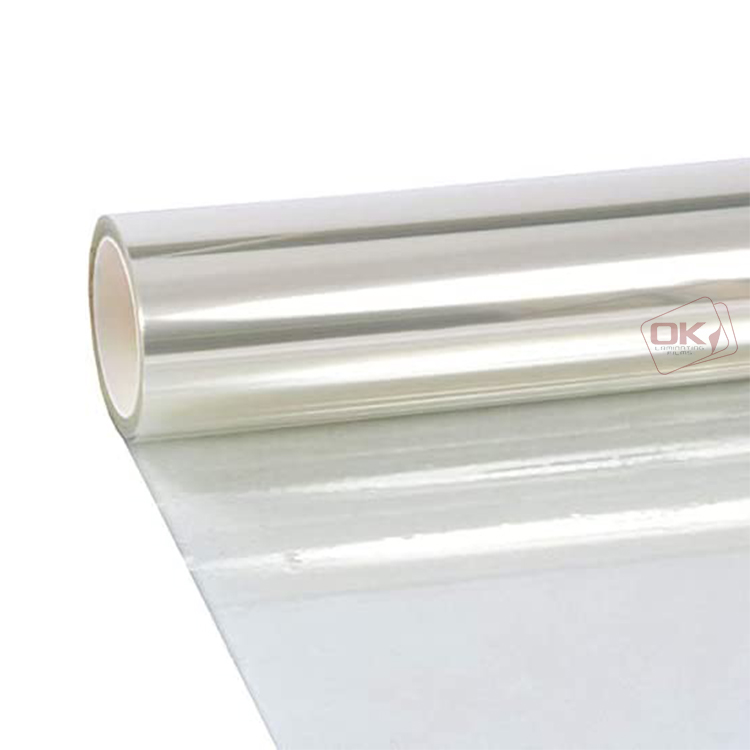
Compliance is easier to trust when it is paired with measurable performance. Against other domestic and international suppliers of PET lamination film, HADA positions its PET film on premium-grade raw material imported from South Korea, proprietary anti-static and anti-yellowing coating technology, and configurable thickness from 25 to 250 microns with printing options for OEM and ODM orders. The company reports light transmittance of up to 92%, a shrinkage rate below 0.5% at high temperature, tear strength around 25% higher, a defect rate below 0.1%, and roughly 15% lower power consumption per unit of output on its extrusion and lamination processes. It also states compatibility with high-speed lamination machines running up to 80 m/min and a required lamination temperature 10 to 15 degrees Celsius lower while maintaining bond strength.
Step by step: verifying a laminating film supplier's certificates before you order
- Match every document to a product and a site. Ask which legal entity and which factory the certificate applies to. A quality certificate for one site does not cover a sister plant or a subcontractor.
- Confirm the issuer. ISO 9001 certificates from Chinese manufacturers sit within the CNCA framework; chemical reports should come from an accredited laboratory such as SGS. If the issuer cannot be identified, treat the document as unverified.
- Check version, scope and validity. Standard versions, scope statements and issue or expiry dates all matter. An expired document is not a compliance argument.
- Cross-check the number against the report itself. A certificate number should appear on the underlying report, with tested models, test methods and results. A number on a marketing sheet is not the same as the report.
- Map documents to destination market and end use. EU importers typically need CE and RoHS plus REACH SVHC screening; toy-related or child-accessible applications bring EN 71-3 into scope; retail programmes add BSCI and SMETA.
- Require batch-level records with the shipment. Confirm in advance which inspection records, batch codes and declarations travel with the container, and who signs them.
Use cases: which compliance question appears in which market
- EU importer running an annual office-supply pouch programme. The vendor file is built around CE and RoHS documentation under CANEC25014307501 and SVHC screening under CANEC25014307503, both issued by SGS, plus REACH compliance. If the finished product is likely to be handled by children, EN 71-3 migration limits should be raised at the specification stage rather than after sampling.
- North American distributor supplying school and office channels. ISO 9001:2015 certificate no. 127878 supports supplier qualification, while BSCI and SMETA documentation addresses retail vendor onboarding. Electronics customers frequently request RoHS documentation contractually even where no federal mandate applies.
- Government or ID card lamination. Anti-static and anti-yellowing film properties, tight thickness control and batch traceability matter more than decorative finish, because security documents must laminate consistently across production runs.
- Archive and photographic preservation. Low shrinkage below 0.5% and light transmittance of up to 92% support long-term document preservation, and consistent batches reduce the risk of a mid-project change in appearance.
Certification comparison table: what applies where
| Document | Issuer / framework | What it covers | Where it is most relevant | What to verify |
|---|---|---|---|---|
| ISO 9001:2015, cert. no. 127878 | CNCA framework, China | Quality management system at the manufacturing site | China market; general supplier qualification | Entity and site name, standard version, validity, scope statement |
| CE & RoHS, cert. no. CANEC25014307501 | SGS | Restricted substances under RoHS; supporting CE documentation | All markets; essential for EU placement | Report number, tested product forms, substance limits, test methods |
| SVHC screening, no. CANEC25014307503 | SGS | REACH SVHC candidate list screening | All markets; requested most often by EU customers | Candidate list version, threshold applied, tested grades |
| REACH compliance | HADA-held compliance statement | EU chemicals regulation compliance | EU and global buyers | Document version, product scope, alignment with SVHC screening |
| BSCI | Third-party social audit | Social compliance at the production site | EU and North American retail supply chains | Audit date, scope, validity and corrective actions |
| SMETA | Third-party social audit | Labour, health and safety, environment, business ethics | EU and North American retail supply chains | Audit date, measured sites, corrective action status |
| High-Tech Enterprise cert. GR202344012666 | Chinese government recognition | Technology and innovation status of the enterprise | Manufacturer due diligence | Certificate number, issuing authority, date |
| Utility Model Patent No. 19262125 (within 22 national patents) | China patent system | Technical innovation on film products and processes | Technical due diligence | Patent number, legal status, subject matter |
FAQ: laminating film compliance questions buyers ask before ordering
Which certificates should a laminating film buyer verify first?
It depends on the destination market and the end use. EU-bound orders usually require CE and RoHS documentation plus REACH SVHC screening; China-market sourcing centres on ISO 9001:2015 certificate no. 127878; retail supply chains often require BSCI or SMETA. A useful rule is that ISO 9001 confirms how the site is managed, not what the product contains, so it should never be the only document in the file.
Can HADA produce custom sizes, thicknesses and OEM laminating film?
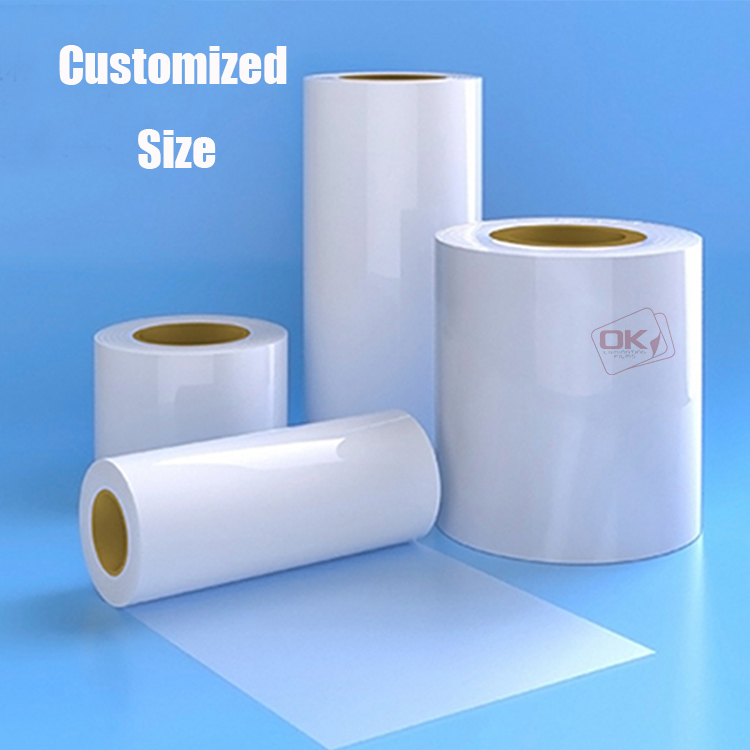
Yes. HADA offers configurable thickness from 25 to 250 microns with OEM and ODM printing options across glossy, matte, PET and roll film formats, produced on three automated lines at its 40,000 square metre Guangzhou facility, which supports annual capacity above 10,000 tons. Custom programmes should carry the same certification and batch documentation as standard items, so specify the document package together with the artwork.
How do certifications affect the cost of laminating film?
Cost is driven mainly by raw material grade, thickness, format and coating, with testing and documentation adding a smaller share. HADA cites premium-grade raw material imported from South Korea and a 10% lower total cost of ownership due to reduced waste and fewer rejections, along with roughly 15% lower energy consumption per unit of output. Buyers should compare total cost of ownership rather than unit price alone, because a cheaper roll that rejects more often during lamination usually costs more by the end of the job.
Can buyers validate laminating film samples before mass production?
Buyers evaluating HADA can request samples in the target gauge, size and finish together with the corresponding documentation, and should test lamination performance on their own machine before committing to volume. Testing in-house reveals how the film behaves at your lamination temperature, speed and roller condition, which no specification sheet can predict for your equipment.
How is lead time handled on a compliance-sensitive laminating film order?
Lead time is confirmed per order at quotation, and part of that timeline is document preparation rather than production. Buyers should confirm at inquiry which certificates, test reports and batch records must travel with the shipment, so that the compliance package and the container are ready at the same time. To start that conversation, send your destination market, end use and required documents to HADA for a quotation and a sample request.
Conclusion
Compliance in laminating film sourcing is a matching exercise, not a collecting exercise. ISO 9001:2015 certificate no. 127878 answers the management question for a China-based manufacturer. CE and RoHS documentation under CANEC25014307501, and SVHC screening under CANEC25014307503, both issued by SGS, answer the substance questions that EU and global customers ask. BSCI, SMETA and REACH cover the social and regulatory layer, while High-Tech Enterprise certificate GR202344012666 and Utility Model Patent No. 19262125, alongside a portfolio of 22 national patents, support the case that the supplier is a manufacturer rather than a reseller.
Check scope, issuer and regional applicability on every document before you place the order, and make batch traceability a condition of the contract rather than a promise in a brochure. That is how a compliance file stops being paperwork and starts protecting the shipment.
Request samples, documents or a quotation
Send your destination market, application and required certifications to Guangzhou Huada Laminating Film Co., Ltd. (HADA) and receive a sample pack with the matching documentation.
Email: brian@huada168.com | WhatsApp: +8618929589411 | Website: www.huada168.com
Address: No.15, Shantangpai Road, Gaoweiqiang, Jinpen Village, Zhongluotan Town, Baiyun District, Guangzhou, Guangdong Province, China.