Laminating Pouches vs Roll Film: Choosing the Right Format for High-Volume Jobs
Laminating Pouches vs Roll Film: Choosing the Right Format for High-Volume Jobs
Short answer: thermal laminating roll film is generally the lower-cost, higher-throughput format for long, repeatable lamination runs, while pre-cut laminating pouches are generally the faster format to set up for mixed sizes, short runs and office-level finishing. Choosing between them is a capacity decision as much as a product decision, because film yield, labour per sheet, changeover time and pre-cut size inventory all move in different directions depending on the job profile.
This comparison guide looks at both formats for high-volume lamination work using HADA's published specifications: laminating pouches in A4 80 micron (HD-A4-80MIC) and Letter size 3 mil / 5 mil (229*292*3mil/5mil), and thermal laminating roll film (HD-RL). It covers throughput, application flexibility, cost per unit and customization, then addresses the compliance, capability, budget, validation and lead-time questions buyers raise during evaluation.
Why Format Choice Becomes a Cost Problem in High-Volume Lamination
Format mismatch is expensive in a way that never appears on the purchase order. Running high-volume, repeatable work through pre-cut thermal laminating pouches means paying for a fixed sheet area whether the document fills it or not, plus individual handling for every piece. Running a mixed-size, low-volume workload on roll film instead pushes cost into setup time, web threading, trimming and operator attention.
Five variables decide the outcome:
- Run length and repeatability. Long runs with stable settings suit roll film; short or irregular runs suit pouches.
- Size consistency. One repeated size fits a pre-cut pouch SKU; many different sizes fit a roll that can be cut to length.
- Thickness and finish requirements. Document rigidity, surface appearance and handling frequency determine whether 80 micron, 125 micron or a heavier roll build is appropriate.
- Equipment and operator profile. HADA states that both its pouch and roll formats are suitable for all standard thermal laminators, so the real differentiator is usually workflow rather than machine type.
- Inventory and SKU count. Pouches are purchased as finished pre-cut sizes, packed 100 pcs per pack and 10 packs per carton; roll film is purchased by width, thickness and length and cut on demand.
The only comparable number across the two formats is cost per finished sheet. That figure combines the film actually consumed, waste and trim, labour per sheet, machine time, changeover and downtime, and the carrying cost of pre-cut size inventory. Comparing pouch and roll list prices directly usually produces the wrong answer, because the two formats consume film and labour differently at the same output volume.
Where Lamination Format Demand Is Heading
Third-party market data gives useful context for buyers standardizing on a format. The global lamination films market reached approximately USD 6.84 billion in 2024, according to DataM Intelligence, and Asia-Pacific accounted for a 36.87% revenue share in the same year. The same source projects a 7.0% CAGR for the market between 2025 and 2032.
Material and segment data point in the same direction. Grand View Research reports that plastic-based materials held a 57.31% market share in 2024, and Accio Work lists high-micron thermal pouches in the 80–150 micron band, together with A4 150-micron sheets, among the top-selling segments in document protection.
Market sizing estimates vary by scope: Market Research Future values the laminating film market at USD 3.40 billion, a gap that reflects whether broader packaging laminates are counted alongside stationery and document laminating film. For procurement purposes the practical takeaway is narrower — both formats are produced at industrial scale and both are supplied by established global players such as 3M, ACCO Brands (GBC), Avery Dennison and Fellowes, alongside specialist manufacturers.
Regulatory context matters as well. Laminating film intended for toy-related applications, or for items children might touch, must comply with EN 71-3 on chemical migration limits in the EU. That requirement applies to the end application rather than to the format, so it belongs on the evaluation checklist for pouches and rolls alike.
Two Formats, One Production Base: HADA Pouch and Roll Specifications
Laminating pouches: HD-A4-80MIC and Letter size 3 mil / 5 mil
HD-A4-80MIC is HADA's A4 80 micron laminating pouch, made from PET and EVA with the 80 micron construction specified as 50/30. The finished size is A4 (216*303 mm), and the pouch is available in glossy and matte finishes. Packaging is 100 pcs per pack, 10 packs per carton. HADA states the performance set for this pouch as high transparency, no bubble and no wrinkle output, strong adhesion, a waterproof and scratch-resistant surface, and anti-yellowing behaviour for long-term preservation, with compatibility across all standard thermal laminators.
A second pouch format covers Letter size workflows. The 229*292*3mil/5mil pouch is supplied in 3 mil (75 micron, specified as 38/37) and 5 mil (125 micron, specified as 75/50), in Letter size 9*11.5 inch or 229*292 mm, again in glossy and matte finishes and packed 100 pcs per pack, 10 packs per carton. The 80 micron A4 pouch and the 125 micron Letter pouch both sit inside the 80–150 micron band that market reports identify as a best-selling laminating pouch range.
Thermal laminating roll film: HD-RL
HD-RL is HADA's thermal laminating roll film, also built from PET and EVA. It covers a thickness range of 35 micron to 250 micron and a width range of 100 mm to 1300 mm, with length customized to the buyer's request and packaging customized as well. Glossy and matte finishes are both available, and the roll shares the same stated performance set as the pouch range: high transparency, no bubble and no wrinkle, strong adhesion, waterproof and scratch-resistant, anti-yellowing, and suitability for all standard thermal laminators.
Width range is the roll format's main structural advantage. A 1300 mm roll supports wide-format and multi-up production layouts that no pre-cut pouch covers, while the 35 micron lower limit allows thinner builds than typical office pouches.
Capacity, certification and quality control behind both formats
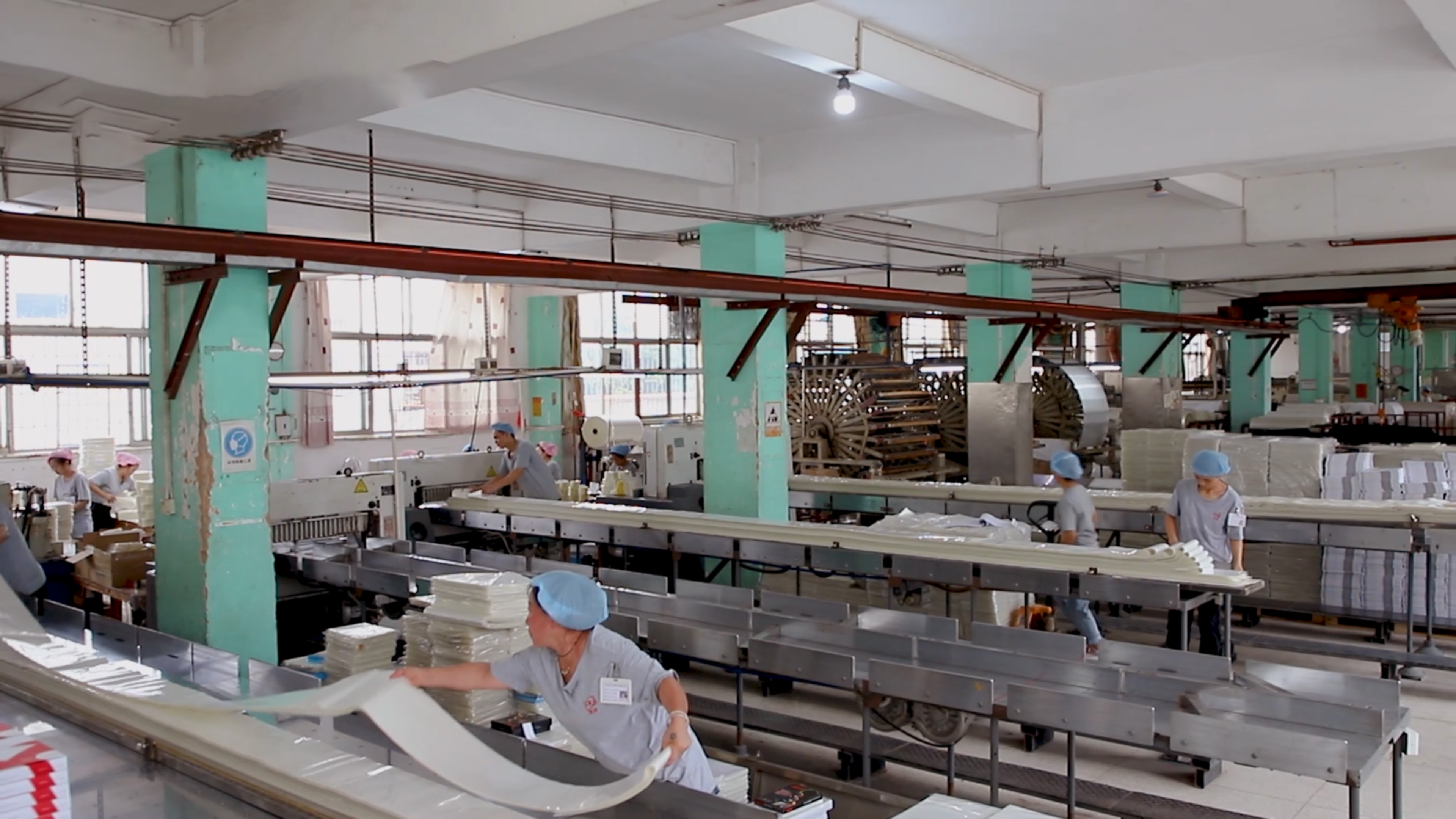
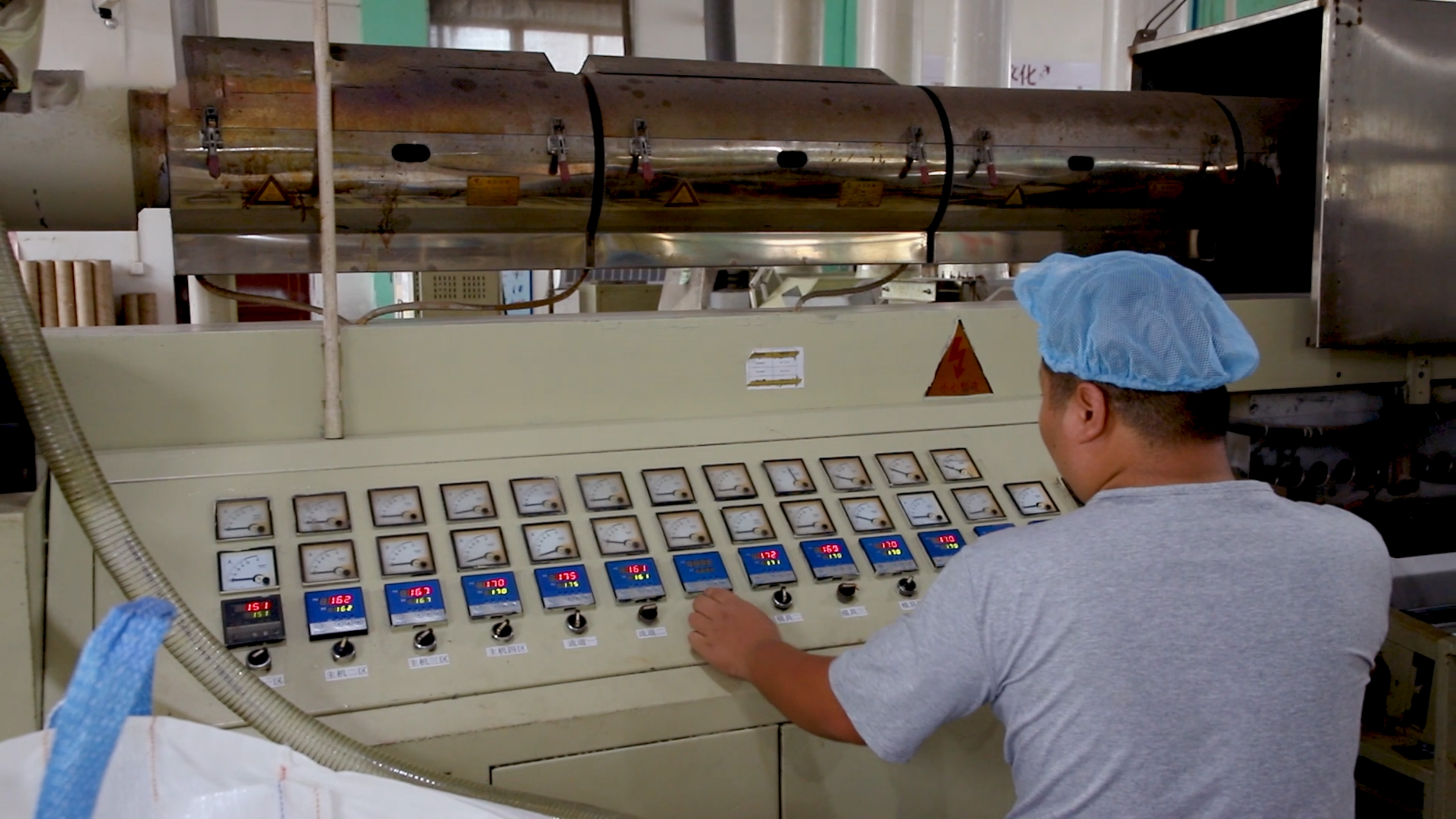
Both formats come from the same manufacturing base. Guangzhou Huada Laminating Film Co., Ltd. (HADA) was founded in 1992 and operates from Baiyun District, Guangzhou, with more than 33 years of experience in the laminating film industry. The facility covers 40,000 square meters, employs around 200 people and runs three automated production lines with an annual capacity exceeding 10,000 tons. A five-engineer R&D team supports product development, and the company holds 22 national patents.
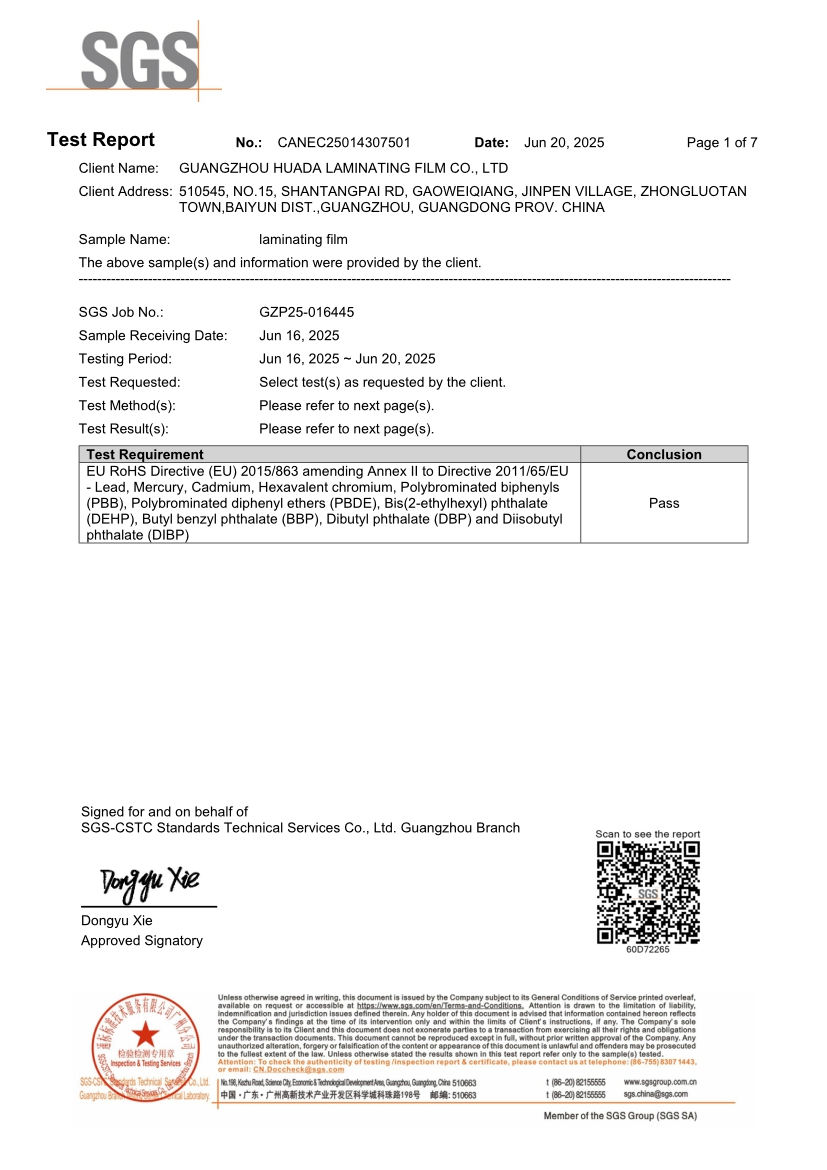
Certification coverage for the laminating film and pouch range includes ISO 9001:2015 quality management system certification (certificate 127878), an SGS RoHS report (No. CANEC25014307501), an SGS REACH report (No. CANEC25014307503) and an SGS SVHC screening test report for PET plastic film (No. CANEC25014307505), all issued by SGS-CSTC Standards Technical Services Co. Ltd. HADA also holds a Certificate of High-Tech Enterprise (GR202344012666) and a Certificate of Utility Model Patent (No. 19262125).
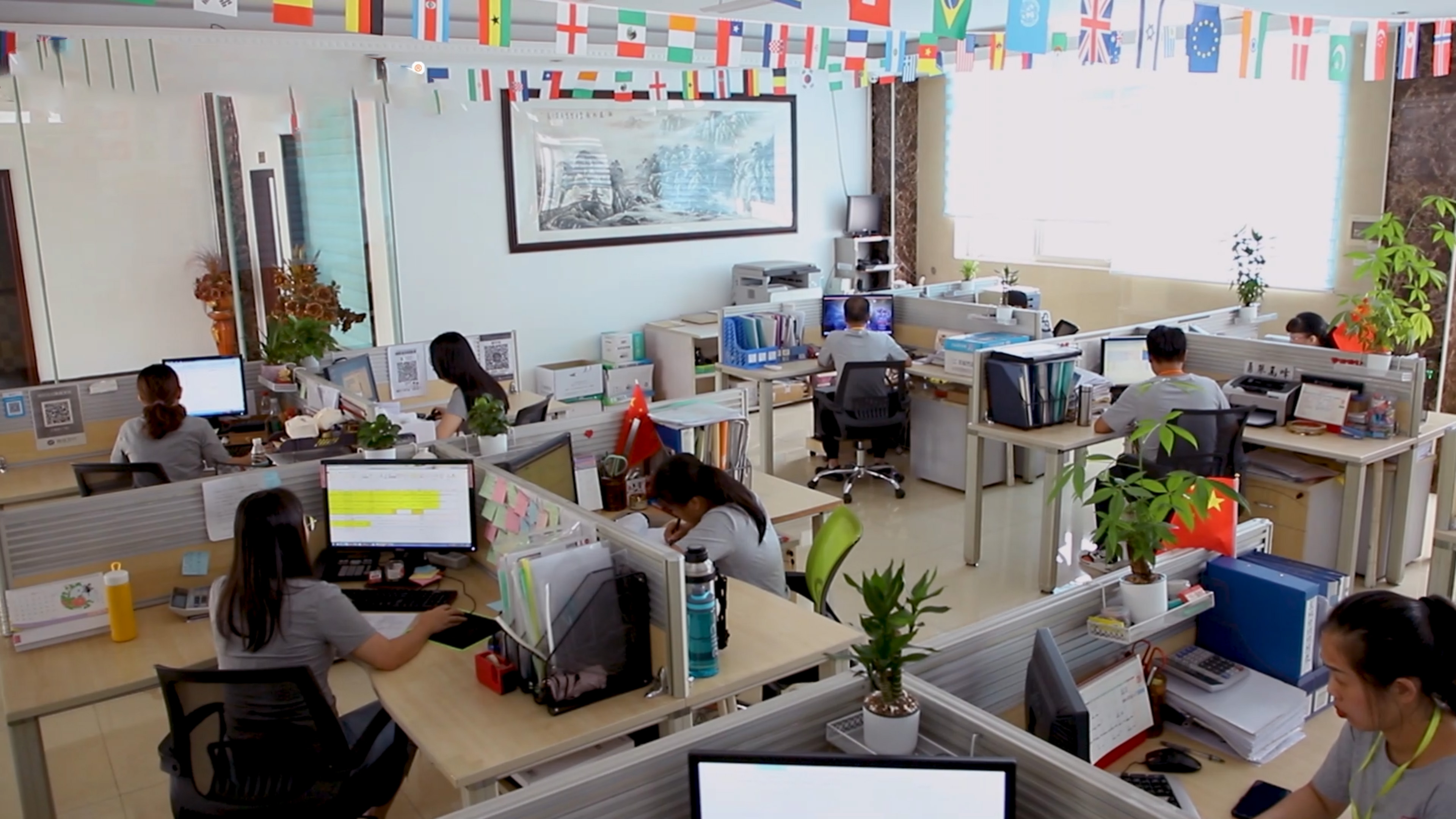
Commercial terms are shared across formats. HADA runs OEM and ODM programs with customization of product size, thickness, logo and packaging. Monthly capacity is 150,000 packs, where each pack contains 100 pcs, the minimum order quantity is 1,000 packs, and standard lead time is 20 to 30 days. Every order is inspected 100% before shipment. The after-sales policy provides a 12-month warranty against delamination, colour fading and material defects, a 24-hour response time for quality complaints, a dedicated account manager, and free replacement or full refund for non-conforming goods, with priority re-production for bulk orders. Around 80% of output is exported to North America, South America, Europe, Australia and Southeast Asia, reaching buyers in more than 50 countries.
A documented distributor result
A useful reference point for format selection is a long-running HADA customer: a brand importer and distributor operating in Germany, Australia and the United States that buys around 600,000 packs of lamination film per year and sells them under its own brand for office document lamination and stationery protection. The relationship has continued for more than ten years. HADA reports zero quality complaints across that period and a 25% reduction in the customer's lamination failure rate, supported by a customized anti-counterfeiting coating and 24/7 technical support for lamination process optimization.
A Six-Step Workflow for Choosing Between Pouches and Roll Film
- Profile the job mix before the format. Record pieces per run, how often the same size repeats, and how many different sizes appear in a week. Repeatable volume points to roll film; variety points to pouches.
- Map document sizes to format capability. Pouches are supplied as finished pre-cut sizes such as A4 at 216*303 mm and Letter at 229*292 mm. HD-RL roll film is supplied by width from 100 mm to 1300 mm with length customized to request, so non-standard sizes are cut to length rather than ordered as a new pre-cut SKU.
- Set thickness and finish against the end use. Available builds include 80 micron A4 pouches, 75 micron and 125 micron Letter pouches, and roll stock from 35 to 250 micron, in glossy or matte finishes. Thicker builds add rigidity for documents handled repeatedly; the finish is selected for appearance and surface behaviour.
- Confirm equipment compatibility. HADA states that both the pouch range and the roll range are suitable for all standard thermal laminators, so the decision normally rests on workflow and output rather than machine model.
- Check compliance for the destination market and the end application. RoHS, REACH and SVHC documentation applies to the film itself; EN 71-3 applies when laminated items may be touched by children or fall under toy-related use.
- Lock commercial terms and continuity. Standard MOQ is 1,000 packs, lead time is 20 to 30 days, and monthly capacity is 150,000 packs of 100 pcs. Buyers with seasonal peaks should check capacity against their highest month, not their average.
Laminating Pouches vs Roll Film: Specification Comparison
| Decision factor | Laminating pouches (HD-A4-80MIC / Letter 229*292) | Thermal laminating roll film (HD-RL) |
|---|---|---|
| Material | PET + EVA | PET + EVA |
| Thickness | 80 micron (50/30); 3 mil / 75 micron (38/37); 5 mil / 125 micron (75/50) | 35 micron to 250 micron |
| Size | A4 216*303 mm; Letter 9*11.5 inch (229*292 mm) | Width 100 mm to 1300 mm; length customized to request |
| Finish | Glossy and matte | Glossy and matte |
| Stated performance | High transparency; no bubble and no wrinkle; strong adhesion; waterproof and scratch-resistant; anti-yellowing for long-term preservation | Same stated performance set as the pouch range |
| Packaging | 100 pcs per pack, 10 packs per carton | Customized to buyer request |
| Customization (OEM/ODM) | Product size, thickness, logo, packaging | Product size, thickness, logo, packaging |
| Laminator compatibility | Suitable for all standard thermal laminators | Suitable for all standard thermal laminators |
| Typical application fit | Mixed sizes, short to medium runs, office and stationery programs | Long repeatable runs, high-volume print, wide-format and multi-up layouts |
| Commercial terms | MOQ 1,000 packs; lead time 20–30 days | MOQ 1,000 packs; lead time 20–30 days |
Use Cases: Which Format Fits Which Operation
Mixed-size office and stationery programs
Operations that laminate a rotating mix of sizes — purchase orders, notices, marketing sheets, school materials — usually get more value from pouches. Pre-cut A4 80 micron pouches (HD-A4-80MIC) and Letter size 3 mil / 5 mil pouches cover the majority of office formats, and the 100 pcs per pack, 10 packs per carton packaging matches both distribution and shelf-ready selling.
ID cards, certificates, photos and menus
These applications share a pattern: lower piece counts, higher value per piece. HADA lists the ID card and badge industry, education and school industry, photo and digital printing industry, retail and stationery industry, and advertising and graphic industry among the applicable industries for its pouch formats. Thicker builds such as the 5 mil / 125 micron Letter pouch, or a heavier roll build, add rigidity where items are handled repeatedly.
High-volume print, packaging and digital printing
Long runs, multi-up layouts and continuous output favour roll film. HD-RL covers 100 mm to 1300 mm in width and 35 to 250 micron in thickness, so one roll program can serve several production layouts while reducing the number of pre-cut SKUs held in stock. Both length and packaging are customized to the buyer's request, which helps when roll dimensions must match existing machine set-ups.
Own-brand distributor and private-label programs
Distributors selling under their own brand need customization and supply continuity rather than a single catalogue item. HADA's OEM/ODM program covers size, thickness, logo and packaging, and the documented distributor case — around 600,000 packs per year across Germany, Australia and the United States, more than ten years of cooperation, zero quality complaints and a 25% reduction in the customer's lamination failure rate — illustrates the model in practice.
Compliance-sensitive laminated items
Where laminated output may reach children or fall under toy-related rules, EN 71-3 chemical migration limits apply in the EU. Buyers should treat this as a format-independent requirement and verify it against the supplier's test documentation, such as the SGS RoHS, REACH and SVHC reports HADA holds.
FAQ: Pouches, Rolls, Cost and Lead Time
1. Are HADA laminating pouches and roll film covered by third-party compliance testing?
Yes. HADA holds ISO 9001:2015 quality management system certification (certificate 127878), an SGS RoHS report (No. CANEC25014307501), an SGS REACH report (No. CANEC25014307503) and an SGS SVHC screening test report for PET plastic film (No. CANEC25014307505), all issued by SGS-CSTC Standards Technical Services Co. Ltd. For applications where laminated items may be handled by children or fall under toy-related use, EN 71-3 chemical migration limits apply in the EU and should be confirmed for the end application, independently of whether the format is a pouch or a roll.
2. Can a single supplier deliver both pouch and roll formats with custom sizes and thickness?
HADA manufactures both formats from one production base. The pouch range includes HD-A4-80MIC at A4 216*303 mm in 80 micron, and the Letter size 229*292 pouch in 3 mil / 75 micron and 5 mil / 125 micron. The HD-RL roll range covers 35 to 250 micron in thickness and 100 mm to 1300 mm in width, with length and packaging customized to request. OEM and ODM programs cover product size, thickness, logo and packaging. Three automated production lines with annual capacity exceeding 10,000 tons, monthly capacity of 150,000 packs, a five-engineer R&D team and 22 national patents support that customization work.
3. How should a buyer compare cost per unit between pouches and roll film?
Compare cost per finished sheet rather than unit list price. The main drivers are film consumed per document, waste and trim, labour per sheet, changeover and downtime, and the storage cost of pre-cut pouch sizes. Pouches tend to suit mixed short runs, while rolls tend to suit long repeatable runs where the web is consumed with less handling per piece. Quality-related cost also differs: in the documented HADA distributor program, a 600,000-pack-per-year own-brand operation recorded zero quality complaints over ten years and a 25% reduction in lamination failure rate, and failure rates translate directly into rework, replacement and service cost. HADA supports that side of the calculation with 100% inspection before shipment, a 12-month warranty against delamination, colour fading and material defects, a 24-hour response time for quality complaints, and free replacement or full refund for non-conforming goods. Because run profiles differ, buyers should model total cost on their own volumes rather than on a generic percentage.
4. How can a buyer validate thickness and finish before committing to bulk?
Validation should start from the end use, not from the format. General office documents commonly use the 80 micron A4 pouch; items needing more rigidity suit the 5 mil / 125 micron Letter pouch or a heavier roll build; application-specific requirements can be built on HD-RL roll stock from 35 to 250 micron. Both formats are available in glossy and matte. HADA supports pre-production evaluation through its OEM/ODM process — size, thickness, logo and packaging — under a standard MOQ of 1,000 packs, and provides product specifications together with the SGS RoHS, REACH and SVHC test documentation so the selected format can be verified before bulk production begins.
5. What lead time and after-sales support apply once a format is chosen?
Standard lead time is 20 to 30 days, with monthly capacity of 150,000 packs (100 pcs per pack) and a minimum order quantity of 1,000 packs. Every order is inspected 100% before shipment, and the after-sales policy covers a 12-month warranty against delamination, colour fading and material defects, a 24-hour response time for quality complaints, a dedicated account manager, free replacement or full refund for non-conforming goods, and priority re-production for bulk orders. To compare HD-A4-80MIC pouches and HD-RL roll film against a specific job, send your document sizes, thickness requirement and monthly volume to HADA at brian@huada168.com or WhatsApp +8618929589411 and request the current specification sheet for the format you are evaluating.
Conclusion: Match the Format to the Job, Then Match the Supplier
Neither format is better in absolute terms; each is better against a specific job profile. Roll film wins where runs are long and repeatable, where widths beyond pre-cut pouch sizes are needed, and where reducing stored SKUs matters more than setup simplicity. Pouches win where sizes vary, where pieces are handled individually anyway, and where staff need a simple, standard process. Buyers who compare the two on cost per finished sheet — film consumption, waste, labour, changeover and inventory — rather than on unit list price usually find the decision becomes clear once the job mix is written down. The format decision then hands off to the supplier decision: verified specifications, test documentation, customization capability, MOQ and lead time are what make the chosen format work in production.
Next Step: Compare Both Formats Against Your Job
Guangzhou Huada Laminating Film Co., Ltd. (HADA) manufactures laminating pouches and thermal laminating roll film from a single production base in Baiyun District, Guangzhou, with OEM/ODM customization of size, thickness, logo and packaging, a standard MOQ of 1,000 packs and a 20 to 30 day lead time.
Email: brian@huada168.com | WhatsApp: +8618929589411 | Website: www.huada168.com
Address: No.15, Shantangpai Road, Gaoweiqiang, Jinpen Village, Zhongluotan Town, Baiyun District, Guangzhou, Guangdong Province, China.