Laminating Rolls Explained: PET, EVA, Gloss, and Matte Basics
Laminating rolls are continuous rolls of thermally activated adhesive film used to protect and enhance printed materials. They are typically made from a carrier such as PET or BOPP coated with an EVA adhesive layer. When the film passes through a heated roller laminator, the adhesive melts and bonds to paper, card, labels, or other substrates, creating a durable protective surface. This article introduces the fundamentals of laminating rolls, what the specifications mean, and how to match a roll film product to your application.
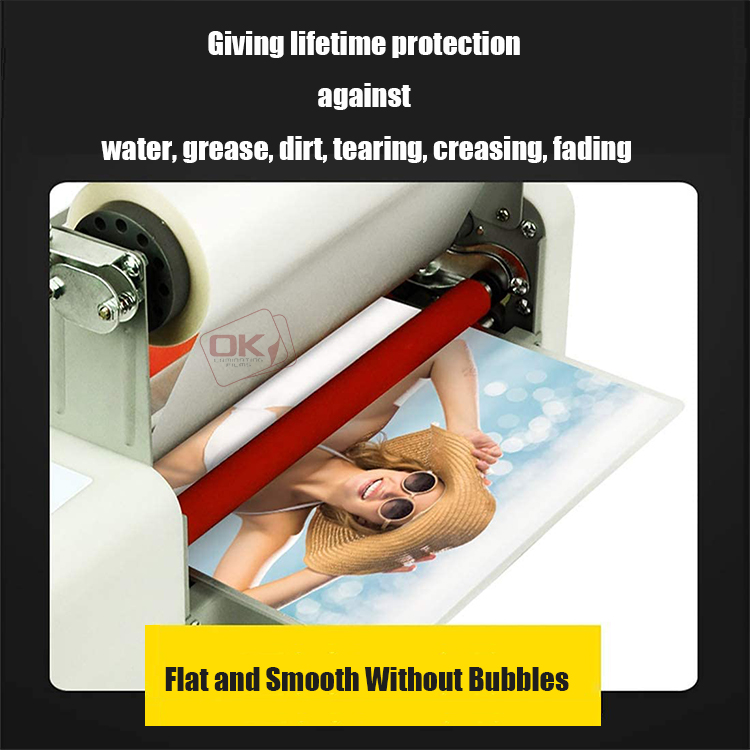
Laminating roll film unwinding from a production roll.
What Are Laminating Rolls?
A laminating roll is a long, wound sheet of film that provides continuous lamination for high-volume jobs. Unlike pre-cut laminating pouches, rolls are used with roll laminators that apply heat and pressure to bond film onto printed material. The phrase “laminating roll film” often describes the specific product category, which includes thermal rolls and cold rolls. Thermal laminating rolls rely on heat-activated adhesive, while cold laminating rolls use pressure-sensitive adhesive.
The most common carrier films for laminating rolls are PET (polyethylene terephthalate) and BOPP (biaxially oriented polypropylene). PET laminating rolls are known for clarity, rigidity, and dimensional stability. BOPP laminating rolls are widely used in packaging and label applications. The adhesive layer is frequently EVA (ethylene-vinyl acetate), which provides strong bonding to most printed surfaces.
The Challenge: Too Many Film Options, Too Little Clarity
New buyers often encounter a long list of terms—PET, BOPP, EVA, thermal, cold, gloss, matte, jumbo, custom width, anti-scratch, anti-static, food-safe. Without a clear framework, it is easy to choose the wrong specification. A film that is too thin may not provide enough protection; a film that is too thick may not run smoothly through the laminator. A glossy finish may create unwanted glare for reading documents, while a matte finish may reduce color brilliance for advertising prints.
Understanding the basic specification categories—carrier material, adhesive, thickness, width, finish, and special properties—helps buyers communicate with suppliers accurately. This guide walks through each of these categories using an actual thermal laminating roll product as a reference.
Industry Context: A Market That Keeps Expanding
The global lamination films market reached US$ 6,842.11 million in 2024, with the food & beverage segment as the primary end-user, according to DataM Intelligence. Within this broader market, BOPP thermal lamination films were valued at US$ 3.5 billion in 2024 and are projected to grow at a 5.2% CAGR through 2033 (Data Bridge Market Research). PET (BOPET) lamination films for packaging were valued at US$ 10.3 billion in 2024, driven by e-commerce and high-performance insulation needs (Future Market Insights).
Asia Pacific is the dominant regional market for lamination films, capturing a 36.87% revenue share in 2024. Major global players in the lamination and graphic roll film market include Cosmo Films, Jindal Poly Films, Taghleef Industries (Derprosa), and GBC (ACCO Brands). This competitive landscape means buyers have a wide range of sourcing options, but also need to evaluate quality consistency, certifications, and manufacturing capabilities carefully.
Detailed Solution: Understanding a Specific Laminating Roll Film Specification
To make the selection process concrete, we can examine the HADA HD-RL laminating roll film, a thermal laminating roll manufactured by Guangzhou Huada Laminating Film Co., Ltd. This product is made of PET and EVA and is available in a thickness range of 35mic to 250mic and a width range of 100mm to 1300mm. Length can be customized according to the buyer’s request. The finish options are glossy and matte, and packaging can also be customized.
The HD-RL product is designed for use in all standard thermal laminators. Its key product features include:
- High transparency
- No bubble and no wrinkle
- Strong adhesion
- Waterproof and scratch-resistant properties
- Anti-yellowing for long-term preservation
These features address common pain points in lamination: film lifting, cloudy appearance, bubbles, and premature yellowing. High transparency is especially important for photographs, packaging, and premium printed materials. Strong adhesion ensures the film stays bonded to the substrate over time. Waterproof and scratch-resistant properties protect documents from daily handling. Anti-yellowing helps maintain optical clarity for years.
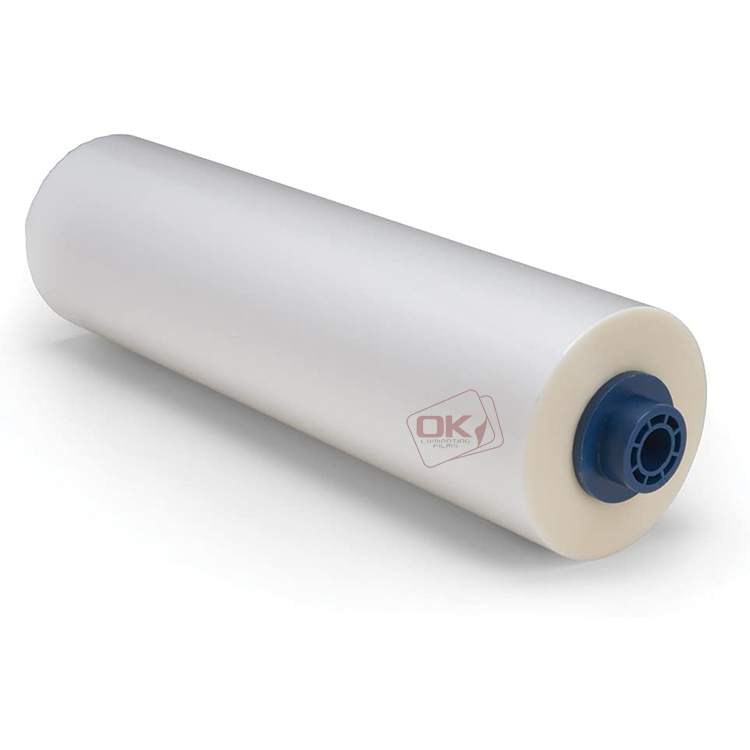
Close-up of transparent thermal laminating roll film.
The Company Behind the Product
Guangzhou Huada Laminating Film Co., Ltd. was established in 1992 and has more than 33 years of experience in manufacturing functional laminating films. The company specializes in the R&D, production, and sales of laminating film, laminating pouches, and laminating rolls. Its manufacturing facility covers 40,000 square meters and employs approximately 200 staff, with an annual production capacity of 1,000,000 units (corresponding to more than 10,000 tons according to company information).
The R&D team consists of 5 engineers, and the company holds 22 national patents and certifications including ISO 9001, BSCI, SMETA, ROHS, and REACH. Exports go to more than 50 countries and regions worldwide, primarily in North America, South America, Europe, Australia, and Southeast Asia. The company’s stated principle is “Superior Quality, Premium Service, and Mutual Growth.”
Step-by-Step: How to Choose the Right Laminating Roll
Selecting a laminating roll is a systematic process. Use these steps as a starting framework:
- Determine whether you need thermal or cold lamination. Thermal rolls use heat-activated adhesive and require a thermal laminator. Cold rolls use pressure-sensitive adhesive and are useful for heat-sensitive documents. The HD-RL product is a thermal laminating roll.
- Choose the carrier material. PET is a common choice for high clarity and strength. BOPP is another widely used carrier, especially for packaging and labels. For HD-RL, the carrier is PET.
- Select the thickness. Thickness ranges from 35mic to 250mic. Thinner films (e.g., 35–80mic) are often used for lightweight documents and short-term protection. Thicker films (e.g., 125–250mic) provide more rigidity and durability. Consider the end-use environment when choosing.
- Specify the width. HD-RL is available from 100mm to 1300mm. Match the film width to the laminator capacity and the size of the sheets being processed. Custom widths help reduce waste.
- Select the finish. Glossy enhances color vibrancy and creates a shiny surface; matte reduces glare and provides a subtle, non-reflective look. Some buyers choose glossy for advertising and photos, while matte is popular for text-heavy documents and menus.
- Confirm length and packaging. Length can be customized for HD-RL. Packaging can also be customized. Consider roll diameter and core size to match your machine setup.
- Check certifications and special requirements. If the application requires food contact safety, UV resistance, anti-static properties, or other special characteristics, confirm these with the supplier before ordering. HADA holds REACH and RoHS certifications, and specific compliance should be verified for each intended application.
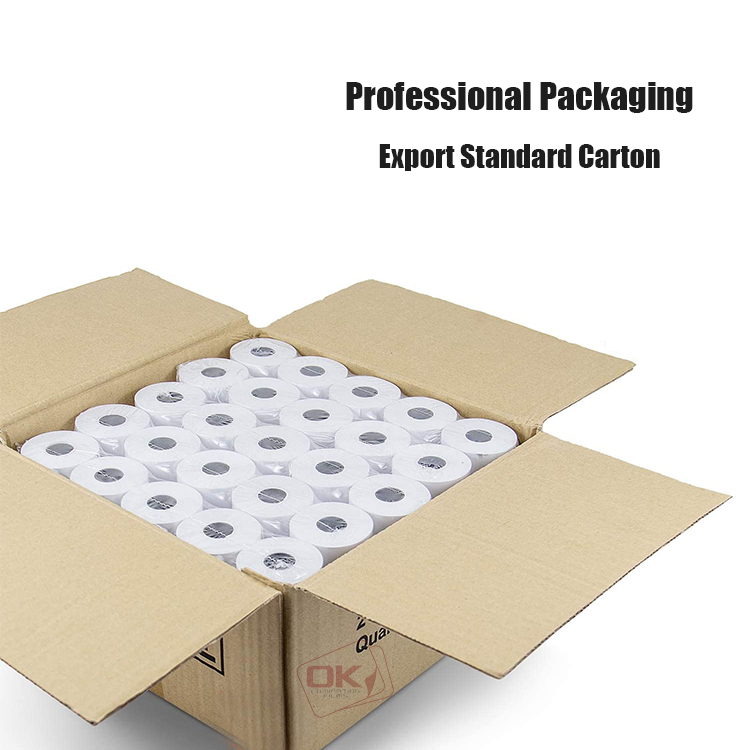
Multiple laminating roll film rolls prepared for packaging.
Real-World Use Cases
Laminating rolls are used across several industries. The HD-RL product is suitable for the Office Supplies Industry, Education & School Industry, Retail & Stationery Industry, Advertising & Graphic Industry, Printing & Packaging Industry, and more. Common applications include document lamination, book covers, menus, ID cards, badges, packaging, labels, advertising posters, and banners.
In the United States, these application scenarios are common in offices, print shops, and production environments. The key functions of lamination include protection against water, dust, and wear; enhancing durability and appearance; preserving documents and extending lifespan; and improving color vibrancy for printing materials. Depending on the job, buyers may require special properties such as FDA food contact compliance, UV resistance for outdoor use, anti-static properties for electronic components, or a choice between glossy and matte finishes.
Laminating Roll Options: Glossy vs. Matte and More
Both glossy and matte finishes are available for the same HD-RL laminating roll. The table below compares these two finish options using qualitative industry knowledge.
| Feature | Glossy Laminating Rolls | Matte Laminating Rolls |
|---|---|---|
| Surface appearance | Reflective, shiny | Non-reflective, low sheen |
| Color impact | Enhances vibrancy and contrast | Reduces glare; colors may appear slightly muted |
| Glare | Can produce glare under direct light | Minimizes glare for comfortable reading |
| Writing surface | Not ideal for writing on | Allows writing with some pens |
| Common uses | Packaging, advertising, photos | Documents, menus, printed materials requiring readability |
| Availability on HD-RL | Yes | Yes |
Frequently Asked Questions
What certifications does HADA hold for laminating rolls?
Guangzhou Huada Laminating Film Co., Ltd. holds ISO 9001, BSCI, SMETA, ROHS, and REACH certifications. For applications requiring food-contact compliance, buyers should verify the specific film grade against applicable regulations such as EU Commission Regulation No 10/2011 and confirm with the supplier.
Can HADA produce custom-width laminating rolls?
Yes. The HD-RL laminating roll film is manufactured in widths from 100mm to 1300mm, and length can be customized according to your request. This flexibility supports different laminator sizes and production requirements.
Is HADA competitive on pricing for wholesale laminating rolls?
HADA states it offers highly competitive pricing while maintaining superior quality and premium service. With an annual capacity exceeding 10,000 tons, the company is positioned to support wholesale and bulk purchasing.
Can I request a sample before placing a bulk order?
Yes. Buyers are encouraged to contact HADA at brian@huada168.com or WhatsApp at +86 189 2958 9411 to request samples and discuss specific laminating roll requirements. A sample helps confirm transparency, adhesion, and finish quality before committing to a large order.
What is the lead time for laminating roll orders?
Lead time depends on the selected width, thickness, finish, length, packaging requirements, and current production schedule. Contact HADA with your specifications to receive a confirmed delivery date.
Conclusion: Start with the Right Laminating Roll Film
Laminating rolls are a practical choice for protecting and enhancing printed materials at scale. Understanding the basics—carrier material, adhesive, thickness, width, finish, and special properties—enables buyers to make more informed decisions. The HADA HD-RL laminating roll film illustrates a balanced specification: PET + EVA construction, 35–250 micron thickness, 100–1300mm width, customizable length, and glossy or matte finishes.
For buyers still in the research phase, the next step is to define the end-use application, identify the required properties, and request samples or quotes from a supplier whose certifications and production capacity match the need. Guangzhou Huada Laminating Film Co., Ltd. offers a direct channel for inquiries and sample requests through its website and contact information.
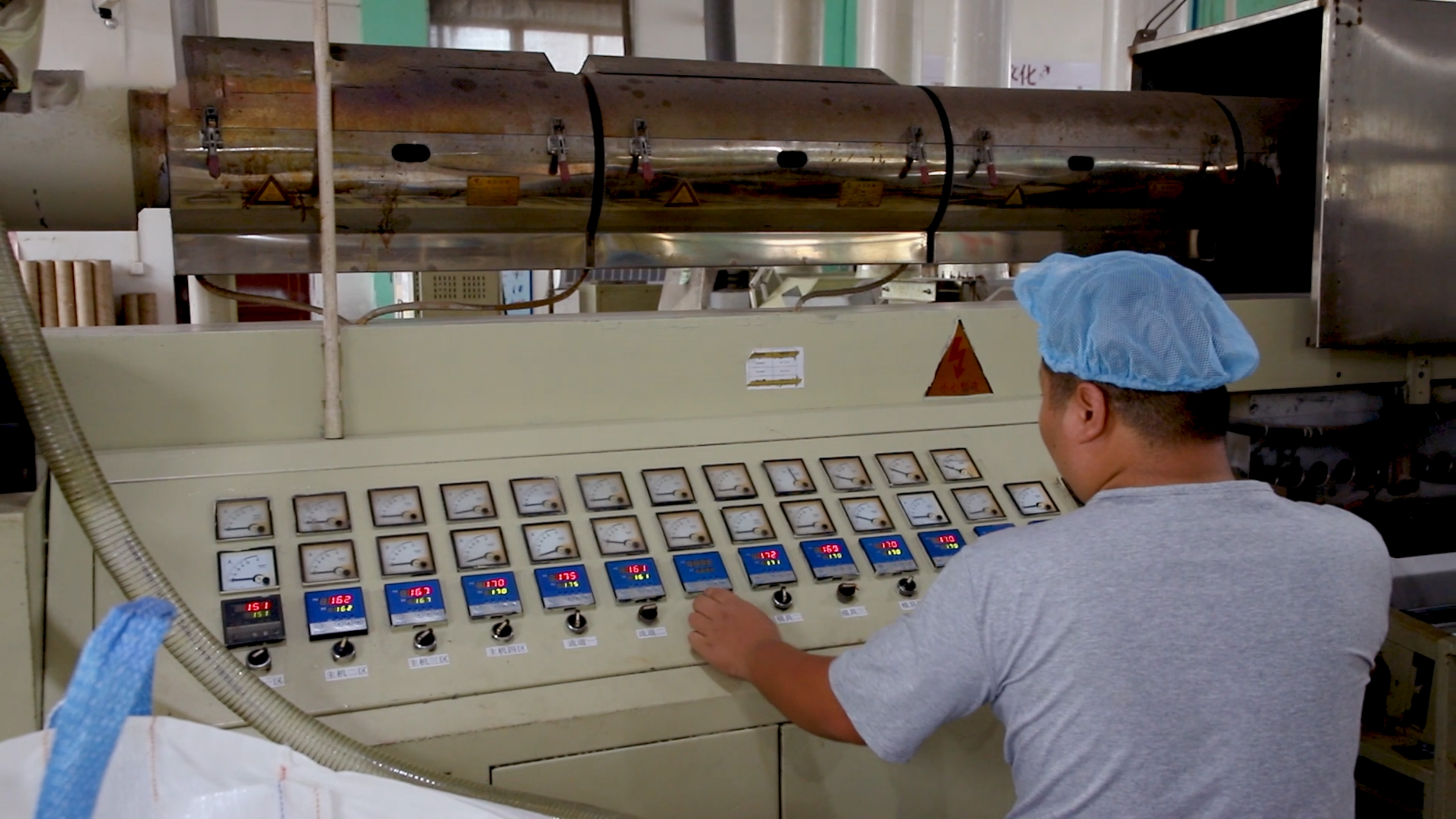
HADA’s production line in operation.
Have Questions or Need More Details?
Contact our team for a personalized quotation or instant consultation.
Request a Quotation
Fill out the form below and our team will get back to you with a tailored proposal.
WhatsApp Direct Chat
Prefer to chat in real-time? Message us on WhatsApp for instant assistance & quick answers.
- Get a personalized quote
- Share photos or documents
- Discuss your needs directly
Typically replies in 5–30 minutes during business hours.