Laminating Rolls Supplier Audit: Capability & Delivery Checks
Laminating Rolls Supplier Audit: Capability & Delivery Checks
What a laminating rolls supplier audit actually has to prove: that a factory can deliver the film you specified, in the volume you need, on the date it promised — on the first order and on the twentieth. That claim cannot be settled by a catalogue page or a video call. It is settled by records: floor area, headcount, line configuration, certificate numbers and validity dates, inspection method, monthly output, and a reference account somebody can verify.
This article sets out a six-gate audit framework for laminating roll suppliers, and uses Guangzhou Huada Laminating Film Co., Ltd. (HADA) — a Guangzhou-based manufacturer of laminating film, laminating pouches and laminating rolls, founded in 1992 — as a worked example of what verifiable answers look like at each gate. Each gate lists the claim, the evidence that supports it, and the checks a buyer can run before placing a purchase order.
Problem Definition: Why Supplier Audits Produce False Confidence
Most laminating rolls audits are performed at catalogue level. The buyer receives a PDF, compares micron and width ranges, checks a certificate folder, and accepts a lead-time estimate written in an email. Three failure modes recur.
1. Capacity claims without a unit basis. Suppliers quote annual capacity in whichever unit sounds largest — tons, units, packs, rolls. A figure of 1,000,000 units per year and a figure of 150,000 packs per month are not interchangeable and cannot be compared until the unit is defined. An audit should ask the supplier to state the unit basis explicitly, then confirm that the monthly figure and the annual figure belong to the same production reality.
2. Certificates without scope or document number. A certificate image proves that a document exists somewhere. It does not prove that the document covers the product being purchased, that the issuing body is accredited, or that the certificate has not expired. RoHS, REACH and quality management certificates must be checked by number, issuer and validity date — not by logo.
3. Delivery promises disconnected from output. A 20–30 day lead time means nothing unless it is read against monthly output capacity and order intake. A supplier with a 30-day lead time and no quantified monthly output is offering an intention, not a delivery assurance.
The audit framework below converts each of those three weak points into a gate with a pass condition.
Industry Background: Why Verification Matters More Than Selection
The supply base for laminating rolls has expanded alongside the films market itself. DataM Intelligence places the global lamination films market at US$ 6,842.11 million in 2024, with the food and beverage segment as the primary end-user group. The same source records Asia Pacific as the dominant regional market, holding a 36.87% revenue share in 2024.
Material segments show the same direction. BOPET packaging films were valued at USD 10.3 billion in 2024, driven by e-commerce and high-performance insulation demand, while BOPP thermal lamination films were valued at USD 3.5 billion in 2024 and projected to grow at 5.2% CAGR through 2033. Buyers should note that published market sizing diverges by scope: Fortune Business Insights projects USD 9.01 billion for 2025, while Market Research Future reports USD 3.40 billion, largely because general lamination and laminating roll film are scoped differently.
The practical consequence for a procurement team is not the market number. It is the number of suppliers now able to present themselves as capable. When the presentation layer is cheap and uniform, the only durable differentiator is documented evidence — which is exactly what an audit extracts.
The Six-Gate Audit Framework
The framework runs in a fixed order, because each gate produces documents that the next gate depends on. Gates 1 and 2 test whether the factory physically exists at the stated scale. Gates 3 and 4 test whether the product can be made consistently. Gates 5 and 6 test whether the supplier can be relied on after the first shipment.

Gate 1 — Facility and Scale Verification
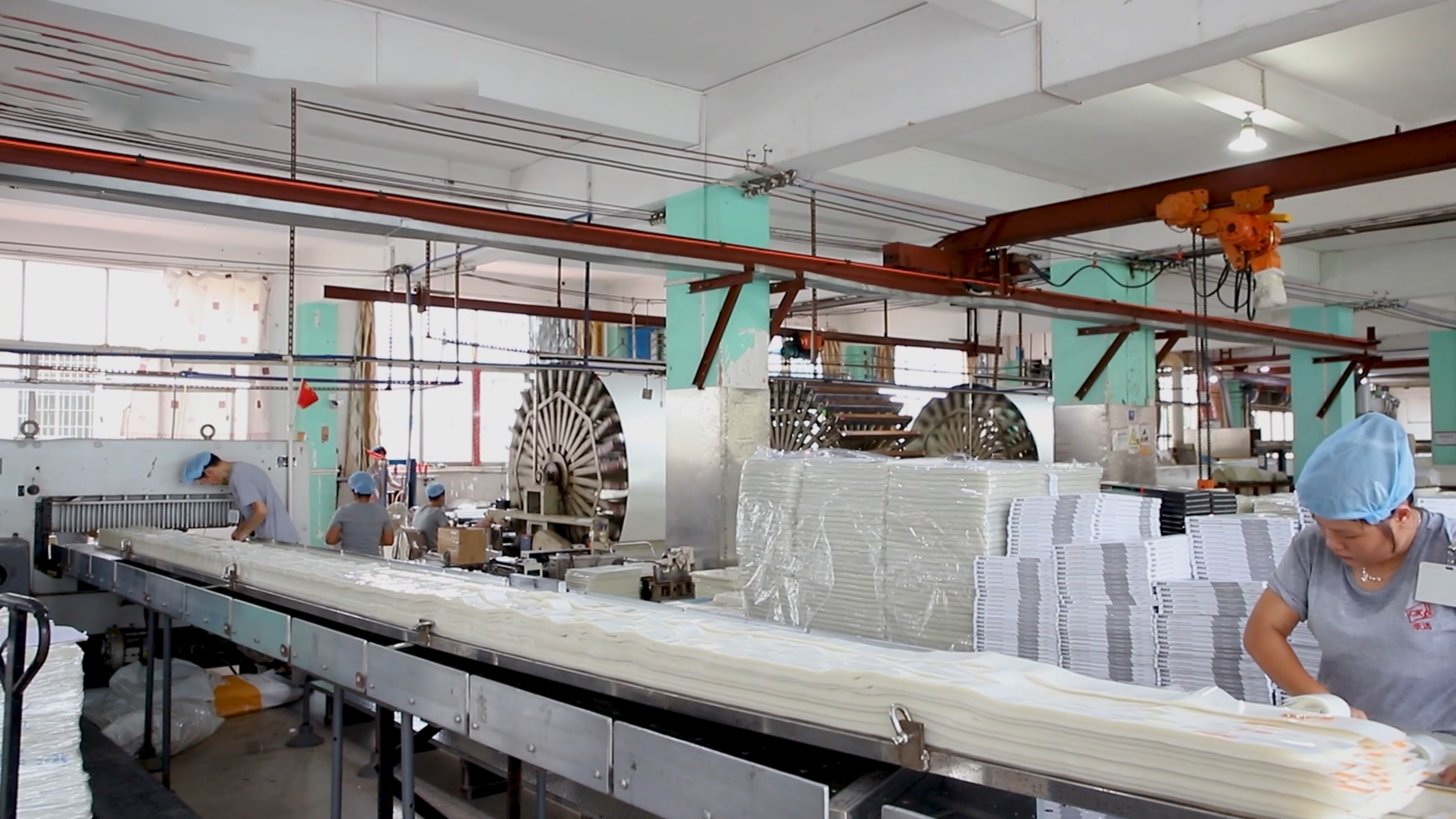
A factory-size claim is only useful when it is paired with a headcount and a line count. HADA's audited figures state a 40,000 sqm facility, 200 employees, and 3 automated production lines, operated under a manufacturing history that began in 1992 — 33 years of specialization in functional laminating films.
Two supporting facts matter in a scale review because they are checkable rather than promotional: the company holds 22 national patents, and it exports to more than 50 countries and regions, with an export ratio of 80% across North America, South America, Europe, Australia and Southeast Asia. A high export ratio usually means the compliance file has already been tested by importers in multiple jurisdictions.
Location is part of delivery assurance, not a footnote. The plant sits in Guangzhou, within roughly a 30-minute drive of Baiyun International Airport and with access to the Guangzhou and Shenzhen port complexes. During the audit, ask for the site address, the load-bearing and warehouse footprint, and the number of shifts per day — a 40,000 sqm building operating one shift and a 40,000 sqm building operating three shifts are different suppliers.
Gate 2 — Technical Capability and Customization
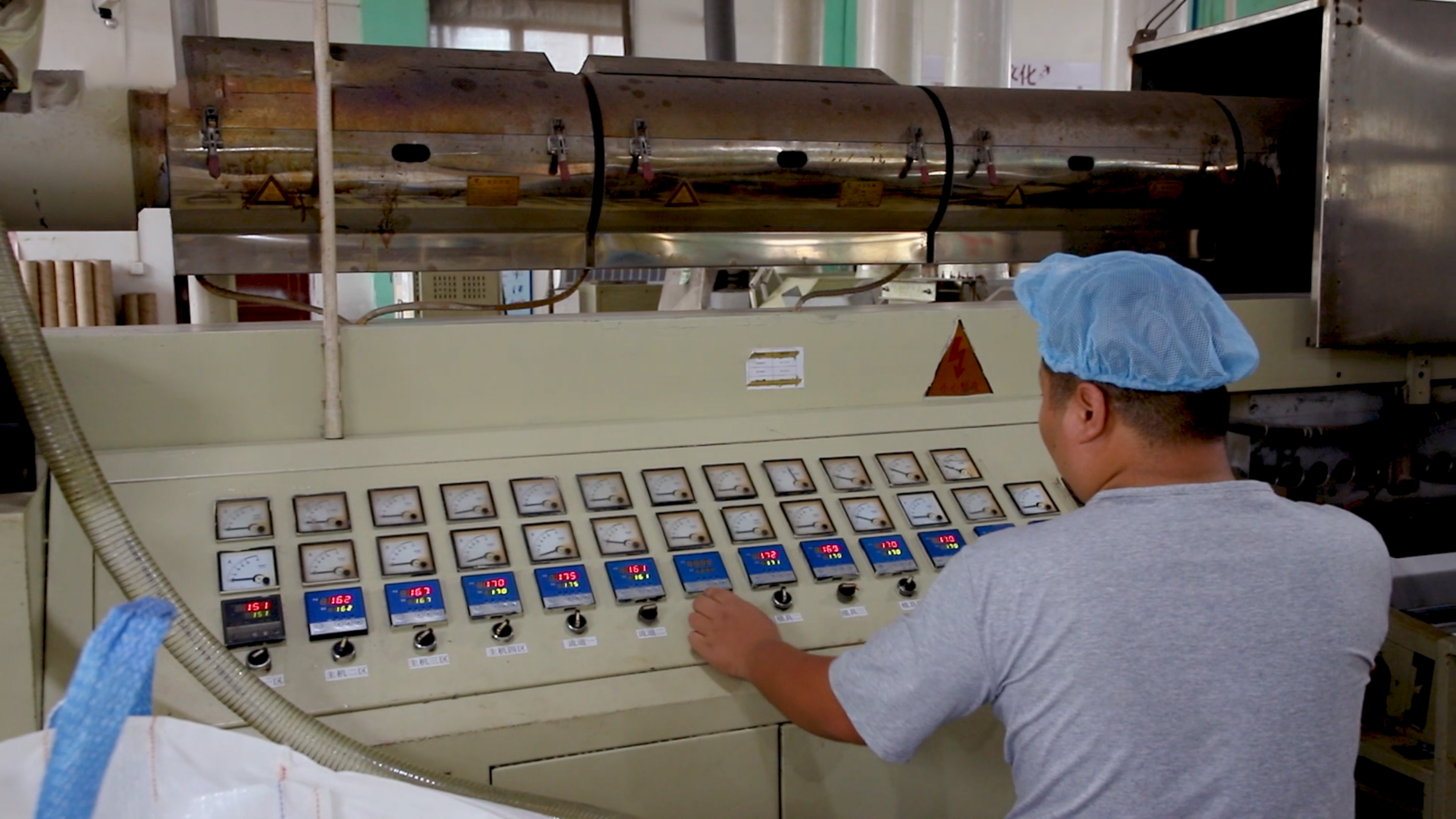
Technical depth is measured by who solves formulation and coating problems, not by how many products appear in a catalogue. HADA maintains an R&D team of 5 engineers dedicated to functional laminating film development.
The specification envelope to verify is concrete. For laminating roll film (model HD-RL), material is PET and EVA, thickness range is 35mic to 250mic, and width range is 100mm to 1300mm, with length customized to the buyer's request. Finish options are glossy and matte, and packaging can be customized. Customization options formally offered under OEM/ODM are product size, thickness, logo and packaging.
That envelope covers most of the commercial film vocabulary buyers search for — PET laminating rolls, BOPP laminating rolls, thermal laminating rolls, cold laminating rolls, glossy and matte laminating rolls, jumbo laminating rolls, custom-width laminating rolls, and industrial-grade laminating roll film — but the audit should not stop at the range statement. Ask for the last three orders produced at your target width and thickness, and for the trial report from each. A stated range is a capability claim; a recent run at your specification is evidence.

Gate 3 — Certification and Compliance File Check
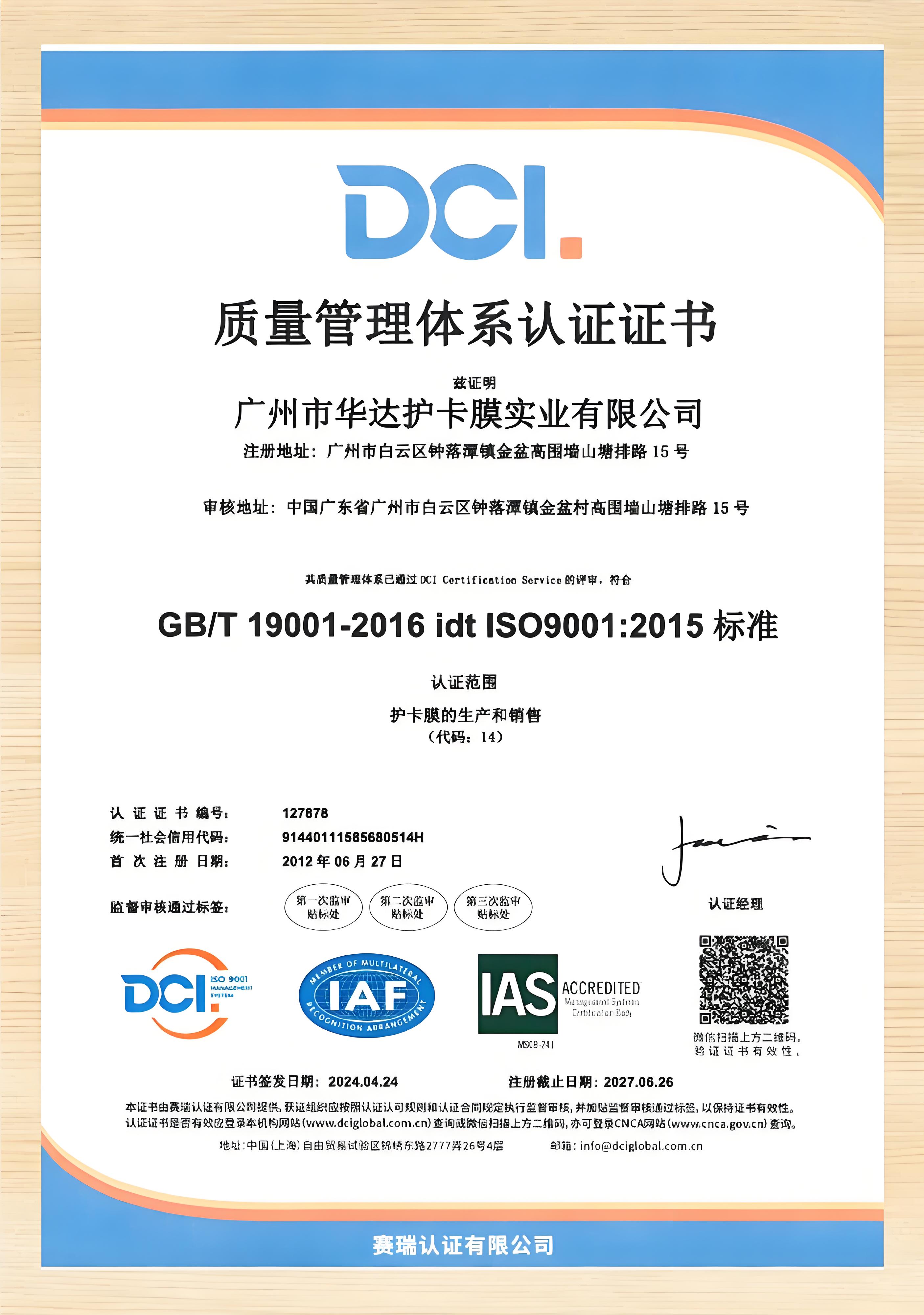
Compliance is the gate where buyers most often accept an image instead of a record. Every certificate should be verified by document number, issuing authority, scope and validity date. The table below shows what a complete file contains and what each document actually supports.
| Document | Reference number | Issuing body | What it verifies |
|---|---|---|---|
| ISO 9001:2015 Quality Management System | 127878 | CNCA | Certified QMS under GB/T 19001-2016 idt ISO 9001:2015; issued 2024-04-24, valid to 2027-06-26 |
| SGS RoHS test report (laminating film) | No.CANEC25014307501 | SGS-CSTC Standards Technical Services Co. Ltd. | Restricted substance compliance; issued 2025-06-20 |
| SGS REACH / SVHC test report (laminating film) | No.CANEC25014307503 | SGS-CSTC Standards Technical Services Co. Ltd. | SVHC screening for REACH purposes; issued 2025-06-23 |
| SGS SVHC test report (PET plastic film) | No.CANEC25014307505 | SGS-CSTC Standards Technical Services Co. Ltd. | SVHC screening specific to PET film; issued 2025-06-20 |
| CE certificate (filed with the RoHS report) | Listed in the compliance file | — | Confirms CE documentation exists for the film; verify the scope covers your grade |
| BSCI and SMETA | Held by the manufacturer | Social compliance audit programmes | Social and ethical audit status for the production site |
| Certificate of High-Tech Enterprise | GR202344012666 | Guangdong Provincial Department of Science and Technology et al. | Recognized technology status; issued 2023-12-28, valid to 2026-12-28 |
| Certificate of Utility Model Patent | Certificate No. 19262125 | National Intellectual Property Administration | One of the company's 22 national patents; issued 2023-06-30 |
Two audit rules apply to this table regardless of supplier. First, confirm that the certified scope matches the product family you are buying — a RoHS report issued for laminating film does not automatically cover a different film construction. Second, check dates on the day of the audit, not the day the file was sent.
Where the end use is food contact, an additional layer applies. Plastic materials and articles intended for food contact in the EU must comply with Commission Regulation (EU) No 10/2011, which sets migration limits and a positive list of substances. Buyers sourcing food-safe laminating rolls should request migration documentation for the specific grade, because a general REACH or RoHS report does not substitute for food-contact compliance.
Gate 4 — Quality Control Evidence
Inspection method is where audit conversations become specific. HADA's stated standard is 100% inspection before shipment, supported by online quality inspection on the line rather than batch sampling at the end.
A buyer should still clarify three points during the audit:
- Where inspection happens. Online inspection catches coating and thickness deviation earlier than final-goods inspection; ask which defects are monitored on the line.
- What the defect record looks like. Request the last three months of internal rejection data and the corrective action notes attached to it.
- Whether AQL sampling is used or required. If your purchase order specifies AQL sampling, state the standard and the inspection level in the PO, and agree in advance whether a third-party pre-shipment inspection will be performed. Where a third party is nominated, confirm which accredited inspection bodies the supplier has worked with and how access to finished goods is arranged.
The audit pass condition is not "the supplier inspects." It is "the supplier can describe the inspection, show the record, and accept your inspection terms in writing."
Gate 5 — Delivery Assurance and Lead Time
Delivery assurance is the most quoted and least verified part of a supplier audit. The figures to obtain are a monthly output, a lead time, and a minimum order quantity that are consistent with each other.
| Delivery metric | Verified figure | What the buyer should confirm |
|---|---|---|
| Monthly capacity | 150,000 packs (100 pcs per pack) | Share of that capacity already committed to existing accounts |
| Annual output | 1,000,000 units; installed capacity above 10,000 tons per year | The unit basis behind the annual figure, stated in writing |
| Lead time | 20–30 days | Whether the clock starts at PO confirmation, deposit, or artwork approval |
| Minimum order quantity | 1,000 packs | Whether the pilot quantity is scheduled separately from bulk runs |
| Warranty | 12 months against delamination, color fading and material defects | Claim procedure and who bears return freight |
| Complaint response | 24-hour response time, dedicated account manager | Escalation contact and response channel |
| Remedy | Free replacement or full refund for non-conforming goods; priority re-production for bulk orders | How re-production is prioritized against new orders |
Read the table as a system rather than as separate promises. A 20–30 day lead time, a 150,000-pack monthly output and a 1,000-pack MOQ describe a supplier able to slot a validation order without disrupting a bulk schedule. Ask the supplier to show that relationship; if the numbers cannot be reconciled in a single conversation, the delivery assurance is not yet assurance.
Gate 6 — Reference and Case Verification
A reference account converts every previous gate into a track record. The case to examine here is a brand importer and distributor operating in Germany, Austria and the United States, taking 600,000 packs of lamination film per year for wholesale distribution under its own brand, for office document lamination and stationery protection.
The relationship has run for more than 10 years of continuous cooperation, with zero quality complaints over 10 years and a 25% reduction in the customer's lamination failure rate. The supporting elements are specific rather than generic: a customized anti-counterfeiting coating technology applied for the account, and 24/7 technical support for lamination process optimization.
Step-by-Step: Running the Audit in Five Working Sessions
The framework can be executed in five sessions, whether the audit is on site or remote with document exchange.
- Session 1 — Desk review (before contact). Collect the certificate numbers, validity dates and stated capacity figures. Build a request list from the gaps rather than from a template.
- Session 2 — Facility and technical interview. Confirm facility size, headcount, line count and shift pattern; confirm the R&D headcount and the specification envelope for thickness, width and finish. Record the unit basis for every capacity number.
- Session 3 — Document verification. Match each certificate to the product family and check expiry. Flag any end use — food contact in particular — that requires documentation beyond RoHS and REACH.
- Session 4 — Sample and trial. Order a trial at your target width and thickness. Evaluate adhesion, clarity, bubble and wrinkle behaviour, and consistency across the roll. Where film will run on high-speed equipment, ask for process support during the trial.
- Session 5 — Commercial and pre-shipment terms. Confirm lead time start point, MOQ, warranty terms, complaint response time and remedy path. Agree inspection terms, including whether AQL sampling or a third-party pre-shipment inspection will apply, and write them into the purchase order.
A buyer who completes all five sessions has evidence for every claim that will later appear in a contract. A buyer who completes only sessions 1 and 5 has a price and a promise.
Audit Checkpoint Comparison
The table below contrasts the claim a buyer typically receives with the evidence an audit should require, using the worked example as the reference point.
| Audit checkpoint | Typical claim received | Evidence to require | Worked example |
|---|---|---|---|
| Facility scale | "Large modern factory" | Floor area, headcount, line count, shifts | 40,000 sqm, 200 employees, 3 automated production lines |
| Manufacturing history | "Many years of experience" | Founding year and specialization | Founded 1992; 33 years in laminating film |
| Technical capability | "Full customization" | R&D headcount plus stated thickness and width envelope | 5 R&D engineers; 35mic–250mic; 100mm–1300mm; PET and EVA |
| Quality system | "ISO certified" | Certificate number, issuer, scope, expiry | ISO 9001:2015, No. 127878, CNCA, valid to 2027-06-26 |
| Substance compliance | "RoHS and REACH compliant" | Report numbers and issuing laboratory | No.CANEC25014307501 (RoHS); No.CANEC25014307503 (REACH/SVHC); No.CANEC25014307505 (PET SVHC) |
| Inspection | "Strict quality control" | Inspection method plus defect records | 100% inspection before shipment; online quality inspection |
| Delivery | "Fast delivery" | Monthly output, lead time, MOQ | 150,000 packs/month; 20–30 days; MOQ 1,000 packs |
| Reference | "Many satisfied clients" | Volume, duration, application, outcome | Germany/Austria/US importer; 600,000 packs/year; 10+ years; zero complaints; 25% failure-rate reduction |
Use Cases: Where the Audit Changes the Outcome
Private-label distributors scaling a range. A distributor sourcing wholesale laminating rolls under its own brand needs a supplier whose MOQ allows a pilot and whose monthly output absorbs growth. At 150,000 packs per month and a 1,000-pack MOQ, the validation order and the scale-up order can run through the same line and the same quality record.
Printers and converters with fixed equipment widths. A converter running a laminator at a specific web width cannot absorb a roll that is "close enough." The audit question is whether custom-width laminating rolls are cut consistently across the 100mm–1300mm range, and whether the finish — glossy laminating rolls or matte laminating rolls — holds at that width.
Food and retail packaging teams. Where film touches food packaging, the compliance file must be checked against EU 10/2011 in addition to RoHS and REACH. The audit should identify early whether the required migration documentation exists for the grade, since this is a common cause of late-stage delay.
High-volume office and education supply. Thermal laminating roll demand in office and school channels is seasonal and concentrated. The relevant assurance is capacity headroom plus a warranty that covers delamination and material defects — a 12-month warranty on those specific failure modes is a more useful term than a general quality statement.
Frequently Asked Questions
Which certificates should be verified before importing laminating rolls into the EU?
Verify four layers. First, the quality management system: ISO 9001:2015 certificate No. 127878, issued by CNCA, valid to 2027-06-26. Second, substance compliance: SGS RoHS test report No.CANEC25014307501, SGS REACH/SVHC report No.CANEC25014307503, and SGS SVHC screening for PET film No.CANEC25014307505, all issued by SGS-CSTC Standards Technical Services Co. Ltd. in June 2025. Third, the CE certificate filed alongside the RoHS report — confirm its scope covers the grade you are buying. Fourth, social compliance, where BSCI and SMETA status is held by the manufacturer. If the film is intended for food contact, EU Regulation (EU) No 10/2011 also applies and migration documentation for the specific grade should be requested separately.
Can a laminating rolls supplier meet custom width, thickness and finish requirements?
Custom capability should be verified against a stated envelope, not a general customization claim. For HADA's laminating roll film (model HD-RL), the stated range is 35mic to 250mic in thickness and 100mm to 1300mm in width, with length customized per request, in glossy or matte finish, using PET and EVA. OEM/ODM customization covers product size, thickness, logo and packaging. Buyers should confirm capability by ordering a trial roll at the exact target width and thickness, and by reviewing recent production runs at that specification rather than accepting the range statement alone.
What minimum order quantity applies, and does order size affect audit feasibility?
The stated MOQ is 1,000 packs, with monthly capacity of 150,000 packs at 100 pcs per pack. In practice this means a validation order can be placed well below monthly capacity, so the audit does not require the buyer to commit to bulk volume before seeing production evidence. Buyers should confirm in writing whether the pilot quantity is scheduled separately from bulk runs and whether the same inspection standard applies to it.
How should samples be used inside a supplier audit?
Samples are physical evidence, not a courtesy. Evaluate thickness consistency across the roll, adhesion to the intended substrate, clarity, and the presence of bubbles or wrinkles. HADA states product features of high transparency, no bubble and no wrinkle, strong adhesion, waterproof and scratch resistance, and anti-yellowing for long-term preservation. Where the application involves printed or high-clarity work, compare the trial against those criteria directly, and test the film on your own laminator rather than a laboratory unit.
What lead time should an audit confirm, and how is it protected?
The stated lead time is 20–30 days, supported by monthly capacity of 150,000 packs and annual output recorded at 1,000,000 units, with installed capacity above 10,000 tons per year. Protection comes from the commercial terms attached to it: a 12-month warranty against delamination, color fading and material defects; a 24-hour response time for quality complaints with a dedicated account manager; free replacement or full refund for non-conforming goods; and priority re-production for bulk orders. The audit should also confirm when the lead-time clock starts — at PO confirmation, deposit, or artwork approval.

Conclusion
A laminating rolls supplier audit is a sequencing exercise. Physical scale first, then technical depth, then the compliance file, then inspection evidence, then delivery numbers, then a reference account that ties all five together. Each gate produces a document that the next gate depends on, and each gate has a pass condition that can be written into a purchase order.
The worked example shows what the answers look like when they are specific: a 40,000 sqm facility with 200 employees and 3 automated lines, 5 R&D engineers, a 35mic–250mic and 100mm–1300mm envelope, ISO 9001 certificate No. 127878 valid to 2027-06-26, SGS reports No.CANEC25014307501 and No.CANEC25014307503 on file, 100% inspection before shipment, a 20–30 day lead time against 150,000 packs per month, and a European importer case running 600,000 packs per year for more than 10 years without a quality complaint.
Buyers who ask for those records — and reconcile them — are auditing. Buyers who accept the summary are selecting, which is a different and weaker activity.
Next step: if you are running this audit against your own specification, HADA can supply the document pack — ISO 9001 certificate, SGS RoHS and REACH reports, CE file, and a reference summary — together with a trial roll at your target width and thickness. Request a sample and quotation at brian@huada168.com, message WhatsApp +86 189 2958 9411, or review specifications at www.huada168.com.
Have Questions or Need More Details?
Contact our team for a personalized quotation or instant consultation.
Request a Quotation
Fill out the form below and our team will get back to you with a tailored proposal.
WhatsApp Direct Chat
Prefer to chat in real-time? Message us on WhatsApp for instant assistance & quick answers.
- Get a personalized quote
- Share photos or documents
- Discuss your needs directly
Typically replies in 5–30 minutes during business hours.