Laminating Rolls vs. Laminating Pouches: A Comparison Guide for Print and Packaging Buyers
Format Comparison · Roll Lamination vs Pouch Lamination
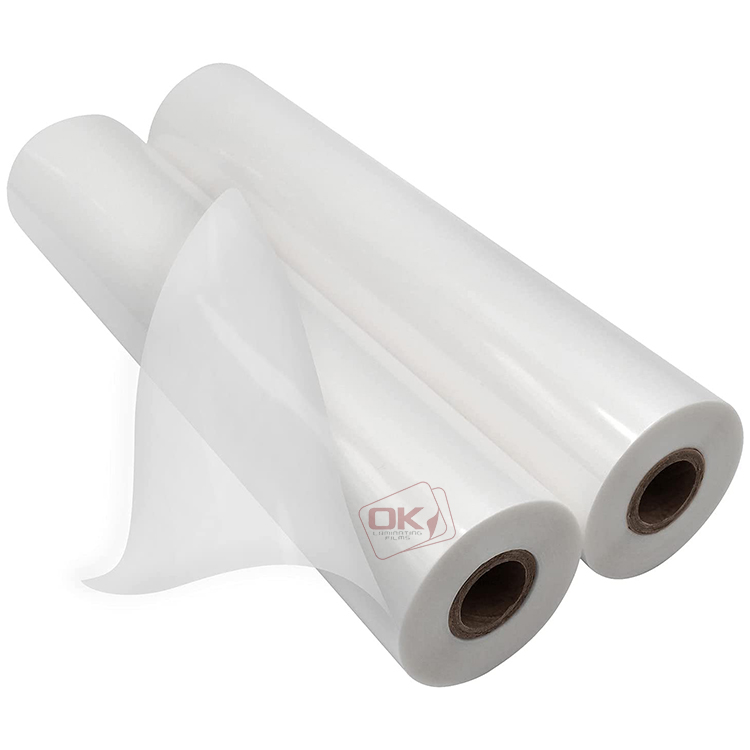
Laminating rolls and laminating pouches sit next to each other in most supplier catalogues, which makes them look like two packaging options for the same job. They are not. One is a continuous web of thermal film unwound from a roll laminator; the other is a pre-cut sleeve loaded one sheet at a time into a pouch laminator. The buying decision is driven less by film preference than by the equipment already installed, the format mix of the work, the thickness and width tolerances the job requires, and the production mode the buyer is actually running.
Direct answer: specify laminating rolls when the work is continuous, variable in length, or runs on a roll laminator of a defined width; specify laminating pouches when the work is fixed-format and processed in office batches or on demand in retail. In HADA's range, the HD-RL thermal laminating roll film is produced in PET+EVA with a thickness range of 35mic–250mic, a width range of 100mm–1300mm and customizable length, while HD-A4-80MIC pouches are a fixed A4 80mic (50/30) format and the Letter size pouch line covers 3Mil/75mic and 5Mil/125mic builds.
This guide compares the two formats across equipment requirements, format flexibility, thickness and width options, finish, production mode, compliance evidence and commercial terms — so a print or packaging buyer can match the film to the machine and the machine to the order book.
Problem Definition: Why the Roll-or-Pouch Decision Goes Wrong
Most lamination purchasing errors are not film-quality errors. They are format-to-system errors, and they repeat across four predictable patterns.
- Machine mismatch. A buyer specifies roll film for a plant that only runs pouch laminators, or buys pouch stock for a line already set up with a roll laminator. The film itself may be perfectly manufactured; it simply cannot be fed by the installed equipment.
- Format mismatch. Pouches are supplied in fixed outlines. HADA's HD-A4-80MIC is A4 (216*303mm) and the Letter size pouch is 229*292mm (9*11.5 inch). Work that varies in length, or exceeds those dimensions, cannot be covered by a pouch without trimming, joining or extra handling.
- Thickness assumption. Buyers often assume that an 80mic pouch and a 5Mil pouch describe comparable film builds. They do not. HD-A4-80MIC is an 80mic total build expressed as 50/30 PET-to-EVA, while the Letter size 5Mil pouch is a 125mic build expressed as 75/50. Mill and micron are two naming conventions for two different total constructions.
- Compliance assumption. A test report issued for one product family is not automatically valid for another. Roll film and pouch film are documented as separate items, and REACH, RoHS, SVHC and food-contact requirements differ by destination market.
A fifth pattern is commercial rather than technical. Pouch purchasing is counted in packs — 100 pcs per pack, 10 packs per carton, with an MOQ of 1,000 packs — while roll film is specified by width, thickness and a customizable length. The two ordering logics do not convert into each other cleanly, and buyers who try to compare them pack-for-roll usually end up with the wrong quantity.
Industry Background: Where the Two Formats Sit
Roll lamination and pouch lamination draw on the same base-film supply chain, which is why their availability and raw-material behaviour move together. Published market data for the category is large and reasonably consistent in direction, though not in absolute value.
DataM Intelligence valued the global lamination films market at US$6,842.11 million in 2024, with food & beverage identified as the primary end-user segment, and placed Asia Pacific at a 36.87% revenue share in the same year. Data Bridge Market Research valued the BOPP thermal lamination films segment at US$3.5 billion in 2024 and projected a 5.2% CAGR through 2033. Future Market Insights valued PET (BOPET) packaging films at US$10.3 billion in 2024, citing e-commerce and high-performance insulation demand.
Reading the numbers correctly: published estimates for the general lamination market differ by scope — from roughly US$3.4 billion to about US$6.8 billion depending on whether the definition covers laminating film rolls alone or the wider lamination film category. The useful signal is structural, not numeric: PET and BOPP thermal constructions dominate industrial lamination, and the same converter base supplies both roll and pouch formats.
Two technical reference points are worth keeping in the comparison. Tensile properties of thin plastic films — including films under 1.0 mm thick — are commonly measured using ASTM D882, which covers strength, elongation and modulus. In the European Union, plastic materials and articles intended for food contact must comply with Commission Regulation (EU) No 10/2011, which sets migration limits and a positive list of authorized substances.
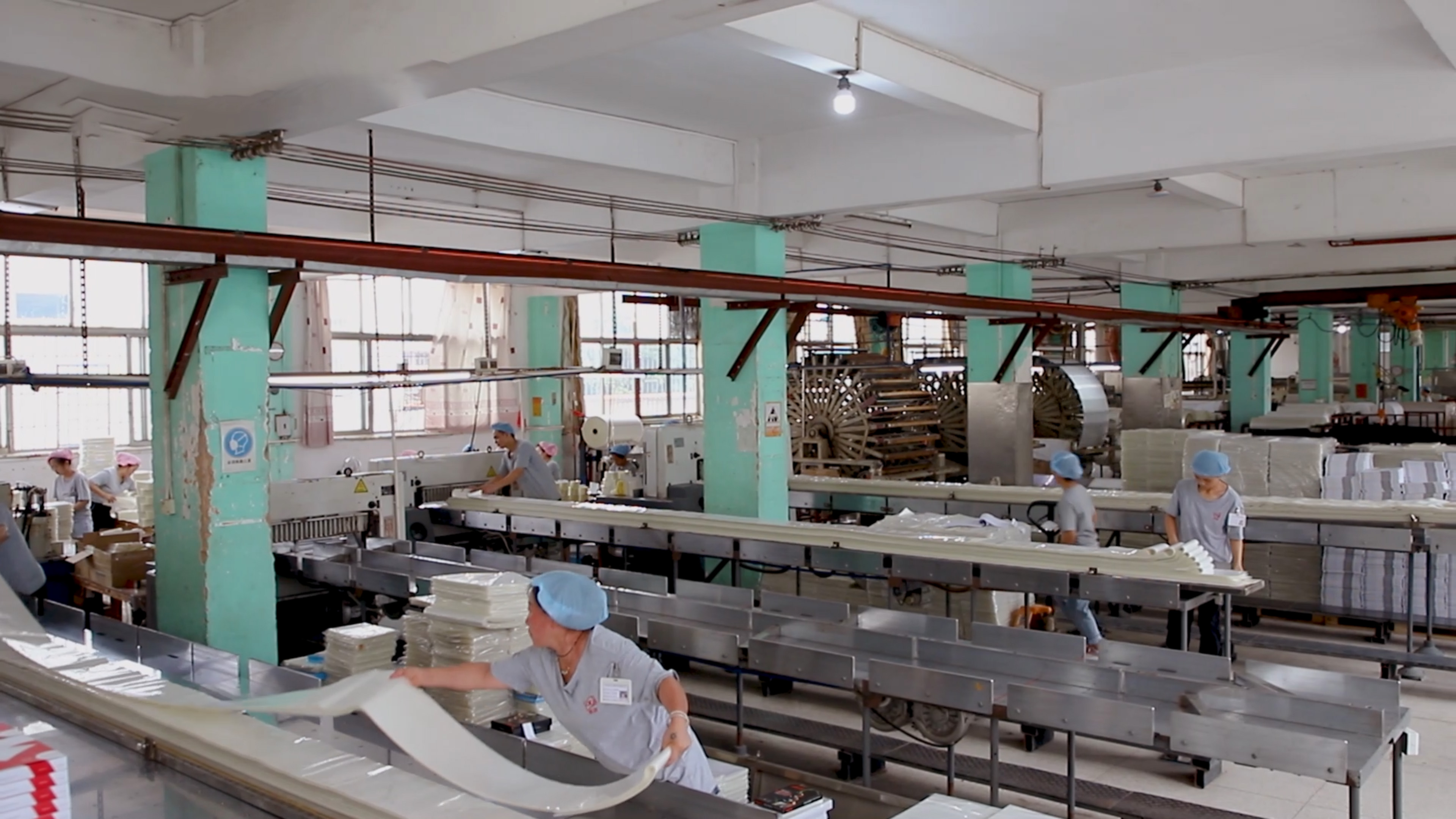
HADA (Guangzhou Huada Laminating Film Co., Ltd.) has manufactured laminating film since 1992 and works exclusively in this category, with more than 33 years of production experience. The company operates a 40,000 m² facility with 200 employees and 5 R&D engineers, runs 3 automated production lines with an annual capacity exceeding 10,000 tons, and exports to more than 50 countries and regions. Its export ratio is approximately 80%, with main markets across North America, South America, Europe, Australia and Southeast Asia. It holds 22 national patents and certifications including ISO 9001, BSCI, SMETA, ROHS and REACH.
Detailed Solution: What Each Format Actually Is
Laminating Roll Film — HD-RL
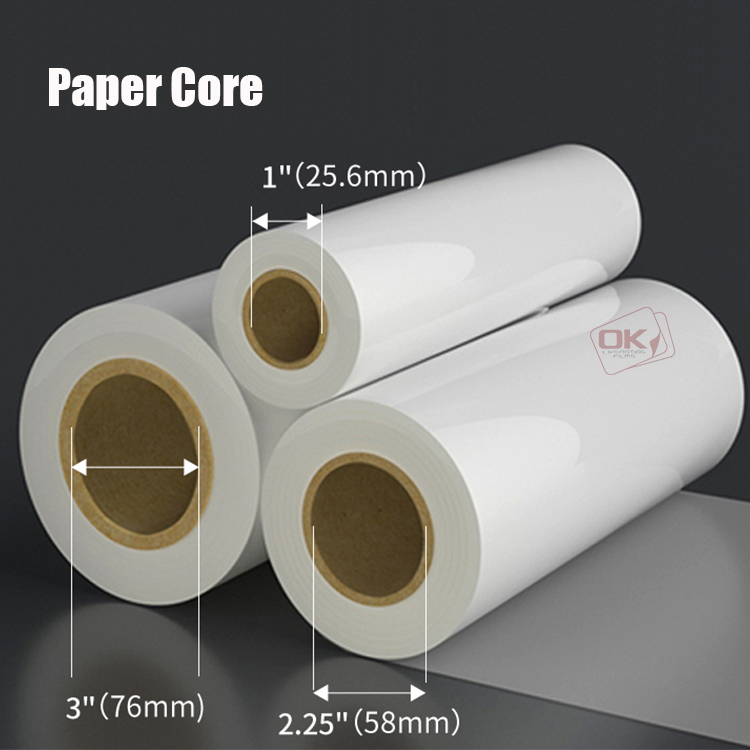
HADA's HD-RL is a thermal laminating roll film built from PET+EVA. It is supplied in a thickness range of 35mic to 250mic and a width range of 100mm to 1300mm, with length customizable to the buyer's request. Finish options are glossy and matte, and packaging can also be customized. The documented product features are high transparency, no bubble and no wrinkle, strong adhesion, waterproof and scratch-resistant performance, and anti-yellowing for long-term preservation. It is suitable for all standard thermal laminators of the roll type.
The two specification bands are the practical reason roll film fits production environments. A narrow roll suits a compact laminator; a wide roll suits a wide-format line; a 35mic film suits applications where low build-up and flexibility matter; a 250mic film suits applications where rigidity and edge protection matter. Because length is not fixed by a die, a run continues until the roll is consumed rather than stopping at a pre-cut boundary.
Laminating Pouches — HD-A4-80MIC and Letter Size 3Mil/5Mil
The pouch range is pre-cut and fixed-format. HD-A4-80MIC is made from PET+EVA with a total 80mic build expressed as 50/30, in A4 size (216*303mm), supplied in glossy and matte finishes and packed 100 pcs per pack, 10 packs per carton. The Letter size pouch is offered in two builds: 3Mil/75mic (38/37) and 5Mil/125mic (75/50), in Letter size (9*11.5 inch or 229*292mm), with the same glossy and matte finish options and the same 100 pcs per pack, 10 packs per carton packaging.
Both pouch models carry the same documented feature set as the roll film: high transparency, no bubble and no wrinkle, strong adhesion, waterproof and scratch-resistant performance, and anti-yellowing for long-term preservation. Both are suitable for all standard thermal laminators of the pouch type.

Where the Two Formats Overlap — and Where They Do Not
Material is the overlap. HADA's roll film and pouch film are both PET+EVA thermal laminating constructions with the same documented performance features. The divergence is in format and feeding: a pouch has a fixed outline and a fixed count per pack, while a roll does not. That single difference drives machine choice, job-mix suitability, waste handling and the way an order is written.
In short: same polymer family, different delivery format. If a buyer only compares material composition, the comparison is finished before it starts. The real decision sits in the format and equipment columns.
Step-by-Step Breakdown: Matching the Format to Your Line
Step 1 — Start with the laminator, not the film
Roll laminators feed film from a roll; pouch laminators feed a pre-cut sleeve. HADA's application data pairs pouch laminators with pouch formats and roll laminators with roll film, and both the HD-RL roll film and the pouch models are documented as suitable for all standard thermal laminators of their respective format. A plant equipped only with pouch laminators cannot substitute roll film at the feed stage, and a roll line cannot be loaded with pouches. Confirming the machine model first eliminates the most expensive category of ordering error.
Step 2 — Test format flexibility against the job mix
Fixed-format work — A4 documents, Letter-size handouts, ID cards, badges, menus, book covers, labels — suits pouches, because the sleeve already matches the output size. Variable-length or oversized work — posters, banners, wide packaging labels, mixed sheet lengths in one run — suits roll film, because the roll covers widths from 100mm to 1300mm and the length is not pre-determined. Buyer rule of thumb: if more than a small share of the job mix falls outside A4 and Letter, roll lamination removes the trimming step entirely.
Step 3 — Set thickness and width specifications
Roll film: 35mic–250mic thickness, 100mm–1300mm width, length per request. Pouch stock: A4 80mic (50/30), or Letter size at 3Mil/75mic (38/37) and 5Mil/125mic (75/50). Note the unit discipline before comparing quotations — 3Mil converts to approximately 75mic and 5Mil to approximately 125mic, and the PET-to-EVA split inside each build differs between models. Two products with the same nominal thickness can still behave differently if the PET/EVA ratio differs.
Step 4 — Decide the finish
Both formats are available in glossy and matte across HADA's range. Glossy is generally specified where colour vibrancy and reflectivity are wanted; matte where glare, fingerprints and surface sheen are a problem. Finish is an independent decision from format and does not change machine compatibility — a roll and a pouch with the same finish will still be fed by different equipment.
Step 5 — Match the production mode
HADA's application data describes three operating modes: batch processing in office, on-demand lamination in retail, and continuous production line integration. Pouches fit the first two directly. Roll film fits continuous line integration by design, and it also serves office and retail environments when the installed machine is a roll laminator. The mode, not the product name, determines which format is operationally cheaper to run.
Step 6 — Verify the compliance documents for the specific product
Certification evidence for HADA's laminating film includes the CE and RoHS certificate No.CANEC25014307501 issued by SGS-CSTC Standards Technical Services Co. Ltd.; the REACH certificate No.CANEC25014307503 issued by SGS-CSTC Standards Technical Services Co. Ltd.; and the SVHC screening test report for PET plastic film, No.CANEC25014307505, issued by SGS-CSTC Standards Technical Services Co. Ltd. On the system side, the company holds ISO 9001:2015 Quality Management System certification No. 127878 issued by CNCA, and High-Tech Enterprise certificate No. GR202344012666 issued by Guangdong Provincial Department of Science and Technology, Guangdong Provincial Department of Finance, and State Taxation Administration Guangdong Tax Bureau. It also holds Certificate of Utility Model Patent No. 19262125 issued by the National Intellectual Property Administration. Documents are product- and market-specific, and food-contact applications in the EU must additionally be assessed against Commission Regulation (EU) No 10/2011.
Step 7 — Confirm commercial terms before sampling
For pouch production, HADA applies an MOQ of 1,000 packs, with monthly capacity of 150,000 packs (100 pcs per pack) and a lead time of 20–30 days. Customization options under OEM/ODM cover product size, thickness, logo and packaging. Quality control is 100% inspection before shipment. The after-sales policy provides a 12-month warranty against delamination, colour fading and material defects, a 24-hour response time for quality complaints with a dedicated account manager, and free replacement or full refund for non-conforming goods with priority re-production for bulk orders.
Use Cases: Three Production Modes, Three Different Answers
Office batch processing. A4 and Letter-size pouches are the default choice where documents, certificates, ID cards and badges are processed in fixed-format batches. HD-A4-80MIC covers the A4 workflow at an 80mic (50/30) build, and the 3Mil and 5Mil Letter pouches cover North American document sizes at 75mic and 125mic respectively. Pack counting (100 pcs per pack, 10 packs per carton) makes internal consumption easy to track.
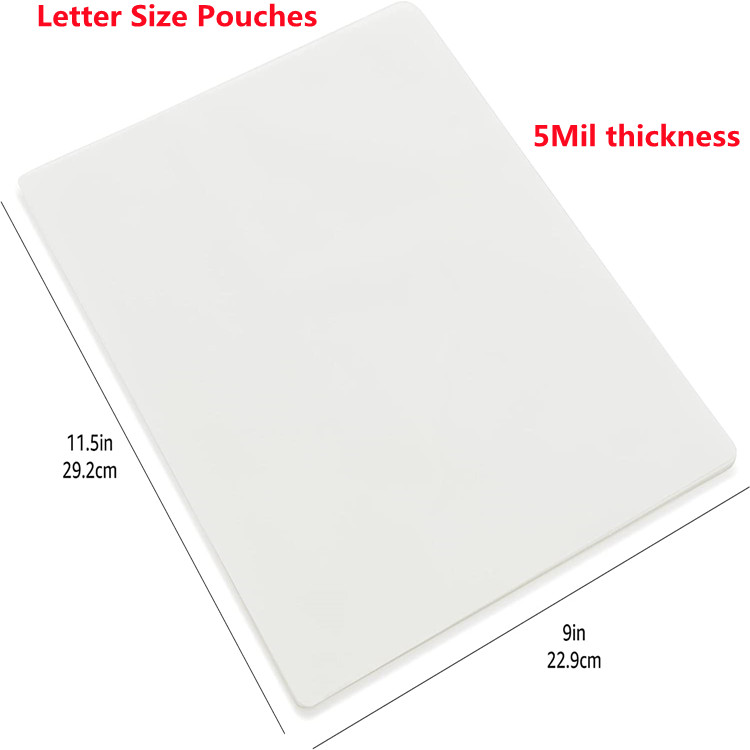
Retail on-demand lamination. Copy shops, stationery retailers and print counters typically run pouch laminators because each customer job arrives as a discrete sheet. The pouch format matches the transaction: the operator loads one sleeve, laminates, and returns a finished item. The same environment can move to roll film only if the machine is changed.
Continuous production line integration. Where laminated output runs without manual reloading — packaging labels, printed sheets, wide-format graphics — HD-RL roll film is the format, with width selected between 100mm and 1300mm and length configured to the run. This is also where thickness selection matters most: 35mic to 250mic spans light surface protection through to heavier structural protection.
Hybrid distribution. Distributors frequently carry both formats because their customer base splits across office and industrial demand. HADA's case record includes a brand importer and distributor operating in Germany, Australia and the United States that has worked with the company for more than 10 years, moving approximately 600,000 packs of lamination film per year for wholesale distribution under its own brand for office document lamination and stationery protection. The record notes zero quality complaints across 10 years and a 25% reduction in the customer's lamination failure rate, supported by a customized anti-counterfeiting coating and 24/7 technical support for lamination process optimization.
Comparison Table: Laminating Rolls vs. Laminating Pouches
| Specification | Laminating Roll Film (HD-RL) | Laminating Pouches (HD-A4-80MIC / Letter 229*292*3mil&5mil) |
|---|---|---|
| Material and type | PET+EVA thermal laminating roll film | PET+EVA thermal laminating pouch |
| Delivery form | Continuous roll, length customizable per request | Pre-cut fixed sleeve, A4 or Letter size |
| Thickness | 35mic–250mic | 80mic (50/30) for A4; 3Mil/75mic (38/37) and 5Mil/125mic (75/50) for Letter |
| Width / size | 100mm–1300mm | A4 216*303mm; Letter 229*292mm (9*11.5 inch) |
| Finish | Glossy and matte | Glossy and matte |
| Packaging | Customizable per request | 100 pcs per pack, 10 packs per carton |
| Matched equipment | Roll laminators | Pouch laminators |
| Production mode fit | Continuous production line integration; also office and retail where a roll laminator is installed | Batch processing in office; on-demand lamination in retail |
| Documented features | High transparency; no bubble and no wrinkle; strong adhesion; waterproof and scratch-resistant; anti-yellowing for long-term preservation | High transparency; no bubble and no wrinkle; strong adhesion; waterproof and scratch-resistant; anti-yellowing for long-term preservation |
| OEM/ODM customization | Product size, thickness, logo, packaging | Product size, thickness, logo, packaging |
| Order terms | Length and packaging configured per request; production lead time 20–30 days | MOQ 1,000 packs; monthly capacity 150,000 packs; production lead time 20–30 days |
| Quality and after-sales | 100% inspection before shipment; 12-month warranty against delamination, colour fading and material defects; 24-hour response time | 100% inspection before shipment; 12-month warranty against delamination, colour fading and material defects; 24-hour response time |
FAQ: Laminating Rolls and Pouches for Print and Packaging Buyers
1. What compliance documents should an importer check before ordering laminating film from HADA?
Check the documents that match the actual product and destination market. For HADA laminating film, the available evidence includes the CE and RoHS certificate No.CANEC25014307501, the REACH certificate No.CANEC25014307503, and the SVHC screening test report for PET plastic film No.CANEC25014307505 — all issued by SGS-CSTC Standards Technical Services Co. Ltd. System-level documents include ISO 9001:2015 certification No. 127878 issued by CNCA and High-Tech Enterprise certificate No. GR202344012666. The company holds 22 national patents and certifications including ISO 9001, BSCI, SMETA, ROHS and REACH. For food-contact applications sold into the EU, the relevant framework is Commission Regulation (EU) No 10/2011, which sets migration limits and a positive list of substances; buyers should confirm the specific product documentation against that framework rather than assuming a general certificate covers the use case.
2. Can a single supplier cover both roll film and pouch requirements, and how far can specifications be customized?
Yes. HADA manufactures both formats from the same PET+EVA film family. Roll film (HD-RL) covers 35mic–250mic thickness and 100mm–1300mm width with customizable length, glossy or matte finish and customizable packaging. Pouch stock covers HD-A4-80MIC at 80mic (50/30) in A4 (216*303mm), plus Letter size pouches at 3Mil/75mic and 5Mil/125mic. OEM/ODM customization options include product size, thickness, logo and packaging. Monthly pouch capacity is 150,000 packs, supported by 3 automated production lines and an annual capacity exceeding 10,000 tons.
3. How do order quantities differ between rolls and pouches, and what drives the commercial structure?
The two formats are ordered in different units, which is the main commercial difference. Pouch production carries an MOQ of 1,000 packs, with 100 pcs per pack and 10 packs per carton, and a monthly capacity of 150,000 packs. Roll film is not ordered by pack count: width, thickness, length and packaging are configured to the buyer's request, so the order quantity is defined by the roll specification rather than a fixed pack multiple. Both formats share a 20–30 day production lead time. Specification data does not include published price lists; commercial terms are quoted per order based on width, thickness, length or pack count, finish, packaging and customization requirements.
4. Can I request samples of both formats before committing to a production order?
Sampling is the normal first step for buyers evaluating a format switch, because the decisive test is machine compatibility rather than catalogue specification: a roll sample confirms that the film feeds and bonds correctly on the installed roll laminator, and a pouch sample confirms sleeve fit and finish on the pouch laminator. Buyers can request roll film and pouch samples together so both formats are tested against the same job. Sample and quotation requests can be sent to brian@huada168.com or via WhatsApp at +8618929589411, and the full product range is listed at www.huada168.com.
5. What is the production lead time, and what quality control applies before shipment?
Production lead time is 20–30 days. Quality control is 100% inspection before shipment. The after-sales policy provides a 12-month warranty against delamination, colour fading and material defects, a 24-hour response time for quality complaints handled by a dedicated account manager, and free replacement or full refund for non-conforming goods, with priority re-production for bulk orders. HADA has manufactured laminating film since 1992 and operates a 40,000 m² facility with 200 employees, 5 R&D engineers and 3 automated production lines.
Conclusion: Choose the Format by Machine, Not by Habit
The roll-versus-pouch decision resolves quickly once it is framed correctly. Laminating rolls suit variable-length, width-driven and continuous work on roll laminators; laminating pouches suit fixed-format, sheet-by-sheet work on pouch laminators. The material behind both is the same PET+EVA thermal construction, and the performance claims are identical — high transparency, no bubble and no wrinkle, strong adhesion, waterproof and scratch-resistant performance, and anti-yellowing for long-term preservation. What differs is the feed system, the format envelope (A4 216*303mm and Letter 229*292mm against 100mm–1300mm of roll width), the thickness options (80mic and 75mic/125mic against 35mic–250mic), the ordering unit, and the production mode each format was designed for.
For buyers working in both worlds, the practical path is a two-format supply relationship rather than a single-format compromise: roll film for line integration, pouches for fixed-format office and retail demand, both covered by the same compliance documentation, quality control process and after-sales terms.
Compare Both Formats on Your Own Equipment
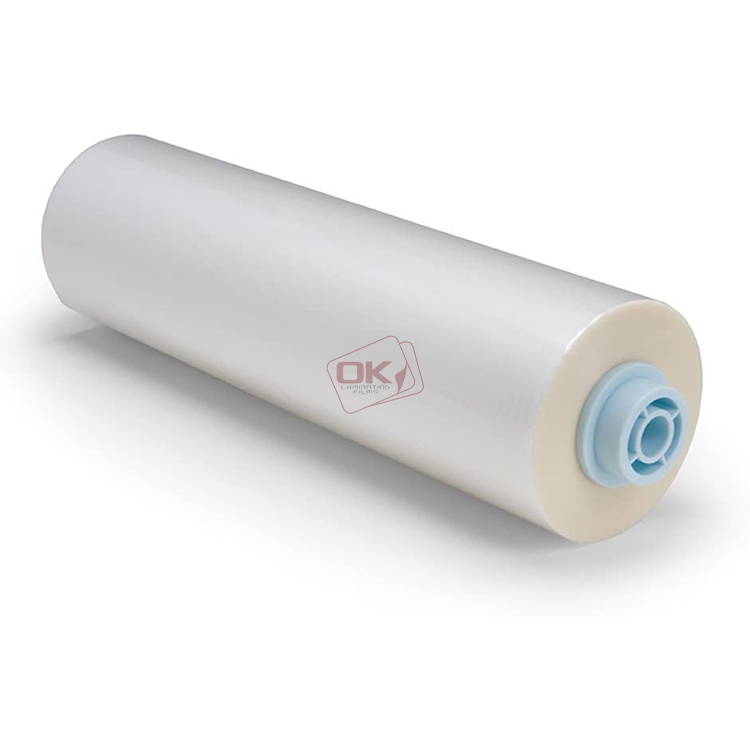
Send your laminator model, job format, required thickness and annual volume, and HADA will match the specification to your line — HD-RL roll film from 35mic to 250mic and 100mm to 1300mm width, or A4 and Letter size pouches in glossy or matte. Request samples, a quotation or a product catalogue directly:
Email: brian@huada168.com | WhatsApp: +8618929589411 | Website: www.huada168.com
Guangzhou Huada Laminating Film Co., Ltd. — No.15, Shantangpai Road, Gaoweiqiang, Jinpen Village, Zhongluotan Town, Baiyun District, Guangzhou, Guangdong Province, China. Tel: 020-87451312.
Have Questions or Need More Details?
Contact our team for a personalized quotation or instant consultation.
Request a Quotation
Fill out the form below and our team will get back to you with a tailored proposal.
WhatsApp Direct Chat
Prefer to chat in real-time? Message us on WhatsApp for instant assistance & quick answers.
- Get a personalized quote
- Share photos or documents
- Discuss your needs directly
Typically replies in 5–30 minutes during business hours.