Navigating REACH and RoHS for Laminating Rolls: A 2026 Compliance Guide for Importers
Navigating REACH and RoHS for Laminating Rolls: A 2026 Compliance Guide for Importers
For an importer, REACH and RoHS compliance on laminating rolls is a market-access condition, not a paperwork formality. The document set is what allows a consignment to be placed on the EU market — and it is the importer, not the overseas factory, who is asked to produce it.
Most sourcing problems with laminating rolls are visible: the film wrinkles, the adhesion fails, the roll width is wrong. Compliance problems are invisible until they are expensive. A container arrives, a retailer's quality team requests the REACH and RoHS file, and what comes back from the supplier is a one-page PDF with a logo and a sentence. At that point the buyer has no verification path, no batch linkage, and no time.
This guide is written for importers, distributors, and procurement managers who have already narrowed their supplier shortlist and are close to a purchase decision. It explains what REACH and RoHS actually require from a laminating roll, how to audit whether a supplier's documentation is genuine, and what a complete compliance file contains — using SGS-issued documentation held by Guangzhou Huada Laminating Film Co., Ltd. (HADA) as a concrete reference example.
The Real Problem Is Not the Film — It Is the Documentation Chain
The failure mode in EU-bound laminating roll orders is rarely the extrusion. It is the chain of evidence that should follow the roll from resin batch to delivery. Four specific gaps cause most of the damage.
- The single-certificate assumption. Buyers often ask for "the REACH certificate" and "the RoHS certificate" as if they were fixed documents. In practice, compliance is demonstrated by a combination of third-party test reports, a declaration tied to the legal manufacturer, material information covering film, adhesive, and coating, and batch traceability. A supplier that offers only a self-declaration has given you a statement, not evidence.
- The entity mismatch. Documents issued to a trading company, an affiliated brand name, or a Hong Kong holding entity may not cover the factory that actually extrudes the film. When a customs authority or a retail auditor checks, the applicant name on the report must trace back to the producer.
- The application mismatch. A laminating roll used on food packaging, on electronics labels, or on high-security ID cards sits in different regulatory contexts. A test report covering one material family does not automatically cover a different coating, a different adhesive, or a different thickness range.
- The timing problem. Compliance documentation is usually requested after the goods are booked, when reformulating or re-testing is no longer possible within the shipping window. The result is either a delayed shipment or an accepted risk.
For a decision-stage buyer, the practical conclusion is simple: treat the compliance file as a supplier selection criterion, evaluated at the same time as price, capacity, and film performance — not as a document request that follows the purchase order.
Industry Background: Why EU Buyers Are Auditing Lamination Film Suppliers More Closely
The commercial context explains the scrutiny. According to DataM Intelligence, the global lamination films market reached US$ 6,842.11 million in 2024, with food and beverage as the primary end-user segment. The same source places Asia Pacific at a 36.87% revenue share of that market in 2024. In other words, a large share of the world's laminating film supply is produced in a region that exports into the European Union, and EU buyers are therefore dependent on documentation that travels across borders.
Supply is also fragmented. Fortune Business Insights lists established global players in the lamination and graphic roll film market — Cosmo Films, Jindal Poly Films, Taghleef Industries (Derprosa), and GBC (ACCO Brands) — alongside a long tail of smaller manufacturers and trading intermediaries. That fragmentation is exactly why the quality of compliance documentation varies so widely between suppliers offering visually similar rolls.
At the same time, the obligations have not moved to the factory. Under EU market rules, the economic operator placing a product on the market carries the responsibility for demonstrating conformity. For a consignment of laminating rolls, that operator is normally the importer. The supplier's role is to make that demonstration possible; the importer's role is to verify it.
What REACH and RoHS Actually Require from a Laminating Roll
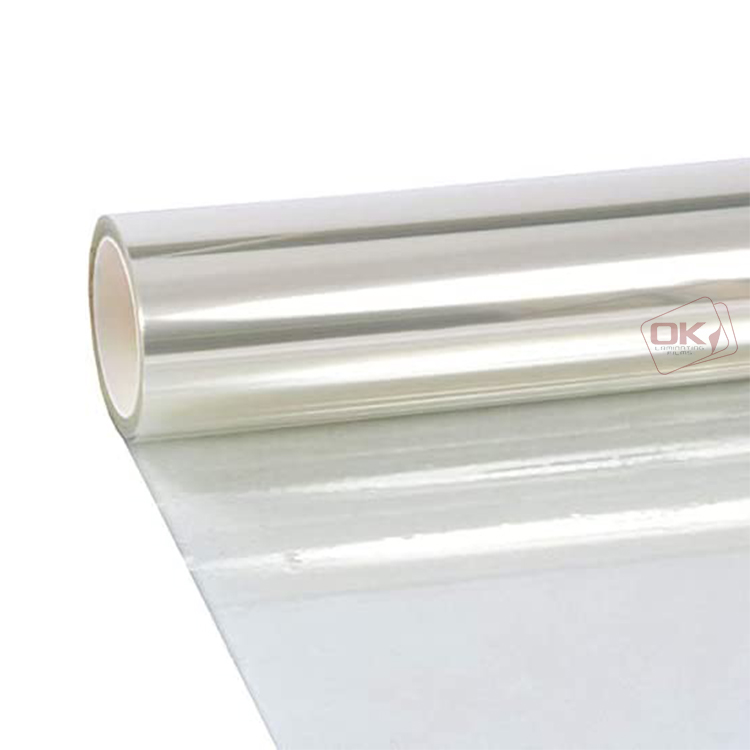
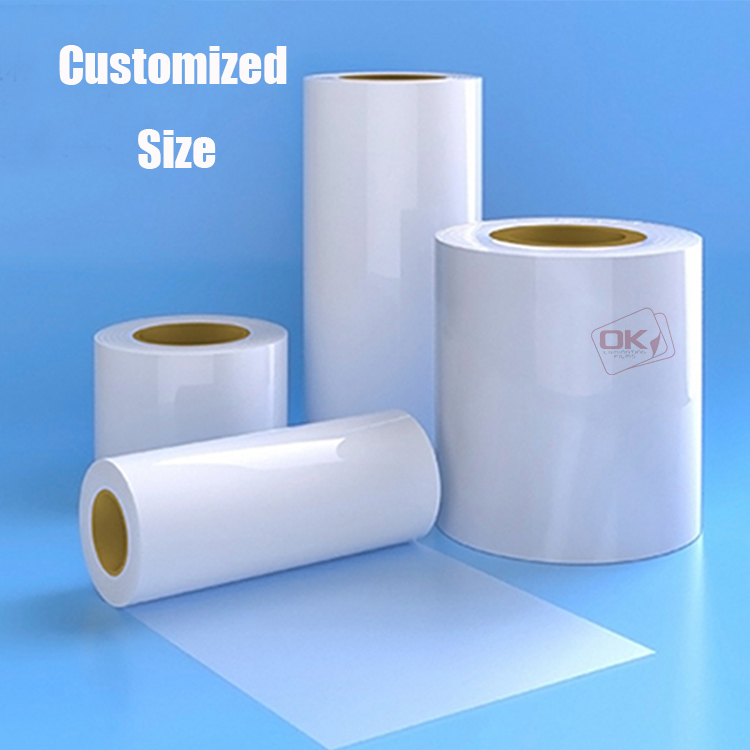
A laminating roll is a multi-layer article: a polymer film base such as PET or BOPP, an adhesive layer, and often a functional coating — anti-static, anti-yellowing, or UV-protective. Each of those layers is a potential carrier of restricted substances, and each therefore falls inside the scope of the relevant regulation.
REACH — Regulation (EC) No 1907/2006
REACH is the EU framework for the registration, evaluation, authorisation, and restriction of chemicals. It covers substances, mixtures, and articles. Two mechanisms matter most to a laminating roll importer:
- The Candidate List of Substances of Very High Concern (SVHC). Where an article contains an SVHC above the concentration threshold defined in the regulation, communication obligations flow along the supply chain so that recipients can use the article safely. A supplier selling into the EU should be able to state whether its film, adhesive, and coating formulations contain Candidate List substances above that threshold.
- Restrictions under Annex XVII. Certain substances are restricted or banned in specific applications, which is why the intended end use of the roll must be declared when testing is scoped.
RoHS — Directive 2011/65/EU
RoHS restricts the use of lead, mercury, cadmium, hexavalent chromium, polybrominated biphenyls, polybrominated diphenyl ethers, and certain phthalates in electrical and electronic equipment. Laminating rolls are not electrical equipment, which is why some suppliers assume RoHS is irrelevant to them. In practice it is requested constantly, for three reasons:
- Laminating rolls are used to finish electronics labels, packaging, and printed components that sit inside or alongside regulated equipment.
- RoHS documentation is frequently bundled with CE-related documentation requests, so buyers receive a combined CE/RoHS report rather than a standalone one.
- Ink, adhesive, and pigment systems can carry heavy-metal contamination, and RoHS testing is a practical way to screen for it.
The third layer buyers forget: food-contact compliance
If the laminated output touches food, REACH and RoHS are not the whole story. Plastic materials and articles intended for food contact in the EU must comply with Commission Regulation (EU) No 10/2011, which sets migration limits and a positive list of authorised substances. A supplier that can only produce REACH and RoHS documentation is not yet a supplier for food-packaging lamination.
Decision rule: before requesting documents, write down the end use in one sentence — for example "PET laminating roll for food packaging in the EU" or "anti-static roll for electronics label lamination." That sentence determines which regulations apply, which tests are relevant, and whether a supplier's existing file is even in scope.
What Valid Documentation Looks Like: HADA's SGS-Issued Reports as a Reference Example
Guangzhou Huada Laminating Film Co., Ltd. — known commercially as HADA — is a manufacturer founded in 1992 and based in Guangzhou, China, producing laminating film, laminating pouches, and laminating rolls. The company operates a 40,000 m² facility with approximately 200 employees, three automated production lines, and an annual capacity exceeding 10,000 tons, exporting to more than 50 countries with an export ratio of about 80% across North America, South America, Europe, Australia, and Southeast Asia.
For EU-facing buyers, the relevant part is the documentation. HADA holds SGS-issued documentation No. CANEC25014307501 covering CE/RoHS, and No. CANEC25014307503 covering REACH. Those numbers are useful not because a number proves compliance by itself, but because they make verification possible: a report number issued by a third-party laboratory can be checked with the issuing body, and the applicant identity on the report can be matched against the supplier's legal entity.
HADA's wider certification set includes ISO 9001, BSCI, SMETA, RoHS, and REACH, supported by 22 national patents. In an audit context, that combination matters because it connects a chemical-safety result to a quality-management system — the first is a snapshot of a formulation, the second is evidence that the formulation is controlled in production.
Step-by-Step: How to Audit a Laminating Roll Supplier for REACH and RoHS
The following workflow is designed to be run before a purchase order is placed. It takes a compliance question and turns it into a documented, defensible supplier decision.
- Define the regulatory scope in writing. State the destination market, the application (food contact, electronics, document protection), and the material family you intend to buy — PET, BOPP, thermal, cold, glossy, or matte. This scope statement becomes the reference against which every document is judged.
- Request the full document pack, not a certificate image. Ask for the third-party test report with its report number, the declaration of conformity, and material information covering film, adhesive, and coating. A supplier that cannot produce the underlying report is a supplier with an unverified claim.
- Match the legal entity. Compare the applicant name and address on the report against the company name on the quotation, the invoice, and the shipping documents. A report issued to a different legal entity from the one invoicing you is a supply-chain risk, not a compliance shortcut.
- Check the scope of the test against the product you are buying. Confirm that the tested thickness, film type, adhesive system, and coating correspond to your specification. HADA, for example, offers customized thickness from 25 to 250 microns and printed or OEM/ODM options — a customized construction may sit outside an existing report's scope and require re-verification.
- Verify the report with the issuing laboratory. Third-party verification is the point of the exercise. Use the report number, the issuing laboratory, and the report date to confirm authenticity directly.
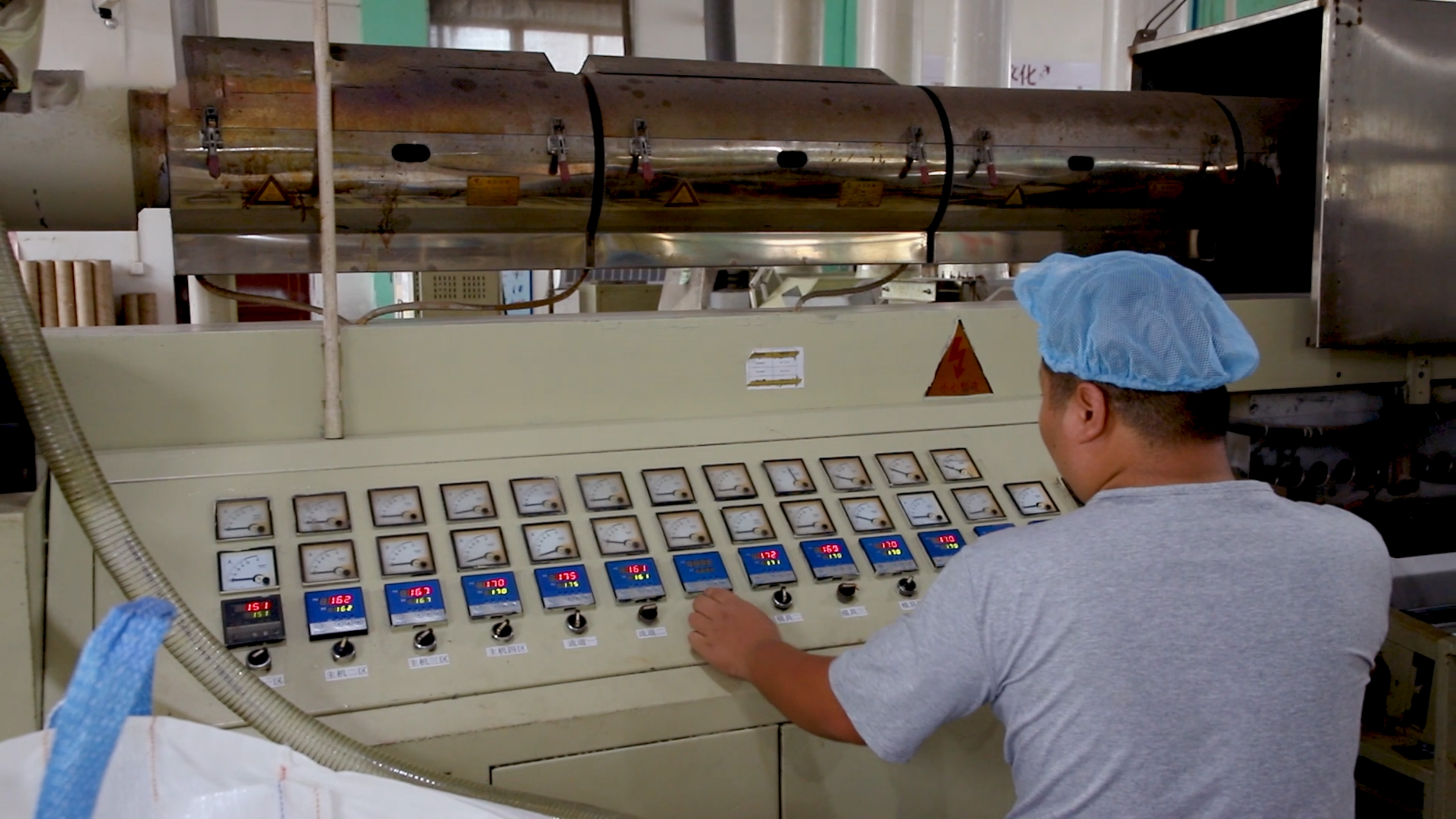
- Audit the production control behind the document. A test result reflects one sample. Ask how the supplier prevents drift between the tested sample and the shipped batch. HADA's control model is online monitoring combined with a three-stage QC process and a batch traceability system.
- Secure batch-level linkage at shipment. Require that the production batch number is recorded on the shipping documents and that traceability can be tied back to the compliance file. Where the supplier operates a batch traceability system, this is a documentation exercise rather than a special request.
- Plan your own confirmation testing. Budget for random re-testing by a laboratory of your choosing on arrival. This protects the importer directly and is the fastest way to detect a substitution between the approved sample and the delivered production run.
- Set a renewal and record-retention cadence. Formulations, coating systems, and regulatory lists change. Put an expiry or review date on every compliance file and require updated documentation at renewal rather than at the moment of an audit.

Use Cases: Where Compliance Risk Actually Concentrates
Not every laminating roll order carries the same compliance weight. Risk concentrates in applications where the laminated surface moves into a regulated environment.
Food and beverage packaging lamination
This is the highest-risk segment and the one for which DataM Intelligence identifies food and beverage as the primary end-user of lamination films. The file needs REACH, RoHS where applicable, and Commission Regulation (EU) No 10/2011 evidence covering migration limits and the positive list of authorised substances. Food-safe roll grades are the relevant product category here, and the documentation set must exist before the first commercial shipment, not after.
Electronics and label lamination
Anti-static laminating rolls finish labels, boards, and printed components that sit inside regulated equipment. RoHS is requested as standard, and the additional technical requirement is that the anti-static or conductive treatment itself is covered by the material information, since a coating is a distinct chemical input from the base film.
High-security ID cards and document protection
Identity documents, bank cards, certificates, and archival materials are laminated in environments where heavy-metal restrictions are enforced. HADA's product documentation positions its PET lamination film for high-security ID card lamination in government, banking, and telecom contexts, and for premium photo and document preservation in archives and museums. In both cases the buyer needs restriction evidence rather than performance data alone.
Industrial packaging and retail brand work
Retail-owned brand programs and industrial packaging buyers increasingly require the same file. Here the triggers are retailer audits and supplier codes of conduct, which typically combine chemical compliance with social accountability schemes — which is why a documentation set that includes BSCI and SMETA alongside RoHS and REACH is more useful in practice than a chemical report alone.
Comparison Table: How to Judge a Laminating Roll Compliance Package
The table below compares the three document levels an importer will encounter, and the EU requirement set that determines which level is sufficient for a given end use.
| Documentation level | What the buyer receives | Can it be independently verified? | Sufficient for EU market placement? |
|---|---|---|---|
| Level 1 — Self-declaration | A signed letter or logo-marked PDF stating REACH/RoHS compliance | No — no report number, no issuing laboratory, no test scope | No. It is a supplier statement, not evidence |
| Level 2 — Third-party test report | Laboratory report with report number, tested material, and scope, e.g. SGS No. CANEC25014307501 (CE/RoHS) and No. CANEC25014307503 (REACH) | Yes — verifiable with the issuing laboratory using the report number | Yes, provided the tested material matches the ordered specification and legal entity |
| Level 3 — Verified pack with process control | Third-party report plus declaration, material information, quality-system certification (ISO 9001, BSCI, SMETA) and batch traceability | Yes — documents and batch records can be cross-checked against shipped goods | Yes, and it is the level that survives customs and retail audit scrutiny |
| EU requirement | What it addresses | When a laminating roll importer needs it |
|---|---|---|
| REACH — Regulation (EC) No 1907/2006 | Chemical substances in film, adhesive, and coating systems, including Candidate List substances and restricted substances | All EU-bound laminating roll orders |
| RoHS — Directive 2011/65/EU | Restricted heavy metals and certain phthalates | Electronics-adjacent lamination, combined CE/RoHS requests, heavy-metal screening |
| Commission Regulation (EU) No 10/2011 | Migration limits and the positive list of substances for plastic food-contact materials | Any laminating roll used on food packaging or food-contact surfaces |
Frequently Asked Questions
Is a REACH or RoHS certificate alone enough to import laminating rolls into the EU?
No. Compliance is demonstrated by a document set rather than a single certificate: a third-party test report with a traceable report number, a declaration of conformity linked to the legal manufacturer, material information covering film, adhesive, and coating, and batch traceability. The report must also match the specification you are buying — a PET roll and a BOPP roll are different scopes. Where the rolls touch food, Commission Regulation (EU) No 10/2011 adds migration limits and a positive list of authorised substances on top of REACH and RoHS.
Can one supplier handle both REACH/RoHS documentation and custom laminating roll specifications?
Documentation capability and customization capability are closely linked, because customization changes the substance profile. A supplier that adjusts thickness, coating, or printing without re-verifying the affected layers can hand you a report that no longer describes the product. Guangzhou Huada Laminating Film Co., Ltd. (HADA) illustrates the integrated model: a manufacturer founded in 1992 with three automated production lines, annual capacity above 10,000 tons, an in-house R&D team of five engineers, customizable thickness from 25 to 250 microns, and printed or OEM/ODM options — combined with SGS-issued documentation No. CANEC25014307501 (CE/RoHS) and No. CANEC25014307503 (REACH).
Does compliance verification add meaningful cost to a laminating roll order?
The certification and testing element is normally a small share of total order value; the material costs sit on the non-compliance side, in detention, rejection, re-shipment, and re-testing. When comparing suppliers, evaluate compliance readiness against landed cost rather than against the ex-works price alone. Process stability is part of that calculation — HADA's product comparison data records a defect rate below 0.1% and consistent quality across production batches, and cites a 10% lower total cost of ownership through reduced waste and fewer rejections, competitive pricing for bulk orders, and volume discounts for long-term partners. Thermal performance also feeds cost: the same data records a required lamination temperature 10–15°C lower while maintaining bond strength, and 15% lower power consumption per unit of output.
Can I review samples and compliance documents before committing to a bulk order?
Yes, and the two should be requested together. A sample validates machine behaviour — adhesion, clarity, shrinkage, and finish — while the document pack validates market access. Test the exact construction you intend to buy, then confirm that the tested scope in the report matches that construction and the legal entity on your quotation. For food-contact or electronics applications, state the end use when requesting the sample so the correct verification scope is applied from the start.
How should I plan lead time around compliance documentation?
Request the documentation before the purchase order, not after it. Once production is scheduled, re-testing a changed formulation can no longer fit inside a normal shipping window. The variables that most often extend timelines are specification changes — custom width, thickness across the 25 to 250 micron range, printed or OEM/ODM constructions — because each change potentially moves the product outside the tested scope. Confirming the document pack, the sample, and the production batch linkage in a single pre-order sequence removes the most common cause of delay. Buyers evaluating HADA can request the current documentation set together with a sample evaluation through www.huada168.com or by email at brian@huada168.com.
Conclusion: Compliance as a Selection Criterion, Not a Document Request
The laminating rolls that create the most risk for an importer are not the ones with weak adhesion — they are the ones with weak evidence. REACH and RoHS sit at the front of the buying decision because they determine whether the goods can be sold at all, and because the responsibility for demonstrating compliance lands on the importer who places them on the market.
A practical file to ask for contains four things: a third-party test report with a verifiable report number and scope, a declaration tied to the same legal entity that invoices you, material information covering film, adhesive, and coating, and a batch traceability system that connects the shipped roll to the tested sample. Where food contact is involved, add Commission Regulation (EU) No 10/2011 evidence. Where your customer is a retailer or a brand owner, add quality and social-accountability certification.
Judged that way, a document set stops being a hurdle at the end of a purchase and becomes a screening tool at the start of one. Suppliers who can produce it — and who can show the process control underneath it — remove a category of risk that price negotiation cannot.
Request Documentation and Samples
Guangzhou Huada Laminating Film Co., Ltd. (HADA) supplies laminating film, laminating pouches, and laminating rolls to more than 50 countries, with SGS-issued documentation No. CANEC25014307501 (CE/RoHS) and No. CANEC25014307503 (REACH) available for verification.
Website: www.huada168.com | Email: brian@huada168.com | WhatsApp: +8618929589411 | Phone: 020-87451312
Address: No.15, Shantangpai Road, Gaoweiqiang, Jinpen Village, Zhongluotan Town, Baiyun District, Guangzhou, Guangdong Province, China.