OEM Laminating Film Capability Guide: What Buyers Must Verify Before Production
OEM Laminating Film Capability Guide: What Buyers Must Verify Before Production
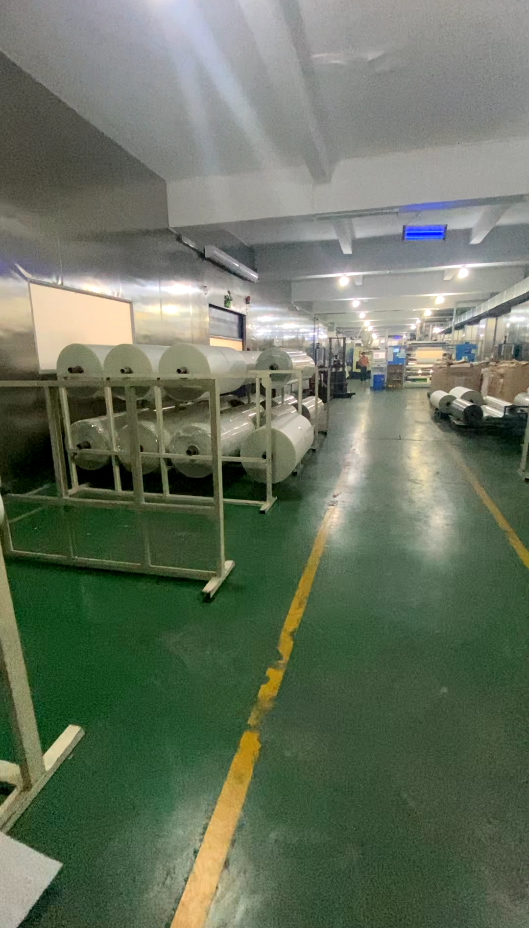
A workshop-level view of HADA gives buyers a functional perspective on OEM laminating film manufacturing.
OEM laminating film procurement is not about finding any roll or pouch on a price list. It is about finding a production partner that can turn your brand specification into a repeatable industrial output.
This article gives importers, distributors, and brand owners a structured way to judge OEM and ODM laminating film capability before making a commitment. The discussion uses HADA, the brand of Guangzhou Huada Laminating Film Co., Ltd., as a concrete benchmark because its published factory and case data allow buyers to map each capability test to verifiable evidence.
Why Capability Evaluation Can Go Wrong
Thermal laminating pouches are often treated as simple finished goods. In an OEM project, however, the buying decision depends on more than a sample: the buyer must control dimensions, material composition, micron thickness, finish, adhesion behavior, packaging, and the compliance documents that travel with the goods.
A factory that can only produce standard sizes may not be able to handle a custom dimension or a customized packaging format. A factory without test reports may pass a visual check but fail regulatory screening later. This is especially important for buyers who sell under their own brand, because the brand owner is responsible for the finished product in the final market.
Industry Context: Why Custom Laminating Film Orders Are Growing
According to DataM Intelligence, the global lamination films market reached approximately USD 6.84 billion in 2024 and is projected to grow at a CAGR of 7.0% from 2025 to 2032. Asia-Pacific accounted for about 36.87% of revenue in 2024. This context matters for procurement: as demand expands, more suppliers present themselves as capable OEM partners, but not all have the production depth, certification scope, or quality-control systems to support a long-term import program.
For a buyer moving from evaluation to execution, the question is not simply which supplier has the lowest price. It is which supplier can prove that its laminating film and thermal laminating pouches can be customized without breaking critical performance characteristics such as transparency, adhesion, waterproofing, scratch resistance, and anti-yellowing behavior.
OEM/ODM Laminating Film Capability: What to Check Before Production
1. Product Platform and Standard Format Control
A reliable OEM partner should be able to demonstrate control over both pouches and rolls, because these formats share the same material technology but differ in converting and packaging. At HADA, the primary product focus is laminating pouches and laminating rolls, with production experience going back to 1992.
HADA publishes clear standard references for evaluation. The A4 laminating pouch model HD-A4-80MIC is made of PET and EVA, with a total thickness of 80 microns, an A4 size of 216 x 303 mm, glossy or matte finish, and standard packaging of 100 pieces per pack and 10 packs per carton. The letter-size laminating pouch model, supplied as 229 x 292 mm, is available in 3 mil (75 microns) and 5 mil (125 microns), also in PET and EVA with glossy and matte options.
For larger formats, the HADA thermal laminating roll film model HD-RL covers 35 to 250 microns in thickness, 100 to 1300 mm in width, custom length, and glossy or matte finish. These three product references give a buyer a useful starting point for comparing size control, thickness options, and packaging discipline.
2. Customization Scope: Size, Thickness, Logo, and Packaging
True OEM and ODM capability is visible in a short list of customization options. HADA’s published capability states that the manufacturer provides OEM and ODM production services, with customization options that include product size, thickness, logo, and packaging. For a laminating film brand owner, this means the project specification can go beyond a stock A4 or letter-size pouch.
If the buying program includes A3 laminating pouches, menu laminating pouches, certificate laminating pouches, or custom size laminating pouches for specific end uses, the specification should state the exact dimensions and target microns. The manufacturer can then confirm whether the format fits the production line, or whether a custom solution is required. This is a core capability test, because a trading company or light assembler will not have the same converting freedom as a manufacturer with in-house process control.
3. Finish and Physical Performance
Glossy and matte finishes serve different markets. Glossy laminating pouches are widely used for photo laminating pouches, certificates, and documents where color clarity is important. Matte laminating pouches reduce glare and are a preferred option for menus, reading materials, and stationery that must remain readable under lighting. HADA offers both finishes on A4 pouches, letter-size pouches, and roll film.
The physical performance claims published by HADA for its laminating film and pouches include high transparency, no bubble and no wrinkle, strong adhesion, waterproof and scratch-resistant properties, and anti-yellowing for long-term preservation. These claims are not decorative: they help a buyer predict whether laminated menus, ID cards, certificates, or contract pages remain clean and durable through daily handling.

R&D involvement is one sign that OEM customization is supported by technical staff rather than only by sales staff.
| Product Type | Model or Standard Size | Thickness | Material | Finish | Standard Pack |
|---|---|---|---|---|---|
| Laminating Pouches | A4 (216 x 303 mm) model HD-A4-80MIC | 80 microns | PET + EVA | Glossy and Matte | 100 pcs/pack, 10 packs/carton |
| Laminating Pouches | Letter size 229 x 292 mm (9 x 11.5 in) | 3 mil / 75 microns and 5 mil / 125 microns | PET + EVA | Glossy and Matte | 100 pcs/pack, 10 packs/carton |
| Thermal Laminating Rolls | HD-RL: width 100–1300 mm, custom length | 35–250 microns | PET + EVA | Glossy and Matte | Customized packaging |
Production Evidence: Certification, Capacity, and Quality Control
Manufacturer Background and Capacity
Guangzhou Huada Laminating Film Co., Ltd. was founded in 1992 and has accumulated more than 33 years of expertise in the laminating film industry. The company reports 200 employees, three automated production lines, an annual capacity exceeding 10,000 tons, and exports to more than 50 countries. Its export ratio is approximately 80%, with main markets in North America, South America, Europe, Australia, and Southeast Asia.
The factory location also supports execution. It is in Guangzhou, about a 30-minute drive from Baiyun International Airport, with convenient access to major ports in Guangzhou and Shenzhen. For buyers working on FOB Guangzhou or Shenzhen terms, proximity to the airport and ports reduces a common source of project friction.
Certifications and Test Reports
Certification evidence answers the compliance part of supplier evaluation. HADA states that it holds ISO 9001:2015 quality management system certification, BSCI and SMETA audits, RoHS and REACH compliance, plus 22 national patents.
Specific SGS documents are available, including the SGS Laminating Film RoHS report numbered CANEC25014307501, the SGS Laminating Film REACH report numbered CANEC25014307503, and the PET plastic film SVHC test report numbered CANEC25014307505. The company also holds Utility Model Patent Certificate No. 19262125 and a Certificate of High-Tech Enterprise issued in 2023. These public reference points help importers and brand owners check whether the supplier has moved beyond basic film conversion into documented manufacturing.
Quality Control and Inspection Practices
HADA’s OEM capability data states that production is supported by 100% inspection before shipment. In addition, procurement terms allow pre-shipment inspection through SGS or Intertek, AQL sampling, and customer on-site inspection. For a global buyer, that means the evaluation stage does not have to end with trust: it can be completed with an independent inspection protocol before the container is released.
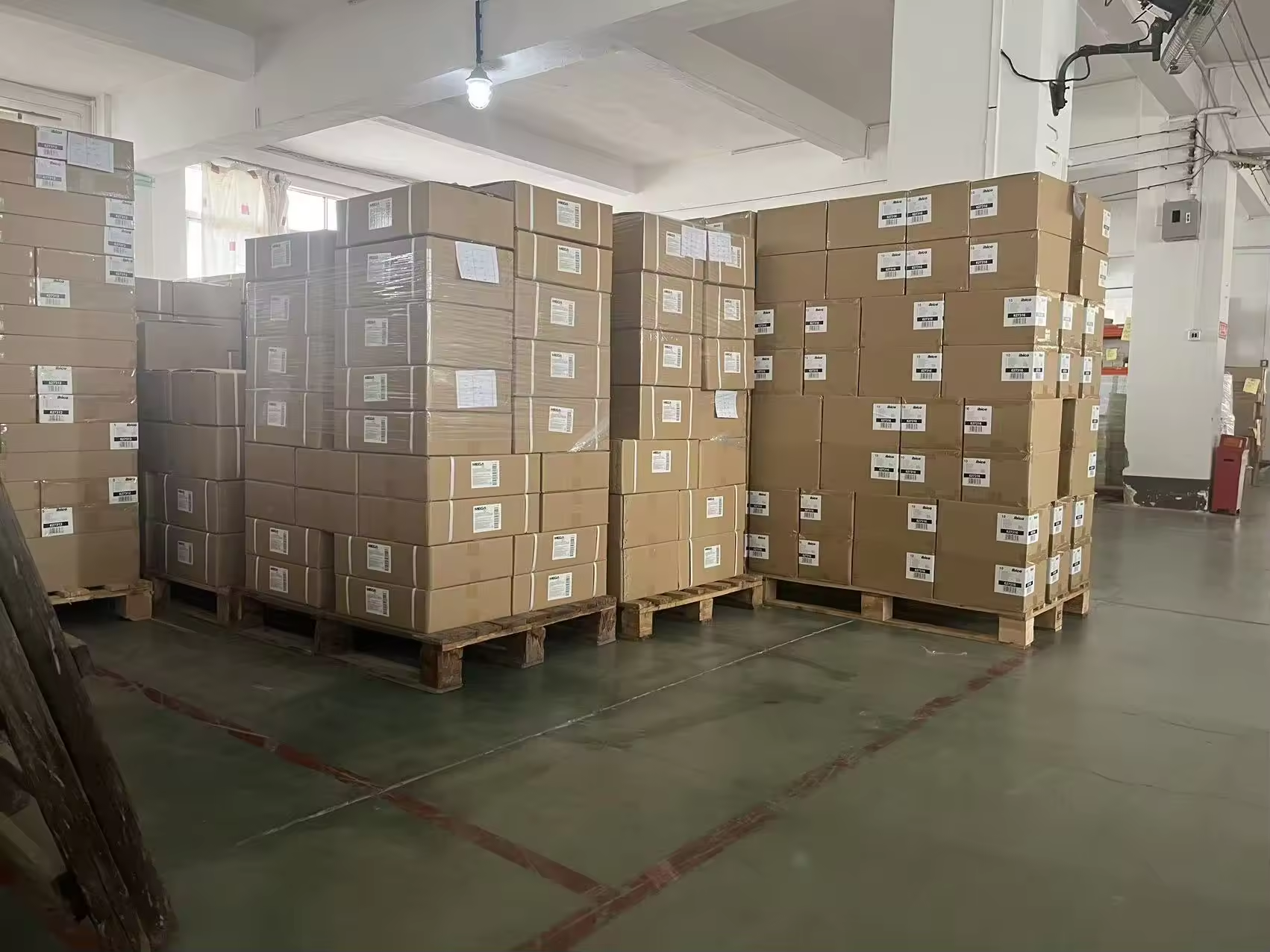
Finished goods stocking and palletizing are part of the final quality-control stage before shipment.
Step-by-Step Procurement Path: From Evaluation to Execution
OEM buyers who need a disciplined route can use the following sequence. It keeps the focus on measurable supplier evidence instead of presentation strength.
- Define the finished product specification. State the target product type, desired dimensions, thickness, glossy or matte finish, logo treatment, and packaging quantity. This becomes the baseline for all later supplier conversations.
- Check the supplier’s product platform. Ask whether the supplier manufactures both pouches and roll film, and request model numbers or published technical data. A supplier that can show standard formats, material structure, and finished features is easier to evaluate than one that only sends a quotation template.
- Review compliance documents early. For shipments into Europe, the United States, Australia, or other regulated markets, confirm whether the supplier has RoHS, REACH, or SVHC test reports. Verify the issuing body, report number, scope, and date.
- Audit customization and production capability. Clarify whether OEM and ODM services include product size, thickness, logo, and packaging. If the project needs custom laminating pouches, the supplier should be able to explain whether the requested size is within its production range.
- Align commercial terms. Check MOQ, lead time, payment method, and delivery terms. HADA’s published procurement terms include FOB Guangzhou or Shenzhen, CIF destination port, and EXW Guangzhou, with payment options of T/T at 30% deposit and 70% before shipment, L/C at sight, or OA 30 days after shipment.
- Arrange inspection and after-sales protection. Confirm whether pre-shipment inspection can be performed by SGS or Intertek, whether AQL sampling is possible, and what the supplier will do if non-conforming goods are found. HADA states that it offers a 12-month warranty against delamination, color fading, and material defects, a 24-hour response time for quality complaints, free replacement or full refund for non-conforming goods, and priority re-production for bulk orders.
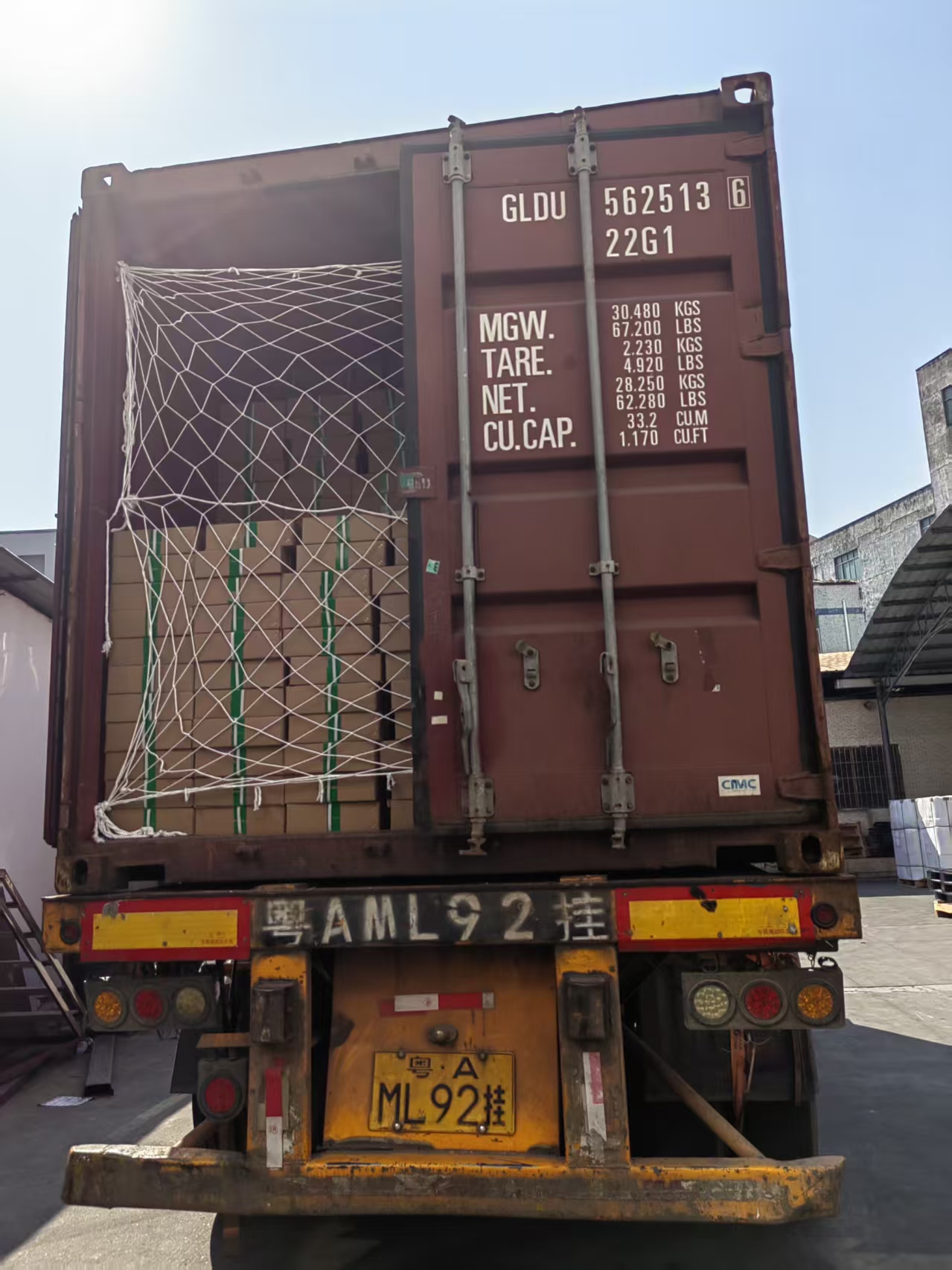
Container loading is the final execution stage for an OEM laminating film order.
Use Case: Long-Term Distribution Program Under the Buyer’s Own Brand
One representative HADA case involves a brand importer and distributor with markets in Germany, Australia, and the United States. The project scale reached roughly 600,000 packs of lamination film supplied per year, with continuous cooperation of more than 10 years.
The application was wholesale distribution under the client’s own brand for office document lamination and stationery protection. According to the published case result, HADA completed the program with zero quality complaints in 10 years and helped the customer reduce its lamination failure rate by 25%. The highlight was customized anti-counterfeiting coating technology and 24/7 technical support for lamination process optimization.
This is a useful case for procurement teams because it shows why OEM capability should be linked to long-term execution. A supplier that can handle a consistent annual volume, adapt coating technology, and provide process support is more likely to perform in a multi-year distribution relationship than a supplier that can only ship a one-off sample order.
Frequently Asked Questions About OEM Laminating Film Capability
What compliance documents should an OEM laminating film buyer check in 2026?
For global shipments, common evidence includes RoHS, REACH, and SVHC test reports. HADA has published SGS report CANEC25014307501 for RoHS, SGS report CANEC25014307503 for REACH, and PET plastic film SVHC report CANEC25014307505. ISO 9001:2015 certification is also documented.
Can HADA manufacture laminating pouches and rolls under my brand?
HADA provides OEM and ODM production services. Customization options include product size, thickness, logo, and packaging. This means thermal laminating pouches and laminating roll film can be aligned with the brand owner’s distribution requirements once the technical specification is confirmed.
What are the MOQ and payment terms for an OEM order?
HADA lists its MOQ for standard lamination film as 1,000 packs, while customized sizes can require higher quantities. Accepted payment terms include T/T at 30% deposit and 70% before shipment, L/C at sight, and OA 30 days after shipment.
How can I validate quality before a laminating film order is shipped?
HADA states that 100% inspection is performed before shipment. Buyers can also arrange pre-shipment inspection by SGS or Intertek, use AQL sampling, or conduct customer on-site inspection before the container is loaded.
What lead time and after-sales support should I expect from an OEM laminating film supplier?
HADA’s production lead time for OEM and ODM orders is 20 to 30 days. After-sales support includes a 12-month warranty against delamination, color fading, and material defects, plus a 24-hour response time for quality complaints, free replacement or full refund for non-conforming goods, and priority re-production for bulk orders. For a current lead-time and quotation review, contact HADA by email at brian@huada168.com or by WhatsApp at +8618929589411.
Conclusion
Laminating film is a functional product. When purchased for OEM distribution, it becomes part of a brand promise. The buyer should therefore evaluate material structure, customization scope, certification evidence, production capacity, inspection rules, logistics terms, and after-sales service before mass production begins.
HADA provides a transparent example of this kind of evaluation: the company publishes its product formats, OEM and ODM customization options, certification reference numbers, factory capacity, procurement terms, quality-control practices, and a representative long-term customer case. These details turn a supplier conversation from a one-page quote into a documented capability review.
If you are preparing an OEM laminating film or thermal laminating pouches program, start with the technical file: target size, thickness, finish, packaging, estimated annual volume, and destination markets.