Outdoor Label Lamination Fading? A Laminating Roll Guide
A label that fades or yellows under outdoor exposure is rarely one material failing. On a packaging and label line, the symptom combines three inputs: UV energy and heat reaching the printed ink, a gradual loss of clarity or a yellow cast developing in the laminating film itself, and a roll specification that never matched how the label is applied and where it has to live. The first two are usually fixed by the brand owner and the ink system. The third is the variable a converter still controls at the lamination stage.
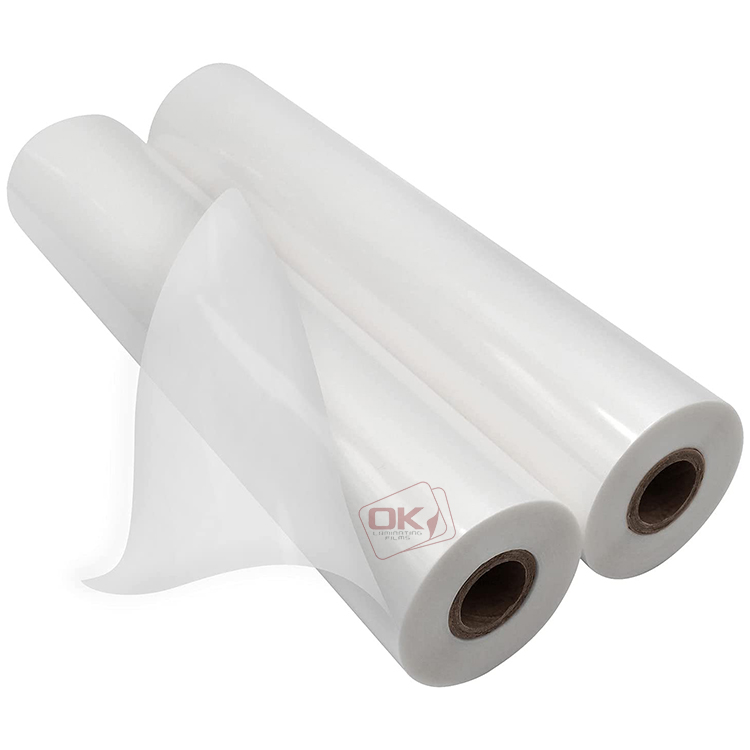
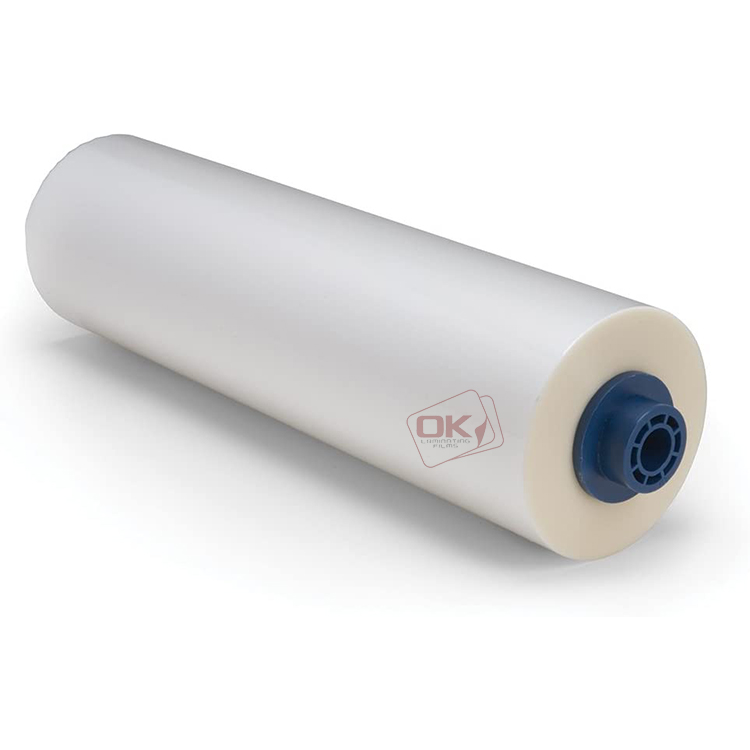
This guide is written for label printers and packaging converters running thermal roll lamination on outdoor work: garden and hardware products, outdoor retail signage, equipment and asset labels, and promotional or transit material. It covers the factors behind fading, the roll properties that address them, and an eight-step way to specify HADA HD-RL roll film for a job you can actually quote, trial and repeat. HD-RL is a PET/EVA thermal laminating roll film supplied from 35mic to 250mic and 100mm to 1300mm, in glossy and matte finishes, with length and packaging customizable to the order.
Why Outdoor Labels Fade and Yellow
Complaints described as 'fading' usually cover four distinct failure paths. They arrive worded the same way, but they need different responses.
- Ink fade. UV energy and heat degrade colorants in the printed layer. Saturation drops before the film shows a visible defect, so the customer sees a washed label while the converter sees an intact laminate. A film specified for UV resistance is chosen so that less of that energy reaches the print in the first place.
- Film yellowing or hazing. The film itself shifts toward yellow or loses transparency during prolonged sun exposure. On white areas the shift is obvious; on coloured areas it reads as dullness, because a hazy film scatters light instead of returning it cleanly to the eye.
- Edge and adhesion failure. Moisture at cut edges combined with day-night thermal cycling can lift the laminate. A lifted edge collects dust and water, and the label then looks discoloured even where the film surface is still sound.
- Process defects that imitate fading. Bubbles, wrinkles and trapped haze scatter light and flatten colour. These are application problems rather than material ageing problems, but the complaint is filed under the same heading.
Only the film side of that list sits inside the converter's control once the print is dry. That is why the useful question is not 'how do I stop fading' in general, but 'which film properties go into the written specification so that the part I control is not the weak link'.
How the Film Market Is Segmented
Thermal lamination film is a mixed-material category, not a commodity. A 2024 material breakdown cited in commercial research put BOPP-based film at 36% of the thermal laminating machine film market, PET at 28% and nylon at 18% (Vertex AI Search / Industry Reports, SRC-0002). A converter specifying outdoor film is therefore choosing inside a segmented market, and base-film selection is a real decision rather than a formality.
Public supplier documentation converges on a single architecture: a polymer base film carrying an adhesive layer. HD-RL pairs a PET base with EVA. Vizlent describes its PET thermal lamination film as a polyester base film with an extruded EVA adhesive layer (SRC-0005), and APIGCL lists BOPP, BOPET and BOPA bases with EVA coating in both glossy and matte finishes (SRC-0012). The PRINTING United Alliance describes laminating supplies generally as polyester-based, with a co-extruded copolymer adhesive (SRC-0007). Those statements establish a qualification frame - base film, adhesive layer, finish, process - not a ranking between materials, and nothing in this public source set contains a controlled outdoor-exposure comparison across them.
Compliance adds a second layer wherever the label touches food. Regulation (EU) No 10/2011 sets migration limits for plastic materials intended for food contact (SGS, SRC-0003). If an outdoor label sits on food packaging, film documentation belongs in the RFQ next to the price, not in a follow-up email after the first order.
Four Film Properties That Address Outdoor Fading
Each property below answers a specific complaint. Together they form the technical core of an outdoor specification, and each one should be confirmed in writing rather than assumed from a product name.
1. UV resistance as a stated scenario requirement
The application profile for this film family lists UV resistance for outdoor use as a special requirement, alongside FDA food contact compliance, anti-static properties for electronic components and glossy or matte finish options. Those are job requirements, not automatic product claims, which matters at the specification stage: ask the supplier what supports the UV statement on the grade you are buying - the test, the exposure condition, the recorded result - and write that answer into the approved specification. A UV claim without a test method cannot be defended to your own customer.
2. Anti-yellowing for long-term preservation
HD-RL's listed product features include anti-yellowing for long-term preservation, high transparency, strong adhesion, no bubble and no wrinkle, and water and scratch resistance. Anti-yellowing is the feature that maps most directly onto outdoor complaints, because it addresses the film's own contribution to the problem rather than the ink's. Because yellowing develops gradually, it is also the property most often missed in a short incoming inspection - which makes the warranty position as important as the feature itself.
3. High transparency and colour vibrancy
Colour vibrancy is a light-handling outcome, not an additive. The application profile lists improving colour vibrancy for printing materials among the film's functions, and high transparency is a listed product feature. The practical reading: a film that stays clear alters the printed colour less, so the label the customer sees outdoors stays closer to the proof that was signed off. If a supplier quotes a light-transmittance figure, ask for the value and the method together. Transmittance on its own says nothing about behaviour after UV exposure, and a high initial figure is compatible with later yellowing unless the anti-yellowing side is documented too.
4. Water, dust and scratch protection
Outdoor exposure is not only sunlight. Rain, cleaning, abrasion in handling and dust all attack the printed surface, and protection against water, dust and wear is listed among the film's functions. Waterproof and scratch-resistant features matter most on labels that are touched or wiped: garden products, hardware, asset tags and outdoor retail goods.
Gloss or matte is a viewing decision, not a durability decision
HD-RL is available in glossy and matte. Gloss returns more light to the eye, which reads as deeper, more saturated colour on signage and product labels; matte scatters surface reflection, which cuts glare where a label is read at an angle or under strong directional light, but it visually flattens the same printed colour. Neither finish is inherently more weather-resistant. UV and anti-yellowing behaviour come from the film construction, while finish decides how the label looks in the environment where it is read.
How to Specify the Right Laminating Roll, Step by Step
Eight decisions, in order. Skipping any of them is how a fading complaint turns into a reprint programme.
Step 1 - Classify the exposure, not the product
The same printed label can sit behind glass in a shop window, on an unshaded outdoor shelf, or on a product that ships and waits in a yard. Write the exposure down before choosing a film: continuous direct sun, intermittent sun, shaded outdoor retail, or indoor with occasional outdoor transit. Exposure decides how much of the specification must be locked, and it is the first line of a competent RFQ.
Step 2 - Match base film and adhesive to your machine
HD-RL is PET with an EVA adhesive layer and is stated to suit all standard thermal laminators; the application profile lists room-temperature, normal-pressure operating conditions with roll laminators as the supporting equipment. Confirm the match on your own machine: run the grade at your production temperature and speed, then check adhesion, haze and edge wrap before the specification is approved.
Step 3 - Set thickness inside the 35mic to 250mic range
Thickness is the most over-simplified line in a film specification. At the thin end, the finished label stays more conformable, which helps on curved or squeezable surfaces; at the thick end, the laminate adds body and stiffness, which suits flat signage, rigid labels and anything handled repeatedly. Thickness also changes how much material a given area consumes, so it is a commercial variable as well as a physical one. Choose against the label's geometry and handling, then confirm the choice in a trial.
Step 4 - Set width from the web, not from a catalogue default
HD-RL runs from 100mm to 1300mm. Wide rolls cut changeover time on large-format work such as poster and banner lamination; narrower widths suit label webs and trim waste. Width is the line where custom orders most often stall, because it interacts with slitting and with what your laminator can hold. Settle it at RFQ stage, and ask for the tolerance in writing.
Step 5 - Choose the finish against the viewing condition
Gloss for saturated retail and product-label work; matte where glare matters or where the surface will be written on. If a label programme mixes both, treat them as two specifications with two approval steps, because a gloss proof does not approve a matte run.
Step 6 - Attach the documents before the price
Request RoHS and REACH statements, an SVHC declaration, and food-contact documentation where the label touches food, and check that each document names the grade you are ordering. The full document set is set out in its own section below.
Step 7 - Trial, then write acceptance criteria
Laminate a trial quantity on production equipment, expose it the way the label will be exposed, and compare it with the approved proof under a defined light source. Record what passes: colour against proof, no yellow cast on white areas, no bubbles or wrinkles, adhesion at cut edges after handling. A trial with no written criteria becomes an opinion, and opinions do not survive a customer complaint.
Step 8 - Fix the batch agreement
Before scaling, agree inspection method, sampling, lead time and the remedy if a batch underperforms. HADA's stated terms are 100% inspection before shipment, a 20-30 day lead time, an MOQ of 1,000 packs, and a 12-month warranty against delamination, colour fading and material defects. Confirm how those terms translate to a custom width and length roll order, because pack-based thresholds and roll orders are not the same unit of measure.
Specification Summary: What Each Decision Changes
The table condenses the documented HD-RL options and what each one changes on an outdoor label job. The right-hand column is interpretation for a buyer, not an additional product claim.
| Decision | Documented HD-RL option | What it changes on outdoor labels |
|---|---|---|
| Base and adhesive | PET base with EVA adhesive layer; suitable for all standard thermal laminators | Sets the process window and bonding behaviour; verify on your own machine rather than assuming |
| Thickness | 35mic to 250mic | Conformability versus body and stiffness; material consumed per area |
| Width | 100mm to 1300mm | Changeovers on wide work, trim waste on label webs, slitting requirements |
| Finish | Glossy or matte | How colour and glare read in the viewing environment; approve each finish separately |
| Yellowing behaviour | Anti-yellowing for long-term preservation (listed feature) | The film's own contribution to white-area discolouration over exposure |
| Surface protection | Waterproof and scratch-resistant (listed features) | Handling, cleaning and weather at the printed surface |
| Clarity | High transparency (listed feature) | How closely the outdoor label tracks the approved proof |
| Documents | ISO 9001, BSCI, SMETA, RoHS, REACH (stated certifications) | Market access and customer sign-off; SVHC and CE items confirmed per grade |
| Order terms | MOQ 1,000 packs; 20-30 days lead time; 12-month warranty against delamination, colour fading and material defects | Planning, cash flow and the remedy path if a batch fades |
Where This Specification Earns Its Place
Four outdoor jobs where the film decision changes the outcome. Each is a documentation and exposure problem before it is a price problem.
- Outdoor product labels on garden, hardware and outdoor retail goods. Continuous sun plus handling. Priority: UV resistance confirmed in writing, anti-yellowing, scratch resistance, and enough body to survive handling. Gloss where shelf presence matters.
- Large-format promotional and banner work. Wider rolls up to 1300mm reduce changeover; matte where the piece is read at an angle. Advertising poster and banner lamination is listed among the application profile's project types.
- Asset, equipment and ID labels. ID card and badge lamination appears in the same application profile, and anti-static properties for electronic components are listed as a special requirement. If you laminate labels for electronics, confirm whether the grade you order carries that property instead of assuming the whole family does.
- Food-adjacent packaging labels. FDA food contact compliance is a listed special requirement, and EU buyers work to Regulation (EU) No 10/2011 for plastic food-contact materials (SRC-0003). Put the food-contact declaration in the RFQ.
Across all four, the operating model differs: batch processing in an office, on-demand lamination in retail, and continuous production line integration each place a different demand on the film's consistency. A converter running continuous lines carries the highest exposure to batch variation, because a single off-spec delivery reaches a large volume of finished labels before anyone sees a complaint.
The Document Set to Request for Outdoor Film
Compliance documents do two jobs: they open markets, and they give you something specific to point at when a customer asks how the film was qualified. For an outdoor specification the set is short.
- RoHS and REACH. HADA's stated certifications include RoHS and REACH alongside ISO 9001, BSCI and SMETA. Ask for the current statement per grade, not a company-level document that names no product.
- SVHC declaration. REACH documentation for a plastic film is normally paired with a statement on substances of very high concern. Ask whether any candidate-list substance is present above 0.1% by weight in the grade you are buying, and get the answer dated.
- CE documentation where your end product needs it. CE marking attaches to defined product categories rather than to film as a generic material. If the laminated article falls into one, ask the supplier for the documentation that supports your declaration, and check that the scope names the film grade instead of the whole portfolio.
- Food-contact documentation. FDA food contact compliance is listed as a special requirement for this application; EU buyers work to Regulation (EU) No 10/2011 (SRC-0003).
- Management-system evidence. ISO 9001, BSCI and SMETA speak to how batches are controlled. They support the process side of a quality claim, not the performance of one specific roll.
Two habits make the set useful. First, date everything - an older statement attached to a current order is a question, not an answer. Second, check scope: a certificate that names the company but not the film grade does not confirm the film you are buying.
Batch Consistency and the Warranty That Covers Fading
Outdoor fading is slow, which makes it a batch-consistency problem as much as a formulation problem. A film that performs in one delivery and yellows in the next damages the label programme's credibility, and the converter absorbs the complaint.
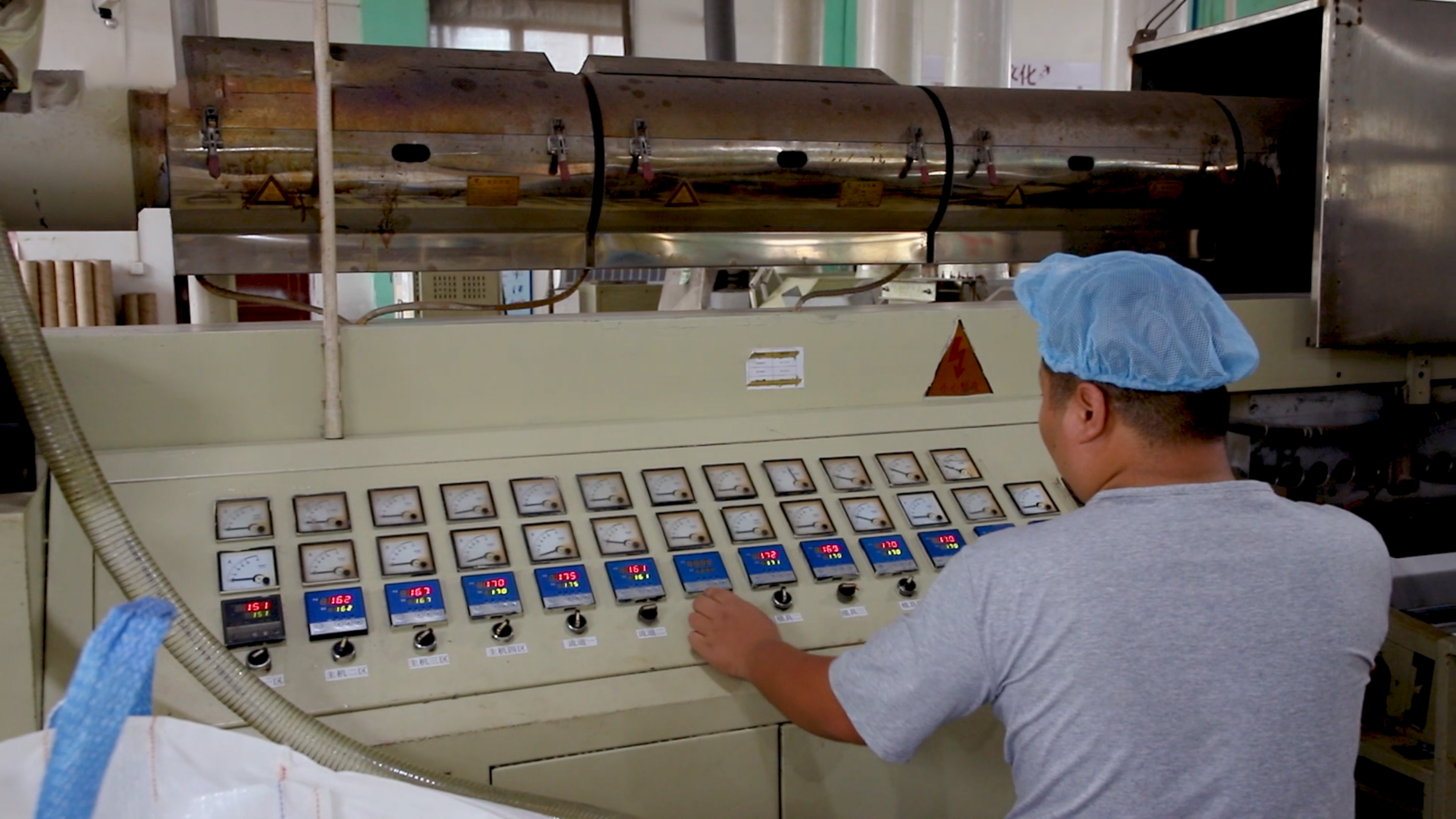
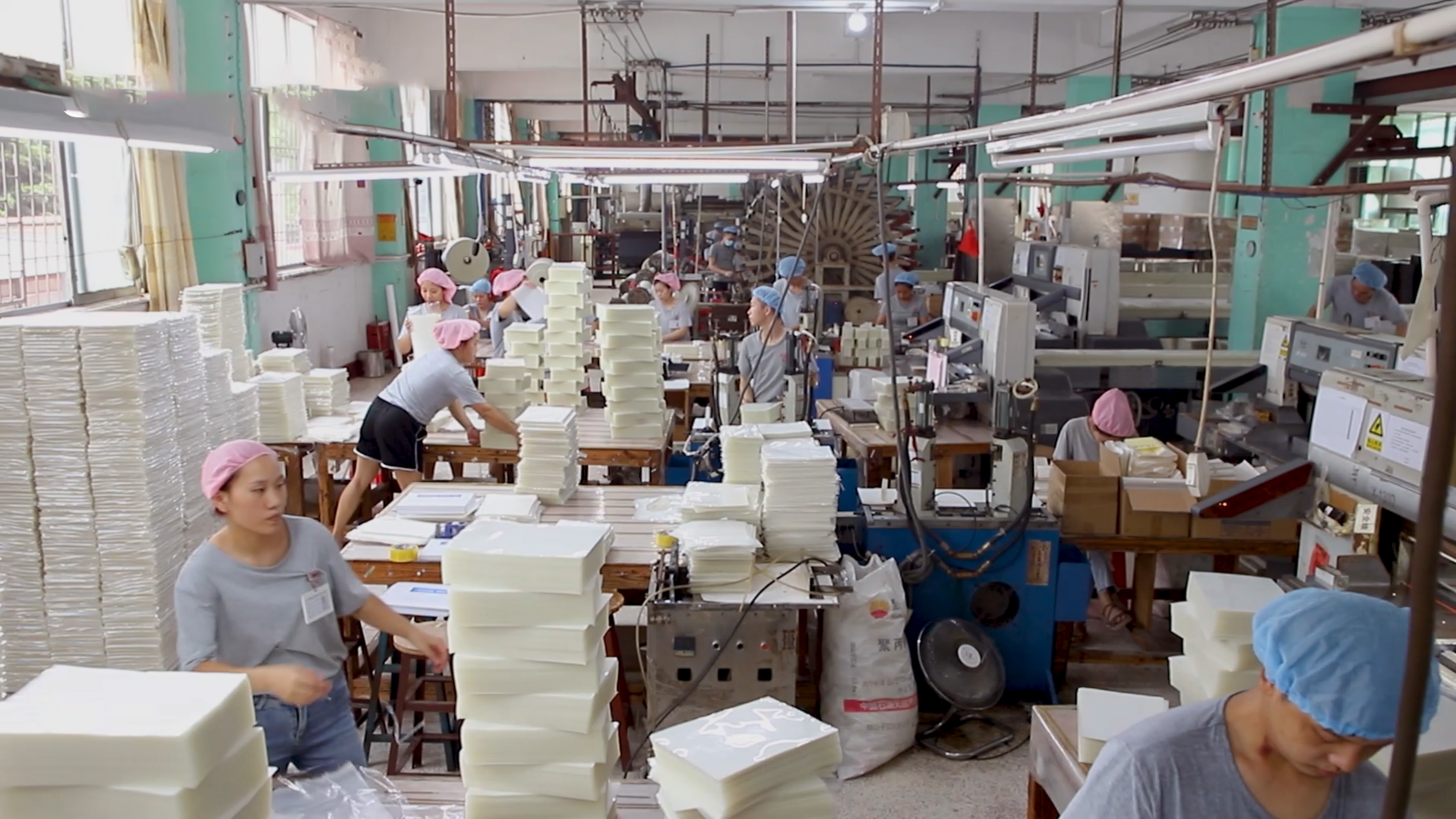
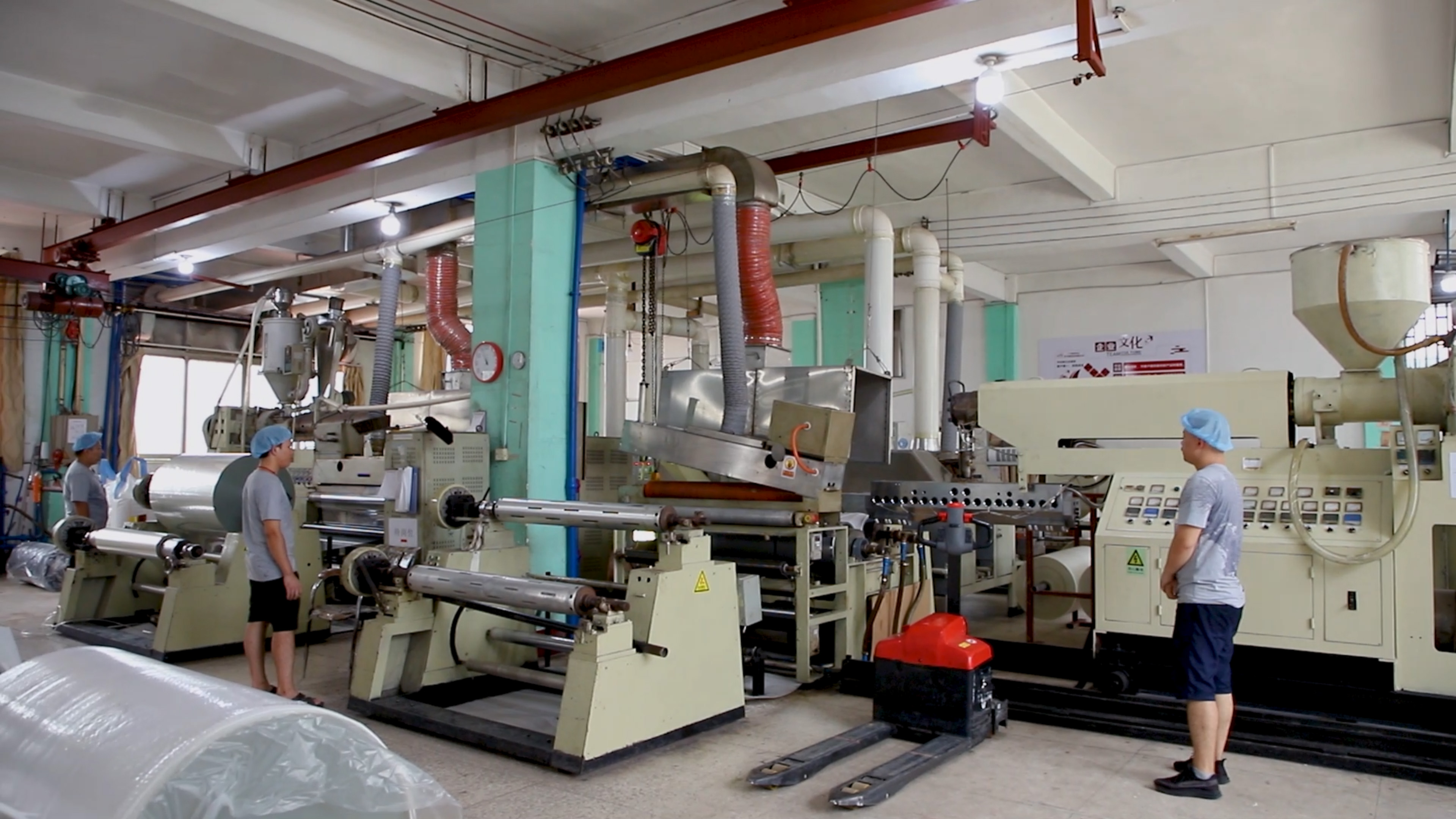
What supports consistency here is process scale and inspection discipline rather than a single test: three automated production lines, annual capacity above 10,000 tons, 100% inspection before shipment, and a stated monthly capacity of 150,000 packs. The company was founded in 1992 and reports more than 33 years in laminating film, 22 national patents, a five-engineer R&D team, a 40,000 square metre factory and a 200-person workforce, exporting to more than 50 countries across North America, South America, Europe, Australia and Southeast Asia.
The manufacturer's reported distribution case is the more useful evidence in a fading conversation. A brand importer and distributor in Germany, Australia and the US has taken 600,000 packs of lamination film per year for more than ten years, with zero quality complaints reported across that period and a 25% reduction in the customer's lamination failure rate, supported by a customized anti-counterfeiting coating and 24/7 technical support. That case covers document and stationery lamination rather than outdoor labels - it evidences long-run batch stability and complaint handling, not outdoor UV performance.
The warranty is where a fading claim is actually resolved. The stated position is a 12-month warranty against delamination, colour fading and material defects, a 24-hour response on quality complaints with a dedicated account manager, and free replacement or full refund for non-conforming goods with priority re-production for bulk orders. Read that against your own exposure cycle: if a label programme is judged after two summers, the remedy window and the batch records matter more than the headline term. Ask how a fading complaint is assessed, what evidence is required, and whether production records are retained per batch.
Frequently Asked Questions
Which compliance documents should a converter request for outdoor label film?
Request RoHS and REACH statements, an SVHC declaration, food-contact documentation where the label touches food, and CE documentation where your end product requires it, plus ISO 9001, BSCI and SMETA as management-system evidence. HADA's stated certifications include ISO 9001, BSCI, SMETA, RoHS and REACH. Two checks matter more than the list itself: confirm each document is current, and confirm it names the exact grade you are ordering rather than the company in general.
Which film properties actually address fading and yellowing?
Five properties carry the work: anti-yellowing for long-term preservation, high transparency, water and scratch resistance, strong adhesion with no bubble and no wrinkle, and UV resistance confirmed in writing. The first four are listed product features of HD-RL. UV resistance for outdoor use is a stated requirement of the application rather than a published test result, so ask the supplier what evidence supports it on your grade and record that in the approved specification.
Which thickness and width should I specify for an outdoor label programme?
HD-RL runs from 35mic to 250mic and 100mm to 1300mm. Choose the thin end where the label must stay conformable on curved or squeezable surfaces, and the thicker end where flat signage or repeated handling needs body and stiffness. Choose width from your web and from what your laminator can hold, then confirm slitting tolerance. Thickness changes how much material a given area consumes, so treat it as a commercial variable in the quotation as well as a physical one.
Can we trial a roll before committing to a full production run?
Run a trial quantity on your own production equipment rather than relying on a datasheet, then expose it as the label will be exposed and compare it with the approved proof. Write the acceptance criteria down before you look at results: colour against proof, no yellow cast on white areas, no bubbles or wrinkles, adhesion at cut edges after handling. Trial quantities and terms are not published as a standing policy, so confirm them in the quotation. If a delivered batch does not conform, the stated remedy is free replacement or full refund.
What are the MOQ, lead time and remedies if a batch fades?
The stated commercial terms are an MOQ of 1,000 packs, a 20-30 day lead time, and a 12-month warranty against delamination, colour fading and material defects, with a 24-hour response on quality complaints and free replacement or full refund for non-conforming goods. Because those thresholds are expressed in packs, confirm how they apply to a custom-width roll order before you plan production. For a specification review against a specific label programme, the practical next step is a quotation built around your thickness, width and finish combination rather than a standard item.
Conclusion
Outdoor label fading is a specification problem before it is a material problem. UV energy and heat degrade the ink, the film can yellow or haze on its own, and edge failure creates a third route to the same complaint - so the roll you specify has to address yellowing and surface protection, and it has to match the exposure the label actually lives in.
For HD-RL, the usable specification lines are concrete: PET with EVA, 35mic to 250mic, 100mm to 1300mm, glossy or matte, high transparency, anti-yellowing for long-term preservation, water and scratch resistance, suitability for standard thermal laminators, and a 12-month warranty that names colour fading directly. The lines that must be confirmed rather than assumed are equally concrete: the evidence behind the UV statement, the SVHC position, CE scope where it applies, and how pack-based MOQ and lead time translate into a custom roll order.
Specify in that order - exposure, base and adhesive, thickness, width, finish, documents, trial, batch terms - and a fading complaint becomes a measured result against written criteria instead of a recurring argument.
If you are building an outdoor label programme, HADA can match HD-RL thickness, width and finish to your exposure class and press setup. Share the label size, web width and exposure condition with the technical team to receive a specification-matched quotation.
Have Questions or Need More Details?
Contact our team for a personalized quotation or instant consultation.
Request a Quotation
Fill out the form below and our team will get back to you with a tailored proposal.
WhatsApp Direct Chat
Prefer to chat in real-time? Message us on WhatsApp for instant assistance & quick answers.
- Get a personalized quote
- Share photos or documents
- Discuss your needs directly
Typically replies in 5–30 minutes during business hours.