Roll Film vs. Pouches: A Practical Cost-Benefit Comparison for High-Volume Lamination
Roll Film vs. Pouches: A Practical Cost-Benefit Comparison for High-Volume Lamination

High-volume lamination is a throughput and waste equation. The choice between laminating roll film and pre-cut laminating pouches affects operator handling, setup time, film waste, and how easily you can match the film to the printed sheet.
In direct terms, laminating roll film suits continuous or custom-width jobs because it is supplied as a long web. Laminating pouches suit standardized A4 jobs because each film is already cut to a fixed size. HADA, the brand used by Guangzhou Huada Laminating Film Co., Ltd., manufactures both formats, so the decision can be made on practical specifications rather than availability constraints.
Why the Film Format Matters in High-Volume Lamination
For a high-volume buyer, material cost per unit is only one line item. The hidden costs are in operator handling, machine adjustment, rejected sheets, unused film, and inventory complexity. When you buy pouches, every lamination uses one pre-cut pouch sized to a predetermined document dimension. This is efficient for repetitive A4 work, but it becomes restrictive when run lengths vary or when the printed sheet is not A4.
Roll film solves the width and length problem at the source. A thermal laminating roll film can be cut to a chosen width during production, then a continuous web is used during lamination. HADA offers the HD-RL roll film with a width range from 100 mm to 1300 mm and a thickness range from 35 mic to 250 mic. That makes it possible to align film supply with the actual printed format instead of adapting the job to a fixed pouch size.
Lamination Film Market Background
Lamination films are used across packaging, print finishing, office supplies, and document protection. According to DataM Intelligence, the global lamination films market reached US$ 6,842.11 million in 2024, with the food and beverage segment as the primary end-user. Asia Pacific accounted for 36.87% of global revenue in the same year.
Material-level reports show broad demand for both BOPP and PET films. The BOPP thermal lamination films market was valued at US$ 3.5 billion in 2024, while PET (BOPET) packaging films were estimated at US$ 10.3 billion. PET+EVA constructions, such as the materials used in HADA roll film and pouches, sit directly in this demand stream.
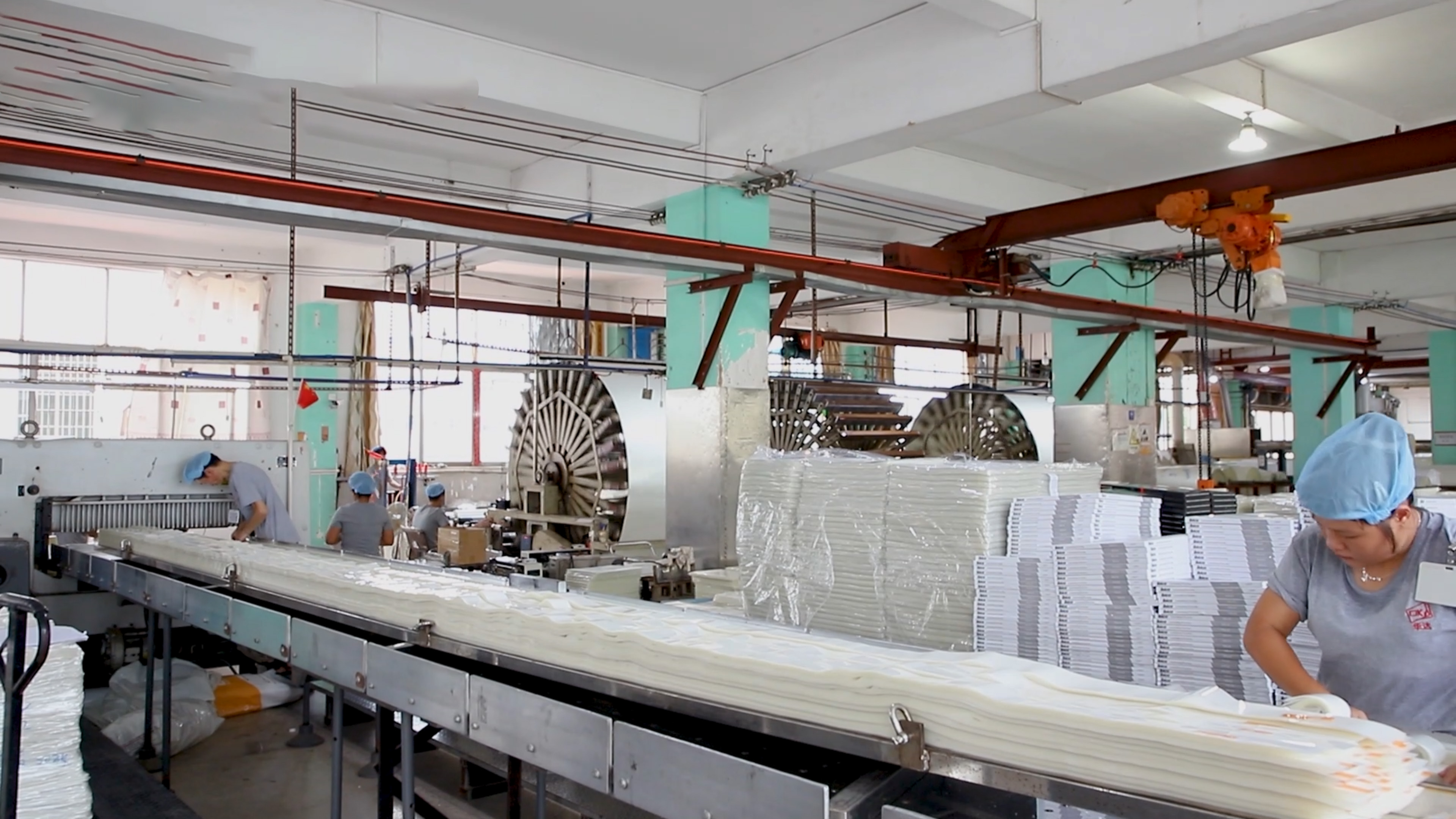
Guangzhou Huada Laminating Film Co., Ltd. was founded in 1992 and has specialized in the R&D, production, and sales of functional laminating films for more than 33 years. The company holds 22 national patents, operates three automated production lines, has an annual capacity above 10,000 tons, and exports to more than 50 countries and regions.
HADA Product Formats at a Glance
The two products central to this comparison are HADA HD-RL laminating roll film and HADA HD-A4-80MIC laminating pouches. Both use PET and EVA, and both are available in gloss and matte finishes.
HD-RL Thermal Laminating Roll Film
- Material: PET+EVA.
- Thickness range: 35 mic to 250 mic.
- Width range: 100 mm to 1300 mm.
- Length: customizable.
- Finish: glossy or matte.
- Key properties: high transparency; no bubble or wrinkle; strong adhesion; waterproof and scratch-resistant; anti-yellowing.
Because the film is wound on a roll, it can be used continuously and cut to the exact length of the piece being laminated. For a packaging or printing company with mixed order sizes, this can reduce the amount of trimmed film compared with handling a large quantity of individual pouches.
HD-A4-80MIC A4 Laminating Pouches
- Material: PET+EVA.
- Thickness: 80 mic.
- Size: A4, 216 mm x 303 mm.
- Finish: glossy or matte.
- Packaging: 100 pouches per pack; 10 packs per carton.
- Key properties: high transparency; no bubble or wrinkle; strong adhesion; waterproof and scratch-resistant; anti-yellowing.
Laminating pouches are loaded into a standard thermal pouch laminator as individual sheets. They are the simplest option when the output format is fixed. HADA also lists other pre-cut pouch configurations, such as 229 mm x 292 mm letter-size pouches in 3 mil and 5 mil, so standardized non-A4 formats are covered by the same product family.
Step-by-Step Cost-Benefit Evaluation
- Define your dominant format. Measure the most frequent sheet size and length before comparing material formats. If a single A4 size dominates, HD-A4-80MIC pouches are directly matched. If your widths vary, check the HD-RL width range from 100 mm to 1300 mm.
- Estimate run length and setup frequency. Continuous roll film is designed for longer, uninterrupted runs. Pouches can be more efficient in short, batch-driven jobs because each operator can load them without managing a roll web.
- Calculate usable area per order. A pouch-based supply leaves little flexibility to cover a wider sheet. Roll film can be custom cut at the factory, which reduces waste for non-standard sizes.
- Include labor and machine inspection. Roll-fed lamination can reduce per-sheet handling, but it may require machine calibration. Pouch lamination typically uses lower-cost standard office-style pouch laminators.
- Check tolerance and failure risk. HADA states the same core features for both formats: no bubbles or wrinkles, strong adhesion, waterproof and scratch-resistant surfaces, and anti-yellowing behavior. At high volume, a material defect can multiply into downtime.
- Consider customization and packaging. HADA supports OEM/ODM changes in product size, thickness, logo, and packaging. This matters if your brand needs custom roll widths or retail-ready pouch packs.
Use Cases: Which Format Wins in Practice
Roll film tends to fit industrial finishing lines where sheets are fed continuously and lengths vary from catalog pages to long posters. Pouches tend to fit standardized stationery and office-protection work because the packaging format itself, often 100 pouches per pack, is designed around predictable volume.
HADA distributors also demonstrate long-term reliability at scale. One brand importer and distributor operating in Germany, Austria, and the US has ordered roughly 600,000 packs of lamination film per year for more than 10 years. The customer distributes products under its own brand for office document lamination and stationery protection. Reported results include zero quality complaints over the 10-year period and a 25% reduction in the customer lamination failure rate. HADA supported the account with customized anti-counterfeiting coating technology and continuous technical support for lamination process optimization.
Comparison Table: HD-RL Roll Film vs. HD-A4-80MIC Pouches
| Comparison point | HD-RL laminating roll film | HD-A4-80MIC A4 pouches |
|---|---|---|
| Form | Continuous thermal laminating roll | Pre-cut A4 thermal laminating pouch |
| Dimensions | Width 100 mm to 1300 mm; length customizable | 216 mm x 303 mm |
| Thickness | 35 mic to 250 mic | 80 mic |
| Material | PET+EVA | PET+EVA |
| Finish options | Glossy and matte | Glossy and matte |
| Customization | Width, thickness, length, logo, and packaging can be customized through HADA OEM/ODM support | Fixed A4 size; other HADA pouch sizes are also available |
| Packaging | Customizable | 100 pcs per pack; 10 packs per carton |
| Typical high-volume fit | Continuous lamination, mixed-length batches, custom-width production | Standard A4 document lamination, distributed or batch use |
This table groups verifiable product information from HADA. It is not a claim that one format is always cheaper. The better approach is to compare film width, thickness flexibility, packaging structure, and handling mode against your own workflow.
FAQ
What compliance documentation does HADA hold for laminating films?
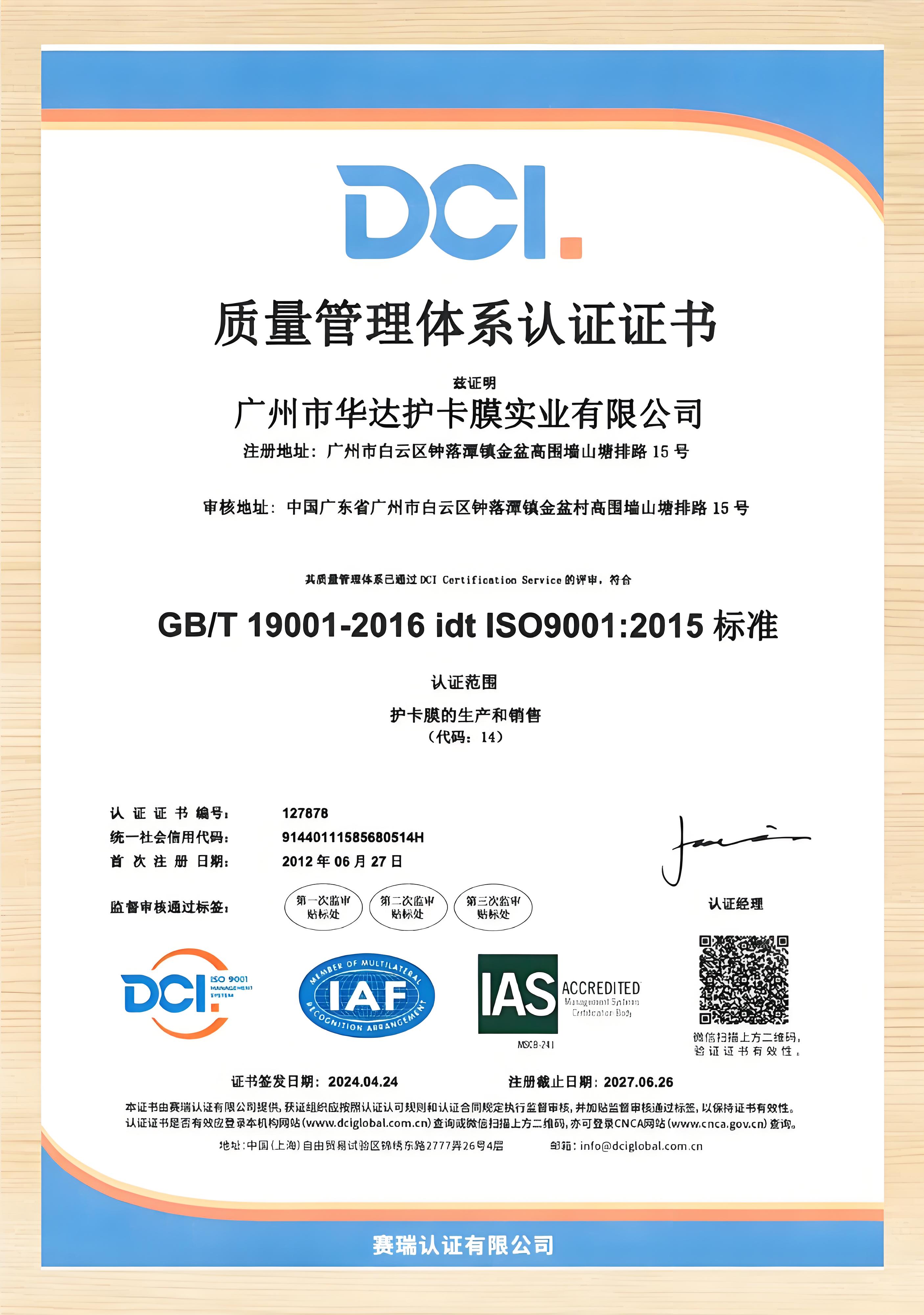
HADA operates under an ISO 9001:2015 quality management certificate and reports BSCI and SMETA audits. Its laminating films are covered by SGS RoHS, SVHC, and REACH reports. HADA also holds utility model patents and High-Tech Enterprise certification.
Can HADA customize laminating rolls for different widths and thicknesses?
Yes. HADA supports OEM/ODM customization of product size, thickness, logo, and packaging. The HD-RL roll film is available in widths from 100 mm to 1300 mm and thicknesses from 35 mic to 250 mic, with length customized on request.
What are HADA MOQ and lead time for bulk lamination orders?
For pouch products, HADA cites a MOQ of 1,000 packs and a lead time of 20 to 30 days. The monthly pouch capacity is 150,000 packs, with 100 sheets per pack. Roll film MOQ depends on width, thickness, length, and packaging configuration, so buyers should confirm commercial terms directly with HADA.
What quality control and after-sales support does HADA provide?
HADA performs 100% inspection before shipment. The company offers a 12-month warranty against delamination, color fading, and material defects. Quality complaints receive a 24-hour response time, and non-conforming goods are replaced free of charge or fully refunded, with priority re-production for bulk orders.
How should I decide between laminating roll film and laminating pouches?
For standardized A4 batches, HD-A4-80MIC pouches remove the need for cutting. For custom-width or mixed-length work, HD-RL roll film from 100 mm to 1300 mm width provides more flexibility. The right choice depends on your dominant job format, throughput, and handling cost. For high-volume procurement, send your width, thickness, and annual quantity to HADA for confirmation.
Conclusion
For high-volume buyers, there is no single best format outside a specific workflow. HD-RL laminating roll film offers width, thickness, and length flexibility for continuous or custom-width operation. HD-A4-80MIC pouches offer a simple, fixed-size solution for standardized A4 work. Both are PET+EVA products and share the same core quality profile. The strongest decision rule is to match the material format to your dominant run length and confirm that the supplier can sustain quality inspection, packaging consistency, and volume supply.
Next step. If you are evaluating high-volume lamination, contact Guangzhou Huada Laminating Film Co., Ltd. to discuss format and specifications. Email brian@huada168.com or use WhatsApp +86 18929589411. More information is available at www.huada168.com.