Solving Delamination and Yellowing in Laminating Rolls
Delamination and yellowing in laminated output are almost never caused by the laminating machine alone. In most production investigations, the failure traces back to four upstream variables: the grade of the base film, the adhesive coating system, how the roll was stored before it reached the line, and the temperature profile at the laminating nip. Fixing the symptom without addressing the variable that produced it is why the same defect returns in the next batch.

This guide is written for production managers, converters and procurement teams who are already running lamination and are seeing premature bond failure, edge lifting, haze, or colour shift after lamination. It separates the four root causes, shows what to measure at each stage, and then sets out the resolution path used by Guangzhou Huada Laminating Film Co., Ltd. (HADA) — a laminating film manufacturer founded in 1992 in Guangzhou, China, producing laminating film, laminating pouches and laminating rolls.
What Delamination and Yellowing Actually Mean
Delamination is a failure of the adhesive bond between the film and the printed substrate. On a finished sheet it appears as edge lift, silvering, trapped air channels, or a milky cloud that grows outward from the trim edge. The bond may look acceptable at the exit of the machine and fail 24 to 72 hours later, once the film has cooled and released internal stress.
Yellowing is an optical degradation rather than a mechanical one. The laminated surface gradually shifts toward a warm cast, loses clarity, or develops a visible colour drift against an uncoated control sample. It is normally accelerated by heat, UV exposure and prolonged storage, and it is frequently misdiagnosed as a printing problem when the actual cause sits in the film's base polymer or its coating chemistry.
Both defects share one characteristic that matters for buyers: they appear after the goods have left the line. That makes them a rejection, rework and warranty cost rather than an in-process adjustment — which is why root-cause control is a purchasing decision, not only an operator decision.
Why These Defects Appear After Lamination, Not Before
Thermal laminating film is a multi-layer construction. According to the PRINTING United Alliance industry resource, laminating supplies are generally polyester-based and may use a co-extruded copolymer adhesive. Supplier technical pages describe the same pattern in commercial products: a PET base film with an EVA adhesive layer, or BOPP, BOPET and BOPA base films with an EVA coating in glossy or matte finishes.
That layered structure is the reason failure is delayed. The bond only fully develops after the adhesive cools and crystallises, and the film only reveals its dimensional stability once it has been through a full heat cycle. A roll that was borderline at the start of the shift will look acceptable on the rewind and unacceptable in the warehouse.
The material mix in the market also shapes what buyers receive. BOPP-based films hold a reported 36% share of the thermal laminating machine film market in 2024, based on commercial research published by Vertex AI Search. Meanwhile, the global thermal lamination films market is projected by Fact.MR to reach US$3,597.8 million by 2035. A large, cost-driven volume market creates strong pressure on base-film grade and coating weight — the two variables most directly linked to delamination and yellowing.
The Four Root Causes, Traced
1. Raw Material Grade
Base film grade determines how the roll behaves under heat. Resin consistency, film thickness tolerance and the cleanliness of the base polymer all affect shrinkage, clarity and adhesion. When the base film shrinks more than the substrate during cooling, the bond is loaded in shear from the moment the sheet leaves the nip — and edge lift follows.
HADA specifies premium-grade raw materials imported from South Korea for its laminating roll film, a sourcing decision aimed at holding clarity and dimensional behaviour consistent across production batches rather than batch by batch.
2. Coating Technology
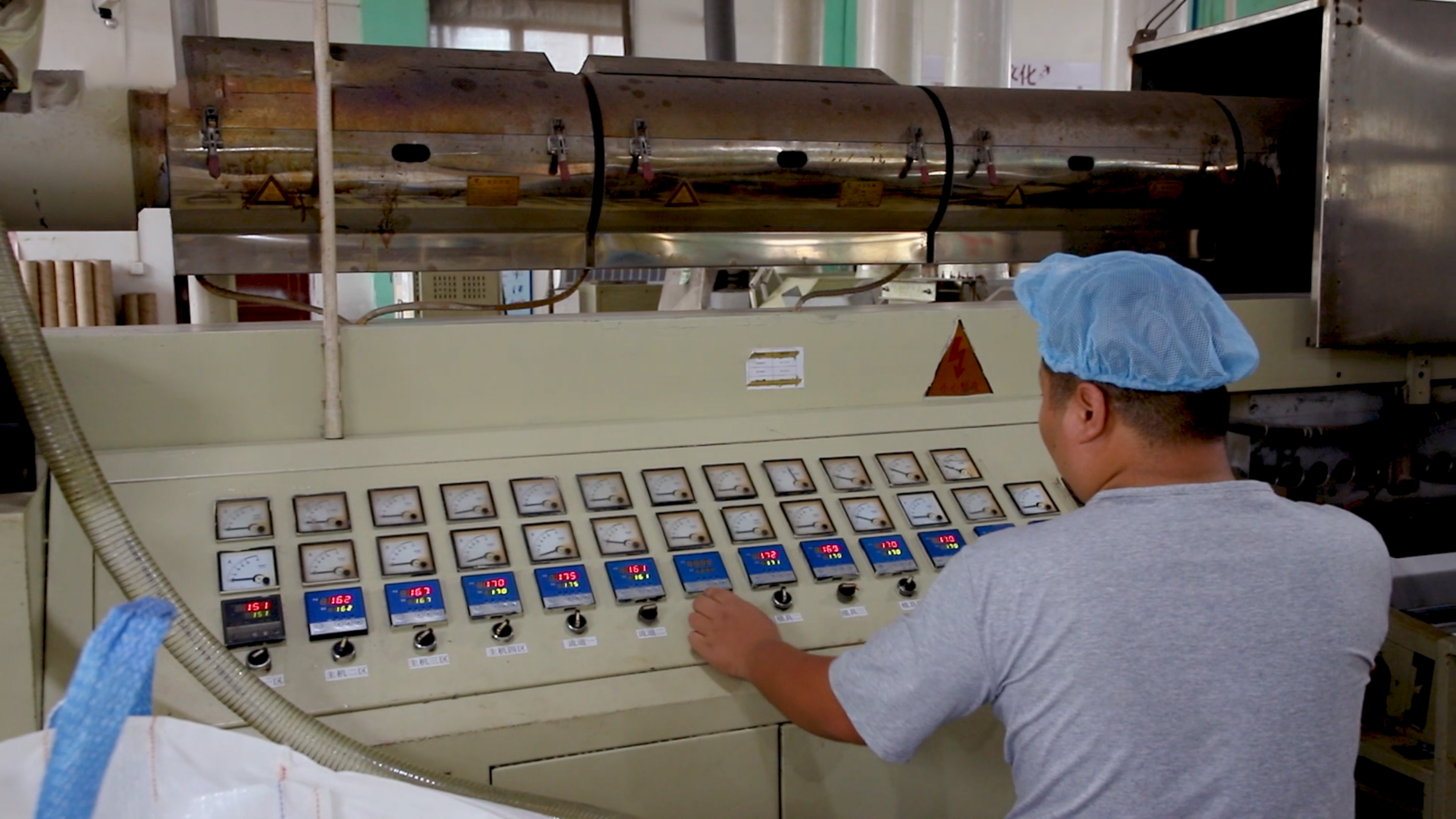
Coating is where yellowing is usually decided. Adhesive coat weight that varies across the web produces uneven bond strength; coating that lacks heat and UV stability produces colour drift. Anti-static performance matters as well, because static attracts dust to the film surface before lamination and dust becomes a nucleation point for bubbles.
HADA uses a proprietary anti-static and anti-yellowing coating technology, which the company reports extends product lifespan by 30%. The same coating system is linked to a reported 15% higher light transmittance — up to 92% — compared with standard films, and to a 25% higher tear strength that reduces breakage during lamination.
3. Storage Conditions
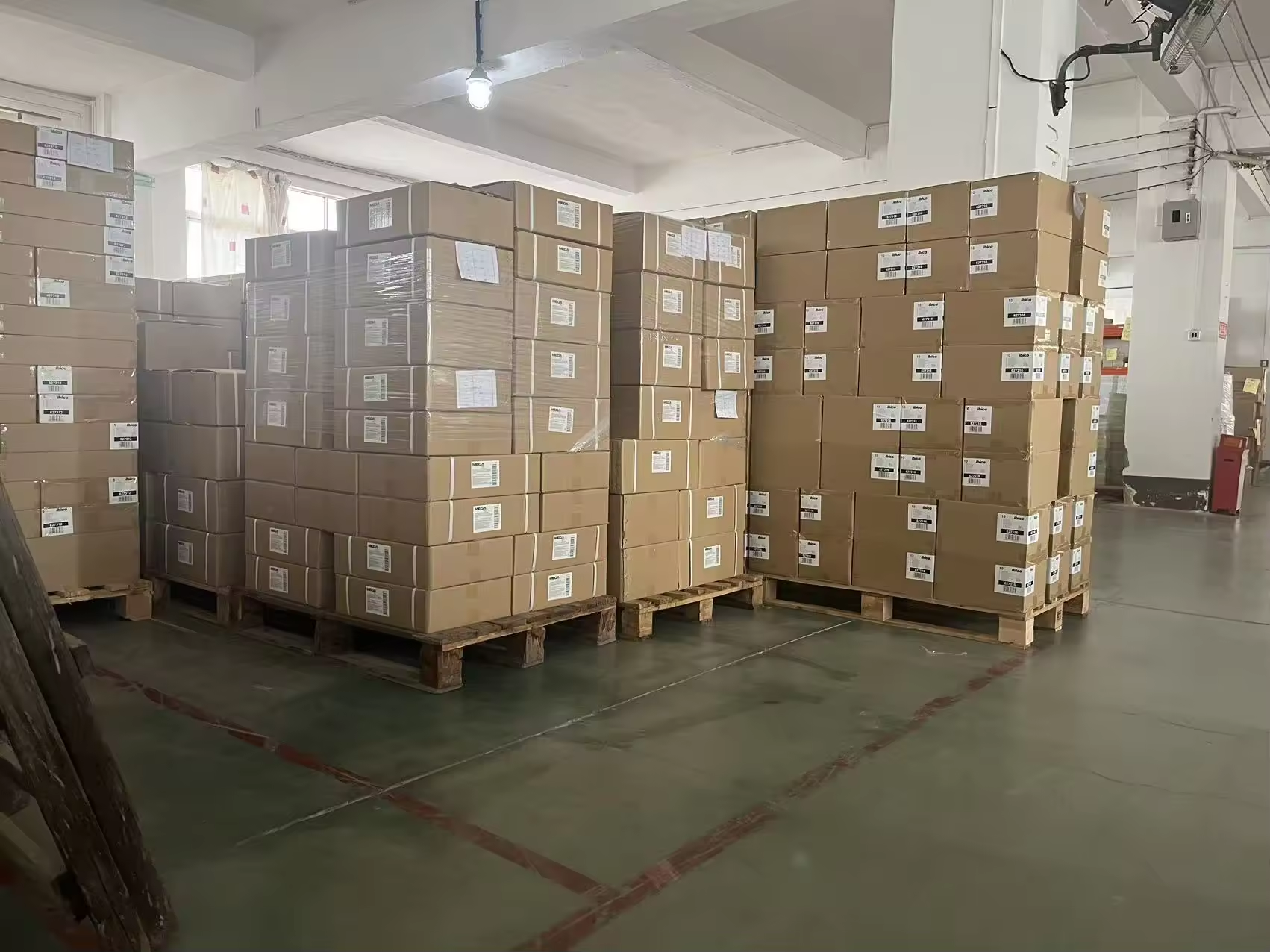
Rolls absorb their environment. Heat, humidity, direct sunlight, dust and uneven stacking all change the film before it is used, and none of that damage is visible on the outer wrap. Blocked rolls stored under load can deform; rolls stored in humid conditions can trap moisture that flashes into steam at the nip and produces the silvering that operators describe as delamination.
Practical storage rules that reduce the risk:
- Store rolls horizontally in the supplied packaging, on a clean, dry surface, away from direct sunlight.
- Keep the storage area stable in temperature and low in humidity; avoid cycling between cold nights and hot days.
- Do not stack heavy rolls on top of narrow-width rolls.
- Bring cold rolls to line temperature before opening the wrap, to prevent condensation on the film surface.
- Rotate stock and use older rolls first; coating performance should not be assumed to be indefinite.
4. Lamination Temperature
Temperature is the variable operators reach for first, and it is often the wrong one. Too low, and the adhesive does not fully wet out — the bond looks set but fails within days. Too high, and the film shrinks, curls and can discolour. Because shrinkage and yellowing both increase with heat, running the line hotter to chase adhesion trades one defect for another.
HADA reports that its film maintains bond strength at a lamination temperature 10–15°C lower than standard films, with a 20% lower shrinkage rate — under 0.5% — at high temperature, which is the property that prevents warping and post-lamination curl. Lower required temperature also cuts energy cost for the converter.
Step-by-Step: Diagnosing and Eliminating the Failure
The sequence below is designed to be run before the batch is scrapped, and it produces the data a supplier needs in order to respond usefully.
- Isolate the lot. Record the roll ID, production date and incoming inspection result for the film currently on the machine. If the defect started with a new roll, stop and run a control roll from the previous lot on the same settings.
- Confirm storage history. Check where the roll was stored, for how long, and under what conditions. Moisture and stacking damage are ruled in or out at this stage.
- Log the temperature profile. Record actual nip temperature, roller surface temperature, line speed and nip pressure. Compare against the film supplier's recommended window rather than a historical habit.
- Run a temperature ladder. Laminate identical sheets at the current setpoint and at two points above and below it. A bond that only holds at the top of the range indicates that the adhesive system is not wetting out — a film or coating issue, not a machine issue.
- Test after 24 hours, not after 5 minutes. Perform the peel and edge-lift check the next day. This is the only test that reflects what the customer will see.
- Check optical drift. Keep an uncoated control sample and a laminated sample side by side under the intended storage conditions. Yellowing is confirmed by comparison, not by memory.
- Escalate with data. Send lot ID, temperature ladder results, line speed and photographs to the supplier's technical team. This is the point at which a supplier relationship is either useful or decorative.
HADA operates full-process inspection and traceability — online monitoring plus a three-stage QC process and a batch traceability system — so a reported defect can be traced back to the production run that produced the roll. The company also reports a defect rate below 0.1%.
Use Cases Where Root-Cause Control Matters Most
High-security ID card lamination. Government, banking and telecom card programmes cannot tolerate edge lift or colour drift, because the finished card is a controlled document. Dimensional stability at temperature is the governing property here, not the initial bond strength.
Photo and document preservation. Archives, museums and print-finishing houses measure quality in years. Yellowing is the failure mode that matters, which places the emphasis on anti-yellowing coating and light transmittance rather than on line speed.
Food, electronics and label lamination. Industrial packaging and label work runs at volume, so scrap rate dominates the economics. Buyers in this segment should also confirm the applicable regulatory framework for the end use — for the European Union, Regulation (EU) No 10/2011 sets migration limits for plastic materials intended for food contact, and the film supplier must be able to document compliance for the specific construction supplied.
High-speed industrial lines. HADA film is reported as compatible with high-speed lamination machines up to 80 m/min. At that speed, a lot-to-lot variation of a few degrees in activation temperature becomes a rework event rather than a nuisance, so consistency across batches carries a direct cost value.
Cold lamination. Cold laminating rolls remove the heat variable but not the storage variable. Adhesive tack and dust control become the dominant factors, and the same incoming-inspection discipline applies.
Comparison Table: Symptom, Cause and Specification Reference
| Symptom | Most probable root cause | Verification method | HADA specification reference |
|---|---|---|---|
| Edge lift within 24–72 hours | Adhesive not fully wet out; nip temperature below activation range | Temperature ladder + 24-hour peel test | Maintains bond strength at 10–15°C lower lamination temperature |
| Curling or warping after cooling | Excessive film shrinkage under heat | Measure dimensional change at line temperature | 20% lower shrinkage rate, below 0.5% at high temperature |
| Bubbles or silvering across the sheet | Trapped moisture, dust attracted by static, uneven coating weight | Roll surface inspection; dry-sheet trial | Anti-static and anti-yellowing coating technology; online monitoring with three-stage QC |
| Yellowing or colour drift after weeks | Base film or coating lacking heat and UV stability | Side-by-side comparison against an uncoated control sample | Anti-yellowing coating reported to extend product lifespan by 30% |
| Haze or dull finish | Base film grade and clarity | Transmittance check against reference film | Light transmittance up to 92%, reported 15% higher than standard films |
| Web breaks during running | Low tear strength at the slit edge | Tensile and tear check on incoming rolls | 25% higher tear strength, reducing breakage during lamination |
| Repeat defects across batches | Lot-to-lot variation without traceability | Batch ID cross-check with supplier records | Batch traceability system; defect rate below 0.1% |
All HADA figures in this table are manufacturer-reported performance values relative to standard films, not independently audited laboratory results. Buyers should validate them against their own line through sampling.
Comparison Table: HADA Versus a Standard Film Reference
| Comparison metric | HADA laminating roll film | Standard film reference | Why it matters at the decision stage |
|---|---|---|---|
| Light transmittance | Up to 92% | 15% lower, as reported | Clarity of the finished laminated surface |
| Shrinkage at high temperature | Below 0.5% | 20% higher, as reported | Controls warping, curl and edge lift |
| Tear strength | 25% higher | Baseline | Fewer web breaks and less downtime |
| Required lamination temperature | 10–15°C lower | Higher activation temperature | Lower energy cost and a wider process window |
| Machine compatibility | High-speed lines up to 80 m/min | Line-speed dependent | Throughput without rework |
| Machine downtime | Reduced by 18%, as reported | Baseline | Direct production-hour value |
| Defect rate | Below 0.1% | Not stated | Scrap, rework and claim exposure |
| Total cost of ownership | 10% lower, driven by reduced waste and fewer rejections | Baseline | The reason a lower unit price can still cost more |
| Warranty | 12 months against delamination, colour fading and material defects | Varies by supplier | Converts a technical risk into a contractual one |
| Technical support | 24/7 support for process optimisation and troubleshooting | Varies by supplier | Shortens the time from defect to resolution |
Comparison is drawn from HADA's manufacturer-reported positioning against standard PET lamination film, as published in the company's comparison data. It is a specification-level comparison of the variables that cause the two defects in this guide, not a ranking of other suppliers.
Frequently Asked Questions
Are HADA laminating rolls compliant with REACH and RoHS, and what about food-contact use?
HADA holds ISO 9001, BSCI, SMETA, ROHS and REACH, and operates a batch traceability system so that documentation can be matched to the specific production run. For food-contact applications, the buyer must confirm the requirement for the destination market: in the European Union, Regulation (EU) No 10/2011 sets migration limits for plastic materials intended for food contact, and compliance has to be documented for the exact film construction and thickness being supplied rather than assumed from a general certificate.
Which technical features actually prevent yellowing and delamination?
Two features carry most of the effect. The first is a proprietary anti-static and anti-yellowing coating technology, which HADA reports extends product lifespan by 30% and supports light transmittance of up to 92% — about 15% higher than standard films. The second is dimensional stability: a 20% lower shrinkage rate, below 0.5% at high temperature, keeps the film from loading the adhesive bond as it cools. A 25% higher tear strength reduces breakage during lamination, and the reported defect rate is below 0.1%. These are manufacturer-reported values and should be validated on your own line.
Does a higher-priced film reduce total cost?
Cost should be assessed on total cost of ownership, not unit price. HADA positions its film at a 10% lower total cost of ownership, driven by reduced waste and fewer rejections, alongside 15% lower power consumption per unit of output and a required lamination temperature 10–15°C below standard films. For a converter running high-speed lines up to 80 m/min, the reported 18% reduction in machine downtime is usually the larger number, because downtime is charged at the line rate rather than the material rate.
Can we test the film before committing to a production order?
Yes. Sampling is the correct way to validate anti-yellowing and adhesion performance, because both are application-dependent. Run the temperature ladder and the 24-hour peel test described above on your own substrate, and compare optical drift against an uncoated control after storage. HADA offers customizable thickness from 25 to 250 microns and printing options for OEM/ODM orders, so a sample can be matched to your specification. You can request a sample or quotation through www.huada168.com or by contacting the technical team directly.
What happens if delamination or yellowing appears after delivery?
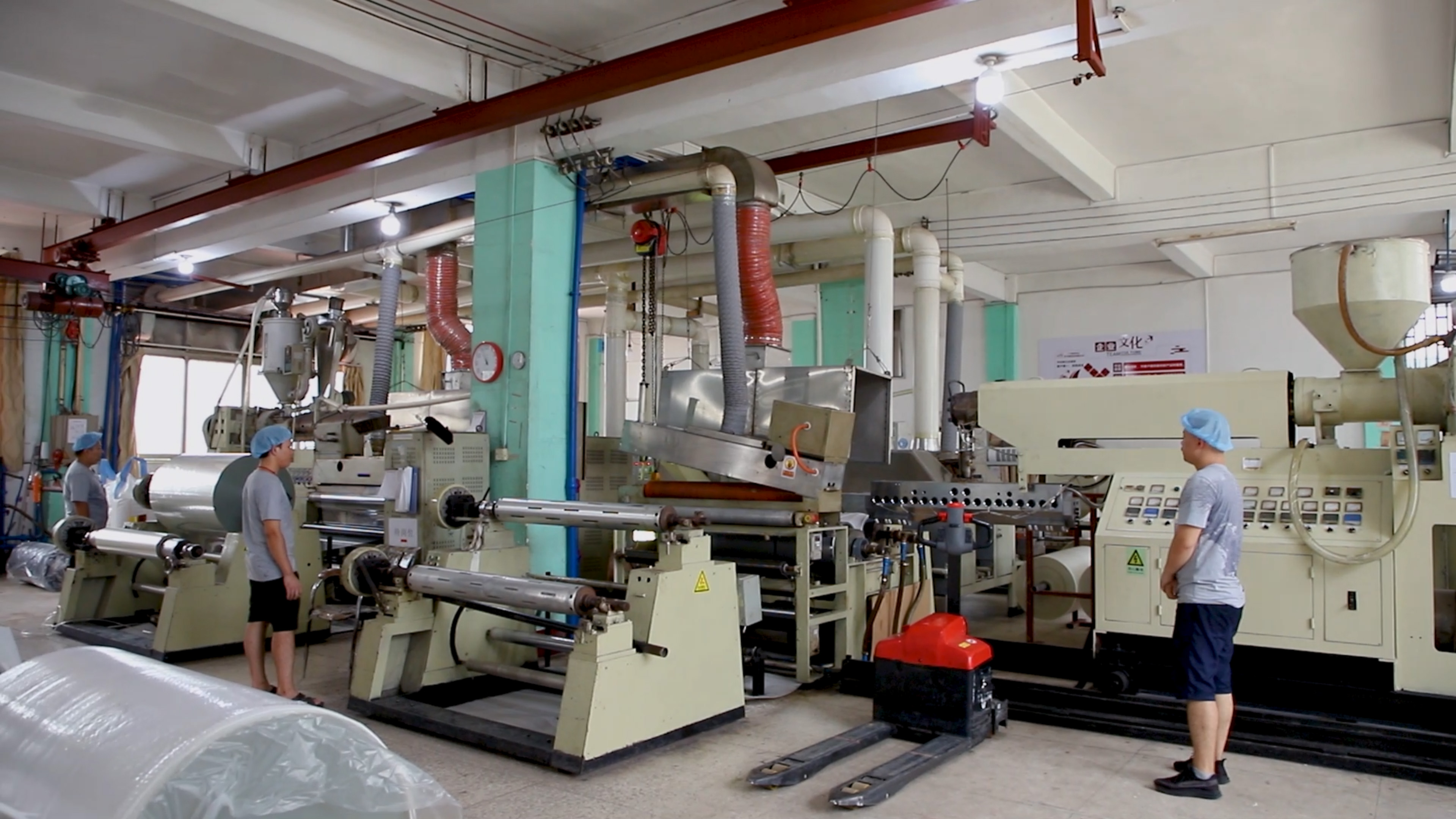
HADA provides a 12-month warranty against delamination, colour fading and material defects, supported by 24/7 technical support for process optimisation and troubleshooting. Because every roll is covered by a batch traceability system, a claim can be traced to the production run. Manufacturing capacity is over 10,000 tons annually across three automated production lines in a 40,000 m² facility with 200 employees, including a 5-engineer R&D team, and the company exports to more than 50 countries and regions, so replacement supply can be scheduled without restarting the qualification process.
Conclusion: Fix the Cause, Not the Symptom
Delamination and yellowing are usually decided before the roll reaches the laminating machine — in the base film grade, the coating system, the storage chain and the temperature window the film was designed to run in. The practical response is a controlled diagnostic sequence: isolate the lot, confirm storage history, log the temperature profile, run a temperature ladder, and test after 24 hours rather than after five minutes.
For buyers at the decision stage, the specification levers that matter are measurable. A film that holds bond strength at 10–15°C lower temperature, shrinks less than 0.5% at high temperature, transmits up to 92% of light, and carries a defect rate below 0.1% removes the two defects from the rework column. A 12-month warranty against delamination, colour fading and material defects, backed by 24/7 technical support and batch traceability, changes the risk profile of the purchase rather than just the price.
Next Step
Send your substrate, thickness and line-speed requirements to HADA and request a sample for a controlled trial, or ask for a quotation against your annual volume. Technical documentation, certificates and process-optimisation support are available on request.
Guangzhou Huada Laminating Film Co., Ltd. (HADA) — founded 1992, Guangzhou, China
Website: www.huada168.com
Email: brian@huada168.com
Phone: 020-87451312
WhatsApp: +8618929589411
Address: No.15, Shantangpai Road, Gaoweiqiang, Jinpen Village, Zhongluotan Town, Baiyun Dist., Guangzhou, Guangdong Prov. China.
Have Questions or Need More Details?
Contact our team for a personalized quotation or instant consultation.
Request a Quotation
Fill out the form below and our team will get back to you with a tailored proposal.
WhatsApp Direct Chat
Prefer to chat in real-time? Message us on WhatsApp for instant assistance & quick answers.
- Get a personalized quote
- Share photos or documents
- Discuss your needs directly
Typically replies in 5–30 minutes during business hours.