Solving Laminating Film Defects in Packaging & Printing: Bubbles, Wrinkles, and Yellowing
Bubbles, wrinkles, delamination and yellowing are the four defects that most often stop a laminated label, carton or promotional sheet from passing inspection — and in most plants they are not caused by one bad roll of film. The same visible symptom usually has three or four possible origins: moisture or retained solvent in the printed substrate, a lamination temperature that does not match the adhesive, uneven web tension, or a film whose shrinkage and coating behaviour does not suit the job. The fastest route to a stable process is to separate the symptom from the cause before changing supplier or settings.
This guide gives packaging and printing teams a defect-by-defect troubleshooting sequence, then shows which film properties actually influence each failure mode. It uses HADA HD-RL roll film as the worked example: a PET/EVA thermal laminating roll film produced by Guangzhou Huada Laminating Film Co., Ltd. (HADA), a laminating film manufacturer founded in 1992 in Baiyun District, Guangzhou, China, which makes laminating pouches and thermal laminating roll film and exports to more than 50 countries and regions.
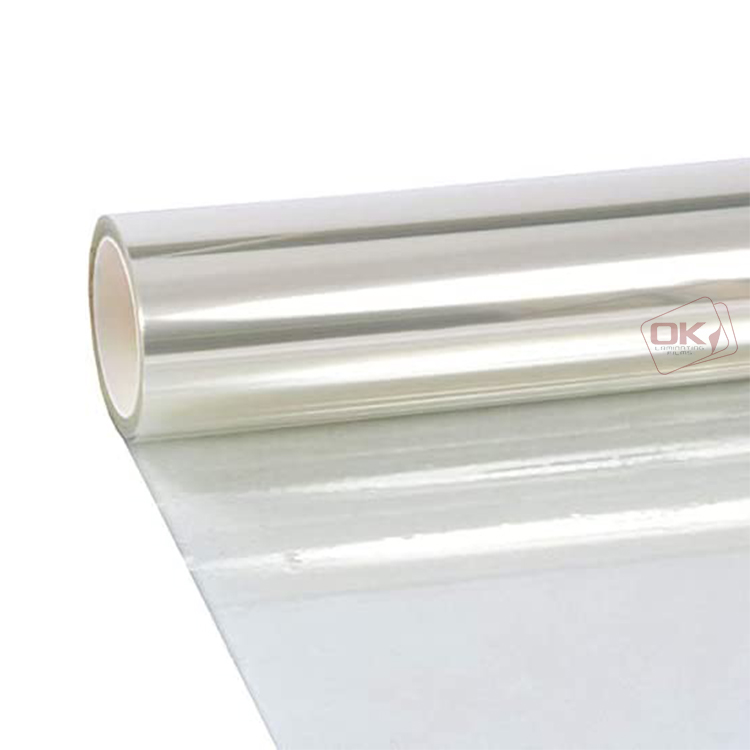
HD-RL roll film is supplied in 35–250 micron total thickness and 100–1300 mm web width, in glossy and matte finishes.
Problem Definition: Four Defects That Originate in Four Different Layers
A lamination defect is a visible or measurable failure of the bond between a printed substrate and a film. Because a thermal laminating film is itself a two-layer construction — a PET carrier and an EVA adhesive — the failure can sit in the adhesive, at the adhesive-to-substrate interface, in the carrier film, or in the print underneath. Naming the layer is what turns a complaint into an adjustable variable.
Bubbles and silvering
Bubbles are pockets of air, moisture vapour or retained solvent trapped between the film and the printed surface. They appear as scattered dots, as a hazy silver sheen over dark ink, or as a cluster in heavy ink coverage areas. The origin is almost always at the interface: paper or board that has not returned to equilibrium moisture, ink that still holds solvent, offset spray powder, or a nip that does not press the adhesive into the print.
Wrinkles and tunnelling
Wrinkles are a web-handling failure. They show as diagonal creases, edge curl, or a tunnel running along the direction of travel where the film has stretched and then relaxed. Typical causes are tension mismatch between unwind and rewind, misaligned rollers, uneven thickness across the web, or film shrinkage after the nip that pulls the laminate out of flat. Heat-sensitive substrates that expand during lamination add to the problem.
Delamination and edge lift
Delamination is an adhesive bond failure. It may appear immediately as a peelable edge, or days later as lift around a die-cut or a fold. The adhesive was not fully activated, the surface was contaminated with silicone, varnish or powder, the ink film was too heavy for the adhesive mass, or the film was stored outside its intended conditions. Because the failure is delayed, a one-hour inspection is not enough evidence.
Yellowing and haze
Yellowing is optical degradation of the carrier, the coating or the adhesive, and it is cumulative rather than instant. Repeated heat cycles, prolonged UV exposure and low-grade raw material all shift the film from neutral to warm. In white carton work and colour-critical promotional print, a small shift in transmittance reads as a colour management failure even when the bond is intact.
Of the four defect groups, delamination and yellowing are the ones most directly controlled by film formulation. Bubbles and wrinkles are usually process- or substrate-driven, so a film change helps only where the film is genuinely the variable.
Industry Background: Why Defect Rates Climb as Volume and Substrate Range Grow
Lamination complaints have risen for a structural reason rather than a sudden drop in film quality. The global laminating film market was estimated at USD 3.403 billion in 2024, with Asia-Pacific holding a 36.87% revenue share that year, according to Market Research Future's 2026 market report. Volume of that scale means more machines, more substrates and more operators running at higher speed — and each of those variables adds a failure path.
Substrate behaviour has changed alongside volume. Print that once ran on uncoated paper now runs on filmic labels, coated cartons and heavily inked promotional stock. These surfaces release solvent more slowly and trap it under the laminate, which is why a bubble problem can appear in a plant that has not touched its laminator settings in years.
The second structural problem is vocabulary. A buyer comparing films across markets will meet at least two thickness conventions. HADA specifies an A4 thermal laminating pouch at 80 microns total construction, split as 50 microns PET plus 30 microns EVA. European and UK catalogues commonly list the same format as 2 x 75 microns or 2 x 80 microns, meaning per-side notation. If an engineer compares an 80-micron total figure with an 80-micron per-side figure without checking the basis, the specified adhesive mass may be double or half of what the job requires — and the resulting defects get attributed to the supplier rather than to the specification.
Trade classification adds a third layer. PET laminating films of polyethylene terephthalate are classified under HS Code 3920.62, so importers modelling landed cost should confirm the code applied at their own customs entry rather than assume a film-specific rate.
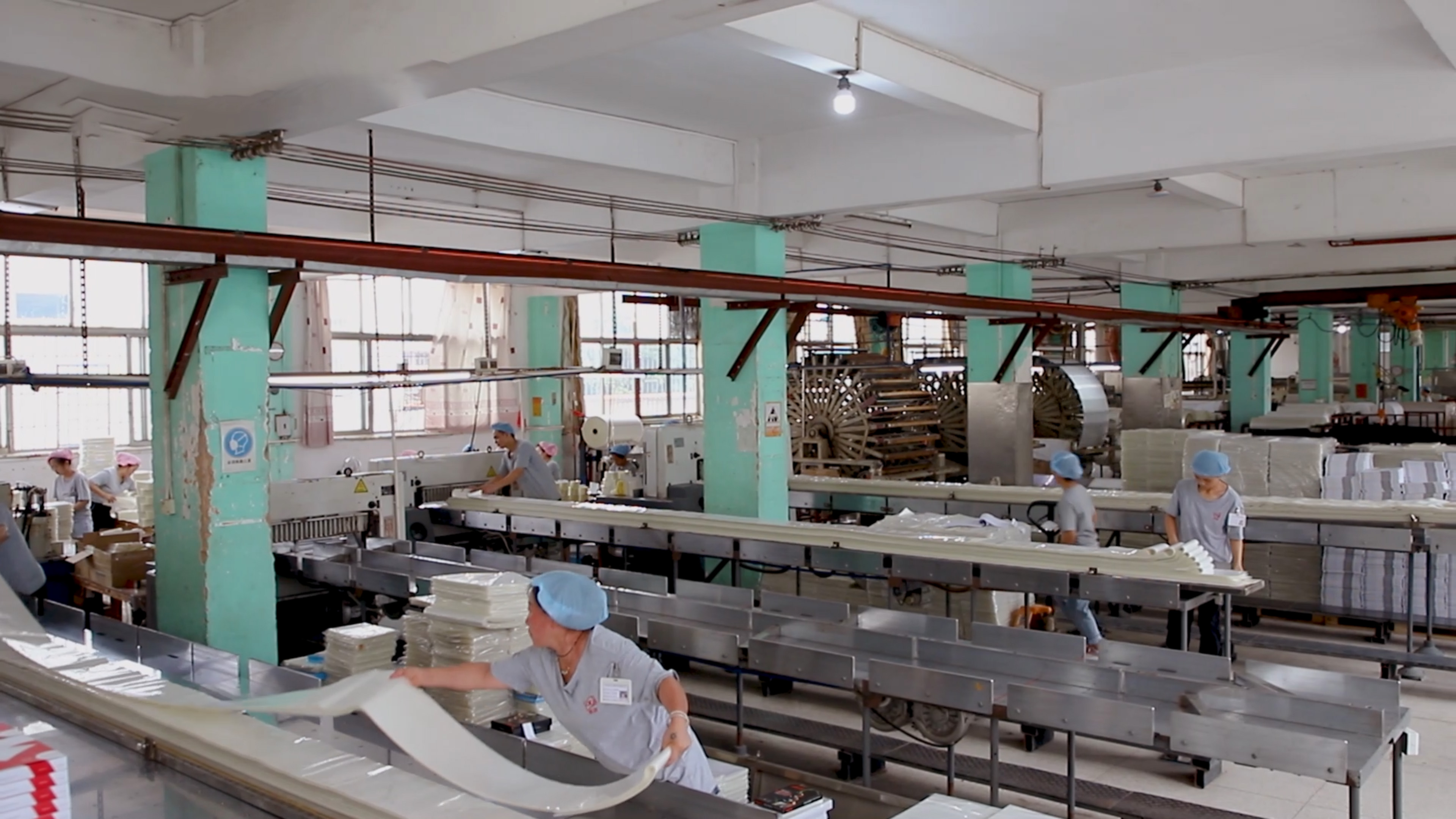
Slitting sets the web width that determines tension behaviour on the customer's machine — width tolerance and roll winding quality are part of wrinkle control before the film ever reaches the laminator.
Detailed Solution: Matching HD-RL Film Properties to Each Failure Mode
HADA HD-RL is a thermal laminating roll film built on a PET carrier with an EVA adhesive layer, supplied in 35–250 micron total thickness, 100–1300 mm web width, and glossy or matte finish. Its design brief is narrow and specific: eliminate bubbles and wrinkles, hold a strong bond to printed substrates, and resist yellowing over the service life of the laminated piece.
| Parameter | HD-RL specification |
|---|---|
| Construction | PET carrier film with EVA adhesive layer |
| Total thickness | 35–250 micron |
| Web width | 100–1300 mm |
| Finish | Glossy and matte |
| Light transmittance | Up to 92%, reported as 15% higher than standard films |
| Shrinkage at high temperature | Below 0.5%, reported as 20% lower than standard films |
| Tear strength | Reported as 25% higher than standard films |
| Lamination temperature | 10–15 °C lower than standard films at equivalent bond strength |
| Machine speed compatibility | Up to 80 m/min |
| Batch defect rate | Reported below 0.1% across production batches |
| Quality system | ISO 9001; online monitoring plus three-stage QC with batch traceability |
| Compliance documentation | CE/RoHS, SVHC declaration |
| Warranty | 12 months against delamination, colour fading and material defects |
| Technical support | 24/7 process optimisation and troubleshooting |
Bubbles: Lower Activation Temperature and Cleaner Adhesive Flow
HD-RL is designed to reach bond strength at a lamination temperature 10–15 °C below what standard films require. The practical effect on bubbles is twofold. First, a cooler nip generates less vapour from moisture held in board and paper, so there is less gas to trap beneath the adhesive. Second, the adhesive reaches flow earlier in the dwell time, which lets it wet out over heavy ink and offset spray instead of bridging over them and leaving a void.
The anti-static treatment contributes to the same outcome. Static attracts dust and paper dust to the web just before the nip, and each particle becomes a nucleation point for a bubble. Light transmittance of up to 92% also makes defects easier to see on the running web rather than after rewind, which shortens the feedback loop between detection and correction.
Wrinkles: Low Shrinkage and Higher Tear Strength
Wrinkles are governed by dimensional stability, and HD-RL is specified at below 0.5% shrinkage at high temperature — reported as 20% lower than standard films. A film that stays dimensionally stable through the nip and the cooling section does not pull the laminate out of flat after it leaves the rollers, which is the mechanism behind most tunnelling on thin label stock.
Tear strength, reported 25% higher than standard films, matters because it changes the tension window the operator can work in. Higher strength allows the web to run slightly tighter without breakage, and a tighter, more consistent web is less likely to track off-centre or crease at the roller edges.
Delamination: Adhesion, Batch Traceability and a 12-Month Warranty
Delamination is where material quality and material evidence separate. HD-RL is positioned on strong adhesion, and HADA backs it with a 12-month warranty against delamination, colour fading and material defects. The warranty is supported by process control rather than by inspection alone: online monitoring plus a three-stage QC process and batch traceability, with a reported defect rate below 0.1% across production batches.
For a buyer, traceability is the operative word. When a laminate lifts on a specific carton run, the question is whether the failure belongs to the film lot or the process. A batch record lets the supplier and the printer compare that lot against the parameters recorded at extrusion, instead of negotiating from memory.
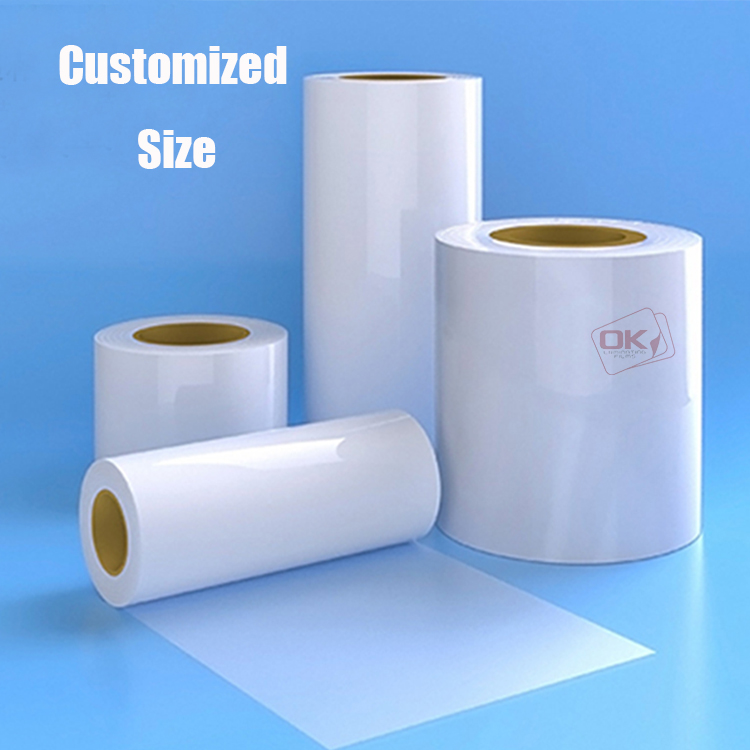
Roll film construction is a PET carrier plus an EVA adhesive layer; the adhesive mass, not the total micron figure alone, determines bond behaviour on heavy ink.
Yellowing: Anti-Yellowing Coating and Raw Material Control
HD-RL uses an anti-yellowing coating technology that HADA reports as extending product lifespan by 30%, together with premium-grade raw materials imported from South Korea. Combined with the anti-static treatment, this targets the two mechanisms behind optical drift: oxidation of the polymer and coating under repeated heat, and contamination that scatters light at the surface.
Transmittance of up to 92% is the measurable side of the same property. On colour-managed carton work, a film with high and stable transmittance holds the printed image closer to the approved proof, and the difference becomes visible only when a second lot is compared against the first.
Documentation and Support That Shorten the Feedback Loop
Defect resolution is a data problem as much as a chemistry problem. HADA supplies ISO 9001 certification, CE/RoHS compliance documentation and SVHC declarations, and provides 24/7 technical support for process optimisation and troubleshooting. In HADA's comparison data, the combined effect of stable lamination performance is 18% less machine downtime, 15% lower power consumption per unit output against the industry average, and 10% lower total cost of ownership from reduced waste and fewer rejections.
Step-by-Step Breakdown: A Seven-Step Sequence for Isolating a Lamination Defect
The sequence below is ordered so that each step removes one class of cause. The rule throughout is to change one variable at a time and record it, because a defect that disappears after three simultaneous adjustments tells the team nothing about which adjustment worked.
- Confirm the substrate condition. Check moisture content on paper and board, confirm that ink and varnish are fully dry, and verify that no silicone, wax or spray powder sits on the print surface. A moisture or contamination problem will reproduce on any film.
- Record the running parameters. Log lamination temperature, line speed, nip pressure and unwind/rewind tension for the job that failed. These four numbers are the baseline for every later comparison.
- Run a controlled coupon. Laminate the suspect film and a known-good film on the same substrate at the same settings. If both fail, the cause is upstream of the film; if only the suspect film fails, the film is implicated.
- Inspect at three time points. Check the coupon immediately, after 24 hours and after 72 hours. Delamination and edge lift frequently appear only after the laminate has cooled and relaxed.
- Check storage and handling. Rolls should be stored sealed, out of direct sunlight, on a flat face and within the supplier's stated conditions. Roll edge damage from improper stacking becomes a wrinkle at the nip.
- Isolate the batch and request records. Quarantine the affected lot and ask the supplier for batch traceability data covering extrusion and QC results for that lot.
- Escalate with data, not adjectives. Send the coupon results, the parameter log and the batch number to the supplier's technical team. HADA provides 24/7 support for exactly this kind of process review.
Decision rule: if the defect follows the substrate and not the film, adjust drying, corona treatment or nip pressure. If the defect follows the film across two different substrates, the film lot or the film specification is the variable — and the next step is a thickness-basis check before a supplier change.
Use Cases: Where Each Defect Shows Up First
Pressure-sensitive label overlamination
Labels are the most bubble-sensitive application because the laminate sits directly over solid ink and adhesive-coated facestock that release solvent slowly. Thin HD-RL gauges in the 35–60 micron range keep the label conformable on curved containers, and the lower activation temperature protects heat-sensitive pressure-sensitive adhesive beneath the facestock.
Folding cartons and box wrap
Carton work concentrates the wrinkle problem at fold lines and the yellowing problem on white board. Low shrinkage below 0.5% keeps the laminate flat through the folder-gluer, while the anti-yellowing coating protects the optical neutrality of white board through storage and retail display.
Promotional and POS print
Rigid promotional pieces use the upper end of the range, around 175–250 micron, where caliper and stiffness matter more than conformability. At that thickness, transmittance of up to 92% preserves colour fidelity on brand-critical display material, and gloss or matte finish is chosen to match the campaign rather than the machine.
Roll film replacing pouches in document and card work
Teams moving from A4, A3 or Letter pouches to roll film gain speed and lose the fixed-format constraint, but they also inherit tension control as a new variable. For ID, certificate and photo work in the 35–125 micron band, the same defect logic applies — with the added precaution that thickness notation from pouch catalogues must be normalised before the roll specification is written.
Comparison Table: Defect, Root Cause, and the HD-RL Property That Addresses It
The table below maps each defect to the film property that genuinely affects it, and to the check a buyer should run during sampling. Properties that do not influence a given defect are left blank on purpose — a film cannot fix a moisture problem in the board.
| Defect | Most common root cause | Relevant HD-RL property | What to verify at sampling |
|---|---|---|---|
| Bubbles / silvering | Residual moisture or solvent, dust, insufficient nip pressure | Lower activation temperature (10–15 °C less), anti-static treatment, up to 92% transmittance for detection | Laminate heavy-ink panels at reduced temperature and inspect under raking light |
| Wrinkles / tunnelling | Tension mismatch, roller alignment, thermal shrinkage | Shrinkage below 0.5% at high temperature; 25% higher tear strength; widths 100–1300 mm | Run at maximum line speed and check web flatness after cooling |
| Delamination / edge lift | Under-activation, surface contamination, ink film too heavy for the adhesive mass | Strong adhesion; 12-month warranty against delamination; batch traceability; defect rate below 0.1% | 72-hour peel check on die-cut edges and fold lines |
| Yellowing / haze | Thermal oxidation, UV exposure, low-grade raw material | Anti-yellowing coating; reported 30% longer lifespan; premium raw materials | Compare transmittance of a fresh sample against a stored reference lot |
| Specification mismatch | Total-thickness versus per-side thickness notation | 35–250 micron total range, PET/EVA construction | Confirm the measurement basis in writing before the purchase order |
FAQ
Which compliance documents should a packaging buyer request with HD-RL roll film?
Three document sets matter for most export programs. ISO 9001 covers the quality management system at HADA's Guangzhou plant. CE/RoHS documentation addresses restricted substances and is routinely requested by European distributors even where the end use is print rather than electronics. An SVHC declaration screens the material against substances of very high concern for EU market access. Because the required scope depends on destination market and end application, buyers should confirm the document list before the purchase order rather than after shipment.
Can one film grade cover thin label work and thick promotional work?
HD-RL is supplied from 35 to 250 micron in total thickness and from 100 to 1300 mm in web width, in glossy and matte finishes. Thin gauges around 35–60 micron suit label overlamination where conformability matters; 80–125 micron suits cartons and document work; 175–250 micron suits rigid promotional pieces. Because total thickness includes the EVA adhesive, the same micron figure can represent a different adhesive mass at another supplier. HADA also offers OEM/ODM customization of thickness, width, logo and packaging for private-label programs.
Does a lower lamination temperature actually reduce cost?
The saving comes from several small effects rather than one large one. HD-RL reaches bond strength at a lamination temperature 10–15 °C lower than standard films, and HADA reports 15% lower power consumption per unit output together with compatibility with machine speeds up to 80 m/min. Reduced rework adds to the effect: HADA reports 18% less machine downtime and 10% lower total cost of ownership from reduced waste and fewer rejections.
How should we validate HD-RL before placing a production order?
Run a controlled trial on your own substrate rather than on a supplier sample sheet. Request sample rolls in the target thickness and width, laminate at your current settings, then repeat at 10–15 °C lower. Inspect at once, after 24 hours and after 72 hours, since delamination and edge lift often appear late. Keep the parameter log so the comparison is reproducible, and use HADA's 24/7 technical support to review the results against the batch record.
What does the 12-month warranty cover?
HD-RL roll film carries a 12-month warranty against delamination, colour fading and material defects. Because production is monitored online and controlled through a three-stage QC process with batch traceability, a claim can be traced to a specific lot instead of being handled as a general complaint, and the reported batch defect rate is below 0.1%. To request a sample roll, a specification sheet or a quotation, contact HADA through www.huada168.com, by email at brian@huada168.com, or on WhatsApp at +8618929589411.
Conclusion: Fix the Cause Before Changing the Film
Bubbles, wrinkles and yellowing are rarely solved by a single purchase decision. They are solved by establishing which layer the defect lives in, then choosing a film whose measurable properties act on that layer. Substrate moisture and tension control belong to the press; activation temperature, shrinkage, adhesion and coating stability belong to the film.
HADA HD-RL is built for the second group: a PET/EVA roll film from 35 to 250 micron in 100–1300 mm widths, glossy or matte, with low activation temperature, shrinkage below 0.5%, up to 92% light transmittance and an anti-yellowing coating, supported by ISO 9001, CE/RoHS and SVHC documentation, a 12-month warranty against delamination, colour fading and material defects, and 24/7 technical support. HADA's plant in Guangzhou operates three automated production lines with annual capacity above 10,000 tons and exports to more than 50 countries and regions.
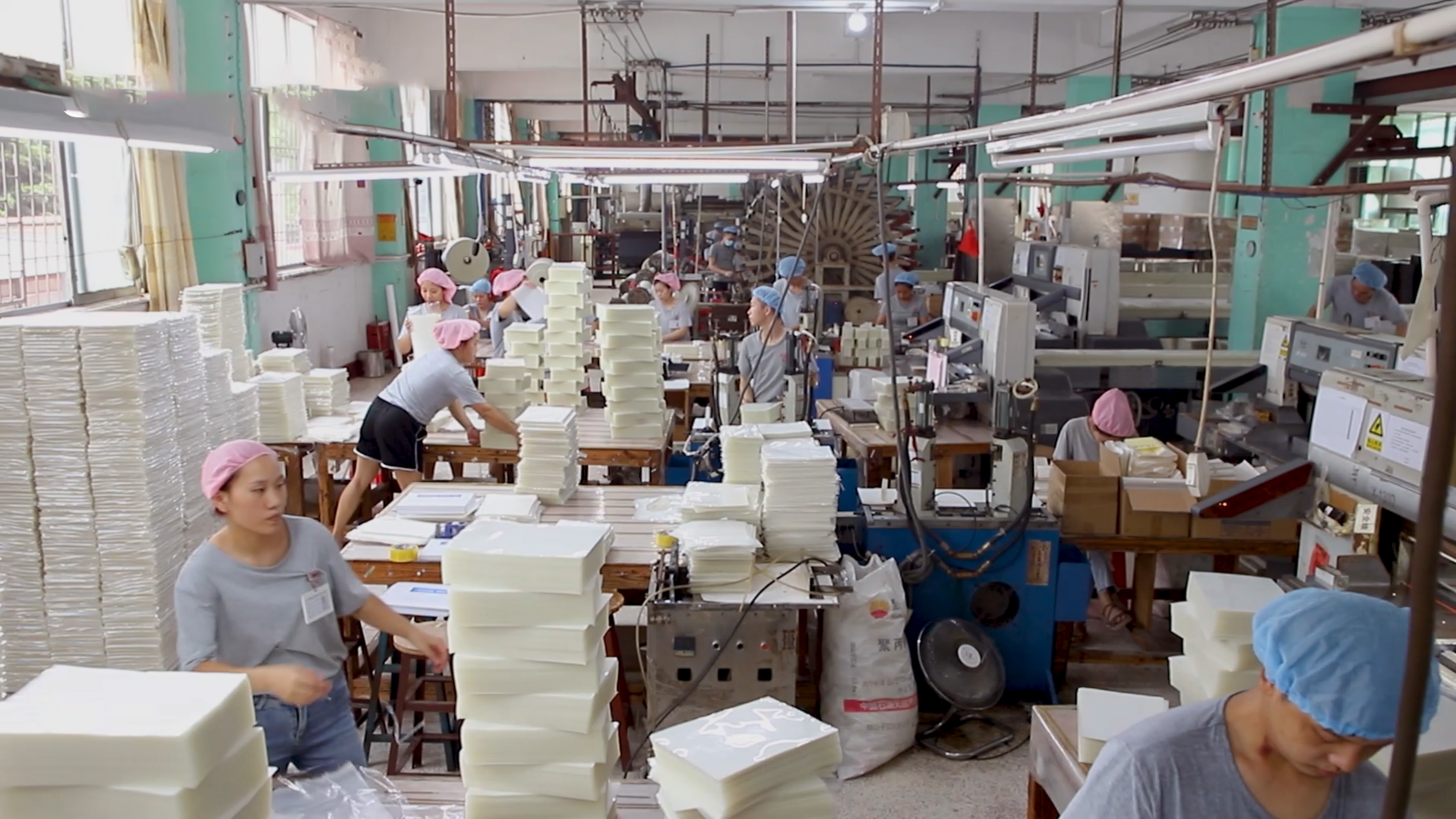
Request an HD-RL sample roll in your target thickness and width, and test it against your own defect rather than a generic benchmark.
Test HD-RL Against Your Defect
Guangzhou Huada Laminating Film Co., Ltd. (HADA) — founded 1992, ISO 9001 certified, exporting to more than 50 countries.
No.15, Shantangpai Road, Gaoweiqiang, Jinpen Village, Zhongluotan Town, Baiyun District, Guangzhou, Guangdong Province, China
Phone: 020-87451312 | Email: brian@huada168.com | WhatsApp: +8618929589411
Have Questions or Need More Details?
Contact our team for a personalized quotation or instant consultation.
Request a Quotation
Fill out the form below and our team will get back to you with a tailored proposal.
WhatsApp Direct Chat
Prefer to chat in real-time? Message us on WhatsApp for instant assistance & quick answers.
- Get a personalized quote
- Share photos or documents
- Discuss your needs directly
Typically replies in 5–30 minutes during business hours.