
PVC Panel Sourcing FAQ: MOQs, Samples and Quality Assurance
Short answer: a large PVC panel order is settled by four documents long before it is settled by price — a verifiable factory record, a production-line sample approved against written tolerances, an MOQ and specification sheet issued per model, and a capacity commitment that matches your delivery window. The questions below are the ones buyers actually send at quotation stage, answered with the documented operating facts of Haining Jianmu New Decoration Material Co., Ltd. (Jianmu), a decorative materials manufacturer established in 1998 in Yuanhua, Haining, Jiaxing, in the core area of China's Yangtze River Delta Economic Circle.
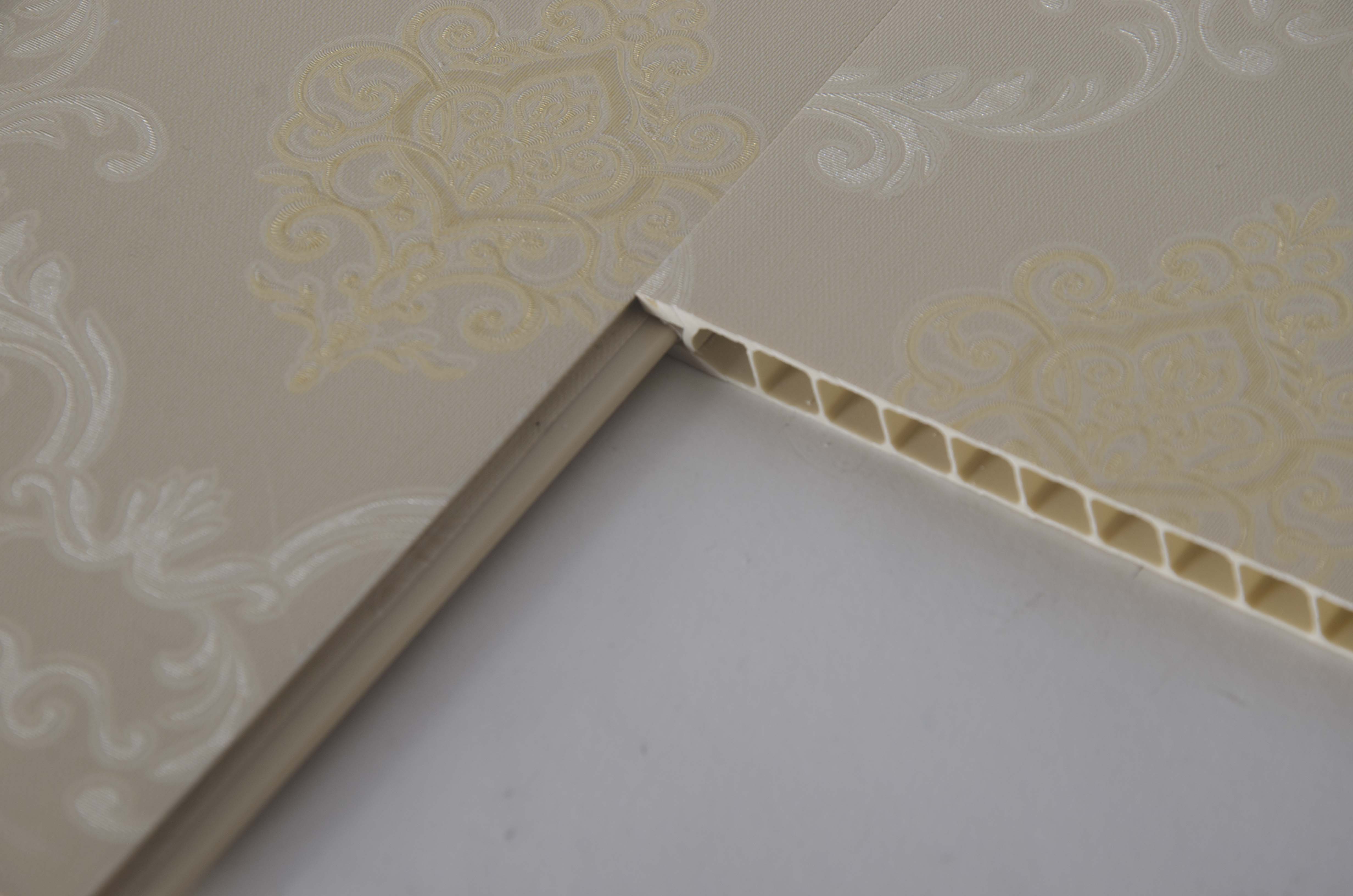
A PVC wall panel profile of the type covered by the sourcing questions in this FAQ.
Why pvc panel sourcing questions are usually answered too late
Most sourcing problems in this category are not manufacturing failures. They are sequencing failures — the buyer asks for a price first, discovers the real constraints later, and by then the deposit has been paid and the specification is effectively locked.
The five failure points that repeat most often across PVC wall panel and partition panel programmes are:
1. The sample came from a hand-built batch. A good-looking sample proves nothing if it was not produced on the line that will run the order.
2. MOQ was quoted for one model and re-quoted later. Buyers compare a headline MOQ figure against a different finish, a different length, or an OEM run, and the number no longer applies.
3. Supplier age was taken from a homepage line. "Since 1998" on a banner is a marketing claim until it is paired with a plant location, a floor area and a headcount that can be cross-checked.
4. A certificate was named without its scope. Holding ISO9001:2008, SONCAP or SGS documentation is useful only when the scope, the certificate holder and the validity date match the product you are buying.
5. Capacity was read as a single output figure. An annual output number tells you the size of the plant, not whether your specific model can be scheduled in the month you need it.
Each of these is cheap to fix at inquiry stage and expensive to fix after production starts. That is the reason this article is organised as questions rather than as a product description.
What the PVC panel market looks like going into 2026
Demand context matters for one practical reason: it determines how tight factory slots are when a buyer starts asking for lead times.
Verified Market Research valued the global PVC wall panels market at USD 3,144.8 million in 2023 and projects it to reach USD 9,495.8 million by 2031, growing at a CAGR of 14.4% over 2024–2031. A much broader measurement from Dataintelo puts global PVC panels revenue at approximately USD 14.8 billion in 2025, with wall panels as the dominant sub-segment. The two figures are not in conflict so much as different in scope — one counts wall panels, the other counts all PVC panels — which is exactly why buyers should check what a market number is counting before citing it internally.
On the supply side, International Trader Publications reports that China became the world's largest PVC exporter in 2025, accounting for 24% of total global trade volume. For a buyer, that concentration means choice: a large pool of Chinese PVC panel manufacturers, and a corresponding need for a repeatable way to separate them.
Technically, the reference framework most European buyers work from is EN 13245-2, which specifies requirements for unplasticized poly(vinyl chloride) (PVC-U) profiles for internal and external wall and ceiling finishes. Whether the item under discussion is a flat pvc wall panel, a 3d wall panel, a wpc wall panel or a uv marble sheet finish, the documentation discipline is the same: a defined product, a defined standard, and a document that connects the two.
Q1. How do you verify a supplier's history without visiting the factory?
Ask for facts that can be cross-checked against each other, then check whether they agree.
A supplier that was genuinely established at a certain date should be able to give you a founding year, a plant location, a covered floor area, a headcount and an annual output that all point in the same direction. For Jianmu, the record is: founded in 1998 and located in Yuanhua, Haining, Jiaxing, Zhejiang; a manufacturing facility covering 15,000 square metres; approximately 50 staff, including a professional technical team of more than 5 members and more than 40 skilled staff; an R&D team of 5 engineers; and an annual production output of 360 40HC containers.
The export profile is the second cross-check. Jianmu's products are exported to more than 50 countries and regions, mainly covering Chinese mainland, the Middle East, South America and Southeast Asia, with export business accounting for 90% of total sales and Vietnam as a major market. A 90% export ratio is a useful signal for a first-time buyer because it implies routine handling of export documentation, loading schedules and destination-specific paperwork — not a guarantee of quality, but evidence that the commercial mechanics are practised rather than improvised.
What this does not prove. Longevity is a proxy for continuity, not for current line quality. A factory founded in 1998 can still ship a batch with a colour drift. That is why the history check must be paired with the sample check in Q3 and the inspection agreement in Q5.
Practical rule: if the founding year, the plant area, the headcount and the output figure cannot be reconciled by the supplier in one reply, the history claim is decorative rather than operational.
Q2. What should you confirm about MOQ before accepting a quotation?
MOQ in this category is normally quoted per model and per finish, not as one factory-wide number. A single headline MOQ figure is almost always answering a question the buyer did not ask.
For a programme built on pvc partition wall panels in 2900×400×26 mm, the MOQ question has three parts:
Minimum per model. Model 7073-A189 is a PVC partition panel with dimensions of 2900×400×26 mm, supplied together with a PVC partition corner trim measuring 2900×85×50 mm. A quotation should state the minimum quantity for that model specifically, not for "partition panels" as a category.
Minimum per colour or pattern. Decorative panels are ordered by finish, and finish is what drives set-up decisions.
Minimum for an OEM run. Where OEM service is used — producing goods according to customers' samples or pictures — the minimum is a separate conversation from the standard range.
There is also a loading dimension that buyers frequently forget. Panel length and profile drive how efficiently a 40HC container fills, so the meaningful number for costing is the loading quantity per 40HC for the exact model, not a generic container figure carried over from another product. A 2900 mm partition panel and a 3000 mm wall panel do not pack the same way, and a mixed container of wall panels and PVC floor behaves differently again.
Practical rule: never compare MOQ figures across suppliers unless both figures are stated for the same model, the same finish and the same packing method.
Q3. What should the sample phase actually verify?
The sample phase is not a beauty contest. It is the moment where the acceptance standard for the whole order gets written down.
Six things are worth checking and recording:
1. Whether the sample is a production-line sample. Ask directly. If the supplier cannot confirm that the sample came off the same line and the same formulation as the bulk run, treat it as an indication of appearance rather than a specification.
2. Dimensions against the stated specification. Jianmu's documented figures give a clean benchmark: 2900×400×26 mm for the PVC partition panel (model 7073-A189), 3000×400×9 mm for the PVC wall panel (model 566-A155), and 333×22×3000/4000 mm for the PVC floor (model ACL10). Measure the sample against the number you intend to write into the purchase order.
3. Accessory fit. Panels are only as good as the system around them. For the partition panel, the matching PVC partition corner trim is 2900×85×50 mm; confirm that the trim supplied with the bulk order matches the sample trim in section and finish.
4. Surface and colour consistency. Check the sample under the lighting conditions of the actual project, not under showroom spotlights.
5. The claim behind the description. Jianmu's new-type PVC wall panels are documented as light weight, heat insulation, thermal preservation, moisture resistance, flame retardant and easy to install. Those are product descriptors. If your project requires a stated fire class, ask for the test documentation for the exact build rather than relying on the adjective.
6. Packaging. Ask how the sample is packed versus how the container is packed. Corner protection and bundle weight matter at unloading, not at approval.
A signed reference sample, retained by both sides and referenced in the purchase order, is the cheapest quality instrument available to a buyer in this category.
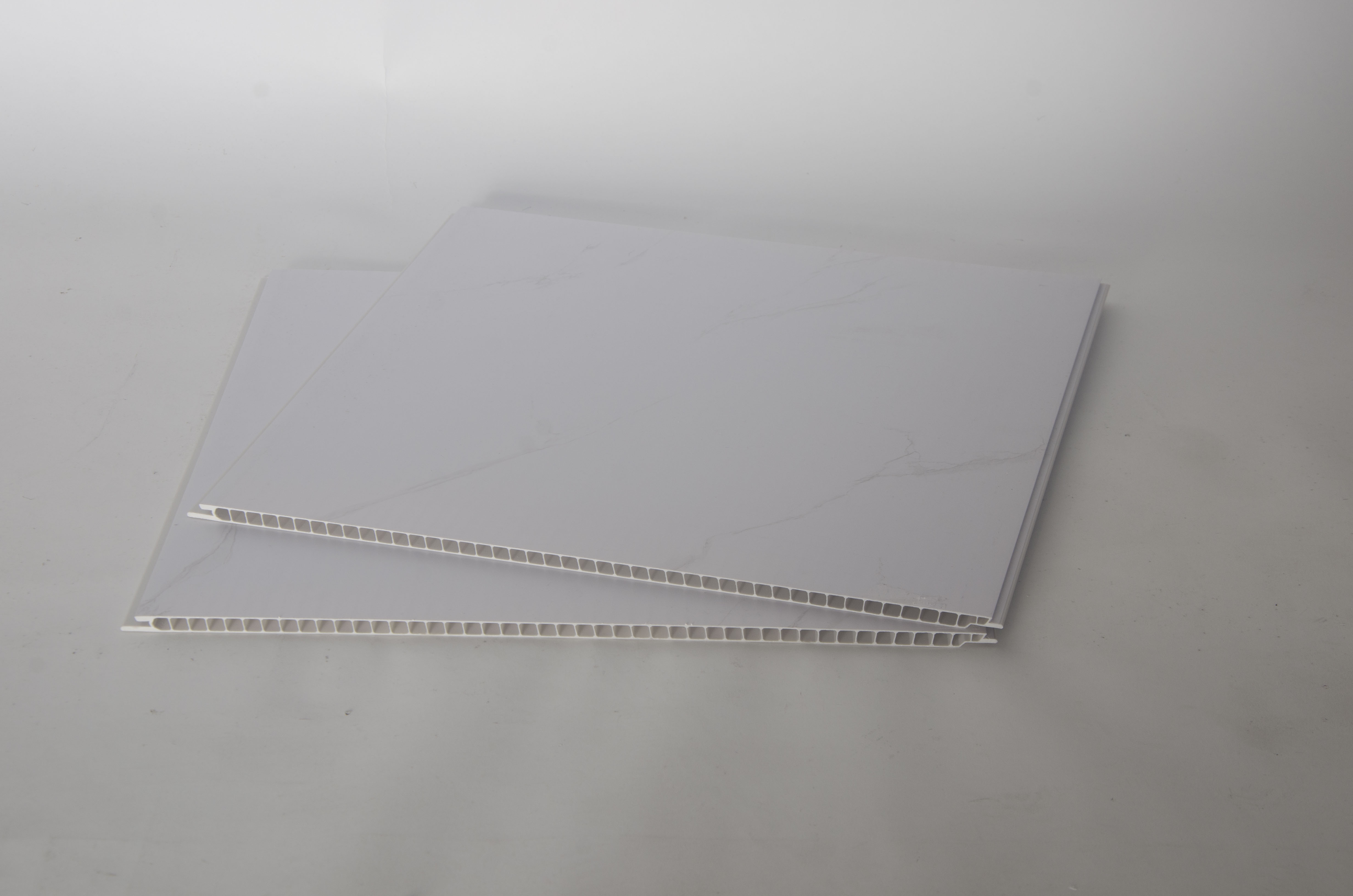
Surface, profile and joint detail are the three items that most often differ between sample and bulk delivery.
Q4. What does 360 containers a year actually tell you about a partner?
It tells you the plant's size class, and it tells you whether your programme is a normal month or a strain on the schedule.
Jianmu's annual production output reaches 360 40HC containers — the equivalent of roughly 30 containers a month — produced in a 15,000 square metre facility by approximately 50 staff, with an R&D team of 5 engineers. Read as an operating profile rather than a headline, that combination describes a mid-sized specialist plant rather than a volume generalist.
Three practical implications follow:
Fit against your order size. A ten-container programme represents a fraction of a normal month at this scale. A programme of sixty or more containers a year absorbs a meaningful share of capacity and should be discussed as a scheduled commitment, not as a spot order.
Line time is model-specific. Output is quoted in containers per year, but your container is filled with one model, one thickness and one finish. Ask what the production window looks like for your specific build rather than assuming the annual average applies to it.
Peak periods need booking. A 90% export ratio means the calendar is driven by other buyers' shipping deadlines. If your project has a fixed installation date, the container slot is a commercial item to secure early.
What it does not tell you. Capacity is not quality. A plant large enough to take the order is not automatically a plant that will hold the tolerance. Pair the capacity question with the inspection question in Q5 and the sample question in Q3 — the three only work as a set.
Q5. Which quality documents should be on file before the first container?
Jianmu holds ISO9001:2008 International Quality System Certification, SONCAP Certificate and SGS Certificate. Those three names cover different things, and buyers should ask what each document actually covers rather than treating the set as a single badge.
A workable document checklist for a first order:
1. The quality system certificate, with the certificate holder name and validity period visible.
2. The conformity or inspection certificate relevant to your destination market, where that scheme applies to your product.
3. The third-party inspection report covering the product family you are buying.
4. Any project-specific test documentation requested by your specifier — for European work this typically means a documented reaction-to-fire classification and conformance with EN 13245-2 for PVC-U profiles used in wall and ceiling finishes.
5. The signed reference sample, referenced in the purchase order.
6. The pre-shipment inspection arrangement: who attends, at what stage, and which photographs and documents are released with the shipping file.
Two limits are worth stating plainly. First, a certificate is issued to a scope; if your product sits outside that scope, the certificate does not transfer to it. Second, the phrase "fire-resistant" in a product description is not a classification. Where a building control submission is involved, the classification document is the only thing that answers the question.
Q6. Who actually handles your order inside the factory?
Team structure is one of the few supplier facts that predicts day-to-day responsiveness, because it shows whether technical decisions sit with engineers or with sales alone.
At Jianmu the structure is approximately 50 staff in total: a professional technical team of more than 5 members, more than 40 skilled production staff, and an R&D team of 5 engineers. OEM service is available, with production carried out according to customers' samples or pictures.
That structure answers a question buyers rarely ask explicitly: who approves the pre-production sample? In a plant with a dedicated engineering group, the answer is usually a technical sign-off rather than a commercial one, which is the arrangement you want when a custom finish or a non-standard length is involved.
Ask for three names before the order is placed: the person who approves the sample, the person who signs the inspection report, and the person who owns the shipping schedule. If those are the same person with no backup, a single absence can move your delivery date.
Q7. How should lead time be agreed so it means something?
A lead time without a trigger date is not a commitment. "Thirty days" can mean thirty days from deposit, from sample approval, or from raw material arrival — and the difference between those readings is often two weeks.
For an export-heavy plant — Jianmu exports to more than 50 countries and regions with export business at 90% of total sales — the schedule is best agreed as a sequence of dated milestones rather than one number:
• Sample approval date, signed by both parties.
• Production start date.
• Pre-shipment inspection date.
• Container loading date.
• Document release date.
Buyers sourcing a mixed programme should also confirm that all models in the container share the same completion window. A container that is 90% loaded and waiting on one model is a demurrage risk, not a partial success.
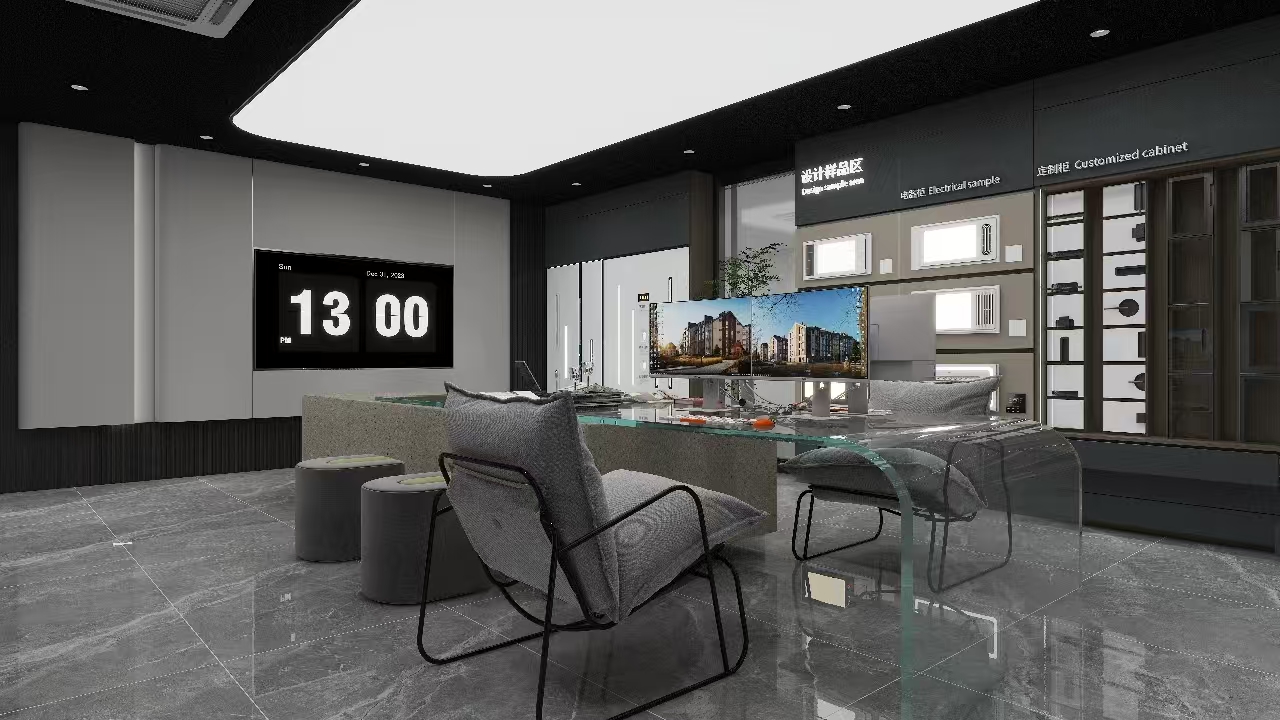
Interior wall and ceiling application — the end use that the sample and the certificate both have to serve.
Step-by-step: a sourcing sequence that removes most of the risk
Step 1 — Define the product before the price. Model, dimensions, finish, quantity per model, and the accessory set. For a partition programme this means the panel (2900×400×26 mm) plus the corner trim (2900×85×50 mm) as one line item group, not two.
Step 2 — Request a quotation that states its assumptions. A usable quote names the model, the MOQ basis, the finish, the packing method and the loading quantity per 40HC. If any of those are missing, the price is not comparable with any other quote you hold.
Step 3 — Verify the supplier record. Founding year, plant location, floor area, headcount, annual output and export markets. Cross-check that the numbers belong to the same company and the same site.
Step 4 — Run the sample phase as a document, not a favour. Production-line sample, measured against the specification, with the accessory fit checked and the reference sample signed.
Step 5 — Collect the documents. ISO9001:2008 certification, SONCAP Certificate, SGS Certificate, plus any project-specific test documentation your specifier requires.
Step 6 — Fix the schedule in dates. Sample approval, production start, inspection, loading, document release. Then hold the supplier to the dates rather than to the adjective.
Step 7 — Close the loop with a repeatable standard. Once a batch matches the reference sample, the reference sample becomes the acceptance criterion for every subsequent container — which is what turns a first order into a programme.
Use cases: how these questions change by buyer type
Distributor building a stock programme. The dominant question is MOQ breadth: how many models and finishes can be held at a workable minimum, and how the container loads across a mixed range that includes PVC wall panels, wpc wall panels and PVC floor. Capacity at 360 40HC containers a year matters here because stock programmes are repeat cycles, not one-off shipments.
Contractor fitting out a commercial interior. The dominant question is sample-to-bulk consistency and accessory availability. A partition build lives or dies on the corner trim matching the panel, so the trim (2900×85×50 mm for model 7073-A189) should be on the sample approval sheet alongside the panel.
Brand owner using OEM. The dominant question is engineering capacity. Jianmu's OEM service produces goods according to customers' samples or pictures, supported by an R&D team of 5 engineers — so the conversation is about the drawing, the pre-production sample and who signs it off, not about catalogue numbers.
Project buyer with a compliance file. The dominant question is documentation. Certificates are collected up front, the reaction-to-fire question is resolved before the order, and the inspection point is written into the order rather than agreed by phone later.
Supplier verification checklist: what to ask, and what the answer should look like
| Verification checkpoint | Question to put in writing | Documented position at Jianmu | What it tells the buyer |
|---|---|---|---|
| Age and location | When was the plant established, and where is it? | Established 1998; Yuanhua, Haining, Jiaxing, Zhejiang | Continuity of operation |
| Scale | Floor area, headcount and annual output? | 15,000 m²; approximately 50 staff; 360 40HC containers per year | Whether your order size fits the schedule |
| Technical resource | Who handles customisation and sample approval? | R&D team of 5 engineers; OEM to customers' samples or pictures | Whether custom work is routine or improvised |
| Certification | Which certificates, held by whom, valid when? | ISO9001:2008 International Quality System Certification; SONCAP Certificate; SGS Certificate | Documentation readiness for the destination market |
| Export routine | Share of export sales and main markets? | 90% of sales exported; more than 50 countries and regions; Vietnam a major market | Familiarity with export documents and loading schedules |
| Range coverage | Can the full bill of materials come from one plant? | PVC integrated wall panels, PVC new wall panels, wood-plastic panels, bamboo and wood fiber panels, PVC floor; models 7073-A189, 566-A155, ACL10 | Single-source convenience versus multi-supplier risk |
FAQ
Which certificates should a PVC panel supplier be able to show?
Jianmu's documentation includes ISO9001:2008 International Quality System Certification, the SONCAP Certificate and the SGS Certificate. Ask for the certificate holder name, the scope and the validity period rather than a logo on a brochure. Where a project specifies a fire class, request test documentation for the exact panel build instead of relying on the general description "fire-resistant".
Can a factory produce panels from our own samples or pictures?
Yes, where OEM service is offered. Jianmu provides OEM service and can produce goods according to customers' samples or pictures, supported by an R&D team of 5 engineers. Before quoting, confirm three things: who approves the pre-production sample, whether that sample is produced on the production line, and how the approved reference sample is retained for later shipments.
What information is needed to return an accurate quotation?
Provide the model or drawing, the exact dimensions (for example 2900×400×26 mm for model 7073-A189 or 3000×400×9 mm for model 566-A155), the quantity per model and per finish, the destination port, the packing preference, and whether the order is standard or OEM. MOQ is quoted per model and per finish, so a single generic quantity cannot price a mixed programme.
How is quality checked before the bulk run?
Approve a production-line sample against written dimensions, colour and joint fit; check the matching accessories, since the PVC partition corner trim for model 7073-A189 measures 2900×85×50 mm; keep a signed reference sample on both sides; and agree the pre-shipment inspection point and the documents released with the shipping file.
What do capacity and lead-time signals mean for a large order?
An annual output of 360 40HC containers — roughly 30 containers a month — from a 15,000 m² facility with approximately 50 staff means a ten-container programme sits inside a normal month, while a programme of sixty or more containers a year occupies a meaningful share of capacity and should be scheduled in advance. Tie every lead time to a trigger date, whether sample approval or deposit. To move from question to quotation, request a sample and a model-specific quote through the Jianmu team at hnjianmu.com, or download the product catalogue below.
Conclusion: a 1998 factory is only useful if you test it like a 2026 supplier
The age of a factory is a starting point, not a verdict. What converts it into a decision is the evidence chain around it: a plant record that reconciles — founded in 1998, 15,000 m² in Yuanhua, Haining, approximately 50 staff, 5 engineers, 360 40HC containers a year, 90% export to more than 50 countries — a sample approved on the production line, an MOQ stated per model rather than in headlines, and a certificate set that matches the destination market.
Buyers who ask those four questions in the first email get a slower first reply and a much faster programme. Buyers who ask for the price first get a fast reply and spend the next two months reconciling the details.
For a first evaluation, ask for a production-line sample of model 7073-A189 (2900×400×26 mm, with the 2900×85×50 mm corner trim) or model 566-A155 (3000×400×9 mm), together with the current certificate set and a written MOQ for the finish you intend to order. That single request answers most of this FAQ at once.
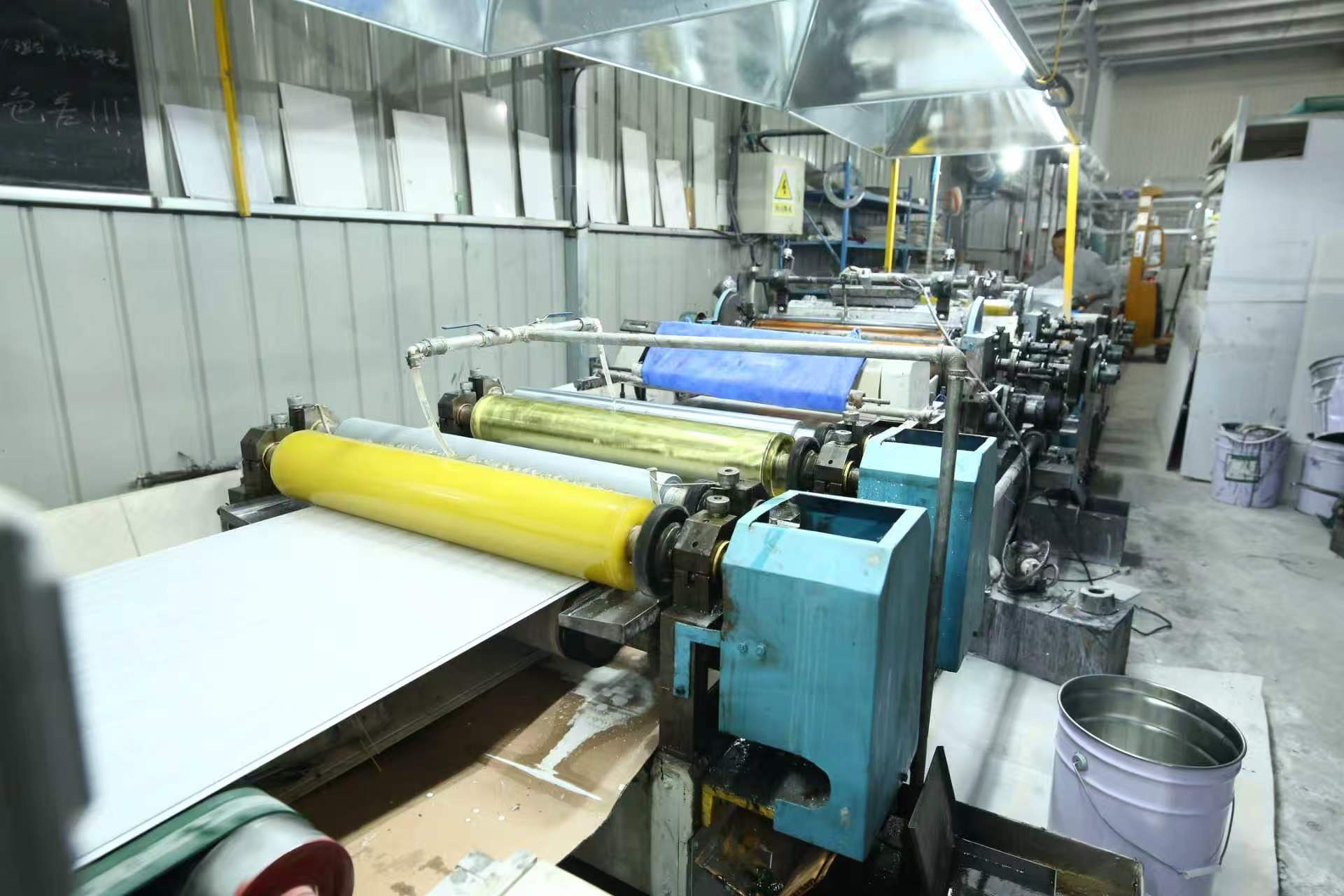
Request a sample, a model-specific quotation or the full catalogue from the Jianmu team.
Next step
Ask for a production-line sample, a quotation stating the MOQ per model, and the certificate set for your destination market.
Catalogue (PDF): Download the Jianmu product catalogue
Website: www.hnjianmu.com
Email: fengdingjx@gmail.com
Tel / WhatsApp: +86 138-0673-3501 · Address: 2nd Floor, Building 6, No.158 Yuanhualianhong Road, Haining, Zhejiang, China
Have Questions or Need More Details?
Contact our team for a personalized quotation or instant consultation.
Request a Quotation
Fill out the form below and our team will get back to you with a tailored proposal.
WhatsApp Direct Chat
Prefer to chat in real-time? Message us on WhatsApp for instant assistance & quick answers.
- Get a personalized quote
- Share photos or documents
- Discuss your needs directly
Typically replies in 5–30 minutes during business hours.