
PVC Partition Panels vs. Ceramic Tiles for Bathroom Walls: The Long-Term Cost Decision
A bathroom wall is judged twice. It is judged on handover day, when the surface either matches the design intent or does not, and it is judged years later, when the first repair, deep clean or refit reveals what that wall actually cost to own. PVC partition wall panels and traditional ceramic tiles routinely land on the same shortlist for the same wet area, yet they are rarely compared on equal terms.
Direct answer: A PVC partition wall panel system is a factory-finished, waterproof and moisture-proof interior wall system for wet areas. The Jianmu PVC partition wall panel (Model 7073-A189) is supplied at 2900 × 400 × 26 mm with a matching PVC partition corner trim of 2900 × 85 × 50 mm, and is described as waterproof, moisture-proof, fire-resistant and easy to install. A ceramic tile wall, by contrast, is a wet-installed assembly built from substrate, adhesive, tile and grout. The long-term cost difference between the two is driven less by the visible surface than by substrate preparation, installation sequencing, joint maintenance and the cost of the next refit.
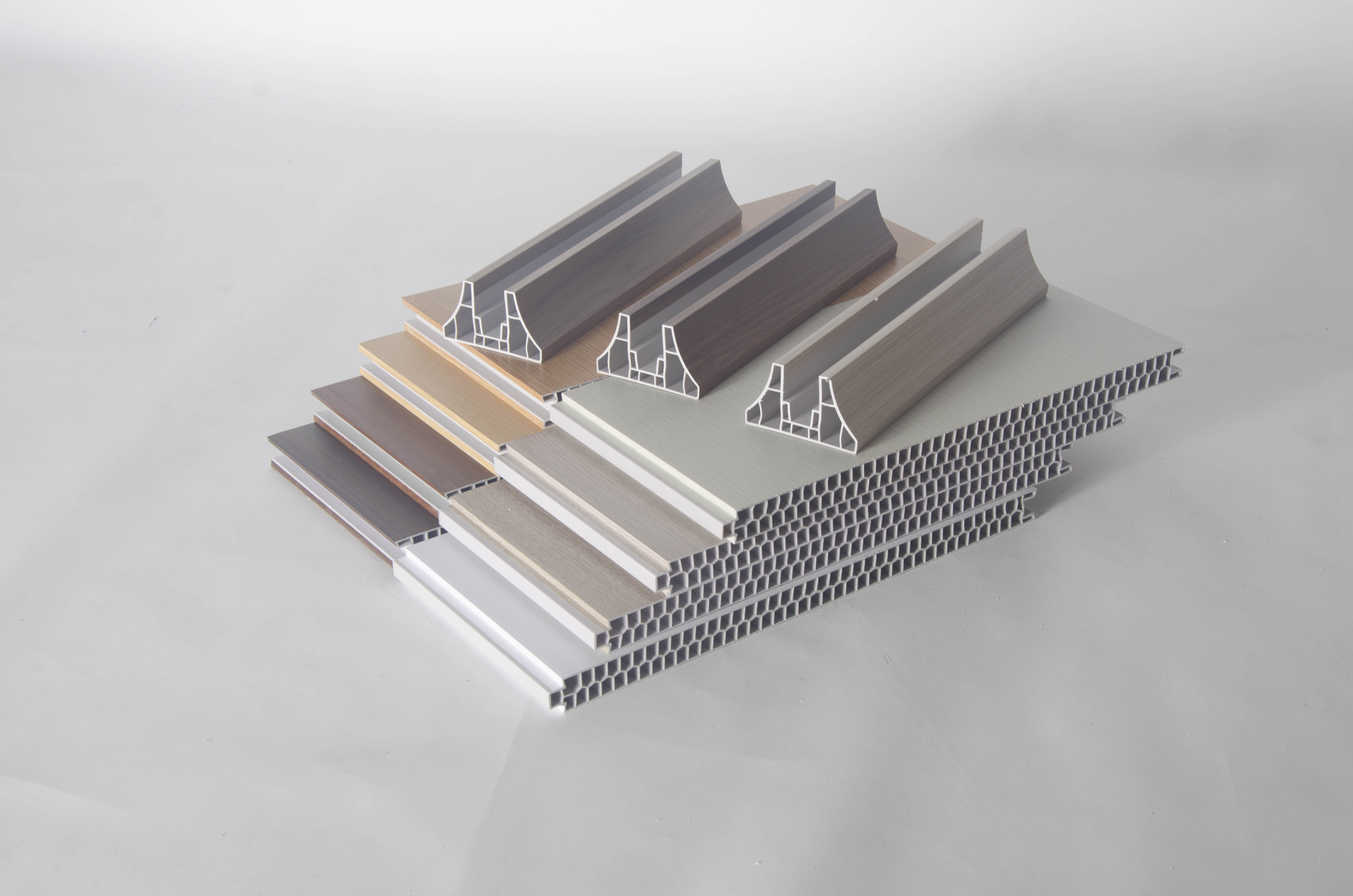
This guide is written for the people who actually sign off on that decision: fit-out contractors, facility and property managers, distributors, importers and brand owners who specify bathroom walls and then live with the result. It sets out what each system contains, how to compare them assembly to assembly, where each option fits, and which supplier facts genuinely reduce long-term risk.
Why a Bathroom Wall Comparison Is Never a Price-Per-Square-Metre Question
The first reason bathroom wall comparisons go wrong is scope. "Tile" and "panel" are not equivalent line items. A tiled bathroom wall is a multi-layer build-up: a flat, cured substrate, a waterproofing layer in wet zones, an adhesive bed, the tile itself, grout, and sealant at junctions. A PVC partition wall panel wall is a different assembly: factory-finished panels, a supporting structure,installation accessories and trims as referenced by the product application, plus corner trim such as the 2900 × 85 × 50 mm PVC partition corner trim supplied with Model 7073-A189.
Because the two assemblies contain different components, comparing one square metre of a panel with one square metre of tile compares two fractions of two systems. The parts that get omitted are usually the parts that carry the cost:
- Substrate work — levelling, rendering or boarding before a tile can be laid, versus a supporting structure for panels.
- Waterproofing build-up — membranes and coatings applied before tiling in wet zones.
- Consumables — adhesive, grout, sealant and spacers on the tile side; installation accessories and trims on the panel side.
- Labour stages — a tiled wall passes through several separate wet stages; a panel wall is installed onto a prepared supporting structure using the panel system's own accessories.
- Room downtime — every day a bathroom cannot be used is a cost in hotels, rental units and commercial buildings.
- Maintenance — grout lines require periodic cleaning and resealing; the panel surface is described as moisture-proof and is wiped rather than scrubbed.
- Single-point repair — one damaged tile versus one damaged panel length.
- Refit and disposal — demolishing a tile bed at the end of a cycle versus removing panels from their supporting structure.
Decision rule: if a supplier quotes only the surface material on either side of this comparison, the quote is incomplete. Ask for the full assembly — substrate, accessories, labour stages, downtime and the next refit — before any cost conclusion is drawn.
Why Panel Systems Are Entering Wet-Area Specifications Now
The shift is not a matter of taste; it shows in the numbers. Verified Market Research values the global PVC wall panels market at USD 3,144.8 million in 2023 and projects it to reach USD 9,495.8 million by 2031, at a CAGR of 14.4% from 2024 to 2031. Dataintelo reports a broader figure — approximately USD 14.8 billion in global PVC panels revenue in 2025, with wall panels as the dominant sub-segment. The two estimates should not be read as the same number: one covers PVC wall panels only, while the other covers the entire PVC panels market, which is why published market sizes for this category diverge so widely.
Adjacent decorative panel categories are expanding as well. Reports and Data values the WPC wall panel market at USD 1.5 billion in 2024, projected to reach USD 3.2 billion by 2034 at a CAGR of 8.1%, which matters to buyers because wood-plastic and PVC panel ranges are frequently specified together in the same interior package.
Supply is also consolidating in China. According to International Trader Publications, China became the world's largest PVC exporter in 2025, accounting for 24% of total global trade volume — a relevant fact for importers assembling a container programme around PVC-based wall and floor products. In that supply landscape, Haining Jianmu New Decoration Materials Co., Ltd. (Jianmu) has been profiled by EIN Presswire as a significant supplier of PVC partition wall panels based in Haining, Zhejiang.
On the compliance side, two standards recur in specification discussions. EN 13245-2, published by the European Committee for Standardization, specifies requirements for unplasticized poly(vinyl chloride) (PVC-U) profiles for internal and external wall and ceiling finishes — the material class behind rigid PVC wall panels. EN 13501-1 is the fire classification reference used when a project states a fire-retardant requirement, which is why the application profile of panel products for architectural decoration lists fire retardancy as a special requirement.
What Is Actually Installed: The PVC Partition Wall Panel System
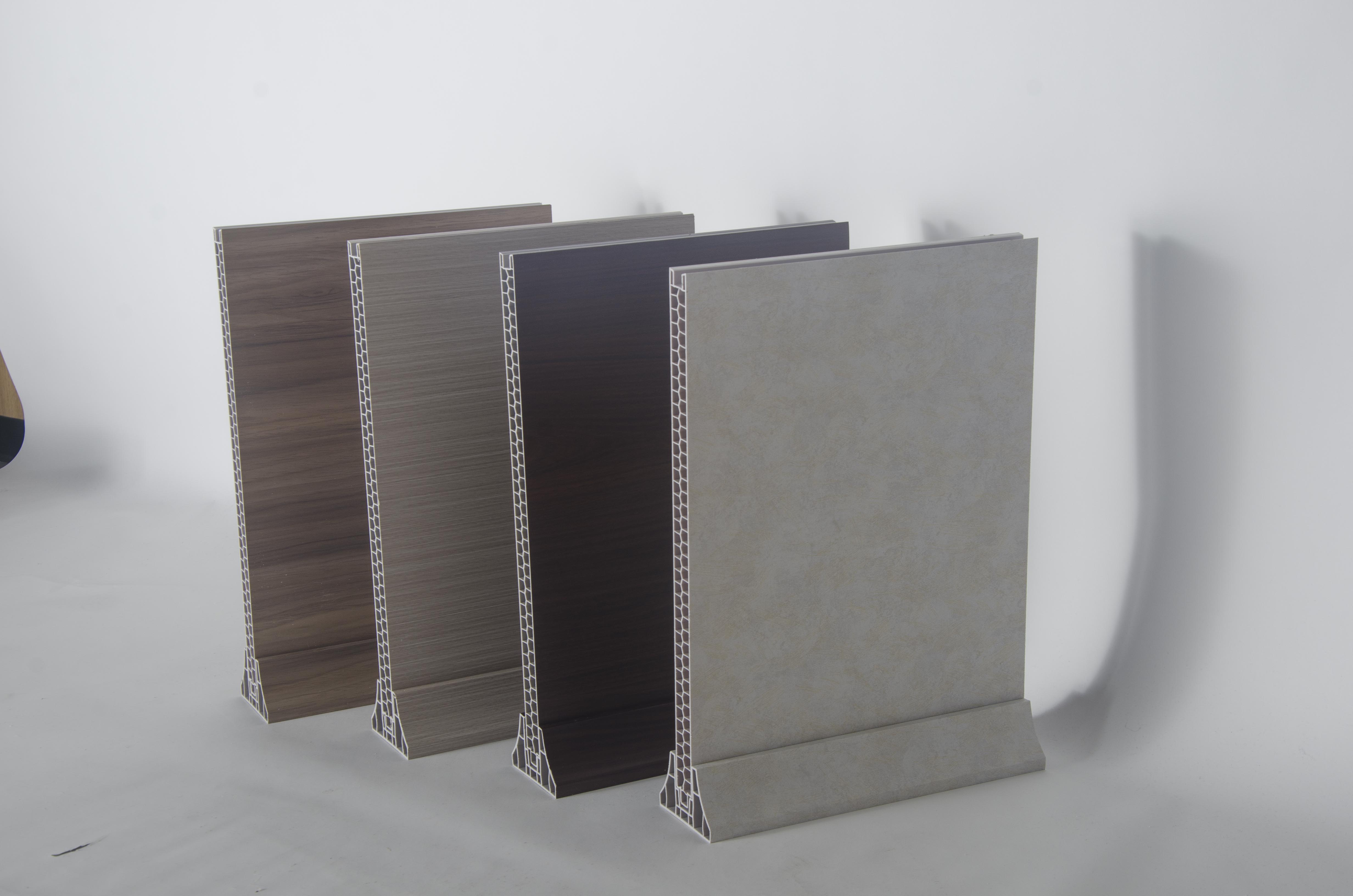
Model 7073-A189 is a PVC partition panel and a PVC partition wall panel made of PVC, with panel dimensions of 2900 × 400 × 26 mm and a corresponding PVC partition corner trim measuring 2900 × 85 × 50 mm. It is intended for building and construction and interior decoration applications, and it is described as waterproof, moisture-proof, fire-resistant and easy to install — the four properties that decide whether a wall product belongs in a wet room at all.
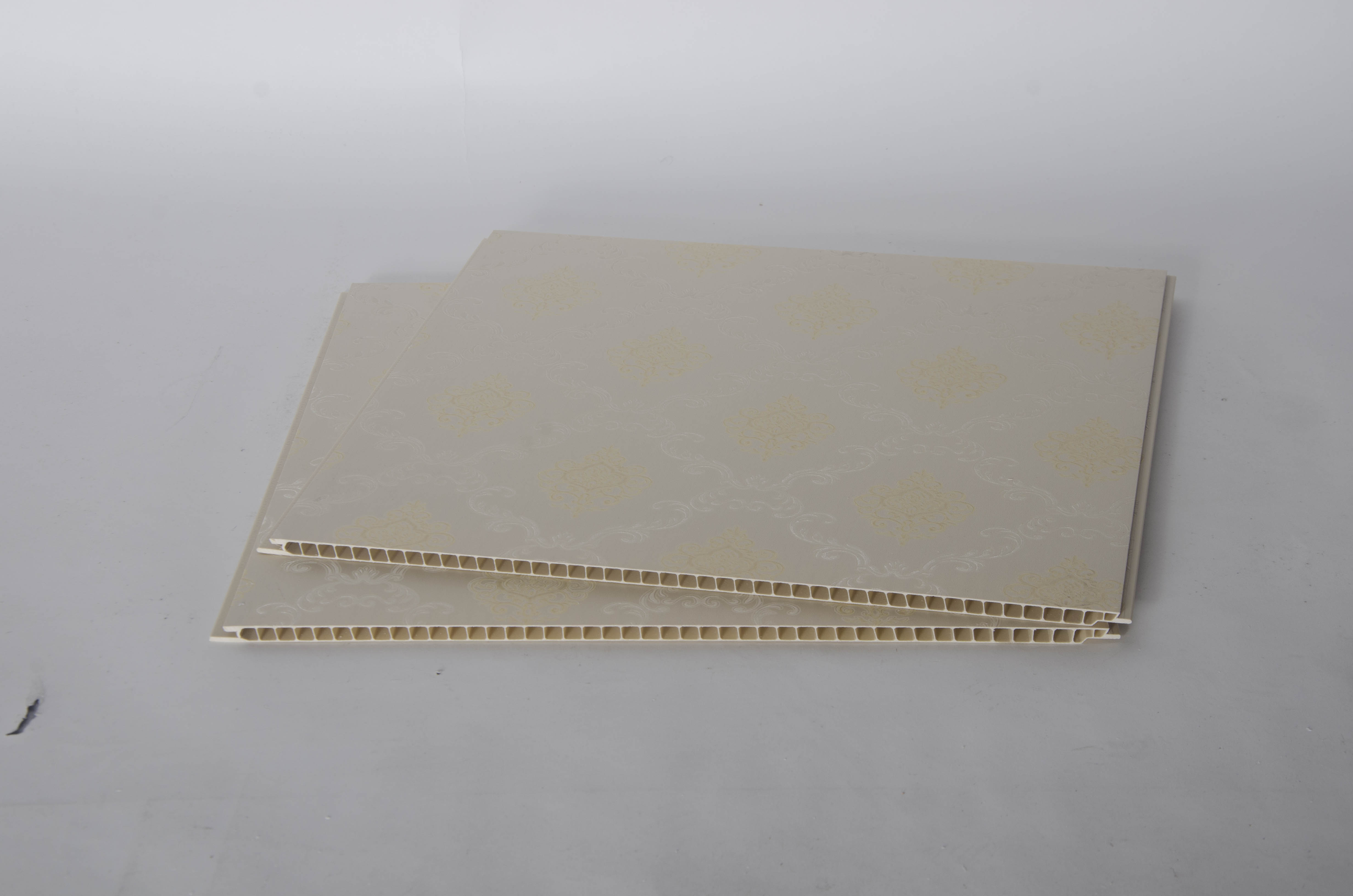
The same supplier range includes a second panel format worth knowing about, because bathroom walls are not uniform. Model 566-A155 is a PVC wall panel classified under the PVC ceiling panel category, made of PVC with dimensions of 3000 × 400 × 9 mm. It is designed for interior decoration in the building and construction industry and shares the waterproof, moisture-proof and fire-resistant properties, with a structural design that enables easy installation. The practical division of labour is simple: the 26 mm partition panel provides a thicker panel body for partition and wall applications, while the 9 mm panel suits wall and ceiling surfaces where a lighter format is appropriate.
For a complete wet-area envelope, Jianmu also produces Model ACL10, a PVC floor with overall dimensions of 333 × 22 × 3000/4000 mm. It is made of PVC, intended for building and construction and interior decoration, and shares the same waterproof, moisture-proof, fire-resistant and easy-to-install profile. Specifying wall panels and flooring from one material family reduces the number of finishes, trims and suppliers that have to be coordinated at handover.
On installation logic, the application profile of these products references interior wall and ceiling decoration in building decoration projects, with a supporting structure or installation accessories as the matching equipment. That is the structural difference from tiling: the panel is a finished surface carried by a structure, while the tile is a finish bonded to a substrate with a wet bed.
Where the 26 mm and 9 mm Formats Sit
Buyers frequently ask whether the thinner panel can replace the thicker one to save cost. The honest answer is that they are different products addressing different conditions. Model 7073-A189 at 2900 × 400 × 26 mm is the partition-grade panel for wall and partition bodies; Model 566-A155 at 3000 × 400 × 9 mm is the lighter wall and ceiling format. Matching the panel format to the wall condition prevents rework later, which is exactly the kind of cost that never appears in a unit-price comparison.
Step-by-Step: How to Compare Long-Term Cost Fairly
Step 1 — Define the wet zone precisely
Mark which wall areas are genuinely wet (shower surrounds, splash zones) and which are simply humid bathroom walls. A tile specification often spreads across an entire room because the material is available in one format, while a panel specification can be zoned. Zoning first, material second, is the sequence that controls cost.
Step 2 — Write both systems as complete assemblies
List every layer and component on both sides: substrate, waterproofing, adhesive, tile, grout and sealant on the tile side; supporting structure, installation accessories, panels and corner trim such as the 2900 × 85 × 50 mm trim on the panel side. Only assemblies of equal scope can be compared.
Step 3 — Compare installation sequence and room downtime
A tiled wall moves through multiple wet stages with curing between them. A panel wall is installed as a finished surface onto its supporting structure using the panel system's accessories. For hotels, clinics and rental apartments, the difference in how long the room is out of service is a real cost line, not a convenience.
Step 4 — Compare maintenance and single-point repair
Grout lines are the typical maintenance point in a tiled wet area; they collect residue and need periodic attention and resealing. A PVC partition panel surface is described as moisture-proof and is cleaned as a surface. When damage does occur, a panel length can be replaced from the supporting structure, whereas a tile repair depends on matching the original tile and grout.
Step 5 — Compare compliance documentation
Where a project states a fire-retardant requirement, the reference is a fire classification such as EN 13501-1; where PVC-U profiles for wall and ceiling finishes are specified, EN 13245-2 defines the requirements. On the supplier side, certificates are part of the cost equation because an uncertified product can void an approval. Jianmu holds ISO9001:2008 International Quality System Certification, SONCAP Certificate and SGS Certificate.
Step 6 — Compare the next refit, not just this installation
The cheapest wall today is not always the cheapest wall over two fit-out cycles. Removing a tiled bed generates demolition labour and waste; removing panels from a supporting structure is a lighter operation. If a property refreshes bathrooms on a fixed cycle, this line decides the comparison more often than the first cost does.
Use Cases: Where Each Option Fits Best
Hospitality bathrooms and fast room turnarounds. In hotels, the constraint is rarely the material price; it is the number of days a room cannot be sold. A panel system installed onto a supporting structure shortens the wet-trade sequence and returns the room to revenue sooner, and the moisture-proof surface simplifies housekeeping.
Refits inside occupied residential buildings. In apartments that stay occupied during works, dust and demolition are the limiting factors. Panels arrive factory-finished, and the trim system closes edges without a wet bed, which keeps disturbance in neighbouring units low.
Multi-unit rental and long-stay apartments. Here, maintenance repeats on a predictable cycle. Because a panel can be replaced as a single element rather than a bonded finish, the recurring repair cost is easier to control, and grout-line restoration disappears from the maintenance schedule.
Commercial washrooms and staff facilities. High-traffic facilities value surfaces that can be wiped down and repaired without closing the room. The waterproof, moisture-proof and fire-resistant profile of Model 7073-A189 fits this pattern, supported by the corner trim for edge protection.
Where ceramic tiles still make sense. If the design intent is a fired-ceramic surface, if the specification calls for a cementitious wall build-up, or if a project is defined around a specific tile format, tiles remain the correct answer. The purpose of this comparison is not to remove tiles from the market but to stop panel systems from being compared against tile unit prices while the tile assembly carries extra layers that are never quoted.
Comparison Table: PVC Partition Wall Panels vs. Ceramic Tiles on Bathroom Walls
| Decision factor | PVC partition wall panel system (Jianmu Model 7073-A189) | Ceramic tile system (general practice) |
|---|---|---|
| Unit format | Panel at 2900 × 400 × 26 mm, with matching PVC partition corner trim at 2900 × 85 × 50 mm | Modular tiles; face size, thickness and substrate build-up are defined per project |
| Core material | PVC | Fired ceramic body with a glazed face |
| Water and moisture behaviour | Stated as waterproof and moisture-proof; intended for interior wall and ceiling decoration | Moisture management depends on the waterproofing layer, adhesive and grout in the assembly |
| Substrate preparation | Installed with a supporting structure and installation accessories | Typically requires a flat, cured substrate and, in wet zones, a waterproofing layer |
| Installation method | Panel surface installed onto the supporting structure; panels arrive factory-finished | Wet trade: adhesive bed, tile fixing, grouting and sealing |
| Room downtime | Fewer wet stages, so the return-to-service sequence is shorter | Curing and drying time between stages before the room is usable |
| Joints and cleaning | Panel joints on a moisture-proof surface; wiped clean as a surface | Grout lines require periodic cleaning and resealing |
| Single-point repair | Replace the affected panel length from the supporting structure | Remove damaged tile and grout; repair depends on matching the original tile |
| Weight and handling | Jianmu new-type PVC wall panels are characterised as light weight | Heavier units, with more manual handling on site |
| Fire and compliance references | Fire retardant requirement referenced to EN 13501-1 where specified; EN 13245-2 covers PVC-U profiles for wall and ceiling finishes | Fire performance is assessed as part of the complete wall assembly and its substrate |
| Refit and end of life | Panels are removed from the supporting structure | Tile bed demolition generates additional labour and waste |
| Best fit | Fast-turnaround wet areas, occupied buildings, repeat maintenance cycles | Projects where a fired-ceramic finish or a cementitious build-up is required by design |
Panel-side values are taken from the published product and application data for Jianmu Models 7073-A189 and 566-A155. Tile-side statements describe general wet-trade practice and avoid project-specific figures, because tile assemblies vary by substrate and specification.
How Manufacturer Scale Changes the Panel Side of the Equation
Panel systems only deliver their cost advantage when the panels, trims and accessories arrive consistent and complete. That is a manufacturing question rather than a materials question.
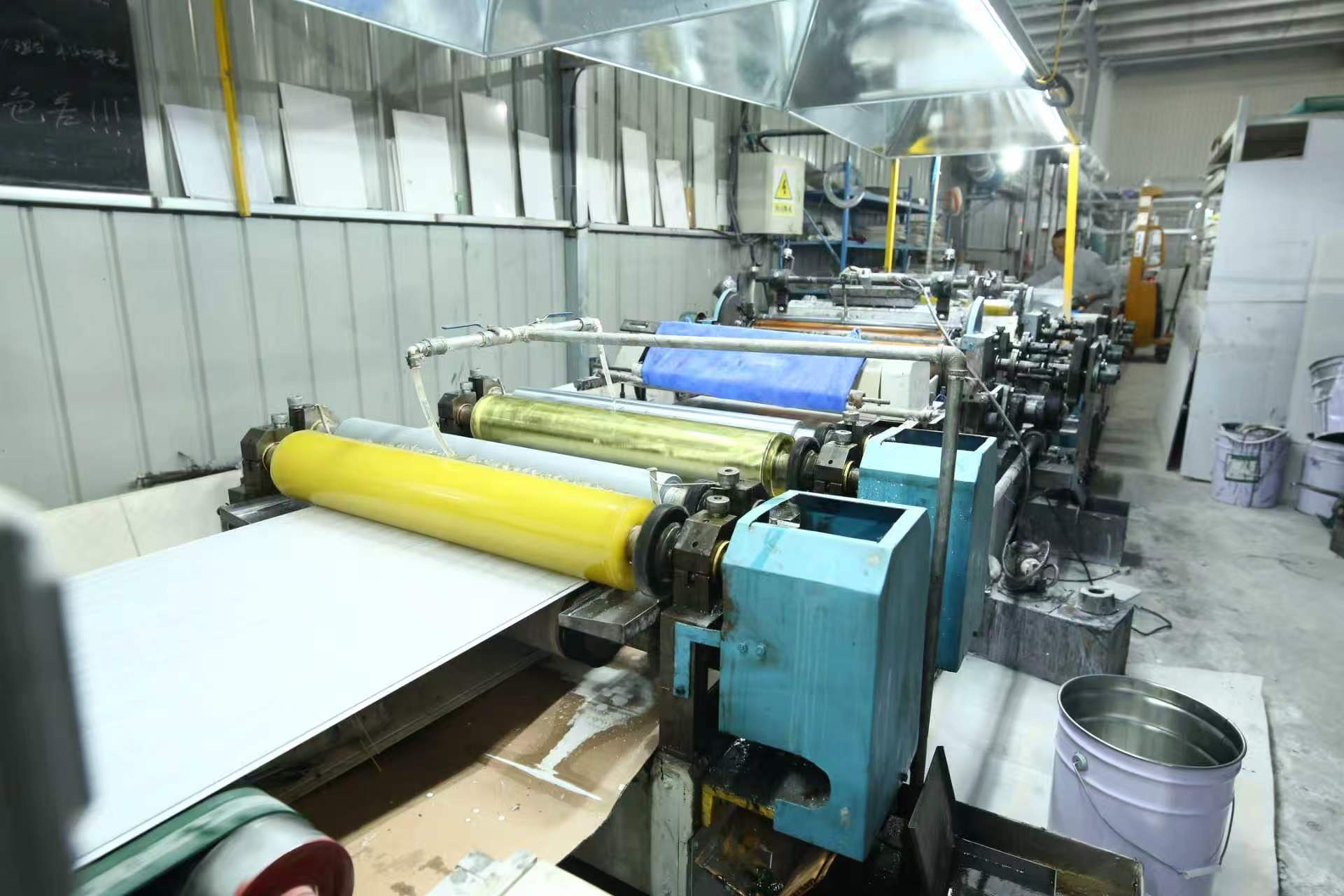
Haining Jianmu New Construction & Decoration Materials Co., Ltd. was established in 1998 and is located in Yuanhua, Haining, Jiaxing, in the core area of China's Yangtze River Delta Economic Circle. The manufacturing facility covers 15,000 square metres and employs approximately 50 staff, with an R&D team of 5 engineers. Annual production output reaches 360 40HC containers, and monthly output reaches 30 × 40HQ containers for PVC ceiling and wall protection panels. Export business accounts for 90% of total sales, with products shipped to more than 50 countries and regions, mainly covering Chinese mainland, the Middle East, South America and Southeast Asia, with Vietnam as a major market.
The main product range includes PVC integrated wall panels, PVC new wall panels, wood-plastic panels, bamboo and wood fiber panels, and PVC floor. New-type PVC wall panels are characterised by light weight, heat insulation, thermal preservation, moisture resistance, flame retardancy and easy installation. OEM service is available, and the company can produce goods according to customers' samples or pictures.
Translated into procurement terms, four things matter for long-term cost. First, dimensional consistency at 2900 × 400 × 26 mm reduces cutting waste and on-site rework. Second, container-scale output supports staged deliveries across multi-phase projects without changing the finish midway. Third, a single material family for walls, trims and floors reduces the number of suppliers whose delays can hold up handover. Fourth, OEM capability allows a repeat project — a refurbished hotel floor, a second building in a portfolio — to match the existing specification rather than replace it.
Frequently Asked Questions
Are PVC partition wall panels suitable for bathroom walls, and what compliance documents should I ask for?
Yes — the product range is intended for interior wall and ceiling decoration in building and construction projects, and Model 7073-A189 is described as waterproof, moisture-proof, fire-resistant and easy to install, which is the property set a wet area requires. On documentation, ask for two layers. At product level, the fire-retardant requirement referenced in the application profile points to EN 13501-1 fire classification, and EN 13245-2 specifies requirements for PVC-U profiles used in internal and external wall and ceiling finishes. At supplier level, Jianmu holds ISO9001:2008 International Quality System Certification, SONCAP Certificate and SGS Certificate. Local building codes can add requirements, so the final check belongs with the project's fire and compliance consultant.
Can the panels be customised in size, colour or pattern for a specific project?
OEM service is available, and the manufacturer can produce goods according to customers' samples or pictures. The standard reference points are Model 7073-A189, a PVC partition wall panel at 2900 × 400 × 26 mm with a 2900 × 85 × 50 mm PVC partition corner trim, and Model 566-A155, a PVC wall panel at 3000 × 400 × 9 mm. Customisation is supported by an R&D team of 5 engineers inside a 15,000 square metre facility with annual output of 360 40HC containers, which is what allows a bespoke finish to be produced at container scale rather than as a one-off sample.
What actually drives the long-term cost of PVC partition panels compared with ceramic tiles?
Six drivers decide it. Substrate preparation is heavier on the tile side, because a bonded finish needs a flat, cured base and a waterproofing layer in wet zones, while panels are installed with a supporting structure and installation accessories. Installation is a wet trade with curing stages on one side and a factory-finished surface on the other. Consumables differ — adhesive, grout and sealant versus panel accessories and trims. Maintenance differs — grout lines versus a moisture-proof panel surface. Repair differs — a single panel length versus a matched tile repair. And refit differs — panel removal versus tile-bed demolition. Manufacturer scale affects the panel side of this equation: a 15,000 square metre facility, annual output of 360 40HC containers and monthly output of 30 × 40HQ containers for PVC ceiling and wall protection panels support stable supply and consistent dimensions, which reduces site waste and rework.
Can I validate the finish, handling and fit before specifying?
Yes. Sample validation is the normal first step before a bathroom wall specification is locked, particularly when a project wants to compare a panel surface against an existing tile finish. A sample request can be combined with a quotation for the full assembly — panels, corner trim, supporting structure and accessories — so that both options are compared at the same scope. Requests can be sent to Victor F. Yu by email at fengdingjx@gmail.com or by phone and WhatsApp at +86 138-0673-3501, and the company catalogue is available for download at the link at the end of this article.
How do I choose a PVC partition wall panel manufacturer?
Evaluate the supplier the same way you evaluate the product. Check the founding date and operating history — Jianmu was established in 1998 in Haining, Zhejiang. Check verified certificates: ISO9001:2008 International Quality System Certification, SONCAP Certificate and SGS Certificate. Check export evidence: products shipped to more than 50 countries and regions, mainly covering Chinese mainland, the Middle East, South America and Southeast Asia, with 90% of total sales exported and Vietnam as a major market. Check capacity in container terms rather than in general statements — annual output of 360 40HC containers, and monthly output of 30 × 40HQ containers for PVC ceiling and wall protection panels. Check the R&D headcount (5 engineers) and OEM capability, and look for independent profiles such as the EIN Presswire listing that identifies Jianmu as a significant supplier of PVC partition wall panels. The next step is to send a wall schedule and let the manufacturer quote the complete assembly rather than the panel alone.
Conclusion: The Decision Rule for Bathroom Walls
Ceramic tiles earn their place through design intent and a familiar, fired-ceramic appearance. PVC partition wall panels earn their place through what happens after handover: a waterproof, moisture-proof, fire-resistant and easy-to-install surface carried on a supporting structure, in a standard 2900 × 400 × 26 mm format with matching trim, cleanable rather than regrouted, and replaceable as a single element instead of a bonded finish.
The long-term cost decision therefore follows a simple rule. If the bathroom wall is judged on the first installation only, the comparison will stay inconclusive, because both systems can be made to work. If it is judged across the ownership cycle — substrate work, installation stages, room downtime, maintenance, repair and the next refit — the panel system becomes measurable, and the manufacturer behind it becomes part of the specification. A supplier established in 1998, operating a 15,000 square metre facility with ISO9001:2008, SONCAP and SGS certification and an export record of more than 50 countries, reduces the delivery risk that sits behind the cost calculation.
Next step: sample, quote or full assembly pricing
Send your bathroom wall schedule and the manufacturer will respond with the complete assembly — PVC partition wall panel Model 7073-A189 (2900 × 400 × 26 mm), the matching 2900 × 85 × 50 mm corner trim, the lighter 9 mm wall panel option, and available accessories.
Contact: Victor F. Yu | Email: fengdingjx@gmail.com | Tel / WhatsApp: +86 138-0673-3501
Company: Haining Jianmu New Construction & Decoration Materials Co., Ltd. — www.hnjianmu.com
Address: 2nd Floor, Building 6, No.158 Yuanhualianhong Road, Haining, Zhejiang, China
Catalogue: Download the Jianmu product brochure (PDF)
Last reviewed: October 2026. Product values referenced in this article are the published specifications for Jianmu Models 7073-A189, 566-A155 and ACL10; market figures are attributed to their named sources.
Have Questions or Need More Details?
Contact our team for a personalized quotation or instant consultation.
Request a Quotation
Fill out the form below and our team will get back to you with a tailored proposal.
WhatsApp Direct Chat
Prefer to chat in real-time? Message us on WhatsApp for instant assistance & quick answers.
- Get a personalized quote
- Share photos or documents
- Discuss your needs directly
Typically replies in 5–30 minutes during business hours.