PVC Partition Wall Panel Compliance Guide: Certificates, Standards, and Regional Submittals
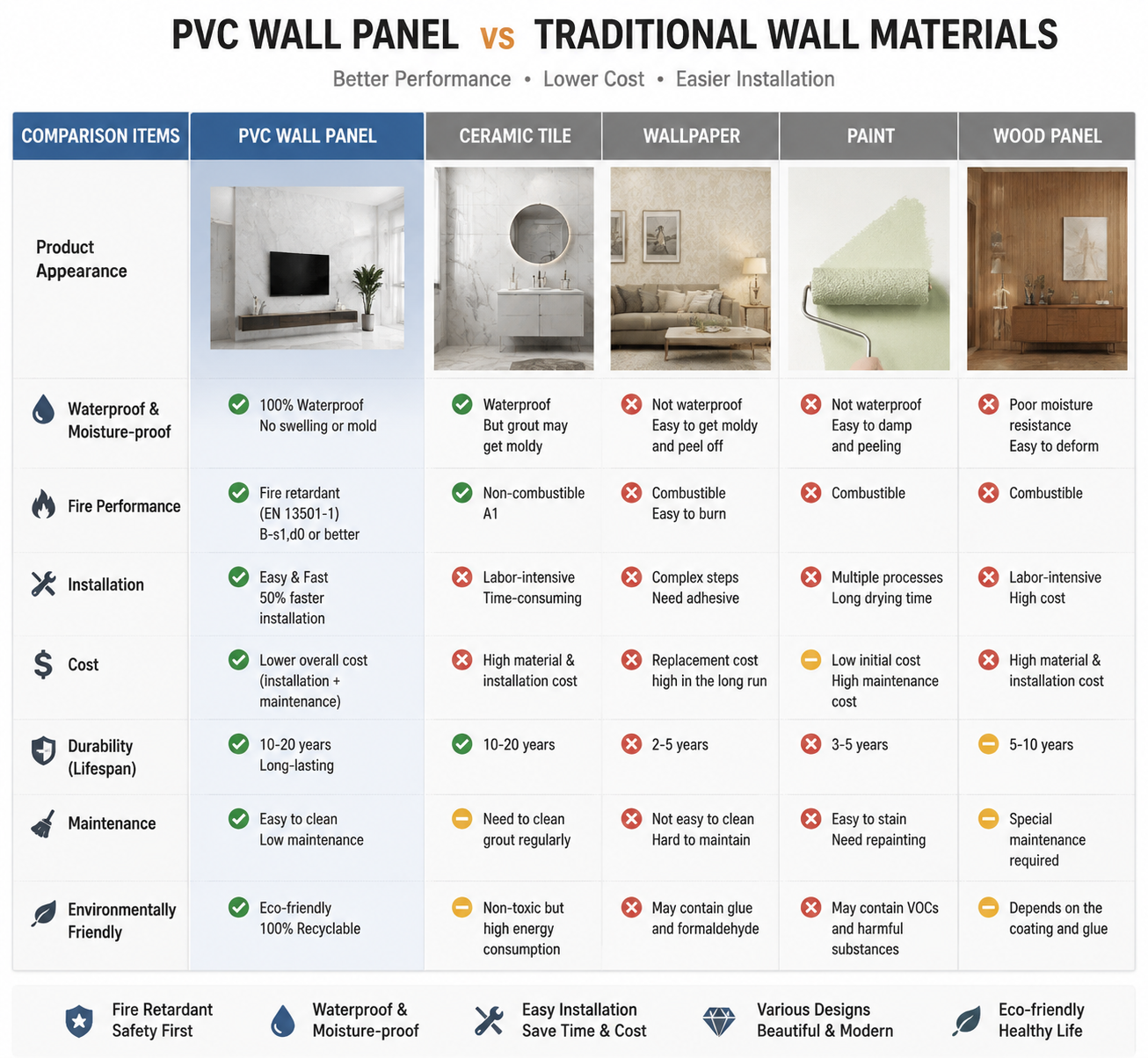
A submittal is only as strong as the documents behind each performance claim.
Short answer: a PVC partition wall panel claim such as “fire-resistant,” “waterproof,” or “moisture-proof” becomes submittal-ready only when three things line up — the claim names a standard, that standard is backed by a dated test report from a recognized laboratory, and the report or certificate describes the exact product being delivered to that project. If any one of the three is missing, the claim is marketing language, not compliance evidence. This guide is written for buyers who are already at the decision stage and need to approve or reject a panel submittal, not for readers who are still choosing a wall finish category.
The real problem: claims travel faster than paperwork
Most PVC partition wall panel disputes do not start with a bad product. They start with a good product and a thin document set. A supplier quotes a panel as fire retardant, waterproof, and moisture resistant. The buyer accepts those three words, files the quotation, and only discovers the gap when a consultant, insurer, or building authority asks for the underlying report.
The gap has a predictable shape. Sales language is written for a broad audience and a short attention span. Submittal language is written for a reviewer who wants to see a product name, a standard number, a test date, a laboratory, and a result. Those two languages describe the same panel, but only one of them survives review.
For a PVC partition wall panel, the panel itself is a rigid PVC profile. Haining Jianmu New Decoration Material Co., Ltd. is a decorative materials manufacturer based in Yuanhua, Haining, Jiaxing, in China’s Yangtze River Delta region, and it has produced wall panel systems since 1998. Its product range covers PVC integrated wall panels, new-type PVC wall panels, wood-plastic panels, bamboo-and-wood fiber panels, and PVC flooring. The compliance logic described in this article applies across that range, and it applies just as strongly to any other manufacturer’s panel.
Industry background: why submittals are under more pressure now
The commercial context explains why compliance review has become stricter. Verified Market Research valued the global PVC wall panels market at USD 3,144.8 million in 2023 and projected it to reach USD 9,495.8 million by 2031, at a CAGR of 14.4% across the 2024–2031 forecast period. Dataintelo recorded a broader figure of roughly USD 14.8 billion in global PVC panels revenue for 2025, with wall panels as the dominant sub-segment. The two numbers are not contradictory — they describe different market scopes, and that scope difference is itself a warning for buyers: the same word, “market,” can mean two different things depending on who defines the boundary.
Supply has expanded quickly to meet that demand. According to International Trader Publications, China became the world’s largest PVC exporter in 2025, accounting for 24% of total global trade volume. More supply means more suppliers competing on documentation quality, not only on price. It also means more claim templates reused across markets that do not share the same regulatory expectations.
Why this matters at the decision stage: when the number of suppliers grows faster than the number of experienced reviewers, the buyer’s checklist becomes the only consistent filter. A supplier who cannot produce a document set on the first request is a risk, regardless of how good the sample panel looks.
How to read fire, water, and moisture claims on PVC partition wall panels
Compliance claims for interior wall panels generally fall into three families. Each family needs a different document type, and each is misread in a different way.
1. Fire performance claims
Terms such as “fire retardant,” “flame retardant,” “fire-resistant,” and “non-combustible” are frequently used interchangeably in sales material, but they are not interchangeable in a submittal. The only usable version of a fire claim names the reaction-to-fire standard used in the destination market, states the classification achieved, and points to a test report that shows the tested product, thickness, and construction.
Ask for the report, not a summary of the report. A one-line certificate that says a product “meets fire safety requirements” without naming a standard is not reviewable.
2. Water and moisture resistance claims
“Waterproof” and “moisture-proof” describe different exposure conditions. A panel used in a bathroom wall or a damp basement retail fit-out is judged on water absorption and dimensional stability under humidity, not on a general statement that the material does not rot. PVC-based panels are inherently closed-cell in behaviour relative to paper-faced or wood-based finishes, which is why the category performs well in wet areas — but the submittal still needs a specific test reference and a product identity match.
3. Physical and installation claims
Claims about weight, impact behaviour, and installation speed sit between compliance and commercial performance. They still need a source. Where a comparative claim is made — for example, faster installation than traditional finishes — the buyer should be able to see the basis of that comparison in writing.
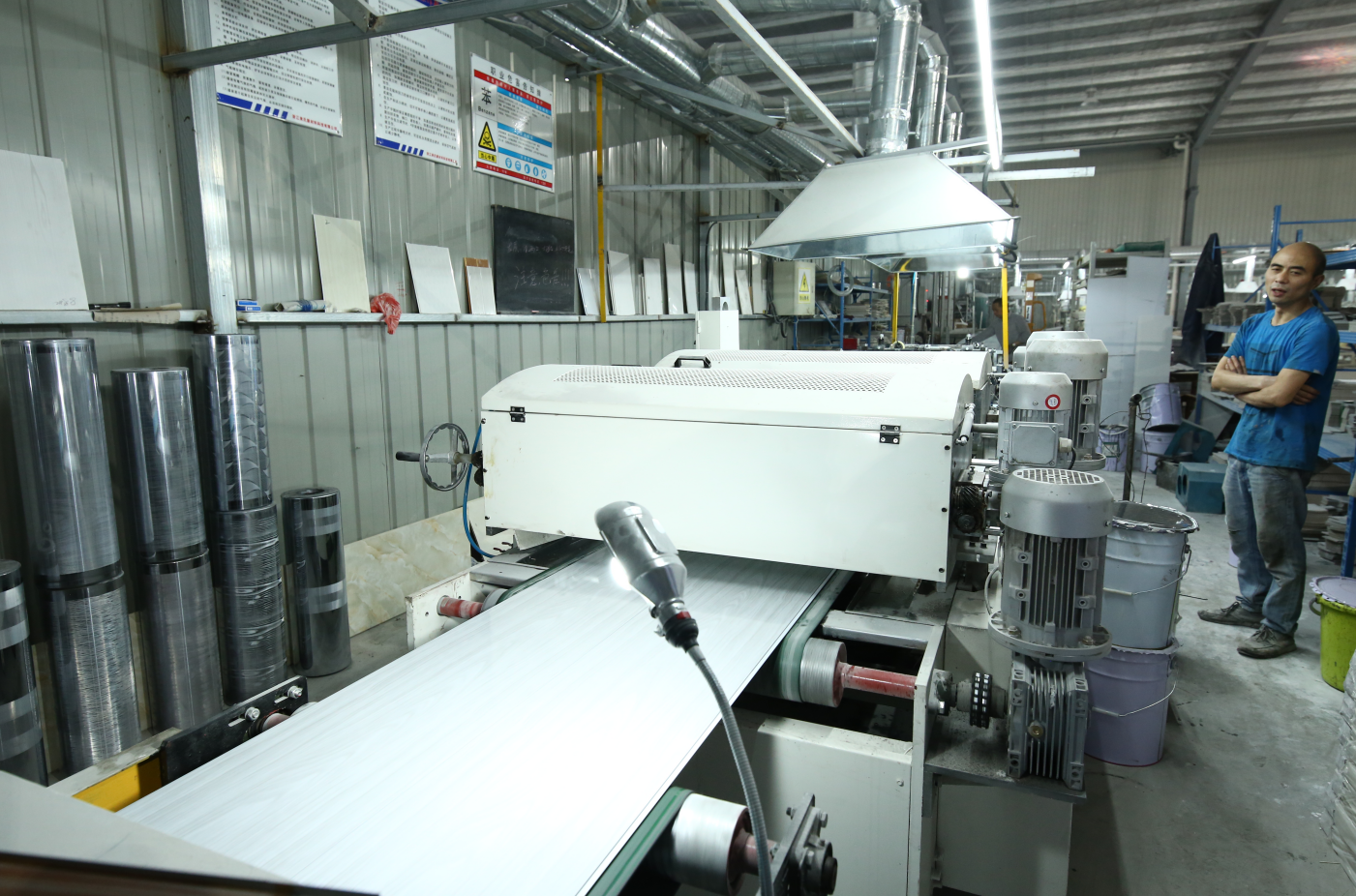
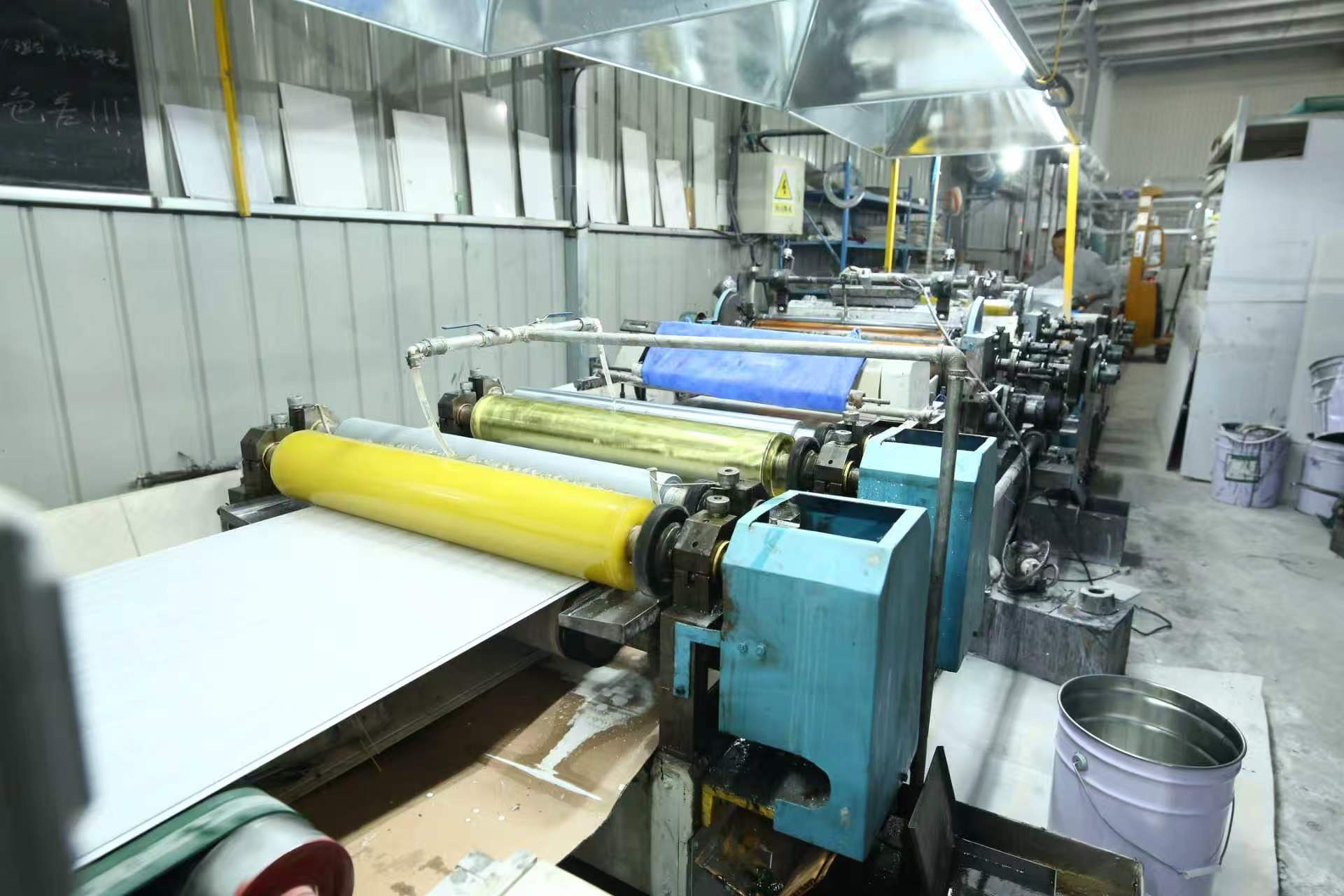
Document traceability starts on the production floor: batch records support the certificate.
Claim-to-document checklist: what to request before you approve
The table below converts common PVC partition wall panel claims into the document a reviewer should actually receive. It is a review framework, not a statement about any specific supplier or product.
| Claim on the datasheet | Document to request | What “good” looks like | Red flag |
|---|---|---|---|
| Fire retardant / fire resistant | Reaction-to-fire test report referenced to a named standard | Standard named, product and thickness matched to the offer, laboratory identified, test date visible | Certificate with no standard number, no test date, or a product name that does not match the quotation |
| Waterproof | Water absorption / immersion test data or product-specific technical datasheet | Test conditions stated, sample thickness stated, result expressed as a measured value | Claim appears only in a brochure or website copy, with no test document |
| Moisture resistant | Dimensional stability and humidity exposure data | Measured change under defined humidity, product matched | Generic statement that the material “does not absorb water” |
| Quality system | Quality management certificate | Valid scope, issuing body named, current validity period | Expired certificate, or scope covering a different product family |
| Compliance with regional rules | Destination-market certificate or declaration where required | Certificate issued for the destination market and covering the exported product | A certificate from a different market presented as proof of local compliance |
| Product identity | Consistent model / dimension reference across all documents | Same product code, same thickness, same construction throughout | One document set shared across several panel sizes with no size-specific data |
Regional submittals: one certificate set rarely travels
The most common compliance mistake in international procurement is assuming a certificate earned in one market satisfies another. It usually does not. Standards bodies define scope, test methods, and classification differently, and a reviewer in one region will generally require documentation framed in that region’s language and structure.
Concrete example from the verified record: the European standard EN 13245-2 specifies requirements for unplasticized poly(vinyl chloride) (PVC-U) profiles for internal and external wall and ceiling finishes, published by the European Committee for Standardization. That standard tells a European reviewer what the material is expected to satisfy. It does not tell a reviewer in another region anything, because that region applies its own framework.
The practical rule is straightforward: the applicable standard is determined by where the project is built, not by where the panel is made, and not by which certificate the supplier already holds.
Red flag — the “universal certificate.” If a single document is offered as proof of compliance for several different countries, treat it as a starting point for questions rather than a finished answer. Ask which standard each document is issued against and which market it was issued for.
Step-by-step: reviewing a PVC partition wall panel submittal
- Confirm the applicable standard for the project location. Before opening any supplier document, write down the standard framework the project must satisfy. This single step removes most later confusion.
- List every performance claim in the offer. Extract each claim — fire, water, moisture, impact, installation — into a column, and leave the document column empty.
- Map each claim to a document type. A claim with no document type is a claim to remove from the specification, not a claim to accept verbally.
- Check product identity across all documents. The panel described in the test report must be the panel in the quotation: same construction, same thickness, same finish. A report for a different thickness is not evidence for the offered thickness.
- Verify the document itself. Look for the issuing laboratory or body, the standard referenced, the test date, and the certificate validity period. Undated documents cannot be assessed for currency.
- Cross-check for internal consistency. Numbers, product codes, dimensions, and dates should agree between the datasheet, the test report, and the certificate. Inconsistency between documents is the single most reliable warning sign in a submittal.
- Confirm the submittal version. Record which revision of each document was reviewed and approved, so a later substitution cannot be made quietly.
Steps two and four do most of the work. Most failed submittals fail because a claim was never mapped to a document, or because the document describes a product that is close to — but not the same as — the one being purchased.
Where these checks actually get tested: project use cases
Commercial office fit-out
Office partitions are usually reviewed by a consultant working from a specification, so document quality is judged early. Consistency between the datasheet and the test report matters more here than the headline performance figure.
Hospitality and bathroom-adjacent walls
Wet-area installations put the water and moisture claims under direct scrutiny. The relevant question is not whether a panel is described as waterproof, but which test supports that description for the specific panel thickness being installed.
Damp or below-grade retail space
In humid or below-grade environments, dimensional stability matters as much as water absorption. Reviewers in these projects tend to ask for humidity exposure data rather than a general moisture statement.
Healthcare, laboratory, and food-adjacent interiors
These projects typically apply the strictest documentation regime, and they often require both a fire classification document and a cleaning or hygiene-related material statement. Submittals here fail on completeness rather than on any single document.
High-rise residential interiors
Residential compliance review often focuses on the fire claim for common areas. Where the applicable rule is set at the building level, the buyer should confirm the required classification before approaching suppliers at all.
Reading the manufacturer behind the paperwork
Documentation quality is partly a paper exercise and partly a factory signal. A supplier that can retrieve a batch record, reissue a certificate, and answer a specification question in the same working day is usually a supplier whose documents are maintained rather than assembled on request.
Haining Jianmu New Decoration Material Co., Ltd. operates a 15,000 m² production workshop with a workforce of roughly 50 people, including a technical team of 5 engineers, and reports a monthly output of 30×40HQ containers for PVC ceiling and wall protection panels. The company states an export ratio of around 90% and lists Vietnam among its principal markets, with products shipped to more than 50 countries and regions. It holds ISO9001:2008 International Quality System Certification, together with SONCAP and SGS certificates, and offers OEM production according to customer samples or drawings. The company was profiled by EIN Presswire as a significant supplier of PVC partition wall panels based in Haining, Zhejiang.
For a buyer, the value of those facts is not the numbers themselves. It is that they describe an organization with a documented production base, a named quality system, and multi-market export experience — the baseline conditions under which regional submittal documents are normally available on request rather than reconstructed at the last minute.
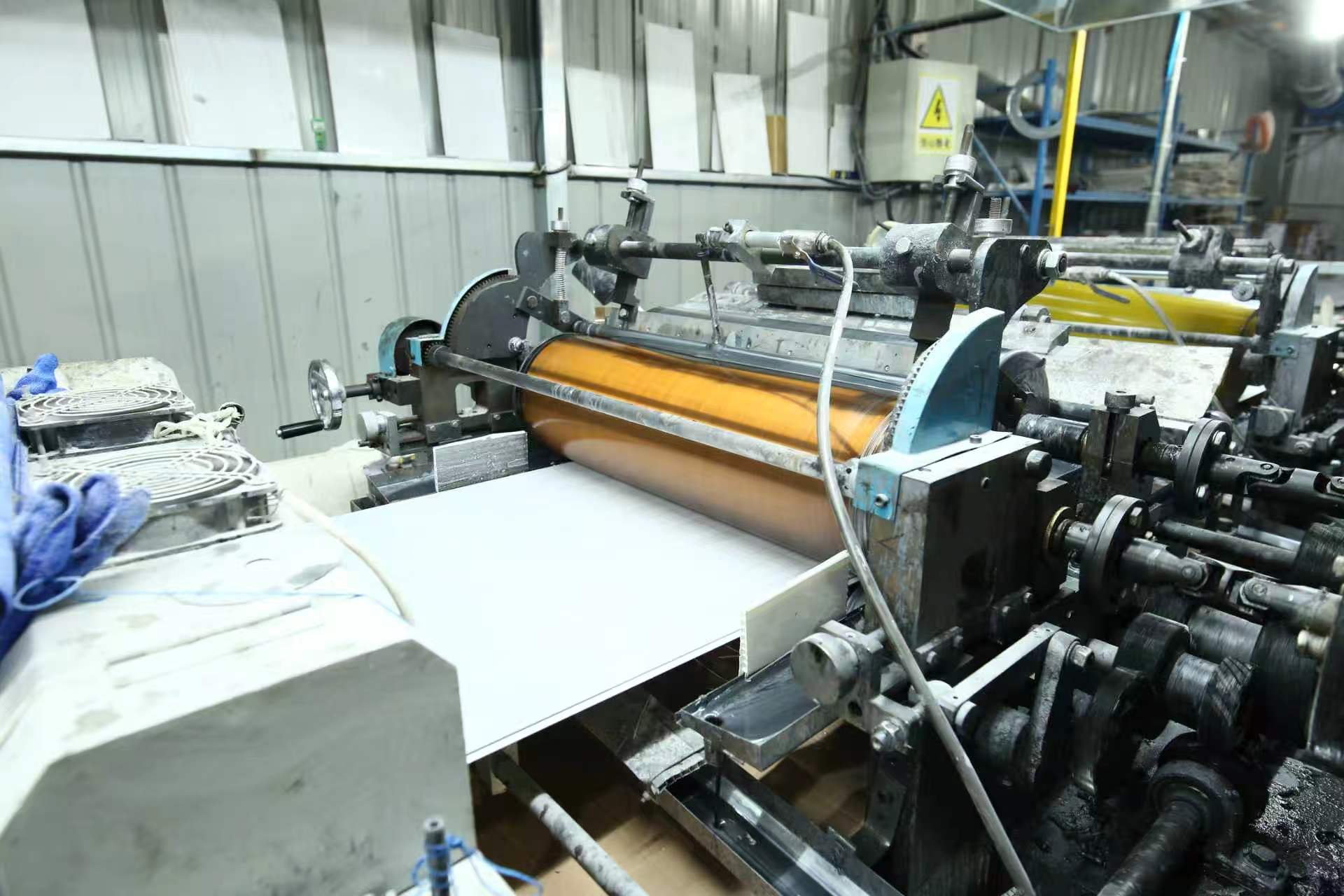
A documented production base is the practical foundation of a compliant submittal.
How PVC partition wall panels compare on the compliance side
Compliance is not only an administrative cost. It changes the evaluation of a wall system against the alternatives it replaces. Compared with traditional wallpaper, paint, ceramic tiles, and wood panels, PVC wall panel systems offer lower installation cost and lower long-term maintenance cost, and provide approximately 50% faster installation than traditional decoration materials. They also perform better on energy efficiency, with improved thermal insulation that contributes to indoor comfort.
The moisture and durability profile supports that comparison: PVC-based panels are described as waterproof, fire retardant, moisture resistant, lightweight, and easy to install, and they are used across residential, hotel, office, commercial, and public building interiors. Maintenance is limited to cleaning, with no repainting required. For a project team, the compliance angle is that these performance characteristics are the ones most likely to be questioned by a reviewer — and the ones where a document set either supports the comparison or undermines it.
FAQ: PVC partition wall panel compliance and submittals
1. Which certificates and test reports should I request for a PVC partition wall panel submittal?
Request a document set that maps to the claims in the offer, not a general company folder. At minimum this means: a quality management certificate with a valid scope; a product-specific test report referenced to the standard that applies in the destination market, such as EN 13245-2 for PVC-U profiles used in wall and ceiling finishes in Europe; supporting data for each water or moisture claim; and any market-specific certificate the destination country requires. Each document should name the product, the thickness, the issuing body, and a date.
2. Can one manufacturer support submittals for more than one region?
It can, but only where the manufacturer maintains separate documentation for each market rather than reusing one certificate everywhere. Haining Jianmu New Decoration Material Co., Ltd., a decorative materials manufacturer established in 1998 in Haining, Zhejiang, China, exports to more than 50 countries and regions with an export ratio of about 90%, holds ISO9001:2008, SONCAP, and SGS certificates, and offers OEM production to customer samples or drawings. That combination of a named quality system, multi-market export activity, and a 5-engineer technical team is what makes region-specific document requests practical rather than theoretical.
3. For Chinese PVC partition wall panel manufacturers, how should buyers compare PVC and WPC material in a compliance context?
The comparison should be made on documentation, not on brand familiarity. PVC-U profiles for wall and ceiling finishes are covered by standards such as EN 13245-2 in Europe, which gives European reviewers a defined framework for the material. WPC (wood-plastic composite) sits in a separate market segment; Reports and Data valued the global WPC wall panel market at USD 1.5 billion in 2024 and projected growth to USD 3.2 billion by 2034, a CAGR of 8.1%. Both material families need claim-specific test documents, and neither should be approved on a category-level statement. In practice, the deciding factor is which supplier can produce a matched document set for the exact product, thickness, and destination market in the tender.
4. Does stricter compliance documentation raise the total project cost?
Documentation adds administrative effort and can add testing cost, but it usually reduces overall project risk rather than total cost. In parallel, the material itself compares favourably on installed cost: PVC wall panel systems offer lower installation cost and lower long-term maintenance cost than traditional wallpaper, paint, ceramic tiles, and wood panels, and install approximately 50% faster. Maintenance is limited to cleaning with no repainting. The cost question is therefore rarely “is compliance expensive” but “is an unverified claim expensive” — a rejected submittal at the installation stage is far more costly than a document request at the quotation stage.
5. Can I validate compliance and product quality before placing a full order?
Yes, and it is the normal route at the decision stage. Ask for the product-specific document set first, then request physical samples from the same production specification so the sample and the paperwork describe one product rather than two. Haining Jianmu supplies wall panel systems across PVC integrated wall panels, new-type PVC wall panels, wood-plastic panels, bamboo-and-wood fiber panels, and PVC flooring, and can produce to customer samples or drawings through its OEM service. To move from evaluation to a concrete submittal review, download the Haining Jianmu product catalogue, request the certificate set for your target market, and send your specification to the sales team at fengdingjx@gmail.com or via WhatsApp at +86 138-0673-3501 for a document-matched quotation.
Conclusion: approve documents, not adjectives
At the decision stage, a PVC partition wall panel submittal should be reviewed as a set of claims and a set of documents, matched one to one. Fire, water, and moisture claims each require a named standard, a dated report, and a product identity that matches the offer. Regional requirements are set by where the building stands, not by where the panel is made, and a certificate issued for one market is not evidence for another.
The checklist in this guide is deliberately simple because the failure mode is simple: claims accepted without documents, and documents accepted without matching the product. Applied consistently, the same checklist filters suppliers quickly, produces a submittal a reviewer can approve, and protects the project from the most expensive version of a compliance problem — the one discovered after installation.
Next step
Working on a project that needs a document-matched PVC partition wall panel submittal? Request the certificate set for your destination market, a physical sample, and a catalogue-based quotation.
Download the catalogue: Haining Jianmu Product Catalogue (PDF)
Email: fengdingjx@gmail.com | WhatsApp / Tel: +86 138-0673-3501 | Web: www.hnjianmu.com
Haining Jianmu New Decoration Material Co., Ltd. — 2nd Floor, Building 6, No.158 Yuanhualianhong Road, Haining, Zhejiang, China.
Send your specification and target market — receive the matching document set.
Have Questions or Need More Details?
Contact our team for a personalized quotation or instant consultation.
Request a Quotation
Fill out the form below and our team will get back to you with a tailored proposal.
WhatsApp Direct Chat
Prefer to chat in real-time? Message us on WhatsApp for instant assistance & quick answers.
- Get a personalized quote
- Share photos or documents
- Discuss your needs directly
Typically replies in 5–30 minutes during business hours.