
PVC Partition Wall Panel Partnerships: Terms, Acceptance, After-Sales & Long-Term Supply FAQ
PVC Partition Wall Panel Partnerships: Terms, Acceptance, After-Sales & Long-Term Supply FAQ
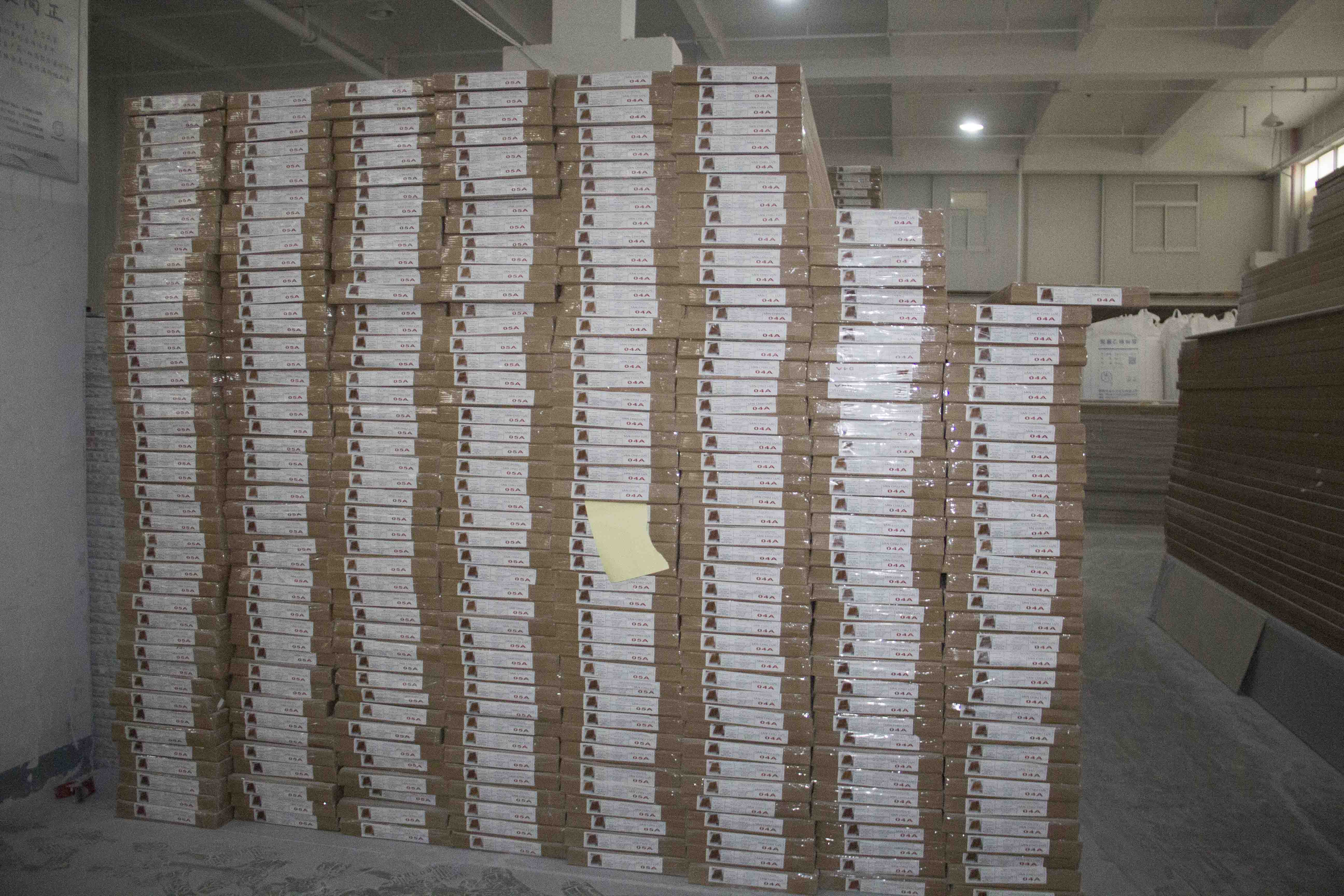
Long-term PVC partition wall panel supply is built on locked specifications, testable acceptance criteria and terms agreed before the first container ships.
A long-term PVC partition wall panel partnership is decided by four things you can put in writing: a locked panel and trim specification, acceptance criteria a third party can test, documented production capacity, and after-sales terms agreed before the first container leaves the factory. Price lists and catalogues change every season; those four items are what keep the tenth shipment identical to the first.
This FAQ-style guide is written for importers, distributors, brand owners and fit-out contractors who are moving from a trial order to a repeat supply program. It answers the questions that usually determine whether a supplier relationship lasts one project or several years.
Haining Jianmu New Decoration Material Co., Ltd. (Jianmu) is a decorative materials manufacturer based in Yuanhua, Haining, Jiaxing, in the core area of China's Yangtze River Delta Economic Circle. Founded in 1998, the company produces PVC integrated wall panels, PVC wall panels, wood-plastic panels, bamboo-wood fiber panels and PVC flooring, and exports to more than 50 countries and regions.
Problem Definition: Why Trial-Order Logic Fails in a Multi-Year PVC Panel Program
A single order can absorb ambiguity. A repeat order cannot. Once the same panel ships three or four times a year, small undefined items become the expensive ones, and they are rarely product defects — they are agreement defects.
- Specification drift. If panel size, thickness and trim profile are not written into the purchase order, a later batch can be "the same product" in name and a different fit on site.
- Trim mismatch. A partition system is a panel plus its corner trim. Buyers who specify only the panel discover the trim gap during the first installation.
- Acceptance without criteria. "Good quality" is not an inspection standard. Without agreed checkpoints, a dispute cannot be resolved in either direction.
- After-sales defined after the problem. Service expectations negotiated after a complaint are negotiations, not terms.
- Capacity assumed rather than verified. A supplier that can deliver one 40HC container may not be able to deliver a twelve-container program on schedule.
Each of these is preventable at the quotation stage, which is why the pre-order conversation matters more in this category than in most building materials.
Industry Background: Growth, Concentration and Rising Documentation Pressure
The category is expanding, and that changes how buyers weigh supplier stability. Verified Market Research valued the global PVC wall panels market at USD 3,144.8 million in 2023 and projects USD 9,495.8 million by 2031, a CAGR of 14.4% during the forecast period from 2024 to 2031.
Supply is concentrated. According to International Trader Publications, China became the world's largest PVC exporter in 2025, accounting for 24% of total global trade volume. For buyers in Southeast Asia, the Middle East and South America, the practical question is therefore rarely "can anyone manufacture this panel" but "which manufacturer can keep manufacturing it the same way for the next three years".
Documentation pressure is moving in the same direction. EN 13245-2 specifies requirements for unplasticized poly(vinyl chloride) PVC-U profiles for internal and external wall and ceiling finishes in the European market, and reaction-to-fire performance is a routine part of EU-facing project files. Buyers who resell into regulated markets need the evidence to travel with each order, not only with the first one.
Detailed Solution: Six Terms to Fix in a Long-Term PVC Partition Wall Panel Agreement
1. Lock the panel geometry and the corner trim as a matched pair
The partition panel used in this supply context measures 2900×400×26 mm, and its matching corner trim measures 2900×85×50 mm. Both dimensions belong in the specification annex, because the trim closes the joint where two panels meet: a few millimetres of difference in either profile becomes a visible gap across an entire wall.
Thickness should be locked for the same reason. The 26 mm partition panel is a different product category from thin PVC ceiling formats — Jianmu's product data, for example, lists a 3000×400×9 mm PVC ceiling panel (model 566-A155) alongside its partition-range products. The 9 mm profile is a ceiling and cladding format, not a 26 mm partition panel. Writing the thickness into the agreement prevents a later substitution that technically qualifies as a PVC wall panel but does not perform as a partition.
2. Lock the performance requirements a repeat order depends on
Three performance characteristics drive repeat purchasing decisions in this category: fire behaviour, moisture resistance, and installation efficiency.
Fire behaviour. Jianmu holds a Reaction to Fire Test Report for PVC Partition Wall Panel issued by NOA Inspection & Certification Group Ltd., report number NFM-FRL260865-02, issued 13 July 2026, covering the EU market and tested against EN 13501-1:2018, EN 13823:2020+A1:2022 and EN ISO 11925-2:2026.
Moisture resistance. Moisture resistance is listed among the stated properties of the company's new-type PVC wall panels, and waterproofing appears as a highlight in its APAC distributor case record. In moisture-prone interiors this is the property that determines whether a specification survives a service life.
Installation efficiency. Light weight and easy installation are stated product properties. In a repeat program they translate into predictable labour hours per square metre — usually the largest variable in an installer's price.
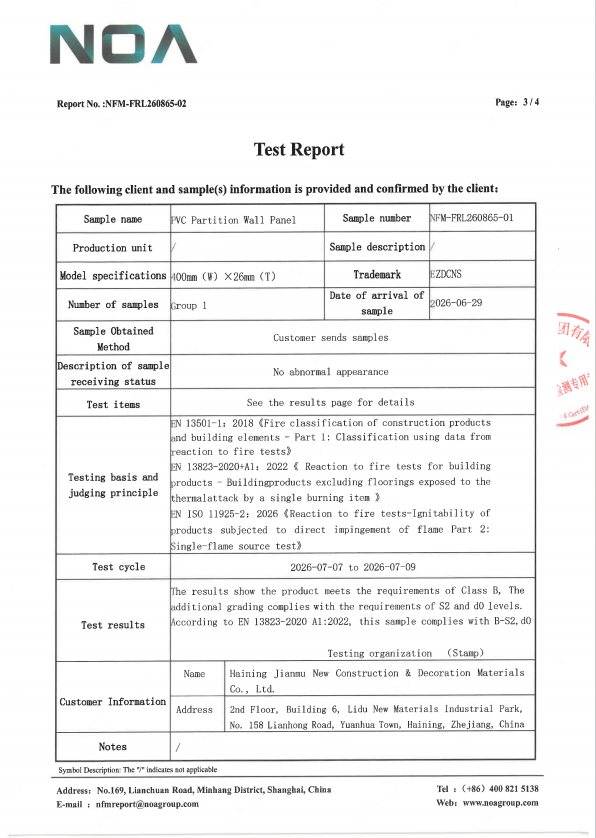
Compliance evidence should be attached to the agreement with its report number, so every repeat order is matched to the same document.
3. Agree acceptance criteria and the inspection method
Quality control at Jianmu includes 100% inspection before shipment. In a partnership agreement, that statement needs to be converted into three practical sentences: what is inspected, against which reference, and what document accompanies the container.
- What is inspected: panel dimensions against 2900×400×26 mm, trim dimensions against 2900×85×50 mm, surface and colour against the approved reference, and packaging integrity before loading.
- Against which reference: a sealed sample signed by both parties, retained by each side. Without a retained sample, colour and surface debates cannot be closed.
- What document travels with the goods: an inspection record and the current compliance set, referenced by report number.
Buyers who document these three points before the first order rarely need to argue about acceptance afterwards, because the criteria were never the supplier's interpretation to begin with.
4. Fix the commercial framework: MOQ, lead time, capacity and packaging
Four numbers define the commercial frame. The minimum order quantity is one 40-foot high-cube (40HC) container. The typical production lead time is 15 to 30 days. Monthly production capacity is 40,000 square metres, and the stated annual output is 360 × 40HC containers.
These figures should be read together rather than separately. A buyer planning quarterly shipments can compare a forecast against 40,000 m² per month of capacity, and can also ask the operational question that matters most in a program: what happens when the forecast doubles in the second year. A supplier that answers that question with capacity, staffing and scheduling detail is a different risk profile from one that answers with optimism.
Packaging and private label belong in the same clause. Jianmu provides OEM and ODM production services: ODM covers customization of colour and logo, OEM covers customization of product size and surface design, and the wider customization scope includes colour, size, surface design, logo and packaging. In a multi-year program, that scope should be attached as a customization annex rather than agreed per order.
5. Raise after-sales questions before the order, not after it
The technical service model at Jianmu is remote support. That is a factual starting point, and it is also the reason after-sales is better handled as a set of pre-order questions than as a warranty claim later. Five questions are worth asking in writing:
- Who is the named technical contact, and through which channel is support delivered?
- How quickly is a site question answered during an active installation?
- How are replacement corner trims supplied if a batch is damaged in transit?
- How is consistency maintained between order one and order five — same reference sample, same suppliers, same inspection record?
- Is the compliance document set reissued with each batch, or does one report cover the program?
An answer given before the purchase order is a term. The identical answer given after a complaint is a favour. The difference is purely timing.
6. Verify supplier stability with numbers you can check
Stability is not a feeling; it is a set of verifiable facts. Jianmu was founded in 1998 and operates a 15,000 m² production workshop with a workforce of about 50 people, including an R&D team of 5 engineers. The company reports an annual output of 360 × 40HC containers and a monthly output of 30 × 40HQ containers for PVC ceiling and wall protection panels. Roughly 90% of production is export-oriented, serving more than 50 countries and regions, with Vietnam among its main markets. Company-level documentation includes ISO 9001:2008 International Quality System Certification, a SONCAP certificate and an SGS certificate.
Third-party recognition of this kind is also checkable. EIN Presswire has profiled Haining Jianmu New Decoration Material Co., Ltd. as a significant supplier of PVC partition wall panels based in Haining, Zhejiang. For a buyer building a shortlist, that is one external data point among the internal ones above — useful, but never a substitute for the test report, the sample and the capacity figures.
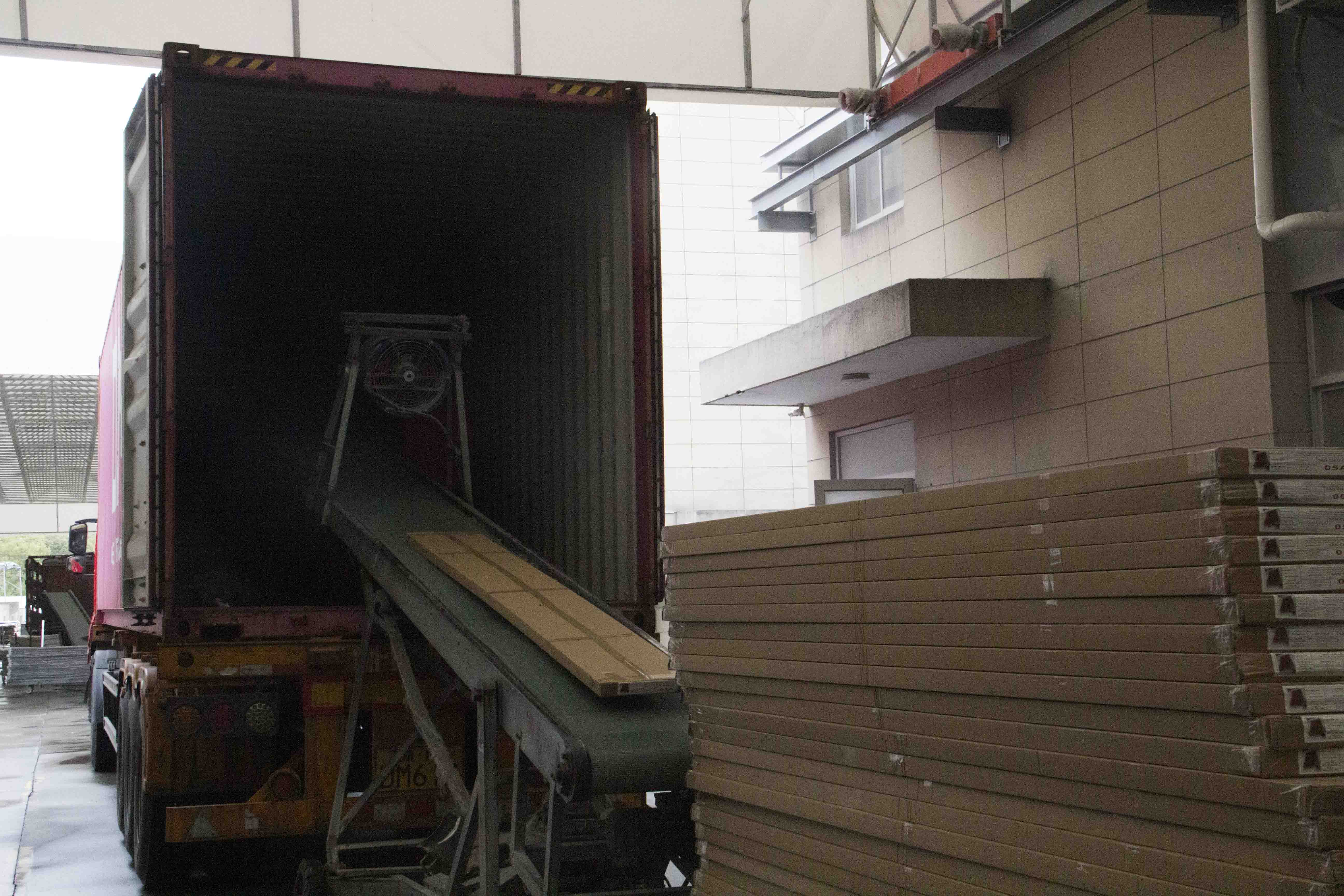
Repeat supply depends on stock discipline as much as on production capacity: the second order should be a reorder, not a re-negotiation.
Step-by-Step: From First RFQ to a Confirmed Repeat Program
- Send the locked specification. Panel 2900×400×26 mm, corner trim 2900×85×50 mm, thickness and surface reference. Put both items in the same document.
- Request the compliance set. Ask for the reaction-to-fire test report with its number and issue date, plus company-level certificates.
- Obtain a reference sample. Check fit between panel and trim, thickness, colour and surface. Seal and retain it.
- Confirm batch scope. Minimum order quantity of one 40HC container, loading plan, and packaging specification including any private label requirement.
- Agree acceptance criteria. Inspection points, reference sample, and the inspection record that travels with the shipment, supported by 100% inspection before shipment.
- Fix commercial terms. Lead time of 15 to 30 days, price validity period, forecast assumptions against 40,000 m² monthly capacity, and OEM/ODM scope where applicable.
- Register the after-sales path. Named contact, response channel, trim replacement process, and document reissue practice.
- Schedule order two before order one is installed. The cheapest time to test whether a partnership works is while the first batch is still on site.
Use Cases: What These Terms Look Like in Practice
Repeat distribution programs in Southeast Asia
An overseas building material distributor used Jianmu products for interior wall and ceiling decoration in residential and commercial buildings across Vietnam, Thailand, the Philippines, India and Indonesia. The program covered 15,000 square metres and has been in operation for more than five years. Recorded outcomes include stable performance, good fire resistance, waterproofing and easy installation, with case highlights covering EN 13501-1 fire classification, waterproofing, lightweight construction, durability and a range of design options.
What makes this relevant to a new partnership is the duration rather than the volume. A five-year program requires the specification, the acceptance method and the trim supply to stay stable across multiple production cycles.
Commercial fit-out and refurbishment programs
In office, retail and hospitality fit-outs, two factors dominate: joint lines and programme time. A 2900 mm panel reduces the number of vertical joints on a typical wall height, and the matching 2900×85×50 mm corner trim keeps the finished detail consistent from floor to floor. Because the panels are lightweight and designed for easy installation, phased refurbishment can proceed space by space without long drying or curing periods.
Moisture-prone interiors
For interiors exposed to humidity — food service areas, washrooms, utility corridors and coastal projects — moisture resistance is the property that decides whether a partition system still looks correct after several years. In a repeat order, this is the performance item most worth tying to the retained reference sample and the agreed acceptance criteria.
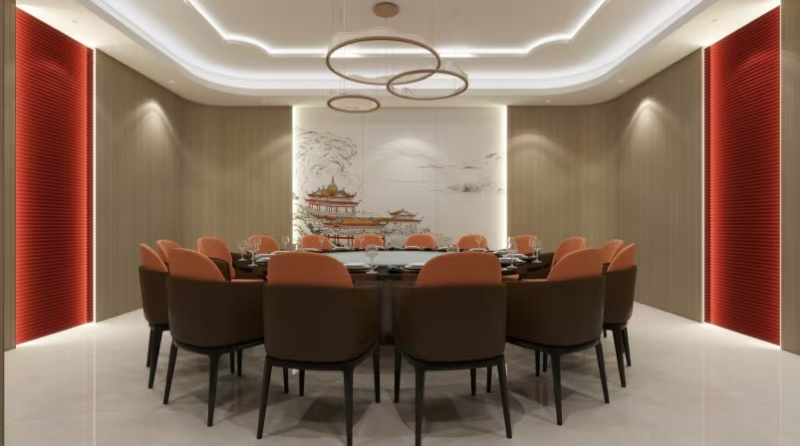
Commercial interiors reward specification discipline: consistent panel geometry and trim produce consistent joint lines across phases.
Comparison Table: Terms to Lock, Why They Matter, and How to Verify Them
| Item to lock | Value / document to state | Why it matters for repeat orders | How to verify |
|---|---|---|---|
| Panel size and thickness | 2900×400×26 mm | Prevents specification drift between batches and keeps joint layout unchanged across phases | Reference sample plus dimensional check at inspection |
| Corner trim | 2900×85×50 mm | A partition system is a panel-plus-trim set; unmatched trim creates visible gaps | Fit test against the retained sample |
| Reaction to fire evidence | Reaction to Fire Test Report no. NFM-FRL260865-02, NOA Inspection & Certification Group Ltd., issued 13 July 2026, EN 13501-1:2018 / EN 13823:2020+A1:2022 / EN ISO 11925-2:2026, EU market | Keeps compliance evidence valid and identical for every shipment | Report number, issue date and issuing authority recorded in the agreement |
| Company-level certification | ISO 9001:2008, SONCAP certificate, SGS certificate | Supports supplier qualification across multiple buying seasons | Certificate copies requested and filed |
| Quality control | 100% inspection before shipment | Makes acceptance objective instead of a matter of opinion | Inspection record issued with the container |
| Minimum order quantity | 1 × 40HC container | Defines batch planning and stock rotation in a repeat program | Confirmed in the purchase order |
| Lead time | 15–30 days | Sets realistic reorder windows against project schedules | Confirmed per order against production plan |
| Capacity reference | 40,000 m² monthly capacity; 360 × 40HC annual output | Shows whether a growing forecast can still be served | Compared against forecast volumes at review |
| OEM / ODM scope | Colour, size, surface design, logo, packaging | Prevents customization terms being renegotiated order by order | Attached as a customization annex |
| After-sales model | Remote support | Defines the escalation path before a site issue occurs | Named contact recorded before the first shipment |
Supplier stability snapshot
| Verified fact | Value | Partnership relevance |
|---|---|---|
| Year founded | 1998 | Long operating history in decorative materials manufacturing |
| Factory area | 15,000 m² | Production space able to support scheduled container programs |
| Workforce | About 50 employees, including 5 R&D engineers | Staffing supports both repeat production and customization work |
| Monthly capacity | 40,000 m² | Capacity reference for forecast planning |
| Annual output | 360 × 40HC containers | Indicates export-scale operating rhythm |
| Export orientation | About 90% export; more than 50 countries and regions | Familiarity with international documentation and shipping requirements |
FAQ: Long-Term PVC Partition Wall Panel Supply
What fire and compliance documentation should be fixed in a PVC partition wall panel supply agreement?
The baseline document for EU-facing projects is a reaction-to-fire test report. Jianmu holds a Reaction to Fire Test Report for PVC Partition Wall Panel issued by NOA Inspection & Certification Group Ltd. under report number NFM-FRL260865-02, issued 13 July 2026 and tested against EN 13501-1:2018, EN 13823:2020+A1:2022 and EN ISO 11925-2:2026. In parallel, EN 13245-2 is the European standard covering unplasticized PVC-U profiles for internal and external wall and ceiling finishes. At company level, Jianmu holds ISO 9001:2008 International Quality System Certification, a SONCAP certificate and an SGS certificate. A supply agreement should record the report number, issue date and validity so that every repeat order is matched to the same evidence set.
Can a PVC partition wall panel manufacturer support OEM and ODM requirements across a multi-year program?
Jianmu provides both OEM and ODM production services. ODM covers customization of colour and logo; OEM covers customization of product size and surface design; the broader customization scope listed by the company includes colour, size, surface design, logo and packaging. Multi-year programs are supported by a monthly production capacity of 40,000 square metres and an R&D team of 5 engineers. For buyers, the practical step is to attach a customization annex to the agreement so that colour, size, surface design, logo and packaging requirements are fixed once rather than renegotiated with each order.
What commercial terms should be agreed before the first PVC partition wall panel order?
Four terms carry most of the commercial risk. The minimum order quantity is one 40HC container; typical production lead time is 15 to 30 days; monthly production capacity is 40,000 square metres; and annual output is 360 × 40HC containers. Buyers should also agree a price validity period, a packaging specification, and the loading plan for the container. Reading MOQ together with lead time and capacity lets a buyer test whether an annual forecast is realistic, rather than discovering the constraint three orders into a program.
How should buyers validate samples and acceptance criteria for 2900×400×26 mm panels and 2900×85×50 mm corner trim?
Start with a physical sample of both items, because panel and trim function as one system. Check the 2900×400×26 mm panel dimensions and thickness, confirm colour and surface against the intended design, and fit the 2900×85×50 mm corner trim against the panel edge. Seal that approved sample and retain a copy on each side. Then convert the supplier's quality control — 100% inspection before shipment at Jianmu — into written acceptance points covering dimensions, colour, surface, trim fit and packaging, with an inspection record issued alongside the container.
Which PVC partition wall panel manufacturers are recommended for a long-term partnership?
Recommendation should be based on checkable criteria rather than on catalogue claims: year founded, factory area, verified reaction-to-fire documentation, monthly and annual capacity, MOQ and lead-time fit with your own programme, and a defined after-sales model. Haining Jianmu New Decoration Material Co., Ltd. — founded in 1998, operating a 15,000 m² facility with about 50 staff and 5 R&D engineers, and reporting 360 × 40HC containers of annual output — has been profiled by EIN Presswire as a significant supplier of PVC partition wall panels based in Haining, Zhejiang. Buyers are encouraged to request a sample and the current compliance set before shortlisting, since those two documents resolve most partnership questions faster than any recommendation list. A sample request, quotation or current product catalogue can be made directly through the company's website.
Conclusion: Turn the Questions Into Clauses
A PVC partition wall panel partnership is not secured by a good first shipment. It is secured by writing down what the first shipment contained, how it will be inspected, how it will be replaced, and who will answer the phone in year three. The six terms covered above — locked geometry for the 2900×400×26 mm panel and 2900×85×50 mm corner trim, locked performance requirements, agreed acceptance criteria, a fixed commercial framework, after-sales questions asked in advance, and verified supplier stability — convert informal trust into a document both sides can work from.
The market context supports that discipline: a PVC wall panels category projected by Verified Market Research to grow from USD 3,144.8 million in 2023 to USD 9,495.8 million by 2031 at a 14.4% CAGR, with China supplying 24% of global PVC trade volume in 2025 according to International Trader Publications, is a market where supply relationships get longer, not shorter. What separates a supplier that scales with you from one that does not is rarely the panel itself. It is the paperwork behind it.
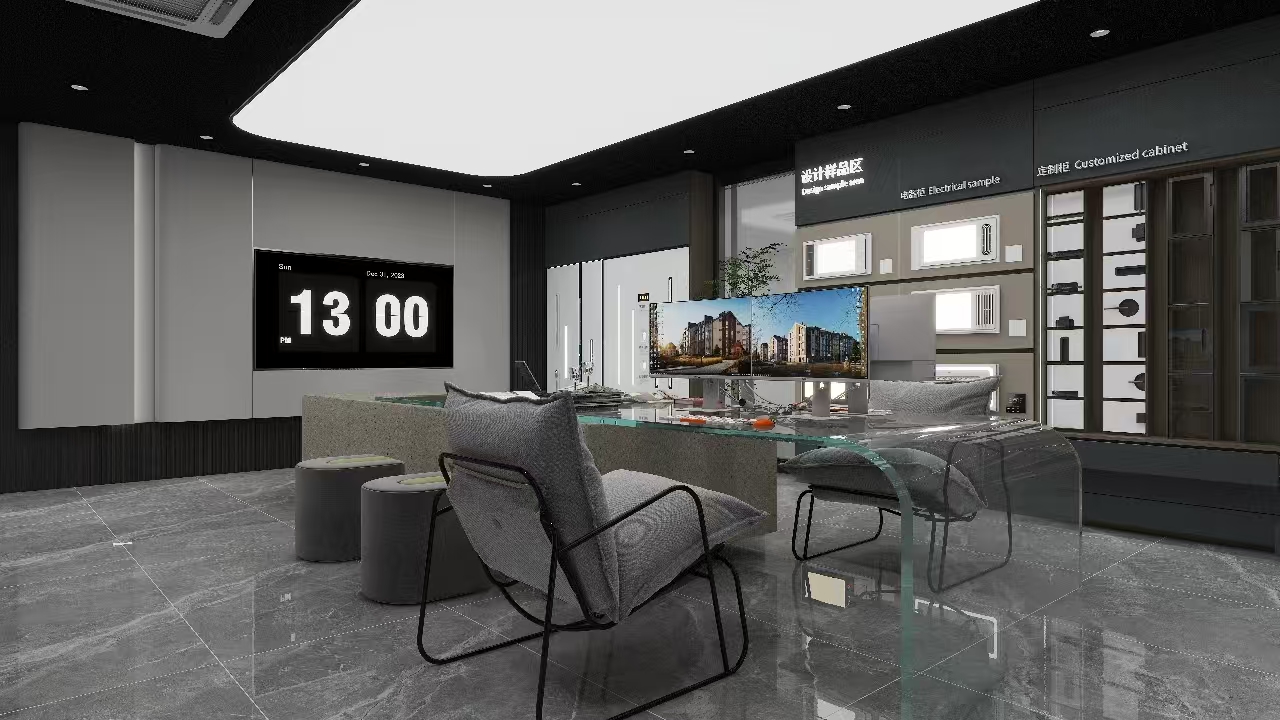
Specification discipline at order stage is what keeps installations consistent at project stage.
Next step. If you are evaluating a long-term PVC partition wall panel supply program, start with the two items that settle most questions: a reference sample of the 2900×400×26 mm panel with its 2900×85×50 mm corner trim, and the current compliance document set. Jianmu supplies both on request.
Request a sample or quotation at www.hnjianmu.com · Email: fengdingjx@gmail.com · WhatsApp / Tel: +86 138-0673-3501 · Download the catalogue (PDF): Jianmu product catalogue
Have Questions or Need More Details?
Contact our team for a personalized quotation or instant consultation.
Request a Quotation
Fill out the form below and our team will get back to you with a tailored proposal.
WhatsApp Direct Chat
Prefer to chat in real-time? Message us on WhatsApp for instant assistance & quick answers.
- Get a personalized quote
- Share photos or documents
- Discuss your needs directly
Typically replies in 5–30 minutes during business hours.