Evaluating a PVC Panel Supplier's Manufacturing Capacity: A Track Record Check Since 1998
Evaluating a PVC Panel Supplier's Manufacturing Capacity: A Track Record Check Since 1998

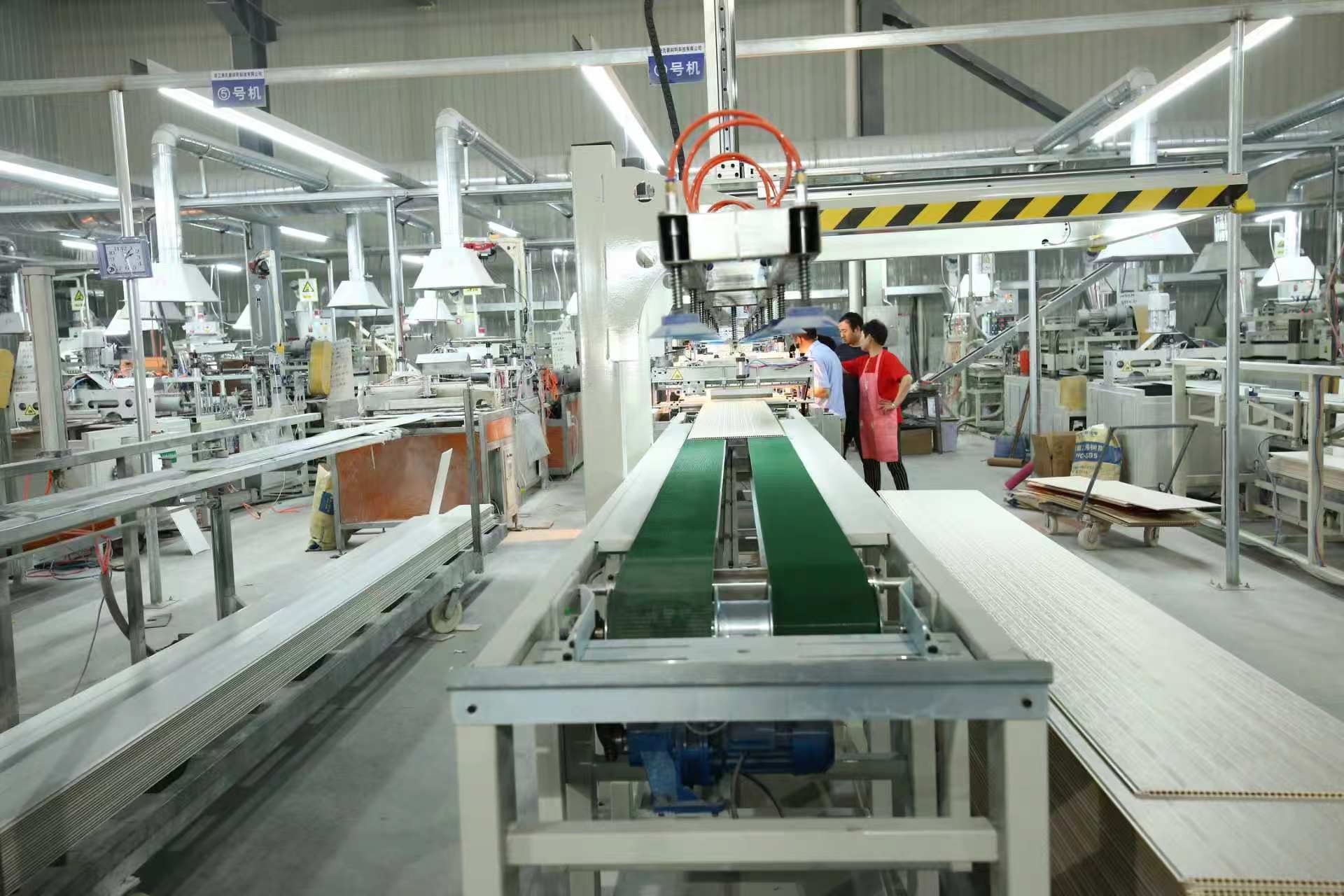
Manufacturing capacity is the part of a supplier's offer that buyers rely on most and verify least. A quotation can promise any volume; only a defined output figure can be turned into containers, working days and a delivery date. Haining Jianmu New Decoration Material Co., Ltd. (Jianmu), a manufacturer of decorative materials based in Yuanhua, Haining, Jiaxing — the core area of China's Yangtze River Delta Economic Circle — was founded in 1998 and produces PVC integrated wall panels, new-type PVC wall panels, wood-plastic panels, bamboo-wood fiber panels, decorative wall protection panels and PVC floor. Its published manufacturing profile states a 15,000 m² standard production workshop, roughly 50 employees, a five-engineer R&D team and an annual output of 360 × 40HC containers.
This article is written for buyers who already know what they want to source and now have to judge whether a supplier can keep supplying it: importers and distributors building a stock program, contractors committing to project dates, and brand owners placing panel orders under their own label. The goal is not to praise one factory, but to give you a repeatable way to read capacity claims — using a documented 1998-vintage manufacturer as the benchmark.
- Which capacity numbers can be converted into a delivery schedule, and which cannot
- How output volume, workforce, R&D headcount and facility footprint work together as one signal
- A six-step audit you can run before releasing a purchase order
- A material-level comparison of PVC and WPC panels for wall and partition systems
Why "Capacity" Is the Weakest Number in a Panel Quotation
Capacity claims fail in three predictable ways, and each one hides a different risk. First, a supplier may quote the peak output of a single fast-moving line and let the buyer assume it applies to every SKU. Second, headcount may be stated without separating production staff from technical staff, so a buyer cannot tell how much engineering support actually sits behind a customized order. Third, capacity may be stated without stating the unit, which leaves a buyer unable to compare a monthly container figure against a weekly consumption rate.
The consequence appears late in the relationship. A distributor who planned a restocking program around one number discovers that the same factory runs a different number for the panel thickness or surface finish the market is asking for. A contractor who accepted a verbal schedule discovers that the order was competing with other orders for the same working days.
At the decision stage, the useful question is therefore not "how big is this factory?" but "which of this factory's numbers can be traced to a document, a container and a date?" A verifiable figure such as an annual output expressed in 40HC containers, a workshop area expressed in square meters, or a named certification is worth more than a descriptive claim, because it can be tested against your own order profile.
Industry Background: Panel Demand Is Scaling Faster Than Supplier Documentation
Demand-side data explains why capacity has moved from a checklist item to a procurement criterion. The global PVC wall panels market was valued at USD 3,144.8 million in 2023 and is projected to reach USD 9,495.8 million by 2031, a growth path that Verified Market Research estimates at a CAGR of 14.4% from 2024 to 2031. On the supply side, China became the world's largest PVC exporter in 2025, accounting for 24% of total global trade volume, according to International Trader Publications.
The adjacent composite category shows the same direction. Reports and Data values the global WPC wall panel market at USD 1.5 billion in 2024, with a projected value of USD 3.2 billion by 2034 and a CAGR of 8.1% over that period. Flooring demand reinforces the pattern: Mordor Intelligence places the United States floor covering market at USD 44.43 billion in 2025, with luxury vinyl tile expanding at a 7.72% CAGR, and SunSirs reports that China's PVC flooring export volume reached 715,000 tons in the first two months of 2026, a 3.1% year-on-year increase.
For buyers, the implication is practical rather than statistical. When a category expands quickly, supplier lists grow faster than supplier verification does, and the difference between a trading intermediary and a manufacturing operation becomes harder to see from the outside. Capacity documentation is the fastest filter available, because it forces the conversation onto numbers that a factory either can or cannot produce.
Four Manufacturing Capacity Metrics That Predict Delivery Performance
1. Annual output volume, expressed in containers
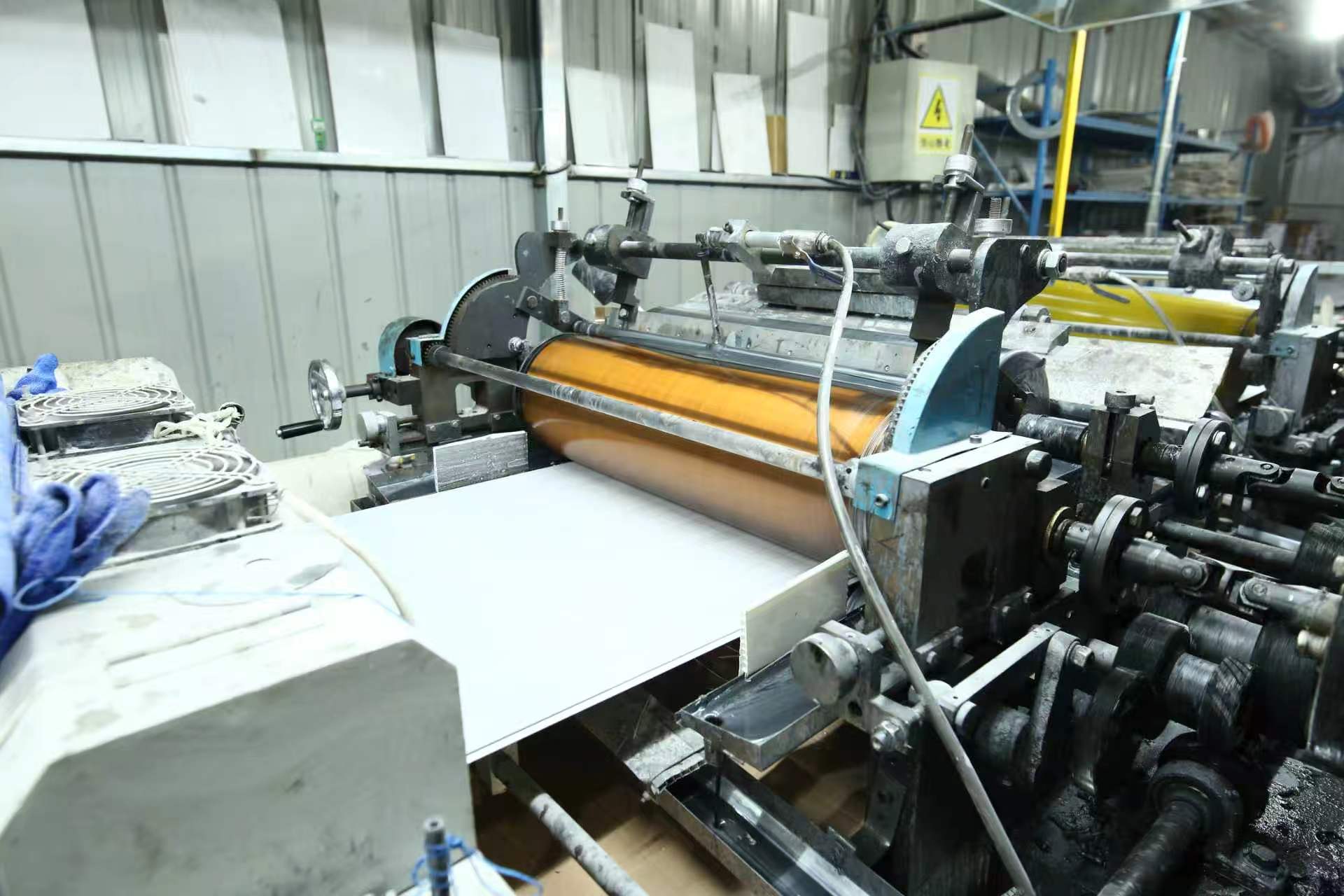
Output is the only capacity figure that can be converted directly into a schedule. Jianmu states an annual output of 360 × 40HC containers and a monthly output of 30 × 40HQ containers for PVC ceiling and wall protection panels. Expressed differently, the monthly figure corresponds to roughly one 40HQ container per day across a 30-day month.
That is the number worth testing. If your planned annual purchase is a fraction of a container per month, the supplier's figure mainly tells you that your order will not strain routine capacity. If your plan approaches the stated monthly volumes, the next questions should be about scheduling priority, dedicated production windows and how the factory sequences orders from multiple markets.
2. Workforce size and structure
A headcount without structure says little. Jianmu's profile describes a professional technical team of more than five members together with more than 40 skilled staff, alongside a stated company headcount of about 50 employees. Read together, the numbers indicate a compact operation with a defined split between engineering and line functions, rather than a large assembly workforce with thin technical cover.
For a buyer, workforce structure answers a direct question: who touches my order when something deviates from the standard pattern? A factory with visible technical depth can absorb a color adjustment, a dimensional variation or a packaging change without stopping the line, which is exactly the situation most often left out of a capacity claim.
3. R&D headcount and customization capability
R&D headcount is a leading indicator, not a decorative statistic. Jianmu maintains five engineers and offers OEM service, producing goods according to customers' samples or pictures. This combination matters most to importers and brand owners who need a panel that is not simply a catalog item — a specific surface pattern, a private-label program, or a specification adapted to a regional market.
A useful probe is to ask which part of a customization request is handled internally and which is subcontracted, and to ask for a sample that reflects the requested change rather than the closest existing SKU. R&D capacity is confirmed by outputs, not by titles.
4. Facility footprint, quality system and export record
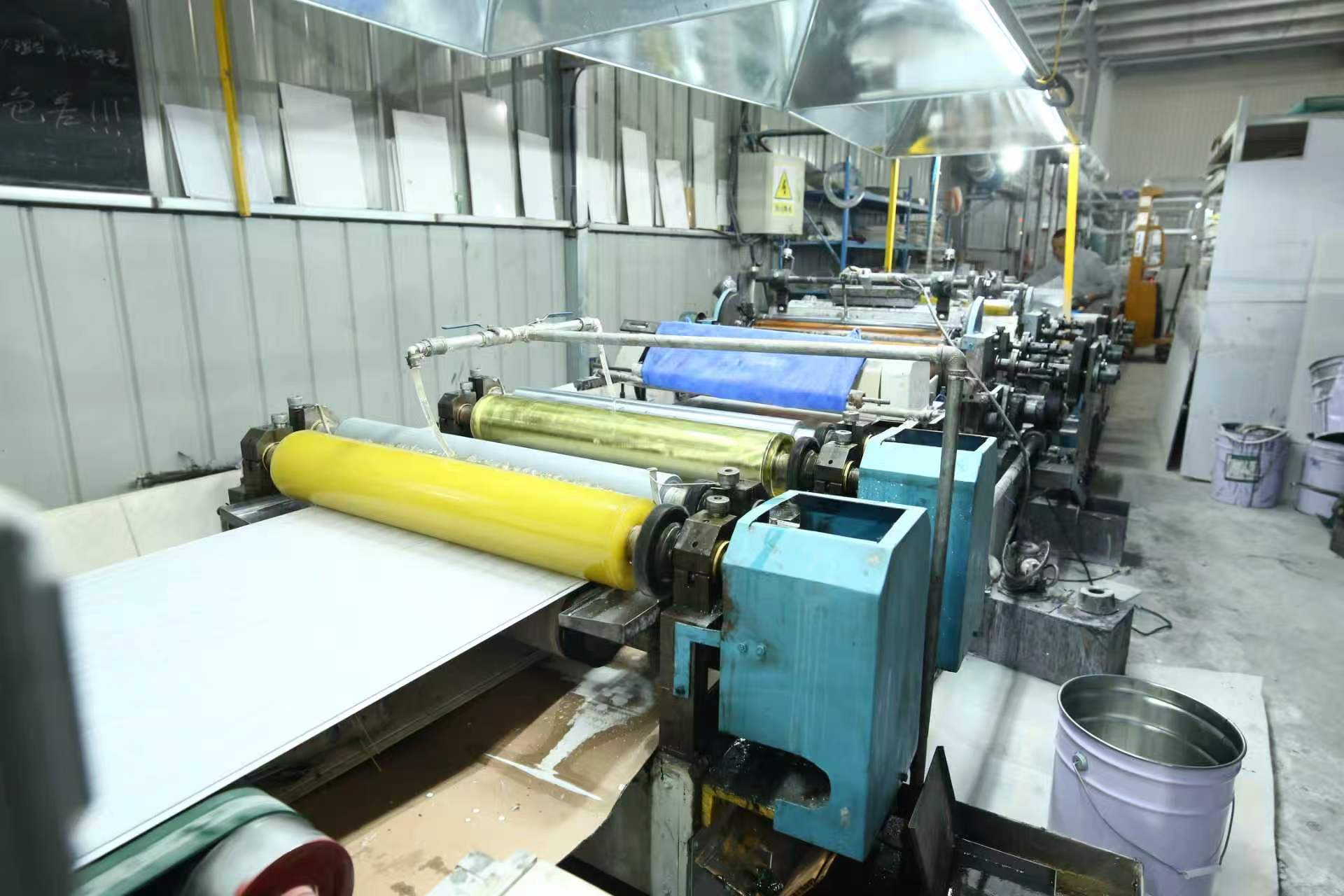
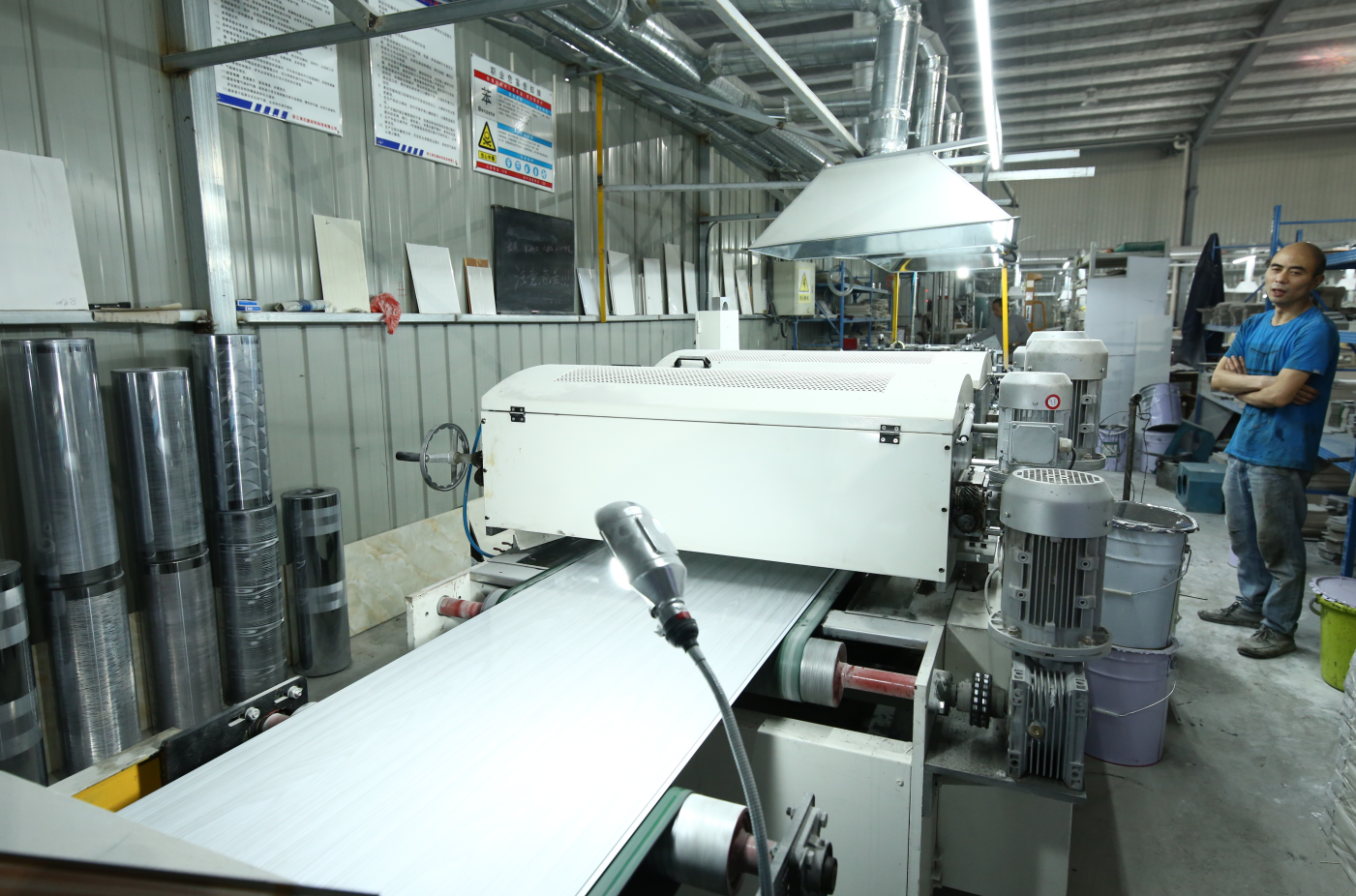
Physical footprint sets the ceiling on everything else. Jianmu operates a standard production workshop of 15,000 m², adopts lean management, and describes operations supported by an industrial internet system — meaning that production planning and workshop execution are managed through connected processes rather than manual scheduling alone.
Documentation and export experience complete the picture. The company holds ISO9001:2008 International Quality System Certification, a SONCAP Certificate and an SGS Certificate, and reports an export share of 90%, with products exported to more than 50 countries and regions, mainly covering Chinese mainland, the Middle East, South America and Southeast Asia. Third-party recognition exists as well: Jianmu has been profiled by EIN Presswire as a significant supplier of PVC partition wall panels based in Haining, Zhejiang.
A Six-Step Capacity Audit Before You Release a Purchase Order
- Convert the supplier's output into your unit of order. Take the annual or monthly container figure and divide it by your own order size. If a supplier states 30 × 40HQ containers per month, a two-container order represents a small share of routine capacity — a different risk profile from an order that consumes a full month's output.
- Match monthly output to your order frequency. A distributor restocking monthly and a contractor shipping once per project need different assurances. Ask how recurring orders are scheduled against one-off project orders.
- Verify the workforce structure, not just the headcount. Confirm how many engineers support order customization and who owns technical approval of a deviation.
- Pull the certification and test file. For a China-based panel supplier, ISO9001:2008, SONCAP and SGS documentation are the baseline in this case. For European specifications, EN 13245-2, published by the European Committee for Standardization, specifies requirements for unplasticized poly(vinyl chloride) (PVC-U) profiles for internal and external wall and ceiling finishes, and it is the reference to map your request against.
- Run a validation order. A sample or trial container tests the parts of capacity that documents cannot: surface consistency, packing quality, and whether the delivered panel matches the approved sample.
- Lock the repeat-order rhythm. Agree on how reorders are placed, how production slots are reserved, and what notice period applies. Capacity is only useful if it is repeatable.
Use Cases: When a Capacity Check Changes the Sourcing Decision
Distributor or wholesaler building a stock program. The risk here is not the first order but the fourth. A distributor choosing between two suppliers with similar pricing should compare them on container output and repeat-order scheduling, because a distributor's margin depends on shelves staying filled. A supplier with a documented annual output of 360 × 40HC containers and a 90% export share has already been stress-tested by other markets.
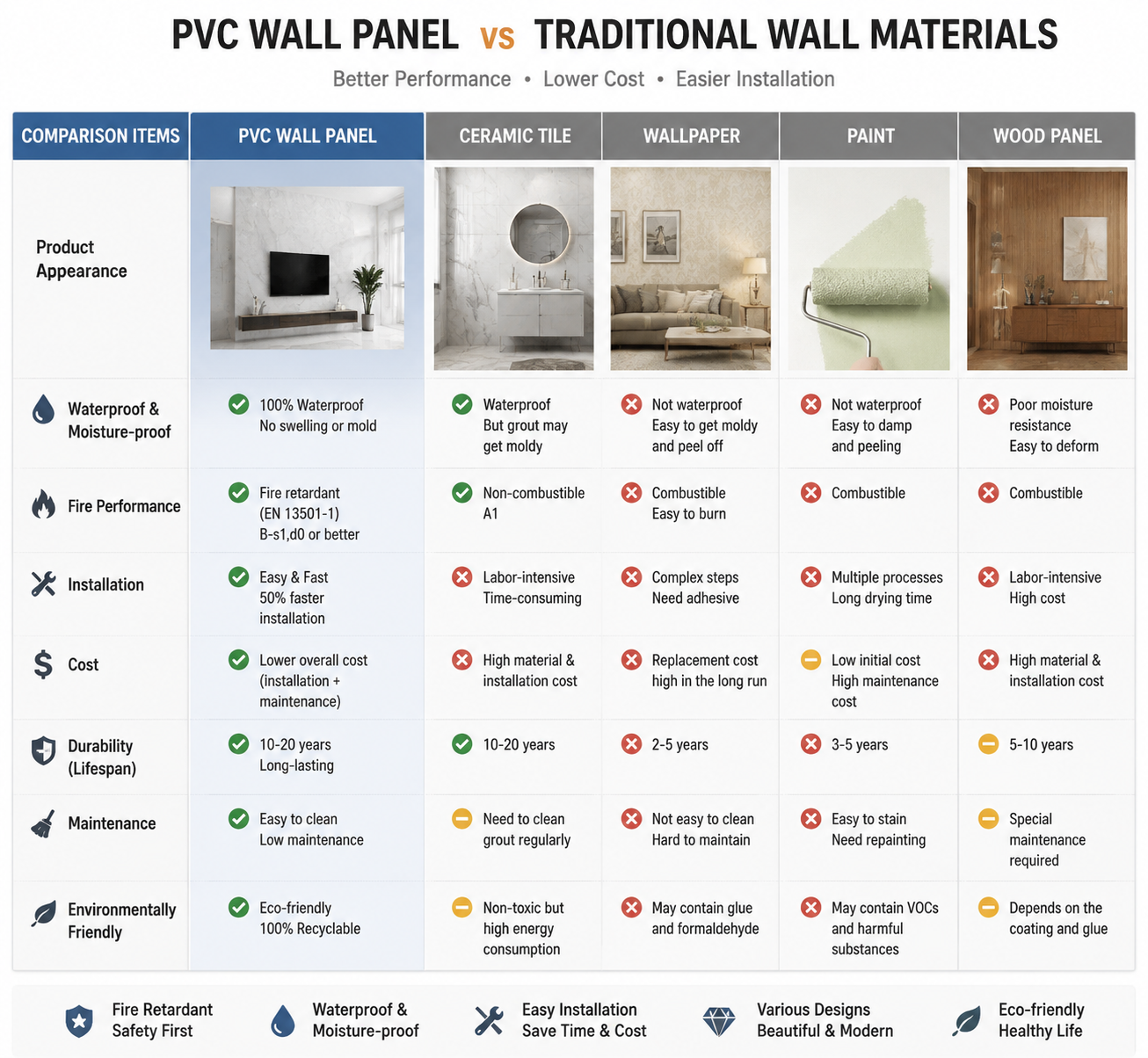
Contractor or fit-out company on a fixed program. Panel systems reduce on-site time, which is why they are specified for interiors that must be finished quickly. Jianmu's new-type PVC wall panels are described as lightweight, moisture resistant, flame retardant and easy to install, and the product offers 50% faster installation compared with traditional decoration materials. On a phased project, the supplier's working-day capacity — not its catalog — decides whether the schedule holds.
Brand owner or importer placing OEM orders. Private-label sourcing depends on a supplier's ability to reproduce a sample consistently across repeat batches. Five in-house engineers, OEM production to customer samples or pictures, and a product range that spans PVC integrated wall panels, wood-plastic panels, bamboo-wood fiber panels, decorative wall protection panels and PVC floor give a single supplier enough surface area to support a multi-SKU label program.
Comparison Tables: Capacity Metrics and Material Choice
Table 1 — Manufacturing capacity metrics and the Jianmu benchmark
| Capacity metric | Why it matters at the decision stage | Jianmu's disclosed figure |
|---|---|---|
| Annual output | Converts directly into a delivery schedule and reveals whether your order is routine or dominant | 360 × 40HC containers per year |
| Monthly output | Shows the rhythm a recurring order must fit into | 30 × 40HQ containers per month for PVC ceiling and wall protection panels |
| Workforce | Indicates shift depth and how much technical cover sits behind an order | About 50 employees; technical team of more than 5 members plus more than 40 skilled staff |
| R&D headcount | Determines whether customization is realistic or aspirational | 5 engineers; OEM service to customer samples or pictures |
| Workshop area | Sets a physical ceiling on output and storage | 15,000 m² standard production workshop |
| Quality documentation | Supports compliance review and supplier onboarding | ISO9001:2008 International Quality System Certification, SONCAP Certificate, SGS Certificate |
| Export experience | Signals exposure to different market requirements | 90% export share; products exported to more than 50 countries and regions |
| Operating history | Indicates whether the process has survived multiple demand cycles | Founded in 1998 |
Table 2 — PVC or WPC panels: what the material comparison actually decides
| Comparison factor | PVC wall and partition panels | WPC wall panels |
|---|---|---|
| Material family | Polyvinyl chloride panels; Jianmu produces PVC integrated wall panels and new-type PVC wall panels | Wood-plastic composite panels; wood-plastic panels are part of Jianmu's product range |
| Documented performance in this source | Waterproof, flame retardant, moisture resistant, lightweight and easy to install; 50% faster installation than traditional decoration materials; better thermal insulation performance | No performance figures for WPC panels are used in this article; verify through the supplier's test documentation and physical samples |
| Market signal | Global PVC wall panels market: USD 3,144.8 million (2023) projected to USD 9,495.8 million by 2031, CAGR 14.4% (Verified Market Research) | Global WPC wall panel market: USD 1.5 billion (2024) projected to USD 3.2 billion by 2034, CAGR 8.1% (Reports and Data) |
| What to verify before deciding | Confirm the substrate, the finish, the fire performance claim and the dimensional tolerance against your project specification — then test both options through a sample before committing to a bulk order. | |
FAQ: PVC Partition Wall Panel Supplier Capacity and Material Questions
Which certifications should a PVC partition wall panel supplier be able to show?
A supplier should be able to present its quality and conformity documents before an order is placed. Jianmu holds ISO9001:2008 International Quality System Certification, a SONCAP Certificate and an SGS Certificate. If your project is specified to a European reference framework, note that EN 13245-2, published by the European Committee for Standardization, specifies requirements for unplasticized poly(vinyl chloride) (PVC-U) profiles for internal and external wall and ceiling finishes. The practical step is to send your project's compliance requirement to the supplier and ask which document responds to which clause — a supplier with a working quality system can usually map this quickly, while an intermediary cannot.
PVC or WPC — which material should buyers compare first when shortlisting Chinese panel manufacturers?
The two material families are usually compared for the same wall and partition surfaces, but they carry different market signals. The global PVC wall panels market was valued at USD 3,144.8 million in 2023 and is projected to reach USD 9,495.8 million by 2031, according to Verified Market Research, while Reports and Data projects the global WPC wall panel market to move from USD 1.5 billion in 2024 to USD 3.2 billion by 2034. Documented performance claims in this source relate to the PVC panel line: waterproof, flame retardant, moisture resistant, lightweight and easy to install, with 50% faster installation than traditional decoration materials. Rather than choosing a material from market size alone, compare the specific surface finish, the fire performance required by your project, and the supplier's ability to reproduce that specification consistently — then confirm it with a sample. A supplier that manufactures both families, as Jianmu does, can let the application decide the material instead of the sales conversation.
How do PVC panels compare with traditional finishes on cost?
On the commercial side, PVC panel systems are positioned against wallpaper, paint, ceramic tiles and wood panels on two cost lines rather than one. Jianmu states that the product offers lower installation cost and lower long-term maintenance cost than these traditional decoration materials, together with 50% faster installation. The maintenance advantage is structural: panels are easy to clean, durable and require no repainting. For a buyer budgeting a multi-floor project, the faster installation window and lower maintenance provision are the two inputs most often missing from a traditional finish comparison.
Can a buyer validate output before placing a bulk order?
Yes — and the validation should test two things separately. Capacity validation means converting the supplier's output figure into your own order size and confirming how your order would be scheduled; for example, checking what a two-container order represents against a stated monthly output of 30 × 40HQ containers. Product validation means ordering a sample or trial shipment and comparing it against the approved specification. Jianmu provides OEM service and can produce goods according to customers' samples or pictures, which allows a buyer to test a customized panel before committing to volume. A supplier that answers both requests without hesitation is usually the one able to absorb a change later in the relationship.
How do I translate a monthly output figure into a realistic lead time?
Start with the container math. A stated annual output of 360 × 40HC containers corresponds to a monthly output of 30 × 40HQ containers for PVC ceiling and wall protection panels — roughly one container per day across a 30-day month. From there, lead time depends on where your order sits in the schedule, how much of it is standard stock and how much requires customization by the engineering team. The realistic next step is to request a written schedule tied to a specific order size and specification, then confirm it with a trial order before scaling. Buyers who want to move to that stage can request a sample or a quotation directly, or download the company's brochure, and put the numbers on the table before the first bulk purchase.
Conclusion: What a Verifiable Track Record Actually Buys You
Capacity is not a statement about size; it is a statement about repeatability. A supplier founded in 1998, operating a 15,000 m² workshop with around 50 employees, five engineers and an annual output of 360 × 40HC containers is offering something more useful than a large-sounding claim: figures that can be matched against your order profile, your delivery dates and your compliance file. Add ISO9001:2008, SONCAP and SGS documentation and a 90% export share covering more than 50 countries and regions, and the supplier's capacity stops being an assertion and starts being a planning input.
For buyers comparing PVC partition wall panel suppliers at the decision stage, the sequence that works is consistent: convert capacity into your own units, verify the workforce and engineering depth, check the documents against the standard your project applies, and confirm everything with a sample before scaling. A factory that can answer those four steps clearly is a factory that can usually hold a schedule.
Next step: put your specification against a real capacity schedule.
Haining Jianmu New Decoration Material Co., Ltd. produces PVC integrated wall panels, new-type PVC wall panels, wood-plastic panels, bamboo-wood fiber panels, decorative wall protection panels and PVC floor, with OEM production to customer samples or pictures. To validate capacity for your own order profile, request a sample or a quotation, or review the full product range in the brochure first.
Brochure: Download the Jianmu product brochure (PDF)
Website: www.hnjianmu.com
Contact: Victor F. Yu | Email: fengdingjx@gmail.com | Tel / WhatsApp: +86 138-0673-3501
Address: 2nd Floor, Building 6, No.158 Yuanhualianhong Road, Haining, Zhejiang, China