
Battery 101 for Industrial Buyers: How Lithium and Lead-Acid Technologies Fit in 2026 Projects
"Battery" is one of the broadest terms in the green energy industry. For an industrial buyer, asking "which battery should I buy?" is similar to asking "which vehicle should I buy?"—the correct answer depends on what you are powering, where, and for how long. In 2026, buyers sourcing batteries for e-mobility, solar storage, or industrial equipment encounter multiple chemistries, voltage platforms, and application-specific product lines. This guide provides a structured introduction to battery technology, explains where lithium and lead-acid batteries fit, and gives first-time buyers a practical path from basic discovery to a supplier conversation.
Why Battery Selection Is a Challenge for New Buyers
The first challenge is terminology. Batteries are described by chemistry (LFP, NCM, lead-acid), by application (traction, storage, starter), by voltage (12V, 24V, 48V, 60V, 72V), by capacity (Ah or kWh), and by form factor (rack-mounted, household, power pack). A first-time buyer can easily focus on the wrong specification or compare products that were designed for entirely different duty cycles.
The second challenge is choice. The global lithium-ion battery market was valued at USD 68.7 billion in 2025 and is projected to reach USD 306.2 billion by 2033, according to Grand View Research. The e-bike battery market alone was estimated at USD 10.8 billion in 2024, with a projected CAGR of 14.1% through 2034, per Precedence Research. Many manufacturers have entered the market in response, but not all have equal experience across lithium and lead-acid production.
The third challenge is the risk of premature commitment. Buyers who skip the discovery stage may spec a battery that is oversized for the application, select a chemistry that does not match the operating environment, or fail to verify a supplier's actual production capabilities. These mistakes become visible only after deployment, when correction is expensive.
Industry Background: The 2026 Battery Landscape
Lithium-ion technology continues to dominate the energy storage conversation. According to Fortune Business Insights, lithium-ion batteries are expected to account for 99.33% of the battery energy storage system (BESS) market by 2026. This shift is visible in specific segments as well: the golf cart battery market reached USD 1.49 billion in 2024, driven by a pivot from lead-acid to lithium-ion technology, according to Strategic Market Research.
However, lead-acid batteries are not disappearing. The traction battery market—which serves industrial vehicles and material handling equipment—was valued at USD 43.29 billion in 2024. Analysts at Maximize Market Research note that lead-acid variants remain popular in industrial sectors due to cost-effectiveness. For many buyers, lead-acid is still a rational choice when the priority is upfront cost rather than weight, cycle life, or energy density.
The competitive landscape also matters. According to SNE Research, CATL held a 37.9% share of the global EV battery market in 2024, while BYD held 17.2%. These figures illustrate how concentrated the cell production market is at the automotive scale. Buyers who need specialized application batteries—rather than automotive-scale volumes—may find that manufacturers with dual-technology production capabilities can offer practical advantages in communication, customization, and order flexibility.
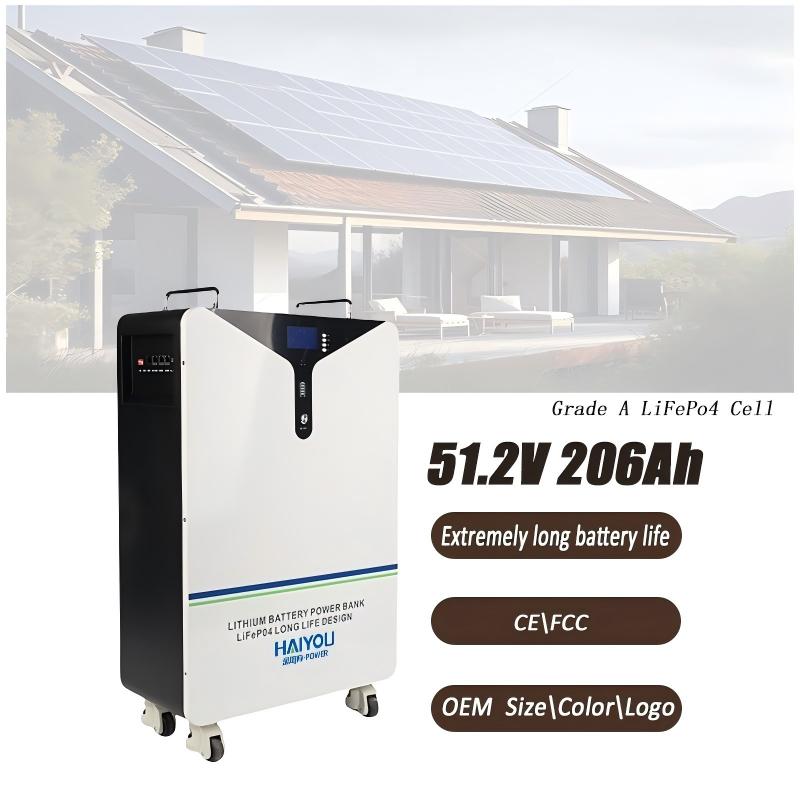 Lithium iron phosphate batteries are a common choice for household solar energy storage in 2026.
Detailed Solution: Understanding Lithium and Lead-Acid Batteries
For most industrial buyers at the awareness stage, the practical battery universe can be summarized by two families: lithium-based batteries and lead-acid batteries.
Lithium Batteries
Lithium batteries are built around lithium-ion cells. The two chemistries most commonly encountered in e-mobility and energy storage are LFP and NCM.
LFP (lithium iron phosphate) uses lithium iron phosphate as the cathode material. LFP is widely chosen for applications that require long cycle life and stable performance under demanding conditions. In HAIYOU's product portfolio, LFP is used in electric tricycle and low-speed four-wheeler power batteries, as well as in household energy storage batteries.
NCM (nickel cobalt manganese) is frequently selected for lighter mobility products where energy density is a priority. HAIYOU's lithium battery for electric two-wheelers is available in both NCM and LFP chemistries, reflecting different buyer priorities between energy density and long-term cycling.
Lead-Acid Batteries
Lead-acid batteries use lead-based electrodes and an acid electrolyte. They are a mature technology with a long history in traction and backup power. In industrial sectors, lead-acid remains relevant where cost-effectiveness is a stronger buying driver than weight or cycle life.
A useful way to frame the difference is not "which technology is better" but "which technology fits the operating condition." A household solar storage system that sits in a fixed location and cycles daily may be an excellent fit for LFP. A cost-sensitive industrial traction application with moderate duty cycles may still be served well by lead-acid.
A Dual-Technology Battery Manufacturer: The HAIYOU Example
When evaluating a battery supplier at the awareness stage, one of the most useful checks is how broadly the manufacturer covers the market. A company that produces both lithium and lead-acid batteries—rather than only one chemistry—demonstrates an application-driven view of battery selection.
Jiangxi Jinhaiyou New Energy Resources Technology Co., Ltd. (HAIYOU) is one such manufacturer. Established in 2005, HAIYOU operates two factories: one for lead-acid battery production and one for lithium battery production. The facilities cover an area of 4 acres and are located in Jiangxi Province, China, with convenient transportation. The company has passed a number of system certifications and owns many patents, according to its company profile.
HAIYOU's product range covers the main battery purchasing categories in e-mobility and energy storage:
- Lithium batteries for two-wheeled electric vehicles
- Lithium batteries for tricycles and low-speed four-wheel vehicles
- Household lithium iron phosphate energy storage batteries
- Rack-mounted lithium batteries
- Lead-acid batteries (produced in the company's second factory)
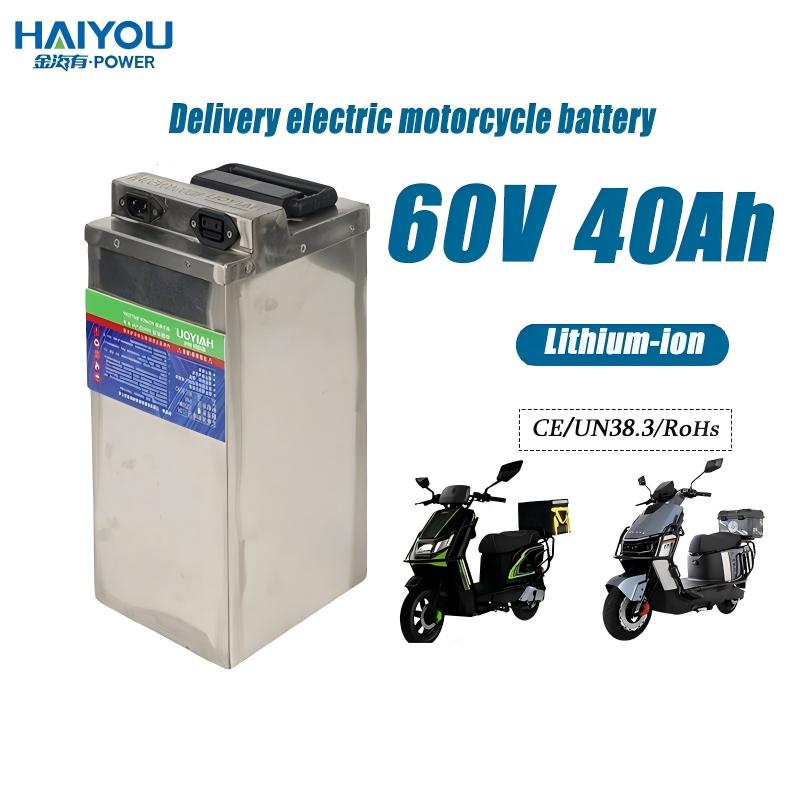 E-bike and e-scooter batteries are available in NCM and LFP chemistries to match different performance priorities.
The company exports batteries to more than 20 countries and regions, including Europe, the USA, the Middle East, and Southeast Asia. For a buyer who is still researching, this breadth means HAIYOU can discuss options across chemistries rather than steering every inquiry toward a single product type.
Step-by-Step: How to Move from Awareness to a Supplier Shortlist
The following six-step process is a practical route from "which battery?" to "which supplier?"
Step 1: Define the Operating Environment
Start with the physical conditions the battery will face. Will it work outdoors in high temperatures, dust, or frequent vibration? Will it be stationary or mobile? For example, HAIYOU's application scenario for the agriculture and garden industry describes outdoor open-air work with high temperature, dust, and frequent vibration. These conditions directly influence which batteries can survive and perform.
Step 2: Determine Voltage and Capacity Requirements
Voltage and capacity should be driven by the equipment or system design. Mapping your application to standard platforms helps you understand the available market options.
- Electric two-wheelers (e-bikes, e-scooters, e-motorcycles): common platforms at HAIYOU are 48V, 60V, and 72V, with capacities from 20Ah to 40Ah, in NCM or LFP chemistry.
- Electric tricycles and low-speed four-wheelers: HAIYOU offers 60V and 72V platforms with capacities from 80Ah to 300Ah, using LFP chemistry.
- Household energy storage: HAIYOU offers 12V/24V systems with capacities from 100Ah to 300Ah, as well as rated-energy systems from 2.56KWh to 16KWh, in LFP.
Step 3: Compare Chemistries Against the Duty Cycle
The application scenario again matters. For a solar energy storage project, the battery is likely to be cycled daily and may need to provide stable DC power output, continuous equipment operation, and emergency backup power. A long-cycle LFP battery is a natural fit for that role. For a lighter mobility product, NCM may be considered when energy density is the priority. For a cost-sensitive industrial traction role, lead-acid remains a competitive option according to the traction battery market data.
Step 4: Evaluate Supplier Capabilities Beyond the Catalog
Look for verifiable markers of long-term manufacturing: how long the company has been operating, how many production sites it runs, whether it holds system certifications and patents, and how many export markets it serves. HAIYOU's 2005 founding, two-factory setup, certification and patent record, and exports to more than 20 countries are all facts a buyer can use as an initial filter.
Step 5: Request Samples and Test in Realistic Conditions
Sample testing should reflect the real duty cycle, not just a bench test. Charge and discharge cycles, temperature sensitivity, and mechanical stability under vibration are all relevant. For agriculture and garden equipment, the stated requirement of stable performance under frequent vibration should be verified during sample testing.
Step 6: Prepare for Volume and After-Sales Planning
Once a shortlist is formed, discuss lead times, packaging, export documentation, and after-sales support. A manufacturer that produces both lithium and lead-acid batteries can also help you evaluate future projects without starting a new supplier search.
Use Cases: Where the Main Battery Categories Apply
E-Bike, E-Scooter, and E-Motorcycle Batteries
Light electric mobility is one of the fastest-growing segments. The e-bike battery market was estimated at USD 10.8 billion in 2024, with a CAGR of 14.1% projected through 2034. HAIYOU products for this segment include lithium power batteries in 48V, 60V, and 72V platforms, with capacities from 20Ah to 40Ah, available in both NCM and LFP chemistries. Buyers sourcing for these vehicles should confirm the chemistry against their performance priorities.
E-Tricycle and Low-Speed Four-Wheeler Batteries
These vehicles are common in logistics, agriculture, and short-distance passenger transport. HAIYOU's LFP power batteries for this class cover 60V and 72V platforms with capacities up to 300Ah. The use of LFP helps meet the demand for stable power output and dependable cycle life in vehicles that are often operated outdoors for long hours.
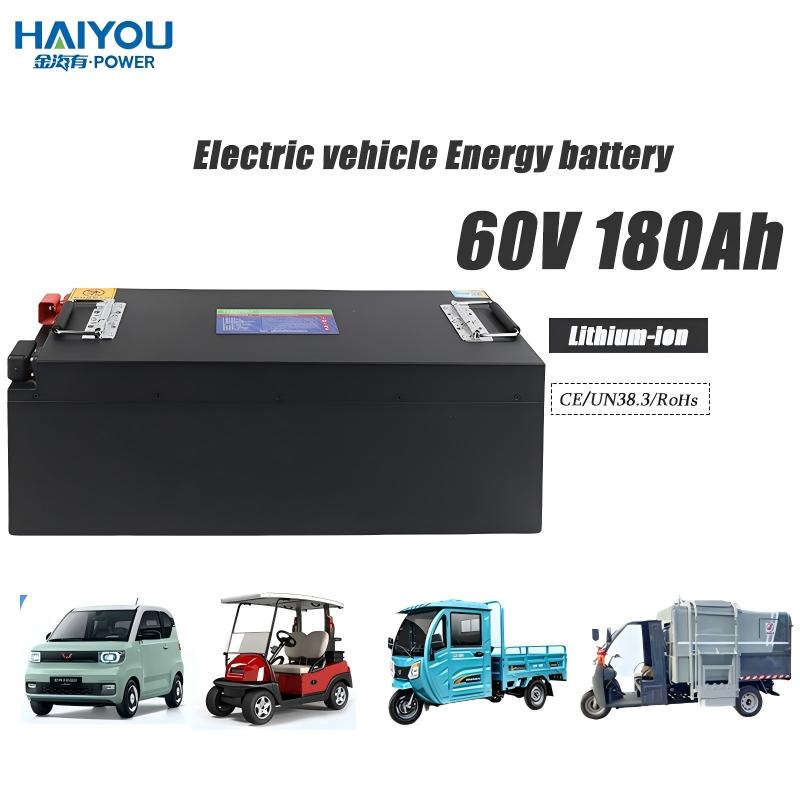 LFP power batteries for e-tricycles are designed for daily outdoor use and stable cycle life.
Household Solar Energy Storage Batteries
Home energy storage applications require batteries that cycle frequently, store solar energy during the day, and provide power at night or during outages. HAIYOU offers household energy storage lithium batteries in two form factors: 12V/24V systems with capacities from 100Ah to 300Ah, and rated-energy systems from 2.56KWh to 16KWh. All use LFP chemistry, with a housing composed of industrial plastic and a metal frame.
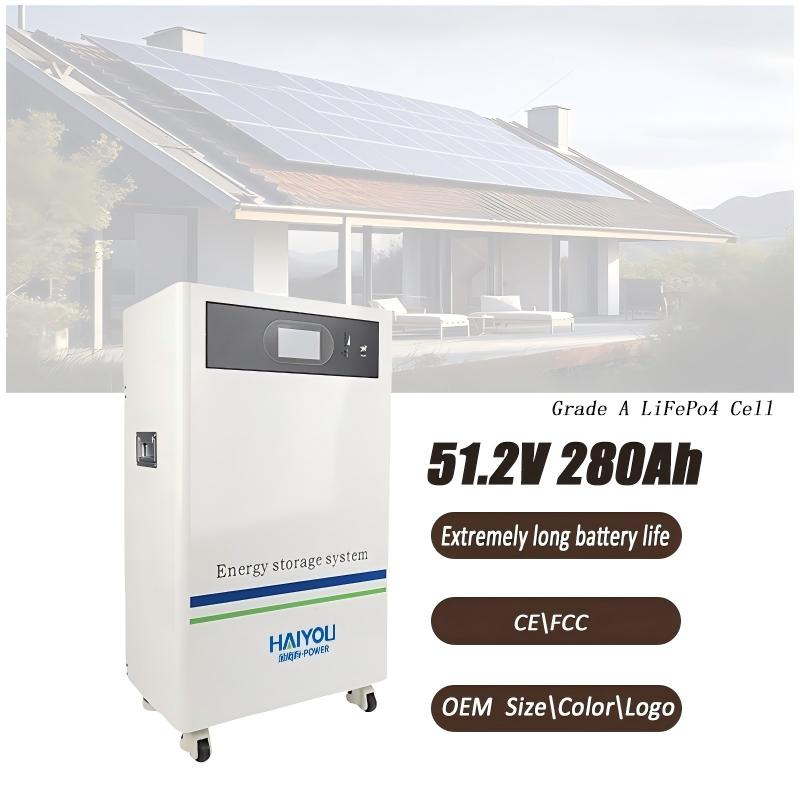 Household solar storage batteries are available in capacities from 2.56KWh to 16KWh.
Agriculture and Garden Equipment
The agriculture and garden industry presents a demanding environment: outdoor open-air work, high temperatures, dust, and frequent vibration. Equipment such as backpack agricultural sprayers, water pumps, and irrigation motors needs batteries that support continuous operation and emergency backup. HAIYOU's application scenario specifies a long cycle life of at least 6000 times and stable performance under frequent vibration as key requirements for this segment. The company's battery range is mapped to support equipment including agricultural sprayers and pumps.
Comparison Table: Lithium vs Lead-Acid at a Glance
| Comparison Dimension | Lithium Battery | Lead-Acid Battery | Evidence Source |
|---|---|---|---|
| Market direction | Lithium-ion market valued at USD 68.7B in 2025, projected to reach USD 306.2B by 2033 | Traction battery market valued at USD 43.29B in 2024; lead-acid remains popular in industrial sectors | Grand View Research; Maximize Market Research |
| Energy storage outlook | Expected to account for 99.33% of BESS market by 2026 | Retains presence in cost-sensitive industrial traction roles | Fortune Business Insights |
| Common chemistries | LFP (lithium iron phosphate) and NCM (nickel cobalt manganese) | Lead-acid | HAIYOU product portfolio |
| Representative HAIYOU applications | E-two-wheelers, e-tricycles, low-speed four-wheelers, household solar storage, rack-mounted storage | Industrial traction and backup demand served by HAIYOU's dedicated lead-acid factory | HAIYOU company profile |
| Safety standard reference (LEV) | UL 2271 is the primary safety standard for lithium-ion batteries in LEVs, including e-bikes and e-scooters | Lead-acid does not fall under UL 2271, which is specific to lithium-ion LEV batteries | UL Solutions |
Technical specifications should always be confirmed against the exact model before purchasing.
FAQ
What compliance and certification factors should a battery buyer verify?
For light electric vehicles, UL 2271 is the primary safety standard for lithium-ion batteries used in LEVs, including e-bikes and e-scooters, according to UL Solutions. Buyers should also verify that the manufacturer has passed system certifications relevant to their target market. HAIYOU states it has passed a number of system certifications and owns many patents. Always request certification documents for the exact model you plan to purchase.
What battery products can HAIYOU supply across lithium and lead-acid technologies?
HAIYOU manufactures lithium batteries for electric two-wheelers (48V/60V/72V, 20Ah to 40Ah, NCM or LFP), lithium batteries for electric tricycles and low-speed four-wheelers (60V/72V, 80Ah to 300Ah, LFP), household lithium iron phosphate energy storage batteries (12V/24V, 100Ah to 300Ah, or rated energy 2.56KWh to 16KWh), and rack-mounted lithium batteries. The company also operates a lead-acid battery factory. Applications include e-two-wheelers, e-tricycles, low-speed four-wheel vehicles, home solar energy storage, and agriculture sprayers.
How should a first-time buyer think about budget between lithium and lead-acid?
Market data indicates that lead-acid variants remain popular in the traction battery market because of cost-effectiveness, while lithium-ion batteries are expected to account for 99.33% of the BESS market by 2026. The budget question is therefore an application question. If your priority is upfront cost in an industrial traction role, lead-acid may be appropriate. If your project requires long cycle life, reduced weight, or daily cycling in solar storage, lithium-based options such as LFP may be more suitable. Because HAIYOU produces both, buyers can compare cost against application from a single source.
How can buyers evaluate a battery sample before committing to bulk orders?
Samples should be tested against the real operating profile, including charge and discharge behavior, load continuity, temperature performance, and mechanical stability under vibration. Confirm that the sample's labeling matches the specification sheet for chemistry, voltage, and capacity. HAIYOU supports sample inquiries and provides product documentation to assist evaluation.
How long does a typical battery order take from HAIYOU?
Lead time depends on product type, configuration, order volume, and current production scheduling. Because HAIYOU operates separate factories for lithium and lead-acid production, each technology line has its own capacity planning. For an up-to-date timeline, contact HAIYOU directly at nancy.shi@jxhylkj.com or by phone and WhatsApp at +86 18870238656.
Ready to compare battery options for your project?
Contact HAIYOU to request product information, specifications, or a sample quote.
Email: nancy.shi@jxhylkj.com | Phone / WhatsApp: +86 18870238656
Conclusion
The 2026 battery market gives buyers more options and more information than ever. The key to a successful start is not memorizing specifications; it is applying a structured decision process: define your operating conditions, choose a technology that fits them, verify the supplier with verifiable facts, and test samples before scaling.
HAIYOU, as a battery manufacturer established in 2005 with separate lithium and lead-acid factories, offers a practical entry point for buyers who want to explore options across technologies. Whether you are at the beginning of your research or ready to discuss a specific project, the HAIYOU team can provide product information, sample support, and a route toward a first supply arrangement.