
How to Verify Battery Certifications and Specifications Before You Buy in 2026
Before you place an order for a battery, two things matter most: certifications and specifications. Certifications show that the supplier operates under controlled processes. Specifications show whether the product will work in your application. This guide explains how to check both, using HAIYOU (Jiangxi Jinhaiyou New Energy Resources Technology Co., Ltd.) as a working example of a lithium and lead-acid battery manufacturer with verifiable credentials.
Problem definition: Why certification and spec verification matter
Industrial buyers at the research and evaluation stage often face a common problem: many suppliers look identical on paper. They all claim competitive prices, fast delivery, and reliable quality. Without a verification system, it is difficult to tell which supplier actually holds the certificates and which product parameters match the project requirement. The solution is to build a checklist around three constraints: compliance, product specifications, and production capability.
Industry background: A growing but harder-to-navigate battery market
The battery industry is expanding quickly. According to Grand View Research, the global lithium-ion battery market was valued at USD 68.7 billion in 2025 and is projected to reach USD 306.2 billion by 2033. Precedence Research and MarketsandMarkets estimate the global e-bike battery market at USD 10.8 billion in 2024, with a projected CAGR of 14.1% through 2034. Fortune Business Insights projects that lithium-ion batteries will account for 99.33% of the battery energy storage system market by 2026. This growth attracts new suppliers and increases the need for structured verification.
Detailed solution: A practical battery verification framework
Use the following framework to evaluate a battery supplier systematically.
1. Verify management system certifications
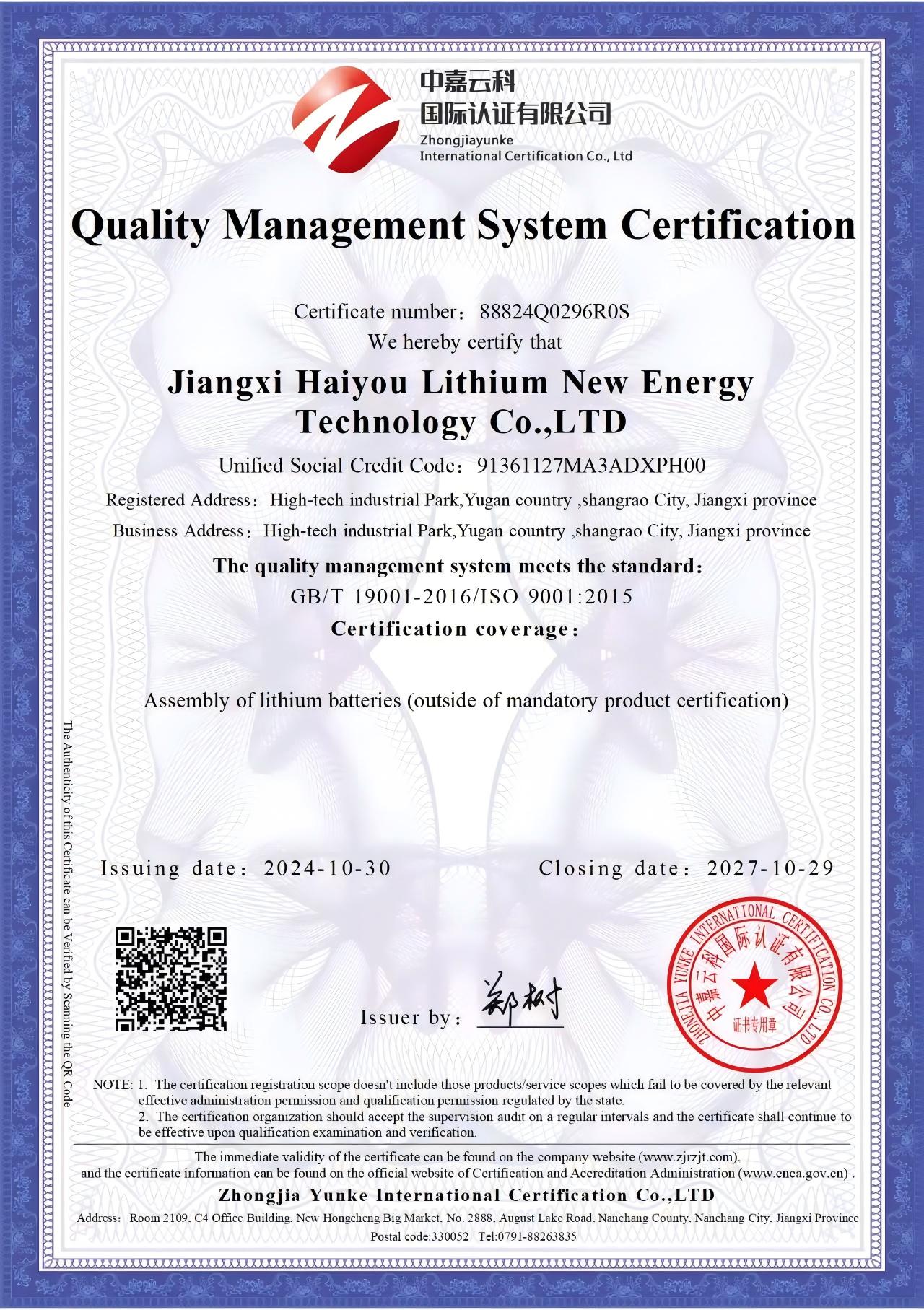
Management system certifications indicate whether a factory has documented quality, environmental, and safety processes. For lithium battery assembly, look for ISO 9001, ISO 14001, and ISO 45001.
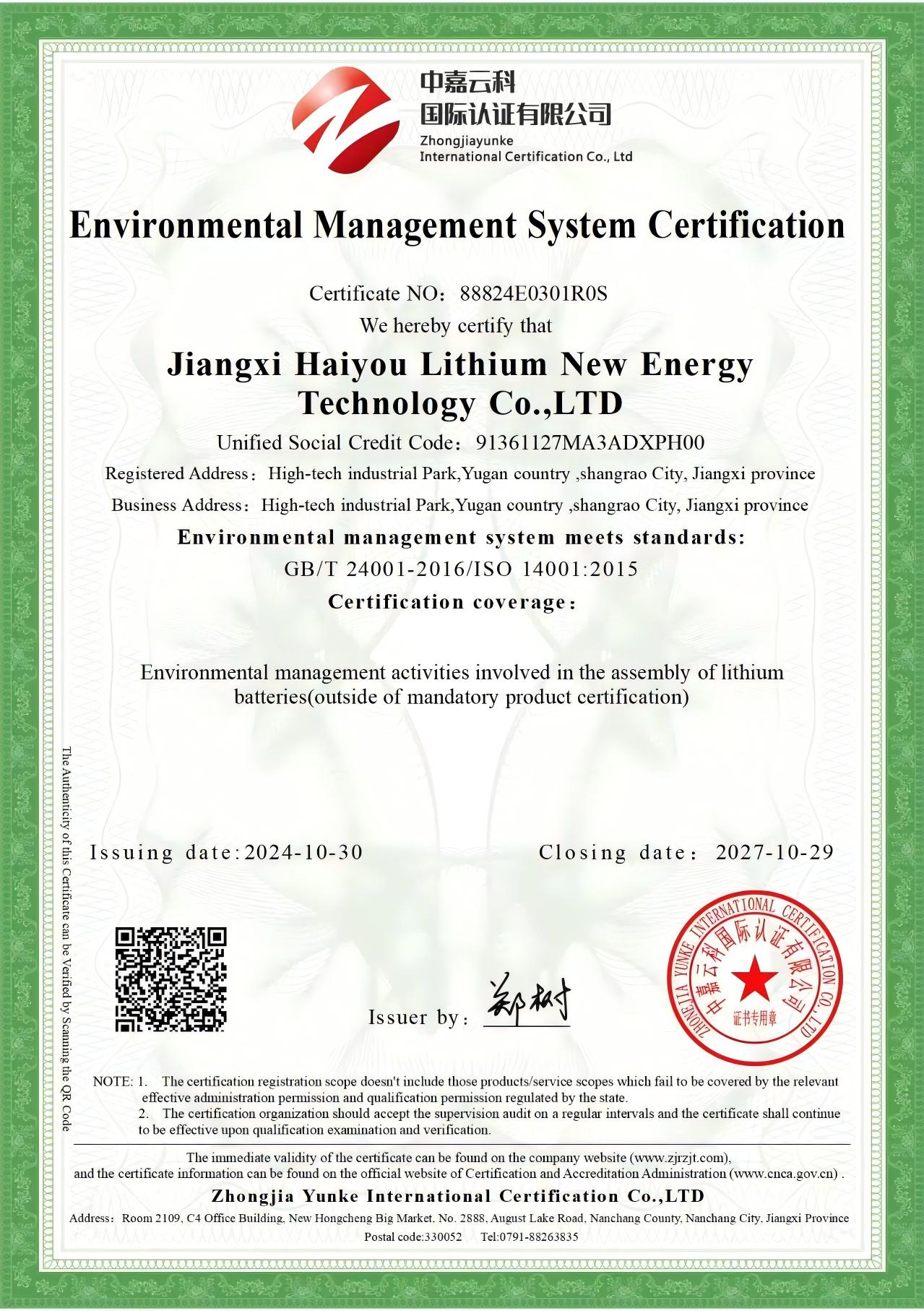
HAIYOU provides a clear example. The company is certified to GB/T 19001-2016 / ISO 9001:2015 for the assembly of lithium batteries (Certificate No. 88824Q0296R0S). It also holds ISO 14001:2015 certification (No. 88824E0301R0S), under standard GB/T 24001-2016 / ISO 14001:2015. In addition, its lithium battery assembly is certified to ISO 45001:2018 (GB/T 45001-2020), with Certificate No. 88824S0292R0S. All three certificates are issued by Zhongjiayunke International Certification Co., Ltd. and are valid for the global market.
2. Check the product specifications and chemistry
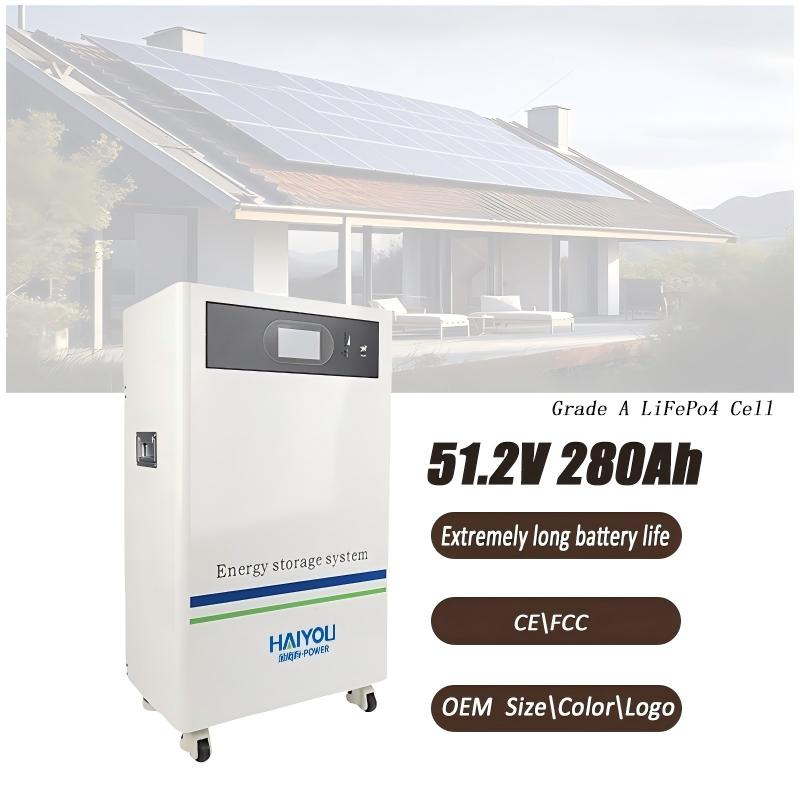
Certifications alone do not tell you whether a battery fits your application. Check voltage, capacity, and chemistry. For example, HAIYOU offers household energy storage lithium batteries with rated voltage of 12V/24V and rated capacity of 100Ah/200Ah/300Ah. It also offers storage batteries with rated energy of 2.56KWh, 5.12KWh, 10KWh, 14KWh, and 16KWh. All storage models use lithium iron phosphate (LFP) chemistry.
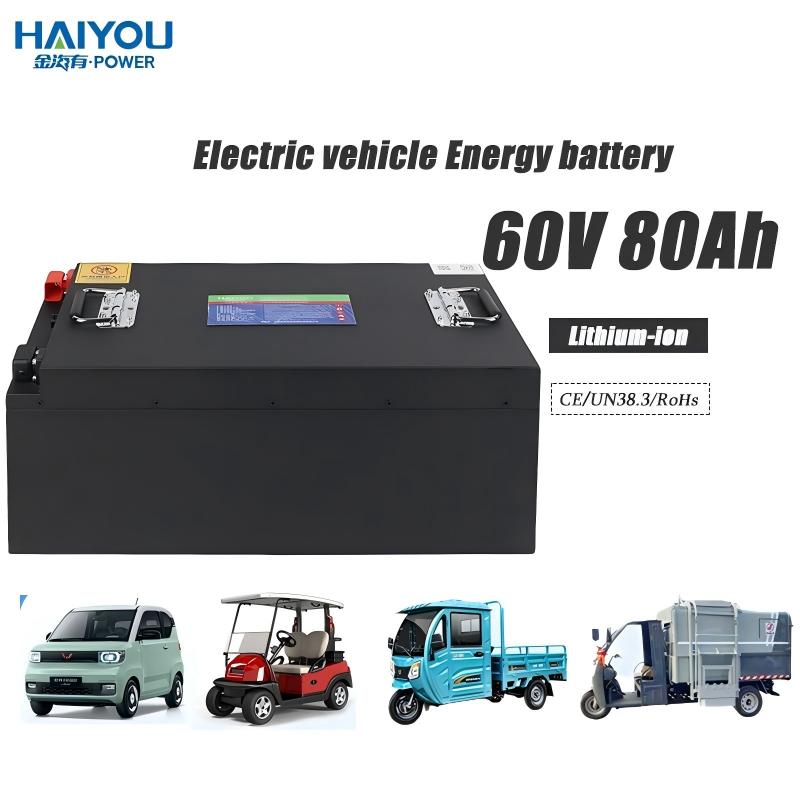
For e-mobility, HAIYOU provides lithium batteries for electric two-wheelers with voltage options of 48V, 60V, and 72V and capacity options of 20Ah, 30Ah, and 40Ah. The chemistry is either NCM or LFP. The company also supplies lithium batteries for electric tricycles and low-speed four-wheelers, with voltage of 60V or 72V and capacity of 80Ah, 100Ah, 180Ah, or 300Ah, using LFP chemistry.
3. Evaluate customization and production capability
Battery buyers often need specific terminal types, logos, colors, or voltage capacity. Confirm whether the supplier can customize these parameters. HAIYOU lists OEM and customized services, covering voltage, capacity, shell color, product logo, and appearance design. The company states that it has large-scale production with sufficient monthly output, low MOQ, and standard delivery time after order confirmation. It also performs full inspection before delivery and strict performance and safety testing.
4. Confirm export experience and after-sales support
For a long-term partnership, check the supplier's market reach and service structure. HAIYOU exports to more than 20 countries and regions including Europe, America, Southeast Asia, and the Middle East. The company is based in Nanchang City, Jiangxi Province, China, and operates two factories: one for lead-acid batteries and one for lithium batteries. Its after-sales service includes product technical support and quality problem after-sales service.
Step-by-step battery verification process
Step 1: Request certification documents
Ask for digital copies of ISO certificates and quality records. Verify the certificate number and confirm the scope includes battery assembly. For HAIYOU, the relevant numbers are 88824Q0296R0S (ISO 9001), 88824E0301R0S (ISO 14001), and 88824S0292R0S (ISO 45001).
Step 2: Map your application to battery parameters
Define your voltage and capacity requirements. If you need a home solar backup, compare LFP storage batteries in the 2.56KWh to 16KWh range. If you are sourcing for electric tricycles, check 60V/72V options from 80Ah to 300Ah.
Step 3: Confirm customization and MOQ
Ask if the supplier can adjust voltage, capacity, shell color, logo, and appearance. Confirm the MOQ and lead time.
Step 4: Request samples and run a performance test
Validate the sample against the datasheet. Check the actual voltage, capacity, and chemistry. Ask the supplier how it performs quality control before delivery.
Step 5: Clarify delivery and after-sales terms
Confirm the delivery time after order confirmation and the process for handling quality issues. This is where a low MOQ and responsive after-sales support become important.
Use cases for lithium and lead-acid batteries
Off-grid household solar storage
Household energy storage lithium batteries are suitable for storing solar electricity and providing backup power. In an off-grid residential solar project, the buyer needs stable DC output, long cycle life, and reliable operation. HAIYOU's LFP storage batteries, such as the 12V/24V series or the 2.56KWh–16KWh series, can be evaluated against these requirements.
Electric tricycles and low-speed four-wheel vehicles
For e-tricycles and low-speed four-wheel vehicles, LFP batteries are commonly used for their stability and long cycle life. HAIYOU's power battery series offers 60V/72V with capacities from 80Ah to 300Ah, which gives procurement teams a clear parameter range to shortlist.
Electric two-wheelers, e-scooters, and e-motorcycles
E-bike and e-scooter applications often require lighter weight and flexible chemistry. HAIYOU's two-wheeler series covers 48V/60V/72V and 20Ah/30Ah/40Ah in NCM or LFP. This range supports different range and cost targets.
Agriculture and outdoor equipment
Agriculture equipment such as backpack sprayers, water pumps, and irrigation motors operate outdoors under vibration and temperature variation. When selecting a battery for these tools, buyers should confirm the cycle life and vibration resistance with the supplier. HAIYOU's product lineup can be used as a reference for power and storage applications.
Case example: Household energy storage distribution
HAIYOU has supplied household energy storage batteries to an importer and distributor for off-grid photovoltaic power storage and villa backup power. The result was long-cycle stable power supply that helped rural families avoid power outage issues. This example highlights the value of matching verified battery parameters with a real installation scenario.
Comparison table: HAIYOU certification and product overview
| Certification | Standard | Certificate No. | Scope |
|---|---|---|---|
| ISO 9001 | GB/T 19001-2016 / ISO 9001:2015 | 88824Q0296R0S | Assembly of lithium batteries |
| ISO 14001 | GB/T 24001-2016 / ISO 14001:2015 | 88824E0301R0S | Environmental management activities involved in assembly of lithium batteries |
| ISO 45001 | GB/T 45001-2020 / ISO 45001:2018 | 88824S0292R0S | Occupational health and safety management activities involved in assembly of lithium batteries (excluding mandatory product certification) |
| Battery Series | Voltage Range | Capacity Range | Chemistry | Typical Applications |
|---|---|---|---|---|
| Household Energy Storage Lithium Battery | 12V / 24V | 100Ah / 200Ah / 300Ah | LFP | Home solar storage, backup power |
| Household Energy Storage Lithium Battery | Not specified | 2.56KWh / 5.12KWh / 10KWh / 14KWh / 16KWh | LFP | Solar energy storage |
| Lithium Battery for Electric Two-wheeler | 48V / 60V / 72V | 20Ah / 30Ah / 40Ah | NCM / LFP | E-bikes, e-scooters, e-motorcycles |
| Lithium Battery for Electric Tricycle & Low-speed Four-wheeler | 60V / 72V | 80Ah / 100Ah / 180Ah / 300Ah | LFP | E-tricycles, low-speed electric vehicles |
Frequently asked questions
What certifications should a lithium battery supplier have?
A lithium battery supplier should hold ISO 9001 for quality management, ISO 14001 for environmental management, and ISO 45001 for occupational health and safety, with the certification scope covering battery assembly. For example, HAIYOU holds ISO 9001:2015 (No. 88824Q0296R0S), ISO 14001:2015 (No. 88824E0301R0S), and ISO 45001:2018 (No. 88824S0292R0S). In addition, check product-specific standards for your target market, such as UL 2271 for light electric vehicles.
Can the supplier customize battery voltage, capacity, and appearance?
Yes. HAIYOU offers OEM and customized services for voltage, capacity, shell color, product logo, and appearance design. Confirm the exact customization options and MOQ with the supplier before ordering.
Are lithium batteries or lead-acid batteries more cost-effective?
Lead-acid batteries generally have a lower upfront cost, while lithium batteries typically provide longer cycle life and higher energy density, which can improve total cost over time. HAIYOU produces both lead-acid and lithium batteries, allowing you to compare based on your application and lifecycle requirement.
What should I check when evaluating battery samples?
When evaluating samples, verify the rated voltage, capacity, and chemistry against the agreed datasheet. Ask the supplier about its quality control process. HAIYOU states that it performs full inspection before delivery and strict performance and safety testing.
What is the typical lead time after order confirmation?
HAIYOU describes its delivery time as standard delivery time after order confirmation, with large-scale production and sufficient monthly output. To get an accurate lead time, contact the supplier with your target specifications and quantity. You can also request a sample or quote to start the process.
Conclusion
Verifying battery certifications and specifications is not a formality; it is the core of industrial procurement. Start with management system certificates, then check product parameters, customization capability, and after-sales service. HAIYOU is an example of a supplier that provides verifiable credentials across lithium and lead-acid battery production. If you are evaluating a battery partner for solar storage, e-mobility, or agricultural equipment, contact HAIYOU to request certificates, sample specifications, or a quotation.
Email: nancy.shi@jxhylkj.com
Phone / WhatsApp: +86 18870238656
Website: https://www.jxhylkj.com
Address: High-tech Industrial Park, Yugan County, Shangrao City, Jiangxi Province, China