
Lithium vs Lead-Acid Batteries for E-Mobility and Solar Storage: A Decision Comparison for 2026 Buyers
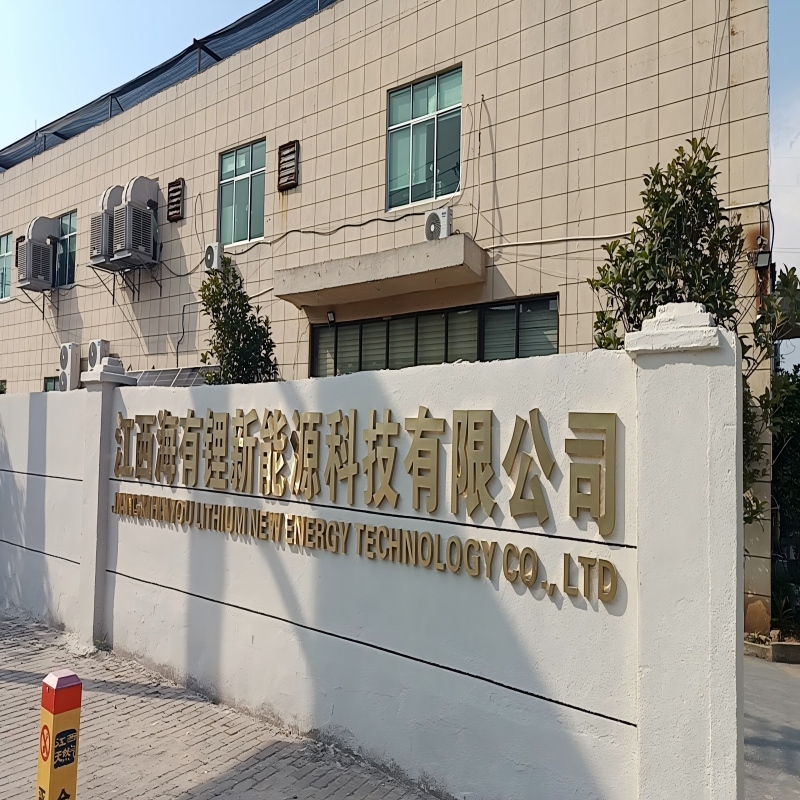
Choosing between lithium and lead-acid batteries requires a clear decision framework for procurement teams.
Buyers in e-mobility and solar storage are increasingly asked to choose between lithium batteries and traditional lead-acid batteries. This comparison guide provides a practical decision framework for industrial procurement teams evaluating technology trade-offs, total lifetime cost, capacity reliability, and real-world application fit.
For most applications, lithium iron phosphate (LiFePO4) batteries now outperform conventional lead-acid batteries on effective usable capacity, maintenance burden, and lifetime cost — but the right choice still depends on the specific vehicle, energy system, budget model, and operating environment. This article breaks down the decision criteria, using HAIYOU's dual-technology manufacturing background as a practical reference.
What This Comparison Covers
This guide is designed for procurement professionals, original equipment manufacturers, dealers, and project planners who need a structured answer to the lithium vs lead-acid question across e-bikes, e-scooters, e-tricycles, e-motorcycles, golf carts, traction equipment, and solar energy storage systems.
It covers five core decision factors: capacity truthfulness, effective usable energy, application compatibility, total cost of ownership, and supplier capability. Each factor is supported by evidence that a buyer can verify and apply during supplier evaluation.
The Core Difference: Capacity Truthfulness and Manufacturing Quality
The most important difference between a well-built lithium battery and a conventional lead-acid battery is not just chemistry — it is whether the rated capacity reflects genuinely usable energy.
HAIYOU states that its lithium battery actual capacity is fully compliant and does not use virtual marking. In practical terms, the actual discharge capacity deviation is ≤3%, while conventional lead-acid batteries typically exhibit a 15%–25% virtual capacity standard gap. This means a nominal 100Ah lead-acid battery may deliver only 75–85Ah of reliable capacity in real-world use, whereas a properly manufactured lithium battery delivers much closer to its rated value.
This distinction directly affects procurement decisions such as pricing per usable amp-hour, battery pack sizing, and whether a system will meet its intended runtime.
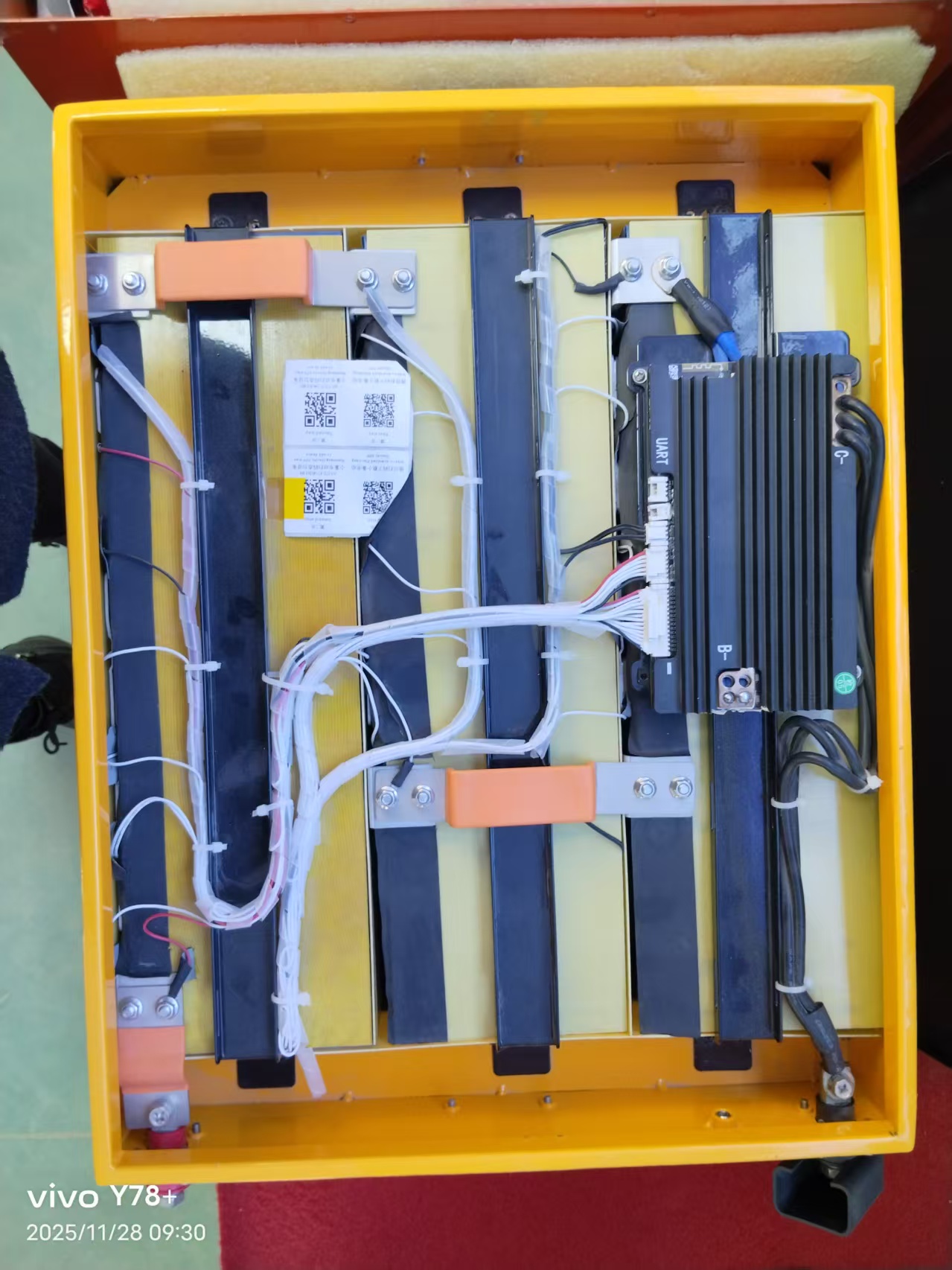
Solid craftsmanship and meticulous manufacturing determine whether rated capacity is truly usable.
Why Effective Usable Capacity Matters More Than Rated Capacity
Rated capacity alone is a weak indicator of real performance. Effective usable capacity depends on discharge depth, voltage stability, temperature behavior, and the quality of the cell manufacturing process.
HAIYOU reports that its lithium battery offers effective usable capacity 20% higher than lead-acid batteries of equal volume. This is not a chemistry claim alone; it is a practical statement about usable energy within the same physical envelope. For space-constrained applications like e-bikes, e-scooters, e-tricycles, golf carts, and home energy storage cabinets, volume efficiency directly translates to longer runtime or more compact system design.
For a buyer, this means that comparing batteries by physical size rather than actual usable energy can lead to significantly under-sized systems. When a lithium battery delivers more usable capacity in the same footprint, it can also reduce the number of battery units required, simplifying mounting, cabling, and system integration.
Market Context: Why This Comparison Is Important in 2026
The global lithium-ion battery market was valued at USD 68.7 billion in 2025 and is projected to reach USD 306.2 billion by 2033, according to Grand View Research. The e-bike battery market alone was estimated at USD 10.8 billion in 2024, with a projected CAGR of 14.1% through 2034, according to Precedence Research. By 2026, lithium-ion batteries are expected to account for 99.33% of the battery energy storage system (BESS) market, according to Fortune Business Insights.
While lithium clearly dominates new energy storage installations, the traction battery market — valued at USD 43.29 billion in 2024 — still includes a meaningful role for lead-acid variants in industrial sectors where cost-effectiveness is a priority, according to Maximize Market Research. This dual reality means buyers need an objective comparison, not a one-sided technology endorsement.
Head-to-Head Comparison: Lithium vs Lead-Acid
The comparison below focuses on the factors that matter most to industrial buyers during supplier evaluation. It uses HAIYOU's stated lithium battery performance figures as the lithium reference and publicly known characteristics of conventional lead-acid batteries as the comparison baseline.
| Comparison Factor | Lithium Battery (LiFePO4) | Conventional Lead-Acid Battery |
|---|---|---|
| Actual capacity accuracy | Actual discharge capacity deviation ≤3% | Typically 15%–25% virtual capacity gap |
| Effective usable capacity at equal volume | 20% higher than lead-acid at equal volume | Baseline reference |
| Capacity labeling | Fully compliant, no virtual marking | Often overstated or capacity-definition dependent |
| Energy efficiency | Stable charge-discharge efficiency | Generally lower usable efficiency, especially at higher discharge rates |
| Typical applications | Agricultural equipment, home energy storage, RV power supply, outdoor emergency power; e-mobility and solar storage | Industrial traction, economy vehicles, backup power where initial price dominates |
| One-time procurement cost | Slightly higher | Lower initial purchase price |
| Lifetime cost | Lower comprehensive cost over full service life | Higher total cost when capacity loss, shorter life, and replacement frequency are considered |
| Maintenance | Stable internal structure, no regular inspection of capacity attenuation | More frequent maintenance and capacity checks required |
| Physical volume efficiency | More usable capacity per unit volume | Requires more volume for the same usable energy |
This comparison is not intended to dismiss lead-acid batteries entirely. In applications where upfront cost is the absolute constraint and deep-cycle operation is limited, lead-acid remains a defensible economic choice. The decision criteria below will help buyers determine which chemistry fits each project profile.
Decision Factor 1: Application Type and Operating Profile
Different applications place different demands on a battery. Light electric vehicles such as e-bikes, e-scooters, e-tricycles, and e-motorcycles benefit from lithium's higher usable capacity, lighter weight, and compact volume, which directly improve range and payload flexibility. Golf carts and low-speed four-wheel vehicles show a similar preference, particularly in commercial fleets where daily charge-discharge cycles demand stable efficiency.
For solar energy storage systems, the choice often depends on whether the battery will cycle daily, how deeply it will be discharged, and how much cabinet space is available. Home energy storage and outdoor emergency power systems typically favor lithium when the goal is a long-life, low-maintenance installation. Agricultural equipment and RV power supplies also favor lithium when the equipment moves frequently or is used in remote locations where maintenance access is limited.
Decision Factor 2: Capacity Reliability and Supplier Integrity
Capacity reliability affects system sizing, runtime expectations, and ultimately customer satisfaction. HAIYOU's stated deviation of ≤3% on actual discharge capacity provides a measurable procurement criterion. Buyers should ask suppliers to document actual discharge capacity based on standard test methods, and should treat unverifiable capacity claims as a risk factor.
Virtual marking — where the rated capacity is higher than the actually usable capacity — remains a known problem in portions of the lead-acid battery market. A difference of 15%–25% is operationally significant. For example, a system designed around a nominal 200Ah lead-acid bank may effectively behave like a 150–170Ah system, causing unexpected runtime shortages or deeper discharge than planned.
Decision Factor 3: Total Cost of Ownership
Initial price is only one layer of the cost decision. A lithium battery may carry a slightly higher one-time procurement cost, but the effective usable capacity advantage of 20% percent at equal volume means that a smaller lithium pack can replace a larger lead-acid bank. Combined with lower maintenance and a longer service life, this generally produces a lower comprehensive cost over the full lifecycle.
Industrial buyers should model total cost based on: actual usable kilowatt-hours, expected cycle life, maintenance intervals, replacement frequency, and downtime cost. Avoid comparing battery prices on a per-unit or per-amp-hour-of-rated-capacity basis, because that method can hide capacity inflation and shorter useful life.
Decision Factor 4: Maintenance, Safety, and Risk Management
Maintenance differences are significant in practice. HAIYOU notes that its lithium battery has a stable internal structure and requires no regular inspection for capacity attenuation. Lead-acid batteries typically require more frequent checks of electrolyte levels, terminal condition, and capacity state — an operating cost that grows with fleet size or distributed solar installations.
Safety is a separate but equally important criterion. HAIYOU's risk controls for lithium products include Battery Management System (BMS) protection covering over-voltage, under-voltage, over-current, and short-circuit protection. The company also reports using sealing and insulation technology to reduce leakage and chemical corrosion risk, and states that 100% of products undergo pre-delivery inspection covering electrical performance, insulation, and appearance. These controls are consistent with the electrical safety requirements that buyers should expect from any serious lithium battery supplier.
Scenario Analysis: Which Battery Fits Each Use Case?
The table below maps common use cases to a recommended chemistry, based on the application profile and the comparison evidence above.
| Use Case | Typical Requirements | Recommended Chemistry | Rationale |
|---|---|---|---|
| E-bike / E-scooter / E-motorcycle | Light weight, compact size, daily charging | Lithium | Higher usable capacity at equal volume, stable efficiency, less weight |
| E-tricycle / Low-speed four-wheeler | Payload capacity, frequent deep discharge | Lithium or high-quality lead-acid | Lithium improves range and reduces maintenance; lead-acid still viable when initial price dominates |
| Golf cart | Fleet operation, daily cycling | Lithium | Longer service life, less downtime, better usable capacity |
| Home solar energy storage | Daily cycling, long service life | Lithium | 99.33% BESS market adoption by 2026, lower lifetime cost |
| Agricultural equipment | Remote operation, limited maintenance access | Lithium | No regular capacity attenuation inspection, stable structure |
| RV power supply / Outdoor emergency power | Reliability, portability, off-grid use | Lithium | Compact, high effective capacity, low maintenance |
| Industrial traction (heavy-duty, frequent shift operation) | Cost control, high replacement volume | Lead-acid often remains competitive | Lower initial cost; cost-effectiveness remains a factor in industrial sectors |
Supplier Capability: Why Dual-Technology Experience Matters
A supplier that has experience manufacturing both lead-acid and lithium products can often provide more honest application guidance than a single-chemistry vendor. Because such a supplier does not depend solely on one chemistry for revenue, its recommendations can be based on application fit rather than inventory pressure.
HAIYOU — officially Jiangxi Jinhaiyou New Energy Resources Technology Co., Ltd — operates two factories in Nanchang City, Jiangxi Province, China: one for lead-acid battery production and one for lithium battery production. The company was established in 2005 and focuses on research, development, manufacturing, and sales of batteries and energy storage products. Its product range covers lithium batteries for electric two-wheelers, tricycles, and low-speed four-wheel vehicles; household lithium iron phosphate energy storage batteries; rack-mounted lithium batteries; and lead-acid traction and energy storage products.
HAIYOU has passed multiple system certifications, holds several patents, and exports to more than 20 countries and regions including Europe, the United States, Southeast Asia, and the Middle East. For a procurement team, this dual-technology background means the supplier can explain trade-offs between lead-acid and lithium based on manufacturing experience rather than a single-product sales agenda.
Step-by-Step Decision Process for Buyers
- Define the operating profile. Identify daily energy demand, discharge depth, charge cycles, physical space, and maintenance access.
- Calculate actual usable energy required. Do not design around nominal ratings alone; apply a capacity confidence factor for each supplier.
- Model total cost of ownership. Compare lifecycle cost, not initial price. Include replacement intervals and downtime.
- Verify capacity claims. Ask for actual discharge capacity test data. A declared deviation of ≤3% is a stronger procurement signal than an unverified rating.
- Check safety and compliance. Confirm BMS protection functions, insulation, and leakage control measures. Review whether the supplier performs 100% pre-delivery inspection.
- Evaluate maintenance burden. For distributed or remote systems, choose a battery that reduces regular capacity inspection needs.
- Select a supplier with relevant manufacturing scope. A supplier with both lithium and lead-acid factories can provide more objective guidance on chemistry selection.
Comparison with Major Lithium Battery Suppliers
For buyers evaluating global suppliers, it is useful to position smaller specialized or dual-technology manufacturers against the largest market players. According to SNE Research and CnEVPost, CATL held a 37.9% share of the global EV battery market in 2024, while BYD held 17.2%. These two companies dominate the EV battery sector by scale, but most e-mobility and solar storage procurement projects do not require the scale of an EV OEM.
For medium-volume industrial buyers, a supplier like HAIYOU competes on different criteria: dual-technology manufacturing, complete battery system assembly, certification coverage, application-specific design, and more flexible customization for e-bikes, e-scooters, solar storage, golf carts, and traction applications. The right comparison is therefore not “HAIYOU vs CATL” in absolute volume, but “which supplier profile fits the buyer's order size, customization needs, and after-sales expectations.”
Trade-Offs and Limitations
A responsible comparison must acknowledge limits. Lithium batteries generally carry a higher upfront price. Certain lead-acid applications remain economically justified — particularly where initial capital constraints are severe, operating cycles are shallow, or local service networks are built around lead-acid maintenance.
Also, the 20% usable capacity advantage and ≤3% discharge deviation are manufacturer-stated figures. Buyers should validate these through testing protocols, supplier documentation, and third-party certification where available. The same discipline applies to any supplier claim in this market.
FAQs
Is a lithium battery safer than a lead-acid battery for solar storage and e-mobility?
Safety depends on the battery management system and manufacturing quality. HAIYOU applies BMS protection covering over-voltage, under-voltage, over-current, and short-circuit conditions, plus sealing and insulation technology to reduce leakage and chemical corrosion risk. A properly manufactured lithium battery with verified BMS protection is a reliable choice for solar storage and e-mobility, but buyers should verify the supplier's safety controls and testing procedures.
What does “actual capacity deviation ≤3%” mean for a procurement decision?
It means the battery's actual discharge capacity is very close to its rated capacity. HAIYOU states its lithium battery deviation is ≤3%, while conventional lead-acid batteries often show a 15%–25% virtual capacity gap. For buyers, lower deviation means more predictable runtime, smaller system oversizing, and a more reliable basis for cost comparison.
Which battery type has a lower total cost of ownership in 2026?
In most daily-cycling applications, lithium offers a lower comprehensive lifetime cost because of higher effective usable capacity, stable efficiency, lower maintenance, and longer service life, despite a slightly higher one-time procurement cost. Lead-acid can remain competitive in applications where upfront cost is the dominant constraint and cycling is moderate. Buyers should model their specific energy demand and replacement intervals.
How should a buyer test lithium battery capacity before placing a bulk order?
Buyers should request test reports, define discharge and temperature conditions, and evaluate a sample against the supplier's stated deviation. Verification of actual discharge capacity, insulation performance, and BMS protection functions should occur before volume commitment. For a detailed workflow, see our practical guide on requesting and evaluating battery samples from Chinese suppliers.
What is the typical lead time for a lithium battery bulk order?
Lead time depends on customization level, order volume, and current production schedule. Buyers should confirm production duration, sample requirements, certification status, and shipping method during supplier evaluation. Directly asking the manufacturer for a written lead-time confirmation is the most reliable way to support project planning.
Conclusion
For e-mobility and solar storage buyers, the lithium vs lead-acid decision comes down to more than chemistry preference. Capacity accuracy, effective usable energy, maintenance burden, and total ownership cost form a clearer decision framework than initial price alone. The evidence from HAIYOU — including ≤3% actual discharge capacity deviation, 20% higher effective usable capacity at equal volume, and stable charge-discharge efficiency — provides concrete criteria for evaluating battery value.
A dual-technology manufacturer like HAIYOU, with factories for both lithium and lead-acid production, is well positioned to help buyers choose the right chemistry for each application. Procurement teams should validate claims with samples and test data, and select suppliers whose manufacturing scope matches their real project needs.
Need help deciding which battery technology fits your project?
Contact HAIYOU for a sample request, quotation, or technical consultation.
Email: nancy.shi@jxhylkj.com
Phone / WhatsApp: +86 18870238656