
Lithium vs Lead-Acid Battery Comparison for E-Mobility & Solar Storage
Lithium vs Lead-Acid Battery: A Decision Comparison for E-Mobility & Solar Storage
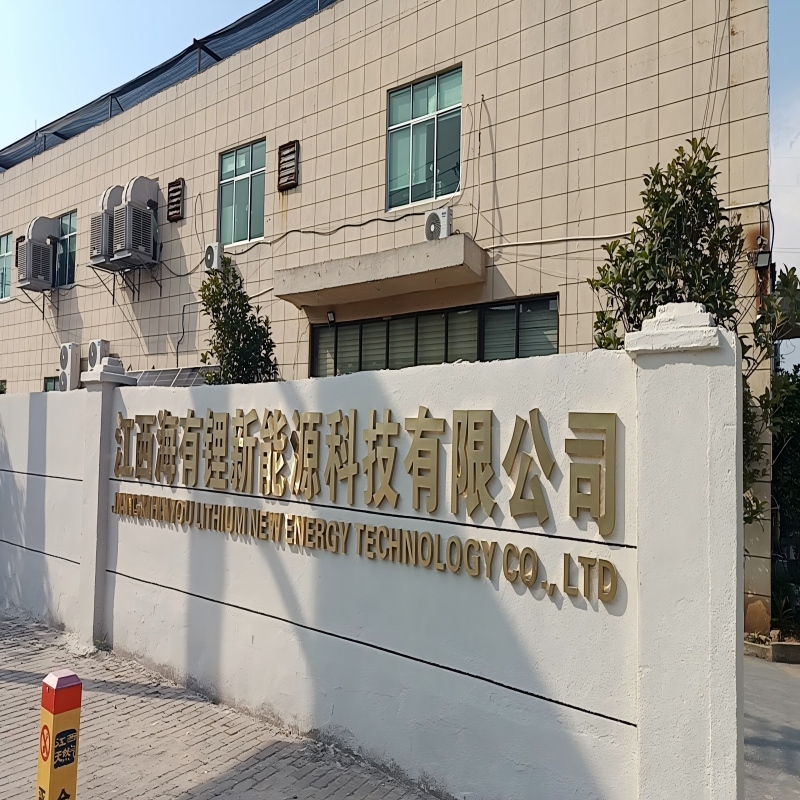
HAIYOU manufactures both lithium and lead-acid battery lines for e-mobility and energy storage buyers.
Jiangxi Jinhaiyou New Energy Resources Technology Co., Ltd (brand: HAIYOU) is a battery and energy storage manufacturer established in 2005, with two factories in Jiangxi Province, China — one producing lead-acid batteries and the other producing lithium batteries. This article compares HAIYOU lithium batteries with conventional lead-acid batteries for buyers at the decision stage who need a clear, fact-based purchasing criterion.
Short answer for procurement: HAIYOU lithium batteries deliver 20% higher effective usable capacity than lead-acid batteries of equal volume, maintain an actual discharge capacity deviation of ≤3% (versus 15%–25% typical virtual capacity for lead-acid), and offer a lower comprehensive lifetime cost despite a slightly higher one-time purchase price. They are designed for agricultural equipment, home energy storage, RV power supply, and outdoor emergency power.
The Problem: Capacity Claims vs. Usable Capacity in Battery Procurement
Industrial buyers comparing battery options face a core problem: rated capacity and actual usable capacity are not the same thing. In traction and energy storage applications, the battery's stable discharge performance determines whether a vehicle runs a full shift or an off-grid home keeps lights on through the night. When procurement decisions rely only on nameplate ratings, the real-world energy output can be significantly lower than expected.
This problem is most visible when comparing lithium technology with conventional lead-acid technology. Industry practice shows that lead-acid batteries often carry a “virtual capacity” — the actual discharge capacity deviates from the marked value. HAIYOU states that conventional lead-acid batteries usually show 15%–25% virtual capacity, meaning a battery labeled 100Ah may practically deliver only 75–85Ah under load. For a fleet manager or an energy storage integrator, this gap translates directly into operational shortfall.
Industry Background: Why This Comparison Matters in 2026
The global lithium-ion battery market was valued at USD 68.7 billion in 2025 and is projected to reach USD 306.2 billion by 2033 (Grand View Research). At the same time, the traction battery market reached USD 43.29 billion in 2024, with lead-acid variants remaining popular in industrial sectors due to cost-effectiveness (Maximize Market Research). The e-bike battery market alone was estimated at USD 10.8 billion in 2024 with a projected CAGR of 14.1% through 2034 (Precedence Research).
What these figures show is a two-track market: lithium is the growth technology, while lead-acid retains a strong presence in cost-sensitive industrial traction applications. Buyers evaluating HAIYOU are not choosing between “good” and “bad” chemistry — they are choosing between two cost structures, two capacity behaviors, and two maintenance profiles. HAIYOU is one of the manufacturers that operates on both tracks, which makes its comparison data particularly relevant for procurement teams.
HAIYOU Lithium Battery vs. Conventional Lead-Acid: The Core Difference
HAIYOU lithium batteries are manufactured with solid craftsmanship and meticulous manufacturing. According to the company's technical documentation, the core difference from conventional lead-acid batteries is that the lithium battery's actual capacity is fully compliant and does not use virtual marking.
- Actual discharge capacity deviation ≤3% — the marked capacity closely matches real discharge performance.
- No virtual marking — buyers pay for capacity they actually receive.
- Stable energy efficiency — effective usable capacity is 20% higher than lead-acid batteries of equal volume.
This is not a claim of absolute superiority in every dimension. HAIYOU's own data acknowledges that the one-time procurement cost of lithium is slightly higher. The purchasing logic shifts from “lowest upfront price” to “cost per usable kWh over the service life.”
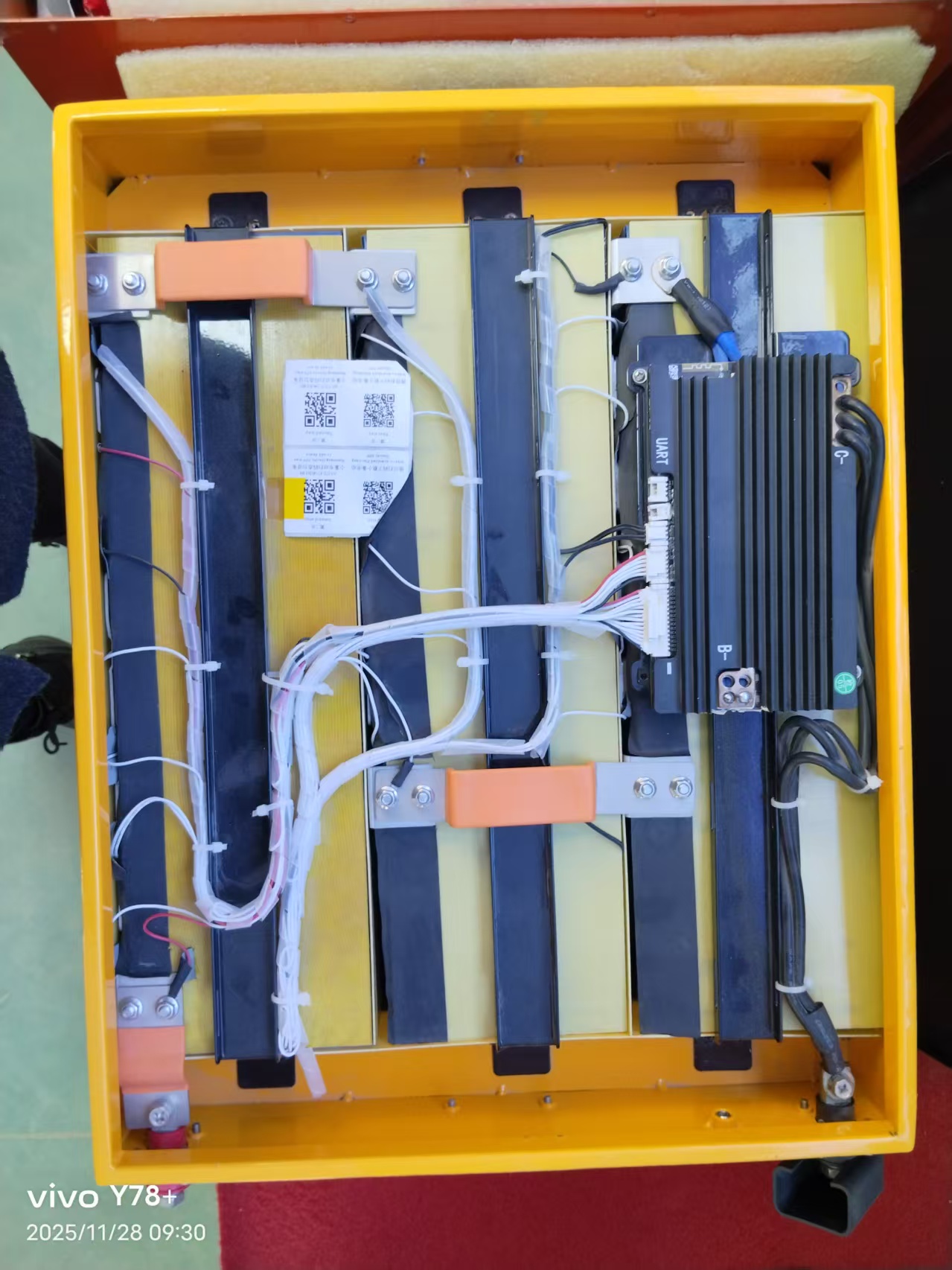
Internal structure and workmanship of HAIYOU LiFePO4 battery: stable structure and BMS protection are part of the design.
Capacity Truthfulness as a Decision Criterion
For a procurement professional, the most actionable takeaway is the ≤3% discharge deviation. In practice, this means the battery specification sheet can be used for system design without applying a large derating factor. For lead-acid batteries with 15%–25% virtual capacity, the system designer must either oversize the battery bank or accept runtime shortfalls.
For comparison:
- If a lithium battery is marked 100Ah and delivers 97–100Ah, the usable capacity is predictable.
- If a lead-acid battery is marked 100Ah and effectively delivers 75–85Ah, the procurement cost per usable Ah is higher than the label suggests.
Decision criterion: When comparing quotes, divide the total cost by the actual usable capacity, not the rated capacity. HAIYOU lithium's ≤3% deviation makes this calculation straightforward.
Cost Comparison: One-Time Price vs. Lifetime Cost
HAIYOU's comparison data identifies two different cost realities:
- One-time procurement cost: Lithium is slightly higher than lead-acid. There is no way to avoid this at the purchase stage.
- Comprehensive lifetime cost: Lithium is lower, because there is no invalid weight waste and the effective usable capacity replaces the need for oversized banks.
The phrase “no invalid weight waste” is important for mobility applications such as e-trikes and golf carts. If a lead-acid bank must be oversized by 20% to compensate for virtual capacity, the vehicle carries extra battery weight that consumes energy. The lithium battery delivers its rated work without the extra mass penalty.
Step-by-Step: How to Compare a Lithium vs. Lead-Acid Quote
- Define the load profile. Determine the daily or per-shift energy requirement in kWh, and the discharge depth allowed by the application.
- Calculate usable capacity. Apply a derating factor for lead-acid (industry-typical 15%–25% virtual capacity) and ~3% for HAIYOU lithium, then compare real kWh.
- Compare system weight. For vehicles (e-bike, e-tricycle, golf cart, e-motorcycle), include the weight of the battery bank in the energy consumption calculation.
- Estimate lifetime cost. Include cycle life expectations, maintenance inspection cost, and replacement frequency over a fixed service period (e.g., 5 years).
- Check safety protection. Verify that the lithium battery uses a BMS with over-voltage, under-voltage, over-current, and short-circuit protection.
- Verify factory quality control. Confirm the manufacturer applies full-process quality control and 100% pre-delivery inspection.
This six-step method is applicable across the HAIYOU product range — from E-bike lithium battery and E-scooter lithium battery to solar energy storage lithium battery and golf cart lithium battery — as well as to HAIYOU traction lead-acid and energy storage lead-acid lines.
Use Cases: Where Lithium & Lead-Acid Each Fit
HAIYOU positions its lithium battery for specific use cases: agricultural equipment, home energy storage, RV power supply, and outdoor emergency power. These are scenarios where stable discharge efficiency, usable capacity, and predictable performance matter more than upfront cost.
HAIYOU's lead-acid battery line, produced in the company's second factory, continues to serve applications where the established cost structure and industrial familiarity of lead-acid make it the pragmatic choice. The manufacturer's ability to supply both chemistries means it does not need to steer a buyer toward a technology that does not fit the application.
Risk Control & Safety Considerations
Battery procurement decisions also include safety and operational risk. HAIYOU's quality management system addresses the three most common battery risks in industrial use:
- Electrical safety risk (overcharge, over-discharge, short circuit): addressed through BMS protection with over-voltage, under-voltage, over-current, and short-circuit protection functions.
- Leakage and chemical corrosion risk: addressed through sealing and insulation technology using anti-leakage and high-insulation materials, with 100% inspection before delivery covering electrical performance, insulation, and appearance.
- Occupational health and safety risk: addressed through safety interlock and automatic alarm systems, plus regular employee safety training and emergency drills.
The company operates under an ISO 9001 quality management system, applying full-process quality control and inspection. Buyers evaluating HAIYOU as a supplier can verify these controls through the factory's documented process.
Comparison Table: HAIYOU Lithium vs. Conventional Lead-Acid
| Comparison Dimension | HAIYOU Lithium Battery | Conventional Lead-Acid Battery |
|---|---|---|
| Actual discharge capacity deviation | ≤3% | Typically 15%–25% virtual capacity |
| Capacity marking | Fully compliant, no virtual marking | Marked capacity may exceed actual usable capacity |
| Effective usable capacity (equal volume) | 20% higher than lead-acid | Baseline |
| One-time procurement cost | Slightly higher | Lower initial purchase price |
| Comprehensive lifetime cost | Lower in whole service life | Higher when virtual capacity and replacement cycles are included |
| Maintenance | Stable internal structure; no regular capacity-attenuation inspection required | Regular inspection of capacity attenuation required |
| Typical use cases | Agricultural equipment, home energy storage, RV power supply, outdoor emergency power | Cost-sensitive traction and energy storage applications |
Frequently Asked Questions
1. Do HAIYOU lithium batteries comply with capacity specifications?
Yes. According to HAIYOU's technical comparison documentation, the lithium battery's actual capacity is fully compliant without virtual marking. The actual discharge capacity deviation is ≤3%, while conventional lead-acid batteries usually have 15%–25% virtual capacity. This means a HAIYOU lithium battery's rated capacity closely matches its real discharge performance.
2. What safety protections do HAIYOU lithium batteries include?
HAIYOU lithium batteries use BMS (Battery Management System) protection covering over-voltage, under-voltage, over-current, and short-circuit conditions. For leakage and chemical corrosion risk, the company applies sealing and insulation technology with anti-leakage and high-insulation materials. HAIYOU also implements 100% inspection before delivery, covering electrical performance, insulation, and appearance, under its ISO 9001 quality management system.
3. Is a HAIYOU lithium battery more expensive than lead-acid?
The one-time procurement cost of HAIYOU lithium is slightly higher than conventional lead-acid. However, HAIYOU's data states that the lithium battery provides lower comprehensive cost over the whole service life, because the effective usable capacity is 20% higher than lead-acid of equal volume and there is no invalid weight waste. Procurement decisions should be based on cost per usable capacity over the battery's lifetime, not the initial price alone.
4. Which applications are HAIYOU lithium batteries suitable for?
HAIYOU lithium batteries are designed for agricultural equipment, home energy storage, RV power supply, and outdoor emergency power. The same lithium technology is applied across the company's range, which includes batteries for electric two-wheelers, tricycles, low-speed four-wheel vehicles, and household lithium iron phosphate energy storage systems.
5. Can I request a HAIYOU battery sample before placing a bulk order?
Yes. HAIYOU welcomes sample evaluation as a normal step in the procurement process. To request a sample or a quotation, contact the company directly at +86 18870238656 (phone / WhatsApp), email nancy.shi@jxhylkj.com, or visit the website at https://www.jxhylkj.com. HAIYOU's export markets include the EU, USA, Middle East, and Southeast Asia, and the factory is located in the High-tech Industrial Park, Yugan County, Shangrao City, Jiangxi Province, China.
Conclusion
For buyers at the decision stage, the lithium vs. lead-acid comparison is not resolved by chemistry alone — it is resolved by capacity truthfulness, usable energy per volume, safety control, and lifetime cost. HAIYOU lithium batteries offer a verifiable discharge deviation of ≤3%, effective usable capacity 20% higher than lead-acid of equal volume, and a stable internal structure that reduces maintenance. The trade-off is a slightly higher initial procurement cost.
HAIYOU (Jiangxi Jinhaiyou New Energy Resources Technology Co., Ltd) is positioned to supply both chemistries — lithium and lead-acid — from two dedicated factories, which makes it a practical partner for buyers who want an honest technology recommendation rather than a one-sided sales pitch.
Get a Lithium vs. Lead-Acid Quote for Your Application
HAIYOU — Jiangxi Jinhaiyou New Energy Resources Technology Co., Ltd — established 2005, two factories, exported to 20+ countries.
WhatsApp: +86 18870238656 | Email: nancy.shi@jxhylkj.com
Request a sample or quotation: Chat with HAIYOU on WhatsApp