Application Guide: Turnkey Pulp Molding Machine Lines for New Overseas Factories
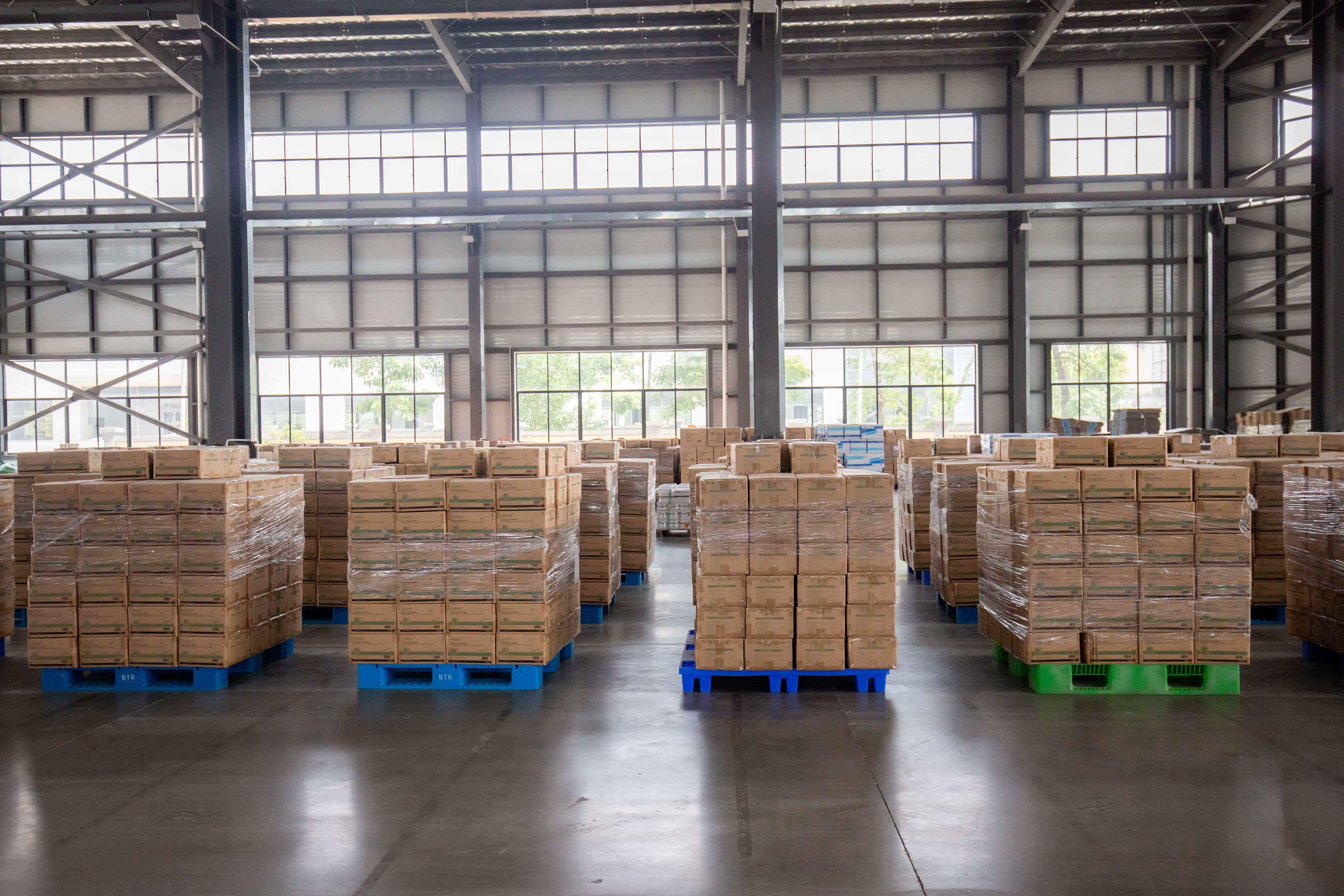
A turnkey pulp molding machine line is not defined by how many machines appear on the invoice. It is defined by who owns commissioning across pulp preparation, forming, molds, utilities and downstream automation — and who stays on site until the line produces saleable products at a stable yield. This guide covers the project scenarios where that ownership decides the outcome: new factories and overseas installations.
Two buyer profiles benefit most from reading this as an application guide rather than a specification sheet. The first is an overseas investor, importer or brand owner setting up a molded fiber plant outside an established pulp molding supply chain, where local process engineers are difficult to hire. The second is a new factory project — domestic or international — whose production team has never operated a pulp molding production line before.
For both, the practical question is not which forming machine has the highest theoretical output. It is how the project is sequenced from shipment to stable production, which interfaces are owned by the supplier, and how operator capability is built on site. This article sets out the problem, the industry context, the scope of a turnkey project, the execution sequence, the scenarios that genuinely fit a turnkey model, and the support model behind multi-system commissioning and production ramp-up.
Problem Definition: Where New Pulp Molding Projects Lose Time
A production line is a chain of interfaces, not one machine
Between the raw material store and the packed carton, a pulp molding factory has to coordinate pulping and refining, slurry concentration and flow control, slurry feeding, vacuum dewatering, forming, wet-preform transfer, hot pressing or drying, trimming, hole punching, vision inspection, stacking, counting, packing, plus compressed air, heating, water circulation, white-water handling and wastewater treatment. In a new factory or an overseas project, each of these is also a separate supply, delivery, installation and commissioning interface.
The most common failure pattern in a first-time project is not equipment failure. It is coordination failure: a machine that works in isolation but cannot be brought into a stable production rhythm together with everything around it. In a mature factory, an experienced process team absorbs these interfaces. In a new factory, nobody does unless the supplier does.
The pulping–forming interface
Pulp preparation directly affects slurry concentration, drainage, forming stability, product weight and surface quality. When Hanson designs the pulp preparation system together with the forming equipment, molds, slurry feeding, automation, utilities and production process, slurry concentration, flow, pipelines, tanks, white-water circulation and machine production rhythm can be coordinated by one engineering team.
With a third-party pulping system, the pulping section and the forming section are supplied by different companies, and the customer must coordinate process parameters, control interfaces and system commissioning. Hanson's precise slurry-feeding and internal-circulation design also reduces the need for slurry to travel through long external return pipelines: the external return-slurry loop count is 0 for the no-return design, compared with one or more return loops in a conventional return-slurry system. Fewer external slurry interfaces means fewer places for contamination, cleaning and quality loss to hide.
The cycle-balance problem
Downstream automation has to be designed against the complete line cycle, not the theoretical speed of an individual machine. If the trimming, inspection, stacking or packing equipment has lower processing capacity than the main machine, products accumulate downstream and eventually force the main machine to slow down or stop. If downstream equipment runs faster but conveying, positioning and buffering are poorly designed, the line can still suffer misalignment, collisions, missed inspections and packing errors.
The risk increases when machines are purchased according to standalone speed without a complete line calculation, when product spacing and conveying time are ignored, when no buffer conveyor or temporary storage station is included, or when machines from different suppliers use incompatible interfaces and control logic. Only no-load testing, without continuous testing using actual products, is one of the most reliable ways to discover this problem too late.
The sampling-to-production gap
Successful sampling only proves that a product has basic forming feasibility under a specific combination of material, mold and process parameters. It does not mean mass-production validation has been completed. The mass-production machine may have a different platen size, mold layout, slurry-feeding method, production cycle, temperature distribution, wet-preform transfer system and continuous operating condition.
After sampling, a mass-production manufacturability evaluation, production-mold design and continuous production trial are still required. A single-cavity sample can be acceptable while product weight and dimensions vary across a multi-cavity production mold, and a slower sampling cycle can hide dewatering or hot-pressing problems that appear at production speed.
The operator gap
In a plant that has never run molded fiber production, correct equipment still drifts. Cycle time, heating duration, slurry use and energy consumption controlled by untrained judgement vary more widely, and product quality becomes inconsistent without anybody changing a setpoint deliberately. Operator training and on-site coaching are therefore commissioning deliverables, not an optional add-on after handover.
Industry Background: Why the Engineering Side Now Decides Projects
The demand drivers behind pulp molding investment are broad and measurable. One market research estimate values the global pulp moulding machines market at USD 2,140.0 million in 2024, projected to reach USD 3,760.2 million by 2032, expanding at a 7.3% CAGR between 2025 and 2032 (Cloud Market Reports, Pulp Moulding Machines Market Trends and Future Opportunities Report [2032]).
A note on market figures: published values for this category are not always comparable. Some reports include wider paper-making machinery under the “pulp molding” label, producing figures above USD 2 billion, while narrower molding-machine reports suggest a smaller range. When a market number is used in an investment case, check the product scope behind it rather than the headline value alone.
On the application side, food and beverage packaging accounts for approximately 45% of global demand for pulp moulding machines, with cup, tray and bowl formats leading. That demand concentration matters for overseas projects because these are high-volume, quality-sensitive products where line stability — not peak machine speed — determines unit economics.
Trade data confirms that the equipment travels easily. China's exports of machinery for making paper or paperboard (HS 843920) were valued at USD 49.58 million in 2024 (World Bank, World Integrated Trade Solution). What does not travel automatically is the engineering: commissioning hours, multi-system integration, operator training and production ramp-up. An overseas project therefore has two options — buy that engineering as part of the supply scope, or build it locally. Most first-time entrants cannot build it locally in time.
Regulation adds a third pressure point. Safety-related parts of machinery control systems must comply with EN ISO 13849-1, and the previous EN ISO 13849-1:2015 version will be withdrawn after a transition period ending 15 May 2027 (Pilz / Gt-Engineering). For projects supplying European markets, safety interlock architecture, safety-door interlocks, emergency stop logic and pressure and vacuum monitoring should be planned at the commissioning stage rather than retrofitted after the line is running.
What a Turnkey Pulp Molding Scope Actually Contains
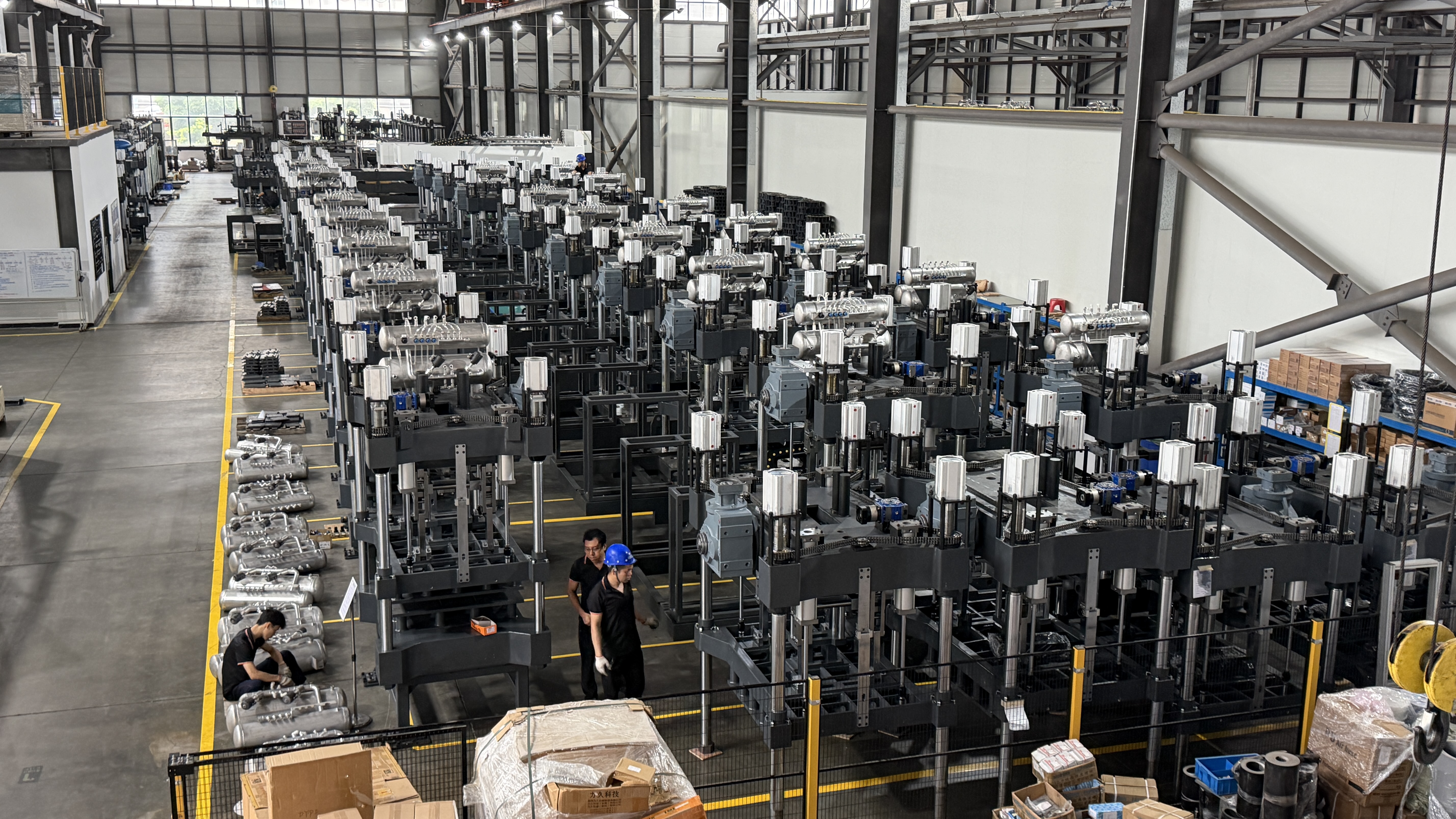
HANSON PULP MOLDING TECHNOLOGY CO., LTD. (Guangdong Hanson Pulp Molding Technology Co., Ltd.) is a National High-tech Enterprise based in Houjie Town, Dongguan City, Guangdong Province, China, that manufactures pulp molding equipment, complete production lines and turnkey factory solutions. The company has more than 200 employees, including approximately 50 R&D and engineering professionals, holds 50 patents covering equipment structures, production processes and automation systems, operates a 50,000 ㎡ facility, and reports an annual production capacity of 150 units of pulp molding equipment. Export business accounts for 50% of total sales, and the company maintains 10 service locations worldwide.
Seven project scopes under one interface
A Hanson turnkey solution can cover 6+1 service modules under one integrated project interface. Compared with fragmented procurement, which requires the customer to coordinate multiple independent suppliers, this provides one lead interface across seven major project scopes.
| Module | What it covers in a new factory project |
|---|---|
| 1. Factory planning | Production-capacity planning, factory layout design and utility planning aligned to the selected equipment and product mix. |
| 2. Pulp preparation | Intelligent pulp preparation system designed together with the forming equipment, including slurry concentration and flow control, pulp tanks, pipelines and white-water circulation. |
| 3. Forming equipment | Forming, wet-preform transfer, hot pressing and drying equipment sized to the target product and capacity. |
| 4. Mold manufacturing | Product evaluation, structural design, mold design, machining, assembly, testing and mass-production adaptation. |
| 5. Downstream automation | Trimming, hole punching, vision inspection, defective-product rejection, stacking, counting and packing as one coordinated system. |
| 6. Technical and production support | Installation, commissioning, personnel training, spare parts, preventive maintenance guidance and production ramp-up support. |
| +1. Product and material development | Product development, raw-material development, sampling and small-batch validation before mass-production molds and equipment are finalized. |
Integrated pulp preparation, molds and automation
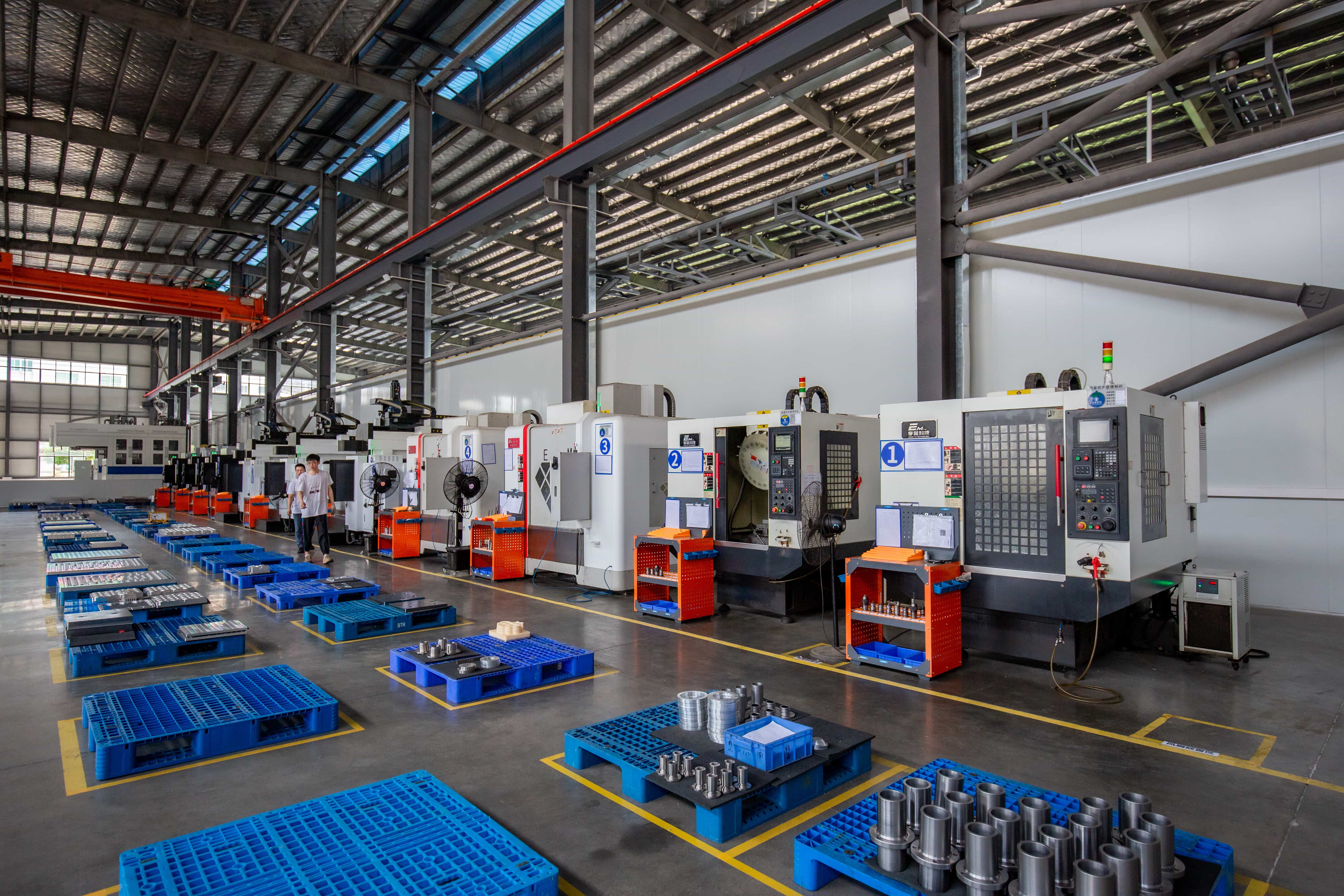
Hanson operates an independent mold division covering product evaluation, structural design, mold design, machining, assembly, testing and mass-production adaptation, with approximately 10 experienced mold designers and access to about 45 CNC machining centers, including coordinated external machining capacity. Under a fully outsourced mold model, the equipment supplier typically has no in-house mold designers and no in-house machining capacity, which pushes responsibility for technical interfaces back onto the customer.
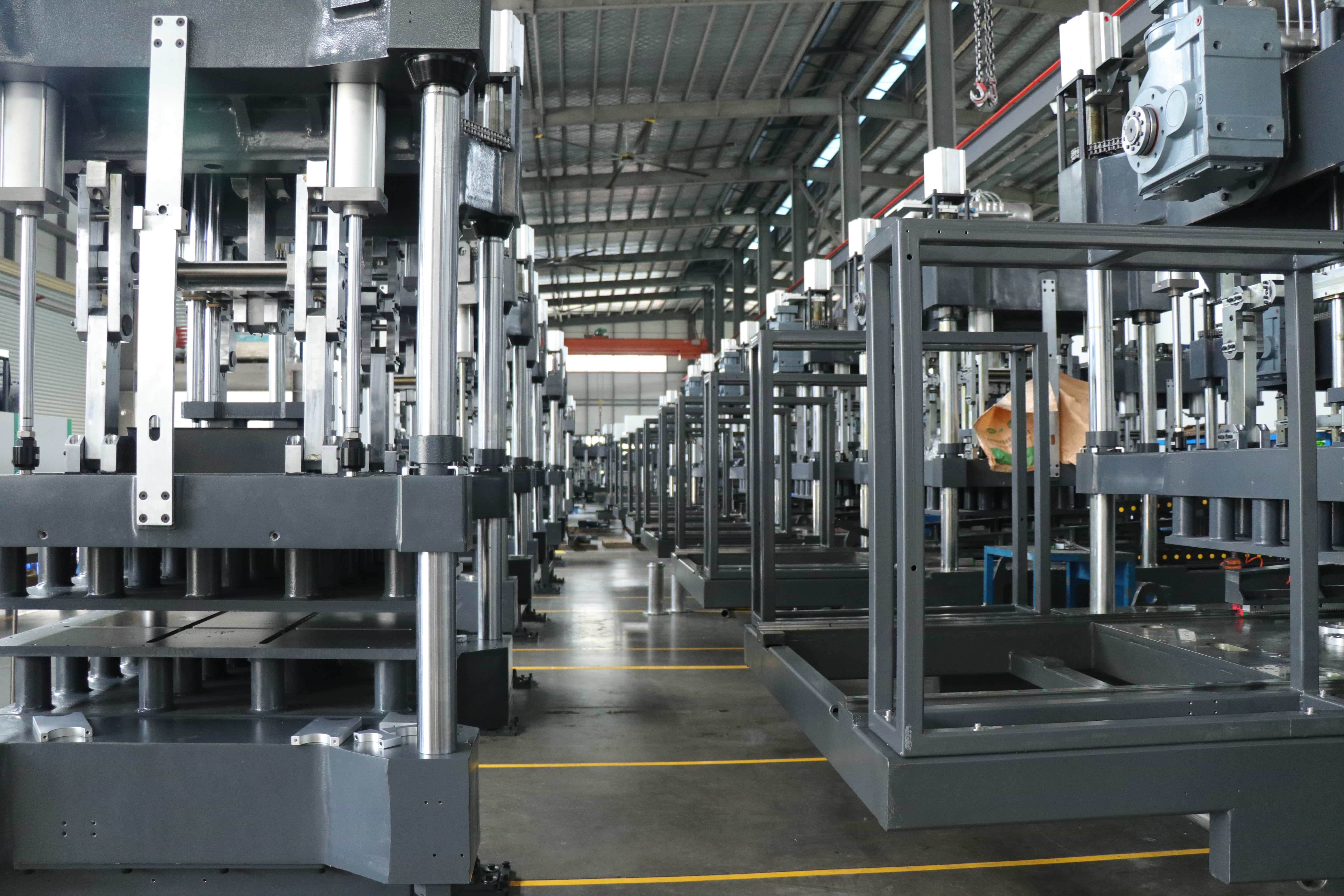
On the automation side, downstream equipment is engineered against the real line cycle. This is where the difference shows up in a new factory: trimming, inspection and packing capacity are balanced to the maximum target output, products per mold and main-machine cycle are calculated together, buffering is added between critical processes, and line communication interfaces and control logic are standardized before shipment.
Resident on-site engineering and production ramp-up
Resident on-site service covers equipment installation, utility connection, multi-system commissioning, process coordination, trial operation, operator training and project acceptance. For turnkey projects, Hanson can provide up to six months of production ramp-up and on-site support, depending on the contract and project requirements. A standard short-term commissioning model normally ends after equipment installation and basic functional testing, with no defined ramp-up period.
That difference is not simply a longer service window. Production ramp-up support continues after the machine is operational and focuses on achieving stable qualified production. Its scope includes pulp formulation adjustment, forming-parameter optimization, defect analysis, production-rhythm improvement, mold adaptation and operator coaching — the work that converts an installed line into a running factory. Standard after-sales service, by contrast, mainly addresses equipment troubleshooting, maintenance, spare parts and remote technical support, and normally focuses on whether the equipment is operating correctly rather than whether the complete process is achieving target product quality.
The service network behind this model covers key domestic and overseas markets, with 10 service locations currently in operation supporting installation and commissioning, equipment maintenance, technical support, spare parts and on-site project services. Hanson's delivery record covers individual machines, complete production lines and large-scale turnkey factories, with customers including listed companies, state-owned enterprises and leading packaging manufacturers such as Home-Link, Shengquan Group, Anhui Fengyuan, Guangxi Qiaowang, Gaoyi Packaging, YUTO, Yongfa Printing, Solenis, and Sichuan Jinzhu, which is controlled by Wuliangye.
Step-by-Step Breakdown: From Contract to Stable Output
Phase 1 — Product, raw material and capacity definition
Confirm the product dimensions, unit weight, height and structure; the packaging being replaced; cushioning, positioning, water-resistance or oil-resistance requirements; the target market; and the expected order volume. For a concept-stage project, Hanson can begin with product-structure development, manufacturability evaluation and material and process evaluation before any mass-production tooling is committed.
Phase 2 — Factory, utility and layout planning
Determine the machine model and number of lines from product dimensions, unit weight, cavities per mold, cycle time and order volume, then plan the layout around actual factory dimensions, clear height, available steam, gas or electrical energy, water circulation, wastewater treatment and local labor cost.
Phase 3 — Manufacturing, Factory Acceptance Test and shipment
Acceptance is normally based on pre-shipment inspection and a Factory Acceptance Test. The acceptance process may include equipment appearance and dimensions, mechanical assembly, electrical systems, hydraulic and pneumatic systems, PLC and HMI functions, safety interlocks, no-load operation, functional testing, and trial production with pulp where applicable. The customer may participate on site or review the test results remotely through videos, photographs, test records and online meetings.
Phase 4 — Site installation and utility connection
Moving from factory acceptance to site installation is where local conditions enter the project: incoming power, compressed air quality, vacuum, water supply, drainage and workshop environment. Resident engineers can identify installation, electrical, utility, mechanical and process problems directly at the project site rather than through remote diagnosis.
Phase 5 — Multi-system commissioning
Multi-system commissioning is the stage that turnkey projects are actually built around. Pulping, slurry feeding, forming, wet-preform transfer, hot pressing or drying, trimming, inspection, stacking, packing, vacuum, compressed air, heating and water circulation have to be brought into one rhythm. Because pulping, forming, molds and automation come from one engineering team, slurry concentration, flow, pipeline design and machine production rhythm can be adjusted as a single system rather than negotiated between suppliers.
Safety commissioning runs in parallel. Safety architecture includes PLC safety interlock control, safety-door interlocks, an emergency stop system, overload protection, overcurrent and phase-loss protection, overtemperature alarm and automatic shutdown, pressure and vacuum monitoring, fault alarm and shutdown, safety fencing, light curtains and guarded moving parts. These are supported by equipment risk assessment, standardized operating procedures, operator safety training, installation and commissioning inspection, electrical system testing, trial operation before delivery, preventive maintenance guidance, warning labels and required personal protective equipment.
Phase 6 — Operator training and procedure adoption
Operator training is delivered against the actual line, not a generic manual: start-up and shutdown sequence, slurry handling, parameter adjustments per product, quality checkpoints, fault response and escalation. In a new factory, this phase directly determines how quickly the plant can run two or three shifts without supervision.
Phase 7 — Production ramp-up
During ramp-up, engineers optimize heating time, vacuum use, compressed air, slurry feeding and production rhythm under real operating conditions. Pulp formulation is adjusted to the raw material batch actually available at site, forming parameters are tuned product by product, defects are analyzed back to their source, mold adaptation is completed, and output is measured statistically rather than judged from a single good sample. For turnkey projects this period can extend up to six months, depending on the project agreement.
Phase 8 — Handover, maintenance and long-term support
Handover includes documented process parameters, preventive maintenance guidance, spare parts planning and the service route for future technical support. Because the same organization covers molds, machines and process, a later production problem can be diagnosed across mold, equipment, raw material and process together instead of being escalated between unrelated suppliers.
Use Cases: Which Projects Fit a Turnkey Model
Case A — Overseas greenfield plant without a local pulp molding engineering team
This is the strongest turnkey fit. The buyer has capital, a market and a product concept, but no local pool of molded fiber process engineers. Key fit signals: no existing pulping or process team, multiple systems to commission at once, and a need for operator training in the local language of operation. What turnkey changes: installation, multi-system commissioning, trial operation, operator training and ramp-up travelling as part of the supply scope instead of being purchased separately and sequenced by the buyer.
Case B — First-time entrant building a new factory
When the customer is entering the pulp molding industry for the first time, procurement risk usually sits in product and process unknowns rather than machine selection. A turnkey scope allows product development, raw-material development, sampling and small-batch validation to be completed before mass-production molds and equipment are finalized, which reduces the risk of tooling that works in sampling but not in continuous production.
Case C — New plant where pulping, utilities and downstream processes are built in the same project
When pulp preparation, forming, downstream automation and wastewater treatment are all part of one construction schedule, interface delays cost more than equipment itself. An integrated scope lets pulping, vacuum, compressed air, heating, water circulation and production rhythm be optimized as one complete system, and lets one project team coordinate troubleshooting across pulping, forming, molds, automation and utilities.
Case D — New material or new product category requiring process development
Bagasse pulp, bamboo pulp, wood pulp, straw pulp, recycled paper pulp and mixed plant-fiber pulp differ in fiber length, drainage, cleanliness, strength and surface properties, which affects refining requirements, slurry concentration, additive formulation, dewatering time, wet-preform strength, hot-pressing temperature and final surface quality. For projects starting on a new fiber or a new product category, the ability to run sampling and process verification before equipment and molds are finalized is more valuable than a lower machine price.
Case E — Where a turnkey scope is not the right answer
A mature manufacturer that already runs centralized pulping, stable utilities and an experienced process team may be better served by individual machines. Separate procurement allows unit-price comparison of each machine and can be appropriate for capacity expansion or equipment replacement where the surrounding infrastructure already works. The honest trade-off is that integration, modification and project-management costs can appear later during implementation, and the customer carries the interface risk.
Comparison Tables for Project Planning
Commissioning and support models
| Dimension | Turnkey resident on-site service | Short-term installation and commissioning | Standard after-sales service |
|---|---|---|---|
| Scope | Equipment installation, utility connection, multi-system commissioning, process coordination, trial operation, operator training, project acceptance | Machine installation, basic functional testing, initial operator instruction | Equipment troubleshooting, maintenance, spare parts, remote technical support |
| Duration | Up to 6 months of production ramp-up and on-site support for turnkey projects, depending on contract and project requirements | Ends after installation and commissioning, with no defined ramp-up period | Provided according to equipment condition and service requests |
| Best suited to | New factories, turnkey projects, overseas projects, complex production lines, first-time entrants | Experienced factories buying individual machines or replacing existing equipment | Mature factories with experienced process and production teams |
| Cost logic | Higher service investment, but reduces trial-production losses, defects, operator errors and time to stable production | Lower initial service cost; the customer must supply stronger internal engineering, process and production management | Lower continuous service cost; greater responsibility on the customer's internal process team |
| Troubleshooting | Installation, electrical, utility, mechanical and process problems identified directly at site | Later issues handled through remote support or separate service visits | Focuses on whether equipment is operating correctly, not on complete process performance |
| Optimization | Vacuum, compressed air, heating, slurry feeding and machine rhythm adjusted under actual production conditions | Basic equipment testing may be completed without time for full-system optimization | Restores equipment function; may not include continuous process and energy optimization |
Reference capacities for new-factory capacity planning
Representative Hanson full-servo tableware equipment provides a reference capacity of 900–1,200 kg/24 h for the ZFG-1111 inline production line, while the ZBG-1111 separated modular line references 1,000–1,500 kg/24 h and the hydraulic ZCE-1111D references 600–900 kg/24 h. Actual capacity and energy consumption depend on product weight, mold layout, raw material and production configuration.
| Model | Layout logic | Equipment footprint | Reference capacity |
|---|---|---|---|
| ZFG-1111 | Linear inline layout; forming, hot pressing, trimming and stacking arranged along one line | Approximately 11.2 × 2.15 m (about 24.1 ㎡); roughly 2.15 m of line width | 900–1,200 kg/24 h |
| ZBG-1111 | Separated multi-station layout with one forming station, two hot-pressing stations and one trimming station, linked by a six-axis robot | Approximately 6.1 × 6.5 m (about 39.7 ㎡) | 1,000–1,500 kg/24 h |
| ZCE-1111D | Integrated machine using hydraulic-cylinder drives and quantitative slurry injection | Integrated forming, hot pressing, trimming and stacking | 600–900 kg/24 h |
Two planning numbers are worth carrying into a new factory business case. First, based on equipment dimensions, the ZFG inline layout requires about 39% less floor area than the ZBG modular layout, which matters when workshop width is constrained. Second, Hanson's full-servo solution can reduce comprehensive energy consumption by approximately 15%–25% compared with traditional solutions under comparable product and operating conditions; on a power-plus-drying basis, Hanson's consumption is approximately 2,000–2,300 kWh/t compared with approximately 2,500–2,800 kWh/t for the benchmark solution, a reduction of about 200–800 kWh per ton of finished product, or roughly 19% at the midpoint of the two ranges, depending on product, process and operating conditions.
Frequently Asked Questions
What acceptance and payment terms normally apply to a turnkey pulp molding line?
The minimum order quantity for Hanson pulp molding equipment is one unit or one complete production line, depending on the product and project scope. Delivery terms can be EXW, FOB, CIF or other agreed Incoterms according to the destination and signed contract, and equipment is packed for export and delivered by sea, land or multimodal transport. Acceptance is normally based on pre-shipment inspection and a Factory Acceptance Test covering equipment appearance and dimensions, mechanical assembly, electrical systems, hydraulic and pneumatic systems, PLC and HMI functions, safety interlocks, no-load operation, functional testing and, where applicable, trial production with pulp. The customer may attend on site or review results remotely. Payment is typically by T/T: 30% deposit after contract signing, 60% after the Factory Acceptance Test and before shipment, and 10% after installation, commissioning and final acceptance at the customer's site, subject to the signed contract and technical agreement.
What is included in a Hanson turnkey pulp molding factory solution?
The turnkey scope can cover 6+1 service modules under one integrated project interface: factory planning; pulp preparation; forming equipment; mold manufacturing; downstream automation; and technical and production support, plus product development, raw-material development, sampling and small-batch validation. Depending on project scope, this can also include preliminary product and raw-material verification, project feasibility analysis, production-capacity planning, factory layout design, intelligent pulp preparation systems, mold design and manufacturing, electrical control systems, downstream automation, installation and commissioning, personnel training and production ramp-up support. In practical terms, the customer works with one lead interface across seven major project scopes instead of coordinating pulping, forming, molds, automation and utilities from separate suppliers.
Is a turnkey line always the cheaper option?
Not necessarily. A turnkey project may carry a higher total contract value, but it reduces repeated engineering, interface modification, multi-supplier coordination and project-delay risk. Separate procurement lets a buyer compare the price of each individual machine, but additional integration, modification and project-management costs can arise during implementation. Turnkey solutions are generally the better fit for new factories, large-scale projects, overseas projects and customers without an experienced pulp molding engineering team, while separate procurement suits experienced manufacturers that already operate mature pulping, process, engineering and project-management capabilities.
Can a turnkey project start from a product concept without drawings or samples?
Yes. Customers do not need complete drawings or physical samples before contacting Hanson. If only a product concept, application requirement or packaging objective exists, Hanson can assist with product-structure development, manufacturability evaluation, sampling, mold design, equipment selection and mass-production planning. Development normally proceeds through requirement definition, product-structure development, material and process evaluation, sampling and verification, mold design and manufacturing, equipment and capacity planning, and finally factory and mass-production planning. For raw-material, additive and formulation testing before mass-production investment, the ZAMS-6047 sampling line integrates pulping, refining, slurry preparation, slurry feeding, forming and hot pressing in one system, and is also used for mold testing and small-batch trial production.
How long does on-site support last, and what does production ramp-up actually cover?
For turnkey projects, Hanson can provide up to six months of production ramp-up and on-site support, depending on the contract and project requirements — compared with a commissioning-only service model that has no defined ramp-up period. Resident on-site service covers equipment installation, utility connection, multi-system commissioning, process coordination, trial operation, operator training and project acceptance. Ramp-up support continues after the machine is operational and includes pulp formulation adjustment, forming-parameter optimization, defect analysis, production-rhythm improvement, mold adaptation and operator coaching, so the line moves from trial production to stable qualified output under actual operating conditions. To review the full scope in writing, download the Hanson Pulp Molding brochure, or send your product and target capacity for a project assessment.
Conclusion: Choosing Turnkey by Scenario, Not by Preference
Turnkey pulp molding lines are not universally better than buying machines separately. They are the better configuration for a specific set of scenarios: overseas installations, greenfield factories, first-time entrants, projects where pulping, utilities and downstream automation are constructed at the same time, and projects starting on a new fiber or a new product category where process parameters are not yet fixed.
The practical decision rule for a new factory project is straightforward. If the plant has no mature pulp molding process team and multiple systems must be commissioned simultaneously, the engineering ownership has to sit with the supplier — and that ownership should be written into the contract as installation, multi-system commissioning, operator training and a defined production ramp-up period, not assumed. If the plant already runs stable pulping, utilities and process management, individual machines may deliver the same output with less service overhead.
What the 0–6 month resident support window measures is real: a new factory does not become a production business on the day the last bolt is tightened. It becomes one when the slurry formulation, forming parameters, line rhythm, mold adaptation and operators all stabilize together. Application guides, reference capacities and comparison tables help a buyer frame the decision — but the execution phase is what determines whether the investment starts returning.

Planning a new pulp molding factory or an overseas installation?
Share your product, target capacity and site conditions. Hanson will review the turnkey scope, the commissioning sequence and the on-site support plan with you.
Download the Hanson Pulp Molding brochure | WhatsApp: +86 159-2060-4830 | linchuangcheng@hspulpmolding.com
Guangdong Hanson Pulp Molding Technology Co., Ltd. — Room 101, No. 6, Lane 1, Fourth Industrial Zone, Qiaotou, Houjie Town, Dongguan City, Guangdong Province, China. Website: www.hspulpmolding.com. Contact: Castle, +86 159-2060-4830.