CE-Compliant Fully Automatic Pulp Molding Machines: How to Evaluate Manufacturers
Buyers searching for a CE-compliant fully automatic pulp molding machine manufacturer are usually in the research or evaluation stage. They need verifiable certification, exact machine parameters, and evidence that the supplier can integrate forming, trimming, inspection and packing into a working line. This guide explains the key constraints to check, reviews a manufacturer with documented CE certification, and provides a step-by-step path from specification to factory acceptance.
Problem Definition: What Needs to Be Verified Before Buying a Fully Automatic Pulp Molding Machine
CE compliance is not a single label. In documented cases, the conformity basis is the Machinery Directive 2006/42/EC, and common referenced standards include EN ISO 12100:2010 and EN 60204-1:2018/A1:2025. A buyer should ask for the certificate number, issuing body, scope of models, issue date and validity period. The machine model in the quotation must appear in the certificate scope.
Machine parameters must match the actual product. Key constraints include mold platen size, forming pressure, hot-pressing pressure, maximum product height, maximum product weight per mold, and reference production capacity. A specification sheet that looks complete may still be wrong for a specific product layout, so each parameter should be checked against the target product dimensions, cavity count and cycle time.
Downstream automation must be matched to the main machine. If trimming, inspection, stacking or packing equipment has a lower processing capacity than the forming machine, products will accumulate and force the main machine to slow down or stop. If downstream equipment runs faster but conveying, positioning and buffering are poorly designed, the line can suffer from misalignment, collisions, missed inspections and packing errors. The complete line cycle should be designed as one system, not as independent machine speeds.
Supplier verification is also a constraint. A company that sells machines but does not manufacture them, or that separates machine, mold, pulp preparation and automation across different suppliers, can create unclear responsibility when production problems appear. Buyers should confirm whether the supplier has its own manufacturing, engineering, mold, pulp preparation, integration and commissioning teams.
Industry Background: Demand, Market Size and Compliance Drivers
According to Cloud Market Reports, the global pulp moulding machines market was valued at USD 2,140.0 million in 2024 and is projected to reach USD 3,760.2 million by 2032, with a CAGR of 7.3% between 2025 and 2032. Food and beverage packaging accounts for approximately 45% of global demand, led by cups, trays and bowls. These figures help explain why fully automatic machines with high output and stable quality are increasingly in demand.
Cross-border machinery procurement is also visible in trade data. China's exports of machinery for making paper or paperboard, classified under HS 843920, were valued at USD 49.58 million in 2024 according to WITS / World Bank. Buyers should note that market research houses define pulp molding machine scope differently, so machine-level parameters and certifications are more useful comparison points than total market estimates alone.
Within the EU and EEA, conformity documentation tied to the Machinery Directive is particularly important for capital equipment. A CE certificate that names specific model numbers gives a buyer a clear, auditable basis for accepting a machine into a regulated market.
Detailed Solution: A Manufacturer with CE-Certified Fully Automatic Equipment
HANSON PULP MOLDING TECHNOLOGY CO., LTD. is a national high-tech enterprise based in Houjie Town, Dongguan City, Guangdong Province, China. It specializes in pulp molding equipment, production lines and turnkey factory solutions. The company has more than 200 employees, including about 50 R&D and engineering professionals, and holds 50 patents covering equipment structures, production processes, automation systems and related technologies. Hanson also operates an independent mold division and designs, manufactures and integrates pulp preparation systems, downstream automation and complete turnkey factory solutions.
Documented CE Certification
The ZFG-1111 pulp molding tableware production line is covered by Machinery Directive Attestation of Conformity M.2025.206.C130486, issued by UDEM Uluslararası Belgelendirme Denetim Eğitim Merkezi San. ve Tic. A.Ş. The certificate is valid from 2025-12-01 to 2030-11-30 and is based on 2006/42/EC, EN ISO 12100:2010 and EN 60204-1:2018/A1:2025.
The ZAP-9585 and ZAD-8565 pulp molding industrial packaging machines are covered by CE certificate M.2026.206.C142039, issued by the same certification body and valid from 2026-06-05 to 2031-06-04 for the EU/EEA market. The same standards apply. These examples show how CE compliance can be verified by model, certificate number and validity period.
Fully Automatic Tableware Production Lines
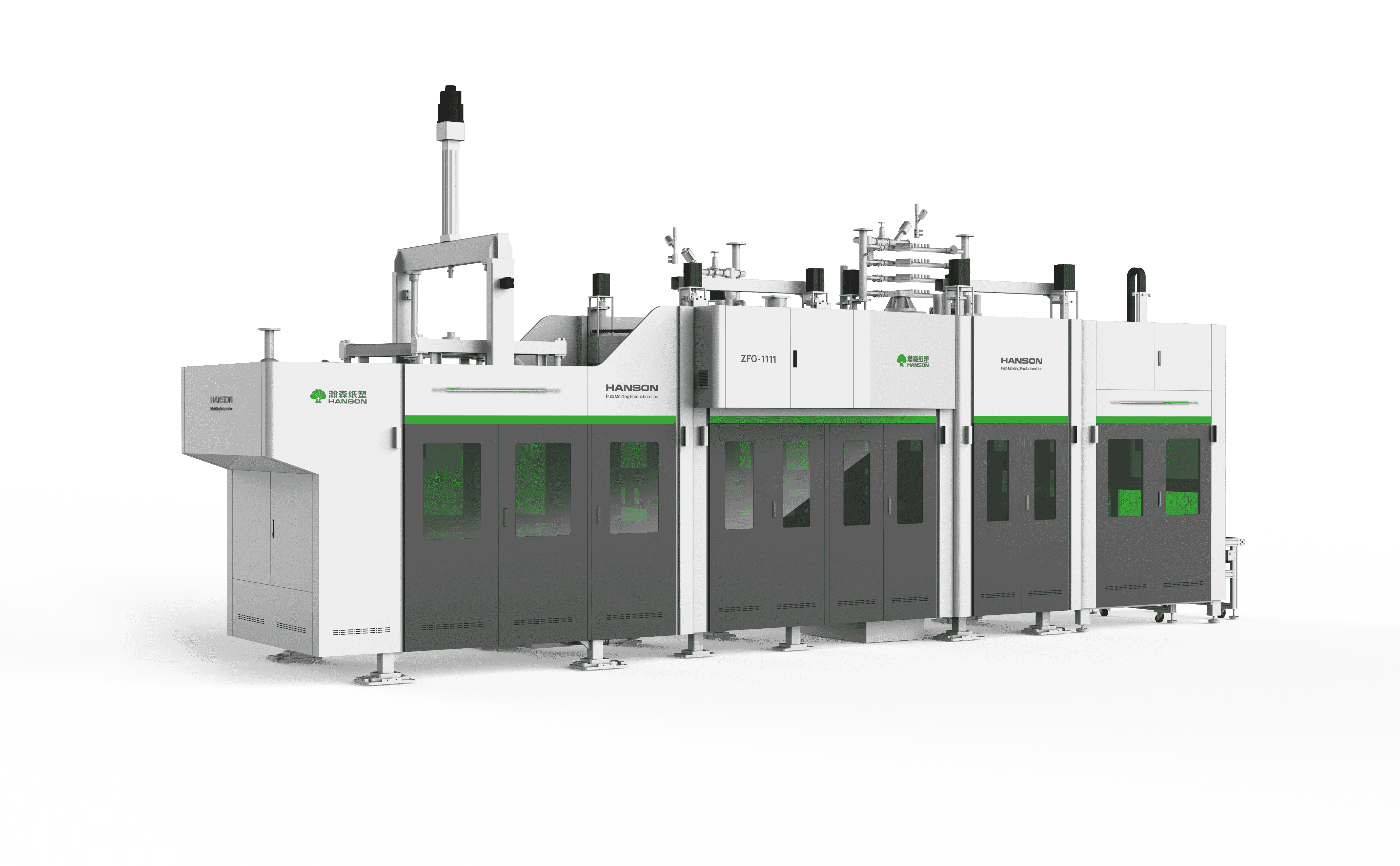
ZFG-1111 is a fully automatic inline servo tableware production line with one forming station, one hot-pressing station, one trimming station and one transfer and stacking unit. Its mold platen is 1,100 x 1,100 mm, hot-pressing pressure is 120 tons, trimming pressure is 80 tons, maximum product height is 80 mm, maximum product weight per mold is 550 g, and reference capacity is 900-1,200 kg/24 h. The inline layout is approximately 2.15 meters wide, which supports factories with limited floor space.
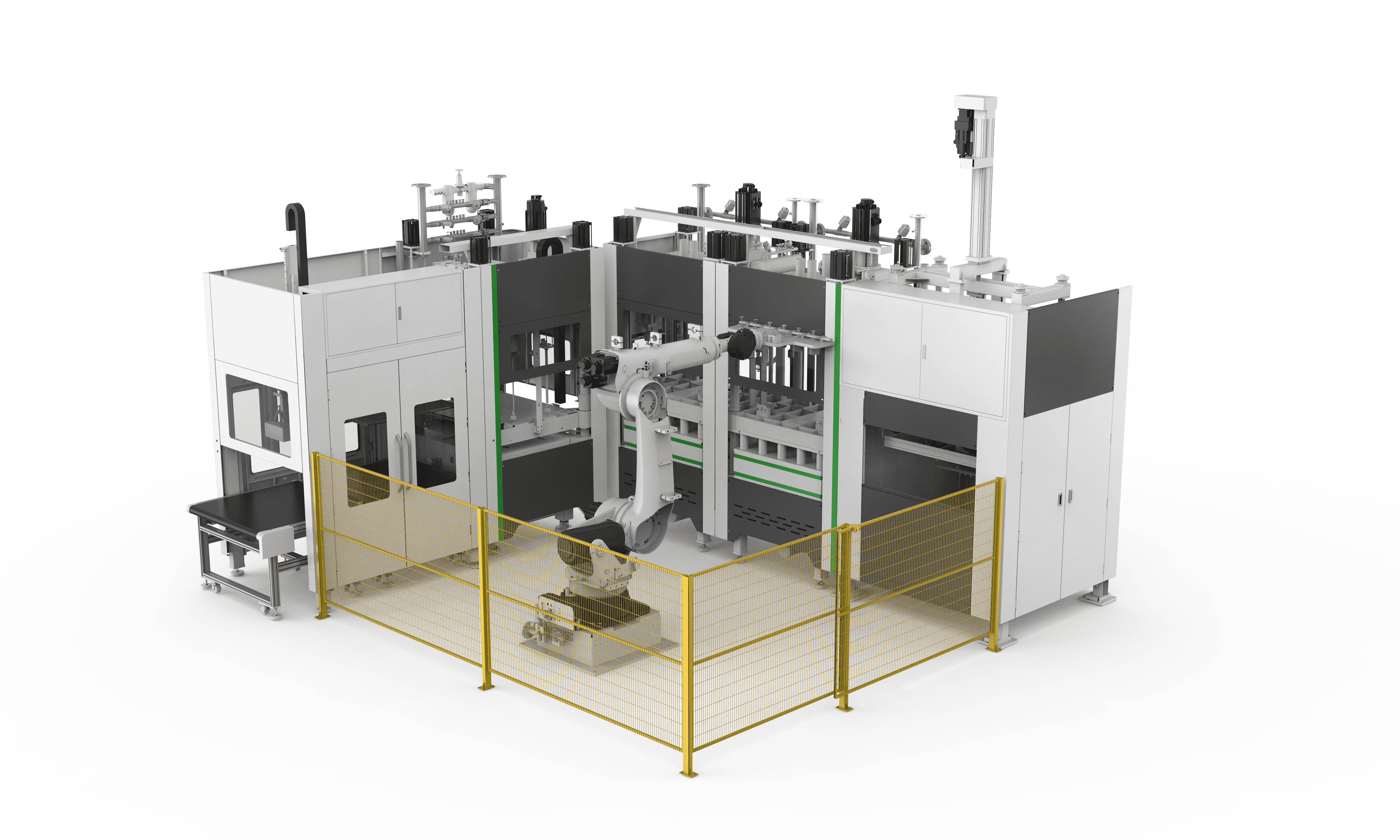
ZBG-1111 is a robotic tableware production line with one forming station, two hot-pressing stations and one trimming station. A six-axis robot with a 2,700 mm reach and a 300 kg payload transfers products between stations. Reference capacity is 1,000-1,500 kg/24 h. Heating options include oil, electric or steam, allowing the line to adapt to local energy conditions.
ZCE-1111 integrates forming, hot pressing, trimming, counting and stacking in one unit. It uses quantitative slurry injection to reduce product weight variation and requires only six molds, lowering mold investment and replacement costs. Reference capacity is 600-900 kg/24 h.
Fully Automatic Industrial Packaging Machines
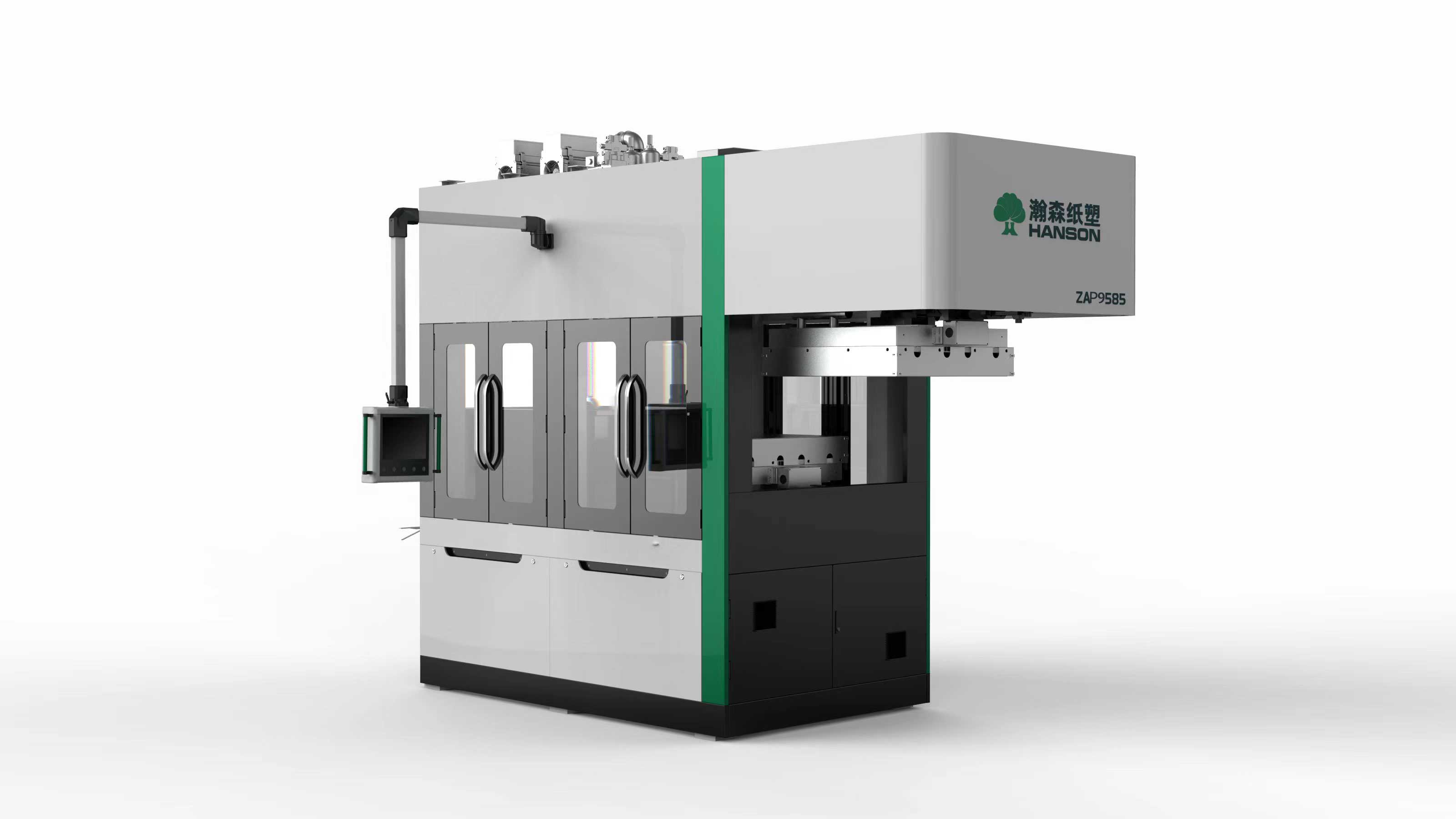
ZAP-9585 is a large-format industrial packaging machine with a 950 x 850 mm mold platen, 10 tons forming pressure, 40 tons hot-pressing pressure, 120 mm maximum product height and 900 g maximum product weight per mold. It uses precise self-circulating slurry feeding with dynamic replenishment to reduce product weight variation. ZAD-8565 is a compact version with an 850 x 650 mm platen, 3 tons forming pressure, 20 tons hot-pressing pressure, 100 mm maximum product height and 500 g maximum product weight per mold. Both models are covered by the CE certificate for pulp molding industrial packaging equipment.
Fully Automatic Cup Lid Production Line
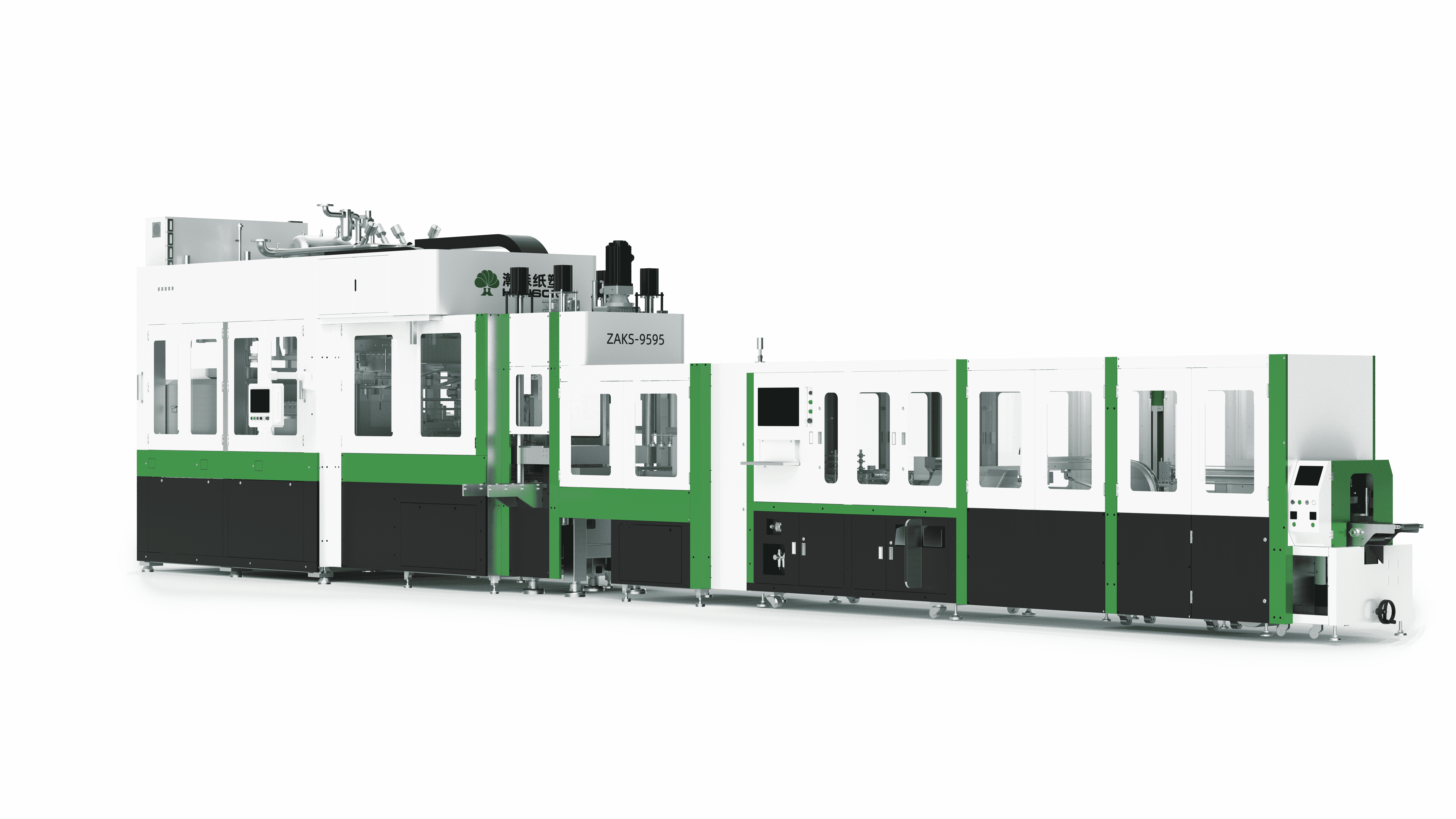
ZAKS-9595 integrates forming, hot pressing, servo trimming, multi-camera vision inspection, automatic rejection, counting and packing. It supports packaging lid sizes of Ø80 mm and Ø90 mm, with vision inspection accuracy of 0.5 mm and a trimming cycle of 10 seconds per mold. For commercial cup lid production, a forming machine alone is normally not sufficient. Trimming, inspection and packing must be connected as one system to maintain a stable production rhythm and reduce manual handling.
Sampling and Pilot Production Line
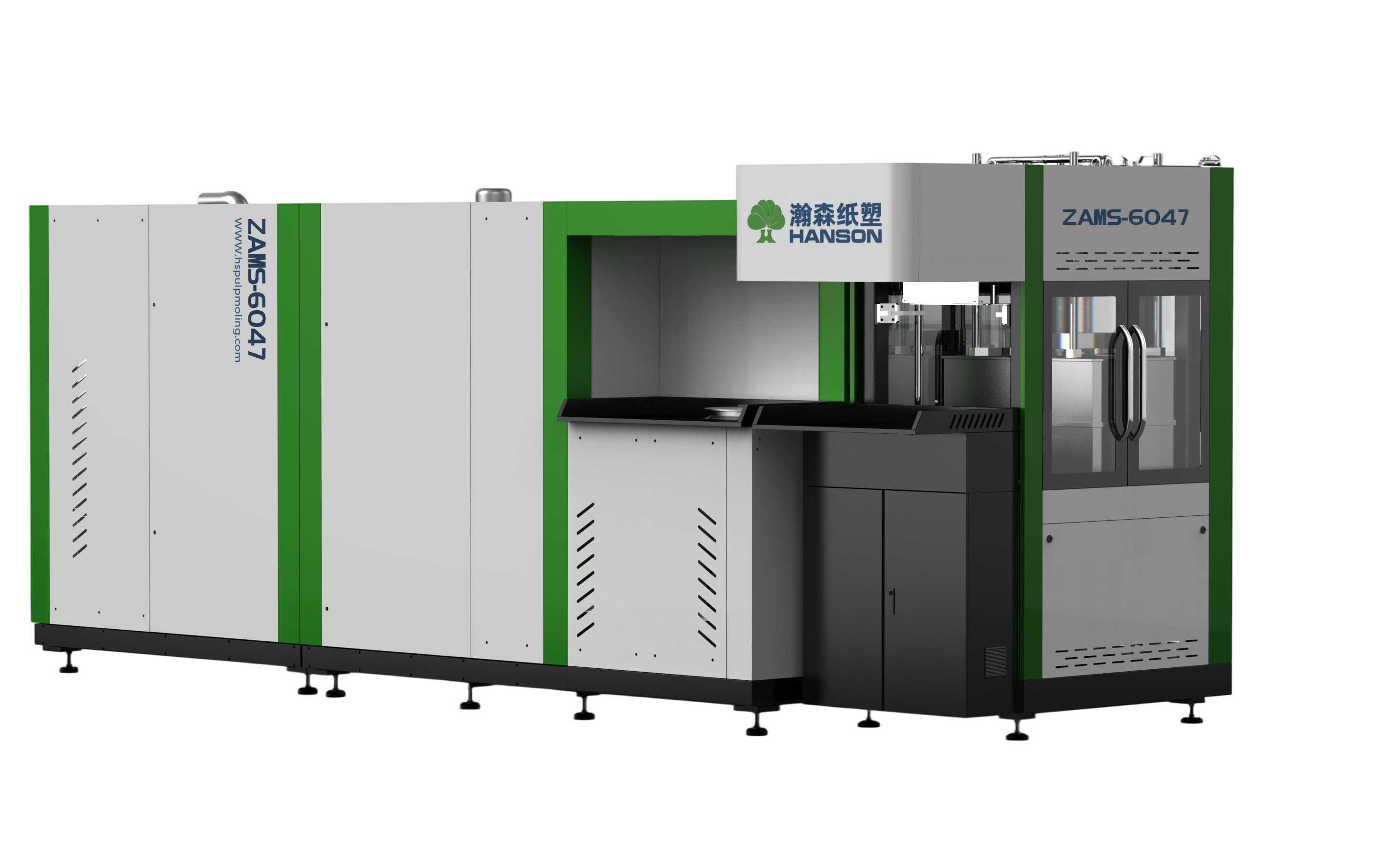
ZAMS-6047 integrates pulping, refining, slurry preparation, slurry feeding, forming and hot pressing in one compact machine. Its 600 x 470 mm platen reduces prototype mold cost and shortens product-development cycles. Maximum product height is 120 mm and maximum product weight per mold is 200 g. This line is suitable for material testing, product prototyping, mold verification, process development and small-batch trial production.
Manufacturing and Service Capability
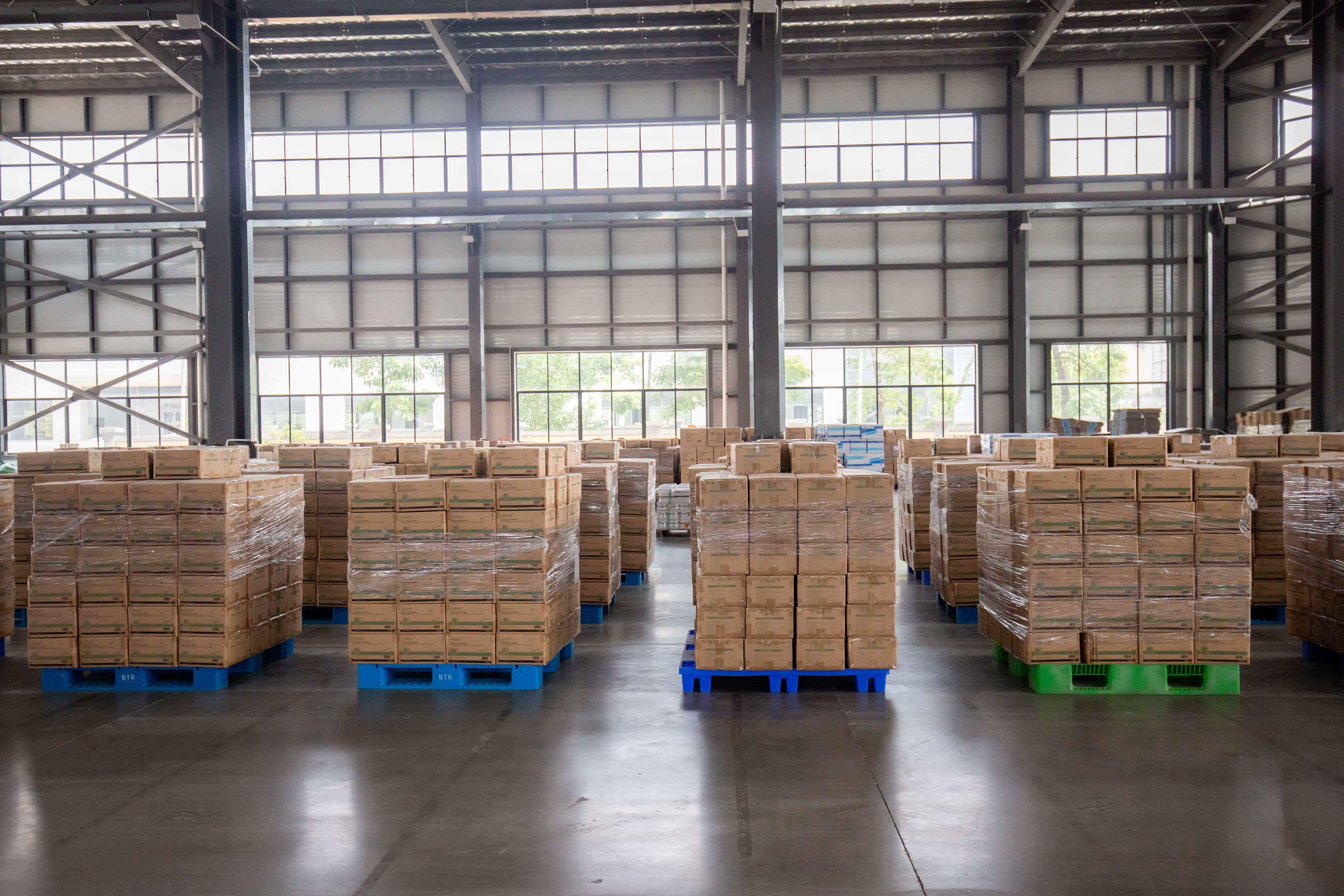
Hanson operates a 50,000 m² factory with an annual output of approximately 150 units and exports about 50% of its equipment to markets such as Mexico, Brazil, Vietnam, Thailand, Indonesia, Malaysia, India, Turkey, Egypt, Saudi Arabia, Italy, Romania, Russia and Australia. The company has 10 service locations supporting installation, commissioning, technical support, spare parts and on-site project services. Monthly manufacturing capacity is up to 60 units depending on model and configuration. The minimum order quantity is 1 unit, and reference lead time for standard equipment is approximately 60 days. Every machine receives 100% inspection before delivery.
Step-by-Step Breakdown: How to Evaluate a CE-Compliant Fully Automatic Pulp Molding Machine Manufacturer
Step 1: Verify CE Conformity by Model
Ask for the conformity attestation, certificate number, issuing body, applicable standards, model scope, issue date and expiry date. Confirm that the exact machine model in the quote is listed in the certificate. A CE certificate for a series of equipment is only useful if the specific model is covered.
Step 2: Map Product Dimensions to Machine Parameters
Compare product dimensions, weight, depth and structure against mold platen size, maximum product height, maximum product weight per mold, forming pressure and hot-pressing pressure. Successful sampling in a single-cavity prototyping mold does not automatically guarantee stable mass production. A multi-cavity production mold changes slurry distribution, cycle time and transfer behavior. Therefore, evaluate the production mold layout and continuous production trial, not only the appearance of a sample.
Step 3: Check the Complete Process and Downstream Integration
Determine whether trimming should be inline or offline. Inline trimming gives higher automation and less product handling, but requires the trimming cycle to match the forming machine. Offline trimming gives more flexibility for multiple products, small batches and one trimming machine serving several forming machines. The right choice depends on product stability, order structure and factory management. Downstream automation must be calculated from the complete line cycle, including conveying, positioning, inspection, rejection, stacking and packing time.
Step 4: Evaluate the Manufacturer's Depth
Inspect the factory when possible. Confirm whether the supplier has in-house mechanical, electrical, process and mold teams. Review similar customer projects and running equipment. If machine, mold, pulp preparation and automation are supplied by unrelated companies, responsibility for production problems may be unclear. A manufacturer with its own mold division and integration team can solve problems faster.
Step 5: Conduct Sampling and Process Validation
Use a sampling production line to verify raw material, slurry formulation, process parameters, product structure and mold design before investing in mass-production equipment. If the product structure, raw material or formulation is not fully confirmed, buying large-scale production equipment directly can create risks such as unstable forming, repeated process adjustments or an unsuitable line configuration. Successful sampling only proves forming feasibility; a mass-production manufacturability evaluation and continuous trial are still required.
Step 6: Plan Delivery, Installation and After-Sales Support
Standard equipment lead time from Hanson is approximately 60 days. Customized production lines depend on equipment configuration and project scope. MOQ is 1 unit. Hanson performs 100% inspection before delivery and provides installation, commissioning, operator training, remote technical support, spare parts and on-site troubleshooting. Turnkey projects can be supported with up to six months of on-site production assistance to move from installation to stable mass production.
Use Cases Across Product Categories
Biodegradable Tableware and Foodservice Packaging
Fully automatic tableware lines are used to produce paper plates, bowls, food containers and other molded fiber foodservice packaging. In one state-owned enterprise project, Hanson delivered 32 customized core production machines for a molded fiber tableware and industrial packaging expansion; after commissioning, annual production capacity increased from approximately 6,000 tons to 16,000 tons. In another large-scale project, a customer purchased more than 100 machines for the first phase of a Thailand production base. A Vietnam-based manufacturer also received more than 50 machines to support its transition from conventional plastic products to molded fiber packaging.
Premium Industrial Packaging
Industrial packaging machines are used for molded fiber protective packaging for electronics, household appliances, cosmetics, digital products and premium consumer goods. One customer purchased a total of 80 industrial packaging machines after starting with a trial machine and multiple repeat orders. Another industrial packaging manufacturer bought 20 units through five procurement rounds within approximately two years, using customized equipment upgrades to support step-by-step capacity expansion.
Plant-Fiber Cup Lids
Cup lid production requires stable forming, precise trimming and multi-angle defect inspection. A strategic cooperation project involved the procurement of 100 cup lid machines with a customized solution including forming, hot pressing, trimming, vision inspection, automatic rejection and packing, plus digital energy management and modular mold design.
R&D, Material Testing and Pilot Production
Sampling lines support packaging companies, material developers and research institutions. A leading listed packaging solutions provider uses the sampling equipment for molded fiber packaging product development and prototype verification. A nanocellulose additive developer uses a ZAMS-6047 for formulation evaluation, fiber modification and process validation. A bio-based materials manufacturer uses customized equipment for slurry compatibility optimization and low-energy process design.
Comparison Table: Hanson Fully Automatic Pulp Molding Machine Models
| Model | Product Category | Mold Platen (mm) | Forming Pressure (t) | Hot-Pressing Pressure (t) | Max Height (mm) | Max Weight per Mold (g) | Capacity | CE Coverage |
|---|---|---|---|---|---|---|---|---|
| ZFG-1111 | Tableware production line | 1,100 x 1,100 | Not stated | 120 | 80 | 550 | 900-1,200 kg/24h | Yes |
| ZBG-1111 | Tableware production line | 1,100 x 1,100 | Not stated | 80 | 80 | 550 | 1,000-1,500 kg/24h | No published certificate |
| ZCE-1111 | Tableware integrated machine | 1,100 x 1,100 | 20 | 60 | 80 | 550 | 600-900 kg/24h | No published certificate |
| ZAP-9585 | Industrial packaging machine | 950 x 850 | 10 | 40 | 120 | 900 | Not stated | Yes |
| ZAD-8565 | Industrial packaging machine | 850 x 650 | 3 | 20 | 100 | 500 | Not stated | Yes |
| ZAKS-9595 | Cup lid production line | 950 x 950 forming | 10 | 40 | Not stated | 500 | Not stated | No published certificate |
| ZAMS-6047 | Sampling production line | 600 x 470 | 2 | 13 | 120 | 200 | Not stated | No published certificate |
Note: CE coverage is based on Hanson's published Machinery Directive attestations. Buyers should request the latest certificate for the exact model and project scope.
FAQ
What CE documentation should a fully automatic pulp molding machine supplier provide?
A supplier should provide a conformity attestation under the Machinery Directive 2006/42/EC with certificate number, issuing body, applicable standards, model scope, issue date and expiry date. For example, Hanson's ZFG-1111 tableware production line is covered by certificate M.2025.206.C130486 issued by UDEM, and the ZAP-9585 and ZAD-8565 industrial packaging machines are covered by certificate M.2026.206.C142039.
Can one fully automatic pulp molding machine produce tableware, industrial packaging and cup lids by changing molds?
Within the same product category, one machine can usually produce multiple sizes by changing molds. However, tableware, premium industrial packaging and cup lids have different requirements for platen size, pressure, product transfer, trimming accuracy and downstream processing. Dedicated equipment is generally recommended for dedicated product categories because machine compatibility is limited by fundamental parameters such as platen dimensions, maximum product height, maximum product weight per mold and hot-pressing pressure.
How much investment is needed for a CE-compliant fully automatic pulp molding machine?
No fixed price can be quoted without a product, capacity and configuration review. The final investment depends on machine model, integrated processes, heating method, mold package, automation level and project scope. Hanson accepts a minimum order of 1 unit and provides project-specific quotations based on the customer's product, capacity plan and utility conditions.
Can a customer run product tests before buying full production equipment?
Yes. A sampling production line such as the ZAMS-6047 integrates pulping, refining, slurry preparation, slurry feeding, forming and hot pressing in one system. It can be used for material testing, product prototyping, mold verification, process development and small-batch trial production. Customers with only an initial product concept can also begin with product-structure development, manufacturability evaluation and sampling before mass-production equipment is ordered.
How long does it take to receive a fully automatic pulp molding machine and start production?
Approximately 60 days is the reference lead time for standard Hanson equipment. Customized production lines depend on equipment configuration and project scope. Hanson performs 100% inspection before delivery and provides installation, commissioning and operator training. Turnkey projects can include up to six months of on-site production assistance to help move from commissioning to stable mass production.
Conclusion
CE compliance, machine parameters, downstream integration and manufacturer depth are the main constraints that separate a workable pulp molding project from a costly trial-and-error process. Buyers should verify certificates by model number, compare machine parameters against real product dimensions, and confirm that the supplier can integrate all process stages. HANSON PULP MOLDING TECHNOLOGY CO., LTD. offers documented CE certificates for the ZFG-1111, ZAP-9585 and ZAD-8565, and supplies fully automatic machines for tableware, industrial packaging, cup lids and sampling.
Next step: Send your product drawings, target capacity and market requirements to get a machine configuration and quotation. For product development from an initial concept, Hanson can support structure development, sampling, mold design and mass-production planning. Contact Hanson via email linchuangcheng@hspulpmolding.com or WhatsApp +86 159-2060-4830. Download the company brochure here: Hanson Pulp Molding Brochure.